The Blues Brothers (1980)

The Ultimate Comedy

To date, The Blues Brothers remains the only instance in which after watching a movie for the first time, I watched it again the very next day. Several viewings later I’ve come to the decision that The Blues Brothers is my favourite film comedy.

The Blues Brothers is some of the most fun you’ll ever have with a motion picture. Just one incredibly fun set piece after another whether a car chase, a musical number or comedic showcase. Choosing a favourite moment? Now that’s difficult. The portion of the film which has me in the most hysterical fit is the sequence at Bob’s Country Bunker. Having a blues band with two lead singers who are as urban as it gets at a redneck bar in which everyone thinks they’re the night’s country music act and everyone is oblivious to this pink elephant in the room has me laughing just thinking about it (not to mention quite a dig at country music), and what country song are they able to play to the crowd? Why the theme song to a TV show of all things. In regards to the film’s musical numbers, let’s just say I bought the two-disc movie soundtrack very soon after watching the film, which gave me a solid twelve months of continuous music listening pleasure.

The brothers Jake and Elwood epitomise coolness with their black suits, sunglasses and stoic nature. Yet despite the film’s protagonists being criminals, The Blues Brothers is a film of strong moral character. The film makes fun of the antiquated nature of Catholicism while still celebrating faith-based virtues which can transcend to the secular viewer. Jake and Elwood have to save the Catholic orphanage they grew up in but are forced to raise the money to do so by honest means and at the end of the day, they do get punished for their bad deeds. Also, I have to ask, do churches as fun as that portrayed in The Blues Brothers actually exist in real life?

What other movie which has more reverence for its location (the only other film which instantly pops into my mind is Rocky with Philadelphia). Right from the opening shots of the industrial landscape, the city of Chicago is gloriously captured. For the best moment in the movie which captures the grit and grime of the city of Chicago is the scene on Maxwell street with John Lee Hooker playing cut to shots of stalls selling music tapes and other artefacts; such a beautiful sequence

Then there’s the film’s final car chase. I haven’t seen every famous movie car chase but I would happily place a wager that there is no other car chase in the history of cinema better than this. I believe a truly great action sequence is one in which there’s a sense of danger that someone can get hurt or even killed. Here I’m not only fearing for the fictional characters but also the real-life cast and crew. The number of cars involved and carnage that ensues is unprecedented; Grand Theft Auto years before Grant Theft Auto existed. With so many action movies featuring gargantuan levels destruction which means nothing and has no impact, they should take note from The Blues Brothers on how to make action sequences in which you can actually feel the weight and heft of everything from the screech of every tire to the sirens of every police car whizzing past the screen.

The lack of logic in The Blues Brothers only adds to its enjoyment. For example, the very obvious plot hole in which The Good Ole Boys arrive hours late at the country bar with no explanation would likely downgrade most movies; here it just enhances the surreal world inhabited by the Blues Brothers. My favourite illogical moment is the Illinois Nazi’s demise on the unfinished freeway; it makes no sense in the most wonderful way. The 80’s was pretty much the decade for epic, large-scale comedies such as The Blues Brothers. Only then could a film like this even get made.

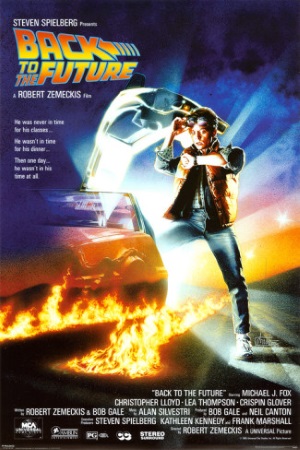
Back To The Future Part II (1989)

It’s a Wonderful Future

***This Review Contains Spoilers***

Back to the Future Part II is one of the most relentless films I’ve ever seen. A one hour and forty minute film yet it feels like only a fraction of that length. As the characters are already introduced to us, the movie immediately gets the ball rolling. I love how frantic and faced paced Part II is; the movie almost never pauses and is one hell of a thrill ride. How many movie sequels return to the events of the first film? I can’t imagine the effort that went into recreating the scenes from the first film from different perspectives, it makes you see the first film in a whole different light. The film’s portrayal of 2015, on the other hand, is the future we all wish we could have, unlike most movies which predict a future of doom and gloom. I still want those self-tying shoelaces and the pizza which can be cooked with a few seconds – its fun watching all those future gizmos. Although they got some things right; the large, flat, wide screen TV with multiple channels or the market for nostalgia with the Cafe 80’s.

Part II takes The Empire Strikes Back route by being darker than the first film; the alternate 1985 is like an even darker version of It’s a Wonderful Life. Part II is Biff’s movie; while he doesn’t have the most complex personality. What makes him such a great character is all the different incarnations he has from different ages, timelines as well as his relatives. Thomas F. Wilson has by far the juiciest role in the film, playing no less than five variations of the same character and even having the young Biff interact with the old Biff. I find it funny that the universe could get destroyed just because this one guy has to be an asshole. Also, I’m not the first person to notice this but it’s dawned on me how much the alternate 1985 Biff looks like Donald Trump. If the first Back to the Future showed the good side of capitalism: this movie shows the bad side of capitalism.

Back to the Future Part II is one of the best examples I’ve seen of single actors playing multiple roles and how they seamlessly have them appear side by side and interact with each other. It still makes me wonder how they did those effects. Today, of course, they would be achieved using CGI but not back then and that’s part of the fun of these effects – on top of being cool to look at – you find yourself asking “how did they do that?” Robert Zemeicks had just directed the technically challenging Who Framed Rodger Rabbit and then directed a film as complex as this followed by directing the third Back to the Future; someone had a busy set of years working. They also got a new actress for the role of Jennifer and even then they manage to make the change in casting appear seamless.

Part II is by far the most and I do mean by far the most complex of the trilogy, these movies seriously screw with your head if you think about them too much. For example, (presuming time travel exists) if you go to the future you can’t actually meet your future self, as you skipped the intervening time period by travelling forward in time, your older self would not exist in that timeline; instead you would find your loved ones mourning over the day you disappeared or how about when old Biff returns to the future after giving his younger self the almanac, should he not have returned the future which he changed? I’ll admit the first time I saw it I found the plot a bit confusing; it took me a number of viewings until I finally figured out why the old Biff is in pain when he returns to 2015. I don’t see these inaccuracies as a bad thing if anything they strengthen our love for these films. Part of the fun of the trilogy is discussing the time travel mechanics and trying to find explanations for any possible inaccuracy. Also one other thing I’ve always wondered, why does Marty make no effort to protect the letter from the rain when his life depends on it? The scene in which Doc tries to explain to Marty that they are in an alternative 1985 must have been similar to the interactions between Robert Zemeckis and Bob Gale when they were writing this film.

To Be Concluded…

Back to the Future (1985)

Spaceman From Pluto

***This Review Contains Spoilers***

An aura of ‘cool’ permeates everything about Back to the Future. I could imagine seeing this film when it came out in 1985 (of course I wasn’t alive) and watching Marty McFly riding through Hill Valley on his skateboard while holding onto the back of a truck to The Power of Love by Huey Lewis and the News and thinking to myself, “omg, this is just the coolest film ever”. To me Marty McFly is the personification of cool, he rides skateboards, has a hot girlfriend, plays guitar. Yet his life is far from perfect; his dad is a dweb, his mum is an alcoholic and his uncle is in prison. This brings him down to a relatable level, plus he hangs out with a crazy old scientist. Why? I don’t want to know. I like the mystery of not knowing how this unconventional friendship came to be. The technical jargon between Marty and Doc is a never-ending pleasure to listen and even lines which shouldn’t be memorable are somehow highly quotable (“Wait a minute Doc, are you telling me that it’s 8:25…dam I’m late for school!”). Likewise taking the coolest looking, commercially available car and making that the time machine is yet another stroke of genius. Notice the scene in which we see the DeLorean for the first time; it’s impossible for Doc Brown to get inside the DeLorean while it is inside the truck so he would have had to get into the car and drive it into the truck and just wait there until Marty would show up and then drive it out and exit the car. I guess Doc thought he had made a time machine that looked so badass he really had to give it an impressive introduction to Marty. The whole movie has the best uses of product placements I’ve seen in a film; never before have I been happier to see advertisements for Pepsi and Texaco. The pacing of Back to the Future is perfect, the film never lets up; the odds keep stacking up against Marty and the suspense towards the end of the film is crazy.

Even though most of the film takes place in the 1950’s, Back To The Future is the film which defines the 1980’s. The ending in which Marty finds his family has been changed for the better and he gets the 4×4 vehicle he wanted; it’s a wish fulfilment fantasy and very much a capitalist, 80’s ideal. It’s an uplifting ending, providing you ignore the fact that Marty now has to adjust to living with a family he has no previous memory off. It makes sense that Marty goes back to the year 1955, the time period of when adolescence had a voice and began an economic force for the first time in history; plus just take a look at the title of what won Best Picture that year. Marty’s mother being attracted to her son is weirdly funny plus his mother being the opposite of her adult herself; makes you question your own parents claims about their day. I’m always struck by the moment when Marty tell his relatives in 1955 he has two TVs and they think he’s joking yet if you told someone in 1985 that households today own upwards of 6-7 TVs, they would have the same reaction.

Star Wars, Indiana Jones and Back To The Future; to me these are the trilogy of trilogies. The three film sagas I can watch again and again, always notice something new on each viewing, discussing every character to no end, coming up with crazy fan theories and trying to find an explanation to any possible plot hole. I’m sure there are still plenty of subtle gags, use of foreshadowing and who knows what lurked within this film which I still haven’t noticed. Is it possible for a film to be 100% perfect, one which has absolutely nothing wrong with it no matter how minuscule? I can’t think of another film (or series) which has a better use of repeating images and motifs. If I could only bring one DVD to a desert island, it would be my trilogy box set so I could spend my time uncovering every last secret in the trilogy. I love how self-contained the movies are; there are so closely connected to each other and the perfect film trilogy to watch in one go (as I have done several times).

But what is it that makes Back to the Future immensely beloved by such a wide audience? I can tell you why I love it but I have a weird and eccentric film taste. Perhaps it’s due to time travel is something we all fantasize about, as well as the idea of seeing your parents when they were young. The themes the film explores such as family, coming of age, the generation gap and the optimistic message of free will, that our future isn’t written; it’s whatever you make it.

To Be Continued…

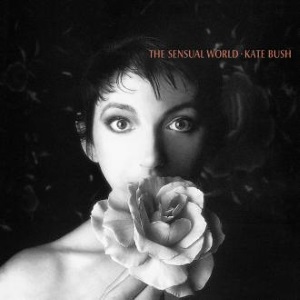
The Sensual World (1989)

This Woman’s Mediocre Work

It brings me great displeasure to say this but I don’t like Kate Bush’s 6th studio LP The Sensual World. This is the only Kate Bush album I’m not keen on (unless you also count Director’s Cut). However, I would think based on the album’s three singles this would be another masterpiece. I’ll begin with the good.

The title track, well it has sensual in the title for a reason. The combination of synthesizers and uillieann pipes creates the most well, sensual sound. Like Wuthering Heights I question if there exists another song like it and if it is one of the reasons why Kate Bush’s work acts like a gateway to a world of high culture. This Woman’s Work is my favourite Kate Bush song, despite this being my least favourite album of hers. This is it; this is the saddest song ever written – the crème de la crème of tear-jerking songs. I can’t listen to this song in a public place or else I’ll well up. Although the song is about having a baby from the father’s perspective, the lyric “Of all the things we should have said that we never said, all the things we should’ve done that we never did” always conjures up thoughts of regret that I have in my life of things I should have done but didn’t; but not necessarily in a depressing manner.

Upon hearing the song Deeper Understanding I could not believe just how ahead of its time it was; a song from 1989 about people not only being addicted but having relationships with computers. I wonder if this song in any way helped inspire the 2013 movie Her; even the music video for the Director’s Cut version in 2011 is reminiscent of Her. By comparison, what could you do on a computer in 1989 that you would be spending hours on it? Is she predicting the invention of the World Wide Web? Likewise, take the lyric “But I was lonely, I was lost, without my little black box, I pick my phone and execute”. Did she just describe an IPhone? Man, screw Nostradamus, Kate Bush is where it’s at. This is one of two Kate Bush songs which speak to me the most, the other being Sat In Your Lap.

The rest of the album is mediocre to average. The Fog, Reaching Out and Never Be Mine; I feel there are great songs in there but these tracks feel incomplete to me. Heads We’re Dancing is a song I find lyrically interesting, involving a story about dancing with Adolf Hitler himself but the rhythm of the song is lacking. Between a Man and a Woman is completely disposable with its generic lyrics and mediocre rhythm but my least favourite song on the album, as well as my least favourite Kate Bush song, in general, is Rocket’s Tail. The choir featured in the song is far too loud, to the point that I feel like saying “Guys can you keep it down, I’m trying to hear Kate sing” and right in the middle of it all is a very obnoxious guitar solo. It pains me to write this review but I guess you can’t win ‘em all.

Hounds Of Love (1985)

Her Undisputed Masterpiece

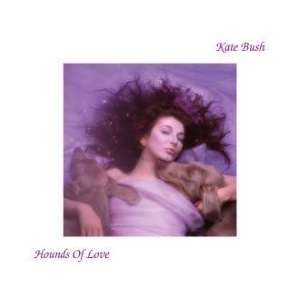
Do you like Kate Bush? I’ve been a big fan ever since the release of her 1978 debut album The Kick Inside. In ’85 Kate released this, Hounds of Love, her most accomplished album. The whole album has a clear crisp sound and a new sheen of consummate professionalism which really gives the songs a big boost, while at the same time it deepens and enriches the meaning of the preceding four albums.

In terms of lyrical craftsmanship, the sheer songwriting, this album hits a new peak of professionalism. Take the lyrics to Cloudbusting, in this song Kate Bush addresses the problem of abusive political authority.

Running Up That Hill is the most moving pop song of the 1980’s, about understanding and commitment. Its universal message crosses all boundaries and instills one with the hope that it’s not too late to better ourselves. It’s impossible in this world to emphasize with ourselves unless we emphasize with our other. It’s an important message, crucial really, and it’s beautifully stated on the album.

It’s hard to choose a favourite among so many great tracks, but I think The Ninth Wave is her undisputed masterpiece; it’s an epic meditation on mysticism. The final song is extremely uplifting, her lyrics are as positive and affirmative as anything as anything I’ve heard in rock.

Take The Big Sky, a great, great song, a personal favourite. A song so catchy, people probably don’t listen to the lyrics, but they should, because it’s not just about the pleasures of pensive daydreaming and the importance of the inner child, but is also a personal statement about the artist herself. Hey Paul…

The Dreaming (1982)

Gimmie, Gimmie, Gimmie!

The Dreaming is a very hard album to get into. I won’t blame you if your initial reaction to this album is “What on God’s green Earth is this?!” There’s no instantly accessible pop hit from the album such as Wuthering Heights or Babooshka. I was in doubt at first that I would ever get into The Dreaming and that I would consider it an album that I would happily come back to listen to again and again. Well after much persistent listening, I now find my aforementioned comments hard to believe. Admittedly I wouldn’t even play any of these songs in front of my relatives; they’re just that weird and would probably turn them off Kate Bush. This is the last Kate Bush album I would recommend for newcomers, despite it being a masterpiece.

Sat In Your Lap is the Kate song I relate to the most, a real “this was written for me” track; a song which deals with humanity’s pursuit of knowledge and the unwillingness to devote the effort required to obtain it. My own further interpretation of the song is the belief that obtaining knowledge will make you happy and give you a high, yet this only leads to eventual dissatisfaction as you see it’s just a foothill for a bigger mountain of knowledge behind it, yet we keep doing it again and again. Talk about story of my life. Whenever I feel like I can’t go on with a task (such as writing this very review), this song helps inspire me to finish it.

There Goes a Tenner is initially off-putting with Kate singing in a cockney accent but the thing which helped me eventually fall in love with it was the moment I deciphered this lyric: “You are Bogart, he is George Raft, that leaves Cagney and me (what about Edward G!)”. While Kate is generally not an angry artist, this is a great album to vent off anger, with the title track, in particular, a song about the destruction of Aboriginal homelands by white Australians in their quest for weapons-grade uranium. Who writes stuff like this?! Kate does! Get Out Of My House (aka the song in which Kate makes donkey sounds) is terrifying, not to mention they sure saved the weirdest song for last. Like many Kate songs, if anyone else did this it would be moronic but because it’s Kate, it works.

The Dreaming is an album which is overlooked by critics and the public but is widely considered among Kate Bush fandom to be her greatest work.  My personal favourite Kate album is either The Dreaming or The Red Shoes. Kate has never made an album more bonkers than this, which unleashes the weirdo in all of us.