We Have Plenty Of Hearsay and Conjecture, Those Are Kinds Of Evidence
***This Review Contains Spoilers***
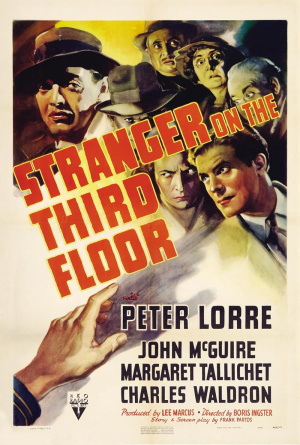
Peter Lorre appeared in several of the most important movies ever made. Most famously, Casablanca, but he also appeared in two movies instrumental to the film noir genre, Fritz Lang’s M and The Maltese Falcon. Then there is Stranger On The Third Floor, a film largely unknown yet often identified as the first film noir. Although it can be hard to identify a year-zero for the genre, with predating films featuring elements of what later became referred to as noir, Stranger On The Third Floor may be the closest a film can be bestowed with such an accolade. However, rather than just being a curio due to its esteemed status, Stranger On The Third Floor is, by its own merits, a great piece of cinematic artistry wrapped up in a thrilling single hour.
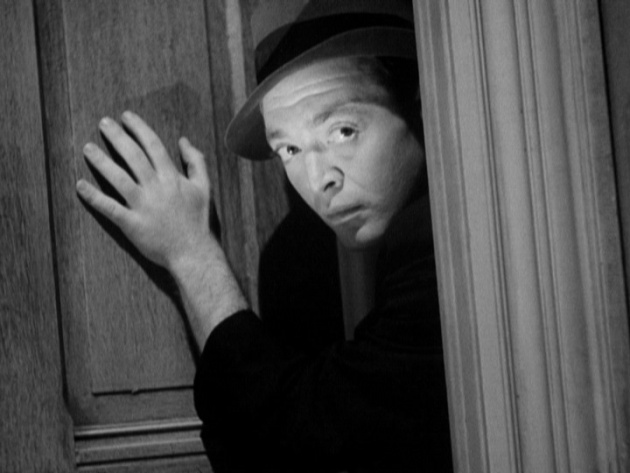
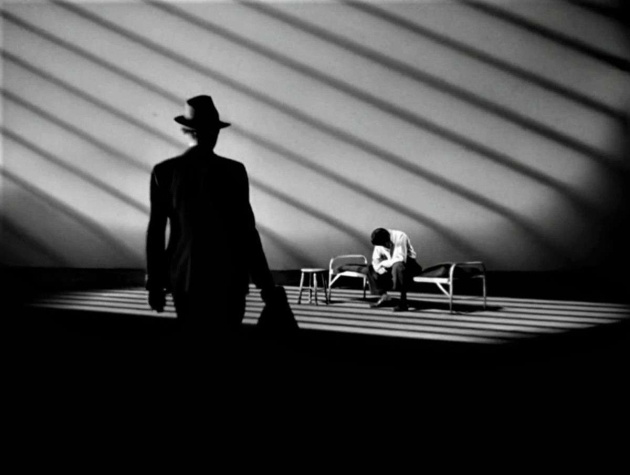
Stranger On The Third Floor contains many elements associated with noir. Deep shadows. Flashbacks. Voice-over narration. Low and diagonal camera angles. An urban jungle. The blinds motif. Late-night coffee shops. Cynical reporters. A falsely accused man, etc. When looking at the crew behind the film, starting with noted art director Van Nest Polglase, along with the European talent of Russian-born director Boris Ingster (reportedly an associate of Russian director Sergei Eisenstein, and with only three directing credits to his name) and Italian-born cinematographer Nicholas Musuraca, it makes sense how this work of German expressionist imagery came to be.
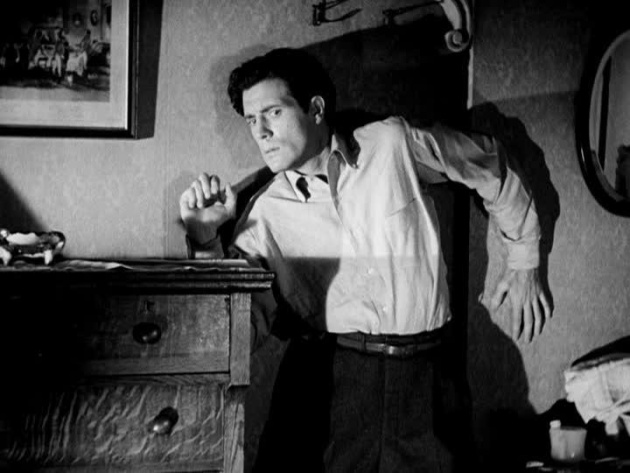
Reporter Mike Ward (John McGuire) is the key witness in a murder trial after observing Joe Briggs (Elisha Cook Jr.) standing over the body of a dead man in a diner. This is instrumental in having Briggs found guilty and sentenced to the chair. For Mike, on the other hand, it gets him a big promotion at work and a story on the front page of his paper – “Star Reporter is Key Witness In Murder Case”. Mike isn’t the hero as seen in many Hollywood films at the time. He is not driven to do the right thing but rather acting in his own self-interest and to protect himself. He does not have much of a guilty conscience over his testimony sending a man to death, but instead, he is worried that his past actions will result in him being implicated in the murder. While John McGuire is a footnote in Hollywood history, his voiceover delivery is unmistakably noir with its thoughtful yet flat tone (his overthinking about his words being taken out of context is relatable to observe). Mike’s delirium-soaked nightmare sequence is the film’s crown jewel, proving it refuses to be confined by its B-movie budget. The sequence is full of unforgettable, surreal images and moments of hammy acting from Mike’s imagined arrest to his trial and eventual execution on the electric chair.
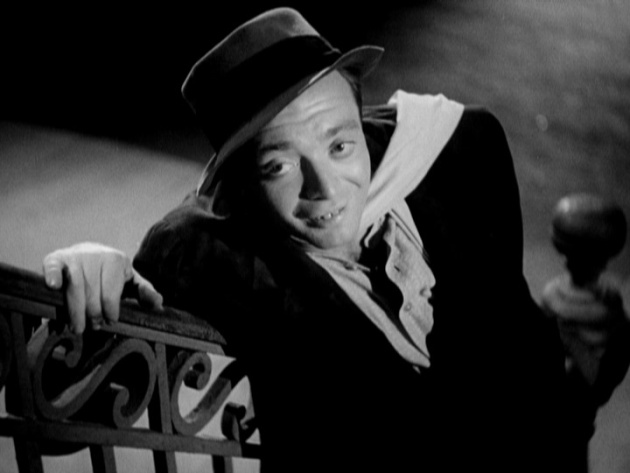
Despite being top billed, Peter Lorre only appears sparingly as the titular character. His role in the film is not too dissimilar to M, in which he lurks in the background before making a splash in the film’s climax. Whether or not this was intentional remains to be seen, as the story goes that Lorre’s involvement and limited screen time in the film came about as he owed RKO two more days in his contract. Lorre appears incredibly thin in Stranger On The Third Floor (especially compared to the more pudgy Lorre of earlier films), while the visible gaps in his teeth make him all the more unnerving. Likewise, his character is repeatedly seen throwing a scarf over his shoulder, a memorable little motif which does humanise him somewhat. Elisha Cook Jr., on the other hand, was 37 years old in Stranger On The Third Floor, yet he looks like a teenager (which the movie itself comments upon – “he looks like a kid”). Upon hearing his guilty sentence, the innocent, wide-eyed, aw-shucks Cook is hair-raisingly brilliant as his echoing voice repeatedly utters “I didn’t kill him!”. The following year, both Cook and Lorre would star in The Maltese Falcon.
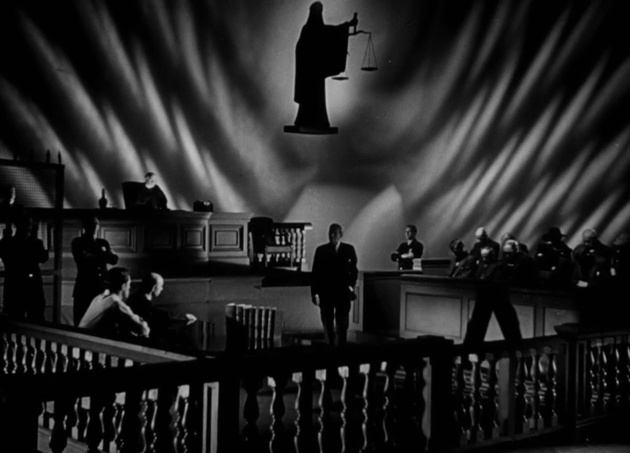
Mike and his fiancée Jane (Margaret Tallichet) are not entirely likeable characters. In the opening scene, Jane is hogging a spare seat in a busy diner to the open dismay of other customers, but that’s on the low end compared to Mike. He is seen during the film having a very confrontational relationship with both his landlady and his kind and elderly next-door neighbour (Charles Halton). He even goes as far as grabbing the old man by his bathrobe and threatening him, not to mention Jane herself sees him doing this and chooses to remain with him. Although it makes sense that the film has an unlikable protagonist since the film has a cynical outlook on his profession, questioning the morality of journalists profiting off crime. None of the reporters in the film are portrayed with endowing much sense of journalistic responsibility (“How do you know he did it?, Who cares, what a story, what a story!”). Likewise, in classic noir fashion, Stranger On The Third Floor is also critical of that other pillar of American society, the justice system. During the courtroom sequence, Joe Briggs is being tried on circumstantial evidence, the judge is clearly uninterested in the case, the lawyer on behalf of the accused is uninquisitive and there is even a juror who treats himself to a nap during proceedings.
Stranger On The Third Floor concludes with Briggs now a free man and working as a cabbie, offering Mike and Jane a taxi ride on the house — a tidy resolution that feels almost suspicious in its optimism, although it could be argued that it is intentionally ironic. After all, Briggs is only free as a by-product of Mike’s self-interest and not out of any heroic deeds. The truth did not triumph; justice was merely accidental. Welcome to the shady, morally incongruent world of film noir.



 Sat In Your Lap