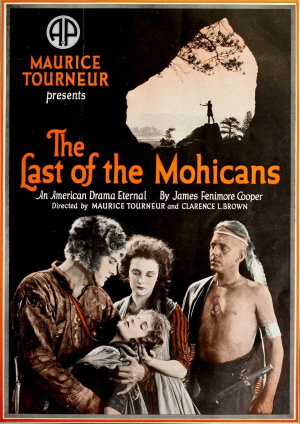
Since most Western films take place within the time period of 1830 – 1890, it’s interesting to encounter examples set earlier in the history of the North American frontier, with The Last of the Mohicans (based on the novel of the same name by James Fenimore Cooper) being set during the French and Indian War (1754-1763). Although shot at San Bernardino National Forest and Yosemite National Park (both in California), the story itself takes place in modern-day Upstate New York. So can a film set that far east in the modern-day USA still classify as a western? I digress…
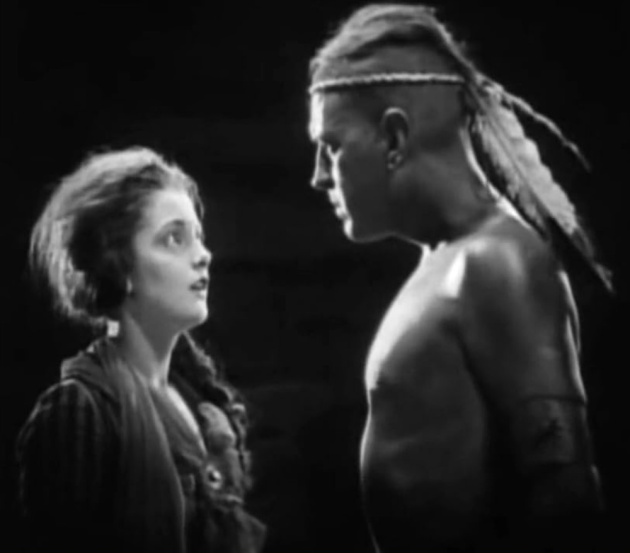
“The pale faces are our friends. Go to Fort Yonder and tell them of the danger that threatens.” The British stronghold of Fort Yonder will soon be under attack by French forces; thus, the women and children are to be evacuated to safer Fort Edward, with two of these women being Cora Munro (Barbara Bedford) and her younger sister Alice (Lillian Hall). The main emotional beat in The Last of the Mohicans is the forbidden interracial love between Cora and the Mohican warrior Uncas (Alan Roscoe). “Surely among his own people he is a prince”, utters Cora on her first sight of the striking warrior. The performances of the two stars are not dramatic; however, the film’s use of the classic Kuleshov effect helps create an eroticism which alongside their chemistry, as well as simply having a woman with a shirtless, well-toned man within a confined space, you can really feel the sexual tension between the two. Perhaps this chemistry however was not manufactured, as Bedford and Roscoe would go on to get married (twice, no less).
In stark contrast, however, to the princely, male beauty that is Uncas, is Cora’s fiancé, the cowardly Captain Randloph (George Hackathorne), who, memorably in one scene, tries to kiss Cora’s hand in front of Uncas only to get friend-zoned. Likewise, any Romeo & Juliet-style love story isn’t complete without the classic male love interest having a secret meeting at the lady’s window scene. Cora herself, however, is not denied her own heroism, sacrificing herself (on two occasions) to become the squaw of the villainous Magua in order to spare her sister.
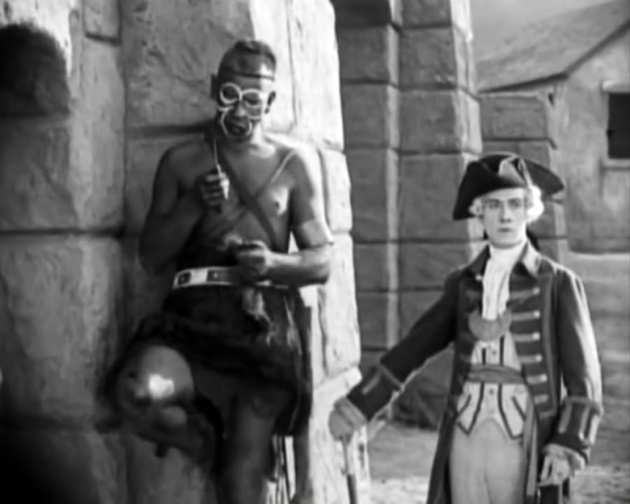
The ever larger-than-life Wallace Beery brings gravitas to the role of Magua, with his intimidating presence as he stands around flipping that knife. In the 1930s Beery became known for his pudgy appearance and lovable lug persona; however, this earlier Beery actually had an athletic build. Magua is introduced as “an Indian runner in service of the British”, but soon reveals his true colours, as a sympathiser for the French and the rival Huron tribe. The battle sequence in which Magua and the Hurons assault the British fort is rather D.W. Griffith-like. It also features the nightmarish image, in which one of the Huron men climbs into a broken stagecoach to pursue a woman and her baby. Through two pov shots, the Huron crawls towards the camera with his protruding eyes and knife in his mouth. He then grabs the woman’s baby from her arms and throws it into the air (to which I presume the baby meets its end). The Last of the Mohicans observes the Native Americans from a dignified perspective, with heroes and traitors being equally distributed between both the whites and the natives.
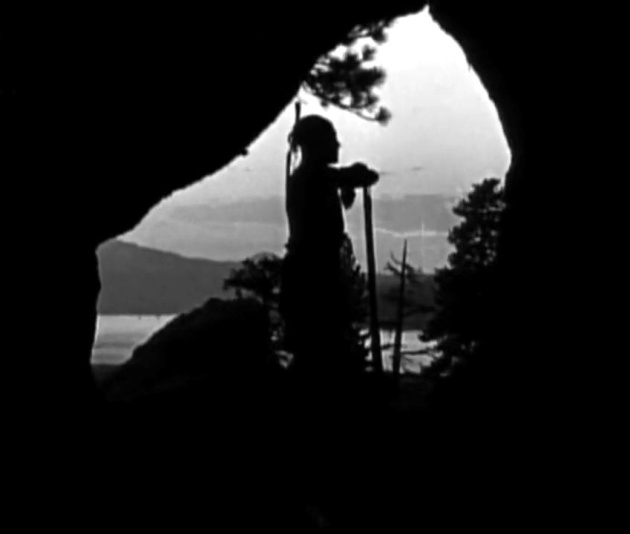
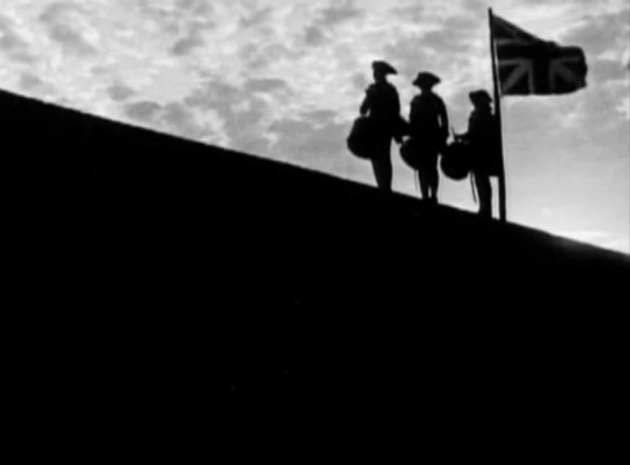
The Last of the Mohicans is a handsome production, although it’s not clear who directed which parts of the film between the two directors, Maurice Tourneur and Clarence Brown. Regardless, there are many stunning scenery shots captured in glorious depth of field, from the sun rising over a mountain to the striking use of silhouetted soldiers in trench coats or Indians against the sky. The film is also particularly keen on using cave entrances as a visual framing device, even capturing the rays of the sun entering the caves. Sadly, as of writing this review, the only copies of The Last of the Mohicans in circulation are beat-up, scratchy prints, and none accompanied by particularly great music scores. Hopefully, in the future, the film will get the boutique treatment.
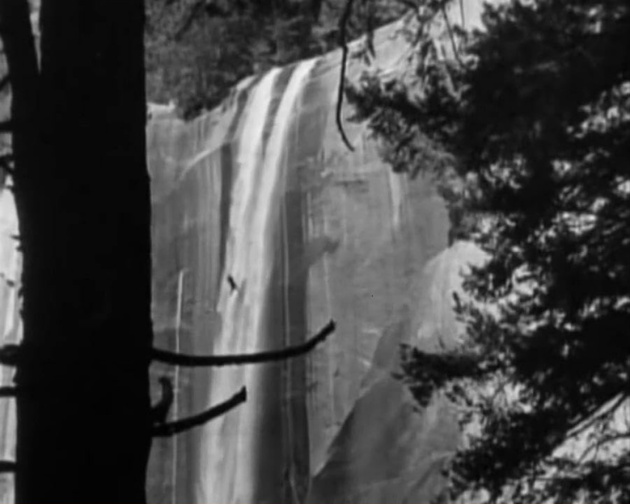
The film’s climax, with the untimely death of Cora and the subsequent final battle between Magua and Uncas, is exhilarating stuff – silent film melodrama at its finest. Taking place through a series of medium shots and long shots as the two men fight amongst epic vistas of towering cliff sides and raging waterfalls to metaphorically showcase the lust and the passion. The fight between the two warriors is a genuine brawl, featuring some impressive choreography between stuntmen topped with some intense tumbling down of steep hills. In the end, however, no one wins, with Magua himself succumbing to a fatal gunshot as his body falls down a waterfall. Get ready to see this trope repeated countless times for the next century.
Remove The Stone Of Shame… Attach The Stone Of Triumph!
***This Review Contains Spoilers***
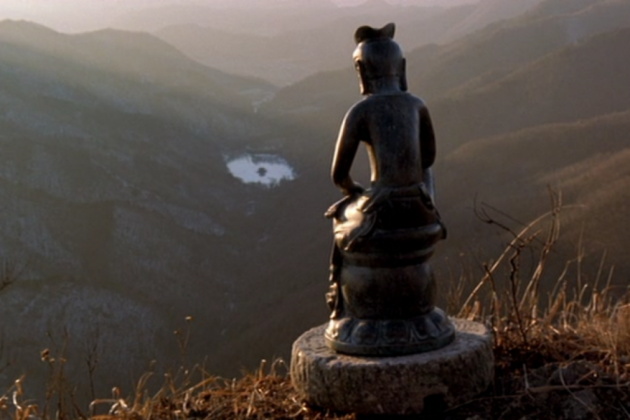
It is a cliché to describe a film as poetic, but Spring, Summer, Fall, Winter…and Spring is one instance in which I will do just that, as it is one of the most metaphorically and symbolically dense films I’ve ever seen. Although the picture is deeply rooted in Buddhist theology, the themes of the film transcend this into the realm of shared human experiences with concepts basic enough for anyone to understand. The most prominent of these (being baked right into its structure) is the cycle of life, which, as the title suggests, sees the movie tell its story over 5 vignettes, each taking place years apart and during one of the seasons of the year, before coming full circle once again. Likewise, the film is grounded in symbolising the significance of the number 4, from the aforementioned four seasons to the prominence of the four elements (earth, air, fire and water) to the most theologically significant for this picture, the Four Noble Truths in Buddhism. Although director Kim Ki-duk himself was a Christian, Spring, Summer, Fall, Winter…and Spring does feel like Everything You Always Wanted To Know About Buddhist Theology, *But Were Afraid To Ask.
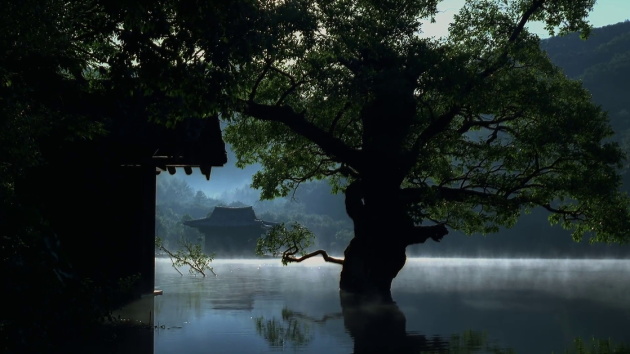
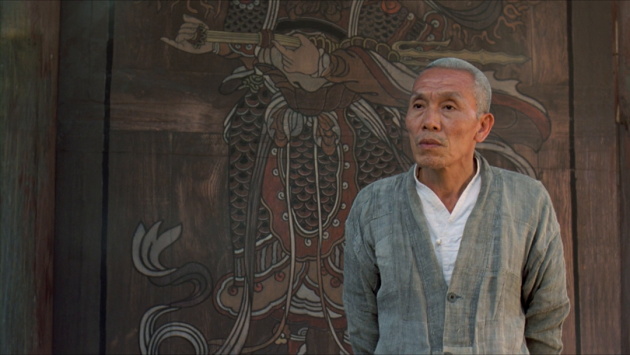
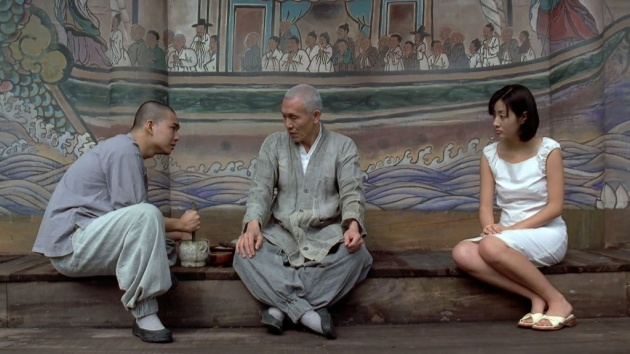
Spring, Summer… takes place on a floating Buddhist hermitage on a lake surrounded by forests and mountains, in which an old unnamed monk (Oh Yeong-su) and his child apprentice (Jong-ho Kim) live out their days. The location itself is the Jusanji Pond in Cheongsong County, North Gyeongsang Province in South Korea, an artificial lake, although one with a mystical aura (reportedly, the film’s production company had to convince the South Korean Ministry of Environment through six months of negotiations to film at the location). Spring, Summer… begins as a pair of wooden doors on the lake open (acting like a pair of stage curtains), revealing this near-mythical world with its thick morning mist and striking reflections in the water (similar to the setting Ki-duk had previously explored in his film The Isle). Many of the film’s panoramic views of the lake are genuinely breathtaking, from the deep, intense reds and oranges of fall to the snow- and ice-covered landscapes of winter.
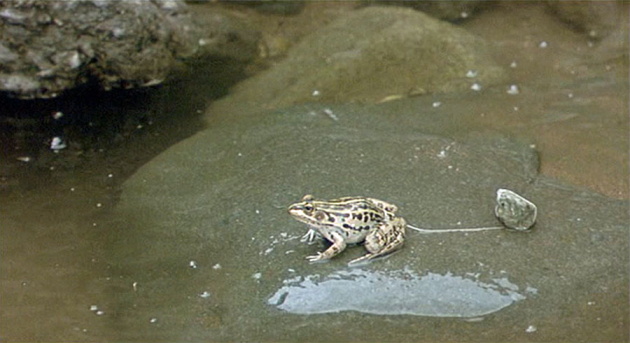
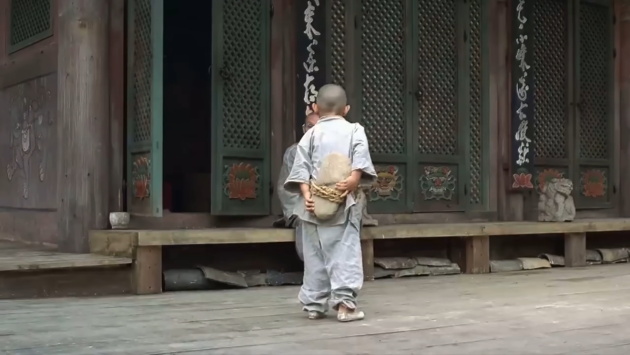
If media has taught me anything, it’s that if I travel into the wilderness of a far eastern land, I will meet a wise old man who will bestow me knowledge and wisdom far beyond my current puny understanding (the older monk in Spring, Summer… does have his share of Master Yoda-like lines; “Lust awakens the desire to possess. And that awakens the intent to murder”). During the first of the film’s vignettes, that taking place during spring, the older Monk delivers his first lesson. The child monk in his spare time finds pleasure in tying small animals to rocks and laughing so innocently at their pain (which itself is unsettling to watch). The older monk observes his actions and thus ties a large rock onto the boy’s back while he is sleeping, so that he may now carry a literal burden of guilt on his back. The older monk tells him he will only remove the rock once he has removed the rocks from the animals he tied up.
Kim Ki-duk’s films are controversial for their on-screen depictions of animal cruelty. In Spring, Summer…, the torture of a frog, fish and snake is captured on screen. While I’m not going to pretend I’m bothered by this on a personal level, I will offer some mild criticism, as there is some clear hypocrisy on the part of the older monk (and the director too), as later in the film, the older monk performs calligraphy with a cat’s tail, to which the cat itself is clearly in pain. This is one aspect which I do find uncomfortable to watch, but there is also the fact that it comes after the older monk was criticising the boy for tying up the animals. Regardless, this doesn’t undo the power of the penance, as during the later winter vignette, the younger monk (now a man) chooses to undergo the same punishment.
Concurrently, when the child monk takes the boat by himself across the lake to abuse the animals, the older monk later appears behind him on land to observe his behaviour. How did the older monk make his way to land, completely dry, when they only have one boat? The movie gives a potential answer to this, as during the fall vignette, when the younger monk, now an adult man, is being taken away by the authorities, the rowboat will not move at first despite the police officer attempting to row. It appears the older monk may have a supernatural pull on the boat, which may also offer an explanation as to who is opening the gates at the beginning of each vignette (with the exception of the fall vignette opening, in which it transitions to reveal the older monk is the one opening the gate). Spring, Summer… is an example of a film in which its lack of explanation enhances the dreamlike nature. Why is a young boy being raised by an older monk on a floating hermitage in the middle of nowhere? One possible explanation, which is supported by the film’s latter portion, is based on reported real-life cases of babies in the past being abandoned at churches and monasteries; however, the film doesn’t feel incomplete without these answers. Even the film’s place in time is left ambiguous, with the dress of the outsiders who visit the hermitage being only one of the few indications that the film takes place throughout the late 20th/early 21st century.
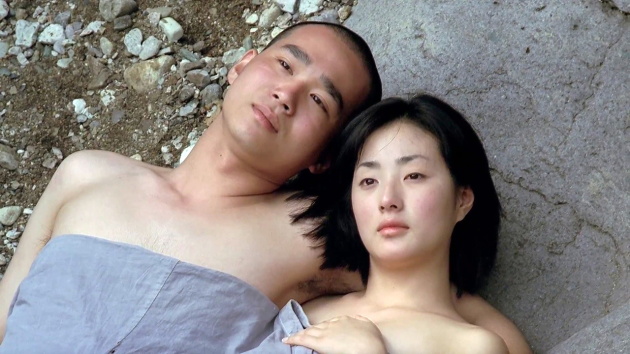
During the summer vignette, with the younger monk now a teenager, an unnamed young girl (Yeo-jin Ha) arrives at the hermitage to be cured of her illness. What is the illness? This is never explained. Only some vague comments, such as the girl’s mother (Kim Jeong-yeong) commenting to the boy, “You look so very healthy” and “This tree is over 300 years old. You will grow as healthy as this tree.” Assuming this is the younger monk’s first interaction with the opposite sex and that he would otherwise be living a life of celibacy, he develops a primal yet innocent interest in her, touching her body and not understanding boundaries. Primal is the key word here, as the relationship they develop is not a romantic one, but one of pure lust, in which the two eventually do make love. It is this portion of the film which brings to mind the Lady Eve in The Garden of Eden, as the girl’s presence upsets the natural order of things at the lake. For example, inside the hermitage, there is a door leading into a bedroom with no walls attached. My initial reaction was to find this comical, as it is a well-established visual gag in Western animation to feature a freestanding doorframe with no walls attached, yet characters still obey the “rules” of the doorway (another aspect which enhances the dreamlike nature of the film). However, with the presence of the girl, the younger monk comes to disregard the wall-less doorway; an abandonment of the restrictions governing his life.
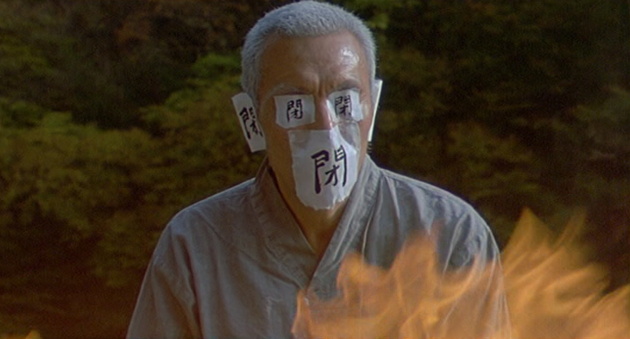
Once the older monk finds the couple in the aftermath of another love-making session, he determines that the girl has been cured. He declares, “Then it was the right medicine”, although it’s not clear exactly what he is referring to. The younger monk, however, has been infected by modernity, as he leaves the hermitage to go and live a regular life, only to return in the fall vignette. The boy, now a devastated and unkempt man, returns to the lake on the run from the authorities after murdering his wife for adultery (it is not made clear, however, if the woman he murdered was the ill girl from summer). As penance for his crimes, the older monk has the man carve and then paint an extensive array of Chinese characters on wood. This does lead to one of the film’s more oddly endearing moments, in which the two plainclothes police officers sent to the hermitage to arrest the man (who had been disrespecting the sanctity of the site with their littering and gun target practice) end up joining in the calligraphy and take a genuine interest in it. Once the man has finally been taken away by the officers, the older monk chooses to end it all and commits self-immolation, as his eyes, ears and mouth are covered by the Chinese character for shut or close (閉). Why does he do it? It’s up to you, my dear friend, the viewer, to make your own interpretation. Regardless, the powerful and harrowing imagery is apt to showcase the closing of the reproductive cycle that autumn represents.
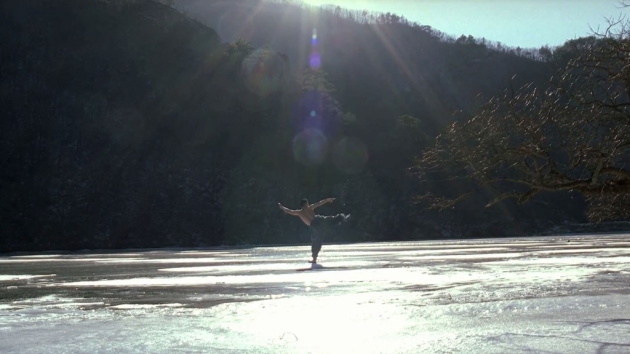
In the winter vignette, the man, now older, returns to the abandoned and run-down hermitage to revitalise it. For the remainder of the film, the man is played by director Kim Ki-duk himself. According to the audio commentary on the Umbrella Blu-ray release, Ki-duk’s self-casting was a last-minute replacement, yet he performs the role remarkably well, especially with the physicality he displays. Many of his scenes involve him shirtless in sub-zero temperatures as he performs penance by once again carrying a giant rock on his back and performing a Korean Buddhist martial art known as Sunmudo (complete with some impressive mid-air kicks).
During the winter rebuilding of the hermitage, a woman arrives with a baby to abandon, with such shame that she keeps her face covered (only for herself to fall into a hole in the ice). The man, now the new elder monk, must raise the child like his predecessor raised him. Much of the action present within Spring, Summer… may lead many viewers to find it a very cynical film on the human condition. Delight in torturing other living things, corruption of that which was pure, murder, disrespect for the sacred, abandonment of responsibility. During the film’s final vignette, …and Spring, the new young monk (played by the same young actor as the first young monk) is once again finding joy in torturing animals, this time by putting rocks in the mouth of a fish and a frog. That said, the film in no way leaves me feeling cynical. To come full circle myself to the Four Truths of Buddhism:
Spring (Childhood and Ignorance)
Summer (Adolescence and Desire)
Fall (Adulthood and Anguish)
Winter (Maturity and the Path)
…and Spring (Rebirth)
I’m by no means a theologian (“mention something out of a Charlton Heston movie and suddenly everybody is a theology scholar”), and while Spring, Summer, Fall, Winter…and Spring in many ways shows the cynical and destructive side of humanity, its spiritual structure shows that existence remains beautiful despite this. It is a cliché to describe a film as poetic, but Spring, Summer, Fall, Winter…and Spring is one instance in which I will do just that, as it is one of the most metaphorically and symbolically dense films I’ve ever seen…
*The following review contains descriptions of suicide, torture and animal cruelty.
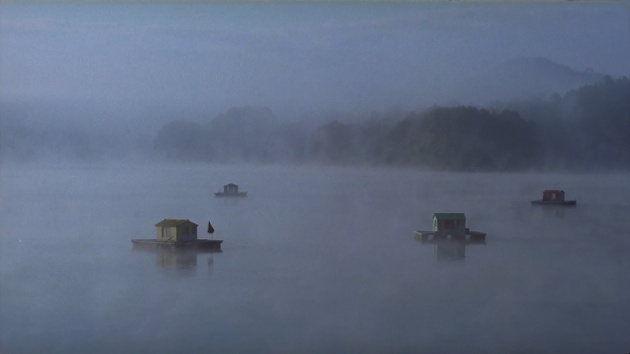
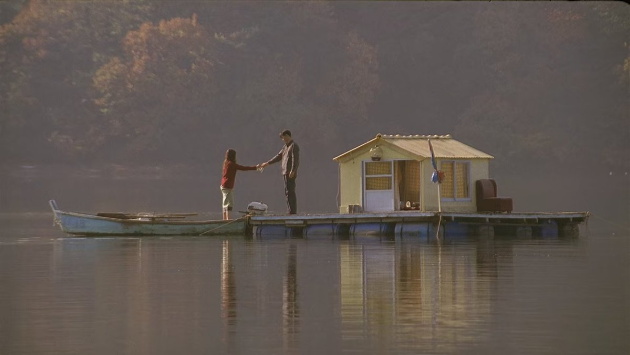
The Isle features one of the more unique film settings I’ve ever encountered, taking place at a lake resort full of little floating platforms with huts placed atop, in which patrons rest, sleep and (and most significantly for this film) fish. I do find myself questioning the logic and safety implications of such a setup, yet it turns out such resorts do exist in South Korea known as Jwadae Naksi (좌대낚시), literally “platform fishing.” Information regarding these resorts is very limited in English (googling the romanised name yields no results), although this international obscurity makes the setting of The Isle all the more mysterious and dream-like (with director Kim Ki-duk employing a similar setting in his later film Spring, Summer, Autumn, Winter…and Spring). With this secluded setting and heavy emphasis on the surrounding nature, The Isle captures the introverted desire to be left alone. The opening scenes featuring the resort covered in a blanket of morning fog, with the aquatic-sounding music score, capture a sense of peace and tranquillity.
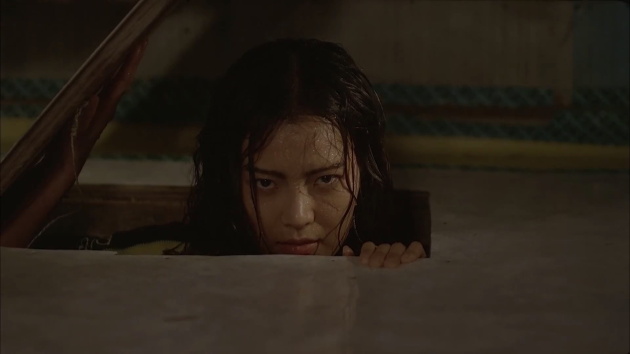
The resort in The Isle is operated by a mute, nameless woman (Suh Jung), although her name is credited as Hee-jin. The resort is very much her domain, in which she facilitates the men staying there with prostitutes and offers her own sexual services. Like other characters in Kim Ki-duk’s films, Hee-jin utters no dialogue throughout the entire film, yet so much is conveyed without it with her alluring yet threatening presence (as memorably captured on the film’s poster). There is a strong mythological element to her character, as she is comparable to the archetype of a nymph or the mould of a mermaid. Her attire of a long skirt mirrors that of a mermaid’s fin, while her seemingly supernatural ability to get out of the water and into a boat so fast or the recreation of the Captain Willard head rise out of the water echoes that of a mermaid (and with the water being her domain, this neatly ties alongside the symbolism of water as a representation of the feminine). Moreover, her role echoes that of Lady Wakasa in Ugetsu (1953) or the titular character in Woman In The Dunnes (1964), keeping the men as prisoners in her domain (early in the film, she even kills one of her patrons after he openly disrespects her following sexual services).
Hee-jin, however, does develop sympathy (and eventually falls for) one of her customers, a depressed, suicidal fugitive named Hyun-shik (Kim Yu-seok), who takes refuge at the resort to evade the authorities following a murder. He is, remarkably, the closest thing the resort has to a sympathetic male character (as sympathetic as you can get for someone who has murdered and attempted rape), compared to the other men who are all outright abusive and unpleasant. However, I have to say the film’s male lead is not terribly interesting (lacking the characterisation of his female co-star), and he does weaken the film overall. Although his character may be uninteresting, what he inflicts upon himself is anything but.
According to Roger Ebert in his review for The Isle, audience members gasped and walked out during the film’s screening at the Sundance Film Festival in 2001. The scene in question involves Hyun-shik quickly devising an impromptu way to kill himself (as he lost his gun earlier in a botched suicide attempt) when he sees that police have arrived at the resort to arrest him. So what is this way he is going to unalive himself? He gets a string of fishhooks, which he places inside his mouth and attempts to swallow, causing him to bleed profusely out of his mouth (possibly an ineffective way to kill yourself, but I guess when you’re about to be arrested by the police, you stop thinking rationally).
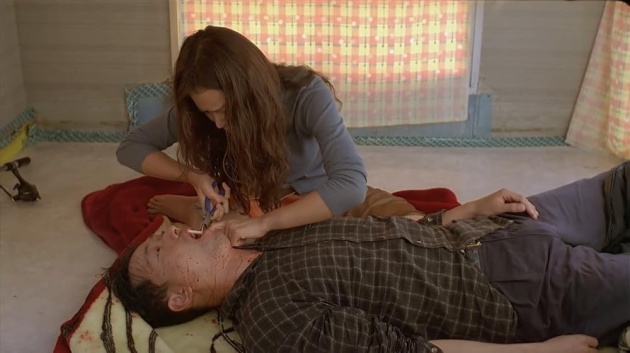
I’ve never been fishing, but I have handled hooks in the past, and they are something I feel squeamish about even touching, and I know I’m not alone in that thought, which I feel really makes this scene so difficult to watch without looking away from the screen. But it doesn’t end there (far from it). As Hee-jin arrives in the hut before the police, she hides Hyun-shik under the platform, dangling from a rod with the hooks still in his mouth. After the police leave, she then reels him back up with the rod like a literal fish (I can’t possibly think of a more graphic metaphor for the power dynamics between a man and woman). However, if this is not enough on-screen torture for you, Hee-jin later ups the ante with her own fishhook suicide attempt, only this time placing the hooks inside her vagina (bringing new meaning to the word hooker, amirite? *ba dum tiss!).
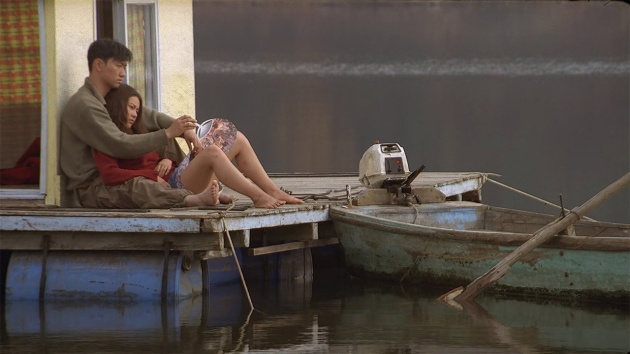
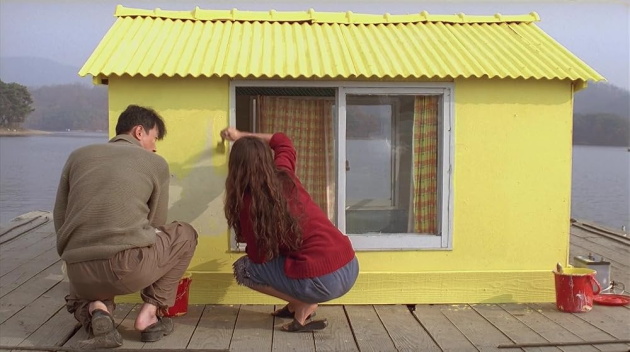
Following both of these suicide attempts, the opposite person removes the hooks from their respective body parts with pliers as they recover from the pain. I find both of these moments oddly satisfying to watch, as they represent a gradual relief after having endured the most unimaginable pain. Hee-jin even makes love to Hyun-shik after his own attempt as a way of easing the pain, which is soon followed by the ultimate consummation of their relationship in the film’s most oddly endearing scene of domesticity, as the two paint the floating hut bright yellow.
The Isle also includes several instances of animal cruelty. This includes the on-screen death of a frog, the electrocution of a fish and the slaughter of a fish (which is then returned to the lake in its mutilated form). Any Western perceptions on the reverence of certain animals over others are reflected in the fact that the Australian release I watched does feature one piece of censorship at 35:06 in which there is a visible cut in which a dog is pulled by the leash onto a boat, whereas the rest of the animal cruelty remained in this edition of the film. I hear many accounts that Kim Ki-Duk is not well regarded in his home country or among the South Korean filmmaking elite. I’d imagine this is due in part to the politically incorrect nature of his work, from the aforementioned treatment of animals to female characters who exist outside the progressive 21st-century norm (alongside accusations of assault made against the director). His work in my ways can be hard to swallow but is worth digesting, and that is a factor in why I find him to be the Korean filmmaker I’m most fascinated by.
I bestow Jacques Deray’s The Swimming Pool (La Piscine) with the oddly specific accolade of being the 2nd best 1960s swimming pool-centric movie. The other film of this double feature I am referring to is Frank Perry’s The Swimmer (1968). Both movies not only share aesthetic similarities but also explore a seemingly idyllic existence that isn’t quite what it seems, with the use of swimming pools as a metaphor. A pool creates a refracted, warped image, and it’s only when seeing through the surface that things become clear.
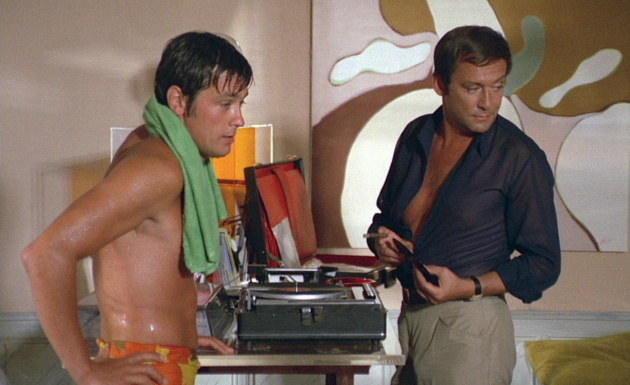
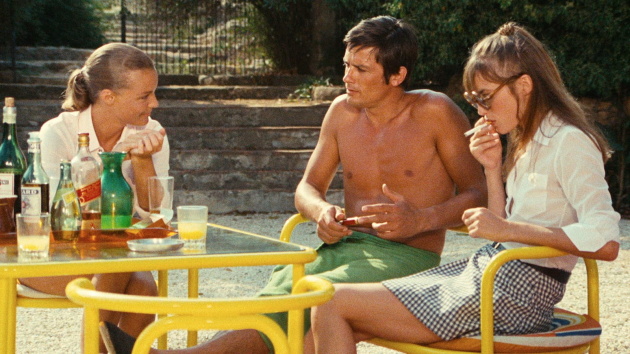
The majority of The Swimming Pool takes place within the confines of a holiday villa in the French Riviera town of Saint-Tropez (which I am reliably informed is pronounced san troh-pay for us word ending consonant pronouncing English speakers). This setting makes The Swimming Pool an oxymoron of a film in that it is a thriller, yet a relaxing one at that. I find myself watching on in jealous enchantment as the sexy, shirtless and effortlessly cool Alain Delon and his glamorous, bronzed-fleshed co-star Romy Schneider flex their sculpted physiques as they relax and make love in the nostalgic, rustic, sun-soaked atmosphere (as 60’s lounge music along with the film’s repeated song of choice Ask Yourself Why sung by Ruth Price echo in the background). Jean-Paul Leroy (Delon) and his girlfriend of two years, Marianne (Schneider), are madly infatuated with each other as they intensely make out (back scratching and all) and engage in light-hearted power plays and one-upmanship. However, there is soon trouble in paradise with the unexpected arrival of the couple’s old friend Harry Lannier (Maurice Ronet).
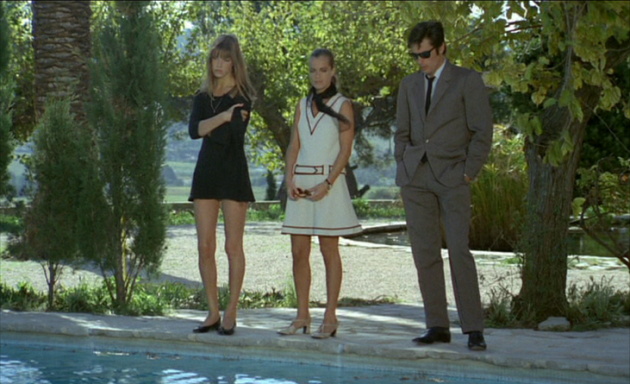
Harry is a figure who gives off mid-life crisis vibes; a cringeworthy dad with his prized sports car and top shirt buttons always undone. Harry, however, merely goes from being a figure of cringe to one of great suspicion from the accompaniment of Penelope (Jane Birkin), a girl he claims to be his daughter. Harry speaks of his daughter and interacts with her in a very intimate manner, commenting to others that she is pretty and telling her that her skin is smooth and that she smells nice. Both Jean-Paul and Marianne are surprised to discover their old friend even has a daughter. Penelope is apprehensive to talk about her background when Marianne asks her questions, while Harry simply tells Jean-Paul, “Her mother is simply an Englishwoman, you don’t know her”. Even the very scenario of a father and daughter going on a European road trip together is an unlikely one, with the film never making it clear if Harry is her Daddy or her “daddy”.
Throughout the film, Penelope wears short dresses and skirts (even to a funeral), although regardless of whether she is trying to provoke, she ignites a lust within a youth-chasing Jean-Paul. Even from their first meeting, Jean-Paul grabs her by the hand and asks, “How old are you?”, to which she responds mildly nervously, “Eighteen”. This eventually culminates in the two making love and, by extension, the dissolution of his relationship with Marianne. Delon and Schneider were real-life ex-fiancés, with the word through the grapevine being that he continued to be infatuated with her, with Delon being instrumental in getting Schneider cast in the film. Regardless, I’m sure their real-life background contributed to their on-screen chemistry and to the emotional weight of the gradual, undramatic breakdown of a relationship and the quiet acceptance of such within the film’s very slow build approach.
Harry brings about Jean-Paul’s gradual emasculation, both through Harry’s subtle flirting with Marianne but more so through his low-key taunting of Jean-Paul in relation to his failed and abandoned career as a writer. Jean-Paul now works for an ad agency while Harry has no issue showing off the expected-to-be hit music records he is producing (he even has to rub it in his face that Mariane herself is a successful writer). After several days, the once cool Delon is now grumpy and carrying a bad posture. The glamorous film star now comes off as a loser. It is this aspect of The Swimming Pool which makes the film strangely comforting, that the rich and beautiful, our betters, are just as miserable as John Doe. On the surface, Jean-Paul has an incredible life, from a gorgeous girlfriend to a high-paying job that permits him to enjoy month-long summer holidays. Deep down, however, he is unhappy as he gave up on his ambitions of becoming a professional writer (with it even being revealed that he has attempted suicide in the past). Just like how social media in the modern day shows other people’s seemingly perfect and amazing lives, the swimming pool offers a distorted reflection that hides what lies beneath.
On a more humorous observation, The Swimming Pool showcases the dangers that arise when close friends start living with each other and/or spend prolonged periods of time together when travelling. The Swimming Pool takes it to the extreme, with the outcome being murder, as the tension between Harry and Jean-Paul reaches its boiling point (both Delon and Ronet had previously appeared alongside each other in Purple Noon (1960), to which both characters see a similar fate). The film’s final act delves into Columbo-like territory, as an inspector (Paul Crauchet), questions Jean-Paul and Marianne about the irregularities in the investigation of Harry’s death. These being Harry wearing a non-waterproof watch when he was found in the pool (which is itself foreshadowed earlier in the film when Harry asks for his watch immediately after coming out of the pool), and perhaps the biggest smoking gun, the clean, perspiration-free clothes lying next to the pool (like someone had taken clean clothes and just put them next to the pool, hmmm). It is this final act in which the picture increases the suspense as the possibility of Jean-Paul being outwitted by the inspector feels dangerously close. Was it an irrational decision for Jean-Paul to remove the clothes from Harry’s corpse and lay clean ones next to the pool, or should he have just left Harry as he was? I guess when you’ve just committed murder in a fit of jealous rage, you cease to think rationally.
During Jean-Paul and Harry’s final confrontation by the pool, both men are dressed in corresponding white tops and blue jeans. The two look like mirror images of each other, a metaphor that Jean-Paul’s interest in Penelope is partly an expression of Harry’s taboo desire for his own daughter. Likewise, when Jean-Paul is dunking Harry beneath the water, it echoes the myth of Narcissus, in which a young mortal, in love with his own beauty, drowns while trying to possess his reflection. Just like The Swimmer before it, The Swimming Pool takes its setting to its ultimate metaphorical height. The pool only reveals its true depth once you look beneath the surface.
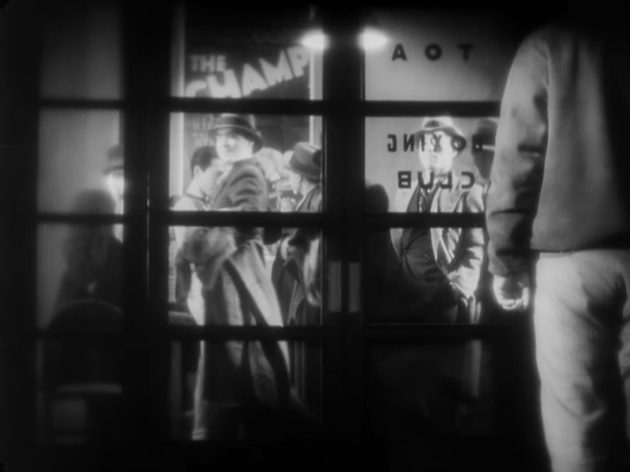
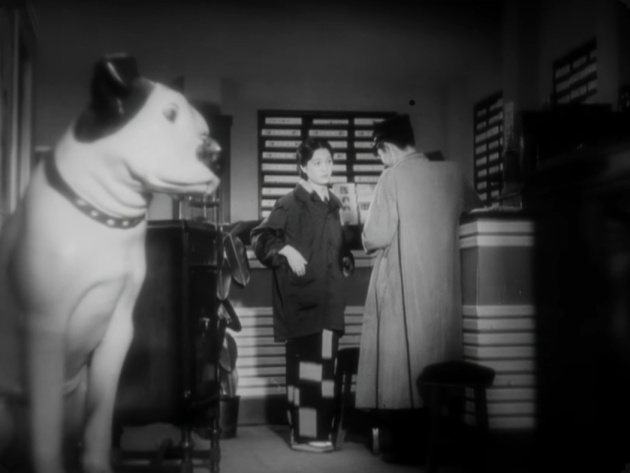
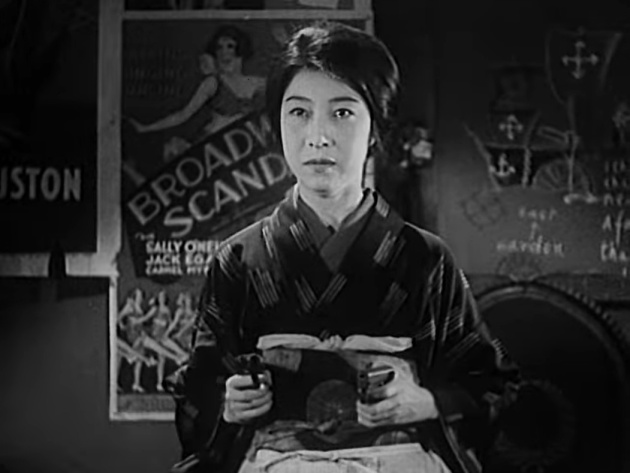
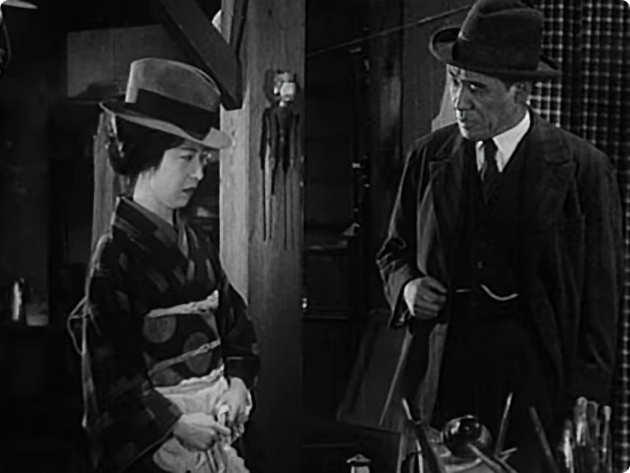
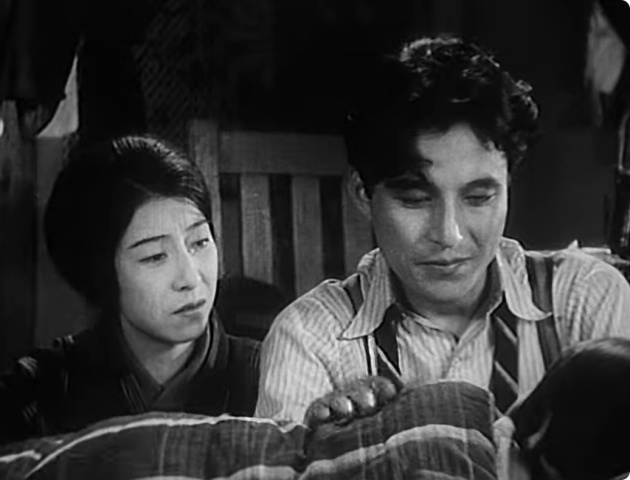
Dragnet Girl (非常線の女, Hijōsen no Onna) was Yasujiro Ozu’s final foray into the gangster genre, and appropriately so, as the picture is deeply embellished in not only the aesthetics of the genre, but also the tropes. Dragnet Girl captures the pulpy world of James Cagney and Edward G. Robinson, but unlike the American pictures of the time, it is a silent film. It is this, alongside the additional combination of German expressionism and traditional Japanese iconography, which creates a unique hybrid of a film. By this point in his filmography, those famous Ozu still frames are well in use, and needless to say, the man knows how to compose a shot that sticks in your mind long after watching (with Dragnet Girl in particular being very keen on layered, deep focus shots looking through glass).
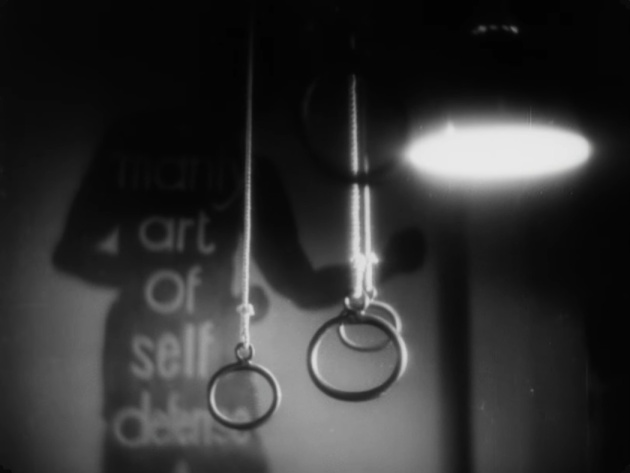
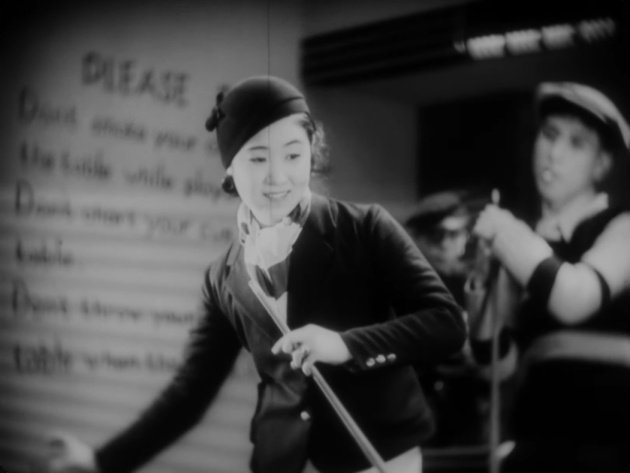
One of the film’s major recurring motifs is the striking image of several dangling, gymnastic rings with the silhouette of a boxer adorning the wall and containing the words (in English), “The manly art of self-defence”. This is one of several examples in the film showcasing the Japanese use of English as a cosmopolitan signifier. Later in the film, a pool hall is showcased, in which the rules of the game are printed on the wall in large English text (as well as the early Ozu motif of prominently featuring Hollywood movie posters in the background). In a more subtle use of English as a cosmopolitan signifier, the office featured in the film has an array of typists working on typewriters; however, there were no Japanese-language typewriters akin to the standard QWERTY Western typewriter in 1933 (rather, Japanese typewriters of the time were large, cumbersome machines), suggesting that this company provides translation services.
Correspondingly, although Dragnet Girl is a Japanese gangster film, the traditional Japanese gangster of the Yakuza are nowhere to be seen. Rather, Dragnet Girl focuses on a subculture known as Mobo (Modern Boy) and Moga (Modern Girl), a youth movement which rejected traditional societal values and embraced Westernised clothing, jazz music, and a liberated, urban lifestyle (prevalent during Japan’s Taishō and early Shōwa periods). Likewise, the plot of Dragnet Girl is built on tropes commonly seen in various Hollywood gangster pictures. Kazuko (Sumiko Mizukubo) becomes concerned that her younger brother Hiroshi (Kōji Mitsui) is skipping school and hanging out with local gangsters. To combat this, she approaches head gangster Joji (Joji Oka), whom her brother respects and admires, to tell her brother to straighten himself out. Joji obliges and tells the youngling to leave the world behind (Hiroshi himself is very unconvincing as a gangster, coming off as a larper). This recognition that the gangster ultimately knows what they do isn’t right and will stop others (the innocent and naïve in particular) from entering the world is seen in later Hollywood films, such as Kid Galahad or the ending of Angels With Dirty Faces.
Sumiko Mizukubo perfectly sells the role of Kazuko with her homely, down-to-earth, innocent demeanour. With no parents present or even mentioned, Kazuko is a mother figure to her brother and a youth who has been forced into the role of a hardworking adult. On the opposite end of the spectrum, however, is Joji’s girlfriend and self-described delinquent Tokiko (Kinuyo Tanaka). Tokiko is on an equal footing with her male gangster peers and is treated like one of the guys. Likewise, in stark contrast to the innocence of Mizukubo, Tanaka is a true, glamorous movie star in the Hollywood form (and boasting an impressive wardrobe in this picture).
Both Joji and Tokiko, however, find themselves questioning their paths in life following their encounters with Kazuko. They both fall for her charm, with Tokiko stating, “I’ve started to feel more domesticated since I met her”, and quickly develops a desire to start knitting socks for Joji. This trope itself, of the otherwise cold and calculating gangster revealing a softer, more affectionate side due to the influence of an innocent, girl-next-door, is seen in later films such as The Roaring Twenties and High Sierra (and Ozu’s earlier gangster picture Walk Cheerfully). Joji and Tokiko decide they will go straight and begin their trad lifestyle, but not before engaging in that other timeless trope of doing “one last job”. If you know anything about gangster pictures, the “one last job” never quite goes to plan.
In many subtle ways, Dragnet Girl presents the gangster lifestyle as a cowardly way of life. Joji, a former boxer, is pursued by a trainer at the gym to return to fighting, which he rejects. This, coupled with the aforementioned recurring image of the boxer with the words “The manly art of self-defence”, suggests that the path of a fighter is more noble than that of a gangster. While the film shows the glamour that comes with the lifestyle, just like Cagney in The Public Enemy or Robinson in Little Ceaser, in the end, it all comes crashing down. Likewise, many may read into the film that the purification of Joji and Tokiko comes in the form of the only character throughout who wears traditional Japanese clothes, suggesting a traditional antidote to the perverted import of Western malaise. Although this is a reading I don’t buy into, as by all accounts, Ozu himself makes it no secret himself to be a fan of western culture in the form of Hollywood movies, with this picture, concluding his trilogy of Hollywood-inspired gangster movies, and in my view, some of the most underrated work of his long career.
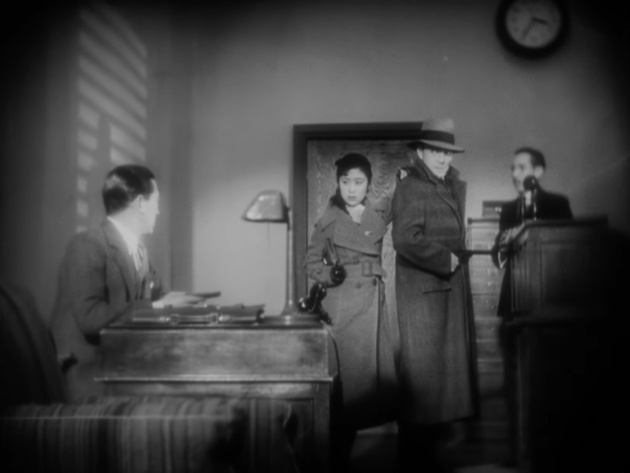
Aeons before the likes of Quentin Tarantino, Kevin Smith or Edgar Wright, Yasujiro Ozu may be one of the earliest examples of a director to showcase his film buff credentials through his own work. The director’s early films, including his crime dramas and student comedies, are adorned with love for American films and frequently featured posters of Hollywood movies garnishing the walls. This expression of love for American film permeates That Night’s Wife. The film is almost entirely devoid of any Japanese iconography (with the one major exception being the titular wife in her kimono attire), even down to the point that there is no act of shoe removal when entering a home. From tall buildings with Greek pillars, men in fedoras, candlestick telephones, noir shadows or that Fritz Lang-esque shot of a handprint on the glass, this mixture of Americana and German expressionism creates an infectious pulp world. It’s this unabashed display of cinephilia which really makes me love Ozu’s crime trilogy alongside the pictures Walk Cheerfully and Dragnet Girl.
The premise of That Night’s Wife is very simple but highly effective. A father, Shuji Hashizume (Tokihiko Okada), robs an office to pay the medical expenses for his terminally ill daughter. The loving father, however, is not very convincing as a master criminal, appearing rather awkward as a bandana covers his visibly nervous face. This is further compounded by the sheer size of the urban space, the towering architecture and the army of police officers, all dwarfing the individual as he tries to evade the law after committing his crime. Rather, Shuji is an effete artist whose family of three appear to live in a bohemian, artist’s studio, covered in the aforementioned movie posters, travel souvenirs, and an abundance of paint cans scattered throughout, implying that Shuji is a starving painter (a graphic designer perhaps?).
Much of the runtime inside the apartment itself plays out in a series of shifting power dynamics and mind games (like a miniaturised version of the movie Sleuth), between the married couple and a taxi driver who turns out to be an undercover cop (Tōgō Yamamoto), most memorably during a sleep standoff between the wife (Emiko Yagumo) and the cop. The husband and wife are co-protagonists in the picture, in which the loyal wife ardently remains by her husband’s side despite objecting to his decision to steal money. There is a tender and intimate simplicity in watching a mother trying to keep this domestic situation together and caring for her ill child; after all, nobody does domesticity like Ozu.
That’s Night’s Wife is a film of simple moral dilemmas. The parents’ love for a child supersedes all else as a father willing to sacrifice himself and his future to ensure the survival of his daughter. He does make a run for it when the opportunity arises, but only for his conscience forcing him to return to the apartment and turn himself in (“I must obey the law and return my debt to society”). The cop, on the other hand, is a calm and compassionate guardian deeply moved by the family’s predicament but also knowing that the law must be served. – Is a man justified to steal money and hold others at gunpoint to save the life of his own kin because he can’t afford healthcare?
What the film doesn’t have in meaning primed to be deeply intellectualised, That Night’s Wife is a film buried in symbolism and visual metaphor. From the fish skeleton on a plate as a backdrop in the opening titles (an image of hunger, death and desperation), the pessimistic image of a flower dying in a half-empty glass of water (or is the glass half full?), to the recurring motif of the floppy doll on a toy swing (a visual representation of the daughter’s vulnerability?). But perhaps the most significant symbolism of all is the film’s passing of time. Set over the course of a single night, the film concludes with the daughter having survived her illness, after the sun has risen following a very long, tiring and difficult night. It’s always darkest before dawn.
Is it harder to construct a film with little or no dialogue compared to the average parlance-filled production? While the general rule of filmmaking is “show, don’t tell”, dialogue is still an important tool for revealing character motivations, relationships, plot information, themes, emotional states, etc. Since the majority of movies in existence (barring silent pictures) are comprised of characters speaking to each other, to watch a movie with this tool stripped out, it really makes you consider all that goes into the art of storytelling through only visual means. 3-Iron (Binjip) is one of several productions in which (the late) director Kim Ki-duk excels at this very feat.
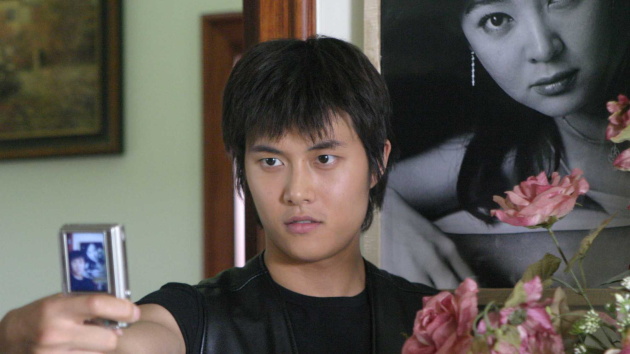
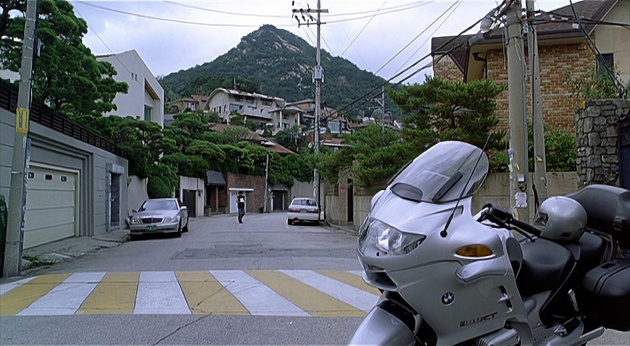
Not a single word is spoken by the two leads in 3-Iron (almost), yet the film still creates compelling characters through only visual means. The film’s initially unnamed young protagonist (Jae Hee) (later revealed to be called Tae-Suk) is a drifter who enters and lives in people’s homes while they are on vacation. However, he is likely not a poor man. He is a well-groomed, pretty boy with an expensive motorcycle and a passion for golf (hence 3-Iron), suggesting that perhaps wealth aids this dangerous and unethical hobby of his.
This pastime is aided by his technical know-how. He can identify when no one is home by placing restaurant flyers on the doors of homes, and when the flyer hasn’t been taken down after a period of time, he picks the door lock and makes his way in (as well as listening to the messages on the answering machines inside). From there, he treats the dwelling like his own home (watching TV, taking a bath, self-pleasuring himself in bed). Tae-suk, however, is not a thief (at least not in the traditional sense). He keeps the homes he has broken into clean, does the laundry, waters plants and even fixes broken electronics, thus helping create empathy from the viewer. This, however, doesn’t undo the ethical dimension of his actions. In much of the world, the protection of private property is held as sacrosanct and for good reason. To have someone break into your house feels incredibly violatory and people even end up moving house because of it. Why does Tae-suk partake in this hobby? Is he simply a thrill seeker and/or mentally unwell (especially since he remains mute) or a perverted voyeurist (his collection of selfies taken alongside family portraits would suggest so)?
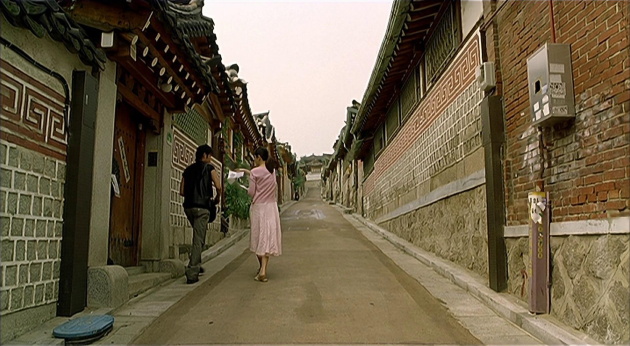
These sequences of Tae-suk scouting and then breaking into people’s homes feel very reminiscent of French filmmaker Jean-Pierre Melville. In particular, his seminal film Le Samouraï (1967), which, like 3-Iron, depicts lengthy dialogue-free sequences in which illegal activity is perpetrated in meticulous detail but with a sense of calm and harmony. From the quiet, empty scenes of the suburban streets of Seoul to the film’s wide showcase of Korean home design, 3-Iron has a sense of comforting domesticity. Likewise, the film even acts as a nostalgic representation of the pre-Internet of Things world with its array of early 2000’s tech. Although the most memorable filming location present in the film is Seoul’s famous Bukchon Hanok Village, a residential area comprised of picturesque traditional Korean houses known as Hanok. Having been there myself in 2025, I can say there is no way that the officials monitoring visitors would allow anyone to attach flyers to the doors nowadays (although I don’t know if that would have been the case either in 2004).
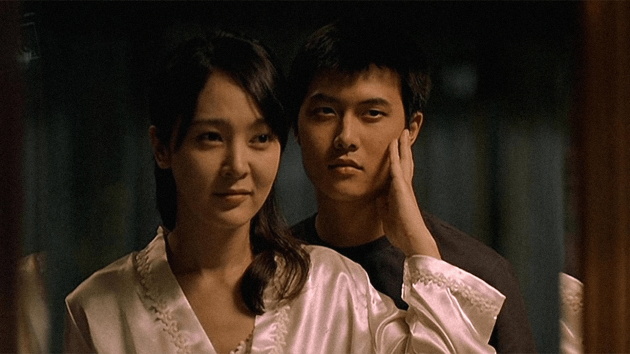
Tae-suk’s blurred world of fantasy vs reality comes to a head when he finds out he is not alone in the house of a wealthy businessman, when he meets his abused and black-eyed laden wife (Lee Seung-yun). Like Tae-suk, she is also mute but is able to portray a sense of torment through purely visual means. Not fearing Tae-suk, the two form a bond and leave the house together to escape her abusive marriage, all while, as a viewer, I ask myself if they will ever actually break their silence. The law, however, eventually catches up to the two delinquents, with Tae-suk thrown in prison and the wife returned to her abusive husband.
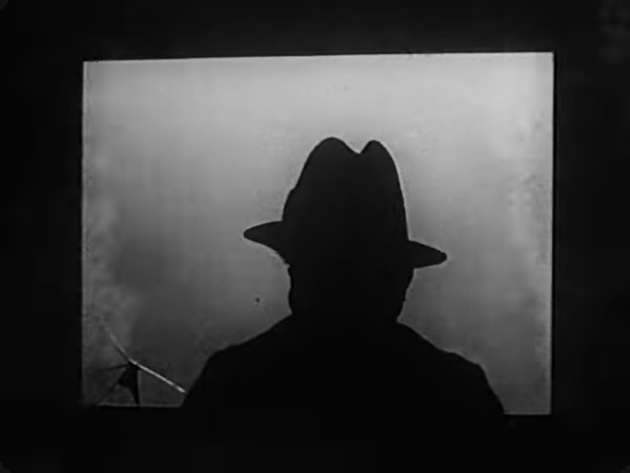
Depending on how you choose to interpret the final act of 3-Iron, Tae-suk may have died during his incarceration and became a literal ghost (as indicated later by his weight scale reading of “0”), or through the stealth manovers he learnt during this period (to avoid the regular beatings of a corrupt officer), has escaped from prison and has had a metaphorical transformation into a ghost. The following portion of the film plays out like a semi-horror film in which, through a series of voyeuristic point-of-view shots (even feeling quite Michael Myers-esque), he gets revenge on a corrupt police officer who wronged him, with the 3-Iron and some golf balls as his weapon of choice.
Tae-suk returns to the house of the abused woman, where the blurring of fantasy and reality reaches its zenith. Tae-suk remains in the house in view of the wife, while the husband is unaware of his presence. The woman smiles for the first time and utters her only line in the movie, “I love you”. The husband thinks the line is directed at him, but it’s actually to Tae-suk standing behind him. All three characters are now living a lie, yet for perhaps the first time in the film, all three appear content. “It’s hard to tell the world we live in is either a reality or a dream”.
We Have Plenty Of Hearsay and Conjecture, Those Are Kinds Of Evidence
***This Review Contains Spoilers***
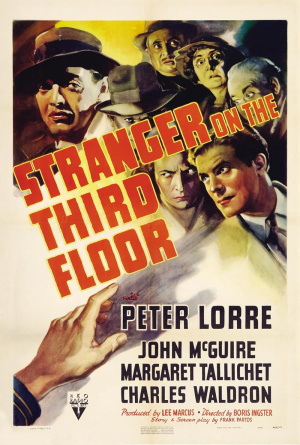
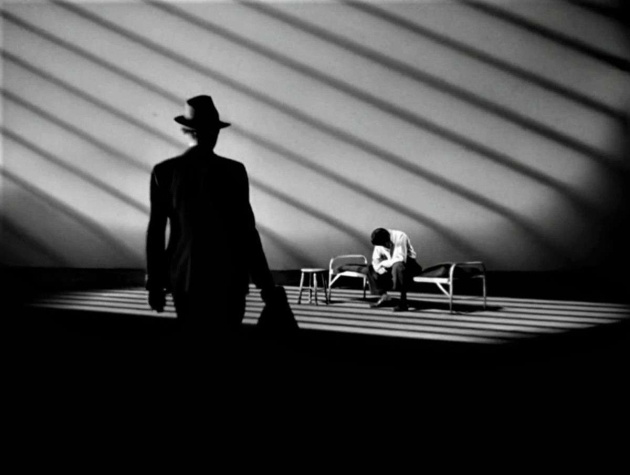
Peter Lorre appeared in several of the most important movies ever made. Most famously, Casablanca, but he also appeared in two movies instrumental to the film noir genre, Fritz Lang’s M and The Maltese Falcon. Then there is Stranger On The Third Floor, a film largely unknown yet often identified as the first film noir. Although it can be hard to identify a year-zero for the genre, with predating films featuring elements of what later became referred to as noir, Stranger On The Third Floor may be the closest a film can be bestowed with such an accolade. However, rather than just being a curio due to its esteemed status, Stranger On The Third Floor is, by its own merits, a great piece of cinematic artistry wrapped up in a thrilling single hour.
Stranger On The Third Floor contains many elements associated with noir. Deep shadows. Flashbacks. Voice-over narration. Low and diagonal camera angles. An urban jungle. The blinds motif. Late-night coffee shops. Cynical reporters. A falsely accused man, etc. When looking at the crew behind the film, starting with noted art director Van Nest Polglase, along with the European talent of Russian-born director Boris Ingster (reportedly an associate of Russian director Sergei Eisenstein, and with only three directing credits to his name) and Italian-born cinematographer Nicholas Musuraca, it makes sense how this work of German expressionist imagery came to be.
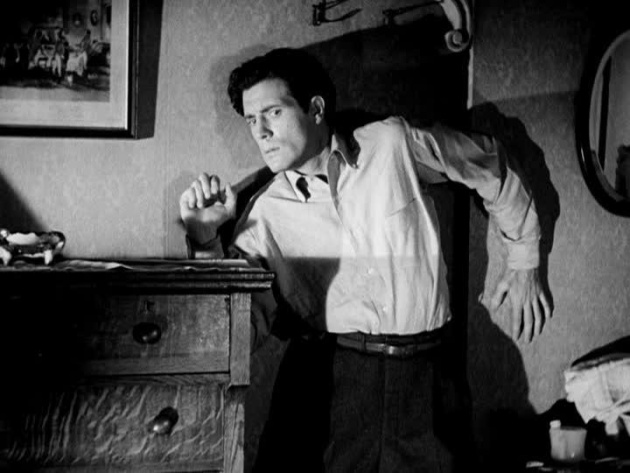
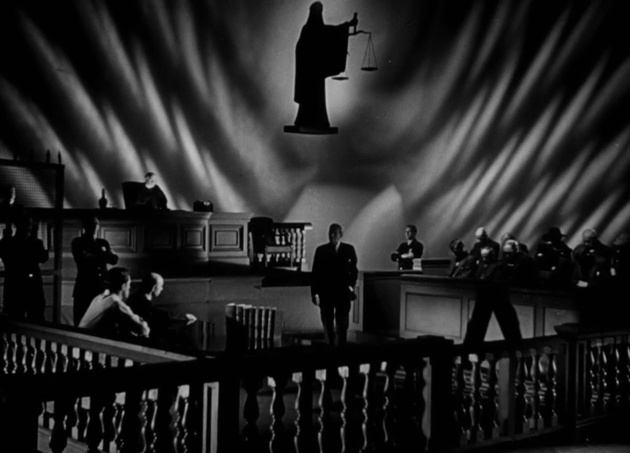
Reporter Mike Ward (John McGuire) is the key witness in a murder trial after observing Joe Briggs (Elisha Cook Jr.) standing over the body of a dead man in a diner. This is instrumental in having Briggs found guilty and sentenced to the chair. For Mike, on the other hand, it gets him a big promotion at work and a story on the front page of his paper – “Star Reporter is Key Witness In Murder Case”. Mike isn’t the hero as seen in many Hollywood films at the time. He is not driven to do the right thing but rather acting in his own self-interest and to protect himself. He does not have much of a guilty conscience over his testimony sending a man to death, but instead, he is worried that his past actions will result in him being implicated in the murder. While John McGuire is a footnote in Hollywood history, his voiceover delivery is unmistakably noir with its thoughtful yet flat tone (his overthinking about his words being taken out of context is relatable to observe). Mike’s delirium-soaked nightmare sequence is the film’s crown jewel, proving it refuses to be confined by its B-movie budget. The sequence is full of unforgettable, surreal images and moments of hammy acting from Mike’s imagined arrest to his trial and eventual execution on the electric chair.
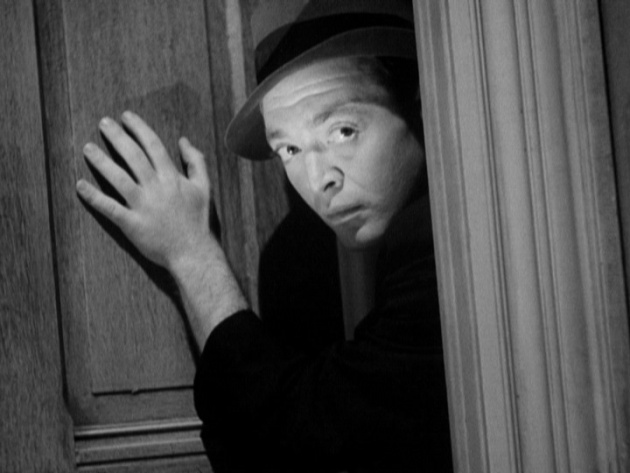
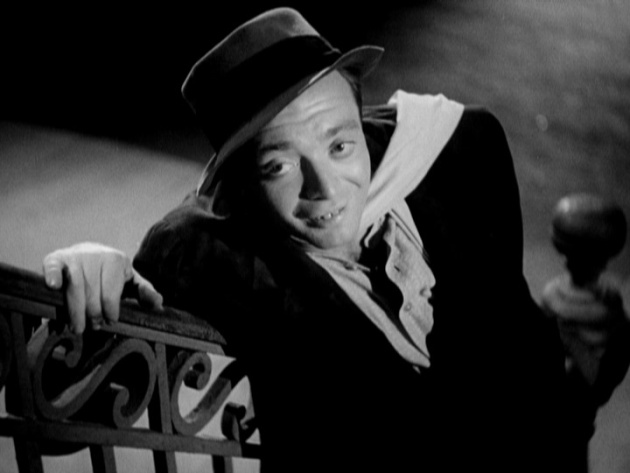
Despite being top billed, Peter Lorre only appears sparingly as the titular character. His role in the film is not too dissimilar to M, in which he lurks in the background before making a splash in the film’s climax. Whether or not this was intentional remains to be seen, as the story goes that Lorre’s involvement and limited screen time in the film came about as he owed RKO two more days in his contract. Lorre appears incredibly thin in Stranger On The Third Floor (especially compared to the more pudgy Lorre of earlier films), while the visible gaps in his teeth make him all the more unnerving. Likewise, his character is repeatedly seen throwing a scarf over his shoulder, a memorable little motif which does humanise him somewhat. Elisha Cook Jr., on the other hand, was 37 years old in Stranger On The Third Floor, yet he looks like a teenager (which the movie itself comments upon – “he looks like a kid”). Upon hearing his guilty sentence, the innocent, wide-eyed, aw-shucks Cook is hair-raisingly brilliant as his echoing voice repeatedly utters “I didn’t kill him!”. The following year, both Cook and Lorre would star in The Maltese Falcon.
Mike and his fiancée Jane (Margaret Tallichet) are not entirely likeable characters. In the opening scene, Jane is hogging a spare seat in a busy diner to the open dismay of other customers, but that’s on the low end compared to Mike. He is seen during the film having a very confrontational relationship with both his landlady and his kind and elderly next-door neighbour (Charles Halton). He even goes as far as grabbing the old man by his bathrobe and threatening him, not to mention Jane herself sees him doing this and chooses to remain with him. Although it makes sense that the film has an unlikable protagonist since the film has a cynical outlook on his profession, questioning the morality of journalists profiting off crime. None of the reporters in the film are portrayed with endowing much sense of journalistic responsibility (“How do you know he did it?, Who cares, what a story, what a story!”). Likewise, in classic noir fashion, Stranger On The Third Floor is also critical of that other pillar of American society, the justice system. During the courtroom sequence, Joe Briggs is being tried on circumstantial evidence, the judge is clearly uninterested in the case, the lawyer on behalf of the accused is uninquisitive and there is even a juror who treats himself to a nap during proceedings.
Stranger On The Third Floor concludes with Briggs now a free man and working as a cabbie, offering Mike and Jane a taxi ride on the house — a tidy resolution that feels almost suspicious in its optimism, although it could be argued that it is intentionally ironic. After all, Briggs is only free as a by-product of Mike’s self-interest and not out of any heroic deeds. The truth did not triumph; justice was merely accidental. Welcome to the shady, morally incongruent world of film noir.
Witchcraft as a subject matter wouldn’t normally be my cup of brew, yet with its unique combination of documentary and scripted drama, Häxan (pronounced as “heck-sun”) presents itself as interesting even to non-adherents. Häxan is a film which on the surface level looks like it would appeal to new age mystics or that one edgy goth kid in every school, however, in contradiction to its arcane visual presentation, Häxan is a film of scientific rationalism as established from the beginning (“The belief in evil spirits and witchcraft is connected with childish perceptions from the world of mysticism”) and one from the God of the Gaps school of thought (“When primitive man is faced with something incomprehensible, the explanation is always the same: witchcraft and evil spirits”).
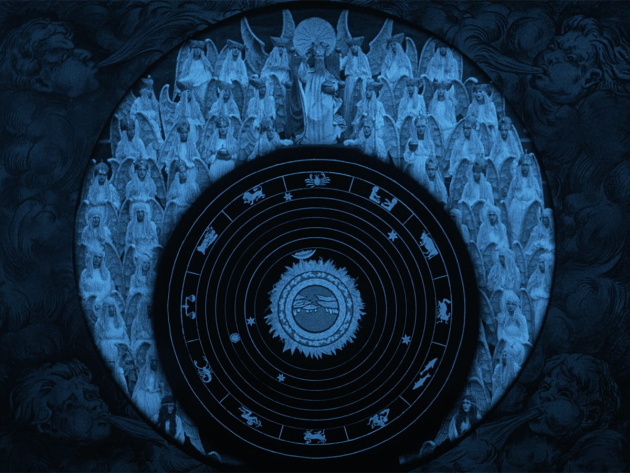
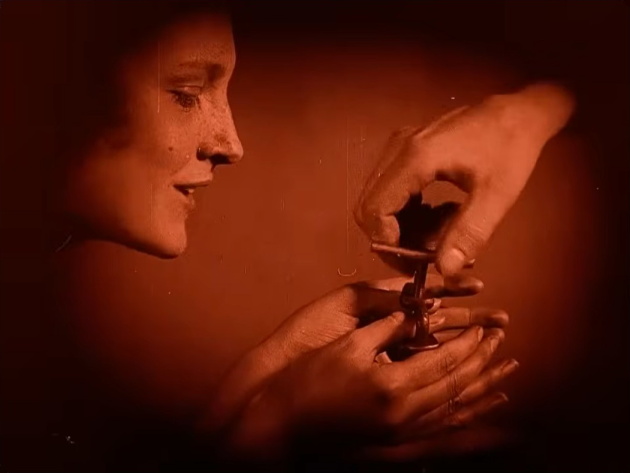
The film’s first of seven chapters provides an overview of witchcraft throughout the ages (primarily the Middle Ages), featuring an array of astronomical diagrams from antiquity, as well as historical depictions of devils and demons. Many of these images are frightening to look at and are presented alongside such gruesome captions as “One devil pours the sulphur-reeking contents of a horn down a man’s throat”, speaking deeply to the fear present in the human condition. One of the film’s later documentary segments features the ever-popular topic of Medieval instruments of torture, with one particularly standout moment involving (as the film claims) one of the actresses volunteering to use a medieval thumb screw, although she is seen laughing on screen when using it (make of that what you will). Many of these displays feature an on-screen pointer being held by someone off-screen, yet they still retain a cinematic quality. As a viewer, you feel like you are being imparted with clandestine, forbidden knowledge rather than feeling like the 1920’s equivalent of a PowerPoint presentation.
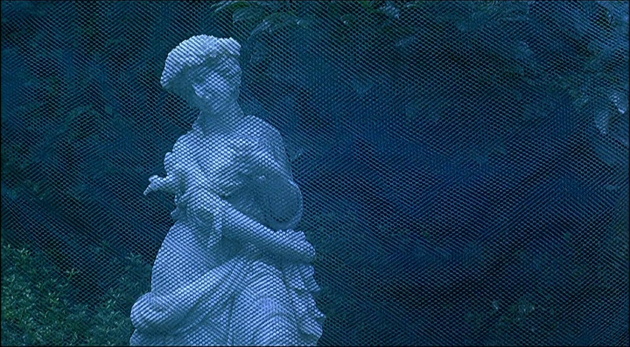
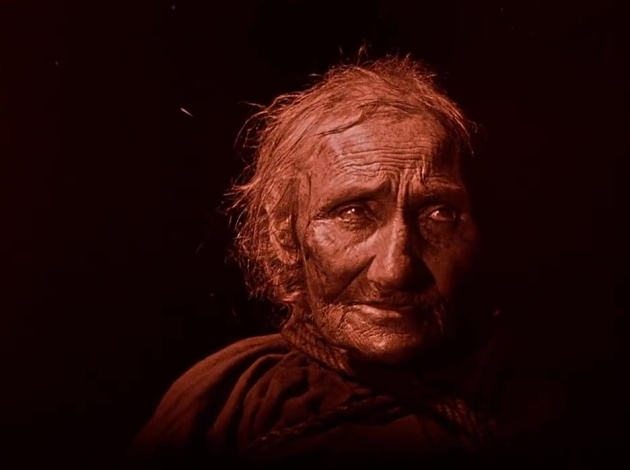
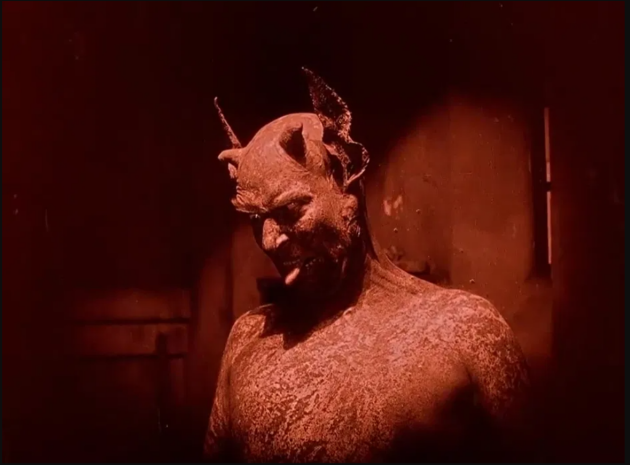
Häxan has all the ingredients you would want from a 100+ year old, arcane, European movie. The sepia tinting, eerie music, haunting choirs, the sight of animal skulls and skeletons in the witch’s dwelling and even the Swedish title cards make it feel all the more unnerving and atmospheric. Likewise, during the trial section of the film (chapters 3 and 4), the close-up shots of the old woman’s face as she is forced to deal with Church inquisitors feel reminiscent of what would later be accomplished in The Passion of Joan of Arc (1928). The lady in question during these scenes, Maren Pedersen (as Maria the Weaver), in her only screen credit, was born in the year 1842. It’s amazing, penetrating close-up into the face of a woman whose birth predates the existence of cinema by decades. Häxan also features scenes with Satan himself (played by the director, Benjamin Christensen), as he gleefully shows off his forked tongue. Over the years, I have kept seeing this as an image of ridicule and parody; thus, my instant reaction when seeing it is to laugh. Likewise, as far as the more immature 12-year-old in me goes, many viewers may also be humoured to see the end credits card.
Witch hunts (whether literal or figurative) have one major paradox, as stated in Häxan: ”those who oppose the arrest of a witch are of course themselves witches”. Or as The Simpsons memorably put it in the episode Treehouse Of Horror VIII, “If you’re innocent, you will fall to an honourable Christian death. If, however, you are the Bride of Satan, you will surely fly your broom to safety. At that point, you will report back here for torture and beheading”. During Häxan, we see a deception of the pious man of the church as a glutton, comically feasting on huge pieces of bread and meat, before chasing his maiden for some hanky-panky. Regardless of whether or not the film has a deliberate anti-clerical or anti-religious angle, it still uses the phraseology in one of its intertitles of “the year of our Lord 1488”.
The final chapter of Häxan circles back to the demystified with a medicalised conclusion, of which the picture presents its central argument that women accused of being witches in the past would be diagnosed with hysteria or other medical conditions in the present day. It is presented in a thought-provoking and articulate manner, although if I were to give one criticism, it would be with the title card stating: “We no longer sit and stare in fright at the devil’s paintings on the church wall”. For starters, it annoys me in a lot of media, the use of pronoun “we” as the media in question thinks it is speaking on behalf of viewers, but additionally, the film contradicts this only moments later by stating “But superstition – doesn’t it still flourish among us?”, as well as with an earlier claim by the director that the actress who plays Maria the Weaver, states that she herself has seen the devil at her own bedside. Häxan presents itself as a work of scientific demystification, yet it cannot resist the same lurid imagery and superstition it claims to transcend. One might say, the devil is in the details.
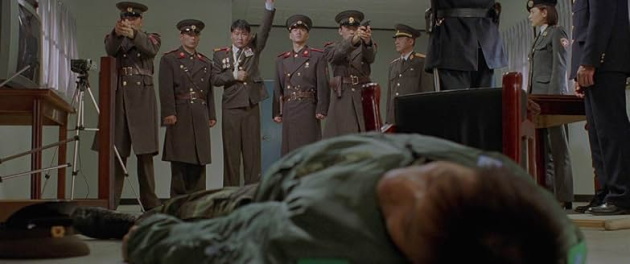
What would possess someone to willingly want to cross the Korean Demilitarized Zone (DMZ) from the safety, prosperity and freedom in the south to the communist, oppressive, hermit kingdom in the north? One such scene in Park Chan-wook’s Joint Security Area (JSA) shows the baseball cap of a tourist being blown off their head in the wind and into the northern side of the JSA (a portion within the wider DMZ), to which they naturally don’t even think about crossing that borderline to go and get it back. In the 21st century, the DMZ is the last remaining piece of the Iron Curtain, an international Rubicon, a seeming point of no return, a barrier one would never imagine wanting to cross from the southern side. Despite being set at one of the most volatile places on Earth, the story of Joint Security Area is localised and condensed to the relationship between a group of soldiers and the investigator sent to uncover the truth of their border crossing exploits.
Major Sophie Jean (Lee Young-ae) of the Neutral Nations Supervisory Commission, the Swiss investigator of Korean descent, is tasked with solving the whodunnit in a “perfectly neutral” manner alongside her Swedish partner (Herbert Ulrich). As the audience surrogate, she is soon provoked by southern authorities with such comments as “There are two types of people in this world, commie bastards and the commie bastard’s enemies”. The North Korean authorities, on the other hand, present her with a series of staged theatrics, including an apparent grieving North Korean family, to dealing with a deposition made and signed by a man in a coma. The first act of JSA follows the Rashomon model, in which a series of contradictory stories are presented. This act of the film also plays out as a procedural in classic CSI-like style with the man-woman duo interviewing witnesses and presenting their forensic findings to each other (with the film not holding back any punches with some very graphic gunshot wounds), with Young-ae bringing a feminine presence to an otherwise male-centric movie. The English present in the film does sound very unnatural, although one could argue this would be the case since none of the characters are native speakers of the language.
The middle portion of JSA pivots to a lengthy flashback, as two South Korean soldiers (Lee Byung-hun and Kim Tae-woo) come to befriend several soldiers from the North and start crossing the border every night simply to hang out with them. The bromance they share becomes endearing as they share southern contraband, including pop music tapes, cookies and Choco Pies, while also engaging in male bonding behaviour: looking at nudie mags, cracking jokes, giving playful jabs at each other and at one point, giving a fart as a present. There is still a real cinematic nature to these intimate moments, such as the use of two 360-degree shots during conversation, with Song Kang-ho delivering the standout performance among the soldiers as the North Korean Sgt. Oh Kyeong-pil, the domineering and alpha personality of the group. Joint Security Area was filmed on a mass recreation of the DMZ, and the sets never feel inauthentic and look indistinguishable from the real thing. I recommend watching the making-of documentary for JSA (included in the Arrow Blu-ray release) in which one of the film’s costume designers states that just a few years prior to the film’s production, he may have been breaking South Korean law by recreating North Korean military uniforms.
The partition of Korea is the division of a single ethnic group; thus, there is an understanding by many in South Korea that northerners are still their fellow Koreans. This can be seen symbolised by the scene in which the saliva from both a northern and southern soldier is mixed together at the borderline, as well as a prominent shot of the full moon as a soldier throws a package across to the north. In literature and K-dramas, the moon often evokes nostalgia or longing, especially for someone far away. This shared humanity across the border brings to mind historical events such as the football game during the Christmas Day truce in World War I. However, within the flashback of JSA, there is still an underlying suspicion that the northern soldiers are just trying to get the southern soldiers to defect, with a dose of Treasure of the Sierra Madre-style tension. If there is a main recurring theme in Joint Security Area, it is that of façades. Major Jean comes to learn that the real purpose of the Neutral Nations Supervisory Commission is to bury the truth on behalf of both sides, that neutrality is simply a façade. From fake grieving families, fake depositions, questionable friendships and apparent loyalty citizens claim that they hold to regimes, to even Jean herself removing her own father from a family photograph.
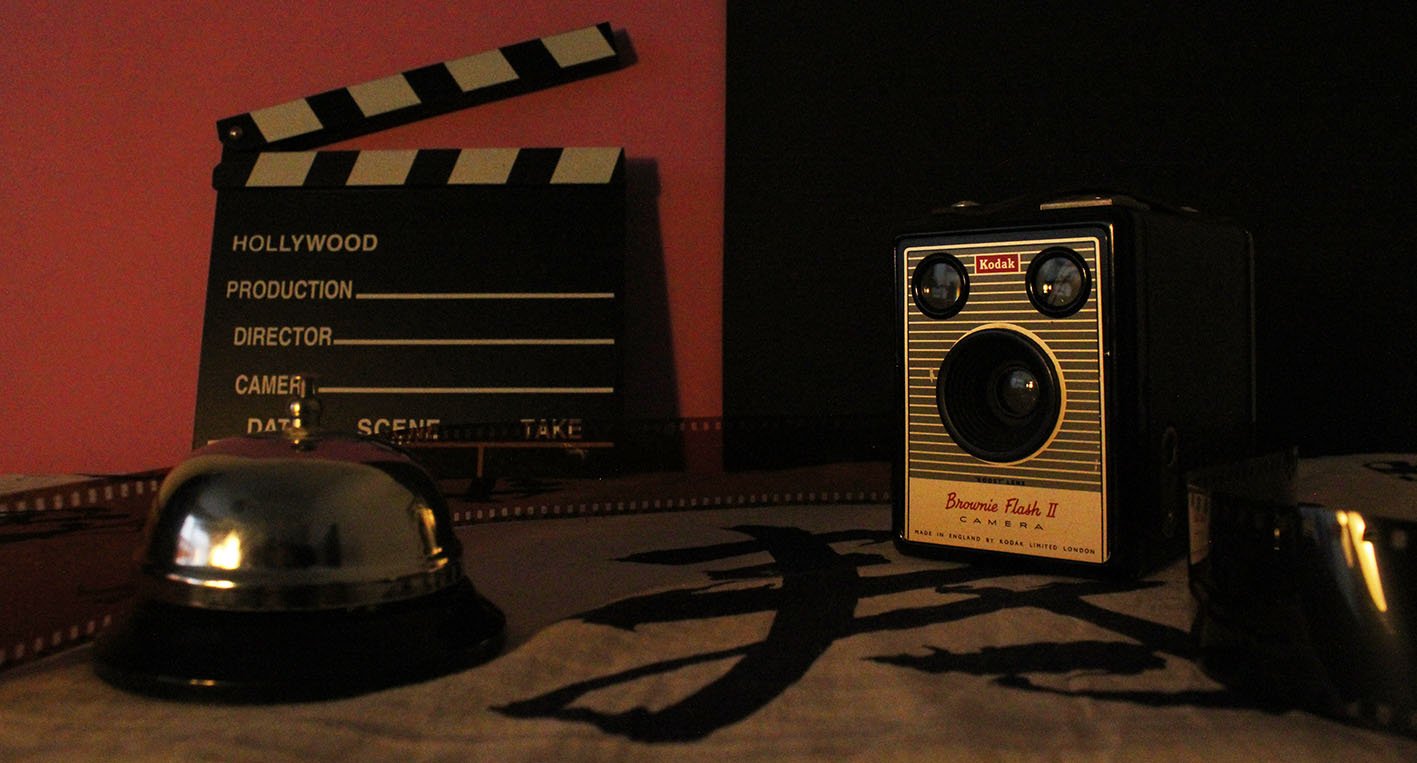
With the Korean DMZ being one of the final remnants of the Cold War, which still exists in the 21st century, Joint Security Area has a real old-school vibe (“Rice is communism”, proclaims an archaic billboard on the northern side of the divide). This sense of historical statis is just one of many reasons as to why of the 200-odd nations which inhabit this planet, none are quite so fascinating as The Democratic People’s Republic Of Korea (better known as North Korea). I am a North Korea obsessive (a North Koreaboo if you will) and will consume any bit of media which will increase my knowledge of NK lore. Needless to say, in April 2025, I fulfilled my dream of almost entering this hermit kingdom by visiting The Demilitarized Zone and getting (at closest) 140 metres from the Korean border. Unfortunately, I couldn’t visit the Joint Security Area itself, but could still bring some pieces of the JSA and wider DMZ back with me.
![Spring, Summer, Fall, Winter… and Spring [봄 여름 가을 겨울 그리고 봄/Bom yeoreum gaeul gyeoul geurigo bom] (2003)](https://satinyourlap.com/wp-content/uploads/2026/07/ssfws.jpg?w=300)
![The Isle [섬/Seom] (2000)](https://satinyourlap.com/wp-content/uploads/2026/03/theisle.jpg?w=300)
![The Swimming Pool [La Piscine] (1969)](https://satinyourlap.com/wp-content/uploads/2026/06/mv5bzdlinguyytmtzwm5os00zmq1ltg5ngitm2i4ytg0n2e0ywqwxkeyxkfqcgc40._v1_fmjpg_ux1000_.jpg?w=300)



![Dragnet Girl [非常線の女/ Hijōsen no Onna] (1933)](https://satinyourlap.com/wp-content/uploads/2026/06/mv5bmzvmzjmyotqtntm1os00ymyxlwjlmjqtzjlimzaymdk3mmmxxkeyxkfqcgc40._v1_fmjpg_ux1000_.jpg?w=300)
![That Night’s Wife [その夜の妻/Sono Yo no Tsuma] (1930)](https://satinyourlap.com/wp-content/uploads/2026/05/gqmjupad84uhhhdgmn1obxwamaesls_large.jpg?w=300)
![3-Iron [빈집/Binjip] (2004)](https://satinyourlap.com/wp-content/uploads/2026/06/mv5bmtm1odiwnzm5ov5bml5banbnxkftztcwnjk5mdkymq4040._v1_fmjpg_ux1000_.jpg?w=300)
![Häxan [Häxan: Witchcraft Through the Ages] (1922)](https://satinyourlap.com/wp-content/uploads/2026/01/mv5bmjewmzgzmtetyzi3zs00m2m4lwjjzgyty2uxzjgznznjnjc0xkeyxkfqcgc40._v1_fmjpg_ux1000_.jpg?w=300)
![Joint Security Area [공동경비구역 JSA] (2000)](https://satinyourlap.com/wp-content/uploads/2025/06/mv5bmti1nda4ntmyn15bml5banbnxkftztywnta2odc5._v1_fmjpg_ux1000_.jpg?w=300)