
Snap Back To Reality
***This Review Contains Spoilers***
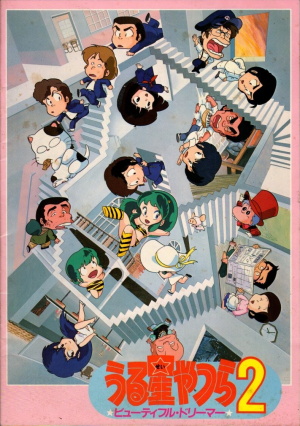
Many franchises have that one instalment which appeals to non-fans. Star Wars with The Empire Strikes Back, Star Trek with The Wrath of Khan, Batman with The Dark Knight, but to name a few. For the Japanese manga and anime series Urusei Yatsura (a Japanese pun which roughly translates to “Those Annoying Aliens”), that honour goes to its 2nd film entry, Urusei Yatsura 2: Beautiful Dreamer (うる星やつら2 ビューティフル・ドリーマー / Urusei Yatsura 2 Byūtifuru Dorīmā). However, despite being a fan of other works by writer Rumiko Takahashi, Urusei Yatsura is a series I struggle to get into despite my best efforts. I like the core concept and characters, but the storylines frustratingly keep delving into one-off gimmicks (often with deus ex machina resolutions) rather than focusing on meaningful character development. This makes it all the more frustrating, given how good this second movie is. Writer and director Mamoru Oshii approaches this source material with a far more introspective approach, a major reason why Beautiful Dreamer feels so different from the rest of the series.
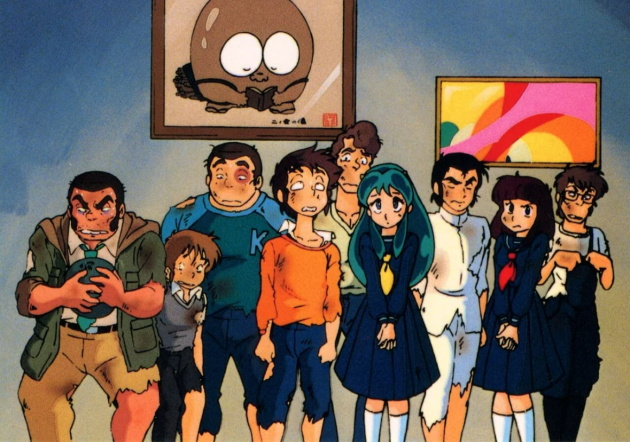
Ataru Moroboshi, his alien girlfriend Lum, and their friends (or frenemies, you might say) are working on their project as part of Tomobiki High School’s annual school festival, in which this year’s theme is “Management By The Students Themselves”. The theme for their project? Why a Nazi-themed café, you know, like you do (either they have a naively innocent ignorance of history or are just big fans of National Socialism). The dry humour of the scenario is enhanced by the fact that none of the characters says the word Nazi or any related terminology and casually discuss whether or not they should have gone with this concept or catered to “Ataru’s weird taste” and went with his idea of the Hot Babes Coffee Shop (that said, the Austrian Painter is mentioned later in the film in a wholly different context).
Much of the comedy in Urusei Yatsura is in the vein of a classic sitcom in which characters who are always in a state of group conflict are forced to live and interact with each other. The comedy does come through in the English-language dub from the school principal’s needlessly long, high falutin reprimanding of the students or my favourite piece of dialogue in the film, Shinobu’s very hard-to-decipher explanation as to why she helps out on the café project despite not being a committee member: “Well let’s say that Person A is staying here out of concern for Person B. In my case, I’m staying here because I care about this Person A. But the Person B that the Person A is concerned about doesn’t know this. Did you understand that?”. This in itself could be taken as a piece of foreshadowing for the plot’s hard-to-decipher, reality-bending complexity.
Beautiful Dreamer belongs to a genre which doesn’t appear to have a defined name, in which the perception of space and time becomes mixed up (stories which are particularly common throughout Japanese media). Perfect Blue, Paprika, Inception, Dark City, Ghost In The Shell (also directed by Mamoru Oshii) or time loop films such as Groundhog Day or The Girl Who Leapt Through Time. Films of this nature could be described as (to borrow a term from writer Todd French), “existentialist time-space displacement flicks”, or, to use an alternative big term, ontological instability (films question the fundamental nature of reality, existence, and identity, leaving both characters and viewers unsure of what is real). Beautiful Dreamer even name-drops some of its own ontological story influences of Urashima Tarō and Rip Van Winkle as the characters increasingly question their feelings of déjà vu, almost like the day before the school festival keeps repeating itself.
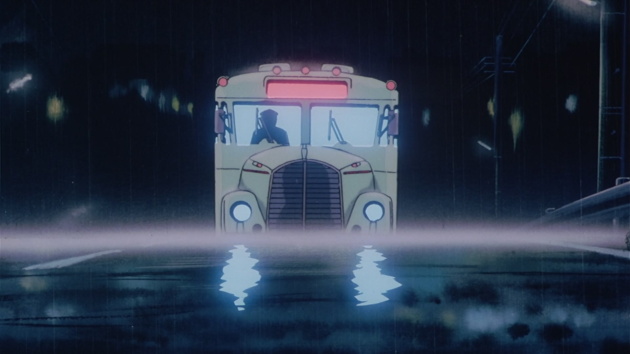
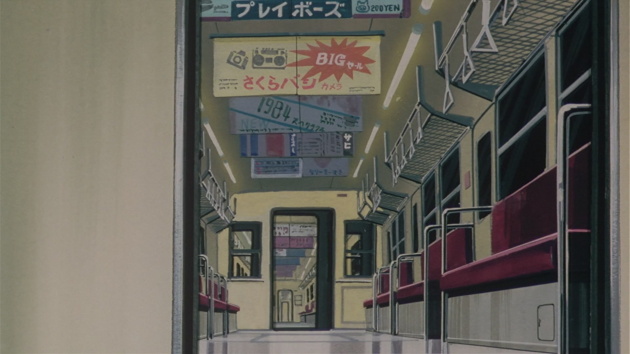
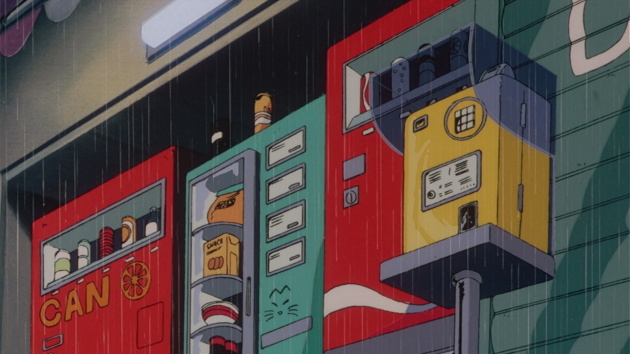
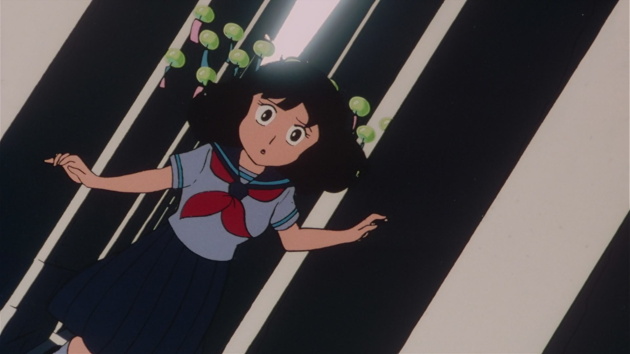
Beautiful Dreamer does an effective job of creating a discordant atmosphere, with its setting becoming gradually depopulated and post-apocalyptic. The nocturnal scenes are appropriately rainy and moody, with the eerie empty streets and train carriages, while also creating the vibe of an Edward Hopper urban landscape painting. There are many sequences in Beautiful Dreamer which are worth singling out for their artistry and impressive animation (something very much absent in the third film of the series), from the surreal, slow-motion sequence of Shinobu in the alley to the gang trying to navigate the corridors of Tomobiki High, which is morphing into a gravity-defying space akin to an M. C. Escher painting.
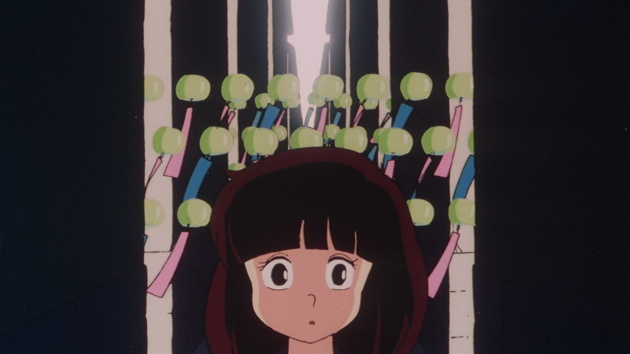
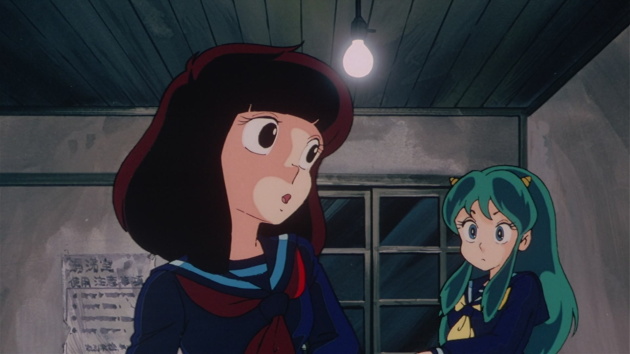
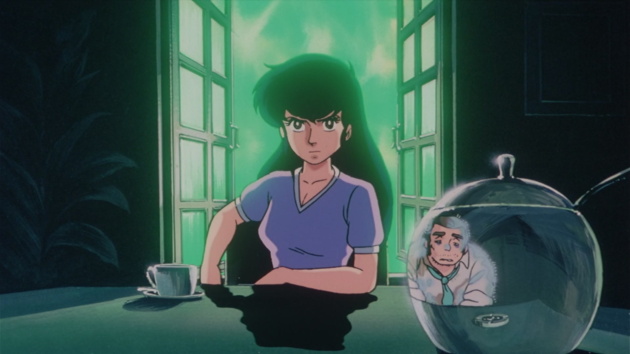
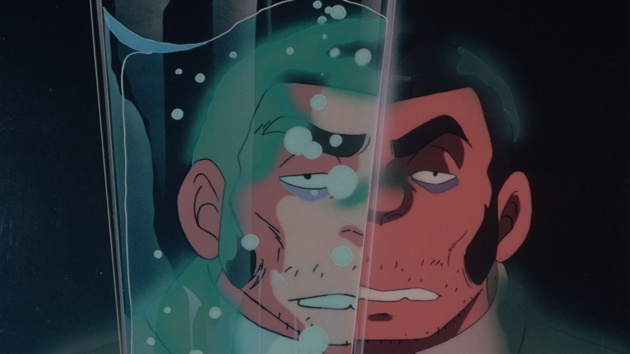
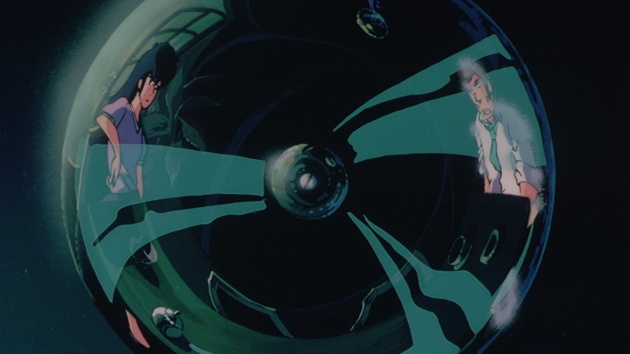
However, the sequence which stands out to me the most is that with Miss Sakura and Onsen-Mark in the café as they try to make sense of what is going on in their reality-bending surroundings. The scene employs a range of cinematic shots, from rack focusing with three distinct planes of depth, layered imagery (with half of Onsen Mark’s face being obscured through a glass of water), to the two characters having a conversation while being viewed through a bird’s-eye reflection atop a teapot (with all of this occurring while the room is illuminated by a bright green light coming from outside). These elements serve as visual metaphors for the film’s distorted reality. This sequence is one of the film’s many lengthy dialogues, in this case enhanced by the effortlessly badass, motorcycle-riding Miss Sakura (I really dig her English voice), as she gradually transitions from scepticism about Onsen-Mark’s claims that he is reliving the same day to showing genuine concern.
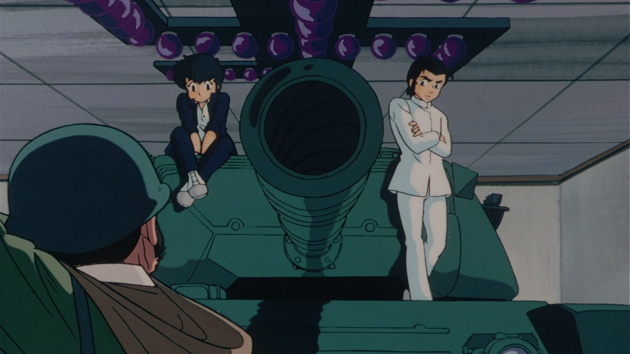
As the characters find themselves living a purely hedonistic lifestyle among the ruins of civilisation (even though their base at Ataru’s house continues to have basic amenities such as water, electricity, gas and a convenience store nearby which doesn’t run out of food), they spend their days swimming, roller-skating, fishing, bathing in the sun, watching movies, celebrating Omatsuri and indulging in slumber. This disturbing level of escapism is showcased in the film’s flash-forward opening with its cast of characters relaxing in this wasteland, while Ataru stands in the water in a zombified state with his mouth hanging open as his rival Mendo drives by with his tank in the background in a phallic-like shot of the tank’s gun looking like it’s going into Ataru’s mouth. Make of that what you will.
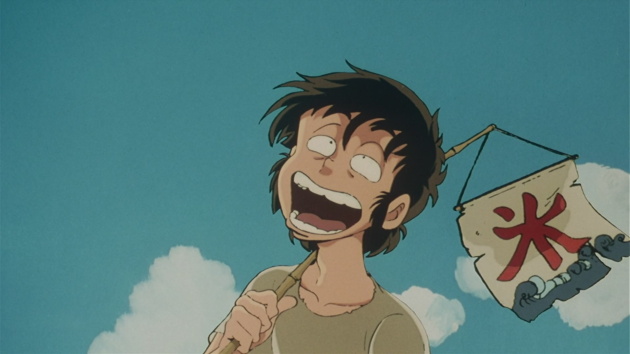
Regardless, it quickly becomes apparent that Ataru and co are stuck living in someone’s dream- but whose? The film gives a clever and comically Agatha Christie-like deductive explanation of whose dream they are stuck in (“it’s not you Moroboshi, if it were the world would be full of women”), to which they determine they are stuck in the dream of Lum. However, like Fight Club, the film’s foreshadowing of this is right out in the open and obvious on a second viewing when Lum herself states, “I want to live happily ever after with Darling, his mom, his dad, Ten, Shutaro and Megane and all his friends.” I know this because Tyler knows this.
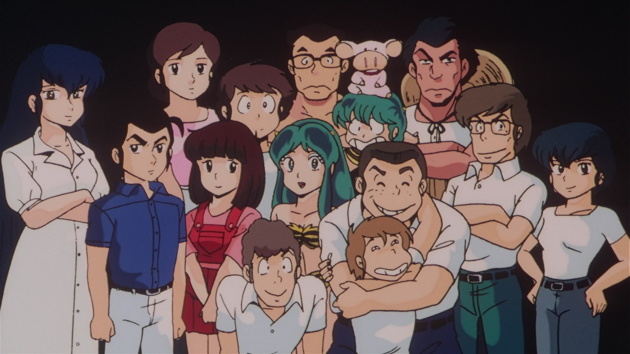
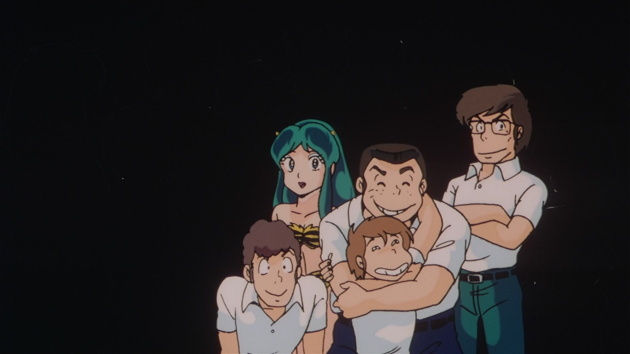
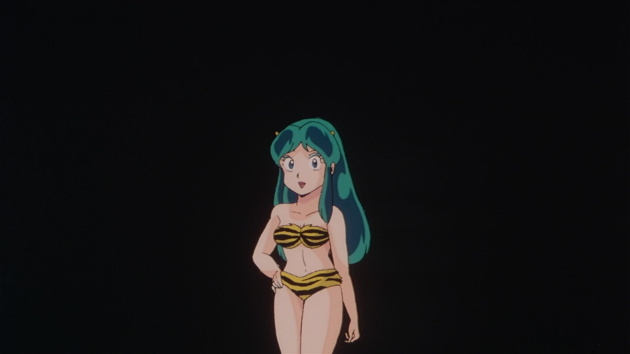
Why does Lum choose to have the day before the festival in a loop of never-ending purgatory? I find the most appealing interpretation to be the Peter Pan-esque fear of growing up. The school festival represents friendship, excitement, romance, freedom from ordinary lessons, and the anticipation of something wonderful. However, what happens after the festival? Life returns to normal, and people go their own ways. What do you remember more fondly? The excitement of Friday and the anticipation of the weekend, or the actual weekend itself? The movie does an effective job of capturing that teen movie nostalgia with the familial bonding of its mostly young cast of characters. On that note, the civic pride and duty in high schools as presented in Japanese media (and that I’ve also seen for myself in real life, having briefly worked in one) is so regrettably alien to my own high school days (or secondary school as it is called in the UK).
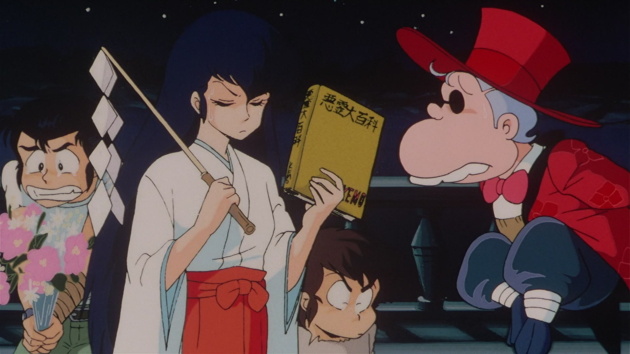
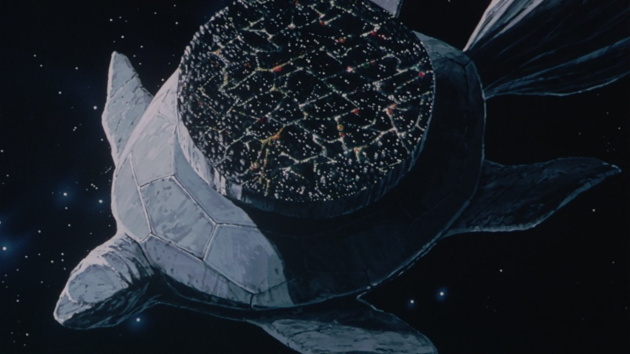
Lum was able to live in her dream as she made a deal with a demon by the name of Mujaki, a pudgy little fellow with a voice which does become quite grating over time. The film indicates he may be Satan himself (although this is not clarified), who is responsible for the rise of Hitler, Judas’ betrayal of Jesus, the stabbing of Julius Caesar and Eve eating the forbidden fruit of knowledge (boy, that escalated quickly). Mujaki wants to create dreams, but these dreams always end up turning into nightmares. However, Lum was the first person he met who had a dream so pure that it couldn’t be corrupted into a nightmare. Anyone within Lum’s dream who stands in opposition to it (turning it into a nightmare), will be put into their own realm where they get to live out their own dream, in which they become a statue which literally and figuratively holds up the world in which Lum’s dream exists (a flat world on the back of a turtle floating in space, an image itself taken from Hindu mythology). As a result, Miss Sakura is worried she will be turned into a statue next, thus herself and Mendo are able to reveal that the Ataru who was present for much of Lum’s dream was actually Mujaki in disguise. Thus, Mujaki grants the real Ataru his own dream (a world full of hot babes), but because he genuinely loves Lum, the world of hot babes isn’t truly his dream, causing a chain reaction leading to the structure of Lum’s dream to fall apart. Phew! Did you get that? It took me until viewing number 3 of Beautiful Dreamer to fully wrap my head around the film’s conclusion.
Beautiful Dreamer concludes with Ataru repeatedly believing that he has escaped back to the real world, only to discover that he remains inside another dream. I do find this portion of the film to be too drawn out, with its dream parodies of Frankenstein and Alien coming off as unnecessary padding. Nonetheless, in the very last scene, Ataru once again wakes up, only this time to find himself back in Tomobiki High with Lum and his friends. Of course, it doesn’t take long for Ataru and Lum to break into another one of their squabbles, to which the film then pans over to Mujaki, who says, “Wow, those two sure are a handful“. Thus, if Mujaki is still present in this reality, is Ataru still inside a dream or back in the real world? Did the events of the film really take place, or are they a decanonised dream like Season 9 of Dallas? Urusei Yatsura 2: Beautiful Dreamer is a film primed for analysis and interpretation (even beyond those who aren’t fans of the series). It is the only Urusei Yatsura entry I can really connect with, but I will cherish it all the more for it.

