The Swimming Pool [La Piscine] (1969)

Euromaxing

***This Review Contains Spoilers***

I bestow Jacques Deray’s The Swimming Pool (La Piscine) with the oddly specific accolade of being the 2nd best 1960s swimming pool-centric movie. The other film of this double feature I am referring to is Frank Perry’s The Swimmer (1968). Both movies not only share aesthetic similarities but also explore a seemingly idyllic existence that isn’t quite what it seems, with the use of swimming pools as a metaphor. A pool creates a refracted, warped image, and it’s only when seeing through the surface that things become clear.

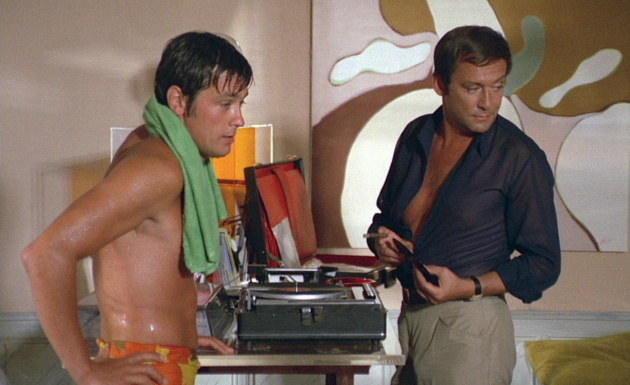
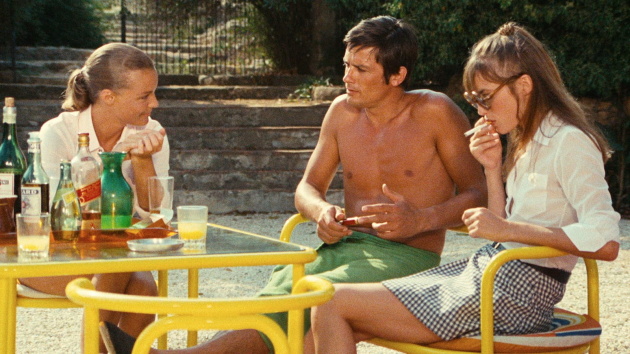
The majority of The Swimming Pool takes place within the confines of a holiday villa in the French Riviera town of Saint-Tropez (which I am reliably informed is pronounced san troh-pay for us word ending consonant pronouncing English speakers). This setting makes The Swimming Pool an oxymoron of a film in that it is a thriller, yet a relaxing one at that. I find myself watching on in jealous enchantment as the sexy, shirtless and effortlessly cool Alain Delon and his glamorous, bronzed-fleshed co-star Romy Schneider flex their sculpted physiques as they relax and make love in the nostalgic, rustic, sun-soaked atmosphere (as 60’s lounge music along with the film’s repeated song of choice Ask Yourself Why sung by Ruth Price echo in the background). Jean-Paul Leroy (Delon) and his girlfriend of two years, Marianne (Schneider), are madly infatuated with each other as they intensely make out (back scratching and all) and engage in light-hearted power plays and one-upmanship. However, there is soon trouble in paradise with the unexpected arrival of the couple’s old friend Harry Lannier (Maurice Ronet). 

Harry is a figure who gives off mid-life crisis vibes; a cringeworthy dad with his prized sports car and top shirt buttons always undone. Harry, however, merely goes from being a figure of cringe to one of great suspicion from the accompaniment of Penelope (Jane Birkin), a girl he claims to be his daughter. Harry speaks of his daughter and interacts with her in a very intimate manner, commenting to others that she is pretty and telling her that her skin is smooth and that she smells nice. Both Jean-Paul and Marianne are surprised to discover their old friend even has a daughter. Penelope is apprehensive to talk about her background when Marianne asks her questions, while Harry simply tells Jean-Paul, “Her mother is simply an Englishwoman, you don’t know her”. Even the very scenario of a father and daughter going on a European road trip together is an unlikely one, with the film never making it clear if Harry is her Daddy or her “daddy”.

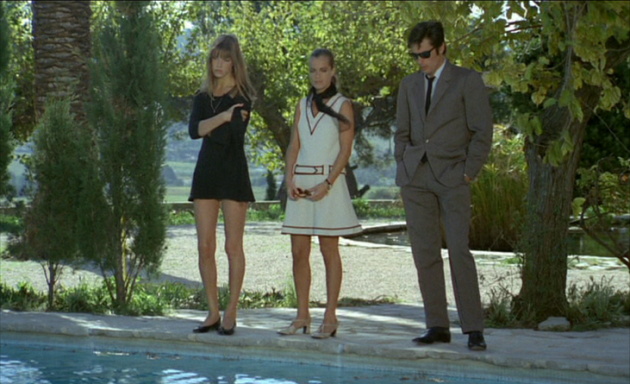
Throughout the film, Penelope wears short dresses and skirts (even to a funeral), although regardless of whether she is trying to provoke, she ignites a lust within a youth-chasing Jean-Paul. Even from their first meeting, Jean-Paul grabs her by the hand and asks, “How old are you?”, to which she responds mildly nervously, “Eighteen”. This eventually culminates in the two making love and, by extension, the dissolution of his relationship with Marianne. Delon and Schneider were real-life ex-fiancés, with the word through the grapevine being that he continued to be infatuated with her, with Delon being instrumental in getting Schneider cast in the film. Regardless, I’m sure their real-life background contributed to their on-screen chemistry and to the emotional weight of the gradual, undramatic breakdown of a relationship and the quiet acceptance of such within the film’s very slow build approach. 

Harry brings about Jean-Paul’s gradual emasculation, both through Harry’s subtle flirting with Marianne but more so through his low-key taunting of Jean-Paul in relation to his failed and abandoned career as a writer. Jean-Paul now works for an ad agency while Harry has no issue showing off the expected-to-be hit music records he is producing (he even has to rub it in his face that Mariane herself is a successful writer). After several days, the once cool Delon is now grumpy and carrying a bad posture. The glamorous film star now comes off as a loser. It is this aspect of The Swimming Pool which makes the film strangely comforting, that the rich and beautiful, our betters, are just as miserable as John Doe. On the surface, Jean-Paul has an incredible life, from a gorgeous girlfriend to a high-paying job that permits him to enjoy month-long summer holidays. Deep down, however, he is unhappy as he gave up on his ambitions of becoming a professional writer (with it even being revealed that he has attempted suicide in the past). Just like how social media in the modern day shows other people’s seemingly perfect and amazing lives, the swimming pool offers a distorted reflection that hides what lies beneath.

On a more humorous observation, The Swimming Pool showcases the dangers that arise when close friends start living with each other and/or spend prolonged periods of time together when travelling. The Swimming Pool takes it to the extreme, with the outcome being murder, as the tension between Harry and Jean-Paul reaches its boiling point (both Delon and Ronet had previously appeared alongside each other in Purple Noon (1960), to which both characters see a similar fate). The film’s final act delves into Columbo-like territory, as an inspector (Paul Crauchet), questions Jean-Paul and Marianne about the irregularities in the investigation of Harry’s death. These being Harry wearing a non-waterproof watch when he was found in the pool (which is itself foreshadowed earlier in the film when Harry asks for his watch immediately after coming out of the pool), and perhaps the biggest smoking gun, the clean, perspiration-free clothes lying next to the pool (like someone had taken clean clothes and just put them next to the pool, hmmm). It is this final act in which the picture increases the suspense as the possibility of Jean-Paul being outwitted by the inspector feels dangerously close. Was it an irrational decision for Jean-Paul to remove the clothes from Harry’s corpse and lay clean ones next to the pool, or should he have just left Harry as he was? I guess when you’ve just committed murder in a fit of jealous rage, you cease to think rationally.  

During Jean-Paul and Harry’s final confrontation by the pool, both men are dressed in corresponding white tops and blue jeans. The two look like mirror images of each other, a metaphor that Jean-Paul’s interest in Penelope is partly an expression of Harry’s taboo desire for his own daughter. Likewise, when Jean-Paul is dunking Harry beneath the water, it echoes the myth of Narcissus, in which a young mortal, in love with his own beauty, drowns while trying to possess his reflection. Just like The Swimmer before it, The Swimming Pool takes its setting to its ultimate metaphorical height. The pool only reveals its true depth once you look beneath the surface.

One Week (1920)

The House That Love Built

***This Review Contains Spoilers***

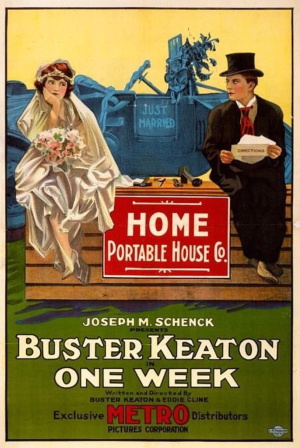
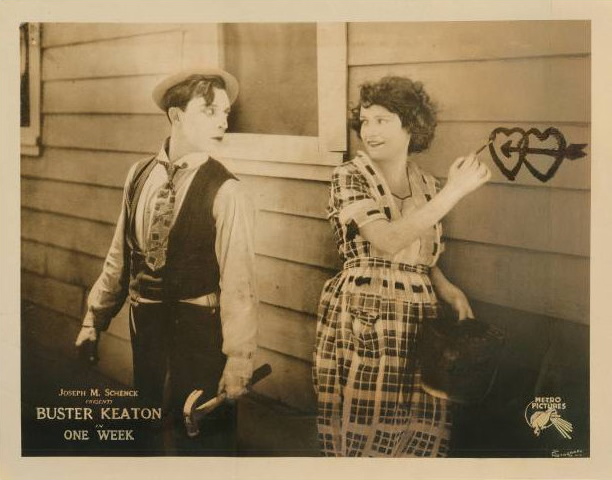
Alongside such films as The High Sign and The Electric HouseOne Week follows in a line of Buster Keaton shorts which utilise aspects of engineering for comic effect. In the case of One Week, Keaton and his newly married wife (in contrast to the usual Keaton formula in which Keaton doesn’t typically begin a film already having the girl), receive a package from the Portable House Co, with their DIY dwelling inside. With the popularity of Ikea-style, flat-pack, ready-to-assemble furniture in the 21st century, this concept being expanded to a full-on house is particularly appealing to the contemporary viewer. At the same time, the short displays that 1920’s go-getter attitude, which paired with the romantic, domestic setting of newlyweds constructing and living in their new home, does make One Week feel endearing and sentimental. I do also find Keaton’s stoicism to be just as endearing in itself. His house is furiously rotating in a storm while the couple are soaking wet, yet there is no point complaining; let’s just sit here and wait until it’s over.

Once the newlyweds finish building their dwelling, it ends up looking like a set piece from The Cabinet of Dr. Caligari due to sabotage from a jealous love interest. Yet the home is still full of clever, utilitarian innovations such as a retractable section of the wall for easy access, a patio banner which can be removed and double as a ladder, and a conveniently indented foot hole on the roof. Likewise, the two-dimensional presentation of certain shots even resembles a platforming video game. They also manage to throw in a meta, fourth-wall-breaking on-screen representation of censorship when the wife drops a bar of soap out of the tub and waits until someone’s hand is placed over the camera lens so she can lean out and retrieve it.

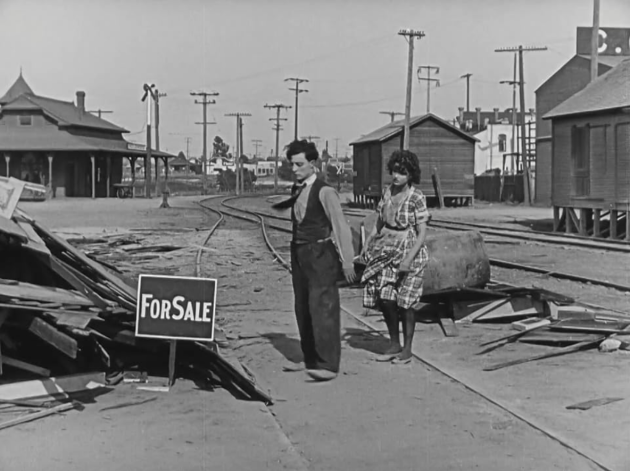
Keaton’s expertise with messing with the audience’s expectations is in full gear with One Week. In particular, the forced perspective shot near the short’s conclusion in which an incoming train appears as if it’s about to smash into their dwelling, only to narrowly miss (only for moments later does another train actually do just this). Keaton makes it look so easy, yet this ending still takes me by surprise when watching One Week again after several years. It might sound contradictory, but watching a short film like this, you can see all the ways in which the world has changed in over 100 years, yet there are ways in which things remain the same.

Announcing The Harrison Ford Blogathon!

Indy

-For this blogathon please write about any film or TV show starring Harrison Ford or any topic related to the man himself. You must choose, but choose wisely!

-Entries don’t have to be just written blog posts. Videos, podcasts or whatever medium you desire for your entry will be accepted.

-No more than two duplicates of any film or TV show will be allowed.

-Add your Twitter handle so I can promote your post.

-You cannot post previously published material.

-To participate please comment along with the URL and name of your blog, and the subject you wish to cover of course. Or if you desire you can email the same details to me via mmallon4@gmail.com.

-Once your topic is approved please take one of the banners below and add it to your blog.

-A full list of the entries will be posted on a separate page which will be active once the blogathon date arrives.

Date: February 27th – 29th, 2020. Please submit your entries on these dates. I look forward to you joining in February!

HF 1

HF 2

HF3

The Roster:

Sat In Your Lap: The Conversation (1974)

Silver Screenings: American Graffiti (1973)

movierob: A Time For Killing (1967), The Mosquito Coast (1986) & Crossing Over (2009)

johnrieber: Working Girl (1988)

Dubsisism: The Conversation (1974)

Hamlette’s Soliloquy: The Fugitive (1993)

The Midnite Drive-In: Cowboys & Aliens (2011)

coffee, classics & craziness: Regarding Henry (1991)

Movies Meet Their Match: Raiders of the Lost Ark (1981)

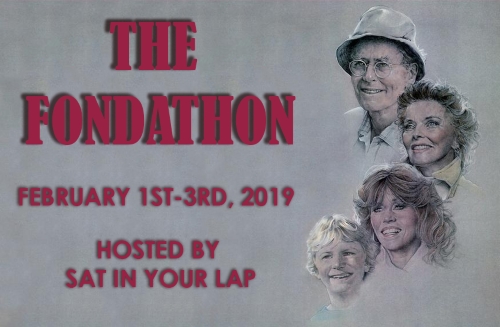
The Fondathon Has Arrived!

2619d74bff700150bc496cd39397d947

The Fondathon has arrived! A big thank you to everyone who took part. We look forward to reading your entries. Please check back over the next three days as I will be updating the blogathon as participants post their entries.

Please be sure to leave comments on the participant’s blogs. I’m sure they will enjoy the feedback!

I will be hosting another blogathon in the not too distant future, so stay tuned for details!


The Entries (In Alphabetical Order):

It Came From the Man Cave!: 9 to 5 (1980)

The Wonderful World of Cinema: 12 Angry Men (1957)

The Flapper Dame: The Big Street (1942)

The Midnite Drive-In: Dirty Mary, Crazy Larry (1974) & Race with the Devil (1975)

Realweegiemidget Reviews: Easy Rider (1969)

Sat In Your Lap: The Electric Horseman (1979)

The Pure Entertainment Preservation Society: Jezebel (1938)

Musings of a Classic Film Addict: Let Us Live (1939)

In The Good Old Days Of Classic Hollywood: The Lady Eve (1941) & Barefoot In the Park (1967)

Dubism: Mister Roberts (1955)

Silver Screenings: My Darling Clementine (1946)

Thoughts All Sorts: Once Upon a Time In the West (1968)

Overture Books and Film: Rings On Her Fingers (1942)

Pop Culture Reverie: Shag (1989)

The Story Enthusiast: Sunday In New York (1963)

Movierob: The Tin Star (1957), Klute (1971) & Ulee’s Gold (1997)

portraitsbyjenni: Yours, Mine and Ours (1968)

Announcing The Fondathon!

HenryFondaJanePeter

Update: All entries can be read here!

The Fondas are an acting dynasty headed by patriarch Henry Fonda (1905-1982) who’s children Jane and Peter Fonda, granddaughter Bridget Fonda and grandson Troy Garity all became actors.

-For this blogathon please write about any film or TV show starring any of the Fondas or any topic relating to them.

-No more than two duplicates on any film or TV show will be allowed.

-To participate please comment along with the URL and name of your blog, and the subject you wish to cover of course. Or if you desire you can email the same details to me via mmallon4@gmail.com. Once your topic is approved please take one of the banners below and add it to your blog.

Date: February 1st – 3rd, 2019. Please submit your entries on these dates. I look forward to you joining in February!

Fondathon 1 Text

Fondathon 2 Text

Fondathon 3 Text

Fondathon 4 Text

Fondathon 5 Text


The Roster:

Sat In Your Lap: The Electric Horseman (1979)

The Pure Entertainment Preservation Society: Jezebel (1938)

Silver Screenings: My Darling Clementine (1946)

In The Good Old Days Of Classic HollywoodThe Lady Eve (1941) & Barefoot In the Park (1967)

portraitsbyjenni: Yours, Mine and Ours (1968)

The Story Enthusiast: Sunday In New York (1963)

Realweegiemidget Reviews: Easy Rider (1969)

Dubism: Mister Roberts (1955)

Thoughts All Sorts: Once Upon a Time In the West (1968)

The Wonderful World of Cinema: 12 Angry Men (1957)

It Came From the Man Cave!: 9 to 5 (1980)

Movierob: The Tin Star (1957), Klute (1971) & Ulee’s Gold (1997)

The Midnite Drive-In: Dirty Mary, Crazy Larry (1974) & Race with the Devil (1975)

Musings of a Classic Film Addict: Let Us Live (1939)

The Flapper Dame: The Big Street (1942)

Overture Books and Film: Rings On Her Fingers (1942)

Pop Culture Reverie: Shag (1989)

Film Criticisms and Movie Review Tropes Which Irk Me

The following points primarily focus on film criticism but some of them can also apply to the reviewing of other forms of media. I am guilty to some of the following during my early attempts at writing movie reviews but eventually saw the error of my ways, and became increasingly aware of and irritated by the following. I may add more in the future.


Describing the Plot of a Film in Detail:

There was once a time I looked at reviews people had written and being impressed by big paragraphs of text, until I would actually read the review and find a large portion of it, sometimes majority of the review is a description of the film’s plot, essentially filler to make a review look longer than it actually is. If I have seen a film then I already know the plot so why would a read lengthy description? If I haven’t seen the film then I want the film to contain surprises and don’t want to know the plot in detail, and if I do want a summary of a film’s plot then I can just read a synopsis on IMDB or Wikipedia.


Labeling a Film “Outdated”:

I believe the term outdated can be aptly used at times; a friend of mine felt The Wages of Fear was outdated because he considered the remake Sorcerer to be superior, ok fair enough. The majority of the time, however, I feel it’s just used as a lazy way of writing off an old movie that someone didn’t enjoy. I didn’t enjoy the film, Little Caesar, as much as I’d like to as I’m a big fan of the Warner Bros gangster movies of the 1930’s; so should I just write it off as “outdated”? No. I’m sure I would have the same reaction to the film if I watched it in 1931. Instead, I’ll examine the movie for why I don’t like that rather than just calling it “outdated”.

Other times reviewers will label something as outdated as if it’s supposed to be a bad thing. “The special effects are outdated, the acting style is outdated, the politics are outdated, the music is outdated”. Yeah, that’s one of the reasons I like old movies. It’s a world away from our own and they offer an insight into the world at the time.


Being Overly Apologetic For Your Opinion:

It goes without saying that snobbery is looked down upon, but I do find the other extreme end to be annoying. I am guilty of this myself in the past, being afraid to put forth an unpopular opinion (i.e, my thoughts on Rocky V), which ultimately I believe leads to a misrepresentation of your true opinion. For example, In the review James Rolfe posted on his site Cinemassacre for Batman Begins as part of his Bat-a thon series of reviews (not to discredit the man as he is a huge inspiration on me), he spends most of the review criticising aspects of the film but only to say at the end he enjoyed the film overall.

I feel like there exists this fear of one being labeled a fanboy or fangirl for constantly praising something they like, and having to justify it by pointing out that they don’t love everything or even dislike pieces of work form an artist or franchise; talk about a first world problem. Someone on the internet called me a fanboy? So what, big deal; I like what I like.


Criticising a Film as Historically Inaccurate:

Movies are pieces of entertainment, not documentaries. Alfred Hitchcock said “drama is life with the dull bits cut out”. Do you really expect a film based on historical events to be entertaining and emotionally engaging if it’s 100% accurate to the known accounts? Unless we’re talking about a glaring anachronism which takes you out of the film, then a certain amount of artistic license is fair game. I find cinema can be a gateway to history; I watch a film based on a historical event and it may make me want to research said event, which I might otherwise not have known about.


Not Having Anything Unique to Say:

In the past I tried to review It’s a Wonderful Life, it’s one of my favourite movies however I couldn’t find much to say about it which has not been echoed by people in the past, so I simply didn’t write a review for it. How tiresome is it read/hear a review which just states the commonly known reasons why a particular movie is beloved or disliked (Or God forbid hearing that dreaded review opener “What can I can I say about this film which hasn’t been said before?”). Film critic Mark Kermode for example gave the Twilight movies positive reviews. I certainly don’t agree with him but it was refreshing to hear an alternative opinion rather than hearing the same old reasons why The Phantom Menace sucks for the millionth time.


Criticising the Use of Plot Holes:

If a film contains a plot hole and it simply doesn’t bother me, then it’s a testament to how great a film can be unless the plot hole hurts the story. The worst film reviewers will point out plot holes as a means of acting snarky. When a person or a group has invested several years of their lives towards the production of a movie they are certainly going to be aware if the script contains plot holes. Do you ether make changes in the script which will affect the flow of a film just so it can be more realistic or do you disguise the plot holes, which itself requires skill.


Complaining About Academy Awards:

I have a rule when writing reviews not to talk about Academy Awards because I feel it is so redundant to do so. “How did this beat ‘x’ picture?”, Why didn’t ‘x’ get an Oscar nomination?”; such tiring statements. It’s no secret that the Academy awards safe film choices and movies which don’t deserve to win throughout its entire 90 year history. There is no rhetoric employed by the Academy Awards to determine what makes a film awards worthy, so why is there always uproar or shock over their choices?


Criticising a Movie For Being Sentimental:

There doesn’t seem to be any word more dirty than sentimental. Unearned emotions? What does that even mean? Stories have been manipulating people’s emotions since the dawn of time. Pulling of effective sentimentality is a skill, and I have not come across a single good reason as to why it is a problem. This is the one film criticism which has annoyed me so much in the past it’s actually been bad for my mental well being. Give me the swooning love scene with the over the top music or the death scene in which the emotions are in full gear. I won’t feel guilty about being moved by it, not one bit.


Criticising a Movie For Being Melodramatic:

Another word which has become dirty for no good reason. Melodrama is a style of storytelling and there’s nothing wrong with it in and of itself; it can be done well and it can be done badly. It’s not going to be everyone’s cup of tea, but unless a film is overly melodramatic or has misplaced melodrama, then more than not it’s another cop-out criticism.


I Like It Because I Grew Up With It:

I’d be willing to give some leeway on this one as maybe some people can attach a strong nostalgic bond to a movie (or another piece of media) and enjoy it largely or entirely on that even if the media in question is not very good. Although I’m not fully convinced and see this as a possible cop-out answer rather than giving a movie a legitimate examination as to why you like it, not just because you grew up watching it. I feel that movies which fall under this banner are often those which people are embarrassed to admit they like. Which segue ways into my next point…


Describing Films Not Held In a High Regard as a “Guilty Pleasure”

Embarrassed to admit you like a movie? Then just say it’s a guilty pleasure and never have to defend your opinion. Ummm…no. I prefer to judge movies on an equal playing field. It doesn’t matter if you’re American Pie or The Seventh Seal. Why should I feel guilt for something which gives me pleasure? What are you? The Roman Catholic Church? What even constitutes as a guilty pleasure? I’ve some lists of so-called Guilty Pleasure movies which contain some surprising entries.

Top 10 Favourite Movies Seen In 2015

topkapi-movie-poster-1964-1020235049

10. Topkapi (1964)

11217913_ori

9. The Prize (1963)

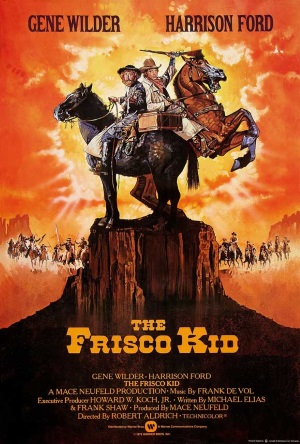
the-frisco-kid-movie-poster-1979-1020517817

8. The Frisco Kid (1979)

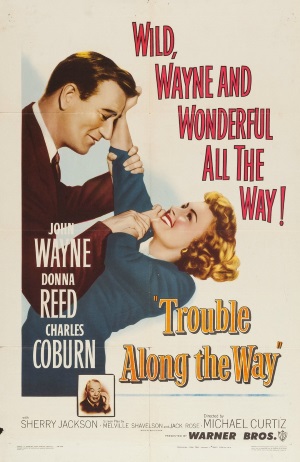
Trouble-Along-the-Way-images-bbdecbe8-569b-4cfb-8116-8ca987f40f3

7. Trouble Along the Way (1953)

1118full-trouble-for-two-poster

6. Trouble For Two (1936)

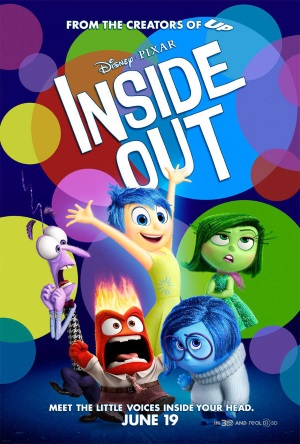
inside-out-poster

5. Inside Out (2015)

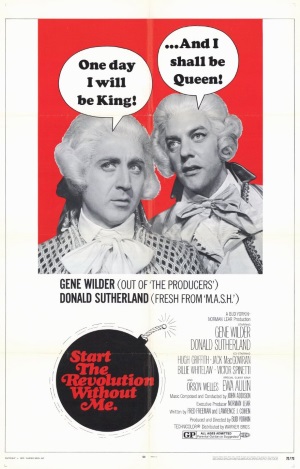
start-the-revolution-without-me-movie-poster-1970-1020213182

4. Start the Revolution Without Me (1970)

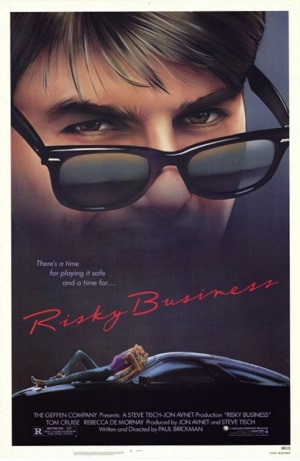
491full-risky-business-poster

3. Risky Business (1983)

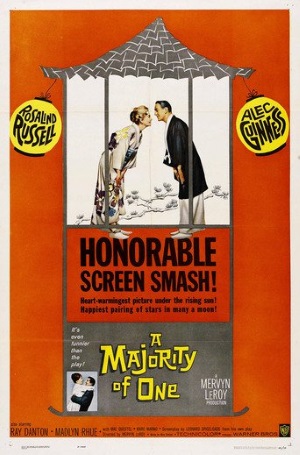
6wXtf2UH3mqQCwviTkJ3p6QzqnH

2. A Majority of One (1961)

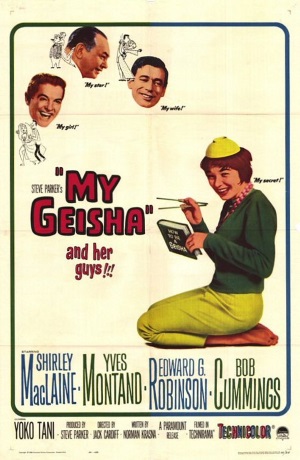
492full-my-geisha-poster

1.My Geisha (1962)