
It’s Free Real Estate
***This Review Contains Spoilers***
During the opening credits of Superman: The Movie, in gigantic blue neon letters which dramatically zoom out towards the screen is the name of screen legend Marlon Brando, whereas the name of the man who actually plays Superman doesn’t appear until after the main title. Brando is only in the movie for less than 20 minutes in the theatrical cut (more in the extended cut and TV version). This foreshadows the imperfect and flawed nature of the Christopher Reeve Superman films however I think of them along the lines of the Japanese concept of Wabi-sabi – beauty within imperfection. With the internal disagreements that occurred with the making of these films behind the scenes, this saga ended up becoming a “choose your own adventure” anthology. Regardless, it all goes back to the year zero of 1978 and Superman: The Movie.

Christopher Reeve will forever be the GOAT live-action representation of the all-American icon that is Superman. But Superman is a boring, overpowered superhero I hear a bunch of edgy, Zack Synder-worshipping 12-year-olds say – nonsense! Superman is a tragic figure, one who saves the lives of others but is unable to enjoy his own life or be with the woman he loves. In Superman: The Movie this tragedy is showcased right off the bat as the young Clark Kent in Smallville is forced to be a lowly waterboy rather than an all-star college athlete as he is upstaged by a group of jocks and denied his childhood sweetheart Lana Lang. Unlike the creatives of today in both film and print who are embarrassed by the Superman of the past, this is the Superman who unashamedly represents truth, justice and the American way. The aspirational hero, the loveable dork, the pure-of-heart-do-gooder who saves a cat from a tree, will pull back his shirt to reveal the iconic S and dawns the bright, popping, contrasting colours of the famous suit (complete with the trunks) and all conveyed with such un-ironic sincerity (I just wish they could have held off on the Cheerios product placement during such a poignant moment). With the lighthearted nature of these films and their lack of irony, they can get away with a certain degree with their suspension of disbelief, hence on Superman’s first night, he just happens to save Lois Lane and none other than The President Of The United States from near-certain death. You know, like you do in a normal night’s work.

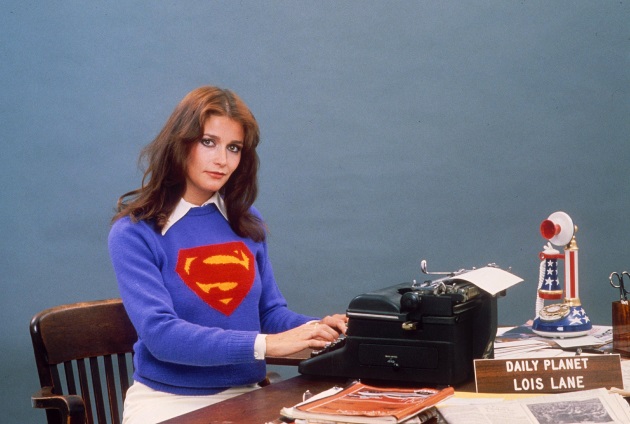
The transformation between Superman and his alter-ego Clark Kent really showcases just what a superb actor the late Christopher Reeve was. The infamous glasses Clark uses as a disguise which no one is able to see through is easy fodder for satirists, but there is so much more to the illusion from his complete change in attitude, posture, voice and mannerisms. Clark wears tailored baggy clothes, parts his hair to a different side, looks frail, slouches, talks in a higher octave, acts clumsy and submissive (while pretending he has no street smarts). Likewise, assuming the film is set in its contemporary period of the 1970s, this Cary Grant-like Clark still dresses as if it is 1938. It is a fantastic sight to observe Reeve playing both personas in the same uncut shot inside Lois’ apartment in which he removes the glasses and speaks in a different voice, as right in front of the viewer’s very eyes, he turns into an entirely different man. Just as impressive is the chemistry Reeve shares with a very quirky and in many ways clumsy Lois Lane played by Margot Kidder, in which the two of them turn the lengthy flying scene with Superman and Lois into pure cinema magic. The sequence and the dreamlike music by John Williams has the beauty and sensuality of an Astaire-Rodgers dance number as it perfectly capturing the intimacy between mortal and immortal (I’m sure with this scene alone the film bagged the female demographic).

Gene Hackman as real-estate madman Lex Luthor provides much of the film’s comic relief with his many flattering comments about himself (“Doesn’t it give you kind of a shudder of electricity through you to be in the same room with me?”) as well as his witty insults against the comic foil that is Otis (even Luthor’s underground layer of an abandoned subway acts like a character in itself). The film’s other great source of comedy is the scenes in The Daily Planet which have that screwball comedy, His Girl Friday vibe. There is a specific electric energy that comes from that click-clack of typewriters and phones ringing (the age before PCs and laptops) to the fast and snappy dialogue from actors who share exceptional chemistry as they walk and talk (“Remember my expose on the sex and drug orgies in the senior citizens home”). Clark himself provides an entertaining contrast as the avatar of Middle America who uses phrases like “swell” against the backdrop of his city slicker urbanites. As far as the film’s other callbacks to vintage Americana, the film plays into the 50’s nostalgia craze of the ’70s (alongside American Graffiti, Happy Days, Grease and The Lords Of The Flatbush) but the film still remains a product of the 1970s (“Say Jim, that’s a bad OUTFIT!”) tapping into the 70’s disaster movie craze with the destruction of the Hollywood sign and the inclusion of several obvious but charming miniatures (complete with scores of tiny boulders). Even the film’s iconic tagline “You’ll Believe A Man Can Fly”, speaks to its era as nothing special effects-wise had ever been accomplished in prior ages.
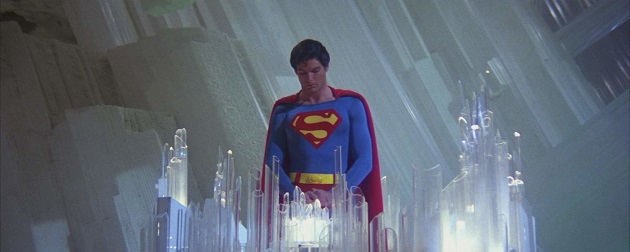
In the 1978 TV special on the making of Superman: The Movie, behind-the-scenes footage shows Marlon Brando reading off cue cards when filming as well as reading from the script when he is not on screen. It’s a rather sad and sorry sight (this was into the era when Brando had lost his marbles), but in the finished product, Brando delivers the goods as Superman’s/Kal-El’s father Jor-El. Brando commands the scenes on Superman’s home planet Krypton with his every word and line being delivered with such commitment and integrity. Brando proves to be a comforting presence during the scenes in the Fortress Of Solitude as well as amid his narration throughout the sequence in which the audience is treated to an assortment of galactic images. With its Shakespearean tone and grand opening fanfare music, the scenes on Krypton really provide Superman: The Movie the aura of a Hollywood epic. Well, that and one of the greatest opening credits sequences in cinema, as each member of the cast and crew has their name appear in the form of those aforementioned giant blue neon letters in space accompanied by a hair-raising “swoosh” sound effect as their credit come across the screen (even with director Richard Donner’s name at the very end, the audio gets that extra oomph). Just how did they achieve that effect without the aid of CGI, tell you what, I’m happy not knowing. Above all, what completes the opening credits is none other than the music by cinema’s greatest composer, John Williams. For the first time in the character’s history, Superman has a musical representation, in which such hope and optimism are conveyed in musical form and a theme in which the main three-note musical motif actually speaks the name of the titular superhero.

The opening scenes on Krypton also set up the big bad for the sequel Superman II, General Zod (Terrence Stamp) and his two accomplices, Non (Jack O’Halloran) and Ursa (Sarah Douglas). This opening offers a taster of the greatness which is offered in the sequel with Terrence Stamp’s legendary, scenery-chewing performance as the Kryptonian traitor (“You will bow down before me! Both you, and then one day, your heirs!”). The giant faces in the high court and their pronouncements of “guilty!” as well as that floating square known as The Phantom Zone (often spoofed in pop culture) makes for unforgettable imagery. So what exactly are the trio being tried for? It’s not explained in any depth, but the film states Zod was attempting to start a revolution on Krypton to form a new order with himself as leader. Was there any justification for their goal? Krypton does appear to be a stale, conformist, authoritarian dystopia in which everyone dresses the same and Jor-El is even instructed not to leave Krypton with his family when he believes the planet will imminently self-destruct (hmmm, #ZodWasRight).

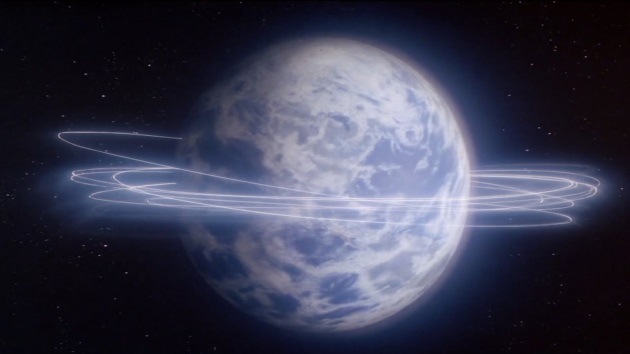
For a film series which is full of silly, bizarre or just downright dumb moments, it’s surprising that it’s the first and most grounded of these films which contains the most controversial moment in the entire Superman film franchise. I am indeed speaking of the infamous climax of Superman: The Movie in which Supes turns back time by altering the rotation of the Earth in order to prevent the death of Lois Lane (after he was only able to stop one of the two missiles Lex Luthor had rerouted), or at least this is what is commonly perceived. Is Superman actually flying faster than the speed of light to go back in time thus the reversed rotation of the Earth is a result of Superman going back in time rather than being the method of which he goes back in time? Superman is also subsequently shown to fly in the direction of the Earth’s rotation as if he is re-correcting the direction in which the planet should rotate, or did he simply overshoot by going too far into the past and had to go slightly correct himself time-wise? But then again, how does flying anti-clockwise make him go into the past and clockwise go into the future? Putting the obvious implications of real-world science to one side, the Back To The Future: Part II levels of paradox will not only make your head spin, the movie ultimately fails to make clear what Superman is actually doing.
Other questions raised by this deus ex-machina climax include:
-Why hasn’t he used this power before or since? If Superman can use time travel to fix any problem, then it makes any conflicts in subsequent movies irrelevant.
-If he can fly that fast then why couldn’t he stop both of the missiles?
-If he went to get the other missile and then save Lois after turning back time, that means there’s another Superman somewhere stopping the one other missile from before.
-If Superman is knowingly breaking Jor-El’s command that he doesn’t interfere with human history (“It is forbidden for you to interfere with human history”) and instead taking his Earth father’s advice (“One thing I know, son, and that is you are here for a reason”), then I can understand that this is a sign that he has chosen Earth over Krypton, why does he continue to consult the elders of Krypton in subsequent movies?
That said, I by no means dislike this ending as it’s not only fun discussing the merits of such a conclusion, it still works on an emotional level as you can feel Superman’s anger, heartache and pain over his failure to save Lois as he lets out a mighty scream and ascends towards a billow of storm clouds as the booming voice of Jor-El instructs him not to interfere with human history.
The 3-hour TV version of Superman: The Movie (first broadcast in 1982 on ABC) contains an extra 37 minutes than the extended cut, which was released by Warner Bros for the first time on home video and in the film’s original aspect ratio for the film’s 40th anniversary in 2018. I did have some scepticism going into this version suspecting it would make the film too long and bloated, however, I am pleased to report this version is my definitive cut of Superman: The Movie. Please forgive me Mr. Donner that I keep preferring the unapproved versions of your Superman films (the Blu-ray contains an opening prologue stating this version does not represent the director’s vision).
So what goodies does this 3-hour long cut offer? Firstly, it offers another moment with the Phantom Zone as it whizzes past baby Superman’s pod. A nice reminder that these guys from the start of the film will come back later not to mention, any more footage of Terrence Stamp as Zod is much appreciated. In this cut, it is also revealed the little girl on the train who saw Clark running in Smallville was none-other than Lois Lane herself, to which I had the reaction of “say what?!”. The scene itself is nonsensical as since when do parents refer to their children by their full name in casual conversation? It is also a bit of a cheap shot to illicit a reaction from the audience but it did work on me so I’ll let them away with this one. It would however have been a more clever move to imply the character was Lois rather than outright stating it, creating a bit of mystery for the viewer. One fantastic addition however is that of Superman speaking to Jor-El in the Fortress Of Solitude after his first night of crime-fighting and speaking of his guilty feelings for having enjoyed the experience (“do not punish yourself you your feelings of vanity, simply learn to control them”). This scene further highlights Superman’s vulnerability and makes this characterization more human – powerful stuff!

Correspondingly, the sequence in which Superman attempts to enter Luthor’s layer but has to make his way through hoards of gun bullets and sub-zero temperatures doesn’t make sense as Luthor is aware that kryptonite is his only weakness but does prove to be a fun sequence despite this obvious plot hole. However speaking of extra scenes involving Lex, my favourite addition to the TV version would have to be that of Luthor’s babies, a collection of big cats which are never seen on screen but only heard with an amalgamation of various big cat growls. These cats strike fear into the heart of Otis as Luthor in a very sinister manner asks him “Otis, did you feed the babies?”. This scene makes Lex all the more sinister and explores the mad-scientist aspect of his character, as well as tying into an additional scene at the film’s end in which we actually discover the fate of Luthor’s accomplice Miss Teschmacher. My only complaint with this version of Superman: The Movie is the dial downed sound effects in the audio mix for the opening credits. That said, I am now waiting for restored versions TV versions of Superman II and III (and an extended cut of IV). Come on Warner Bros, chop chop!

I get that people are very sentimental towards director Richard Donner although I’ve never been a huge fan of his work. Lethal Weapon was never my scene and I don’t like The Goonies. I also really dislike The Richard Donner cut of Superman II (but more on that for another day). Regardless, personally for me Superman: The Movie is by far his best film in my estimation. However, my biggest complaint with Superman: The Movie (as solid as it is) is Superman II. The sequel does everything the first movie did but better. One thing which is lacking from the first movie is an adversary for Superman to engage in combat with (which Superman II has in plentiful supply) not to mention the sequel has much more internal character-driven conflict. With that said, the adventure continues…
![House [ハウス/Hausu] (1977)](https://satinyourlap.com/wp-content/uploads/2022/10/resize.jpg?w=300)





 Sat In Your Lap