Dances with Wolves (1990)

Writes With a Keyboard

It’s more than apparent that Kevin Costner has such love and reverence for the Hollywood western, as he resurrects the genre one decade on from the infamous flop that was Heaven’s Gate and continuing the long tradition of epic Hollywood filmmaking in Dances With Wolves. I find it refreshing to see westerns which include the Indian point of view and the insight Dances With Wolves provides into the culture and lifestyle of the Sioux as well as hearing a language not often heard is fascinating. The Indians in Dances With Wolves are humanised with moments such as when John Dunbar (Kevin Costner) endures a relatable awkward moment as he sees Kicking Bird (Graham Greene) having sex in the tipi they are sharing, to moments in the film in which the Indian children of the tribe have the desire to be grown up and act older than they are. The Indians, however, are not sanctified either and the film avoids the noble savage stereotype; some members of the tribe are vicious killers and openly express their prejudice. The white man on the other hand is shown killing mass amounts of Buffalo only for their horns, throwing their trash on the ground and polluting the water. More significantly the film shows the Sioux’s rival tribe The Pawnee working in co-operation with the US military to take out the Sioux, presenting the conflict between settlers and natives as not a simple good/bad dichotomy – Dances With Wolves presents both villainy and nobility on both sides.

Although not many people share the fondness I have for Kevin Costner and dismissing him as a dull, monotone actor, I point to Dances With Wolves as a showcase that the man is a great screen presence as he carries a four-hour-long movie on his shoulders with no dialogue for long stretches of time while exuberating his commanding narration voice. The passage of time in which John Dunbar very slowly over the course of a four-hour runtime becomes assimilated into the Sioux culture, learns their language and becomes more emotive and open from his previously quiet, stoic self represents an astounding piece of storytelling. Unfortunately, certain individuals will look upon a movie like Dances With Wolves and decry it as offensive for its display of so-called “cultural appropriation” because apparently, the embracing of other cultures doesn’t represent unity between races but thievery of one culture’s ways by another. Dances With Wolves is a film that speaks to our humanity and shows how race can transcend culture. The scene in which Dunbar is being held by the US soldiers as they assault him, denying him to return to his newfound way of life as well as killing his wolf companion Two Socks and using his diary as toilet paper is beyond painful to watch. I’ve become so attached to the character at this point that I can’t bear to watch everything he has worked towards being destroyed.

I can’t say if Dances with Wolves is a movie intended to carry an environmental message but that is an impression I get from it from the film’s contrast between the resourceful Native Americans to the more polluting white men (Costner would go on to later produce and star in the eco-thriller Waterworld). John Dunbar’s desire to see the western frontier before it disappears is comparable to the last great frontiers today which are apparently at risk of eventually disappearing if modern climate change accounts are anything to go by. John Dunbar is a man who doesn’t want to take advantage of the land but to simply admire and bask in it – who needs CGI when there’s a world of scenic and natural beauty out there begging to be captured on film? Simply look at the film’s majestic landscapes of the badlands accompanied by John Barry’s score which evokes a real sense of wonder. “Why go out to a location when you can just create it on a computer. Isn’t that so much easier?” – sigh. Likewise, the famous buffalo hunt scene is the real deal. How do you recreate a buffalo hunt? Why get huge herds of buffalo of course. Like the chariot race in Ben-Hur, history is brought back to life with herds buffalo as far as the eye can see with stuntmen on horseback right in the middle of it all; pulling off something as huge as this and retaining continuity is astounding. Dances With Wolves doesn’t come off as cold, callous Oscar bait but sadly it is another movie in which its Best Picture win has hurt its reputation; “Dances With Wolves is just that movie which beat Goodfellas”.

Star Wars Episode I: The Phantom Menace (1999)

The Farce Awakens

Star Wars Episode I: The Phantom Menace is a movie I’m apprehensive to review; perhaps more than any other film ever. I only review movies if I feel I have something to interesting and unique to say. What unique viewpoint to do I have to give to the Star Wars prequels? –  possibly the three most heavily critiqued films ever. I decided to watch all three prequels again (and hopefully for the last time) in order to get a fresh perspective on them. I believe I may have some unique points of view to offer; plus I am among the populace who is addicted to discussing every aspect of George Lucas’ pop culture behemoth.

Don’t be too surprised when I tell you I hate the prequels – big shocker, right? However, The Phantom Menace is the prequel I dislike the least. The major aspect I find The Phantom Menace does have going for it over the other two prequels are the aesthetics. It comes the closest to resembling the original trilogy, if still incredibly far off. The Phantom Menace was shot on film and does feature on location filming and even some practical effects here and there, so the whole thing doesn’t come off looking like a video game as Episodes II and III did. There is a lot of eye candy to behold, such as the locations such as the Palace of Caserta in Italy (why do you want to film everything on a green screen when beautiful places like this exist in the world?), while the costume design – not something I would normally comment on – is very pleasing to the eyes. The only two scenes in The Phantom Menace which has a little bit of that excitement that I get watching the original trilogy are the pod race and final lightsaber duel between Obi-Wan, Qui-Gon and Darth Maul; an impressive display of acrobatics and is it’s not choreographed within an inch of its life like the duels in Episodes II and III. But even these few aspects of the film I do enjoy are ultimately superficial as there is no internal conflict nor am I emotionally invested.

What surprised me watching The Phantom Menace for the first time in a decade was just how incredibly frustrated I got. I’ve seen and read more reviews of this film over the years, analysing it to death and mocking every aspect of it. Watching the film again I expected to have reactions of “yeah it sucks, what else is new”, but sitting down and watching the entire thing my brain became so numb from the never-ending monotone exposition. I’m not even that keen on the John Williams score; it’s not bad by any means – far from it – but it feels too dark and moody for a Star Wars movie. As fine a piece of music as Duel of the Fates is, those booming choirs feel out of place for Star Wars. In regards to the most hated fictional character of all time, I don’t think Jar Jar is the absolute worst thing ever, I can at least tolerate him (if there’s any character in the prequel trilogy that bothers me for how ridiculous they are: its General Grievous). Plus at least he’s responsible for the only line from this film I like; “The ability to talk does not you intelligent”.

All three prequels lack the space western elements of the original trilogy, and I recall a comment that George Lucas intended The Phantom Menace to play out like a costume drama. Perhaps it’s own such a direction could have worked if you know, the execution wasn’t total pants. I can see what Lucas was perhaps going for in the story in trying to portray the fall of a democracy; the idea of radicals using political unrest as a means of coming to power – such as the Nazis using the turmoil caused by the great depression to amass power. Perhaps the empire isn’t such a bad thing, it appears under their command the universe became a more interesting place.

As someone who is interested in the relationship people have with popular culture, I find the most interesting aspect of The Phantom Menace is nothing in the film itself but rather its place in history. Think about it, the most anticipated movie of all time and it was a colossal letdown, and this occurring during the early days of the internet. What would the world of geekdom be like if The Phantom Menace actually lived up to expectations? Would an entire generation be less cynical?  Would internet culture be the same as it is today, possibly for the better?

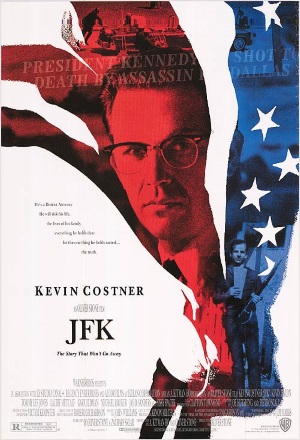
JFK (1991)

JFK, Blown Away, What Else Do I Have To Say?

I’m aware in modern times conspiracy theories have become detrimental in discovering the actual truth (largely thanks to the internet) but I can’t deny that I just love this sort of stuff. JFK requires your utmost attention and at a runtime of three hours, it feels like the movie leaves no stone upturned (pardon the pun) in its examination and deconstruction of the Kennedy assassination. Admittedly the first time I watched JFK I didn’t understand much of what is discussed in the film. It’s a lot to digest in a single viewing but there are more intriguing theories here than an entire season of Ancient Aliens (minus the bad haircuts and awkward line delivery); but I can happily watch JFK multiple times to further understand it and eat up every single word of dialogue. I doubt we will ever need another film made about the Kennedy assassination; what highly talented filmmaker could be more passionate about the subject matter? I also highly recommend watching the director’s cut for even more conspiracy goodness to evoke the paranoia in you.

JFK is one of those movies which makes you most appreciate the art of editing, incorporating many layers of time and reels of stock footage; no scene during the movie’s three hours is edited in a standard fashion. The editing help make the film’s exposition exciting; a character may be describing an event as the scene cuts to just that in an obscured or dreamlike manner. The Mr. X sequence with Donald Sutherland is a perfect example of how to pull of engrossing exposition; plus is there a more classic cold war, spy movie type scene than meeting a suited man in the park to receive classified information. Likewise, John Williams’ theme for JFK evokes my inner patriotic American, even if I’m not American. The militaristic and at other times conspiratorial nature of the score helps make the movie as compelling as it is. The black & white scenes such as those featuring the military feel reminiscent of Seven Days In May with shades throughout of the John Frankenheimer style. I’m sure Stone must have also taken some pointers from the first movie about the Kennedy assassination, 1973’s Executive Action.

JFK continues the tradition of films such as The Longest Day in which a large ensemble cast of familiar faces and great screen presences to help guide us through the story. It’s amazing seeing different generations of actors doing some of the best work their careers and utilizing their screen personas to full effect even if many of them are only on screen for short spaces of time. Some of the figures in the story strike me as too bizarre to have been real-life people, especially David Ferrie and Claw Shaw.

I’ve always been in defense of Kevin Costner against criticisms of being a dull actor. Granted his career did go downhill in mid 90’s and has never fully recovered but in his heyday of the late 1980’s/early 90’s he was such a hot streak of films. Casting him in the role of Jim Garrison couldn’t be more perfect as Costner is much like a modern-day classic movie actor in the vein of everymen like James Stewart, Henry Fonda or Gary Cooper. He’s been most commonly compared to Cooper (the courtroom section of the film is reminiscent of Cooper’s role in The Fountainhead) although with his southern demeanor I would compare him to being a modern-day Henry Fonda. I would defy anyone to call Costner a bad actor after watching the film’s courtroom scene. Talking almost non-stop for 40 minutes and never losing my attention while exuding a stern, emotional and towards the end of the speech, a fragile voice; with his final conclusion bringing a tear to my eye.

I find Jim Garrison’s family life interesting itself, mostly from the relationship with his wife. What does he see in her? She does not support his endeavors, despite his noble cause and unlike her husband, she is susceptible to believing what the media tells her. Here is a man who spends the movie questioning and fighting the system yet has a wife with a conformist personality. I can’t say for certain what they were like in real life but the in film I grew to dislike her character.

JFK  draws no conclusions, it doesn’t prove who assassinated Kennedy and allows the viewer to make up their own mind. Stone may be often criticized for his use of a dramatist’s license but as I say with many films based on historical events; this can make for a more compelling story. Even if there are untruths present, the film can act as a gateway to wanting to discover the real story. The movie did leave me a feeling of (good) anger and is one of the films I can credit with helping to influence the way I think.

“Dedicated to the young in whose the spirit the search for truth marches on.”

Jack Frost (1998)

He’s Snowboarding On His Flesh

When I was a kid, nothing got me and my friends more hyped up in anticipation than snow. Yep – the glorious white stuff. To us, there were few other activities as fun as playing in the snow. One major problem, however; I grew up in a country in which we only get about 3-4 days a year of significant snowfall in which it would actually settle on the ground. So when there was a significant level of snowfall, we would make the utmost use of it. Snowball fights, sledding, snow angels and of course, making a snowman.

Snowmen were a subject of my childhood fascination. Why? They just have a certain magical appeal. Whenever I would see one in someone else’s garden, I would always have to point it out, “Look, a snowman!” So when my friends and I heard about the movie Jack Frost, in which a snowman comes to life, we were psyched to see it. Although there already existed the 1982 animated short The Snowman which had a similar premise, I believe Jack Frost appealed to us more for several reasons:
-It was a movie more of our generation.
-It was live action and the snowman looks just like a real snowman we could have created ourselves.
-But most importantly, the movie was called Jack Frost. When I was younger, whenever there was a frosty night, we would always say that Jack Frost is out tonight.

So one weekend myself and one of my friends rented Jack Frost on video and we thought it was an absolute blast. However even at that age we thought there were some stupid moments, such as when Charlie is hanging over a wall of snow and he’s supposed to be in danger, yet the drop itself is tiny; or during the sledge chase sequence when two kids just happen to have a snowball the size of a boulder on standby to stop Charlie and Jack. However, the one aspect of the film we found to be the most unbelievable was in how Charlie had not got over his father’s death one year on. The reason for this is that a friend of ours had recently lost his father to an illness, yet was back in school one week later, acting as he normally would. To us, Charlie isolating himself from his friends due to his father’s death one year on seemed far-fetched. In retrospect, however, this view was short-sighted.

Regardless we could only look on in envy at just how much snow this fictional picture perfect postcard town of Medford, Colorado had. In my home country when it did snow our teachers wouldn’t even let us go outside to play in it. Yet in Jack Frost, the kids are able to go into the snow and have trench warfare battle snowball fights. Plus they don’t even wear school uniforms?! You can imagine the jealousy us kids had for our Yankee counterparts.

Several years later, I saw Jack Frost again on TV one weekend and the following Monday in school, it seems half the class also watched it and were all raving about how much we loved it; discussing our favourite moments, talking about the scenes we found to be the funniest. Even my teacher had watched it over the weekend and called it – and I quote – “a wonderful film”.

Now years later with the advent of the internet, I find out that Jack Frost is considered a terrible film and the critics trashed it. However, when watching it again after all these years it still strikes a chord with me as a pool of happy, nostalgic memories coming flooding back. But what I can I take from the film and examine now with an adult perspective?

One of the biggest criticisms I hear against the movie is that the snowman is creepy. Even Roger Ebert criticised the design with its anorexic looking twigs for arms. Well, it’s all in the eye of the beholder I guess. I also liked the design of the snowman as I think not only does he look cute but looks just like a snowman the average kid would make. The snowman was originally designed for George Clooney and I can see Clooney’s face within it. Apparently, the casting change to Michael Keaton caused major problems for the film’s SFX team. Watching my late 90’s DVD copy of Jack Frost, the CGI doesn’t look half bad. Although if I was to ever watch the film on an HD transfer perhaps it might not look as good.

Jack Frost belongs to that breed of film which was everywhere in the ’90s in which a workaholic father can’t make time for his kids. As drawn out as this cliché was in the 90s, it does raise the question – should you even have children if you’re going to dedicate yourself to a lifelong career or venture? Jack Frost does go a step further with this examination of fatherlessness with the character of Rory whom as the movie states, never saw his old man and resents it (“It sucks, it sucks big time”). Any coincidence his character is a delinquent. The father-son relationship in Jack Frost does tug at my heartstrings and yes, that ending kills me.

Many aspects of Jack Frost scream this is a late 90’s movie from those early CGI credits to the film’s emphasises on extreme sports such as hockey and snowboarding. Even the antagonist is named Rory Buck – might as well be called 90’s Mc 90’serson. Even the radio presenter at the beginning of the film states: “we got more music coming from the 70’s and 90’s. No 80’s I promise” (Boo!).

Viewing Jack Frost from a more mature perspective I am forced to suspend my disbelief at my many aspects of the film’s plot. So for starters, does the afterlife exist within the universe of Jack Frost? Where was Jack for the entire year before he came back as a snowman? Was he in purgatory? How did he suddenly find out how to change back to his human self then leave? What’s the deal with the magic harmonica? Does God himself exist in this universe?

Then there’s that whole snowboarding sequence. It’s a blast to watch even though I have to refrain from questioning how illogical it is. I already thought the conveniently placed snow boulders where stupid as a kid but I also notice how snowboards and snowbikes are all conveniently placed. But more importantly, the kids do notice that Charlie is sledding with a sentient snowman? Also, have you considered that he’s essentially snowboarding on his flesh? But who cares, this sequence is a ton of fun and Hey Now Now by Swirl 360 is a tune. That money shot of Jack Frost snowboarding in mid-air brings a smile to my face.

Rock on Jack Frost! Snow dad is better than no dad!

Back to the Future Part III (1990)

Once Upon a Time In Hill Valley

***This Review Contains Spoilers***

While I loved Back to the Future Part II for how frantic and fast-paced it is, I love Part III for largely the opposite reason; for being more simple and laid back. You need a dark chapter like Part II before you can have something more romantic and light-hearted like Part III. I love the western setting, there’s a certain innocence to it and is classic in every sense of the word. There’s monument valley, cowboys, Indians, a saloon as well as the atypical western music score. It’s also fun to see Marty and Doc in a date much further back in time as well as seeing the images, quotes and motifs from the first film reapplied in the western setting. The film shows us Hill Valley during its early days thus over the course of three films we get the entire history (and near future) of this town, making it a character onto itself even if the western setting does raise the question about Hill Valley’s geographical location.

Part III is the Doc’s movie; it gave his character a whole new dimension as his scientific ethics are challenged by falling in love for the first time. I don’t think many people realise it but Doc Brown is a pretty dark character. He blew his family’s fortune on inventions which don’t work (at least until he invented time travel) and is ostracised from the rest of Hill Valley so it’s about time something finally went right in his life and he finds a love. Plus it’s cute, two geeks falling in love who were previously separated by space and time for that added romantic element.

My only complaint with Part III (really my only complaint with any film in the trilogy) is that the film pulls the liar revealed, one of my most dreaded of movie clichés. We know the Doc and Clara are going to get back together towards the end of the movie, so do really need to have the movie abruptly stop for a period. But I’m more forgiving of it in this instance as their separation does contribute to the suspense during the film’s finale which is one of the highlights of the entire trilogy. The interactions between Marty and Doc, on the other hand, are just as great as ever, even more so that they have to find a way to get the DeLorean up to 88 miles per hour with the technology available to them in 1885. Although I do have to ask is Doc not going against his principles at the end by creating another time machine, oh well, it’s still a great ending. Back to the Future Part III is my least favourite of the series but I still love it. Unlike other film franchises, the trilogy is done and dusted. It’s not polluted with further sequels, prequels, remakes, reboots, re-whatevers, and hopefully, it will stay that way.

The End.

The Simpsons: Season 3: Episode 17; Home At The Bat (1992)

The Pride of the Simpsons

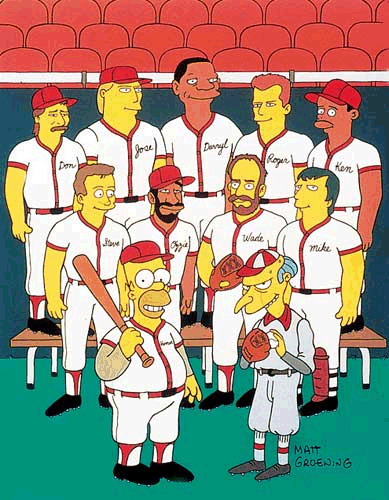
After recently re-watching the first nine seasons or what fans now refer to as the golden age I have come to the decision that Homer at the Bat is my favourite episode of The Simpsons.

I should point out that I’m not a sports fan (far from it as a matter of fact) and due to cultural reasons I do not know who any of these baseball stars are as the sport is not popular in the UK. However, this made me realise just what made the guest appearances during The Simpsons glory days so great. Even if you’re not familiar with a celebrity you can still enjoy their appearance on the show as they manage to give them their own unique comic, down to Earth personalities. Here there are no fewer nine guest stars and they’re all equally memorable and funny. However what also astounds me is how each of these guest stars has their own story arc and all this within the confines of 22 minutes. There is even an early exposure to Barney Gumble being a secret intellectual; leave it to The Simpsons to get the viewer interested in who was England’s greatest prime minister. There is so much going on in this episode yet the show’s creators successfully get it all in without any of it feeling forced. There’s enough material here to make several episodes.

Homer at the Bat is one of the more surreal episodes of The Simpsons’ glory days and they even manage to summarise this during the end credits in one catchy song (a parody of Talkin’ Baseball by Terry Cashman). Like many Simpsons’ parodies it has become more famous than its source and like the best Simpsons’ songs, a whole generation can recite it off by heart.

The Simpsons: Season 7: Episode 21; 22 Short Films About Springfield (1996)

Seeeeymoooour!

I can narrow down the two Simpsons episodes which I quote the most in daily life; A Star Is Burns and 22 Short Films about Springfield. Half of my favourite Simpsons’ quotes come from these two episodes alone.

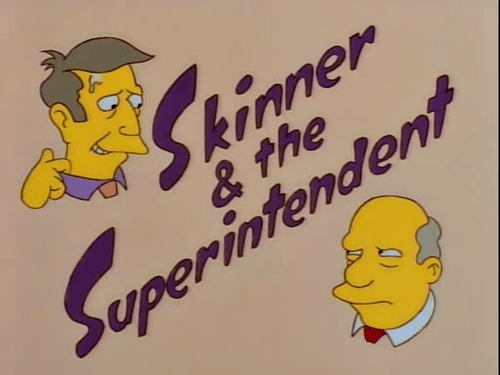
This episode has not only my all-time favourite Simpsons’ moment but also possibly my favourite moment in TV history; I am indeed talking about the greatness that is the Skinner and Superintendent skit. I can recall several instances in which myself and people I’ve known have recited this scene in its entirety from memory. As a kid, I didn’t get the humour of the scene but can recall my parents and older brother laughing hysterically at it. Now that I’m older I constantly watch this scene over and over again. But do you know what’s the funniest thing (well aside from the aforementioned scene) it’s the little differences. Such as the episode’s parody of Pulp Fiction’s “Muthaf**ka” scene, with Chief Wiggum stating “Hey I know you!”; the complete opposite of what is said in the scene from Pulp Fiction. Like the greatest of Simpsons’ gags, it works on so many levels. Why did they never make another episode like this? I guess this one was as close to perfection as it gets that they could never top it.

Be Here Now (1997)

Oasis: Beyond Wonderwall

Oh boy, Be Here Now, talk about a divisive album. I’ll cut to the chase and say that I am a lover of Be Here Now and consider it one of my favourite albums of all time. The cover of the album itself symbolises the bombastic nature of the record, and in narcissistic fashion, even displays the album’s release date. The title, on the other hand, represents the arrogant nature of Oasis at the time (whether or not that was intentional). It’s like Oasis is instructing that you are going to be here now! If the first two albums were about trying to achieve your dreams, then Be Here Now was about living those dreams. The sound of a band high on coke and on top of the world, a real powerhouse of an album in which everything is turned up to 11. Be Here Now is not Morning Glory. I don’t want Be Here Now to sound like Morning Glory, we had Morning Glory and now this is something different. Unlike the first two albums, the songs on Be Here Now don’t have as many hooks and are not instantly catchy; Be Here Now is a dirtier, meaner record. When I first listened to the album I didn’t instantly latch onto it and took me a few listens to grow on me, unlike the first two albums which were love on first listen.

The album’s opening track D’You What I Mean? Is 7 minutes and 42 seconds long. Before the vocals even begin we are treated to a minute comprised of helicopter and Morse Code sound effects with the final minute of the song just being guitar feedback; that’s the level of bombastic indulgence we’re talking about here. This song is not radio-friendly yet it was the album’s lead single and went to number 1 on the UK charts; only Oasis had the clout to get a song like this to be a single. Yet, they would even outdo D’You What I Mean?  with All Around the World, an epic all-devouring song which lasts for a whopping 9 and a half minutes, and it too was a UK number 1; the longest song in length to ever do so. It’s such a monstrous, epic song; a real celebration of everything Oasis had achieved up until that point.

I disagree with the notion that the B-sides from the Be Here Now era should have been included on the album. They’re great songs but they’re more reminiscent of Morning Glory and don’t match the over-the-top nature of Be Here Now. But aside from the over-the-top arena rockers of celebration (God knows just how many layers of guitar tracks are on My Big Mouth and It’s Gettin’ Better Man!!), we do get two more downbeat, emotional songs in the form of Stand By Me and Don’t Go Away; the latter of which being one of Oasis’ biggest tearjerkers.

No band could make Be Here Now today, no one would have the clout to do so. But not Oasis back then; I can imagine a record label executive asking the band does All Around the World have to be 9 and a half minutes long, and them replying “Yes if f**king does!”. When was the last time a band made an album that had the same “we’re on top of the world” spirit as that of Be Here Now? I’ve never been a fan of the post-millennium music scene, and for me personally, 1997 is the last year in which there were several high-profile album releases which I loved. The final sound effect on the album of a door shutting on the All Around the World Reprise signals the end of the Brit-pop era and the end of Oasis’ golden age.

Critics praised Be Here Now on its initial release, only later to detract from their praises. The complete opposite of what happened to Morning Glory, which received mixed reviews on the initial release and later went on to receive acclaim. Are people just conformist drones who listened to Oasis because it was the “cool” thing to do and backlashed against the band when Be Here Now turned out not to be another Morning Glory; or perhaps I’m just in a minority opinion who think this album is amazing? Who knows? Regardless, for me Definitely Maybe, (What’s the Story) Morning Glory? and Be Here Now will always be the holy trinity of Oasis albums. Be Here Now, I salute you!


Be Here Now Era B-Sides and Rarities

As I stated before, the B-sides for the Be Here Now were more reminiscent of the Morning Glory era. There were not as many B-sides during the Be Here Now era, but all of them were good. Throughout their entire 90’s output, there are only two Oasis songs I don’t like (Hey Now! and Be Here Now); the band almost literally had no filler. I wonder if the backlash Be Here Now received prevented the album’s fourth single Don’t Go Away (which ended up only getting released in Japan) from having any new songs. e is one of my absolute favourite Oasis songs; what a choon! While it’s not the most lyrically significant Oasis song, it’s one seriously uplifting jam. The band’s cover of David Bowie’s Heroes is also superb; you can’t top the original but this is a dam fine cover. Now when will the deluxe edition of Be Here Now be here now?

(What’s the Story) Morning Glory? (1995)

The Master Album

There doesn’t exist an album which I would rate 10.0/10.0, because there is no album in which I would give every song a perfect 5-star rating. (What’s the Story) Morning Glory? is one of a handful of albums which comes close. All but one song is a five-star masterpiece of musical greatness. The song I’m talking about is Hey Now!, a track which fails to be catchy or memorable, and should have been replaced by one of Oasis’s many excellent B-sides but why am I beginning this review by focussing on the only negative aspect of what is otherwise one of my top 5 favourite albums of all time. The remaining nine songs are masterpieces of lyrical and musical composition craftsmanship, in other words, each track is one of the greatest songs I’ve ever heard.

Roll With It; damn, talk about a catchy uplifting song. Possibly the happiest Oasis song and one I always turn towards to lift my spirit and to remind myself not to care what naysayers think. Why is Wonderwall considered Oasis’s signature song? It’s a great song but why it? It’s become the cliché song of choice for guys with acoustic guitars at parties. Even the choir at my sister’s school sings it; I don’t deny it’s an amazing song but with a band with an amazing back catalogue as Oasis, choose another one to play on the radio. Some Might Say is the song which started my Oasis journey. I feel it’s the perfect introductory Oasis song, summing up what the band is all about. Cast No Shadow strikes such powerful imagery, however, the title track Morning Glory is my choice for the centrepiece of the album. The lyric “another sunny afternoon walking to the sound of my favourite tune” describes many an afternoon to me; it’s kind of depressing actually. The song is about drug use and that is what this album is, a drug. You can’t stop listening to it, even when you think you’ve had enough of it you keep coming back for more. Even the two brief instrumental interludes are amazing. Heck, even the novelty song She’s Electric is amazing.

Closing the album is a song with lyrics which are total gibberish but it doesn’t matter. With Champagne Supernova it feels like Noel took every memorising phrase he could think of (“Slowly walking down the hall, faster than a cannonball” or “Caught beneath a landslide in a champagne supernova in the sky”) and put them all into one song and somehow made it all work. Even the title is memorising, Champagne Supernova: what does that even mean? Who cares! It’s an amazing title. Ok, I know I’ve said amazing about a million times in this review. Allow me to place (What’s the Story) Morning Glory? on top of a pedestal and worship its greatness.


(What’s the Story) Morning Glory? Era B-Sides and Rarities

With all these incredible B-sides it makes me think Oasis could have possibly made a whole album out of them or even make Morning Glory a double album. But nope, they made them B-sides.

Why is Acquiesce considered their best B-side? It’s a great song but like Wonderwall, I don’t get why it’s singled out so much. In my opinion, it’s the most overrated Oasis song. Talk Tonight, on the other hand, sends shivers down my spine on every listen;  it has the most vulnerable lyrics Noel has ever written with the story behind the song seems too incredible to be true. Conversely, I like to think of Bonehead’s Bank Holiday as Oasis’ attempt at a Blur song (a track previously only included in the vinyl editions of Morning Glory). Is it just me or did the songs which not make it to the B-side compilation The Masterplan are even better than those which didn’t? It’s Better People, Step Out (sounds like an early 2000’s pop-punk song) and Round Are Way, in my opinion, are better than most of the songs on The Masterplan. Speaking of the actual song The Masterplan, a tune which sums up the journey of life within five minutes: that we are all part of a masterplan which we can’t understand, so we should just make the best of it. It contains some of the best, no, most incredible lyrics Noel has ever written. I love Noel’s comments regarding the song being a B-side, “Well, I don’t write shit songs!

Definitely Maybe (1994)

D’Yer Wanna Be A Rock ‘n’ Roll Star?

Oasis, a name which invokes power and grandeur. Some might say Oasis sucks, they’re a Beatles rip-off, they haven’t done anything good since 1996, the brothers are pricks and just fight all the time, insert British band here is so much better. I’ll probably spend the rest of my life debunking such criticisms just like how I’ll be spending the rest of my life listening to Oasis. Unpretentious songs about liking, nay, loving and being true to yourself, simply trusting what you believe and speaking your mind. Ultimately this brand of non-conformity comes at a price, and perhaps Oasis paid this price; could this be one of the reasons they receive the stick they do? I’m an optimist at heart, thus one of the reasons Oasis appeals to me. Few other artists can strike up such an emotional connection with the listener and worth getting passionate about to such a high degree.

In the tradition of the movie High Fidelity’s top 5 lists; top 5 side 1, track 1’s, Oasis – Rock n’ Roll Star from Definitely Maybe. When I listen to this song I have to repeat the final 90 seconds repeatedly and absorb every moment of its guitar riffing, drum-bashing perfection. Oasis is an arrogant band and this song sums this up perfectly. The band’s combination of Noel’s catchy hooks and Liam’s enunciating words (Gonnnnnaaaaa Liiiiiivvvvveeee Forevvvvvvvvverrrrrrrrr) is what makes Oasis the drug that it is; always coming back for more. Songs like Shakermaker and Columbia are beyond hypnotic (I remember listening to Shakermaker well over a dozen times in a row shortly after hearing it for the first time). The opening lyrics to Supersonic, on the other hand, the song which they first released sums up how I attempt to live my life. Like many Oasis songs, it has an obvious message, but I believe at the end of the day we need to be reminded of obvious messages in our lives as we seem to forget them all the time.

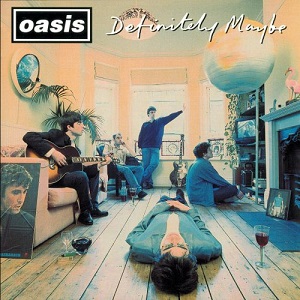
Choosing a favourite song from Oasis ain’t easy but does there exist a song more emotionally shattering than Live Forever? In 4 minutes and 30 seconds, Liam’s powerful yet at times fragile voice waves a wide gauntlet of human emotion, the desire to be immortal, to never be forgotten. Noel Gallagher was motivated to write the song after hearing a song from Nirvana titled “I Hate Myself and I Want to Die”. Let’s face it, it’s easy to be pessimistic and look cool because of it, it takes courage to express optimism. I have a poster of the Definitely Maybe on my bedroom wall, and will regularly take a look at it to admire its beauty and always notice something within it which I never saw before. As with the band’s album and single covers throughout the 90’s, the genius comes from their simplicity.

Oasis hit their peak early on; I remember hearing comments from Noel Gallagher stating he could never write songs like that again or else you would get laughed out of town; you can only write like that when you’re uninhibited and nobody is listening to your music. Definitely Maybe is the punkier, dirtier companion to the cleaner, more commercial-sounding Morning Glory; not that makes Morning Glory any less of an album. The way I see it, Definitely Maybe is like The Terminator, whereas Morning Glory is like Terminator 2. Sometimes I wish I could erase my mind of songs so I can listen to them again as if hearing for the first time, that couldn’t be truer here. Definitely, Maybe the best debut album of all time? Not maybe, definitely!

Definitely Maybe Era B-Sides and Rarities

What band has better B-sides than Oasis? Their B-sides are better than most band’s biggest hits. It’s the greatest collection of unknown songs ever. Their singles were all like mini albums, each with a cover which was a work of art itself. For a time I was content with just listening to Oasis’ albums, but when I really started to delve into the band’s B-sides it was like falling in love with Oasis all over again.

The 1998 compilation album The Masterplan contained most of the band’s B-sides up until that point but not all of them; a shame too as there are some absolute gems which didn’t. The deluxe edition of Definitely Maybe brings all the B-sides from the Definitely Maybe era together as well as various other rarities. That is all apart from a live version of Bring It On Down from the Shakermaker single. Not a major loss as there is nothing particular that stands out about it, but it would be nice for it to be there for completist sake. Now if we can just get a deluxe edition of Be Here Now then all will be well with the world.

Take Me Away is such a simple yet powerful song, with Noel’s vocals being so fragile; you can hear the desperation in his voice. Another downbeat song with Noel on vocals D’Yer Wanna Be a Spaceman? is so beautiful it hurts; plus it also gets the vote for my favourite Oasis song title. The story goes that Liam didn’t want to sing these downbeat songs as he considered himself a “rock ‘n’ roller” and didn’t want to play that wimpy shit; says the guy who later wrote Songbird. Likewise, you haven’t heard Oasis’ cover of I Am the Walrus until you’ve heard the full-length version from the Cigarettes & Alcohol single (The Masterplan version was shortened by two minutes). The Beatles created it, but Oasis really made it into something of their own. Then there’s Half the World Away, a song which sums up a period of my life (and many other people’s lives), being stuck in a dead-end town where you can’t express yourself creatively.

Cloudburst is the only slightly weaker Definitely Maybe b-side; it has energy to it but lacks a coherent structure. Everything else however are absolute gems, like a secret collection of songs just for Oasis diehards. It makes me wonder what Oasis songs have never seen the light of day, perhaps those are the greatest Oasis songs of all.