
![Supermarket Woman [スーパーの女/ Sūpā no onna] (1996)](https://satinyourlap.com/wp-content/uploads/2024/01/mv5by2e5nddkyjutogu3mi00yjzilwjlnjcty2i1ntc5y2qwmzk1xkeyxkfqcgdeqxvymtcymdgxnq4040._v1_.jpg?w=300)
Can I Speak To The Manger?
Juzo Itami’s penultimate film Supermarket Woman has all the hallmarks of a movie intentionally trying to position itself for cult classic adoration from its quirky premise to the film’s comic book-like aesthetic in terms of both its visuals as well as the comiclly clear-cut distinction of good-guys and bad-guys. Above all, Supermarket Woman feels like a film in which its visual motifs were created with the intention of selling real-world merchandise. I’d happily buy t-shirts with the logos of fictional supermarket rivals Honest Mart and Discount Demon.

The noble but failing Honest Mart is struggling against its absurdly evil rival Discount Demon, a supermarket run like a militaristic operation out of Imperial Japan (with their business meetings emitting strong Yakuza vibes). Discount Demon is the Chum Bucket to the Krusty Krab or Mondo Burger to Good Burger, thus it takes the ever-fabulous Nobuko Miyamoto as Hanako Inoue to use her womanly, housewife intuition to reinvigorate Honest Mart. Miyamoto’s impeccable comic timing both physical and verbal has a real sense of contagious enthusiasm. Much of the sheer fun within Supermarket Woman comes from the screwball comedy-like antics of Hanako and her co-workers as they try to please customers and right various wrongs, from gathering hoards of shopping carts left in the parking lot to dealing with frustrated Karens on the verge of asking for the manager. Equally as memorable is Miyamoto’s wardrobe of bright, contrasting colours. Even when she wears an informal blazer it is accompanied alongside tartan trousers and sneakers, in keeping with a character who never takes herself too seriously.

Just how accurate a reflection is Supermarket Woman of Japanese commerce in the post-bubble 1990s? It is unique to observe a wholly independent supermarket that doesn’t trade under a franchise name (something which I’ve never even seen in my own country). This is emblematic of the world Supermarket Woman inhabits, one which presents Japanese supermarkets like the Wild West with the absence of any legal regulations or government oversight. Discount Demon is determined to eliminate the competition so they can raise prices, while both outlets engage in actions such as repacking food with a new expiry date, mixing meats and passing them off as more expensive cuts and even falsely advertising imported meat as being home-breed Japanese.
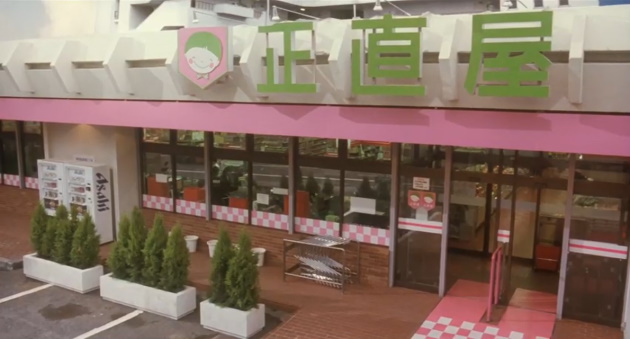
The exterior and interior of Honest Mart is a world of unbridled, Americana-inspired artifice with its frequent use of checkered patterns and bright colours (in particular the film’s prominent use of pink and red) as well as a general warm and fuzzy atmosphere. To accompany this is the film’s soundtrack to consumer capitalism – stereotypically, catchy department store music by composer Toshiyuki Honda. Can any lost media sleuths track down an isolated version of the score? As far as weirdly specific film accolades go, Supermarket Woman is the 2nd best Supermarket-themed film I’ve ever seen. The top spot goes to oddly enough, another Japanese film, Mikio Naruse’s Yearning (1964). Recommend for a slightly more unorthodox double-feature experience.

 Sat In Your Lap