Departures [おくりびと/Okuribito] (2008)

To The Faithful Departed

***This Review Contains Spoilers***

Cultures across the globe have different approaches to how they deal with their deceased. In my own Irish culture, it’s normal practice for the body of the deceased to be on open display prior to the closing of the casket, which, to my surprise, isn’t even the case across the sea in Great Britain. However, if there is one thing which is consistent amongst many cultures, it’s the taboo nature of death as a topic of discussion. In the anglosphere, people don’t even like to use blunt language as “dead people”, rather opting for language such as “passed away”, the late…”, “the departed”, “the deceased” or “those no longer with us”. Departures (おくりびと/Okuribito – “one who sends off“) is the only film I’ve ever seen about those who hold the job of handling bodies of the departed, well, at least in a serious manner (Night Shift, Weekend At Bernies).
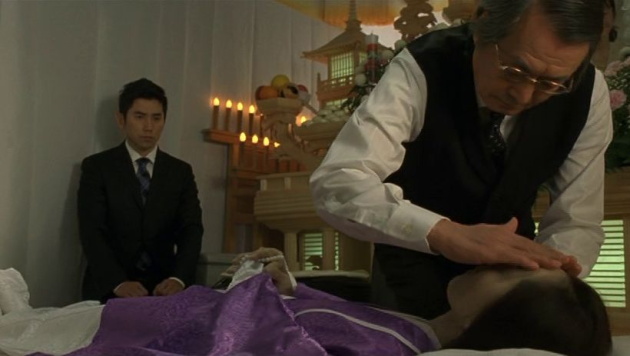
Departures depicts men known as Nōkanshi and details their custom of ‘encoffining’, in which the body is prepared for its so-called departure. This is accomplished through a procedure of cleaning, dressing and applying make-up; there is such a level of dignity, grace and even an artisanal nature to the procedure as it is performed with such intricate precision (even when it involves a man undressing a woman and touching her body). In a way, the procedure brings life back to the body, as the application of makeup returns colour to the face after the blood has been drained from the face.
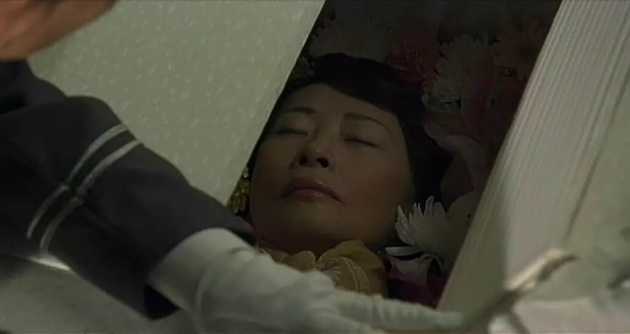
However, despite the importance of death rituals in Japanese culture, the subject is considered “unclean” as everything related to death is thought to be a source of “kegare” (defilement). This is the contradiction at the core of Departures: a job which is so vital and dealing with something so universal, yet those who perform it are scorned upon and discriminated against. Daigo Kobayashi (Masahiro Motoki) is only one of three employees at the encoffining company NK Agent, alongside his world-weary Freudian father-figure boss Ikeui (Tsutomu Yamazaki) and the secretary Yuriko (Kimiko Uemura), whom is herself a social outcast. Daigo is even openly insulted by a patron during an encoffining ceremony, while an old friend, Yamashita (Tetta Sugimoto), highly chastises Daigo upon learning of his profession. Well, that is until his own mother dies and he receives a metaphorical comeuppance. This discriminatory treatment reaches its zenith when Daigo’s Mika (Ryoko Hirosue) wife, temporarily leaves him upon discovering what he does. From an outsider’s cultural perspective, it’s hard not to feel that the reactions Daigo receives are anything but unreasonable (but I understand that I come from a particular perspective).

That being said, Daigo does receive praise from patrons during the course of the film for his work. This ties into the other (albeit positive) irony within Departures, that a man finds meaning in life through death. At the beginning of the film, Daigo is devastated to lose his job as a cello player in a Tokyo orchestra, as few people are attending their performances. This has been a lifelong ambition of Daigo as he has been playing the instrument since kindergarten (“You professional cello player yet?!”). This death of his music career, however, yields a new career, as just like in the real world, life doesn’t always turn out how we planned it (“What I’d always taken as my dream maybe hadn’t been one after all”). With so many people in the world stuck in dead-end (pardon the pun) jobs, Departures really showcases the importance of finding deep meaning and purpose in one’s work, and just what a spiritual privilege that can be.
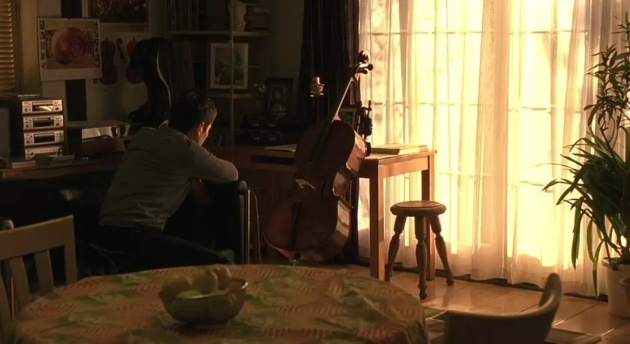
Despite the subject matter, Departures is not a dour film, far from it. In fact, upon watching again, I was surprised to find the film rather funny. From Daigo wearing a giant diaper to film an instructional video, to live octopus antics in the kitchen, Departures injects an appropriate degree of levity, but not in a way to break the mood. Even during the opening scene, Daigo discovers the deceased person in question was actually a gender dysphoric male once he discovers she has “a thing”, leading to a funny exchange between Daigo and his boss (but not in a way which feels inappropriate or out of place). This levity also extends to the film’s montage, in which the complete spectrum of people dealing with grief is displayed. One funeral sees a family laughing with tears of joy and leaving lipstick marks on the face of their deceased patriarch, while another family happily proclaims “bye-bye” and “thank you for everything” to their grandmother while she wears her favourite socks (really putting the fun in funeral). On the other end of the spectrum, the POV shot from the deceased Christian boy as the lid is slid over the coffin into darkness gives me goosebumps. Likewise, the emphasis of the cello in the film’s narrative not only ties in with the Japanese love of European classical music but also influences the music score. Composer Joe Hisaishi emphasises the use of cellos in his score of which he described the challenge of centring a score around the cello as one of the most difficult things he had ever done.

In a classic “would probably never happen in real life” scenario, Departures concludes with Daigo performing an encoffining for his estranged father, who left himself and his mother for a waitress when he was a child. Daigo finds in the hands of his father’s deceased body a rock (a counter piece to a rock his father gave him as a child to symbolise their bond), showing that he never forgot about his son and thus acting as a form of redemption for this deadbeat father. Although I do have to question if this is enough to really redeem his character, should there have been evidence for more active measures by his character in order to achieve redemption? Regardless, as presented in the film, one can view it through either the Eastern notion of forgiveness vs the Western Christian notion of forgiveness.

Forgiveness doesn’t erase karma, but it helps release attachment and hate vs “Forgive us our trespasses as we forgive those who trespass against us”.
The Red Shoes (1993)

It’s Really Happening To Ya!

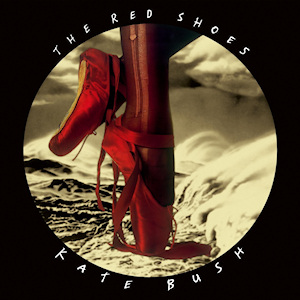
It’s a close call, but The Red Shoes is my favourite Kate Bush album; a record which really is all killer and no filler. This is her most pop-sounding album, not that necessarily being a bad thing as pop music is an art form itself, while the album still has Kate’s stamp of unusualness. The back cover of the album shows an array of fruit which is appropriate as The Red Shoes contains some of her most rich compositions. Bush was going through emotional turmoil at the time of the record’s production with a series of personal bereavements and it shows on the album. The album has both the happiest and saddest songs of her career with songs of both despair and hope.

To discuss the happy side of the album, the lead single Rubberband Girl feels very distant from the grace of Running Up That Hill or The Sensual World; instead, this is probably the most danceable song Kate Bush has ever done. If Kate Bush was going to do at least one song which echoes a mainstream pop dance song, at least it still has her trademark weirdness. Concurrently, If Kate had to outdo the epic nature of This Women’s Work with another haunting cinematic in nature ballad then she certainly achieved that with Moments of Pleasure; a song about the journey of life itself with every lyric being a piece of powerful imagery. There’s no point even identifying any single examples, all the lyrics to this song are so majestic.  Eat the Music is her most erotic song, loaded with sexual imagery in a seemingly innocent tune. Constellation of the Heart on the other hand, what a jam! This regularly appears on lists of worst/least best Kate Bush songs, but sorry, I absolutely love it. Why Should I Love You? features Prince on back vocals, and it’s clear he definitely had a part to play in this song’s evolution with the final product feeling like something out of Paisley Park; not that there’s anything wrong with that. I highly recommend listening to the un-Princed demo; I find both are excellent in their own way. The vocals on the demo are haunting even if the song does meander a bit; the album version tightens it up. Big Stripy Lie is the least pop/most avant-garde song on the album, one which isn’t pleasant to listen to but it’s not supposed to be; it is, after all, Kate taking on organised religion. The title track of the album continues the line of Kate’s Celtic-infused songs, and in my view one of her most energetic; I don’t know about you but this song gets me pumped every time I hear it.

Moving away from Happy Street to Depression Alley, this selection of sad songs on The Red Shoes contains some of Bush’s most powerful vocal performances from the impassioned plea in Top of the City (a song which may be about literally about suicide) to The Song of Solomon (her only song in which she curses). But if you think The Song of Solomon is sad bastard music then you ain’t heard You’re the One. What strikes me about this song is that there is no hidden meaning; the lyrics and obvious and direct. Right from the first line, “It’s alright I’ll come round when you’re not in, and I’ll pick up all my things”, you know what you’re in for. It’s such a desperate song and she sure saved the most tragic track for the end of the album. Every song on The Red Shoes is a fascinating piece of work; a rare album in which I can say I find every song memorable.

The songs on The Red Shoes were given more of a live band feel as it was proposed Kate would tour the album. Sadly this never materialised but what we got in its place was a 40-minute film featuring a selection of songs from The Red Shoes. This short film, directed and starring Bush herself would be  The Line, The Cross and The Curve. For anyone who is a fan of Kate Bush and her Kate Bush-isms, this film is pure nirvana. Granted Kate’s acting isn’t the greatest but it’s still Kate, I could watch her in a feature-length film and still be completely entranced even if her acting is dodgy (ok, I’ll try and keep the fanboy sentiment aside). It seems hard to believe this is Kate Bush’s first (and only) foray as a film director as the direction itself is superb. It’s a low-budget film but that doesn’t get in the way. Ok, the shot of her legs moving uncontrollably is a rather poor special effect and unintentionally funny but you could see it as part of the film’s camp appeal which has always been an element of Kate Bush’s work (dancing devils anyone?). The film is full of breathtaking imagery and recaptures the warm and soft colours reminiscent of Powell and Pressburger and even the ending is suspenseful. It’s a shame this was Kate Bush’s only foray into filmmaking; she later dismissed the film as “a load of bollocks”. How can an artist create such a powerful piece of work but for them to think little of it themselves? Unfortunately, this would be the last we’d see of Kate for 12 years.

The Sensual World (1989)

This Woman’s Mediocre Work

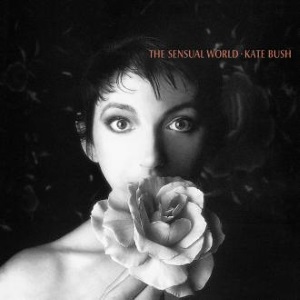
It brings me great displeasure to say this but I don’t like Kate Bush’s 6th studio LP The Sensual World. This is the only Kate Bush album I’m not keen on (unless you also count Director’s Cut). However, I would think based on the album’s three singles this would be another masterpiece. I’ll begin with the good.

The title track, well it has sensual in the title for a reason. The combination of synthesizers and uillieann pipes creates the most well, sensual sound. Like Wuthering Heights I question if there exists another song like it and if it is one of the reasons why Kate Bush’s work acts like a gateway to a world of high culture. This Woman’s Work is my favourite Kate Bush song, despite this being my least favourite album of hers. This is it; this is the saddest song ever written – the crème de la crème of tear-jerking songs. I can’t listen to this song in a public place or else I’ll well up. Although the song is about having a baby from the father’s perspective, the lyric “Of all the things we should have said that we never said, all the things we should’ve done that we never did” always conjures up thoughts of regret that I have in my life of things I should have done but didn’t; but not necessarily in a depressing manner.

Upon hearing the song Deeper Understanding I could not believe just how ahead of its time it was; a song from 1989 about people not only being addicted but having relationships with computers. I wonder if this song in any way helped inspire the 2013 movie Her; even the music video for the Director’s Cut version in 2011 is reminiscent of Her. By comparison, what could you do on a computer in 1989 that you would be spending hours on it? Is she predicting the invention of the World Wide Web? Likewise, take the lyric “But I was lonely, I was lost, without my little black box, I pick my phone and execute”. Did she just describe an IPhone? Man, screw Nostradamus, Kate Bush is where it’s at. This is one of two Kate Bush songs which speak to me the most, the other being Sat In Your Lap.

The rest of the album is mediocre to average. The Fog, Reaching Out and Never Be Mine; I feel there are great songs in there but these tracks feel incomplete to me. Heads We’re Dancing is a song I find lyrically interesting, involving a story about dancing with Adolf Hitler himself but the rhythm of the song is lacking. Between a Man and a Woman is completely disposable with its generic lyrics and mediocre rhythm but my least favourite song on the album, as well as my least favourite Kate Bush song, in general, is Rocket’s Tail. The choir featured in the song is far too loud, to the point that I feel like saying “Guys can you keep it down, I’m trying to hear Kate sing” and right in the middle of it all is a very obnoxious guitar solo. It pains me to write this review but I guess you can’t win ‘em all.

Hounds Of Love (1985)

Her Undisputed Masterpiece

Do you like Kate Bush? I’ve been a big fan ever since the release of her 1978 debut album The Kick Inside. In ’85 Kate released this, Hounds of Love, her most accomplished album. The whole album has a clear crisp sound and a new sheen of consummate professionalism which really gives the songs a big boost, while at the same time it deepens and enriches the meaning of the preceding four albums.

In terms of lyrical craftsmanship, the sheer songwriting, this album hits a new peak of professionalism. Take the lyrics to Cloudbusting, in this song Kate Bush addresses the problem of abusive political authority.

Running Up That Hill is the most moving pop song of the 1980’s, about understanding and commitment. Its universal message crosses all boundaries and instills one with the hope that it’s not too late to better ourselves. It’s impossible in this world to emphasize with ourselves unless we emphasize with our other. It’s an important message, crucial really, and it’s beautifully stated on the album.

It’s hard to choose a favourite among so many great tracks, but I think The Ninth Wave is her undisputed masterpiece; it’s an epic meditation on mysticism. The final song is extremely uplifting, her lyrics are as positive and affirmative as anything as anything I’ve heard in rock.

Take The Big Sky, a great, great song, a personal favourite. A song so catchy, people probably don’t listen to the lyrics, but they should, because it’s not just about the pleasures of pensive daydreaming and the importance of the inner child, but is also a personal statement about the artist herself. Hey Paul…

The Dreaming (1982)

Gimmie, Gimmie, Gimmie!

The Dreaming is a very hard album to get into. I won’t blame you if your initial reaction to this album is “What on God’s green Earth is this?!” There’s no instantly accessible pop hit from the album such as Wuthering Heights or Babooshka. I was in doubt at first that I would ever get into The Dreaming and that I would consider it an album that I would happily come back to listen to again and again. Well after much persistent listening, I now find my aforementioned comments hard to believe. Admittedly I wouldn’t even play any of these songs in front of my relatives; they’re just that weird and would probably turn them off Kate Bush. This is the last Kate Bush album I would recommend for newcomers, despite it being a masterpiece.

Sat In Your Lap is the Kate song I relate to the most, a real “this was written for me” track; a song which deals with humanity’s pursuit of knowledge and the unwillingness to devote the effort required to obtain it. My own further interpretation of the song is the belief that obtaining knowledge will make you happy and give you a high, yet this only leads to eventual dissatisfaction as you see it’s just a foothill for a bigger mountain of knowledge behind it, yet we keep doing it again and again. Talk about story of my life. Whenever I feel like I can’t go on with a task (such as writing this very review), this song helps inspire me to finish it.

There Goes a Tenner is initially off-putting with Kate singing in a cockney accent but the thing which helped me eventually fall in love with it was the moment I deciphered this lyric: “You are Bogart, he is George Raft, that leaves Cagney and me (what about Edward G!)”. While Kate is generally not an angry artist, this is a great album to vent off anger, with the title track, in particular, a song about the destruction of Aboriginal homelands by white Australians in their quest for weapons-grade uranium. Who writes stuff like this?! Kate does! Get Out Of My House (aka the song in which Kate makes donkey sounds) is terrifying, not to mention they sure saved the weirdest song for last. Like many Kate songs, if anyone else did this it would be moronic but because it’s Kate, it works.

The Dreaming is an album which is overlooked by critics and the public but is widely considered among Kate Bush fandom to be her greatest work.  My personal favourite Kate album is either The Dreaming or The Red Shoes. Kate has never made an album more bonkers than this, which unleashes the weirdo in all of us.

Lionheart (1978)

Oh Kate, My Lionheart

Lionheart is the underdog of Kate Bush’s work; usually dismissed as the inferior, rushed follow-up to The Kick Inside. Pfft, what album are the people who say this listening to? Lionheart was released only nine months after The Kick Inside but you would never know it. The album is campy, theatrical and is the kookiest thing Bush has ever recorded but it doesn’t care who knows it. What do you expect from an album which has Kate dressed as a lion on the cover?

There’s not a track I dislike here and choosing a favourite is hard. Ultimately have to go with Kaskha From Baghdad, a song which creates such a visualisation in my head with lyrics such as “Cause when the alley-cats come out, you can hear music from Kashka’s house”. The song is believed to be about a male homosexual couple: “Kashka lives in sin they say, with another man”. Is Kashka the name designated to a man? Lionheart has some of the best representations of Kate’s ability to tell stories through her music. Likewise, the song Fullhouse, a particular favourite of mine, contains lyrics real cinematic scope, describing a scene which could come straight from a film noir.

Lionheart is probably the most English album ever; Oh England, My Lionheart is probably the most English song ever. I’m not an anglophile but when I listen to this song I sure feel like one! An unabashedly romantic song to the highest degree, yearning for an England that no longer exists, or perhaps never existed to begin with. I also notice the lyric notes on the CD and Vinyl for Lionheart have those of Oh England, My Lionheart is in Kate’s own handwriting; odd when you consider that Kate apparently doesn’t even like the song. Likewise, with Symphony In Blue Kate sings from the point of view of a girl who realises the joy of sex is not only what makes life worth living but is essential; “Here we have a purpose in life, good for the blood circulation, good for releasing the tension, the root of our reincarnations”; a liberating mindset from a woman who is only 20.

From Kate’s first three albums, I have decided this is my favourite. Lionheart represents Kate Bush’s musical progression;  It’s more varied and thematic than The Kick Inside and feels more complete than Never For Ever (not that I’m putting down those albums, they’re both also amazing), no two songs here sound alike. My advice is to listen to this album on a cold winter’s night, such atmosphere! Grab your tea and crumpets and be whisked away to Kate’s English dreamland.

The Kick Inside (1978)

The Kate Inside

It was in 2012 in which I had my first exposure to Kate Bush when I heard Running Up That Hill on an ITunes radio station. I was immediately hooked on the song and listened to it many times over the next few weeks. However, at this point in my life, I wasn’t actively exploring music. Although, just a few years earlier I had been doing just this but my love of cinema pushed music to the side, thus for a number years I only knew Kate Bush as that Running Up That Hill singer. Although I thought Running Up That Hill was an incredible song, I assumed Kate Bush would have been a personal one-hit-wonder. Otherwise, how come I had never heard of this woman until now?

Fast forward to 2014 and I am hearing news reports of Kate Bush embarking on her first series of concerts in 35 years. With this renewed interest in Kate Bush in the media, I heard Wuthering Heights on the radio. “Holy crap!” was my reaction. This was the beginning of my descent into the weird and wacky world of Kate Bush. I HAD to check out this woman’s work. Which I did, followed by checking out the albums, followed by buying them, followed by listening to every song carefully and deciphering every lyric. Kate Bush reignited my interest in music which I had lost over the past few years. How did this woman bypass me for so many years?! Was it due to her reclusive nature, or not having released an album for 12 years of my life (I was born in 1992). I need answers!

Kate Bush doesn’t fit into any one music genre. She is a genre!

“What’s your favourite music genre?”

“Kate Bush.”

Has there ever been another song in history like Wuthering Heights? Even Kate herself has never made another song like it. How many pop songs base their lyrics on classic literature that makes you want to read the novel it’s based on (listening to Kate makes you feel smarter). Kate’s story-driven songs such as this always create such a visual image in my head. Although Heathcliff and Cathy are not strictly Kate’s creations, her ability to conjure characters in her songs is unparalleled.

Although The Kick Inside doesn’t have a recurring theme like her subsequent albums, being more of a collection of songs, every track stands on its own. Kite is the most bonkers and innocent song on the album, James and the Cold Gun reminds me more of Bruce Springsteen, one of Kate’s least Kate-like songs but a superb rocker. The Saxophone Song has a very sinister sounding final minute which I can’t help but listen to over and over again. Them Heavy People is one of Kate’s most infectious songs, it will never leave your head, especially the uttering of “Rolling the ball”; admittedly this song can get a little annoying if you listen to it enough times but I still like it. Strange Phenomena is (apparently) about having a period; Kate Bush, daring to go lyrically where no one else dares! Feel It, on the other hand, makes no effort to disguise that it is about sex, completely directly and honestly. Wrapping of the album is the title track, which shows how Kate Bush isn’t afraid to experiment with controversial subjects. It’s speculated that the song deals with a brother and sister who have a sexual relationship resulting in her getting pregnant with her baby and the decision to commit suicide rather than bringing shame on her brother (just where does she come up with this stuff?). Although we can’t be sure; it’s fun deciphering these songs which are as mysterious as Kate Bush herself.

All the songs on the album make me want to jump around the room and mime like Kate does in many of her music videos, although I’d probably look like a mad git if I did so. Pop on the album, dim the lights, sit back with your eyes closed and allow The Kick Inside to kick your own insides.