Gabriel Over the White House (1933)

I Love Democracy…

***This Review Contains Spoilers***

I do love the efficiency and streamlined nature of pre-code films. Within two minutes, the opening credits roll, followed by a montage of stock footage, and the story of Gabriel Over The White House is underway (unlike films today with a parade of 10 studio logos and a title screen that doesn’t appear until 40 minutes in).
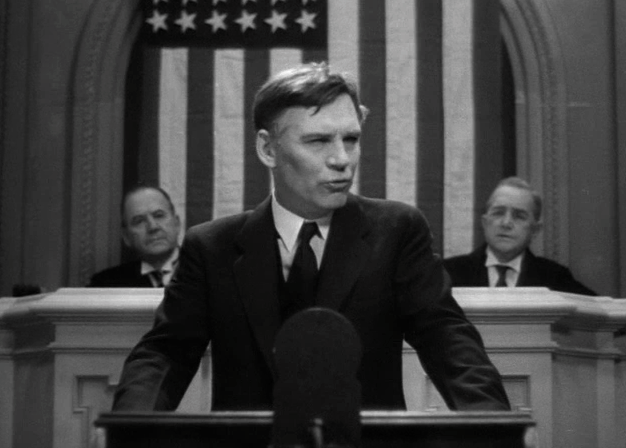
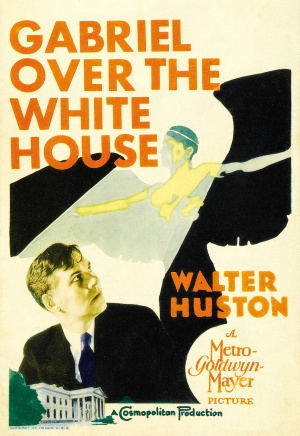
The newly elected President of the United States, Judson Hammond (Walter Huston), is sworn into office, yet behind closed doors, he and his inner circle treat the presidency as a joke. They engage in smarmy chatter and look down upon the populace (“When I think of all the promises I made to the people to get elected…by the time they realise you’re not going to keep them, your term will be over”). Hammond even takes the pen that Lincoln freed the slaves with and remarks, “Well, here it goes for Puerto Rican garbage”. To play up this disregard to an even greater degree, in a very unusual scene featuring a rare use of overlapping dialogue, the President and his nephew play a treasure hunt game in the Oval Office while the radio plays an activist speech. The audio from the dialogue between the President and his nephew becomes drawn out by that of the radio, as Hammond does not have a care in the world for what’s happening in the country. The only loyalty displayed by Hammond is towards what is simply referred to as “The Party” (“The party has a plan, I am just a member of the party”). Walter Huston has the look you would expect from a president from the early 20th century (not too dissimilar looking to Warren G. Harding or a clean-shaven William Howard Taft), while his sheer gravitas not only makes the hairs on your skin stand up, but he also prevents Hammond from coming off as just a caricature. Interestingly, however, he is a President without a First Lady, which would make him and James Buchanan the only unmarried presidents. 

Following a racing accident, Hammond goes into a coma. However, upon his reawakening, Hammond is no longer the man he once was; rather, a populist figure is born. “God might have sent the angel Gabriel to do for Jud Hammond what he did for Daniel”, states the President’s secretary, Pendie Molloy (Karen Morley), as the film makes no secret of indicating that Hammond will be enacting the will of God himself. Many scenes from this point onwards have a softer, more dreamlike look, with a higher contrast between black and white. In one moment shortly after Hudson’s awakening, he stares up in awe at a bright heavenly light shining upon his face, or as Pendie describes it, “the presence of a third being in the room”. Many a beautiful shot populates the film, from the dramatic zoom shot on Hammond (even if it does go in and out of focus) to some stunning set design with the art deco set of the film’s court martial scene.

The new Judson Hammond wastes no time getting things done with his newfound heavenly, populist political will. Right off the bat, he stops calling his staff nicknames and stands up to the members of his own party.

“Now, be careful. I might resign on you.”

“Your resignation is accepted.”

“Oh, well now, wait a minute, Jud, I was only suggesting…”

Hammond asks Congress to declare a state of national emergency to adjourn itself until normal conditions are restored, and during this period, he will assume full responsibility for the government. With the country under martial law, Hammond proceeds to tackle the issues of unemployment, mob rule, forcing over nations to pay their debts the US and by the film’s climax, literally enshrining world peace into a document signed by most nations in the world. Upon lending his own signature to the document, Hammond himself collapses and quickly passes away, lending further credence that he is enacting the will of God.
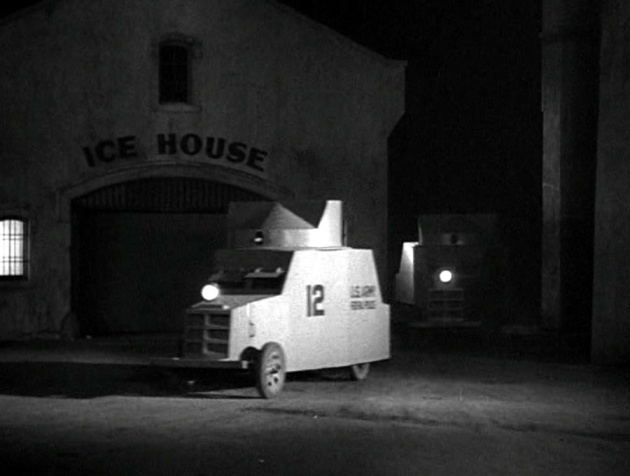
The subplot of Hammond’s efforts to eliminate the mob is particularly interesting. He praises gangster Nick Diamond (of course, he has a scar on his face) directly for “getting rid of most of his own kind”, relating to the theory in criminology that allowing one single crime syndicate to operate results in an overall reduction of crime. Hammond proceeds to create a federal police force to eliminate the mob, leading to two of the oddest scenes in the film, the first in which the mob attempts to assassinate Hammond on the grounds of The White House itself (was this more plausible in 1933?). The latter is a sequence which I can best describe as resembling the climax of every episode of Takeshi’s Castle. Following the arrest of Nick Diamond and his men, they are executed by way of an old school firing shot with the Statue of Liberty in the background (I’ll let you decide what is the intended symbolism, if any, of such a shot).

Is there a name for this kind of populist wish-fulfilment picture? The film which has the most striking similarities to Gabriel Over The White House is Ivan Reitman’s Dave (1993), in which an ineffective, uncaring president is replaced by a populist doppelganger who gets things done. Likewise, multiple sources online speak of an alternative European cut with 17 extra minutes, although such a cut has never been released on home video. Much is made of the fact that film was financed by media conglomerate William Randolph Hearst, although regardless of the agenda those behind the production may or may not have had (although it is worth noting that director Gregory LaCava would go on to direct the anti-New Deal May Man Godfrey in 1936), Gabriel Over The White House, whether by design or not, presents one central dilemma; should a nation be led by one all-powerful leader who can get things done, or have a system of checks and balances, which may be slow and inefficient? When watching Gabriel Over The White House, it’s easy to feel seduced by the temptation of having an all-powerful leader, a benevolent dictator, a king. Or once a crisis has abated, can we ever trust that a leader will lay down the powers given to him? History would say no, but Gabriel Over The White House allows the viewer to indulge in such a fantasy.

Midway (1976)

Now, Hop In Your Sushi Boat And Git!

***This Review Contains Spoilers***

Midway is one of the better battle recreation movies to be released in the wake of The Longest Day (1962), detailing the first on-screen recreation of the battle, which was the turning point of the pacific war in this flawed but worthwhile Dubya-Dubya II venture. Universal Studios was the most old-school studio in the 1970s and concurrently Midway is an unashamedly old-school film within the era of New Hollywood and one which plays into the 70’s disaster movie trope of featuring an all-star cast, many of whom were residing in their twilight years. Ensemble pieces of this nature can easily provide an excuse for a cast to phone-it-in but the famed personalities in Midway all do shine even with some players of the cast only getting brief cameos. Much of the film’s roaster were veterans of the war itself including Henry Fonda, Charlton Heston, Glenn Ford, Hal Holbrook, Cliff Robertson, Robert Webber, screenwriter Donald S. Sanford and director Jack Smight (something exceedingly rare among contemporary Hollywood). 

The king of larger-than-life actors, Charlton Heston leads the picture and portrays one of the characters not based on a historical figure in the role of Matthew Garth (the same name as Montgomery Clift’s character in Red River), and being fictional he is given his big hero moment at the climax of the battle. Of the cameo appearances I feel Cliff Robertson is given the most memorable in which he delivers a great, cynical monologue about the “the wait and see-ers” in relation to the warnings given in the years leading up to Pearl Harbor, while Robert Mitchum provides some welcome comic relief as the agitated hospital patient William F. “Bull” Halsey Jr (“I know, I’m a son of a b**** of a patient”). I also find it humorous that Joseph Rochefort (Hal Holbrook) wears a dressing gown over his army uniform and Captain Gareth does ask a “very personal” question in regards to the hygiene of him and his men (“You know, it really stinks down here. How often do some of your people take a bath?”). However, the most memorable piece of casting in Midway would have to be that of Japan’s Japan’s all time greatest film star, Toshiro Mifune as Admiral Isoroku Yamamoto (the third film in which he has portrayed the famed Japanese admiral). Reportedly Mifune’s Japanese accent when speaking English was so thick that his lines had to be dubbed by actor Paul Frees yet regardless, his sheer physical presence alone does bring a great sense of weight to his scenes. I do wish however the film had the Japanese characters actually speak Japanese rather than English. Come on, we’re big boys, we can read a few subtitles. It also doesn’t help that many of the Asian actors in these scenes have obvious American accents.

Much of Midway plays out as men of authority talk battle tactics over giant maps, feeling like a giant game of chess between both sides as we are given much background insight into the decoding methods employed prior to the battle. These scenes are among the best directed in the film with the layers of texture and effective use of interior space. Likewise, very little new combat material was filmed for Midway with footage taken from Tora! Tora! Tora!, The Battle of Britain (1969) and Storm Over the Pacific (Hawai Middouei daikaikusen: Taiheiyo no arashi), the latter of which was made 16 years prior (and also starred Toshiro Mifune). I do love the shot of the Imperial Japanese flag over the upper half of a battleship in the background, only to be disappointed to find out its footage taken from another movie. There is an obvious change in grain structure with this footage although it’s not overly jarring and I have seen worse examples. I am left with spilt feelings on the film’s use of actual combat footage taken from the Battle of Midway itself. On one hand, it completely contrasts with the newly filmed footage but perhaps an argument can be made that it’s taking the documentary-like aspect of the film to its logical endpoint by using actual footage from the battle. The battle itself does feel drawn out and repetitive and is clearly edited around the Sensurround system (which was the big selling point in the film’s promotion), with the same angle shots of pilots flying planes used repeatedly and an overreliance on the use of subtitles to identify locations, ships, squadrons and individuals.

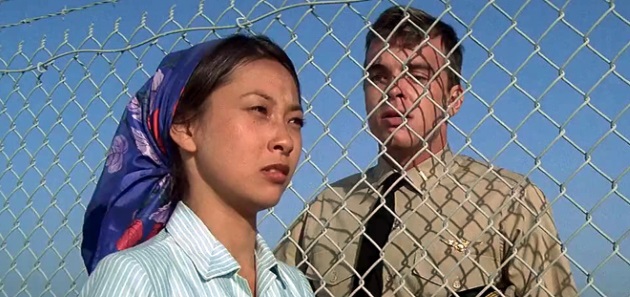
The other major topic Midway explores is the US government’s internment of Japanese-Americans during the war (“execute order 9066”). I enjoyed the subplot involving Gareth’s son Thomas (Edward Albert) having fallen in love with a Japanese-American girl named Haruko Sakura (Christina Kokubo), of whom her family is being interned in Honolulu over their membership of so called Japanese Patriotic Organizations and the owning of subversive magazines (“Damn it, I’m an American! What makes up different from German-Americans or Italian-Americans?”). However I do wish this subplot could have been explored in greater depth as the film only scratches the surfaces of the subject matter nor is the sub-plot given a proper resolution as come the film’s end Haruko sees an injured Tom coming off the boat on a stretcher, but that’s it.

In 1978 a TV version of Midway was broadcast in which newly filmed scenes were added to the film. This TV version inserts an entire section detailing the Coral Sea Battle of which the newly filmed footage is competently made but just feels like filler (and still includes a large amount of stock footage). Also included in this version are scenes in which Charlton Heston reprises his role as Captain Gareth in a relationship with a woman named Ann (Susan Sullivan) who is never mentioned in the original film. These scenes are very cheesy and shot in a manner that is more televisual than cinematic but more significantly, they do not contribute to the narrative or enhance the final demise of Gareth. The final inclusions in this version are two scenes involving the Japanese commanders, the first of which is actually a terrific addition to the film. In the scene, James Shigeta reprises his role as Vice Admiral Chūichi Nagumo in which he speaks to the son of Yamamoto who he expresses doubts that Japan is fighting a war they cannot win as the two walk through some striking historical Japanese architecture (of which the film states is Nagumo’s residence in Tokyo). The direction and acting of this scene is top-notch and help further humanize the Japanese side in the one worthwhile addition in the TV version. I can’t say the same however for the second of these two scenes as the latter by contrast is poorly directed in which two Japanese commanders react to the defeat at the Coral Sea – a simple static and very bland shot. Midway is already a flawed film as it is and these extra additions (bar the one aforementioned scene) really don’t help matters, with Henry Fonda not even showing up until 57 minutes in. The TV version of Midway is included in the 2021 Powerhouse Films Blu-ray release.

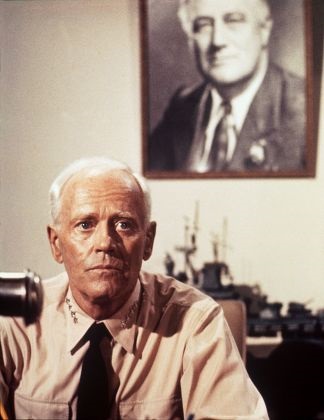
Throughout Midway the American soldiers use the pejorative term “Jap”, yet the film portrays a mutual respect for enemies among the high ranks of both the US and Japanese militaries. Yamamoto speaks of how “I have travelled widely in America, my friends. Their industrial might is awesome” while Admiral Nimitz (Henry Fonda) concludes following the battle, “It doesn’t make any sense, admiral. Yamamoto had everything going for him. Power, experience, confidence. We’re we better than the Japanese, or just luckier?”. Despite being a picture detailing a Japanese military loss, Midway was a big hit in Japan. It is not a jingoistic film and treats both sides in a fair and dignified manner, perhaps nowhere more so than Yamamoto’s final appearance in which he accepts responsibility for the loss and states “I am the only one who must apologize to his majesty”.