Rocky III (1982)

Rocky III: An American Tradition

After the recap of the fight from the previous movie, Rocky III opens with a montage which begins with fireworks and giant light up sign of Rocky as if to say “Welcome to the 80’s!”; a decade when everything was larger than life. The song of choice is Eye of Tiger, the montage is edited like an MTV music video and Rocky even appears on The Muppet Show; and all that merchandise, me want!

Rocky III is ridiculously entertaining while still managing to have thematic substance. Rocky is no longer struggling with fame. A man who couldn’t film a simple commercial in Rocky II is now making all sorts of endorsements. He could barely drive a car in Rocky II, now he can now drive with ease. Rocky has also become a more intelligent man instead of the dum dum he was in first two movies. Not to mention does he looks different, very handsome I might add and in such physical shape. I think Stallone looks like Al Pacino here, especially when wearing a suit.

Rocky III brought the series in a different direction, distant from the first two movies. But despite Rocky’s wealth and fame, Rocky III is not a movie which cheapens out. The primary theme of the movie is about Rocky’s fame making him soft or as Mickey puts it, “You got civilised”. Once Rocky discovers Mickey has been hand picking fighters his seemingly perfect bubble of a life is burst; “You wake up after a few years, thinking you’re a winner, but you’re not, you’re really a loser”. This continues the series theme of being semi-autobiographical of Stallone’s own life as the movie examines what fame and fortune can do to a person. Adrian’s role is smaller is time round although her character still sees an evolution as the famous lifestyle has taken away her shyness and made her more outspoken and pretty hot too I might add. Just listen to the words of motivation she gives Rocky on the beach; a far cry from the Adrian in the first movie.

Even when Rocky discovers Mickey has been hand picking fighters prior to his first fight with Clubber Lang, Rocky is training in the most superficial gym. It’s full of photographers and visitors, musicians are playing and merchandise is being sold.  Unsurprisingly he gets the worst beating of his life at the hands of Clubber Lang. The solution to Rocky getting his so-called “eye of the tiger” back; get away from the superficiality of his wealthy lifestyle and back to the nitty-gritty. As Apollo Creed puts it, “Man, when we fought, you had that eye of the tiger man, the edge! And the only way to get it back is to go back to the beginning; you know what I’m saying?”. I stick by these words as some of the wisest words I’ve heard uttered in a motion picture. Whenever you lose your mindset of determination whether physically or mentality, go back to where you first started in order to reclaim it. Rocky III humanises Apollo Creed with Rocky and Apollo becoming friends being a great spin on the story. I always think of his intense shouting of “There is no tomorrow!” whenever I need some motivation.

The hypnotic, uneasy music which plays when Rocky is training poorly under Apollo and stuck with the threat of living with failure reminds me of Bernard Herman’s score to Vertigo in possibly the most uneasy scenes in the series. Likewise, the scene of Paulie in the arcade has to be the most surreal scene in the entire series in which he throws a bottle pinball machine in slow motion complete with odd sound effects; it’s an image which doesn’t leave your head.

Mr. T as Clubber Lang, oh man! What a beast! A true larger than life villain with outbursts of immensely entertaining lightning fast dialogue; he sure has a way with words with such a violent temper and high levels of anger. You do not want to be stuck in an elevator with this guy. Which raises the question; is Clubber responsible for the death of Mickey by pushing him to the side? Yet even close to death Mickey can still inspire with scenery-chewing words of motivation; his death being one of the series most emotional moments. The boxer vs. wrestler charity fight on the other hand between Rocky and Thunderlips (Hulk Hogan) has nothing to do with the rest of the movie but dam is it entertaining. It’s so over the top with such intense pain on display. The referee and police officers are thrown to the side, the audience is assaulted and even Paulie gets in on the action (I do love those bits of humour Paulie provides).

The final fight in Rocky III is the only in ring fight in the series which takes place in real time until Creed.  Meanwhile, the final scene of the movie is such fun, with Rocky and Apollo playing off each other which along with the training montage gives off some homoerotic vibes along the way with sweaty, shirtless, muscular men in tank tops as well as men hugging and jumping in the sea.

Also, the film’s trailer refers to Rocky III as an “American tradition”. What’s the tradition? Hollywood sequels?

Rocky II (1979)

Rocky II: Electric Boogaloo

***This Review Contains Spoilers***

Rocky II picks right off where the first movie ended and with the characters are already established, we can get right into the story. Stallone writes and directs this time, and who knows his own creation better than him?

Rocky II has a much higher budget than the first film and thus doesn’t have the guerrilla filmmaking tactics of the first so while it loses something in that regard it’s still no less a beauty of a film. They can even afford to have a huge crowd of kids following him during the training montage and possibly the cheesiest moment in any Rocky movie. We now get two montages instead of one and the series obsession with them would grow from here. The final fight benefits the most from the higher budget. We actually get to see a large crowd of spectators instead of relying on stock footage and camera angels disguising the lack of extras; while the use of slow-motion captures the pain and barbaric nature of fighting in glorious detail. When Rocky and Apollo both fall to the ground at the end of the fight, the suspense is crazy! The final shot of Rocky’s beat up face as he slurs in classic Stallone fashion is so barbaric; a perfect shot to end the movie on.

In Rocky II we get to see what Rocky does now that he has lots of money for the first time in his life and you really get a sense of the character’s new found happiness. However, he becomes blinded by this happiness and it goes to his head such as when he buys a house without even checking the upstairs. Rocky struggles with his new found fame and can’t even film a simple commercial. Just like how the public turn their back on Rocky, the public turned their back on Stallone after his two follow up films to Rocky bombed; Paradise Alley and F.I.S.T. Like how Stallone had to do a sequel to Rocky in order to get by, Rocky has to fight Apollo again to get by and prove that he is not a fluke or a one hit wonder. Apollo’s trainer Duke also has a bigger role here and would continue to be more prevalent in Rocky III and IV; I love this guy and his intense words of inspiration.

Rocky II is easily the funniest movie in the series, from his poor driving skills to his mispronunciation of words when trying to film a commercial (“Smeel mainly”) but my favourite moment is when he tries to a catch a chicken as part of his training (“I feel like a Kentucky Fired Idiot”). I also find it funny the scene in which Apollo is being consumed by hate mail telling him to kill himself; it’s a good thing for him the web doesn’t yet exist. In terms of more twisted humour, Rocky takes Adrian to the zoo and even proposes to her there, because you know, retards like the zoo.

Rocky II was the first film in the series to use synthesizers in its score and the music feels very late 70’s and at times disco inspired (listen to the vocal version of All of My Life, it’s beautiful). Bill Conti’s ‘Redemption’ is by far the best piece of original music in the movie; it makes me want to climb a mountain.
Just a side note: In regards to the Rocky DVDs, only the first movie gets the special edition treatment and the rest are just bare bones releases. I know the first is considered the best but that doesn’t mean there’s no merit to the sequels that they’re just tossed aside on the home video releases.

Rocky II offers everything I could ask for in a sequel, a movie which stays true to the original but offers new elements along the way. It advances the story and adds an extra layer of depth to already complex characters. In 1979 the New Hollywood movement was coming to an end and the age of the blockbuster had begun. In 1976 Rocky lost the final fight but keeping with the newfound optimism in Hollywood movies, in 1979 Rocky wins the fight (although timeline wise its late 1976).

Rocky (1976)

The Philadelphia Story

I may sound like a bit of a fanboy when I talk about the Rocky franchise but I just legitimately love all these movies so much. This is a series which always inspires me and has aided me during my darkest days. Rocky was one of the first movies to have such a profound impact on me, making me appreciate cinema on a deeper level. I first saw Rocky on TV and week after week came back to watch the sequels; such joy I had and memories I never forget.

I don’t think there is a fictional character whom I’ve been more emotionally invested in than Rocky Balboa. Could there be a character who is more honest or down to Earth? A man who has next to nothing yet has such a positive outlook on life (“Naw I ain’t got no phone, I had to pull it you know because people calling me all the time, and who needs the aggravation, right?” – such profound wisdom). The character is also a mystery and an enigma; who are his parents and what about his early years? Apart from a few brief snippets of information, it’s up to the viewer’s imagination instead of giving us a pointless origin story which Hollywood is so keen on nowadays. The character is biographical of his creator Sylvester Stallone throughout the whole series; his fictional alter ego. Just like Rocky, Stallone had next to nothing before making it as a star. Just like how the character rises to the challenge against impossible odds, the movie also beat impossible odds by becoming one of the biggest sleeper hits of all time. Likewise what movie or character is more identified with a city or has such reverence for the location it was filmed.

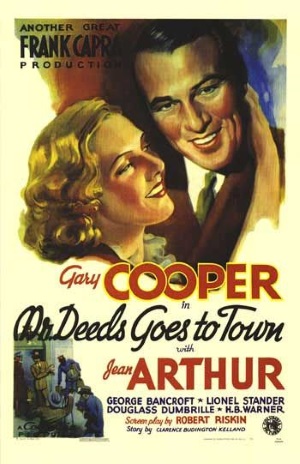
All the films in the series reflect the periods in which they were made. It’s 1976, America’s Bicentennial year. Perhaps the country didn’t know it needed an injection of optimism after years of cynical and pessimistic film as well as political upheaval. Don’t get me wrong, there will always be a place for cynicism in movies but with such movies dominating the mainstream at the time it was clear that enough was enough. It seems like happy endings where against the law in the first half of the 70’s, but Rocky brought them back for better or worse, and film snobs will look down on it for that. But yes, I do blubber away at this ending and Adrian’s uttering of “I love you!” is the greatest “I love you!” in cinema history. The ending has that same feeling of joy and happiness as seen in the ending of many Frank Capra movies. Speaking of Capra, Rocky’s response to being asked if he wants to fight Apollo Creed for the world heavyweight championship is like Gary Cooper in Mr Deeds Goes to Town when he is told of the vast sum of money he has inherited.

As the filmmakers didn’t get permission to shot for many of the on locations, guerilla filmmaking techniques where employed in the making of Rocky; capturing the streets of Philadelphia in all their glory with that distinctive that gritty look of 70’s films while aided with the use of the then-new technology in the form of the steady cam. You’d be hard pressed to find a movie which is more naturalistic and unmanufactured as Rocky.

It’s astounding that such a low budget film could have had such a great soundtrack and score. Bill Conti’s score to Rocky always makes me feel melancholic; the Rocky soundtracks have given me hours upon hours of listening pleasure. I even watch the end credits of all the films for the music (well except the first one as the end credit music here is quite dreary). The Rocky movies are also responsible for my love of montages. I’ll never forget the feeling of exuberance I felt watching the film’s training montage for the first time and hearing Gonna Fly Now; we’re talking the goosiest of goosebumps.

Roger Ebert compared Stallone to Marlon Brando in his original review, and in 1976 no one could have seen this man being a future action movie star, but I maintain the man is more intelligent than people make him out to be. He’s made a respectable career out of what he is capable of doing. How many people can claim to have been able to write installments in a film series which has lasted four decades and still manage to keep the long-running story interesting? During the filming of Rocky, he had to do script rewrites on the spot such as upon discovering the ice rink for Rocky and Adrian’s was completely empty or the shorts on the giant poster of Rocky in the stadium where the wrong colour.

When I watched this film at a younger age, I never fully appreciated the romantic angle, yet watching it from a more mature perspective. Rocky and Adrian are like two misfits who don’t fully fit in with the rest of society. There is a goddess with Adrian, and only Rocky can see it. The scene in which Rocky invites Adrian to his apartment after their first date took my breath away like few other love scenes have ever done. The sexuality on display is immense with Stallone in a vest and the gradual build-up to their first kiss, and I’m sure they did it.

The world of Rocky is populated with such unforgettable characters. Rocky’s trainer Mickey Goldmill is one of the greatest mentors in film history (either him or Obi-Wan Kenobi in my book) with his grouchy and curmudgeon manner. I feel Burgess Meredith is an actor who got better with age, so no surprise his most famous role came to him at the age of 68. Paulie (Burt Young) is one pathetic hateful loser, abuses his sister, is violent and yet you can’t help but feel sorry for him. Apollo Creed (Carl Weathers) on the other hand, dam! What a showman with his charisma, confidence, cockiness, and ego; the archetype of a leading man from a blacksploitation film. Yet despite being a black man, he is surely one of the most patriotic characters ever put on screen who shuns any left wing mentality of victimhood; sounds like a dam monster movie!

One more recent viewings of Rocky I’ve also come to appreciate Tony Gazzo (Joe Spinell) more as a character. A charismatic loan shark who employs Rocky and has a real liking for him, giving him money for his date, attends his fight with Apollo and doesn’t try to take over his boxing career whereas many other mobsters would. Yet Rocky’s lenient collecting style by refusing to break the thumbs of clients who don’t pay up causes problems for Gazzo yet he treats Rocky almost like a brother. It shouldn’t come as a surprise then that in the original script for the film, Rocky and Gazzo where brothers.

When Rocky visits the empty arena before the fight you can feel the pressure and weight that bestows him. By the time the final fight comes around I’m so emotionally invested in this character that I’m rooting for him like it’s a real fight. During the fight itself, the punches look real and there’s no sped up footage like boxing films of the past; while Bill Conti’s score ups the intensity and suspense for some serious emotional impact.

Vacation (1983)

Getting Away From It All

The noble all American pursuit of taking your family on vacation (or holiday as we call it in the UK); that is the ultimate aim of Clark Griswold. Chevy Chase is Clark Griswold in one of those roles which is so identified with one actor. He’s such a family man in an extreme yet subtly comic way with is repressed frustration making him a ticking time bomb. He’s a proponent of the American dream if there ever was one; an unashamedly white Anglo Saxon protestant who takes family ideals a little too far at times.

Vacation is my favourite John Hughes movie and a very American movie at that. You can’t do this in the UK; here you can hop in your car and you will be at the other end of the country in a day. It seems like the idea of a road trip was designed for the vast open country of the United States in which you drive for days on end. However, the theme of vacation (or holiday) frustration is relatable to anyone who has been on vacation. As Clark puts it “When I was a boy just about every summer we would take a vacation, and you know in 18 years, we never had fun”. Even the most out there jokes such as the car still moving while Clark has fallen asleep at the wheel or the death of the aunt still manage to feel relatable to some degree and remain grounded in reality.

Road movies give some of the best opportunity to create great amounts of character development and I feel there are few other writers in cinema history who had the ability to generate so much character development within such a short space of time than John Hughes; and like The Blues Mobile of The Blues Brothers, the car in Vacation is a character itself. As seen in many of Hughes’ film, the kids and/or young people are fully sexually aware (In Vacation Rusty’s cousin teaches him about masturbation for the first time) which I find liberating to watch as Hughes is a writer who treats young people like adults with themes which were explored further in films like Sixteen Candles and The Breakfast Club. Sigh, why wasn’t I a child of the 80’s?

Vacation is one of the most summery movies; watch it during the cold months of the year to escape the winter blues.

Woman In the Moon [Frau im Mond] (1929)

Destination Moon

I first heard of Woman in the Moon (Frau im Mond) as a child reading about it in the Newsround Book of Space. In a section of the book about science fiction movies, the film was mentioned accompanied by a photograph of the film. This picture always intrigued and stuck with me – three people and their rocket on the moon; very retro-futuristic looking. I finally saw it many years later and was not disappointed.

Woman In the Moon really does deserve the title of a unique film, the movies feels like 50’s science fiction movie, yet was released in 1929. The design of the rocket has that retro-futuristic, egg-shaped 1950’s look while the painted moon backdrops look as if they could be in a 50’s space fantasy film. Likewise actress Gerda Maurus has a very futuristic, metallic looking hairstyle. Science Fiction wouldn’t become a staple genre in cinema for another 21 years and Fritz Lang himself was to create a sci-fi movie in the 1950’s, which unfortunately never came to be. The movie also mixes together other time periods. Portions of the movie feel reminiscent of a Jules Verne story with that 19th century sci-fi aesthetic such as the apartment of Professor Mannfeldt with its vintage 19th century furniture, chairs and telescope.

Woman In the moon combines genres with a mix of espionage, melodrama, comic book sci-fi and even a helping of comedy thrown into the mix. Other moments feel like a documentary with scenes of scientists and diagrams explaining things; I love that stuff. Woman in the Moon was the first time ever (film or otherwise) in which space travel was depicted through the use of a multistage liquid fuel rocket; 40 years before man first landed on the moon. Considering this it’s a shock that this movie isn’t more widely known, especially in compassion to Lang’s previous sci-fi epic Metropolis. Even later Nazi rocket science (and eventual American rocket scientist) Wernher Von Braun acted as an advisor for the film.

The film has its Cartoony moments such as the ever cliché image of close-minded bearded scientists laughing and the insane or seemingly insane person is the one who is right but the message is clear, as Professor Mannfeldt angrily puts it “The progress of the world will not fail due to learned ignoramuses lacking in fantasy whose brains work in inverse proportion to their calcification”. The movie’s villain, on the other hand, is obviously modeled after everyone’s least favourite evil dictator Adolf Hitler; he doesn’t have a mustache but has the same parted hairstyle. Lang hated the Nazis before it was cool or before they even came to power.

The only major downside of Woman In the Moon is the run time at 2 hours and 50 minutes which I felt could have been cut down. At the 26 minutes in until 50 minute mark was a section of the film which really tried my patience with its painfully slow setting up in real time but it’s largely smooth sailing after that.

The rocket launch is something to behold with the impressive miniatures and the very gradual build up. The rocket interior is in tune with a space fantasy even with its design taking the absence of gravity in space and G-force taken into account. The actors do an effective job of conveying G-force and not coming off as laughable. When on the moon the astronauts do not wear space suits, are able to breathe on the moon and did I mention there is also gold on the moon. I assume the filmmakers intentionally created a film which combined scientific accuracy and fantasy to create a film which has a great sense of adventure. The child stowaway on the rocket represents the schoolboy adventurer in us. The moon as seen here is a fantasy land full of mountains and caverns. Plus I love and I do mean LOVE the film’s ending. Such an uplifting moment after we’re led to believe the opposite but doesn’t come off as contrived.

There are some subtitle issues on the Masters of Cinema Blu-ray release with white English text overlaying white German text.

“For the human mind, there is no never – only a not yet.”

It’s a Wonderful World (1939)

It’s a Wonderful Life…I Mean World

The first 10 minutes of It’s a Wonderful World is just rather dull set up for an incomprehensible murder mystery, but when Stewart becomes a fugitive on the run trying to prove his innocence and Claudette Colbert enters the picture it’s all smooth sailing even with the largely impossible to understand plot.

James Stewart is Guy Johnson, a hardboiled detective who often has a cigarette hanging at the end of his mouth like he’s Phillip Marlow. The role is a very different change of pace for Stewart but he pulls it off showing he could have easily slipped into a noir/detective thriller. Stewart even channels Clark Gable at times; with even the way he talks to a dog shouting at it to go away is very Gable-like. On top of that, at one point he admits to Colbert’s character that he thinks “all dames are dumb and all men ain’t” and how she has changed his philosophy on women; don’t tell the feminists. I also have to ask does this movie contain Stewart’s only ever blackface moment in a film? So yes, the on-screen personification of a boy scout is now literally poking fun at boy scouts and even tying them up. Claudette Colbert, on the other hand, plays an overly trusting eccentric poet who states throughout the film, “I swear by my eyes”. What does that even mean?

It’s a Wonderful World offers a genre mix of screwball comedy, murder mystery and even some elements of Hitchcock with the plot of a fugitive on the run to prove his innocence. Likewise, many of the solutions’ the character’s use throughout the film feel like they could be used in a Hitchcock movie such as Colbert lighting the newspaper on fire to escape from the car. No surprise that the film’s co-writer Ben Hecht would be a future Hitchcock writer.

Topkapi (1964)

Mission Unpossible

***This Review Contains Spoilers***

Topkapi is one of those movies in which it is fun to look in the background at the colourful array of gadgets and gizmos. The film’s sets are a thing of beauty, full of beautiful, understated colours. This is the kind of movie to watch to watch on a hot summer’s day or to escape the winter blues. The movie was filmed on location and acts as a time capsules for 1960’s Turkey and Greece, and capturing in a documentary like for the nitty, gritty street corners of Istanbul.

The production code was all but gone in 1964, thus the movie is able to explain and able to show in detail how they are able to commit their crime with explanations of the security system in place and how to bypass them, as well as their undercover scheme and the heist plan; I just delight in that kind of exposition. There were the days before security cameras, therefore they aren’t an obstacle to get around. I also imagine they probably could have chosen to have the criminals get away scot-free if they had desired.

Peter Ustinov steals the show, in one of those performances which bring me levels of respect towards an actor playing a loveable sucker and the most unconvincing conman who can’t fool anyone to save his life. Oh, the other hand I’ve heard reviewers criticise the casting of a 44-year-old Melina Mercouri as a flirt who is not very attractive, I disagree. I find it’s an interesting character dynamic to have a somewhat maniacal nymphomaniac who isn’t particularly attractive yet has a lover who appears to legitimately sees something in her.

Topkapi may have the best heist sequence I’ve seen in a film. By this point in the film I’ve already attached a strong emotional interest in these characters, but during the heist itself, the characters played by Ustinov and Maximillian Schell develop an unexpected emotional bond which raises the stakes higher than they are. With a clumsy fool who is afraid of heights, a lighthouse being controlled from afar by other operatives and precise rope movements to moving an entire glass enclosure, I’m left with that glorious feeling of clenching your hands when something almost goes wrong.

Libeled Lady (1936)

The Front Page

The opening credits of Libeled Lady are not your typical list of screen names, instead we get footage of the four main stars walking arm in arm very happily as their names come on screen one by one. Four heavyweights in roles which play to their strengths, giving some of the best dialogue the screwball comedy has to offer. Libeled Lady is my favourite newspaper comedy, a world in which journalistic ethics are nonexistent and people struggle to make relationships and careers in journalism mix. Warren Haggerty (Spencer Tracy) is so preoccupied with his job as the managing editor of a paper he has missed his own wedding several times, so no surprise Jean Harlow gives a very comically angry performance throughout most of the film.

William Powell’s Bill Chandler has such cool and confidence, he even draws his own contract which will bring him back to the paper he was sacked from as he knows Warren Haggerty will come looking for him following a scandal. Powell gets the chance to show the full range of his comic abilities, not only as a master of words but also gets showcase slapstick comedy similar in vain to Buster Keaton or Charlie Chaplin during the film’s fishing scene. The subplot of Bill Chandler learning to fish would be the basis of Howard Hawk’s comedy Mans’ Favorite Sport?. Despite how incredibly fast he picks up the ability to fish like an expert it doesn’t feel contrived.

A portion of the story is spent trying to find William Powell with telephone, telegraph, and radio as their means of communication. Outdated aspects like in old movies always intrigues me and makes me ponder if stories like this could be told today. With the internet and other modern communication devices, they could have been able to recall those newspapers at the start of the film. Likewise, publications today are no less obsessed with covering the escapades of socialites and people famous for being famous; but Connie Allenbury (Myrna Loy) is not a typical socialite. She is down to Earth, has an image distorted by the media and can even outwit the paper. It’s appropriate this role would be played by Myrna Loy; the so-called only good girl in Hollywood.

It’s a Wonderful Life (1946)

It Happened One Christmas

***This Review Contains Spoilers***

Why yes I do cry like a baby over it’s a Wonderful Life: every time. That ending is such a huge release after such as a dark and depressing alternative reality. I’m always left shaken up by it and need a break before I can watch another movie as well as making me want to make amends with loved ones. I’m sure everyone who watched It’s a Wonderful Life thinks to themselves what the world would be like if they were never born. The struggle of George Bailey is relatable to a wide spectrum, and I know for myself it really hits home. Being stuck in a dead-end town and feeling you will bust if you don’t get away from it; having your life not going the way you intended it to while your siblings appear to be doing so much better than you. But in at the end George Bailey realises what he’s got when it’s all gone, above it all, God’s greatest gift. It’s a Wonderful Life takes placed in a world in which God exists (and can focus his time on this one person over the rest of the world, but I digress). I’ve never felt however for It’s a Wonderful Life to have a religious agenda, it’s merely just a plot device for the film’s fantasy elements.

Lionel Barrymore’s performance as Henry F. Potter I feel is a tie between his brother John’s roles in Twentieth Century as the best performance from the Barrymore clan. Potter is one of the biggest douche bags in movie history; the archetype evil business mogul and ripe for comparisons with real-life figures. Not only has he no charitable side, he directly steals money in order to destroy his competition. Unlike other screen villains, Potter does not get any comeuppance at the end of the film, although you could say he’s destiny as a sick, frustrated and lonely man who hates anyone that has anything he can’t have is punishment enough. Potter isn’t a total caricature though, he is more three dimensional than that. He’s a man who knows how to conduct and run a business and understands that high ideals without common sense could ruin a town. But George Bailey is no fool, he is a natural born leader, even if he doesn’t realise it. He stands up to Potter without giving it a second thought, runs a building and loan which is a real estate empire itself; even his father states to him that he was born older than his brother.

Moments like the makeshift honeymoon suite in the broken down house which they later make their own or the recurring gag with the mantle at the end of the stairway represents the kind of writing which elevates It’s a Wonderful Life above the majority of other movies. Like the greatest of films, you notice something new on every viewing. Likewise, nobody can do moments of intimacy like Frank Capra, the movie is full of scenes in which it is simply two actors talking with no background music, yet creates raw human emotions like no other. Take a scene such as George and Mary walking through a neighbourhood at night while George talks about his ambitions for the future, the rest of the world ceases to exist. Many will be quick to put down Capra’s work as so-called “Capracorn” or as Potter puts it, “sentimental hogwash”. Get off your high horse and stop thinking you’re above such emotion – cinema is about the manipulation of emotions.

It’s hard not to feel sentimental for the representation of small-town America on display. Bedford Falls itself is a town full of interesting and unique characters. It actually reminds me of The Simpsons. Potter himself is essentially the town’s own Mr. Burns in The Simpsons – the people of Springfield hate Burns but are dependent on him for their energy needs. Likewise, the people of Bedford Falls hate Potter and would be dependent on him for their housing if it wasn’t for the competition of the Bailey Building & Loan.

Due to its public domain status, the film was shown on some TV networks in 24-hour marathons. I’d happily watch one of those networks as I can’t stop watching It’s a Wonderful Life no matter what point in the movie I begin. Could you get a more perfect marriage between actor and director than James Stewart and Frank Capra? Collaborating on a perfect trilogy of films, with each one better than the last. It’s a Wonderful Life? It sure is.

The Philadelphia Story (1940)

Another Philadelphia Experiment

***This Review Contains Spoilers***

At the beginning of The Philadelphia Story, Cary Grant pushes Katharine Hepburn to the ground by putting his hand in her face. With any other actor this would be a vile act against a woman but because it’s Cary Grant, it works and thus showing the power of these three acting titans, Hepburn, Grant and Stewart. The Philadelphia Story gives an insight into the lives of the rich and famous, something which would be harder to pull off in later decades not to come off as a metaphorical dick waving display of wealth. I do find myself trying to figure out why this is? Could it be the incredibly high standards of writing and filmmaking craft on display here and the love of these performers; even more so when compared to the poor standard of romantic comedies today?

Tracy Lord (Katharine Hepburn) is not a ditzy socialite. In this role written for Hepburn it’s clear that she is a symbol of first wave feminism; wearing pants and an emasculating suit and being an influence on her younger tomboy sister but more importantly, it’s not to be undermined the complex characterisation of Tracy Lord. Like in Holiday, Grant and Hepburn share some very poignant and hard to decipher dialogue in which he tells her about her standing as a goddess and her lack of human frailty. Despite her ego, she claims in a sincere manner “I don’t want to be worshipped, I want to be loved”. Under the surface of the usual Cary Grant charm and elegance, C.K. Dexter Haven is one the darker characters Grant ever played. Apparently he “socked” Tracy on occasions, destroyed the cameras of multiple photographers on a boat and is a recovering alcoholic. This is Cary Grant at his most conniving with no remorse and enjoying it, displaying the darkly comic side of The Philadelphia Story.

However, this is Stewart and Hepburn’s film. Macaulay Connor is the moral, do-gooder James Stewart is known for (at least at the beginning that is); objecting to having been given the assignment of snooping in on the wedding of a Philadelphia socialite, as opposed to something with more journalistic integrity. He is appalled by the rich and their lifestyle but unlike Jefferson Smith he throws this out the window when he falls in love with Tracy; a piece of subtle cynicism on the movie’s part? I also really appreciate the relationship he shares with his work partner Liz Imbrie (Ruth Hussey). Her character is very cynical throughout most of the film but later reveals her more idealist side. She shares a platonic friendship with Macaulay but there are hints they have deeper feelings for each other. Virginia Weidler, on the other hand, is a real scene stealer. Just look at her speaking French in an overdramatic manner then singing Lydia the Tattooed Lady by the piano; a pointless scene but funny.

I can’t call The Philadelphia Story a predictable movie as I couldn’t see where the story was going at the end. I could have sworn she would end up with Jimmy but at the last minute and totally out of nowhere she goes with Cary and with it coming off as contrived. Likewise, a drunken Stewart carrying Hepburn in his arms while singing Somewhere Over the Rainbow is surely one of the greatest things ever caught on celluloid.