Before The West Was Won
***This Review Contains Spoilers***
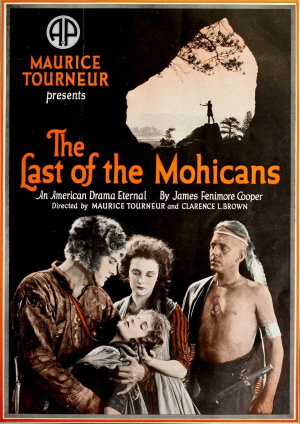
Since most Western films take place within the time period of 1830 – 1890, it’s interesting to encounter examples set earlier in the history of the North American frontier, with The Last of the Mohicans (based on the novel of the same name by James Fenimore Cooper) being set during the French and Indian War (1754-1763). Although shot at San Bernardino National Forest and Yosemite National Park (both in California), the story itself takes place in modern-day Upstate New York. So can a film set that far east in the modern-day USA still classify as a western? I digress…
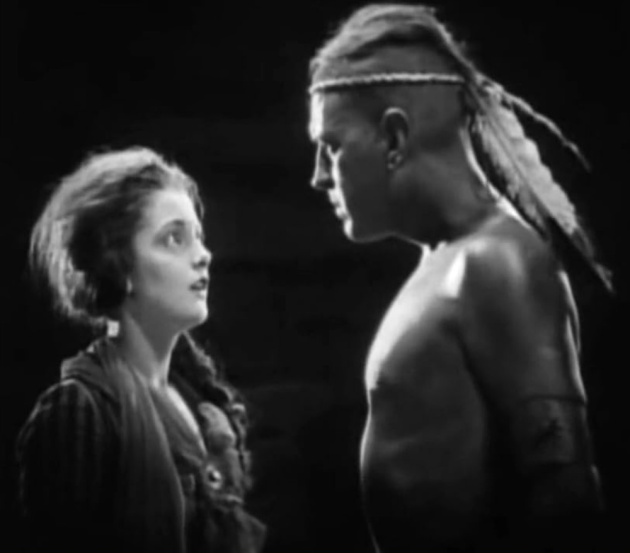
“The pale faces are our friends. Go to Fort Yonder and tell them of the danger that threatens.” The British stronghold of Fort Yonder will soon be under attack by French forces; thus, the women and children are to be evacuated to safer Fort Edward, with two of these women being Cora Munro (Barbara Bedford) and her younger sister Alice (Lillian Hall). The main emotional beat in The Last of the Mohicans is the forbidden interracial love between Cora and the Mohican warrior Uncas (Alan Roscoe). “Surely among his own people he is a prince”, utters Cora on her first sight of the striking warrior. The performances of the two stars are not dramatic; however, the film’s use of the classic Kuleshov effect helps create an eroticism which alongside their chemistry, as well as simply having a woman with a shirtless, well-toned man within a confined space, you can really feel the sexual tension between the two. Perhaps this chemistry however was not manufactured, as Bedford and Roscoe would go on to get married (twice, no less).
In stark contrast, however, to the princely, male beauty that is Uncas, is Cora’s fiancé, the cowardly Captain Randloph (George Hackathorne), who, memorably in one scene, tries to kiss Cora’s hand in front of Uncas only to get friend-zoned. Likewise, any Romeo & Juliet-style love story isn’t complete without the classic male love interest having a secret meeting at the lady’s window scene. Cora herself, however, is not denied her own heroism, sacrificing herself (on two occasions) to become the squaw of the villainous Magua in order to spare her sister.
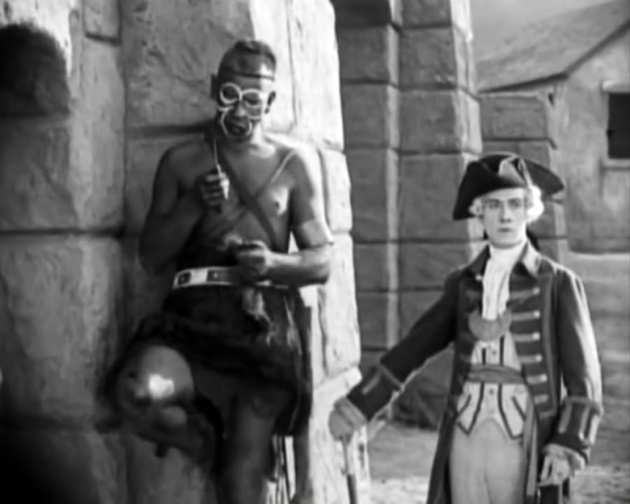
The ever larger-than-life Wallace Beery brings gravitas to the role of Magua, with his intimidating presence as he stands around flipping that knife. In the 1930s Beery became known for his pudgy appearance and lovable lug persona; however, this earlier Beery actually had an athletic build. Magua is introduced as “an Indian runner in service of the British”, but soon reveals his true colours, as a sympathiser for the French and the rival Huron tribe. The battle sequence in which Magua and the Hurons assault the British fort is rather D.W. Griffith-like. It also features the nightmarish image, in which one of the Huron men climbs into a broken stagecoach to pursue a woman and her baby. Through two pov shots, the Huron crawls towards the camera with his protruding eyes and knife in his mouth. He then grabs the woman’s baby from her arms and throws it into the air (to which I presume the baby meets its end). The Last of the Mohicans observes the Native Americans from a dignified perspective, with heroes and traitors being equally distributed between both the whites and the natives.
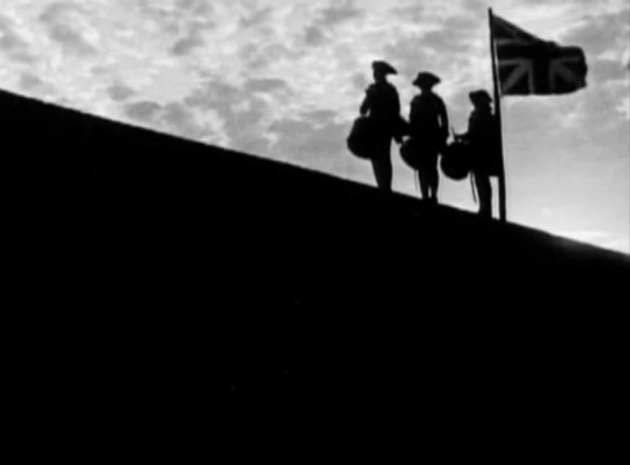
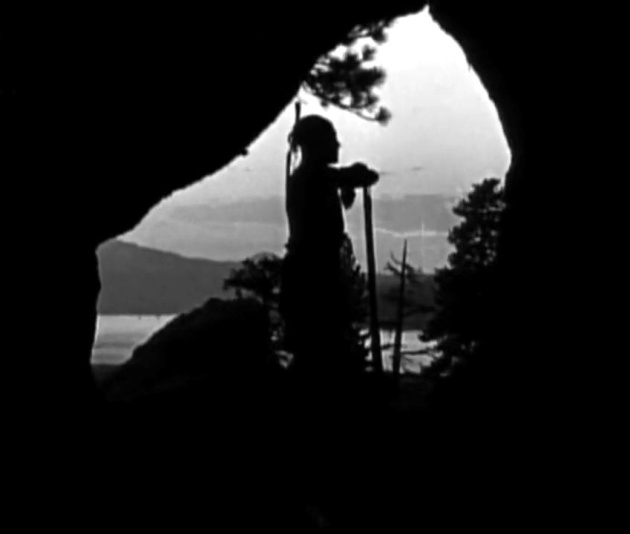
The Last of the Mohicans is a handsome production, although it’s not clear who directed which parts of the film between the two directors, Maurice Tourneur and Clarence Brown. Regardless, there are many stunning scenery shots captured in glorious depth of field, from the sun rising over a mountain to the striking use of silhouetted soldiers in trench coats or Indians against the sky. The film is also particularly keen on using cave entrances as a visual framing device, even capturing the rays of the sun entering the caves. Sadly, as of writing this review, the only copies of The Last of the Mohicans in circulation are beat-up, scratchy prints, and none accompanied by particularly great music scores. Hopefully, in the future, the film will get the boutique treatment.
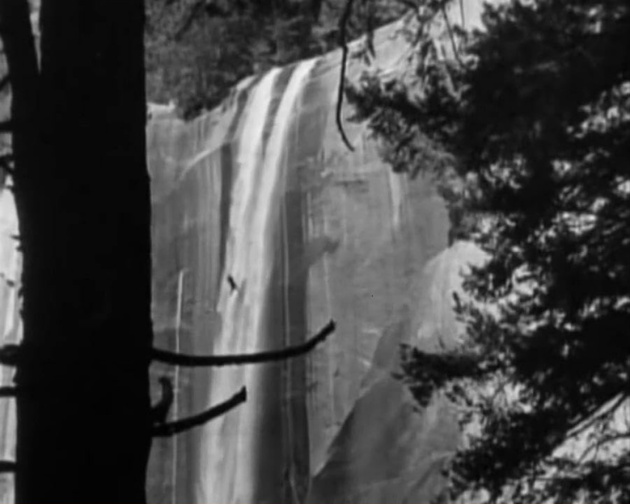
The film’s climax, with the untimely death of Cora and the subsequent final battle between Magua and Uncas, is exhilarating stuff – silent film melodrama at its finest. Taking place through a series of medium shots and long shots as the two men fight amongst epic vistas of towering cliff sides and raging waterfalls to metaphorically showcase the lust and the passion. The fight between the two warriors is a genuine brawl, featuring some impressive choreography between stuntmen topped with some intense tumbling down of steep hills. In the end, however, no one wins, with Magua himself succumbing to a fatal gunshot as his body falls down a waterfall. Get ready to see this trope repeated countless times for the next century.