
![That Night’s Wife [その夜の妻/Sono Yo no Tsuma] (1930)](https://satinyourlap.com/wp-content/uploads/2026/05/gqmjupad84uhhhdgmn1obxwamaesls_large.jpg?w=300)
Darkest Before Dawn
***This Review Contains Spoilers***
Aeons before the likes of Quentin Tarantino, Kevin Smith or Edgar Wright, Yasujiro Ozu may be one of the earliest examples of a director to showcase his film buff credentials through his own work. The director’s early films, including his crime dramas and student comedies, are adorned with love for American films and frequently featured posters of Hollywood movies garnishing the walls. This expression of love for American film permeates That Night’s Wife. The film is almost entirely devoid of any Japanese iconography (with the one major exception being the titular wife in her kimono attire), even down to the point that there is no act of shoe removal when entering a home. From tall buildings with Greek pillars, men in fedoras, candlestick telephones, noir shadows or that Fritz Lang-esque shot of a handprint on the glass, this mixture of Americana and German expressionism creates an infectious pulp world. It’s this unabashed display of cinephilia which really makes me love Ozu’s crime trilogy alongside the pictures Walk Cheerfully and Dragnet Girl.
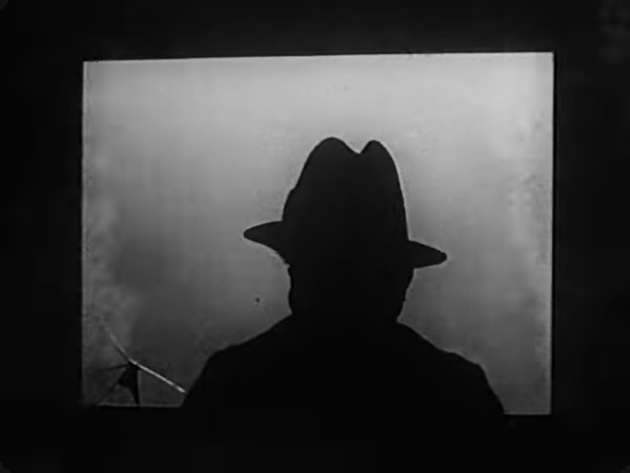
The premise of That Night’s Wife is very simple but highly effective. A father, Shuji Hashizume (Tokihiko Okada), robs an office to pay the medical expenses for his terminally ill daughter. The loving father, however, is not very convincing as a master criminal, appearing rather awkward as a bandana covers his visibly nervous face. This is further compounded by the sheer size of the urban space, the towering architecture and the army of police officers, all dwarfing the individual as he tries to evade the law after committing his crime. Rather, Shuji is an effete artist whose family of three appear to live in a bohemian, artist’s studio, covered in the aforementioned movie posters, travel souvenirs, and an abundance of paint cans scattered throughout, implying that Shuji is a starving painter (a graphic designer perhaps?).
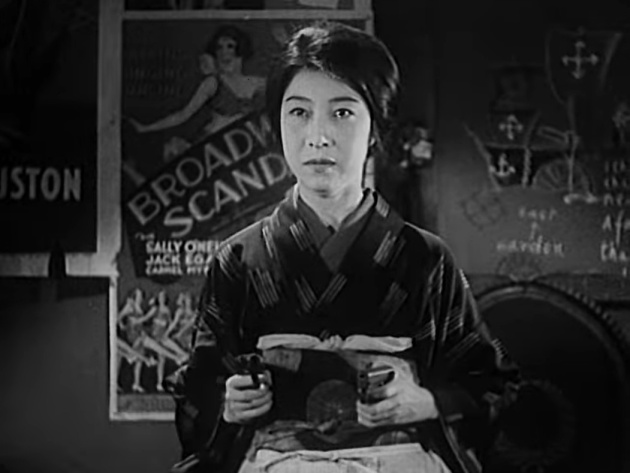
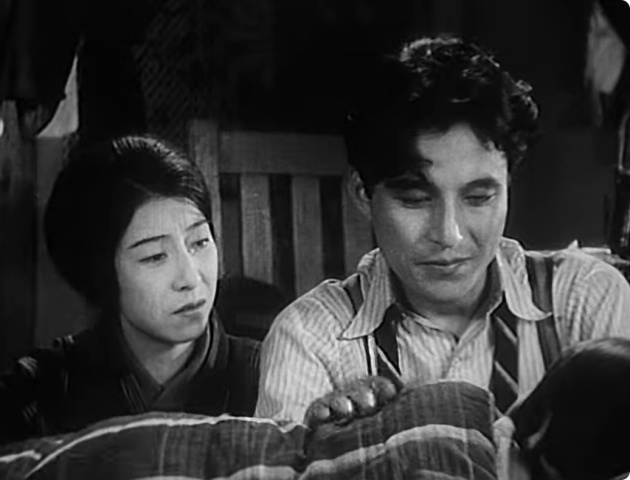
Much of the runtime inside the apartment itself plays out in a series of shifting power dynamics and mind games (like a miniaturised version of the movie Sleuth), between the married couple and a taxi driver who turns out to be an undercover cop (Tōgō Yamamoto), most memorably during a sleep standoff between the wife (Emiko Yagumo) and the cop. The husband and wife are co-protagonists in the picture, in which the loyal wife ardently remains by her husband’s side despite objecting to his decision to steal money. There is a tender and intimate simplicity in watching a mother trying to keep this domestic situation together and caring for her ill child; after all, nobody does domesticity like Ozu.
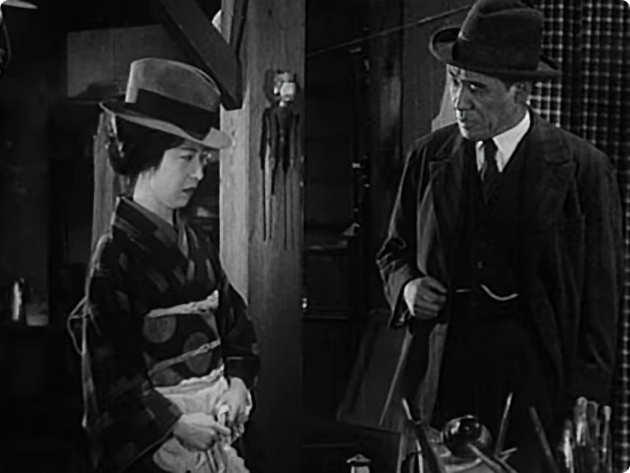
That’s Night’s Wife is a film of simple moral dilemmas. The parents’ love for a child supersedes all else as a father willing to sacrifice himself and his future to ensure the survival of his daughter. He does make a run for it when the opportunity arises, but only for his conscience forcing him to return to the apartment and turn himself in (“I must obey the law and return my debt to society”). The cop, on the other hand, is a calm and compassionate guardian deeply moved by the family’s predicament but also knowing that the law must be served. – Is a man justified to steal money and hold others at gunpoint to save the life of his own kin because he can’t afford healthcare?
What the film doesn’t have in meaning primed to be deeply intellectualised, That Night’s Wife is a film buried in symbolism and visual metaphor. From the fish skeleton on a plate as a backdrop in the opening titles (an image of hunger, death and desperation), the pessimistic image of a flower dying in a half-empty glass of water (or is the glass half full?), to the recurring motif of the floppy doll on a toy swing (a visual representation of the daughter’s vulnerability?). But perhaps the most significant symbolism of all is the film’s passing of time. Set over the course of a single night, the film concludes with the daughter having survived her illness, after the sun has risen following a very long, tiring and difficult night. It’s always darkest before dawn.


