![Dragnet Girl [非常線の女/ Hijōsen no Onna] (1933)](https://satinyourlap.com/wp-content/uploads/2026/06/mv5bmzvmzjmyotqtntm1os00ymyxlwjlmjqtzjlimzaymdk3mmmxxkeyxkfqcgc40._v1_fmjpg_ux1000_.jpg?w=300)
One Last Job
***This Review Contains Spoilers***
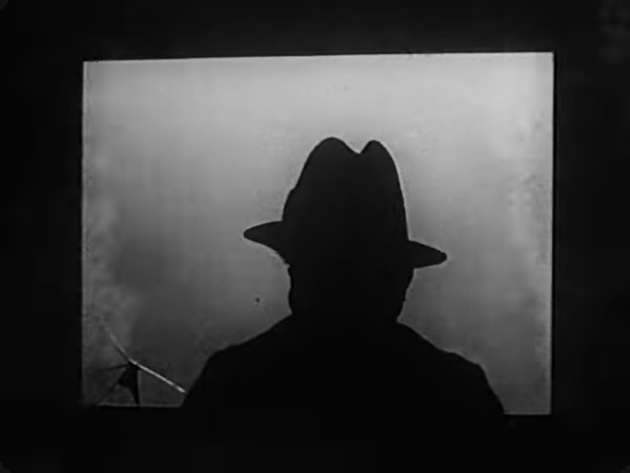
Dragnet Girl (非常線の女, Hijōsen no Onna) was Yasujiro Ozu’s final foray into the gangster genre, and appropriately so, as the picture is deeply embellished in not only the aesthetics of the genre, but also the tropes. Dragnet Girl captures the pulpy world of James Cagney and Edward G. Robinson, but unlike the American pictures of the time, it is a silent film. It is this, alongside the additional combination of German expressionism and traditional Japanese iconography, which creates a unique hybrid of a film. By this point in his filmography, those famous Ozu still frames are well in use, and needless to say, the man knows how to compose a shot that sticks in your mind long after watching (with Dragnet Girl in particular being very keen on layered, deep focus shots looking through glass).
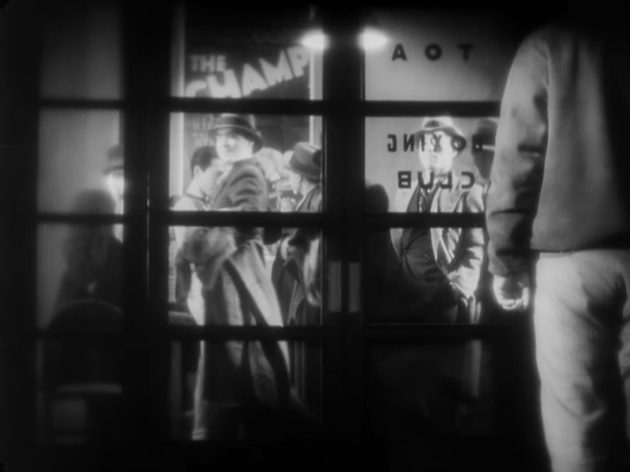
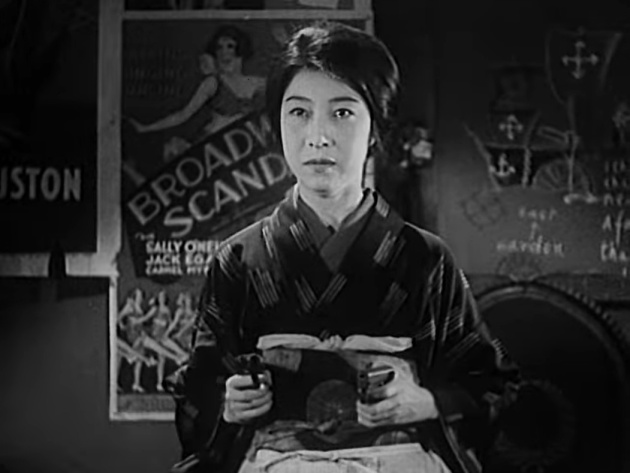
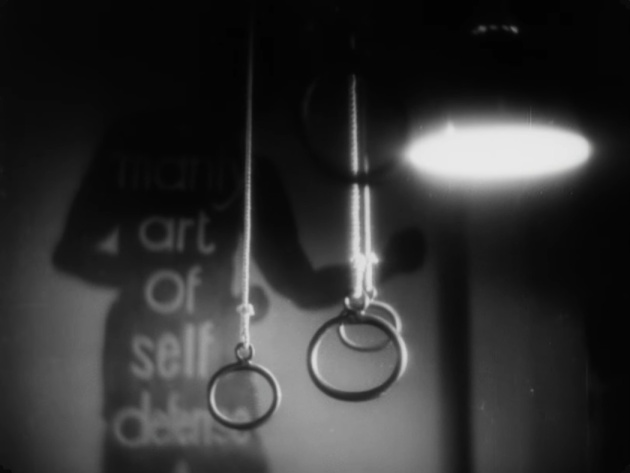
One of the film’s major recurring motifs is the striking image of several dangling, gymnastic rings with the silhouette of a boxer adorning the wall and containing the words (in English), “The manly art of self-defence”. This is one of several examples in the film showcasing the Japanese use of English as a cosmopolitan signifier. Later in the film, a pool hall is showcased, in which the rules of the game are printed on the wall in large English text (as well as the early Ozu motif of prominently featuring Hollywood movie posters in the background). In a more subtle use of English as a cosmopolitan signifier, the office featured in the film has an array of typists working on typewriters; however, there were no Japanese-language typewriters akin to the standard QWERTY Western typewriter in 1933 (rather, Japanese typewriters of the time were large, cumbersome machines), suggesting that this company provides translation services.
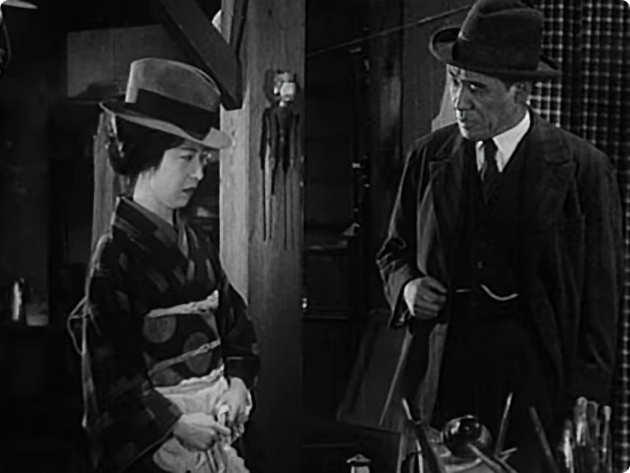
Correspondingly, although Dragnet Girl is a Japanese gangster film, the traditional Japanese gangster of the Yakuza are nowhere to be seen. Rather, Dragnet Girl focuses on a subculture known as Mobo (Modern Boy) and Moga (Modern Girl), a youth movement which rejected traditional societal values and embraced Westernised clothing, jazz music, and a liberated, urban lifestyle (prevalent during Japan’s Taishō and early Shōwa periods). Likewise, the plot of Dragnet Girl is built on tropes commonly seen in various Hollywood gangster pictures. Kazuko (Sumiko Mizukubo) becomes concerned that her younger brother Hiroshi (Kōji Mitsui) is skipping school and hanging out with local gangsters. To combat this, she approaches head gangster Joji (Joji Oka), whom her brother respects and admires, to tell her brother to straighten himself out. Joji obliges and tells the youngling to leave the world behind (Hiroshi himself is very unconvincing as a gangster, coming off as a larper). This recognition that the gangster ultimately knows what they do isn’t right and will stop others (the innocent and naïve in particular) from entering the world is seen in later Hollywood films, such as Kid Galahad or the ending of Angels With Dirty Faces.
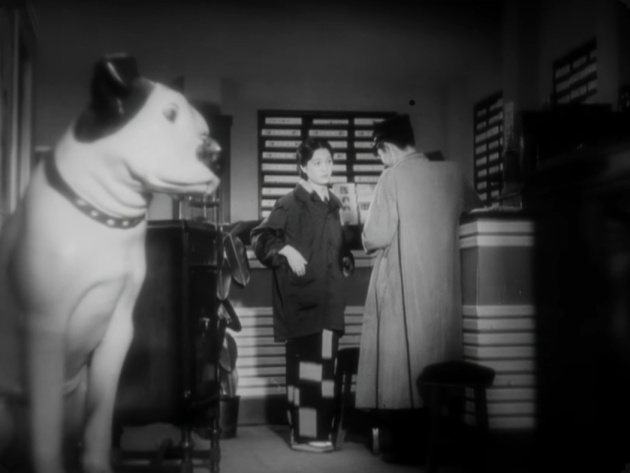
Sumiko Mizukubo perfectly sells the role of Kazuko with her homely, down-to-earth, innocent demeanour. With no parents present or even mentioned, Kazuko is a mother figure to her brother and a youth who has been forced into the role of a hardworking adult. On the opposite end of the spectrum, however, is Joji’s girlfriend and self-described delinquent Tokiko (Kinuyo Tanaka). Tokiko is on an equal footing with her male gangster peers and is treated like one of the guys. Likewise, in stark contrast to the innocence of Mizukubo, Tanaka is a true, glamorous movie star in the Hollywood form (and boasting an impressive wardrobe in this picture).
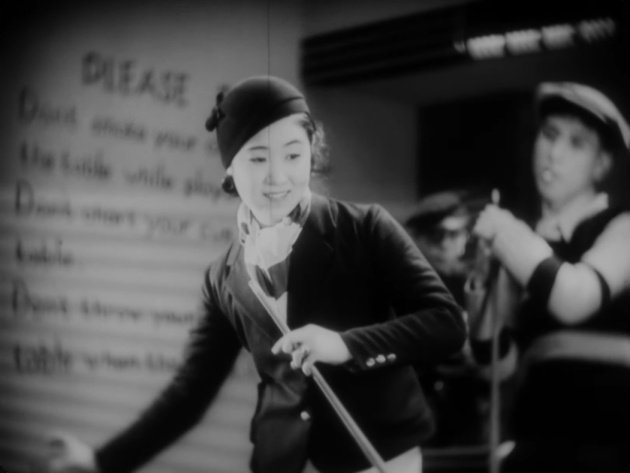
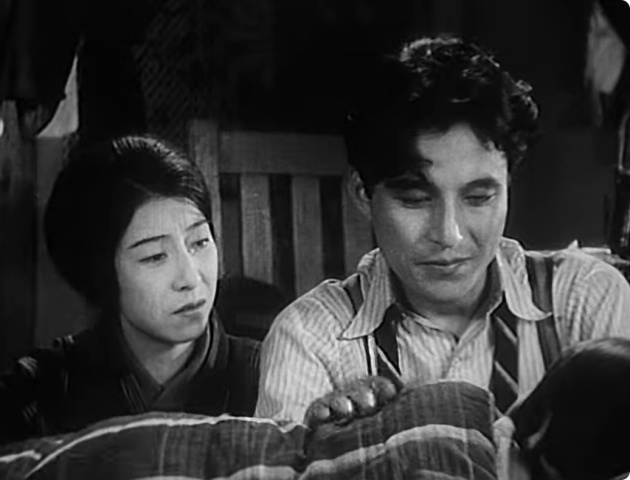
Both Joji and Tokiko, however, find themselves questioning their paths in life following their encounters with Kazuko. They both fall for her charm, with Tokiko stating, “I’ve started to feel more domesticated since I met her”, and quickly develops a desire to start knitting socks for Joji. This trope itself, of the otherwise cold and calculating gangster revealing a softer, more affectionate side due to the influence of an innocent, girl-next-door, is seen in later films such as The Roaring Twenties and High Sierra (and Ozu’s earlier gangster picture Walk Cheerfully). Joji and Tokiko decide they will go straight and begin their trad lifestyle, but not before engaging in that other timeless trope of doing “one last job”. If you know anything about gangster pictures, the “one last job” never quite goes to plan.
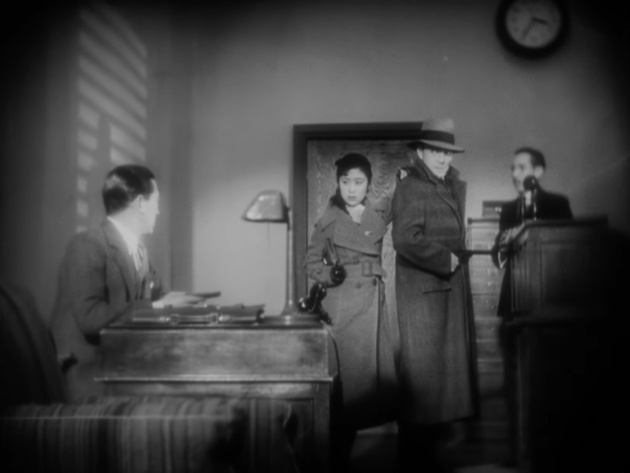
In many subtle ways, Dragnet Girl presents the gangster lifestyle as a cowardly way of life. Joji, a former boxer, is pursued by a trainer at the gym to return to fighting, which he rejects. This, coupled with the aforementioned recurring image of the boxer with the words “The manly art of self-defence”, suggests that the path of a fighter is more noble than that of a gangster. While the film shows the glamour that comes with the lifestyle, just like Cagney in The Public Enemy or Robinson in Little Ceaser, in the end, it all comes crashing down. Likewise, many may read into the film that the purification of Joji and Tokiko comes in the form of the only character throughout who wears traditional Japanese clothes, suggesting a traditional antidote to the perverted import of Western malaise. Although this is a reading I don’t buy into, as by all accounts, Ozu himself makes it no secret himself to be a fan of western culture in the form of Hollywood movies, with this picture, concluding his trilogy of Hollywood-inspired gangster movies, and in my view, some of the most underrated work of his long career.
![That Night’s Wife [その夜の妻/Sono Yo no Tsuma] (1930)](https://satinyourlap.com/wp-content/uploads/2026/05/gqmjupad84uhhhdgmn1obxwamaesls_large.jpg?w=300)