The Black Watch (1929)

Terminate With Extreme Prejudice

The Black Watch marked John Ford’s first venture into talking pictures and as expected with talkies from 1929, the film’s dialogue is delivered at a snail’s pace as one actor will wait over a second for the other to finish before they themselves start speaking, creating many long gaps in the dialogue and making the film’s pace slower than it needs to be. This gives The Black Watch a disjointed feel while the film still uses title cards over establishing shots – a silent era holdover. Visually speaking, however, the production values do not let the film down with the craftsmanship to be expected from a John Ford picture. The sets and costumes are lush and there are plenty of grand and expressionistic visuals – ultimately the film succeeds in creating that sense of adventure.

MV5BYjY0OTRhZWYtZTFlNi00MjcyLWJmYzctYzM0ZjU1ZmQ5NmE1L2ltYWdlL2ltYWdlXkEyXkFqcGdeQXVyMDI3OTIzOA@@._V1_

The Black Watch is a loose adaptation of Talbot Mundy’s novel The King of the Khyber Rifles. The Heart of Darkness style story sees Captain King (Victor MacLaglen) of the Black Watch, 3rd Battalion, Royal Regiment of Scotland (“the descendants of highland chieftains who rallied behind Wallace and conquered under Bruce”) sent on a military mission during World War I to take out a cult leader in a territory not under British rule ahead of the northern frontier of British India near the Khyber Pass. The first portion of The Black Watch features a heavy emphasizes on military tradition with plenty of thundering bagpipe action to show off that sound technology, plus nothing beats some Auld Lyne Sang regardless of the movie. The Black Watch holds a number of parallels to the adventure film Gunga Din which was released 10 years later and also starring Victor MacLaglen in an Indian setting.

Q5jGS_bg

One of the main draws of The Black Watch is Myrna Loy in the spotlight role of Yasmani – Goddess to the natives (“others have been sent to take her out but never returned”). Observe the theatrical manner in which Loy moves her body alongside her hammed up pompous speech delivery, all while cloaked out in lavish costumes and surrounded in splendour and opulence. Yasmani claims to be a white woman descended from Alexander the Great, with Aryan blood running through her veins as she puts it. When she delivers a sermon in the cave of echoes she speaks of the prophecy that a woman of Alexander’s line shall find a mate and are destined to rule these tribesmen.

The identity of the cult in the film is not made clear. The film gives many indications the cult are Islamic extremists (there is no mention of the words Muslim or Islam) from members praying to Allah to proclaiming the murder of infidels and even the appearance of a flag with the Islamic Star and Crescent. However, in Islam you wouldn’t have a woman, let alone one of western origin at the head of a traditional Islamic movement. Likewise wouldn’t referring to Yasmani as a Goddess not go against Islam’s (and Abrahamic religions’ as a whole) monotheism? Not to mention the cult’s racial undertones raises many questions. I can’t deceiver if The Black Watch is a poorly researched movie or was intentioned to be deliberately vague?
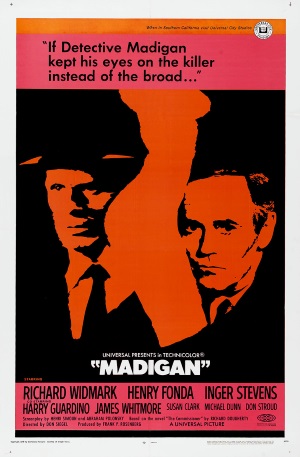
Madigan (1968)

Bad Cops, Bad Cops

Madigan is my kind of cop movie. Everything about it feels so quintessentially classic. All the tropes are there from the officer who doesn’t play by the book, police corruption, guys in suits who show off their identification, one-liners galore and all this aided by the aura of cool which film-noir icon Richard Widmark brings to the screen – plus is there a more cop name than Madigan?

Many of the men in Madigan wear suits and fedoras with this being the late 60’s and the final days in which it was common for working men to do so; although there is a sense of New Hollywood creeping in with the film’s villain appearing in that 1970’s mould along with various snippets of once-taboo subject matter. Madigan is also one of the best uses of location in film; I haven’t seen another film in which the grit and grime of the New York streets have been captured so vividly in this neo-realistic record of NYC in the late 1960’s.

Madigan

11 Days Already! Hooray!

The opening credits of Madigan are a fantastic montage of New York in the early hours of the morning. This should come as no surprise as director Don Siegel had been a montage editor before becoming a director. I could happily have this movie playing in the background just to listen to the music as the score by Don Costa itself is one of the most underrated film scores I’ve heard; it’s so motivating and makes you want to go and kick some ass.

Much of my appreciation of Madigan is due to the film’s aesthetics. The film’s main plot and many subplots are good if not entirely exception, primarily the tension between Henry Fonda as the commissioner who “likes the book” and spends his day at superficial social events to promote the image of the force and works from behind a desk versus the unethical Madigan trying the catch crooks on the street. Siegel would go on to do better in Dirty Harry three years later but dam does Madigan have some fine aesthetics.

Don Juan (1926)

The OG Playboy

***This Review Contains Spoilers***

The opening credits of Don Juan self proclaim the film to be “A Warner Brothers Classic of the Screen”. Well, this self-gratification didn’t aid the film over time as Don Juan has gone down in history more so for its technical achievements over artistic merit, being the first film with a synchronized pre-recorded soundtrack with additional sound effects using the Vitaphone sound-on-disc system (likewise some film fans might recognize Don Juan for footage used in the opening credits of Start the Revolution Without Me from 1970). As a result, viewers can watch the film with the same soundtrack as heard by audiences back in 1926 – not a new score or modern re-recording of the original. The synchronized sound effects themselves don’t add much to the film, nor are they well synced although this was new technology in 1926 so I can’t blame them.

EFVCEpuWwAEgVul

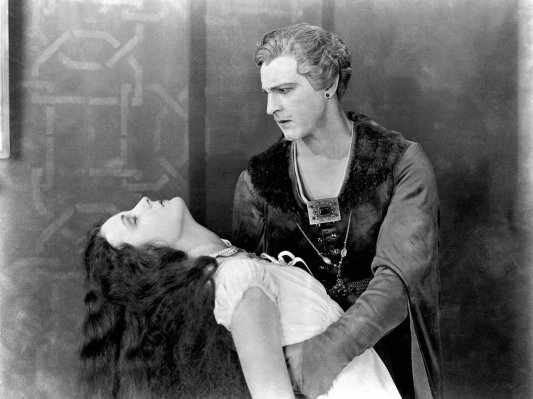
Don Juan is, however, a good swashbuckling romp in John Barrymore’s attempt to out-Fairbanks Fairbanks. Barrymore is a magnificent figure of a man, pausing every now and then to let everyone get a good look at his iconic profile. Contrary to the likes of Douglas Fairbanks or Errol Flynn, the titular character is less of an escapist fantasy but more of a tragedy in the classic tale of a man whose lust for women is his undoing; arousing from his own mother’s infidelity and his father’s response to such – there’s more implied sex than you can shake a stick at. But this is still a romantic swashbuckler at the end of the day (reportedly with the highest kiss count in film history at a whopping 127), and the film ends with the most classic of romantic images, the man and woman riding off into the sunset, perhaps not as cliché or worn out in 1926?

In classic Cecil B DeMille style, Don Juan is a film of biblical morality but is never a preachy one at that. At the beginning of the film, Juan is courted by sultry women amongst displays of decadence when he is still a child. However, in adulthood, Juan eventually comes to find redemption in Adriana della Varnese (Mary Astor) as the first woman he legitimately falls in love with and must rescue from the clutches of history’s infamous, sadistic Borgia family. The wide-eyed Mary Astor is the face of innocence and virginal purity if there ever was one, as we even see her unconscious body laid down next to a statue of the Virgin Mary just to hammer the point home.

972b4-myrna-don-juan-1926-6

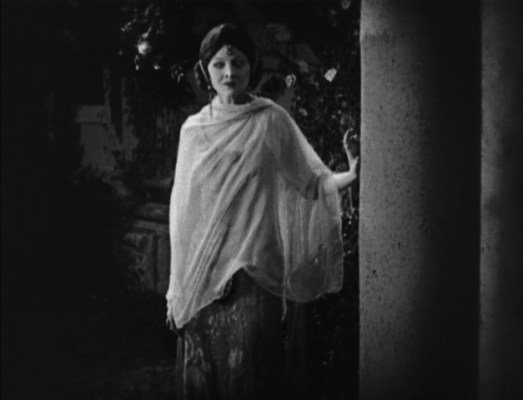
Among the film’s supporting players includes Willard Louis as Juan’s amusingly effeminate and theatrical attendant Pedrillo. It would make sense to have a gay attendant guide his many affairs when they arrive at Juan’s residence and reassuring each one that she is “the love of his life”. Don Juan also features Myrna Loy in one of her earliest screen appearances. There’s no real meat to her role as Mai, Lady In Waiting as she part takes in background scheming, but it’s great to see her at such an early stage in her career in a number of close-ups and lingering shots as well as many costume changes.

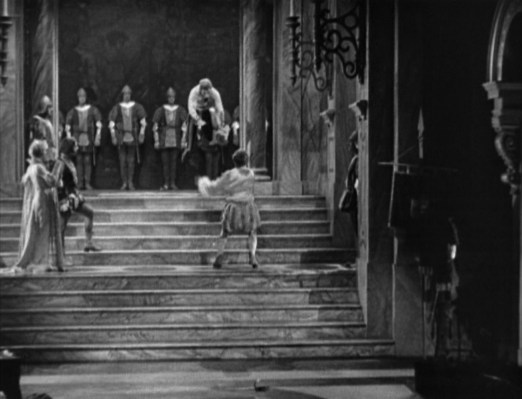
My one major downside to Don Juan is that I’m left wishing for more action, only getting some in the final 20 minutes with a sword duel and a Conte of Monte Cristo style prison escape. At least the film’s money shot does not disappoint, Don Juan’s dive on top of the stairs and onto his foe. It’s filmed in one take with no editing trickery nor does a stunt double appear to be used.

DJ 1

Don Juan is an example of the excess and opulence present in many silent-era films from the grandiose sets to the never-ending wardrobe of costumes (even all the women still have contemporary 1920’s makeup despite its 15th-century setting). In the words of John Hammond – “We spared no expense”. Watching these movies on a TV at home (or dare I say from a dodgy corner of the internet) really doesn’t do them justice.