Hard to Swallow
***This Review Contains Spoilers***
*The following review contains descriptions of suicide, torture and animal cruelty.
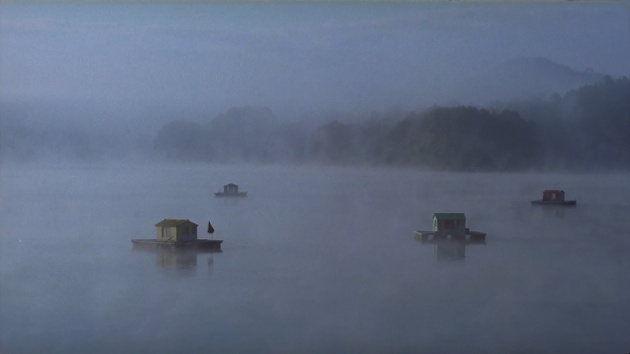
The Isle features one of the more unique film settings I’ve ever encountered, taking place at a lake resort full of little floating platforms with huts placed atop, in which patrons rest, sleep and (and most significantly for this film) fish. I do find myself questioning the logic and safety implications of such a setup, yet it turns out such resorts do exist in South Korea known as Jwadae Naksi (좌대낚시), literally “platform fishing.” Information regarding these resorts is very limited in English (googling the romanised name yields no results), although this international obscurity makes the setting of The Isle all the more mysterious and dream-like (with director Kim Ki-duk employing a similar setting in his later film Spring, Summer, Autumn, Winter…and Spring). With this secluded setting and heavy emphasis on the surrounding nature, The Isle captures the introverted desire to be left alone. The opening scenes featuring the resort covered in a blanket of morning fog, with the aquatic-sounding music score, capture a sense of peace and tranquillity.
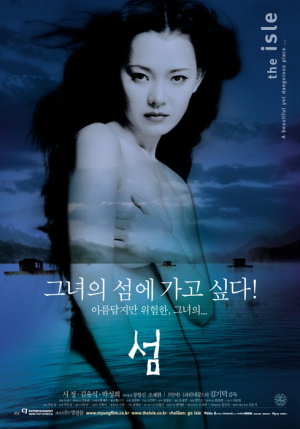
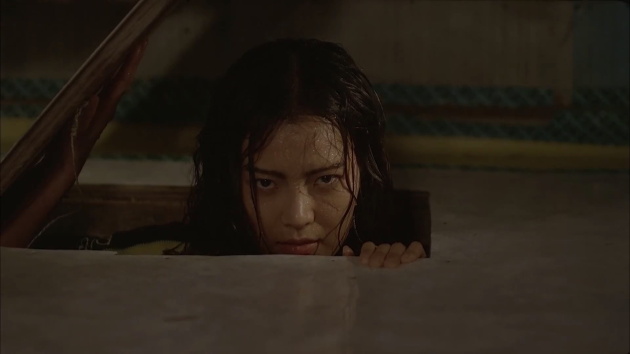
The resort in The Isle is operated by a mute, nameless woman (Suh Jung), although her name is credited as Hee-jin. The resort is very much her domain, in which she facilitates the men staying there with prostitutes and offers her own sexual services. Like other characters in Kim Ki-duk’s films, Hee-jin utters no dialogue throughout the entire film, yet so much is conveyed without it with her alluring yet threatening presence (as memorably captured on the film’s poster). There is a strong mythological element to her character, as she is comparable to the archetype of a nymph or the mould of a mermaid. Her attire of a long skirt mirrors that of a mermaid’s fin, while her seemingly supernatural ability to get out of the water and into a boat so fast or the recreation of the Captain Willard head rise out of the water echoes that of a mermaid (and with the water being her domain, this neatly ties alongside the symbolism of water as a representation of the feminine). Moreover, her role echoes that of Lady Wakasa in Ugetsu (1953) or the titular character in Woman In The Dunnes (1964), keeping the men as prisoners in her domain (early in the film, she even kills one of her patrons after he openly disrespects her following sexual services).
Hee-jin, however, does develop sympathy (and eventually falls for) one of her customers, a depressed, suicidal fugitive named Hyun-shik (Kim Yu-seok), who takes refuge at the resort to evade the authorities following a murder. He is, remarkably, the closest thing the resort has to a sympathetic male character (as sympathetic as you can get for someone who has murdered and attempted rape), compared to the other men who are all outright abusive and unpleasant. However, I have to say the film’s male lead is not terribly interesting (lacking the characterisation of his female co-star), and he does weaken the film overall. Although his character may be uninteresting, what he inflicts upon himself is anything but.
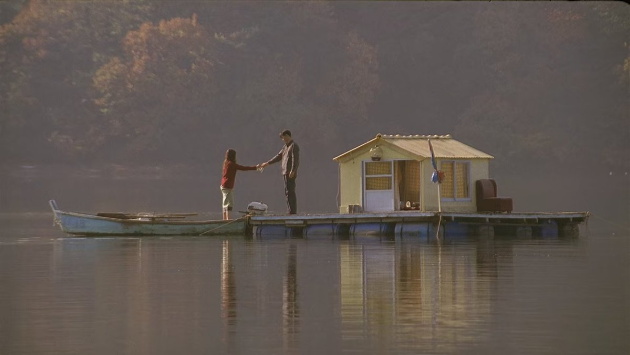
According to Roger Ebert in his review for The Isle, audience members gasped and walked out during the film’s screening at the Sundance Film Festival in 2001. The scene in question involves Hyun-shik quickly devising an impromptu way to kill himself (as he lost his gun earlier in a botched suicide attempt) when he sees that police have arrived at the resort to arrest him. So what is this way he is going to unalive himself? He gets a string of fishhooks, which he places inside his mouth and attempts to swallow, causing him to bleed profusely out of his mouth (possibly an ineffective way to kill yourself, but I guess when you’re about to be arrested by the police, you stop thinking rationally).
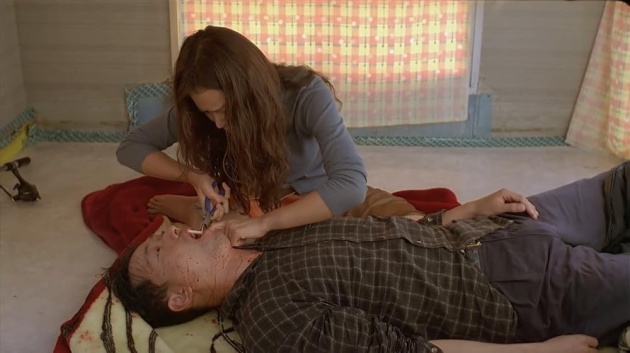
I’ve never been fishing, but I have handled hooks in the past, and they are something I feel squeamish about even touching, and I know I’m not alone in that thought, which I feel really makes this scene so difficult to watch without looking away from the screen. But it doesn’t end there (far from it). As Hee-jin arrives in the hut before the police, she hides Hyun-shik under the platform, dangling from a rod with the hooks still in his mouth. After the police leave, she then reels him back up with the rod like a literal fish (I can’t possibly think of a more graphic metaphor for the power dynamics between a man and woman). However, if this is not enough on-screen torture for you, Hee-jin later ups the ante with her own fishhook suicide attempt, only this time placing the hooks inside her vagina (bringing new meaning to the word hooker, amirite? *ba dum tiss!).
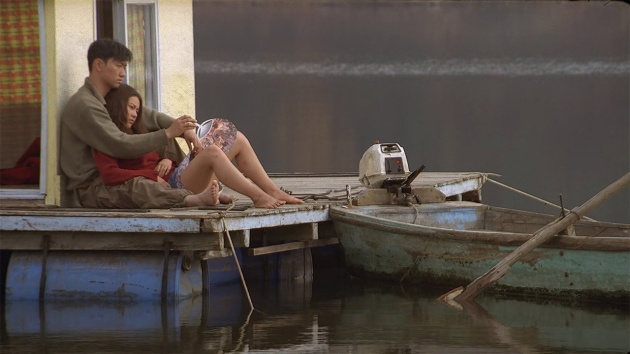
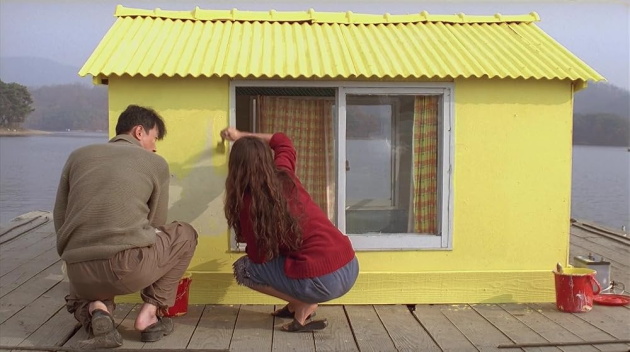
Following both of these suicide attempts, the opposite person removes the hooks from their respective body parts with pliers as they recover from the pain. I find both of these moments oddly satisfying to watch, as they represent a gradual relief after having endured the most unimaginable pain. Hee-jin even makes love to Hyun-shik after his own attempt as a way of easing the pain, which is soon followed by the ultimate consummation of their relationship in the film’s most oddly endearing scene of domesticity, as the two paint the floating hut bright yellow.
The Isle also includes several instances of animal cruelty. This includes the on-screen death of a frog, the electrocution of a fish and the slaughter of a fish (which is then returned to the lake in its mutilated form). Any Western perceptions on the reverence of certain animals over others are reflected in the fact that the Australian release I watched does feature one piece of censorship at 35:06 in which there is a visible cut in which a dog is pulled by the leash onto a boat, whereas the rest of the animal cruelty remained in this edition of the film. I hear many accounts that Kim Ki-Duk is not well regarded in his home country or among the South Korean filmmaking elite. I’d imagine this is due in part to the politically incorrect nature of his work, from the aforementioned treatment of animals to female characters who exist outside the progressive 21st-century norm (alongside accusations of assault made against the director). His work in my ways can be hard to swallow but is worth digesting, and that is a factor in why I find him to be the Korean filmmaker I’m most fascinated by.

