How To Steal a Million (1966)

Precious Venus!

***This Review Contains Spoilers***

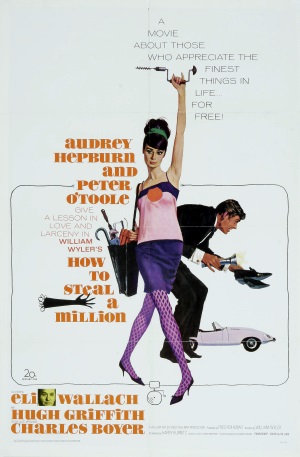
William Wyler is one of my very favourite directors and this being his third last film of a forty year career is a testament to the phenomenal director he was. Wyler didn’t direct many comedies, and with a comedy as perfect as How To Steal a Million that’s a crying shame. In fact, the last straight-up comedy he directed was 31 years earlier with The Gay Deception and the Ernst Lubitsch inspired The Good Fairy. How To Steal a Million defiantly owes something to Ernst Lubitsch. The character’s interactions have that Lubitsch touch while the European setting and the high society elegance are unmistakably Lubitsch. Speaking of elegance, does this movie have style! At the beginning of the film, we see Audrey Hepburn driving an unusually small car, wearing sunglasses and all white apparel; setting the tone for one heck of an eye-pleasing film.

Since How to Steal a Million was made after the demise of Hollywood’s production code and the character’s we’re rooting for are essentially criminals it did surprise me that they didn’t let the character’s get away with their actions at the end of the film. Peter O’Toole (one of Hepburn’s few age-appropriate leading man) shows that he could be as suave and debonair as the likes of William Powell. I often say this with a lot of primarily dramatic actors; I wish he could have done more comedies. It can’t be easy to ask the person whose house you were in the process of robbing to give you a lift home in a perfectly convincing manner.

The robbery process itself makes want to shout “genius” at the screen. The manner in which the heist is pulled of is so inventive and suspenseful as all hell. This was the days before CCTV so their plan probably wouldn’t work nowadays. How to Steal a Million is one of the rare comedies which is consistently funny from start to finish; almost without a laugh-free minute.

Hot Fuzz (2007)

Proper Action and Sh*t

***This Review Contains Spoilers***

Hot Fuzz is my favourite comedy of the new millennium as well as in my top 5 favourite films of said era. I already thought Shaun of the Dead itself was a perfect film yet Hot Fuzz is even better. There are so many film and pop culture references, inside jokes and foreshadowing ranging from the subtle to the more obvious. Just how long does it take to write a movie this layered? It’s like Bad Boys meets The Vicar of Dibley meets The Wicker Man. British comedy has long been about quality over quantity, just look at the small episode count of British sitcoms or films by Aardman Animations which employee a similar style of humour to Hot Fuzz; there is more comedy in this one film than several Hollywood comedies combined. The pacing and consistency of the jokes in Hot Fuzz are perfect, never is there more than 10 seconds that I’m not laughing. For me, the best laugh was saved until the end when the swan attacks the police officer in the car.

Those moments when Danny (Nick Frost) asks Nicholas Angel (Simon Pegg) about films he has seen; just how many times have I been in this situation in real life when someone names films one by one (usually junk food films) and when you say you haven’t seen one they keep going onto you about it. Angel himself manages to be a likable character despite his overt political correctness but for me, Timothy Dalton steals the show. He really is one of the last of his kind as a Shakespearean trained actor who can play these types of debonair villains; here he just has the smuggest look on his face.

It’s easy for a film to mock bureaucracy but this seems to be one film which speaks in its favour, then again how many films can make the act of filling out paperwork look exciting. The film’s use of fascism and the concept of “The Greater Good” (the greater good!) as a theme surprisingly is highly thought-provoking.

Hot Fuzz satirizes action movies by being grounded in reality and with Danny’s misconceptions between fantasy and reality yet at the same time also celebrates them. Having an action movie with British police officers, set in a small English town and full of Hollywood action movie tropes; the concept works on so many levels – likely because there doesn’t exist a tradition of cop movies in the UK. Plus having the bad guy’s hideout being an outlet for an actual British supermarket chain is another stroke of brilliance. There’s just something refreshing and satisfying watching these Hollywood clichés spoofed in a British manner. Action movies have never been a favourite genre of mine, especially this brand of shaky cam, fast cut action, but the action scenes here are legitimately edge of your seat thrilling. The film’s use of CGI blood is my only complaint but when a film is this amazing I can look past this one flaw. Thank you, Edgar Wright and Simon Pegg for improving the greater good of British cinema (the greater good!).

Holiday (1938)

Is This Where the Club Meets?

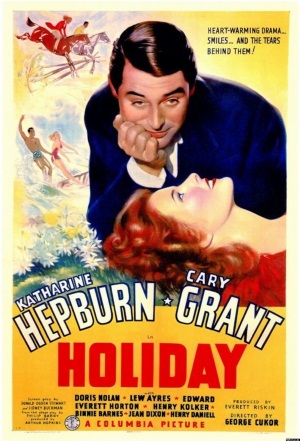
Holiday is my favourite Cary Grant film and my favourite of Cary Grant & Katharine Hepburn’s partnership. Between this, Bringing Up Baby and The Philadelphia Story it’s almost like having to choose my favourite child; yes all three are that good but ultimately Holiday is the most beloved of my offspring. I find Kate & Cary to be one of the five greatest instances of chemistry I’ve seen between an actor and actress (my other selections being Astaire & Rogers, Powell & Loy, Stewart & Sullivan and Fonda & Stanwyck), even preferring them to the longer running Tracy-Hepburn partnership.

However, the two stars aren’t actually romantically engaged throughout Holiday, with Johnny Case (Grant) preparing to get married to Julia Seaton (Doris Nolan), the sister of Linda Seaton (Hepburn). This dynamic in which Linda is more passionate about her sister’s relationship than Julia herself and the obvious feelings she has for Johnny is a much more interesting and complex dynamic than the more standard romance. Linda is far more interesting than her comparably dull sister. The whole time I’m thinking to myself Kate & Cary are beyond perfect for each other in this coming together of two intellectuals.  – I simply don’t want to see them being involved with anyone else.

I feel Cary Grant has never looked more youthful than he does in Holiday and even gets a rare opportunity to show off his acrobatic skills, with Hepburn even getting in on the action. I’ll also take this opportunity to mention that man sure could wear clothes like no other. The discussions Kate & Cary engage on what their characters want to do with their lives are so deep and profound. The difficulty of finding their place in life, the obstacles of trying to live it and not wanting to miss out on an ever-changing world full of ideologies and ideas, all while trying to get by with an optimistic attitude despite the imperfections in their life. It’s hard to take it all in on and decipher in a single viewing, which makes Holiday one of my most life-affirming movies.

Katharine Hepburn, on the other hand, had the opportunity in her career to play roles which reflected her real-life personality as a non-conformist oddball. In Holiday she is the black sheep in a wealthy, business-driven family. Linda is a character who comes up with what her family describes as “little ideas” which they outright dismiss. Her “little idea” of throwing an engagement party for Julia in their childhood playroom (a playroom which looks so much fun! You could almost set the entire movie in there) on New Year’s Eve is one of the most powerful and harrowing moments I’ve seen in any film. The feeling of being an outsider and a lonely at that (I know I’ve been there before) has never been captured more effectively on celluloid than it has when Cary Grant and Katharine Hepburn are dancing alone in the playroom and welcome in the New Year. I do make it an aim during a future new year’s eve to watch Holiday with the film synchronized with real time so I can introduce the new year at the exact same time the character’s in the movie do so.

The High Sign (1921)

Keaton Komedy Klassic

The ‘High Sign’ has to be my favourite Buster Keaton short and it just so happens to be the first independent film Keaton produced, giving birth to his iconic unnamed character. However, Keaton was reportedly disappointed with the short and didn’t release it until the following year, instead making One Week his first solo short. I question why though as I feel the premise of The ‘High Sign’ is one of Keaton’s most inspired and even worthy of being used as the set-up for a feature – it’s true what they say, the artist is often wrong about their own work. The opening prologue of The High Sign states “Our hero came from Nowhere– he wasn’t going Anywhere and got kicked off Somewhere”; and considering his superhuman stunts, Keaton is like an alien who just landed on Earth. This opening prologue reminds me of a statement Roger Ebert made in his review of The General; “[Keaton] seems like a modern visitor to the world of silent clowns”.

The ‘High Sign’ packs in so much gags and material into its 21-minute runtime, chocked full of blink-and-you-miss-it moments in the story of a wannabe gangster who also becomes a bodyguard for the man he is assigned to kill. The gag involving Keaton’s set-up with the dog, the meat and the string (it’s hard to explain) is reminiscent of something Mr. Bean would conjure while the short also features the earliest example I’ve seen in a film of a recurring gag with the high sign itself, a secret signal between the members of a gang known as The Blinking Buzzards. Keaton even messes with the audience’s expectation for comic effect by walking past a banana peel on the ground only to not slip on it. Furthermore, the short’s finale is a real “How did they do that?” sequence. The house with its traps and secret hatches is an astounding piece of set design and when four rooms on duel levels appear in the frame at once in which Keaton jumps back and forth between them, it reminds me of a 2D platform video game. I was laughing, in awe and was even shocked (when the gangster’s neck is closed on the door) all at once. All of this takes place within a nostalgic, Coney Island-like setting (filmed at Venice Pier in Los Angeles) and even features the appearance of a man at the 11 minutes mark who bears quite a resemblance to that other great silent comic, Charlie Chaplin (intentional or not?). I’ll say it now and I’ll say it again; the genius of Buster Keaton will never cease to amaze me.

The Harder They Fall (1956)

The Pen Is Mightier Than The Sword

***This Review Contains Spoilers***

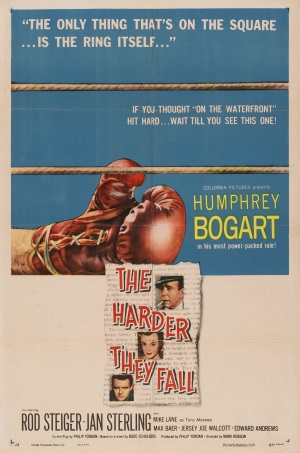
It’s unique to see Humphrey Bogart in a more contemporary, neo-realist 1950’s film in the form of The Harder They Fall. From the Saul Bass-inspired opening credits which help set up the plot (rather than just a series of static title cards) to the punchy music score, I imagine if Bogart lived longer and stared in movies for at least a few more years they would have been aesthetically in a similar vein to The Harder They Fall.

The Harder They Fall deals with corruption and fixing in boxing and how promoters exploit athletes regardless of their health or well being, providing an in-depth look at corruption in boxing as to who pulls the strings and how. The fight scenes themselves don’t suffer from the dilemma of old boxing films having dodgy looking bouts with sped-up footage or obviously fake punches, partially due to the fact that the fights within the film are staged and of poor quality fight tactics. Likewise, the grime and sweatiness of boxing arenas and training gyms never fail as effective subjects to capture on film, especially in black and white. Also, what’s the deal with that bus with the cardboard cutouts attached to it? It’s almost like a character in itself.

More so than any other Bogart film do we see such a striking generational clash with Bogart coming from the old school style of theatrical acting and Rod Steiger from the Marlon Brandon, method school style of acting. However, I’ve always found Bogart to be a very adaptable actor and he is able to seamlessly play of Steiger despite their acting styles being worlds apart. Bogart’s role as washed up columnist, Eddie Willis is one of the most interesting heroic performances of his career which combines Bogart’s trademarks of both world-weary cynicism but also, a sense of righteous morality as he deals with his moral and ethical conscience throughout the film. Eddie can draw up fake publicity for the not so talented, big lug Toro Moreno (Mike Lane), writing articles stating he is the heavyweight champion of South America, undefeated in 39 fights and largely get away with it – that’s the pre-internet world for you (“Nobody reads these west coast papers in the east”).

Eddie may take part in the world of boxing corruption but he never fully believes in what he is doing and tries to make the outfit as unscrupulous as possible. Not to mention he is the only person in the racket who genuinely cares about the gargantuan Toro, whereas the rest of the men couldn’t care less about him. Rod Steiger on the other hand as corrupt sports promoter Nick Benko is an impulsive, brash character who has no moral or ethical conscience – you have to ask does he actually believe in what he is doing is justified in his mind. Steiger chews the scenery throughout the film in a very shouty, loud-mouthed performance which has shades of DeNiro or Pacino coming through.

I had a sense of melancholy during the movie’s closing shots knowing this was the last time Bogart appeared on screen. Bogart was in poor health during the film’s production, suffering from lung cancer (although ironically it doesn’t stop him from lighting up during the movie). In the film’s conclusion, The Harder They Fall celebrates the power of writing as a force to fight wrong and enforce positive social change – proving once again the pen is mightier than the sword, or should I say boxing glove. In the powerful final shot, Eddie begins typing an article on boxing corruption and reformation for the sport, an aspiring sight for any budding non-fiction writers.

“The boxing business must rid itself of the evil influence of racketeers and crooked managers, even if it takes an Act of Congress to do it.”

Grace Quigley (1984)

Seymour! Mother!

Old Hollywood stars who were still working by the 1980’s where usually appearing in films dealing with old age (On Golden Pond, Tough Guys, The Whales of August). Grace Quigley was one such film and would be Katharine Hepburn’s last starring role in a theatrical film. The movie’s alternative title is ‘The Ultimate Solution of Grace Quigley’ although I’m assuming that title is less commonly used since it echoes a certain 20th-century atrocity.

Starring alongside Nick Nolte, Grace Quigley has a Harold and Maude element of a young man and an old woman becoming an unlikely team but the Hal Ashby comparison doesn’t end there as I’ve read several sources stating he was originally set to direct the project. The plot of the film involves retired widow Grace Quigley and hitman Seymour Flint getting together through a series of events (and eventfully he adorably starts calling her mom) and starting their own assisted suicide enterprise.  Yes, that’s the plot. Grace Quigley is one of my favourite dark comedies with much of the film’s humour coming from the characters talking so casually about killing themselves as if it’s something they do every day as well as the inclusion of possibly the happiest funeral ever.

The film has a pro-assisted suicide message with one scene involving Grace’s neighbour played by William Duell telling Seymour about dying with dignity and her unwillingness to go to a retirement home as well as “dying in front of a TV set”. In one of the more serious moments of the film, Grace takes Seymour to a retirement home to show him the horrors. I applaud the film for having the courage to make these unapologetic statements about one’s right to take their own life and society’s treatment of the elderly.  As Grace Quigley was a pet project for Katharine Hepburn she must have strongly believed in the issues raised in the film (and a sequel was even planned!).

I also recommend looking up Grace Quigley’s UK VHS cover art. The film I not actually that action-packed (although there is one brief car chase) but I still say it is the single greatest piece of home video artwork ever created.

Glen or Glenda (1953)

Misunderstood

Note: This is the earliest film review of mine which I still have. While my other early attempts make me cringe in how amateurish they are, this one I find has an appealing innocence to it, therefore I present it as I originally wrote it back in 2011.


I might sound insane, but I’m giving an Ed Wood movie a positive score from an artistic point of view. Glen or Glenda marked Wood’s first film, which he not only written and directed but also starred in. The film was originally slated to be a biopic on Christine Jorgensen, the propriety of the first publicly known sex change operation (in this case from male to female) Wood, however, took over production and instead turned it into a film about his own transvestism.

Whether you’re conservative or liberal on issue of cross-dressing and trans-sexuality, Glen Or Glenda manages to do something which I’ve seen many sacred cows fail to do, create emotional interest in its main characters, and succeeds to raise question on what it means to be normal, with an issue which is just as relevant today as it was in 1953.

The movie’s production values are surprisingly good for a film of this calibre. The surreal dream-like sequence in the 2nd half of the movie features some impressive filmmaking techniques and manages to engage you in the character’s descent into insanity. Even the film’s acting is decent, certainly better than in the likes of Plan 9 from Outer Space.

Lugosi’s character is widely regarded to be a scientist representing God. At first, I didn’t understand the character’s role in the movie (plus the use of the stock of footage is completely random). However, I was impressed with how his catchphrase which he utters throughout the course of the movie actually finds its way to having relevance with the plot.

I’m not the type of person who over analyzes movies looking for their deeper meaning, but in Glen or Glenda it really came through quite obviously and did leave an impression on me, as well as changing my opinions on Wood as a director. I can defiantly sense Ed Wood put a lot legitimate feeling into this movie, and certainly comes through in the finished product.

Fours a Crowd (1938)

Release the Hounds!

***This Review Contains Spoilers***

Errol Flynn, Olivia de Havilland and Rosalind Russell in a screwball comedy? These are the kinds of cast ensembles which unleash the inner fanboy in me. Errol Flynn rarely got the chance in his career to perform comedy and here he proves he was cable of doing Cary Grant-esque comedy on the same level as well, Cary Grant. Sadly Four’s a Crowd’s lack of box office success prevented Warner Bros from putting him in more comedies

Although The Women is seen as the film which launched Rosalind Russell as a fast-talking comedic actress, Four’s a Crowd is the first film in which she plays such a character and her first turn as the working career woman (or “newspaper man” as she refers to herself here) which became synonymous with shades of Hildy Johnson coming through. She takes full advantage of the role, stealing the show with her impeccable timing which reportedly made Olivia de Havilland envious. De Havilland though is tasked with playing a dim-witted character which she performs without coming off as annoying as such characters can easily be.

Four’s a Crowd owes a certain debt to Libeled Lady featuring some similar plot trends and themes with its slam on the upper classes, the socialite lifestyle and the desperate lengths newspapers will go to in order to get a story and control the narrative. Even the opening title sequence is taken from Libeled Lady in which the cast do the same arm in arm walk but is full of moments of inspired zaniness to distinguish itself. The model train sequence which lasts for 16 minutes had to have come from creative minds; plus what’s funnier in an innocent, cute kind of way than grown men playing with model trains. However, there is one moment in Fours a Crowd which is one of the most bizarre gags I’ve ever seen in a film in which after escaping from a pack of guard dogs to the other side of a gate, he grabs one of the dog’s legs and bites it. I still don’t know how to react to it, whether I should laugh or be horrified or both! The plot gets very confusing very fast but in a good way culminating in a finale in which Errol gets the wrong girl at the end! Although the manner in which this happens is screwball antics at its finest.

Fedora (1978)

When the Pictures Became Small

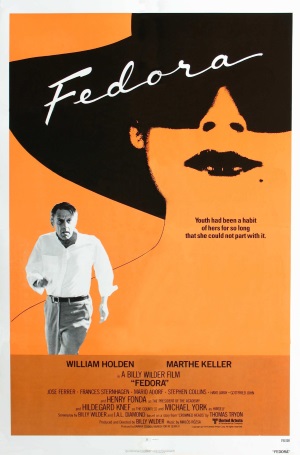
Fedora is one of the most bizarre films I’ve ever seen, to say the least. At points I’m almost laughing at the movie’s plot twist yet the more bizarre and highly improbable the movie became the more I found myself getting engaged in the story, waiting in eager anticipation to find out what will happen next with those oh so joyous “I did not see that coming” moments. The film’s highly implausible plot manages to draw the thin line between being completely absurd but never feeling like a parody.

The character of Fedora herself is a reclusive movie star who goes to extreme lengths in order to stay “on top” and retain her eternal youth to the point which even Norma Desmond would consider crazy. Early during the film, I suspected Greta Garbo to be the likely source of inspiration for the character of Fedora (whom Wilder always had great admiration for) but as the plot progressed I thought to myself “ok even Garbo was never this nuts”.

One of Fedora’s other intriguing aspects is the film’s critique of New Hollywood and how times have changed since Hollywood’s golden era came to pass. Fedora is the only film I’ve seen which displays a harsh attitude towards New Hollywood with lines referring to Hollywood being taken over by kids with beards who don’t need a script, just a handheld camera with a zoom lens as well as the demise of glamorous movie stars of the past. This is one of several aspects of Fedora which makes it similar to what you could call its spiritual cousin Sunset Boulevard; which itself commented upon what was lost when the silent era came to an end. I could go on making comparisons between the two films from William Holden playing a Hollywood hack in both films to Michael York’s role the in film being similar to the role Cecil B. Millie played in Sunset Boulevard.

I imagined by 1978 Wilder was far past his directing prime, not to mention after the 1950’s he seemed to become content with only directing comedies; thus I’m surprised to consider Fedora as one of his greatest films and a return to the roots of his earlier work as a director. As soon as William Holden’s narration begins you can instantly tell this is classic, old-school Billy Wilder.

Fail-Safe (1964)

Fail-Safe or Strangelove? That Is the Question

***This Review Contains Spoilers***

Fail-Safe is largely overshadowed by Stanley Kubrick’s Dr. Strangelove due to both movies being released in the same year. Both films deal with the events leading up to a nuclear strike although Fail-Safe takes a serious approach as opposed to the comedic nature of Dr. Strangelove. I much prefer Fail-Safe which I feel is a considerably more suspenseful film than Dr. Strangelove is a funny film. Fail-Safe examines in step by step detail what could potentially happen if a technical mishap gave pilots on a bomber the order to drop a nuclear bomb, in this case on the city of Moscow. The movie never explains what the technical mishaps was but the rest of the film examines in precise detail the actions which would be carried out if such a thing was too happen; primarily trying to stop the bombers and convincing the Soviets that the oncoming attack is accidental. Although the opening scene at the rodeo seems rather pretentious, Fail-Safe is a no-nonsense, straight to the point wordy drama. Like Sidney Lumet’s 12 Angry Men, Fail-Safe is a film driven by heart-pounding wordy exchanges.

Playing the President of The United States requires an actor with charisma and a commanding screen presence, no surprise that Henry Fonda pulls off the role with the greatest of ease. As a huge Henry Fonda fan, I do delight in seeing him as the most powerful man in the world. Along with James Stewart and Gary Cooper as actors who best embody the everyman, I feel this is one of the best roles of his career, representing the ideal American President (on the surface level at least) I’m sure many wish for (no political party is mentioned) as he tries to remain calm under the most extreme pressure.

Fonda spends almost the entire film in a small room only being accompanied by his Russian language translator Buck (Larry Hagman). This one aspect of the film did have questioning why the President isn’t surrounded by advisers and associates but this one liberty does create a sense of loneliness and claustrophobia with the film’s use of high contrast black and white cinematography also heightens the sense of fear and giving the film a great visual flair in one of the most visually stunning black & white films of the 1960s’s. Hagman’s performance itself is especially impressive as his character translates Russian to English as he listens to it being spoken, talking in a uniquely awkward manner in several sequences throughout the film, the first of which is a single, lengthy uncut shot.

The only other liberty I have to question in Fail-Safe is the failure of the wife of the bomber pilot O’Grady to tell him something only the two of them would know when speaking to him over the radio in an attempted to divert the bomber from destroying Moscow and convince them this isn’t an impression from Soviet spies – Could have at least been worth an attempt in order to avoid World War III.

Comedic actor Walter Matthau shows off his dramatic stripes as the cynical nuclear expert Professor Groeteschele, whom is more concerned with the political and economic aspects of nuclear warfare as opposed to the cost to human life. He is cold hearted and has no sentimental side to him and even gets pleasure making discussions of nuclear war into a piece of sick entertainment as seen at a house party during the beginning of the film. Later he makes very questionable recommendations in an attempt to have communism destroyed when the opportunity arises due to the technical mishap. His final worlds in Fail-Safe are a recommendation to prioritise recovering business records in New York City over the recovery of survivors and the dead as apparently, the economy depends on it. Whether or not this and other actions are justified, Groeteschele is a character who gives off bad vibes throughout the film and appears to enjoy his job a little too much.

The movie contains a disclaimer at the end that the US military has procedures in place to prevent the film’s events from occurring actually occurring but with a character like Matthau’s being a government adviser, I wonder what kind of statement the movie is making. The Congressman Mr. Raskob acts as the audience getaway character, perplexed and terrified of the technology he is being given a tour off at the war room of Strategic Air Command while the military personnel act in a confident manner to the improbability of anything going wrong. I doubt Fail-Safe is going to give any viewers a pro-nuclear mindset and will leave a chill down your spine. I feel nobody does thought-provoking and issue-based films (or issuetainment) as well as Sidney Lumet but none quite as terrifying as Fail-Safe.