The House That Love Built
***This Review Contains Spoilers***
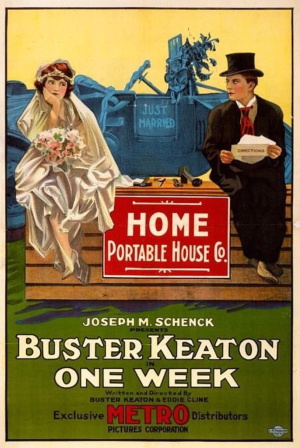
Alongside such films as The High Sign and The Electric House, One Week follows in a line of Buster Keaton shorts which utilise aspects of engineering for comic effect. In the case of One Week, Keaton and his newly married wife (in contrast to the usual Keaton formula in which Keaton doesn’t typically begin a film already having the girl), receive a package from the Portable House Co, with their DIY dwelling inside. With the popularity of Ikea-style, flat-pack, ready-to-assemble furniture in the 21st century, this concept being expanded to a full-on house is particularly appealing to the contemporary viewer. At the same time, the short displays that 1920’s go-getter attitude, which paired with the romantic, domestic setting of newlyweds constructing and living in their new home, does make One Week feel endearing and sentimental. I do also find Keaton’s stoicism to be just as endearing in itself. His house is furiously rotating in a storm while the couple are soaking wet, yet there is no point complaining; let’s just sit here and wait until it’s over.
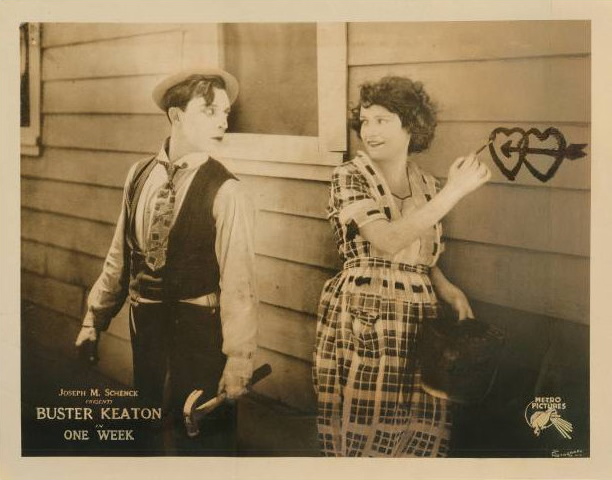
Once the newlyweds finish building their dwelling, it ends up looking like a set piece from The Cabinet of Dr. Caligari due to sabotage from a jealous love interest. Yet the home is still full of clever, utilitarian innovations such as a retractable section of the wall for easy access, a patio banner which can be removed and double as a ladder, and a conveniently indented foot hole on the roof. Likewise, the two-dimensional presentation of certain shots even resembles a platforming video game. They also manage to throw in a meta, fourth-wall-breaking on-screen representation of censorship when the wife drops a bar of soap out of the tub and waits until someone’s hand is placed over the camera lens so she can lean out and retrieve it.

Keaton’s expertise with messing with the audience’s expectations is in full gear with One Week. In particular, the forced perspective shot near the short’s conclusion in which an incoming train appears as if it’s about to smash into their dwelling, only to narrowly miss (only for moments later does another train actually do just this). Keaton makes it look so easy, yet this ending still takes me by surprise when watching One Week again after several years. It might sound contradictory, but watching a short film like this, you can see all the ways in which the world has changed in over 100 years, yet there are ways in which things remain the same.


