The Petrified Forest (1936)

This Is How The World Ends, Not With a Bang But With a Whimper

***This Review Contains Spoilers***

When I first watched The Petrified Forest I was at an unsure time in my life; fearful of the future and with my own sense of individualism and artistic ambitions. Watching Leslie Howard as Alan Squier, a failed artist who eventually takes his own life so a young girl could be the artist he never was made me fearful and depressed of what my own future held in store for me. I felt for this character to the point that it hurt because I was worried that someday I could become that character, perhaps not to that extreme but destined to a similar fate. Gabrielle (Bette Davis) on the other hand is stuck in a rut and dreams of going to France. No one in The Petrified Forest has much to look forward to; even the old man played by Charlie Grapewin gets very excited by the prospect of gangsters being nearby. Anything to create some excitement in the middle of the desert, excitement which doesn’t wain when he’s being held hostage by them. At the time when I watched this film and I was dealing with the uncertainty of if I would ever leave my hometown or would I always be stuck here. Few other films have ever had characters which spoke so directly to me.

The atmosphere in The Petrified Forest is intense enough that I can forgive the not so seamless transitions between real-life locations and the sets. With little to no use of non-diegetic music, the sound of a windstorm is more than enough to emphasize the prison of which the characters reside. I also highly recommend checking out Heat Lightning from 1934 which contains many similarities to The Petrified Forest in its setting and atmosphere as well as characters and plot points.

The Petrified Forest’s most notable contribution to cinema is the breakthrough role of Humphrey Bogart as Duke Mantee, a role in which he has never been more terrifying. I generally don’t think of Bogart as an actor who is scary but here he is a guy I would not want to be stuck in an elevator with, even with that distinct walk with his slouch and his arms bent in that manner as the dangle. – In most cases this would look ridiculous by Bogart makes it work. Bogart’s acting career had been marred with failure up until this point with this likely being his final chance to make it in Hollywood and no doubt must have fueled his performance. I know a film is good when I have to think and contemplate which actor (Howard or Bogart) gave the better performance.

How often do you get to see gangsters and intellectuals involved in such profound conversations? Howard and Bogart play characters whom are worlds apart yet develop a mutual respect for each other as they discover they share a bond with their individualism (also look out for Bogart’s head being framed over a moose head so it looks like he has antlers). Fascinating characters (all with such unique dynamics between each other) in a fascinating story is already one of the most important things I could ask for from a movie, even better when they affect me on a personal level.

The People Vs. George Lucas (2010)

A Sad Devotion to an Ancient Religion?

In this day and age when people use pop culture as an extension of themselves, it surprises me there haven’t been more documentaries like this (how about a documentary about the decline of The Simpsons?). I hate what has happened to the Star Wars franchise beginning with the special editions in 1997 as much as the next fan, and The People Vs. George Lucas helps ventilate the anger but it is so much more than that. It isn’t just mindless Lucas bashing but does give the man a fair shake.

The documentary raises many thought-provoking points of speculation about the man. Does he believe that what he’s doing to Star Wars is the right thing? Is he getting revenge on a franchise which turned him into the thing he hated and promised himself he would never become, a corporate entity. It goes to show you how the man is a much of an enigma as the characters in his films, as pointed out in the documentary, the rise and fall of George Lucas parallels Anakin Skywalker’s descent to the dark side. By the end of the documentary, I felt as one of the fans interviewed puts it, “I love/hate George Lucas”. The other major debate raised in the documentary is that of who owns art, the artist or the public and does the public have the right to the material of its own culture?

You don’t have to start a Star Wars related conversation before people start talking about their disdain for the prequels or the changes to the special editions, yet no official Star Wars documentary is certainly going to address this, nor do I doubt this documentary would be shown at the annual Star Wars convention Celebration.

The People Vs. George Lucas showcases a large range of fans from the mature to the more childish, to those defending Lucas. The documentary both celebrates fan culture as well as makes fun of it, whether intentional or not (I wonder if the guy who compares Lucas to a Holocaust denier regrets it?). My favourite part of the documentary is the section which perfectly captures the anticipation and undaunted optimism towards the release of The Phantom Menace and the following disappointment and disenchantment.

Intercut between the interviews are an astounding showcase of fan films (recreating scenes from the movies, telling their own Star Wars stories and those ridiculing George Lucas). This along with the perfect balance between the more serious debates related to artistic ethics all the way to the more trivial, such as whether or not George Lucas raped people’s childhoods, makes The People Vs. George Lucas immensely entertaining to watch, as I’ve now done so several times, making this my personal favourite documentary.

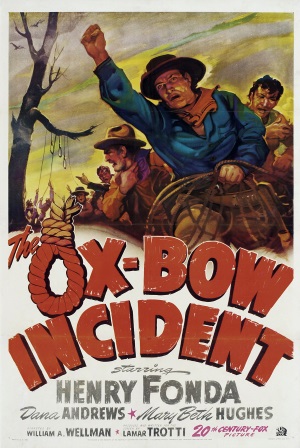
The Ox-Bow Incident (1943)

The Mob Doesn’t Think. It Has No Mind of Its Own. The great Spencer Tracy said in Fury!

***This Review Contains Spoilers***

When I think to myself what are the most pessimistic films, The Ox-Bow Incident is one of the first to come to mind. This is the type of film you never forget. Whenever I hear a story in the news related to mob mentality, I always think ‘The Ox-Bow Incident’! In the same way how any news story of political corruption or ineffectiveness makes me think Mr Smith Goes to Washington. The eerie music throughout the film sets the tone that something bad is going to happen.

This is the type of film that needs public exposure. It showcases how people can be pack animals who will rally behind something whether or not it’s true; demanding quick, speedy justice regardless of the consequences, with an ending which is a pessimistic punch to the gut, making you feel bad about humanity. The characters having no patience for the legal system and bend the law to fit their own agendas by allowing a deputy sheriff to deputise others. The result: three men are lynched on flimsily evidence that later turn out to be innocent. And if that wasn’t bad enough; the man they were accused of murdering is actually still alive. Remember just how easily false information can spread – do you hear that internet?

All the cast members of The Ox-Bow Incident have their moment in the sun, although it’s Dana Andrews is the one of who steals the show for me – just what you expect for a man threatened with lynching for a crime he is not proven to have committed. The hung bodies themselves don’t appear on screen as this would have been too graphic for the time. Only their shadows appear which is no less a powerful image.

Henry Fonda’s character is like the man in the painting in the saloon who is about to reach out for a woman – “In reach but can’t do anything about it”. Henry Fonda was not a producer on The Ox-Bow Incident but it’s likely had more of a role than just an actor. At the age of 14, Fonda’s father took him to witness the lynching of a young black man accused of rape – an event which had a profound impact on him, so it’s clear the material of The Ox-Bow Incident was of prime interest to him. Even in the film’s trailer he appears as himself talking about the book and film, and states “it’s not ethical for an actor to talk about a picture he’s in”. Yikes, times have changed!

Lynching was still prevalent in 1943 and the movie takes a jab at southerners with much of the posse being southern stereotypes. One of them even says at one point “Down in Texas where I come from we just get a man and string him up”, and even the unofficial leader of the posse Major Tetley wears a Confederate uniform.

The movie also packs a punch with its critique on machismo. The character of Major Tetley tries to make himself out to be more than he is while trying pathetically to be manly and tough. He tries to make a man out his effeminate and possibly gay adopted son (Tetley refers to him at one point as a “female boy”) by forcing him to be part of the lynching mob; needless to say things end in a tragic state. The son barely utters a word throughout the film until the end in which he gives a monologue to his father on what a depraved animal he is – such a release of anger. Likewise, Jane Darwell plays an annoying loud-mouthed old hag (ugh, that laugh) who is essentially one of the guys and believe you me: you just want to tape her mouth shut.

At only 75 minutes the film doesn’t screw around and gets straight to the point. The only disruption in the film’s pacing is a subplot regarding Henry Fonda’s character and his ex-girlfriend. I haven’t got any answers to how this is relevant to the rest of the plot. Westerns are not my favourite genre so to enjoy one they have to be incredibly well done or stand out of the crowd. In The Ox-Bow Incident, the western setting is merely a backdrop. The film has a low budget complete with obviously fake backdrops but it’s unlike anything else being made in Hollywood at the time. The film I found it held the most resemblance towards was Paths of Glory but preceding it by 14 years. The world wasn’t ready for The Ox-Bow Incident in 1943 – but is it still ready?

On Golden Pond (1981)

My Knight In Shining Armour

On Golden Pond deserves the title of “something you don’t see every day”.  Movies which deal with old age don’t usually become box office hits in a world obsessed with being young, yet On Golden Pond became the 2nd highest grossing film of 1981. Plus it stars two elderly actors who hadn’t appeared in a major box office picture in over a decade.

Despite their six decades in the industry, not only was it the first time Henry Fonda and Katharine Hepburn starred in a film together but they the first time they had even met each other. I never ceased to be amazed by the longevity of the careers of these two actors, especially Henry Fonda, whom I consider to have the most impress careers of any actor I’ve come across, scoring great films in every decade from the 30’s right up to the 80’s. On Golden Pond would be his last film and what a way to end a career. On Golden Pond reflects Fonda’s real-life relationship with his children. Reportedly the man was emotionally distant from his children, as are characters of Norman and his daughter Chelsea (Jane Fonda) in On Golden Pond. It makes you wonder how much of the interactions between the Fondas in the film are genuine with their intentionally forced and un-naturalistic manner of speaking to each other. Yet Norman will accidentally utter Chelsea’s name at several points showing that deep down he really cares about her. Also, what’s up with the bikini shots Jane Fonda? Was she trying to promote her exercise videos?

Norman Thayer actually reminds me of my own grandfather in how he enjoys screwing with people’s minds, such as the scene in which his future son in law tries to ask him if he would have a problem with having sex with his wife in their house.  Norman Thayer seems like a stereotypical old man at first but we grow to empathize with his character. Just look at that battered old face of his which manages to say so much while his cranky, grump, smart-aleck old man shtick helps the ease the likeability of his character. Norman is a man nearing the end of his life played by a man who literally was nearing the end of his life. Compared to Henry Fonda’s appearance in the film Meteor which he stared in two years earlier, he aged quite a lot in that short period of time.

Katharine Hepburn is one badass old lady in On Golden Pond. Just look at the scene in which jumps of a boat and into a lake to save her husband and nephew and doing her own stunts too. She also reportedly told Jane Fonda on set that she hated her but watching their scenes together you’d never know it but she’s Kate, she can hate whoever she wants. Plus it’s nifty to hear old stars curse, as well as flipping the bird. Norman and Ethel Thayer represent the old couple I believe most people would strive to be, married for decades but still madly in love with each other as ever.

My Man Godfrey (1936)

She’s Electric, she’s in a family full of eccentrics.

***This Review Contains Spoilers***

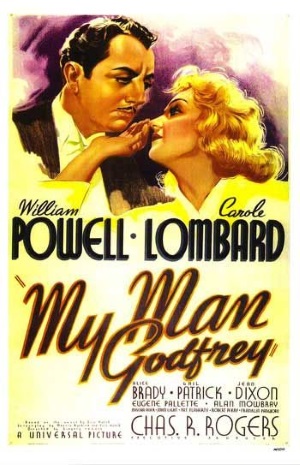
Does a comedy film actually have to make you laugh? Can you have a comedy without any laughs in it? This was once a question posed by film critic Mark Kermode.  When thinking of this question, the first movie which comes to my mind if My Man Godfrey, a comedy which I love but there are only a few moments during it which make me laugh and even those few aren’t big laughs. This is despite the movie’s crazy screwball, gorilla imitating antics in which the straight man William Powell enters a cartoon world. But I would still call it a comedy as it’s a movie which leaves you feeling melancholic watching it.

William Powell’s role as Godfrey exemplifies why he is the master of words. He can take any regular sounding lines and turn them into something memorable and unique – it’s like poetry. Even as an unshaven bum Godfrey outclass anyone. Likewise It’s easy to fall in love with Carole Lombard watching My Man Godfrey; she succeeds in playing a ditsy scatterbrain in an endearing manner but I feel the real unsung cast member of the film is Gail Patrick, one of the most underrated actresses of the 30’s – it’s a shame she never became an A-list leading lady. She became typecast playing (for lack of a better term) bitches, but could do so with a dose of humanity.

I love those moments which describe a ridiculous situation which is never caught on camera. The mental image of Carole Lombard riding into a mansion on a horse, going up the stairs and leaving it in the library is an image better left to my imagination. Many modern film comedies would show such a display for the viewer to actually see and well, would just be cringey and embarrassingly unfunny in the process.

My Man Godfrey wasn’t based on a stage play but watching it you might think otherwise as long stretches of the film take place in real time. Plus you get one thing almost unheard of in films prior to the 1950’s, an intricate title sequence.  I consider My Man Godfrey along with You Can’t Take It With You as the two quintessential “kooky family” movies although “kooky” may be an understatement.

Screwball comedy was partially about making fun of the rich as retribution for the great depression; My Man Godfrey is probably the harshest attack on the rich which the genre ever made, partially because of just how somber the film is. The opening scene in which men are living in a shanty town by a dump or the scavenger hunt for bums (or so-called ‘forgotten men’) are shocking sights for any era. However, My Man Godfrey shows how the wealthy upper classes are not beyond redemption and are a necessary component for any functioning capitalist society.

At the beginning of the film, Godfrey utters “Prosperity is just around the corner”, a line misattributed to Herbert Hoover though a widely mocked platform of the Republican Party during the early days of the depression. Once Godfrey is hired by the Bullock family as their butler he uses his newfound position to work his way out of poverty. By pawning the necklace Cornelia planted in Godfrey’s bedroom in an attempt to frame him, Godfrey purchases stock which Mr. Bullock had sold and in turn saving the family fortune. Godfrey owes a debt to a wealthy family for bringing him out living in a literal dump but in return, he is responsible for saving the family’s fortune and bringing the dysfunctional Bullocks together.

It sounds like the movie makes an argument for supply-side economics. Less subtle however is the scene in which Eugene Pallete (I swear that man is the spitting image and voice of Alex Jones) as the head of the Bullock household says “I don’t mind giving the government 60% of what I make but I can’t do it when my family spends 50% of it”, followed by his wife’s response of “Well why should the government get more money than your own family?”. At the end of the film, Godfrey has opened his own diner at the dump from the beginning of the film and hiring his previously homeless chums. – People banding together to get themselves out of poverty and not relying on an FDR handout.

My Geisha (1962)

Land of the Rising Fun!

***This Review Contains Spoilers***

Oh man, these are the kinds of quirky film concepts I live for, definitely up there with films like The Major and the Minor, The Whole Town’s Talking or Sylvia Scarlett. I’ve never previously been a Shirley MacLaine fan but My Geisha may have converted me. Unlike many dual identity films, I actually found the premise here believable, in that Lucy’s husband Paul Robiax (Yves Montand) wouldn’t recognise her disguised as her alter ego geisha by the name of Yoko – At times I found myself MacLaine is pretending to be a Geisha. Ok, the illusion might not work for everyone but it did for this viewer. Also on a more superficial appraisal, omg Yoko is so cute! I was also surprised and delighted that Edward G. Robinson actually has almost as much screen time as MacLaine, making the two a great comedic pairing. I stated in my review of The Whole Towns Talking (1935) that Edward G. Robinson appeared in some very quirky comedies in his career but this film just furthers that statement, My Geisha is by far the quirkiest of them all.

However, it’s not just goofiness for the sake of goofiness, the dual identity set up actually allows for a deep and complex plot. For starters it examines the business of film by acknowledging the dilemma of casting white actors as non-white characters; you can’t get a large budget for a film unless it stars a big box office draw, most of who in the early 1960’s where white. The other surprising area of depth that comes out of the goofy plot is the examination of the husband’s ego, tired of being in the shadow of his wife’s success and desiring the more conservative nature of Japanese society, a nature which Robaix acknowledges is disappearing from Japan as the country becomes increasingly westernised. Another point of interest if the moment when Edward G. Robinson’s character receives the news that Lucy’s husband has discovered the truth about Yoko, Robinson asks to be taken to the fourth floor of the hotel. The Japanese tend to avoid the use of the number 4 due to superstitions regarding the number as unlucky.

My Geisha would unsurprisingly not be made today would be seen as politically incorrect with its use of so-called “yellowface”, not to mention Bob Cummings in the role of somewhat creepy adulterous movie star Bob Moore who doesn’t quite understand boundaries. Yet even a film of this manner was made today, you know the film world come to a halt for 20 minutes when Lucy’s secret is revealed (otherwise known as the dreaded cliché of the liar revealed) in which one character would tell the other about how they’ve been betrayed and they never want to see each other again even though they get back together at the end. Not here though, when Lucy’s husband discovers she is Yoko (which I should add is done a very clever manner) he quietly accepts that he was fooled and there’s no big pointless, drawn-out argument scene. Sorry, classic movie fanboy rant.

I wonder what the Japanese reaction to this was. I assume this is an idealised, tourist brochure version of Japan but either way this film sure looks beautiful. I believe this could likely be credited to the surprising choice of director, Jack Cardiff, normally more famous for his work as a cinematographer. The entire film is a feast for the eyes and ears with its eye-popping colour and score by Franz Waxman (even the film within a film looks incredible and is itself emotionally moving). Not to mention to the costume design by the great Edith Head, it’s clear in classic Hollywood films that costumes were no afterthought. My Geisha is another obscure, quirky gem which I adore.

Mutiny on the Bounty (1935)

Ship Happens

***This Review Contains Spoilers***

Few other cinematic experiences are as immensely satisfying as MGM’s 1935 production of Mutiny on the Bounty. Loosely based on the mutiny on board the HMS Bounty in the South Pacific on April 28th, 1789 (although at the end of the day how can any of us really know what happened on board that vessel over 200 years ago), the actual build-up to the seizing of the ship is just gloriously immense.

Charles Laughton is an absolute beast as Captain William Bligh, a cruel sadist, and a tyrant with no reverence for the convicts and low lives in his crew. With his arrogant stance, a face like a dead fish and his bushy eyebrows, it’s hard to stress just how much I love this performance; shivers go down my back at any of his many outbursts (“Miiiister Chriiiiiistian!”). For me, this is the ultimate love to hate character that when he finally gets his comeuppance after subjecting his crew to overworking, lashings and other mistreatments (which even go as far as leading to the death of some shipmen), it’s one of the most satisfying movie moments ever. Just like the crew, you grow to hate the Napoleon-complexed bully with a passion. On a personal level, I can see many of my old school teachers in Bligh. Ok, they weren’t that sadist but his harsh nature gives me déjà vu of my school days. There’s just something about angry, tyrannical ship captains which make for such memorable storytelling trope (Captain Ahab, Captain Queeg, James Cagney in Mister Roberts, Edward G. Robinson in The Sea Wolf).

Laughton’s performance as Bligh is not merely a caricature, however. Bligh is shown to have a human side which is expressively shown with the friendship he shares with the King of Thatti, Hitihiti (Bill Bambridge) – the only person who can convince Bligh to be less harsh with his crew and take a more liberal attitude. We don’t know why Bligh is the way is he, but it’s clear he’s very selective with whom he shows his respect and loyalties too. Whenever Bligh is on the lifeboat away from the convicts and lower dregs of society following the mutiny and only surrounded by his most loyal officers, suddenly he’s a great morale booster and a competent captain.

Second billed after Laughton is The King of Hollywood himself: Clark Gable as Fletcher Christian – A figure you would be glad to have as a captain, stern but fair and a man you would happily salute and shout “yes sir!”. He’s the humanitarian saving grace for a crew ravaged at the hands of Captain Bligh. Like Laughton, the hairs on my back rise at any of his outbursts throughout the film (“I call ship’s company to bare witness, you killed him!”). Supposedly the two actors intensely disliked each other possibly due in part to Gable winning the Oscar for Best Actor the year before for It Happened One Night over Laughton’s performance in The Barretts of Wimpole Street. This makes the seething hatred between the two characters feels more real making Mutiny on the Bounty a movie of two powerhouse performances fighting for dominance of the screen. This was Gable’s first role in a historical film and he fits well into the period even with his apparel of knee breeches probably being the most effete thing he’s ever worn on screen and his lack of an English accent (but ultimately this never gets in the way). It’s just a shame Gable would never again do an adventure role in the vein of Mutiny on the Bounty.

The complexity of Fletcher Christian comes from whether the character can be classified as a hero or a coward for his enacting of a mutiny. Christian could have tried to keep the crew’s lives as bearable as possible until they returned to England. On the other hand Bligh, on top of being tyrannical and corrupt, is responsible for the death of crew members. Was Christian justified in his action? It’s a question which the movie has no clear answer for (”From now on, they’ll spell mutiny with my name. I regret that, but not the taking of the ship. Every time think of Bligh, well I’d do it again”). When the mutineers celebrate the taking of the ship, Christian doesn’t part take in their exuberance and has a look of confliction on his face. For the mutineers they had noting waiting for them back in England, Christian, on the other hand, is throwing away his navel career, became a criminal and betrayed the crown in the process.

This question of whether a mutiny can be justified is also notably examined in Herman’s Wouk’s novel and subsequent film adaptation The Caine Mutiny, and there are quite a few plot threads connecting these two films together. In Mutiny on the Bounty Midshipman Byam sees a tall ship and asks if it is the Bounty, only to be disappointed when he’s directed to a much smaller ship; likewise Ensign Keith in The Caine Mutiny spots a new vessel and asks if it is the Caine, only to be directed to a rusty old minesweeper. In Mutiny on the Bounty, Bligh obsesses over two wheels of missing cheese, in The Caine Mutiny, Captain Queeg turns his ship upside down over a quart of missing strawberries. On top of this, both Bligh and Queeg are highly untrusting of their crews, even going as far as to draw up conspiracy theories based on half-heard and innocent conversations. I have to ask if Herman Wouk took inspiration from Mutiny on the Bounty when writing his own novel.

Rounding out the crew of The Bounty is a fine cast of players. I’ve never thought much of Franchot Tone as an actor (or at the very least didn’t get many meaty roles) but he’s superb as Midshipman Roger Byam, an idealist seaman who has to make difficult decisions between his loyalty to the navy and tyranny of Captain Bligh with his final monologue being one of the movie’s many acting highlights. Other character actor highlights include the drunken Dudley Diggs, the easily frightened Herbert Mundin as well as Eddie Quillan and Donald Crisp, who have small but very memorable and striking parts.

The scenes on the island of Tahiti are a major contribution to the pure escapism in Mutiny on the Bounty. Filmed on location on the real-life island itself, this portion of the film is as romantic as it gets. Tahati seems like a world too good to be true; a tropical drug shop of feast, song, and sleep; a seemingly carefree society in which the inhabitants don’t even know about the concept of money. It’s such a release after the tyranny experienced onboard The Bounty, well until we have to return to the ship that is – no wonder a mutiny takes place. Even with the production code in effect, the scenes on the island are still very exotic (even with the women’s navels being covered up with makeup) and it’s defiantly implied that intercourse has taken place. Shirtless Clark Gable, beautiful exotic women, tropical island paradise, what more do you want?

Mutiny on the Bounty also pushes forth a positive representation of the much-vilified British Empire with its patriotic overtones and the portrayal of the Empire having exceedingly good relations with a Polynesian tribe. Even with the appearance of a tyrannical and corrupt ship captain and his associates, the film indicates Bligh is an exception to the British Navy rather than the norm. Likewise, the film states in the opening prologue that the mutiny brought about reform to Britain’s navy:

“But this mutiny, famous in history and legend, helped bring about a new discipline, based upon mutual respect between officers and men, by which Britain’s sea power is maintained as security for all who pass upon the sea.”

The life-size recreation of The Bounty pushes the boundaries of set design at the time. From a visual standpoint, the movie excels in the realism department especially considering the lack of back-projection shooting. Likewise, the rousing musical score by Herbert Stothart unleashes the imagination of your inner schoolboy. Oh, and did I mention James Cagney is in this film; yep he’s in there for a brief second (just when I thought this movie couldn’t get any better). I find the tale of The Bounty is a story of great fascination and one which really sparks the imagination and the yearning for adventure. Mutiny on the Bounty is the seafaring movie all seafaring movies are measured against.
Mr Smith Goes to Washington (1939)

Life, Liberty and the Pursuit of Happiness

***This Review Contains Spoilers***

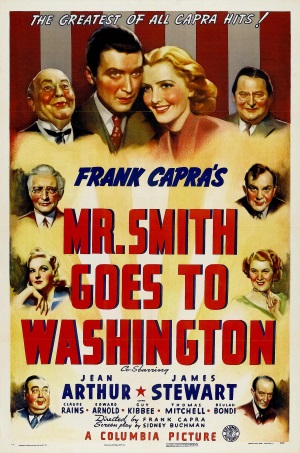
If anyone asks me why James Stewart is my favourite actor I just say watch the final scene of Mr Smith Goes to Washington. The final scene of this movie is simply of the greatest things I have ever witnessed in any film ever. That may sound like a hyperbole but I’ll never forget the very exact feeling of goosebumps I had when first watching it. Mr Smith Goes to Washington is one of a small handful of films I would call life-changing, one of the films which helped to mold the way I think and ultimately turn me into the person I am today. It encouraged me to be more skeptical, not to believe everything you here and stand for what you believe despite great opposition. It’s thanks to films like these why cinema is my bible. As much however as Capra is criticised for his films being overly idealist, Mr Smith Goes to Washington does not exactly paint the most glowing picture of the American political system. To quote Thomas Paine (Claude Raines), “The duty of a true patriot is to protect his country from its government”.

One of my favourite scenes in Mr Smith is that in which Clarissa Saunders (Jean Arthur) attempt to explain to Jefferson Smith (James Stewart) the entire procedure of creating a bill and submitting it to Congress. For starters, the scene is incredibly funny with the comedic timing and Stewart’s childlike reactions. Secondly, it’s a very informative civics lesson and thirdly, this scene shows us how Jefferson Smith acts of the film’s ambassador the for the average Joe watching film who’s just as confounded by Sauder’s lecture as Smith is. The scene lays out in an entertaining manner the political hoo-ha for the politically lay; my knowledge on politics was very limited when I first watched Mr Smith Goes to Washington but that wasn’t a barrier to being engrossed in the film’s state of affairs.

This is as good an opportunity as any to raise the question, why is Jean Arthur such a forgotten actress? Despite working with several big-name directors, co-starring with famous actors and appearing in a number of beloved classics, her presence is incredibly overlooked as the definitive urbanite career woman with her wit, warmth, and innocence. Also, that voice! Her role as Saunders is the opposite of Mr Smith. She is cynical, jaded and knows the ins and outs of the system with its corruption and cronyism. It takes Smith, the Americaphille who appears to know more about American history than the people working in Washington to restore faith in her with his childlike optimism and perseverance.

Along with the attack on the American political system, Mr Smith Goes to Washington is just as harsh with its portrayal of the press as a pack of ravenous vultures. The scene in which Smith confronts the reporters in a bar is truly shocking as they flat up tell him about their lack of journalistic ethics as reality hits Smith like a ton of bricks (also among the crowd of reporters if Jack Carson, always a scene-stealer). I just have to question the morals on the part of Smith prior to this scene in which he literally goes around punching reporters in the face although it could be argued this was more of a social norm back then between men.

Another striking monologue is that in which Smith’s mentor Thomas Paine justifies corruption as a comprise in order to achieve good deeds, a process which has existed since the birth democracy as he puts it. As convincing as he might sound at first, through the course of the film you can tell he’s a man who knows he’s sold out on is ideals partially from the complete look of shame which bestows Claude Rains’ face. Even at the beginning of the film just look at the reaction of Paine’s face when Smith declares “Dad used to tell me Joe Paine was the finest man there ever was”.

The relationship between Paine and the business mogul James Taylor (Edward Arnold) is like that of The Emperor and Darth Vader. Taylor hovers above Paine only for his conscious to be put to the ultimate test by the end of the film. Taylor’s ability to control the media of Smith’s home state and preventing any of his words from the Senate reaching the state is frightening. I can just be glad that in the age of the internet and mass communication that such control of the narrative isn’t as easy as it once was.

Mr Smith Goes to Washington is very snappy and faced paced; with the culmination of some of Hollywood’s finest character, acting talent helps carry the exposition in an entertaining and at times screwball like manner. The final 30 minutes of the film in which Smith filibusters is one of the greatest things ever caught on celluloid with its immense hair-raising build up to an exhausted, out of breath James Stewart declaring that he will fight for this lost cause, even if this room gets filled with lies like these!

Like other political films to arise from classic Hollywood, no party is mentioned during the film nor do we know what state Smith is from and which he fights so hard for. Those on the modern right could see Mr Smith as a little guy standing up against big government and the Washington elites. By contrast, those on the left can view Smith as a rebel fighting against corporate, capitalist fat cats like James Taylor. Independents could see Smith as someone who stood alone without backing from any party to fight for his beliefs. Like many of Capra’s films, Mr Smith Goes to Washington is hard to place on the political spectrum. Anyone can see what they want to within the film which is part of its enduring power.  Really, if I ever met someone in elected office, I will be asking them if they have seen this film. Mr Capra and Mr Stewart, thank you for this film.

Mouse In Manhattan (1945)

These Little Town Blues…

Tom & Jerry were a defining part of my childhood. I could spend hours watching T&J shorts on Cartoon Network when I was younger and to be honest, this is my favourite; was then and still is now. As a kid, I would always get excited when this short came on TV.

Mouse in Manhattan is not a traditional Tom & Jerry short at all; there are no chases or the carnage you would usually associate with Tom & Jerry. It begins with Jerry leaving his life in the country in favor of the bright lights and Broadway of New York City. Tom only appears briefly at the beginning and at the end but Jerry leaves him a note showing that the two could be friends from time to time. The rest of the cartoon involves Jerry’s escapades in the Big Apple and plays out like a silent film with Jerry succumbing to the odd pratfall in the vein of Keaton or Chaplin; it’s all such fun to watch. Take the moment when Jerry is dancing and ice skating with the dolls on the table; could a piece of animation be more beautiful? During the short things go from really romantic to really dark quick but it all ends well. They still throw a black face joke in there with Jerry’s head being put into a container of shoe polish. I can tell you right not that these moments were left intact when showing these cartoons on the UK Cartoon Network and Boomerang when I was a child.

The locations Jerry visits in New York such as Grand Central Station appear very empty but who cares, just look at the beauty of it! Those painted backdrops have such scope to them. What really makes Mouse in Manhattan perfection, however, is the music. You might recognize it from the opening credits of My Man Godfrey but this rendition of” Manhattan Serenade” I feel is superior and I doubt could ever be topped. Tom and Jerry shorts always evoke nostalgia in me but Mouse in Manhattan just evokes that feeling to a far greater degree.

The Mortal Storm (1940)

I Did Nazi That Coming

I try to avoid calling movies underrated or saying “Why is this not more well known?!”, otherwise, I would sound like the most malfunctioning record but as to why The Mortal Storm is not more famous goes beyond just my own personal preferences. The fact that Hollywood’s then biggest studio Metro Goldwyn Mayer would release an anti-Nazi film at a time when the US and Germany were not involved in any conflict should be a bigger deal than it is. To give some historical context, although it seems hard to believe nowadays, fascist and other Nazi-like ideas were out in the open throughout the United States during the 20’s and 30’s (heck, just look at the film Gabriel Over the White House from 1933, also released by MGM, or the public initial backlash against films with pro-interventionist sentiments such as Sergeant York or To Be Or Not To Be). Prior to the US involvement in the war, there was even uncertainty as to whether or not the US should take part in the conflict in Europe.

The Mortal Storm being overlooked is criminal. It deserves the special edition DVD treatment with documentaries behind its production. I’m sure there must be an interesting story behind the making of this film. MGM has generally been seen as a studio who played it safe, thanks in part to its conservative studio head Louis B. Mayer. So it comes as a surprise The Mortal Storm would come from this studio and they paid the price. The Mortal Storm lead to MGM films being banned in Germany. The word Nazi is never used once throughout the film, while the characters I can only assume are Jews are referred to as Non- Aryan. I wonder if this was done to prevent further controversy surrounding the film but it’s still an incredibly brave picture.

The core story is about how Nazism tore German families and friends apart due to racial and political differences. The Roths (Jewish I assume) are a happy picture postcard family one day, the next there are completely torn apart. Things go bad for the family from the moment in which it’s announced Hitler has become chancellor of Germany as the adopted, non-Jewish sons of the Roth family begin saying disturbing yet enthusiastic comments (“If peasants want to keep their cows they better have the right politics”). Likewise, the patriarch of the Roth family and the professor of the town’s local university played by Frank Morgan is treated with the highest levels of respect one day and is awarded for his contributions to the fatherland. Not long after Hitler’s rise to power his students are boycotting his class after he states that science has shown there is no difference between the blood of various races.

The Mortal Storm is a work of propaganda, not that there’s anything wrong with that. Propaganda is an art form in itself, one which tries to get an emotional reaction out of the viewer in order to convert them to one side. The Mortal Storm achieves just that. The tension during the film just builds and builds, concluding in an ending which is one huge punch to the gut.

Watching the film again in order to write this review I surprised just how engaging it was on a further viewing. There are many little touches I never noticed previously, such as when Robert Young’s character announces his engagement to Margaret Sullavan, James Stewart is the only character the room who does react with joy. I do also have to ask how Stewart, a man who would become a World War II hero and later supporter of the Vietnam war must have felt playing a character who is a pacifist.

Majority of the film is shot on sets with the use of painted backgrounds and miniatures, yet the whole thing still looks fantastic and looks more idyllic than real-world locations could. You really get a sense for this small town in the Alps. The only complaint if any I can find with the film is that opening narration which is overly bombastic.

The casting of the previously paired Shop Around the Corner stars couldn’t be more perfect. James Stewart and Margaret Sullavan play two friends who are forced to become lovers due to the impending circumstances – I can’t recall any other movies which portray a love story like this. Sullavan often portrayed characters who represented bravery; her voice is so fragile yet powerful at the same time. The cast isn’t the only tie the film shares with The Shop Around the Corner; both films represent a European society which was on the brink of destruction. The Mortal Storm shows how even an enlightened society can turn to authoritarianism.