My Top 20 Prince Songs

Sorry if my list is a bit heavy on 1999 and Purple Rain, but those albums are just that good.

prince-1999-900

20. Little Red Corvette (1999)

prince
19. Why You Wanna Treat Me So Bad? (Prince)

1280x1280 (1)
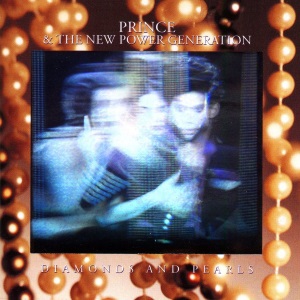
18. Diamonds and Pearls (Diamonds and Pearls)

lovesexy
17. Alphabet Street (Lovesexy)

613i6LFjOeL._SL1046_
16. Sometimes It Snows In April (Parade)

lovesexy
15. Lovesexy (Lovesexy)

prince-1999-900
14. Lady Cab Driver (1999)

81CzfbO4CrL._SL1425_
13. Take Me With You (Purple Rain)

81CzfbO4CrL._SL1425_
12. Baby I’m a Star (Purple Rain)

tumblr_neqeultSd31qagxv6o1_1280
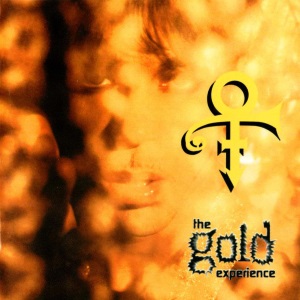
11. The Most Beautiful Girl In the Word (The Gold Experience)

prince-1999-900
10. Automatic (1999)

1280x1280
9. Adore (Sign ‘O The Times)

396e1a74478ecf384c2721bde0ed01cc.953x953x1
8. Do Me Baby (Controversy)

396e1a74478ecf384c2721bde0ed01cc.953x953x1
7. Controversy (Controversy)

81CzfbO4CrL._SL1425_
6. When Doves Cry (Purple Rain)

81CzfbO4CrL._SL1425_
5. Let’s Go Crazy (Purple Rain)

prince-1999-900
4. 1999 (1999)

prince-1999-900
3. DMSR (1999)

prince-1999-900
2. Let’s Pretend We’re Married (1999)

81CzfbO4CrL._SL1425_
1. Purple Rain (Purple Rain)

Star Wars: Return of the Jedi (1983)

Luke Be a Jedi Tonight!

***This Review Contains Spoilers***

It’s not easy calling Return of the Jedi your favourite Star Wars film. Were as when someone says The Empire Strikes Back is their favourite they get cheers from the crowd. Call Return of the Jedi your favourite you get boos and hisses followed by a rigorous defense of your opinion. Well, it could be worse; those who call the prequels their favourite usually get stoned or hanged by a lynch mob.

I find Return of the Jedi to be the film in the series which satisfies me the most in this swashbuckling space adventure. I like how it combines elements from both A New Hope and The Empire Strikes Back from Hope’s light-hearted nature and the nostalgic return to Tatooine, to Empire’s darker nature with Luke confronting Vader and the Emperor. But when I think Return of the Jedi I think redwood forests. The forest moon of Endor is such a splendour to look at, and once again proves that Planet Earth is the greatest movie set of all.

Let’s talk about everyone’s favourite addition to the Star Wars universe, shall we? I am indeed speaking of the Ewoks. The dismissive statements towards these creatures that the empire was brought down by a bunch of teddy bears I find to be very close-minded. I completely agree with George Lucas that they showcase how it is possible for a primitive race to bring down a technologically advanced superpower such as the empire is inspired by the Viet Cong’s offense against the Americans during the Vietnam War. I like this message as it’s true that the most advanced technology isn’t always the best means; sometimes less is more. I know many say the idea of Ewoks helping bring down the Empire was highly improbable. Well, my answer to that is remember Yoda’s lesson in The Empire Strikes Back, “Judge me by my size do you?”. The cute nature of the Ewoks (along with their whimsy yet epic theme music) provides a counterbalance to the darker scenes in Return of the Jedi. Yet the Ewok’s themselves are not without their own darker side. At one point in the film, they have no remorse when they intend to burn out heroes alive and notice how they use the helmets of dead stormtroopers as musical instruments.

Likewise, Return of the Jedi has too many puppets? I’m used to hearing people complain about movies which use too much CGI but a movie using too many practical effects – that’s a new one. The creature department and their astounding levels of creativity employed for Return of the Jedi hit it out of the park with creations such as the odd-looking yet enamoring fish create that is Admiral Ackbar. It’s just a shame people look at this cynically and say they were just trying to sell toys.

Return of the Jedi does not disappoint in its reveal of Jabba the Hut. The space gangster whose name is mentioned in the previous two movies with no indication as to whether or not he was a human, an alien or something different altogether (at least in the original theatrical versions). In a masterwork of puppetry, Jabba is a wonderfully, horrendous creature design; an extreme, gluttonous version of Sydney Greenstreet. Return of the Jedi also contains the iconic bikini Leia. More than just a sex symbol (insert Tex Avery wolf here), it also gives way to the powerful image of Leia strangler Jabba, her enslaver with the very chains attached to her body.

My favourite action scene in any movie ever is a toss between the final car chase in The Blues Brothers and the escape from Jabba in Return of the Jedi (with the later speeder bike chase not being far behind). Talk about a “How are they going to get out of that?” moment; in which they do in a convincing, heart racing like crazy manner. I love how the escape is one big elaborate plan which all our heroes are in on, not to mention the introduction of Luke’s green lightsaber in a shot that couldn’t look more majestic. Also, I never understood people’s love affair with Boba Fett, so his death didn’t bother me. To the contrary I find his death to be interesting in how unconventional it is; this tough badass who doesn’t go out with a bang, but rather dies in a humiliating fashion. I was more concerned with Lando being on the cusp of death!

The second half of Return of the Jedi is one of the most intense, involving and grand cinematic experiences. Cutting between the assault on the imperial cruisers and the second death star, the assault on Endor and the powerful emotions when Luke is confronting Vader and the senile, scenery chewer that is Emperor Palpatine; it perplexes me that people can put down this movie so much. Having a second Death Star sounds like a lazy idea on paper but I fell they get away with it due to the immaculate execution. I love the incomplete appearance of Death Star II and the film’s final battle involves ships navigating through the tunnels and into the center of the battle station makes for a dogfight even more exciting than that from A New Hope. Likewise, while it’s near impossible to go into these movies for the first time fresh unless you’ve spent your whole life under a rock, but I didn’t have previous knowledge that Luke and Leia are brother and sister; which is one surprise the original Star Wars trilogy had for me.

Science fiction cinema had never seen a finer moment between the final confrontation between Luke, Vader and the Emperor. The optimism of Luke Skywalker to find the good in someone as evil as Darth Vader and bring him away from the dark side is inspiring in this powerful arch of redemption as Vader returns to the light side just at the very end of his life; a life he sacrificed in order to save Luke’s. The unmasking of Vader is enough to make grown men cry, and seeing the ghost of Anakin Skywalker played Sebastian Shaw (sorry Hayden Christensen) appear to next to the ghosts of Obi-wan and Yoda is awe inspiring. Revenge of the Sith, a Shakespearean tragedy? Pfft, please. This is proper storytelling tragedy. I couldn’t ask for a better finale to a better trilogy. Ah, Return of the Jedi, I know people give you flak but to me, you’re perfect the way you are – Ewoks and all.

Star Wars: The Empire Strikes Back (1980)

The Empire Strikes Back, With a Vengeance!

***This Review Contains Spoilers***

The Empire Strikes Back is my least favourite of the original trilogy, I guess I just prefer the more light-hearted nature of A New Hope and Return of the Jedi (plus when has darkness become a measure of quality?), as well as the sense of closure given by those films but calling it my least favourite is like saying this pizza with 19 slices of pepperoni is it not as good as this pizza with 20 slices of pepperoni. It’s appropriate that the second part of the three-act story is the dark entry so the more light-hearted third act can act as a release from the darkness and despair.

Imagine if Star Wars went in the direction of The Planet of the Apes franchise? It’s a miracle the studio had no input into the film, creating the movie sequel all movie sequels aspire to be. What if it was a rushed out sequel titled Star Wars II? If Jaws started the trend of blockbusters and Star Wars cemented it, then The Empire Strikes Back was the final step in the birth of the blockbusters, by cementing the rules behind the art of the movie sequel (and creating the subtitle any movie sequel wishes they had). However, could the film’s quality also due to Lucas not having any input into the writing or directing of the film?

The Empire Strikes Back is a film of more advanced directorial prowess than A New Hope in this ridiculously fast-paced movie. Right from the start, you can tell the characters within The Empire Strikes Back are much deeper than the first film. Han and Leia are simply one of the greatest romances in all of cinema; the classic tale of two who pretend to hate each other but are secretly in love, a trope as old as cinema. Watch as the two engage in the hottest moments of a generally a-sexual franchise. It’s no surprise the two are posed in the manner of Rhett Butler and Scarlet O’Hara on the film’s poster. Yet The Empire Strikes Back introduces the closest thing to rivaling the coolness of Han Solo in the form of Lando Calrissian played by Billy Dee Williams, to inject some smooth blaxploitation vibes into the Star Wars universe (not to mention the beauty of the Cloud City theme).

The planets in Star Wars are like characters themselves from the tundra of Hoth providing a counter to the deserts of Tatooine, to the intimacy and poignancy to the scenes on the swamp planet Dagobah and its one (as far as we know) lowly inhabitant. Yoda really is a perfect creation, like Obi-Wan, you do wonder if everything he says is full of nonsense when you break it down but it doesn’t matter. It’s just a shame the perception of the character has become bastardized because of the prequels. Plus what is it about stop-motion that is just endlessly appealing to look at from the long shots of the Tauntauns to those majestic herds of impending was elephants known of AT-ATs during the Battle of Hoth. The manner in which the stop motion doesn’t have the full fluid motion of live action movement but not to the point that it looks choppy is a visual I never tire off.

Although the darkest, The Empire Strikes Back is the funniest film of the series. C-3PO constantly telling people about the improbability of escaping the situation they’re getting themselves into, to Han’s many sarcastic whips never fails to get a laugh. Plus the movie keeps teasing you that you’re going to get to see that iconic jump to light speed shot from the first film, making it all the more satisfying when you finally do get to see it.

Even Darth Vader is significantly deepened as a character in The Empire Strikes back, thanks in part to him getting his own theme music to strike the fear of impending authoritarianism into your heart, but also thanks to certain plot twist.“I am your Father”, the most well-known piece of pop culture knowledge. Is there anyone in the civilised world who doesn’t know Darth Vader is Luke Skywalker’s father? Should we try and preserve the secrecy of these plot twists so future generations can enjoy the surprise?

Raiders of the Lost Ark (1981)

The Return of the Great Adventure!

***This Review Contains Spoilers***

Indiana Jones is my second favourite movie character of all time. My number one favourite is Han Solo. Yes, the same actor played my first and second favourite movie characters. I don’t care how many mediocre movies Harrison Ford may appear in during his later career, that’s like eternal levels of respect and a miracle that this is even the case.

The character of Indiana Jones is the ultimate escapist fantasy. A tough hero who goes on adventures around the world when he feels like it to obtain relics, escapes life and death situations, thwarts the bad guys and gets the girl in the end. Even his action moves are so identified with his character (e.g., climbing underneath the back of a moving vehicle then holding onto it with his whip).

Yet Indy is still human like the rest of us because of his overzealous confidence, thinking he’s several steps ahead of the bad guys when he is not, his ability to make mistakes and his irrational fear of snakes. If there’s a scene which I feel sums up the character of Indiana Jones, it’s when he pulls out a gun on the sword-wielding Arab, a moment which wasn’t even supposed to be the film (likewise that clothes hanger gag is also truly the product of genius minds). Making the character an unassuming nerdy professor is the other stroke of genius and making him a Clark Kent like figure; It’s the biggest contrast of personalities, yet entirely believable. Just look at any Han vs. Indy debate for people pulling every facet of this character’s personality apart but you can’t blame them. Would Harrison Ford have had the career he had if it wasn’t for Raiders? Or would he have faded away like his co-stars in a galaxy far far away?

Does Raiders of the Lost Ark have the best character introduction of all time? The opening of the film tells you everything you need to know about the character of Indiana Jones, as well as having the hairs stand up on your back – Just that boulder alone permeates our culture. Raiders of the Lost Ark is one of those movies which everyone has seen, even those who haven’t seen it. So many frames in the film are ingrained into the subconscious of film buffs and the general public alike. I feel what makes a film moment iconic is when you’re pondering to yourself as you watch it of ways it could be parodied of spoofed; there’s no shortage of that in Raiders.

Nazis are the ultimate cinematic bad guys and this was even more poignant in 1981 than today when survivors of the Second World War were still alive. Even Ronald Lacy as Thot is no less scary with his baby face. The movie captures and emphasises the fear of Nazis and their quest for world domination; “The army which carries the Ark before it…is invincible”. Yet the film’s climax seems to state that within the Indiana Jones universe, the Judeo Christian God exists or at the very least some higher power.

There are shots in Cairo in Raiders which feel very Lawrence of Arabia and I’m not talking about the grand landscape shots. Likewise, in Lawrence of Arabia, there are moments which I could swear could have been a shot from Raiders of the Lost Ark. As for the music, I can remember listening to John Williams’ The Raider’s March when I was younger simply to lift my mood and inspire me. From the beauty of Marion’s theme, the excitement of the desert chase music to the otherworldly Ark theme, how can one argue John Williams isn’t the greatest film composer of all time? With all the Indiana Jones movies, I will watch the entire end credits just to listen to the score.

The genius behind Raiders of the Lost Ark is the same stroke of genius which made Star Wars so great; I believe it’s all to do with simplicity. They took such a simple B-movie level concept and glorified and made it larger than life. Spielberg and Lucas did it first and better than anyone has since and that’s why these movies have such a widespread appeal and endure the way they do.

On Golden Pond (1981)

My Knight In Shining Armour

On Golden Pond deserves the title of “something you don’t see every day”.  Movies which deal with old age don’t usually become box office hits in a world obsessed with being young, yet On Golden Pond became the 2nd highest grossing film of 1981. Plus it stars two elderly actors who hadn’t appeared in a major box office picture in over a decade.

Despite their six decades in the industry, not only was it the first time Henry Fonda and Katharine Hepburn starred in a film together but they the first time they had even met each other. I never ceased to be amazed by the longevity of the careers of these two actors, especially Henry Fonda, whom I consider to have the most impress careers of any actor I’ve come across, scoring great films in every decade from the 30’s right up to the 80’s. On Golden Pond would be his last film and what a way to end a career. On Golden Pond reflects Fonda’s real-life relationship with his children. Reportedly the man was emotionally distant from his children, as are characters of Norman and his daughter Chelsea (Jane Fonda) in On Golden Pond. It makes you wonder how much of the interactions between the Fondas in the film are genuine with their intentionally forced and un-naturalistic manner of speaking to each other. Yet Norman will accidentally utter Chelsea’s name at several points showing that deep down he really cares about her. Also, what’s up with the bikini shots Jane Fonda? Was she trying to promote her exercise videos?

Norman Thayer actually reminds me of my own grandfather in how he enjoys screwing with people’s minds, such as the scene in which his future son in law tries to ask him if he would have a problem with having sex with his wife in their house.  Norman Thayer seems like a stereotypical old man at first but we grow to empathize with his character. Just look at that battered old face of his which manages to say so much while his cranky, grump, smart-aleck old man shtick helps the ease the likeability of his character. Norman is a man nearing the end of his life played by a man who literally was nearing the end of his life. Compared to Henry Fonda’s appearance in the film Meteor which he stared in two years earlier, he aged quite a lot in that short period of time.

Katharine Hepburn is one badass old lady in On Golden Pond. Just look at the scene in which jumps of a boat and into a lake to save her husband and nephew and doing her own stunts too. She also reportedly told Jane Fonda on set that she hated her but watching their scenes together you’d never know it but she’s Kate, she can hate whoever she wants. Plus it’s nifty to hear old stars curse, as well as flipping the bird. Norman and Ethel Thayer represent the old couple I believe most people would strive to be, married for decades but still madly in love with each other as ever.

Indiana Jones and the Temple of Doom (1984)

Fortune & Glory

***This Review Contains Spoilers***

Ah, Indiana Jones and the Temple of Doom. One of those films which I thought was beloved for many years until the advent of the internet in which I discovered it actually gets a lot of stick. Well never fear Temple of Doom, as I am here to defend you against waves of undeserved criticism. So hold onto yo potatoes, it’s time for a controversial review of unpopular opinion.

I’ll begin my defense of Temple of Doom by discussing the movie’s two not so beloved supporting characters. First up its Short Round as delightfully played by child actor Jonathan Ke Quan. I love Short round for several reasons with the first being the endearing relationship he shares with Indiana Jones. Unlike Indy’s other companions, Short Round idolizes Indy. The moment in which Indy places Short Round’s cap on his head after freeing him from the Thuggee cult’s spell perfectly sums up their relationship and it gets me every time. Short Round saves Indy’s life on multiple occasions; In fact, sometimes I wonder how he’s even still alive without him. In comparison to a more beloved character in the series, Henry Jones senior, who almost gets Indy killed on a number of occasions thus rendering the criticism of Short Round being a hindrance to Indy invalid. But I hear you say, Short Round has an annoying voice? – Not at all. Short projects a voice of juvenile innocence and adventure. Short Round is like a kid’s fantasy, what’s cooler than getting to be Indiana Jones’ sidekick? Who wouldn’t want to be Short Round? Well, I’d rather be Indy himself, but being Short Round is the next best thing.

But how do I defend Willie Scott?! This bastion of female serotypes! Oh please, quit the feminist double standard. Outrage is none existent when a character exhibits male stereotypes (not that there should be). Shouldn’t true equality between the sexes allow for a female character to be portrayed as incompetent rather than imposing creative limitations on how women can be portrayed in fiction.

For those who call Willie annoying; well let’s agree to disagree. I’ve never found the character of Willie to be annoying and I believe one of the reasons for this is that she is punished for her selfish actions throughout the film. Her character is supposed to be unlikeable and the movie is fully aware of this by making her receive comeuppance. Willie holds some similarities with Marilyn Monroe in Gentlemen Prefer Blondes with her preoccupation with diamonds and her intention to get rich by marrying a particular wealthy gentleman, only to find out they’re a child. Just like Monroe, Capshaw displays a wide range of facial expressions and excels in her comedic timing. During the movie Willie matures, she shows concern for Indy and Short Round during the later portion of the film and even punches bad guys during the mine cart chase, a far cry from her earlier self. I love this trio of characters, so yeah, what are you going to do about it?!

Temple of Doom begins not with the build-up to an action scene but rather a musical number (with the opening shot of the gong is surely a little tribute to the Rank Organisation). I’ve never heard every rendition of Cole Porter’s Anything Goes but surely this has to be the best version of the tune with Kate Capshaw singing it in Mandarin. The superb rendition of the song along with the dance choreography, the costumes and shear sparkling on-screen, this may be the greatest musical number from a non-musical film. It might seem odd to start an Indiana Jones movie with a musical number but as it captures the 1930’s setting and exotic tone of the series so against the odds it works and works magnificently. Temple of Doom even serves as a travelogue for India with its gorgeous landscapes, accompanied by John Williams at his most exotic.

Temple of Doom is a film that doesn’t beat about the bush and gets over the top very quickly. This is another aspect that sets it apart from Raiders and Last Crusade as the action in Temple of Doom is the least plausible from the original three movies; hence why moments such as the trio escaping from the plane via jumping out of it on a rubber raft come under criticism. However, I believe there’s a fine line between action being implausible but not the point in which you can’t suspend your disbelief (yes I’m looking at you Nuke the Fridge) and I feel Temple of Doom achieves this fine line. The second half of Temple of Doom is one huge roller coaster ride with many classic B-movie and adventure serial pitfalls; a room with a descending spiked roof, a conveyor belt with a crushing roller at the end, a scene atop a rope bridge and the best of all, the mine cart chase sequence – an absolute master class of action movie filmmaking. After the trio escape from metaphorical hell, the final kiss between Indy and Willie is one of the most satisfying in all of cinema.

Temple of Doom is too juvenile you say? You’re saying juvenile like it’s a bad thing. I like all the weird creepy stuff; the bugs, the monkey brains, hearts being ripped out of people’s chests. It’s repulsive in the best sense of the word. But Temple of Doom isn’t a stupid film. No one ever seems to mention Indy’s character arc of overcoming his selfish streak. During the first half of the film, he is only concerned with obtaining his “fortune and glory”. Even after visiting the baron village and obtaining the Sankara Stones, his personal gain remains his only objective. It’s not until he sees with his own eyes the children in slave labour that he changes his ways. Likewise, people praise The Empire Strikes Back for being “dark”, why doesn’t this logic of darkness being synonymous with quality not work for Temple of Doom?

But let’s get into the real serious stuff – the film’s portrayal of Hinduism. I don’t claim to be an expert on Hinduism but I’ll attempt to the best of my ability to defend this most controversial aspect of the film. The villains of Temple of Doom, The Thuggee, were a cult who resided in India over several hundred years who would strangle travelers and steal their belongings (hence the origin of the term ‘thug’). The Thuggee were followers of the Hindu Goddess Kali, however, in Hinduism, Kali is not an evil entity, but rather the goddess of time, change and energy. As what The Thuggee believes is not what Kahali stands for, it makes the villains more interesting as they religious extremists, desecrating a faith for their own selfish gain, such as The Westro Baptist Church to Christianity or Isis to Islam. I believe the filmmakers are aware of this, as evident in the scene towards the end of the film on the dangling rope bridge. Just before Indy sends Mola Ram to his death, he utters “You betrayed Kali!”. Raiders and Last Crusade both show that the God of Christianity exists in the Indiana Jones universe. Does the spiritual power to the Shankara Stones lend legitimacy to Hinduism then?

Then you’ve got the usual crowd with their screams of “racism!”. Does the movie have a stereotypical portrayal of Indians? I don’t see Raiders or Last Crusade having such a loving portrayal of the German people but of course, they’re white so it doesn’t count. I’m sick of engaging in this game. When a film is labeled for apparent racism I think to myself, was there malicious intent behind it? Temple of Doom doesn’t give into any pretense of political correctness with its white saviour protagonist, touchy religious subject matter and stereotypical female lead; deal with it.

I consider Temple of Doom to be no less worthy of a film than Raiders or Last Crusade. Like how Temple of Doom dared to be different and the black sheep of the series, I dare not to bow to the will of popular opinion. What are you going to do about it!? For you see my opinion is always correct, except for the times when I am wrong, which is never.
Indiana Jones and the Last Crusade (1989)

Now That’s What I Call Archaeology!

***This Review Contains Spoilers***

Indiana Jones and the Last Crusade takes everything that made Raiders of the Lost Ark great to begin with and builds on top of that. Last Crusade is unquestionably my favourite of the series and the main reason for this being the role of Sean Connery as Indy’s father Henry Jones Sr, which I consider to be one of the greatest casting choices ever made. This casting was largely due to James Bond being one of the inspirations for Indiana Jones although oddly enough despite my love of Indiana Jones I’ve never been keen on the James Bond films. There’s something about father-son stories that I’ve always had a particular affection for and the relationship between Indy and his father is challenging to put into words how thematically in-depth it is. The search for the bond between father and son ends up becoming more important than the search for the grail

Their personalities differ from Henry being more of an academic and Indy being more of an adventurer (at the film’s beginning Indy is struggling to even find the time to grade his student’s papers), yet at heart, they are both giddy schoolboys. Their emotionally distant relationship is beautifully conveyed during their exchange on the airship in which Indy complains to his father about never being there for him. His father replies by asking him what does he want to talk about and Indy struggles to find a conversation point to dwell on. The tone of Henry’s response, “well what are you complaining about?!” sums it up beautifully. At the film’s climax when Henry finally calls his son Indiana rather than Junior, it gives me chills alongside his words of “Let it go” as legitimate advice I apply to many real-life situations (when has a James Bond movie had anything as remotely substantive as this?).

Their scenes together are so melancholic and full of complex emotions that further humanises the character of Indiana Jones. I really do think this may be the greatest pairing of two actors ever and when I contemplate on it. I also feel this is the best performance Harrison Ford ever gave in his career, never has he been able to convey such emotion on-screen (and impersonate and art-loving Scotsman). Ford is one of few actors who can make any normal line of dialogue into something memorable.

The Last Crusade is also a comedy classic in its own right from the North by Northwest type moments (“No ticket!”) to more slapstick-oriented gags. The Hitchcock influence even extends to borrowing a moment from The Lady Vanishes in which young Indy escapes from a train via a magician’s box. Likewise, the Forest Gump type moment in which Indy inadvertently confronts Hitler face to face is brilliant on so many levels. – It works the same way the clothes hanger scene from Raiders did.

The supporting cast of players in the Last Crusade are second to none. Indy, Henry, Sallah (John Rhys-Davies) and Marcus Brody (Denholm Elliot) are simply so much fun to watch together on screen, with the clumsy Marcus going on the adventure (whereas in Raiders he is only seen at the beginning and end of the film) also really gives Last Crusade a big boost. Even his line “The pen is mightier than the sword” always cracks me up with the manner in which he delivers it in an English gentlemanly way, or Indy Sr’s uttering of “Junior!”; music to my ears. Likewise, I’m more than happy to listen to the eloquent and well-spoken Julian Glover as Walter Donavon as himself and Harrison Ford deliver exposition and tell each other “bedtime stories” (and subsequently transform into Doc Brown just before his untimely demise). Ernest Vogel (Michael Byrne) on the other hand is a completely two-dimensional villain in the best way possible with his intimidating presence as one really evil, tall, uniformed Nazi with a powerful music cue to introduce him in any scene. He has also has one of the most comical deaths in any film ever in a bizarrely campy two-second shot on him falling towards the camera. – Even the actor playing the Grail Knight (Robert Eddison) is mesmerizing in his brief part.

If I was the make a list of my favourite action scenes in film, I swear my list would be dominated by scenes from the original Star Wars trilogy and its sister franchise. Sequences such as that on the circus train or in the belly the steel beast make such clever use of props and their surroundings. Last Crusade was one of the last blockbusters to have such extensive use of practical effects, you know, before CGI had to go and ruin everything. Two years later Terminator 2 was released and things would never be the same again. As for the film’s music, the score by John Williams is not only one of his best but one of his most moving, perfectly capturing the melancholic and deep thematic nature of the film. I regularly listen to the movie’s soundtrack in moments of personal reflection, it’s that powerful.

Indiana Jones and the Last Crusade is one of those rare films which gives me everything I could ask for in a motion picture. Like the filmmakers specifically made it just for me, encapsulating everything I love about cinema. The final shot of the four characters riding off into the sunset brings to an end to a decade of filmmaking like no other.

Grace Quigley (1984)

Seymour! Mother!

Old Hollywood stars who were still working by the 1980’s where usually appearing in films dealing with old age (On Golden Pond, Tough Guys, The Whales of August). Grace Quigley was one such film and would be Katharine Hepburn’s last starring role in a theatrical film. The movie’s alternative title is ‘The Ultimate Solution of Grace Quigley’ although I’m assuming that title is less commonly used since it echoes a certain 20th-century atrocity.

Starring alongside Nick Nolte, Grace Quigley has a Harold and Maude element of a young man and an old woman becoming an unlikely team but the Hal Ashby comparison doesn’t end there as I’ve read several sources stating he was originally set to direct the project. The plot of the film involves retired widow Grace Quigley and hitman Seymour Flint getting together through a series of events (and eventfully he adorably starts calling her mom) and starting their own assisted suicide enterprise.  Yes, that’s the plot. Grace Quigley is one of my favourite dark comedies with much of the film’s humour coming from the characters talking so casually about killing themselves as if it’s something they do every day as well as the inclusion of possibly the happiest funeral ever.

The film has a pro-assisted suicide message with one scene involving Grace’s neighbour played by William Duell telling Seymour about dying with dignity and her unwillingness to go to a retirement home as well as “dying in front of a TV set”. In one of the more serious moments of the film, Grace takes Seymour to a retirement home to show him the horrors. I applaud the film for having the courage to make these unapologetic statements about one’s right to take their own life and society’s treatment of the elderly.  As Grace Quigley was a pet project for Katharine Hepburn she must have strongly believed in the issues raised in the film (and a sequel was even planned!).

I also recommend looking up Grace Quigley’s UK VHS cover art. The film I not actually that action-packed (although there is one brief car chase) but I still say it is the single greatest piece of home video artwork ever created.

Continental Divide (1981)

The Continental

***This Review Contains Spoilers***

Early during Continental Divide as I was gradually enjoying the film more and more and becoming emotionally invested in its two characters (very emotionally invested I might add), storm clouds began forming over me. I came to the realisation that at some point the movie was going to pull of my least favourite movie cliché, the liar revealed. You know, the woman finds out the man isn’t what he claims to be, after a big monologue about how betrayed she feels, they break up, cue the sad montage music but 20 minutes late they forgive each other and live happily ever after, the end.

Thus it was a huge sigh of relief when Blair Brown’s (not the former British government cabinet) Nell Porter discovers John Belushi’s Ernie Souchak (a name which sounds like it’s taken from a 1930’s newspaper comedy) is secretly writing a news piece on her after he agreed not to during this early point in the film. They don’t argue about it, she happily accepts it. How about when Ernie discovers Nell has been meeting a man in the wilderness purely for sexual intercourse and not for a passionate relationship, does he freak out? No, he has no problem with it and that’s the way it should be! That’s one of the things I loved most about Continental Divide, it was like a big middle finger to the inane and contrived clichés which plague modern-day romantic comedies.

Continental Divide is one of my favourite man and woman alone in the wilderness type movies, in this screwball comedy for the 1980’s; which at the time advertised Belushi and Brown as the next Hepburn & Tracy. With the likes of His Girl Friday and Libeled Lady, Continental Divide has the underlying theme that long-term romantic relationships and careers in journalism are an apparent impossibility; only the typewriters are out in favour of computers. Although I do have to ask how many journalists have the levels of a celebrity among the populace as Ernie Souchak has, in which he is constantly recognised in the street. Likewise, Ernie Souchak’s employment of the Chicago Sun-Times is the paper film critic Rodger Ebert writes for, although there is no cameo or mention of him in the film, likely due to a conflict of interest.

Nell Porter is a woman so reclusive she lives in the mountains while attending to her study of Eagles. She has a desire for peace and quiet and I get the impression she is disenfranchised with civilisation, partly due to her dislike of the media. Having a female character like this is one of the reasons I’m so attracted to a love story like this, since weird girls are my thing. Plus speaking of the wilderness, does this movie look good! Filmed atop of actual mountains in Montana and Washington State, It just shows you that Planet Earth is the greatest movie set of all.

It is evident from both Continental Divide and his final film Neighbours that John Belushi was trying to escape typecasting. Continental Divide proves he had what it takes to be a romantic leading man, however, his time left on this world was short at this point but the legend lives on.

Cinema Paradiso (1988)

The Cinema Has No Boundary, It Is A Ribbon Of Dream

***This Review Contains Spoilers***

Giuseppe Tornatore’s Cinema Paradiso is the ultimate movie lovers’ movie. A film which perfectly captures the obsessive and domineering power cinema has over its dedicated fans and their lives. In the manner of how the picture’s protagonist Toto becomes enchanted and engulfed by the movies, Cinema Paradiso is a movie which succeeds in doing just that. Cinema Paradiso takes the viewer back to a time when the movie theatre was at the heart of a community, where people would even have sex in the middle of a crowded theatre and teenage boys would engage in acts of self-pleasure to what was on screen (must be a European thing), or alternatively, many would just go to enjoy a nap. Cinema Paradiso is my favourite Italian film but also my favourite film not in the English language, and what a rich experience it is. Even the Italian people’s over-the-top, histrionic nature is hugely entertaining – now that’s a good-a pizza pie! The music, scenery and vibrant architecture of the village of Giancaldo on the island of Sicily immediately draw me in with the stone buildings, fountains, cobblestone streets and wide open squares free of automobiles. This contrasts with the film’s latter scenes set in the modern day, where modernity has replaced a world in which the influence on Ancient Rome still lingered and instead with something more superficial and ugly.

Cinema Paradiso follows the relationship between the child Salvatore “Toto” Di Vita and his Freudian father figure Alfredo (Philippe Noiret), a projectionist at the local cinema. Alfredo himself is very much a mythical character; he has no back-story or even a surname (he does have a wife yet we only see her briefly), yet he succeeds in being one of the most unforgettable characters in film history. He is a man who appears to have never made much for himself in life yet to Toto, this cinema projectionist is the most fascinating man in the world – the archetype of a loser with a heart of gold. This is one aspect of the story which really punches one in the gut; Alfredo prevents Toto from going down the same road as he did but at the cost of moving to Rome and never seeing him again of his family again as the village would have a destructive influence on the artistic development of someone like Toto. The job of a projectionist is no path for a young man of whom the world is his oyster. Ultimately, this works, as we learn from the opening and closing of the theatrical cut of Cinema Paradiso (more on the director’s cut later) that Toto holds a job of some esteem in the film industry (possibly a director although it’s not made clear) and lives in a not too shabby Rome apartment, but only by the way the of great sacrifice imposed by Alfredo. The man may not have had much education, but it’s clear he had the wisdom of age.

The question has to be asked, is Cinema Paradiso the most tear-inducing film ever made? I recommend wearing a life jacket while watching this movie or you will drown in your own waterworks. This is one of few films that give me teary-eyed goosebumps even thinking about it or by listening to the music score by Ennio Morricone. The entire score is one of few I can listen to in its entirety, full of compositions of pure tranquillity to reminisce on days gone by. I hate to imagine how much of a nihilist one would have to be not moved by the scene in which Alfredo makes a projected image travel along the walls of the projection room and into the town square accompanied by the booming music score. Alternatively, take the scene in which or a lonely teenage Toto walks through the streets of Giancaldo just as New Years rolls in after being rejected by his love Elena. I also personally find it hard to retain a straight face at the utter soul-crushing scene near the film’s end as the adult Toto walks through the abandoned interior of the Paradiso on the day before it is set to be demolished to make way for a car park. However, it is the final scene in which Cinema Paradiso really does save the best for last, a conclusion which is movie magic of the highest magnitude. Aside from being a tribute to the 20th century’s greatest art form, Cinema Paradiso is full of emotions of nostalgia, youth, love and the losses we have to deal with during our lives. Like the stamp of any truly great film, Cinema Paradiso is a movie which you don’t want to end and the streamlined version of Cinema Paradiso is Cinema Perfecto. Oh yes, there’s more, with the director’s cut of Cinema Paradiso which adds not only so much more additional material to the film, but so much more depth and complexity to its characters which bares discussion.

For the original Italian release or director’s cut, Cinema Paradiso had a run time of 173 minutes and for the international release, it was cut to 124 minutes. The biggest difference with the director’s cut is the far greater examination of the relationship between Toto and Elena, transforming what is a subplot in the cut version into one of the main focuses of the story, especially during the picture’s third act. In the theatrical cut, there is only a hint that Elena’s middle-class parents object to her relationship with Toto but in this longer version, this objection is on full display. However more significantly, we learn in a crucial flashback scene, that it is Alfredo himself who worked to end this young love, viewing Elena as another obstacle to Toto’s artistic development. Toto and Elena’s contemporary reunion scene is an incredibly lengthy and talkly affair, outlasting by great magnitude any other scene in the film but its emotional payoff is satisfying and in the end, both characters come to accept that Alfredo was justified in his actions.

In the theatrical cut of Cinema Paradiso it’s merely hinted that Toto has become a film director but in this version, it that not only the case, but he is also famous enough that he is recognised by fans in a bar. In regards to other new scenes, that in which the film acknowledges the rise of television by having a game show projected in the Paradiso via a teleprojector much to Alfredo dismal is a nice addition, foreshadowing the eventual demise of the local cinema. Other scenes however I did find unnecessary such as adult Toto’s encounter with the street punks in Rome to Toto’s friend Boccia getting some action in the countryside. Although the one scene I really didn’t need to see was Toto losing his virginity to a cougar in an empty paradiso and just before meeting his later love, taking away from the character’s innocence. I have to say I greatly prefer the shorter, more streamlined version of the Cinema Paradiso. The additional material of the director’s cut greatly affects the film’s pace and takes away much of the mystery posed by the shorter cut. Likewise, the majority of the additional scenes are set in the modern day and stylistically do feel very distant from those set in the Sicilian village of the ’40s and ’50s, thus at times, it does feel like I’m watching an entirely different film altogether. That said, even though it is a flawed version of the film, I am glad this cut exists as it does contain its own merits turning the film into something of an epic and reminding me of another film with an Ennio Morricone score with similar coming-of-age themes, Once Upon A Time In America.