Somehow, Angel Eyes Returned
***This Review Contains Spoilers***
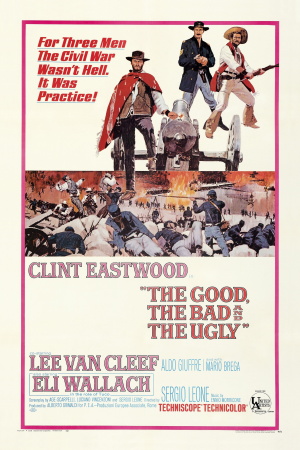
Has there ever been a cinematic experience more visceral than The Good, The Bad And The Ugly? It’s a tall order to describe watching a film as a spiritual experience, but Sergio Leone’s spaghetti western masterpiece is the closest I feel I can get to one. Although I am not a western aficionado, allow me to try to articulate as to why The Good, The Bad And The Ugly (Il buono, il brutto, il cattivo) is one of my 10 favourite movies of all time.
The Good, The Bad And The Ugly is a film of sheer operatic, Lawrence of Arabia-like grandeur (something few other westerns have) in which the framing and intricate construction of just about every scene results in a 3-hour motion picture (if you choose the full-length version) which is over before you know it. I mean, the film’s treasure-hunt MacGuffin isn’t even established until 1 hour in, yet this in no way impedes its pacing. Moreover, the spaghetti western’s combination of the traditional western images as seen in Hollywood movies mixed with its own unique Mediterranean flavour (with its characters of southern European descent, Iberian and Roman Catholic imagery, and the presence of Mexican guitars and trumpets within the film score) in conjunction with the natural sounds (the howls of wind, the crunch of boots, sounds of coyotes, and just about every foley sound effect present), creates a cinematic experience which few other pictures in my years of film consumption have equalled.
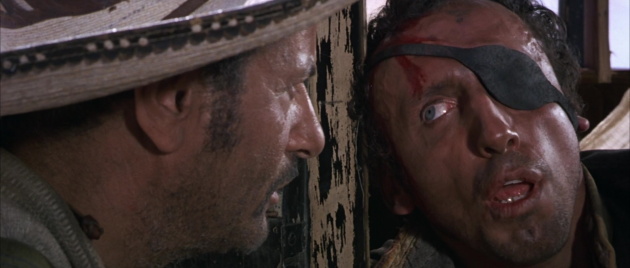
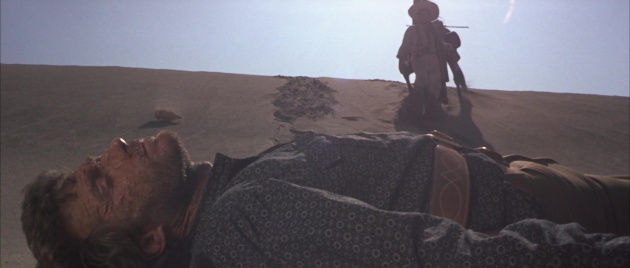
You can take any scene from The Good, The Bad And The Ugly to deconstruct and dissect their multiple layers to understand what makes them so compelling. Take the scene in which the character of Tuco (Eli Wallach) is speaking to the dying soldier Bill Carson (Antonio Casale). This is a scene in which a character delivers lengthy expository dialogue (a death sentence to any film if not handled in a constructive or clever manner). The scene itself succeeds in drawing suspense from having a character on the edge of death delivering important information, and just like Tuco, as a viewer, you are in a state of tension as to whether or not he will reveal the location of a Confederate gold stash before biting the dust. However, the other layer which makes the scene compelling is about what is happening off-screen. Before the interaction with Carson, Tuco was allowing his nemesis Blondie (Clint Eastwood) to slowly die in the desert sun, so what has become of him outside the frame? It’s multiple layers like these that have your brain running multiple cylinders of engagement.
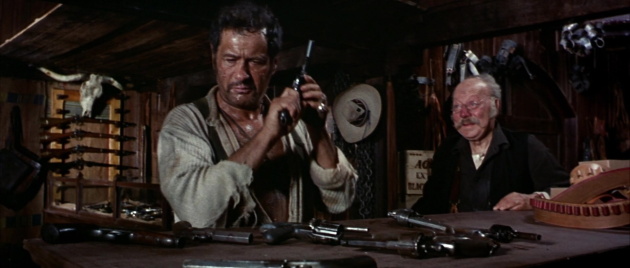
Correspondingly, one particular favourite scene of mine is that with Tuco in the gun store. The sequence plays out with such immaculate grace and rhythm; I get the same feeling as I would watching a Fred Astaire dance number. Reportedly, Wallach’s use of the firearms in the scene was improvised, although I’m at the point in my years of film analysis that I take any claim of “this scene/moment was improvised” with a grain of salt. Regardless, it does convincingly show that Tuco is a technician in his craft as he effortlessly tries different combinations of firearms with such satisfying grace and poise. While I do ask the question of why a gun store does not have any security protocols, a lot of suspense is drawn from the unpredictability of where the scene is going, and ultimately whether or not Tuco is going to take the life of the bemused and meek store owner. Likewise, I can’t help but detect a Terminator influence when Tuco takes the hat at the end.
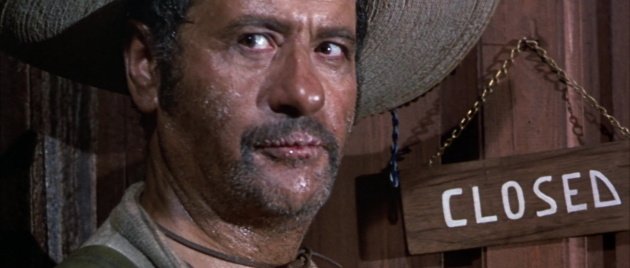
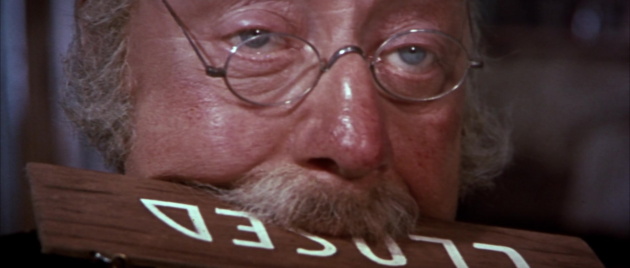
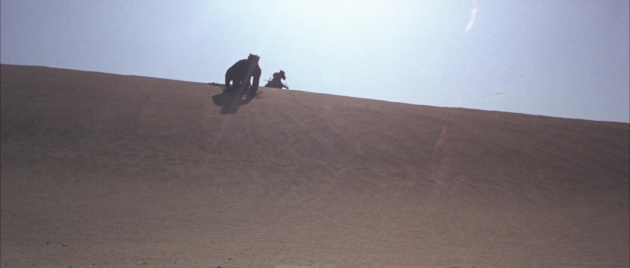
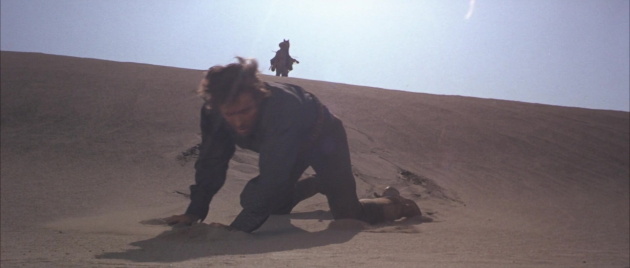
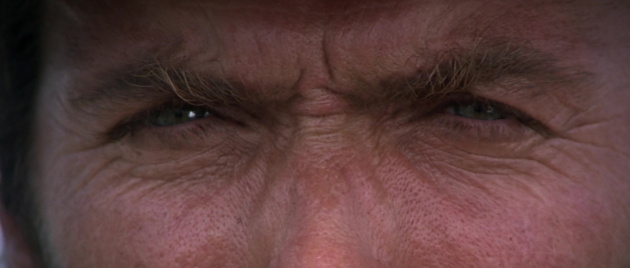
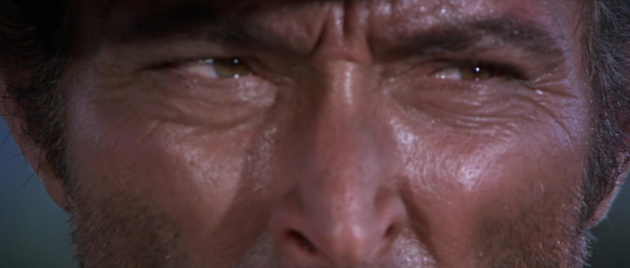
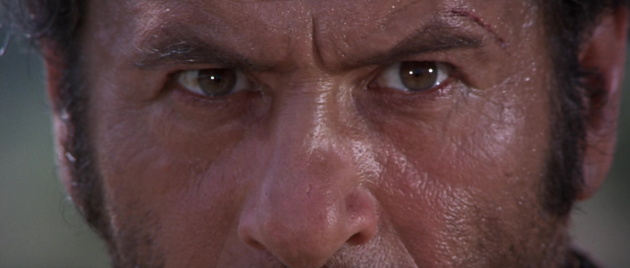
Sergio Leone is also the master of the tight close-up, showing every facial detail of his subjects. All the men in Leone’s work, even if they only appear in a single scene, have beat-up faces which show that these are men who have lived rough lives, from the hang dogs of the gentleman who gets assassinated in the beginning to the meek and bemused gun store owner. That said, if there is a single shot which I feel best represents Leone’s cinematic artistry, it is that of Blondie falling down the sand dune. I almost can’t comprehend how much planning and coordination must have gone into this shot. Firstly, the sand in the shot must have been untouched prior to filming, while the sun, which appears just above the frame with its rays coming through, had to have been in the right part of the sky. Then, Eli Wallach is in frame standing atop the sand dune while Clint Eastwood is rolling down the dune towards the camera, which he must perform in a convincing manner. All of this is impressive in itself, but what really elevates the shot is Wallach throwing a glass bottle onto the ground, which then rolls down the dune (never leaving the frame) towards Eastwood and hits him on the head. The perfectly timed gravity of that alone has me in awe.
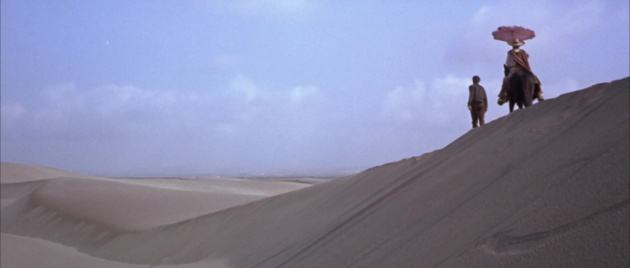
With all that said, what is a movie without characters, and if there is one character who owns The Good, The Bad And The Ugly, it is the Ugly himself, Eli Wallach, portraying the legend that is Tuco Benedicto Pacífico Juan María Ramírez. One of my choices for the 10 greatest screen performances of all time, Tuco is one of cinema’s most entertainingly shameless characters. An Eric Cartman-like figure who will pull a 180 without blinking when the opportunity suits him. Tuco is the polar-opposite of the cool, laid-back and stoic Blondie. He is a cranky, ever-vocal, profanity-spewing, full-of-life, carnivalesque character. Yet despite his horrible deeds (including those he is alleged to have committed in the past), as a viewer, I can’t help but be endeared to Tuco. He is childlike at times; while co-stars Blondie and Angel Eyes are like the grown-ups in the room, Tuco is often naïve and innocent, believing what other people tell him. Take the moment at the prisoner-of-war camp in which he actually believes that “good treatment” means good treatment. Like many great characters of cinema, it’s all the little things which add up to really enhance a character, from his carrying of a pink parasol (why does he have a parasol when he’s already wearing a sombrero?), using bath salts, to often referring to himself in the third person.
Moreover, Tuco is the only character in the film to be given a backstory, as he shares the classic Angels With Dirty Faces dynamic with his brother. One chose the priesthood, the other chose a life of crime (although Tuco still blesses himself over the dead, even if he takes the remaining money from their wallets). Like the character of El Indio in For a Few Dollars More, the handful of times Leone’s films include character backstories, they always go down hard. Although Clint Eastwood may be top billed in The Good, The Bad And The Ugly, Tuco not only steals the show; he actually has the most screen time of the film’s cast members.
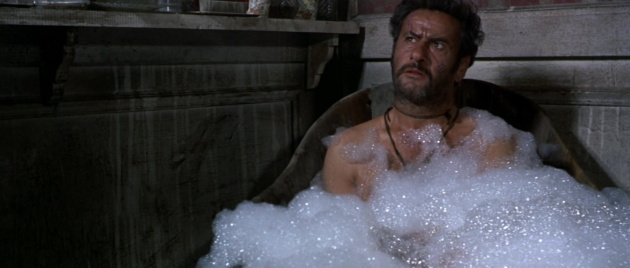
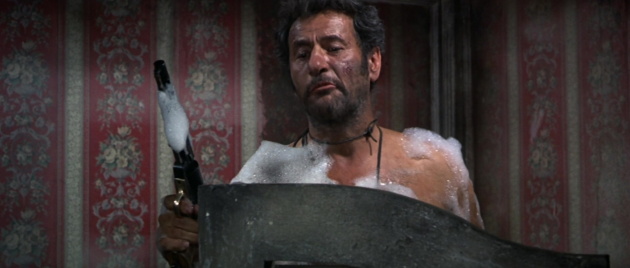
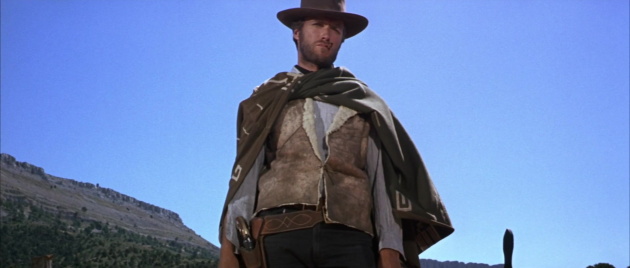
When watching the films of The Dollars Trilogy, I’m always taken aback by the high-level street smarts present in many of the characters. Their ability to stay alert and ahead of the game feels like a superpower or an act of magic (personally, I am also impressed that these characters can remember information over such a long period of time without writing it down). This is no better representation of this than the scene in which the bounty hunter Elam (Al Mulock) attempts to capture Tuco, only to be shot and killed by Tuco, hiding a gun out of sight in his lather-filled bathtub, followed by the line “If you have to shoot, shoot, don’t talk” (ignored by every movie villain ever) and, subsequently, possibly the first sideways gun shot in film history? However, it’s Clint Eastwood as Blondie as the character who best represents this with his effortless and, at times, hair-raising stoicism. Like the other entries in The Dollars Trilogy, Blondie is a man of few words and few theatrical expressions, yet you always know what is on his mind (the yin to Tuco’s yang). Yet, even a figure like Blondie can develop a subtle bond with Tuco (despite Tuco’s attempt to slowly kill him in the desert), as memorably seen when Blondie asks Angel Eyes about Tuco’s fate, with a tiny hint of genuine concern.
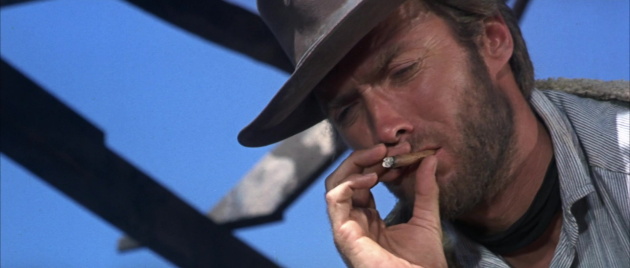
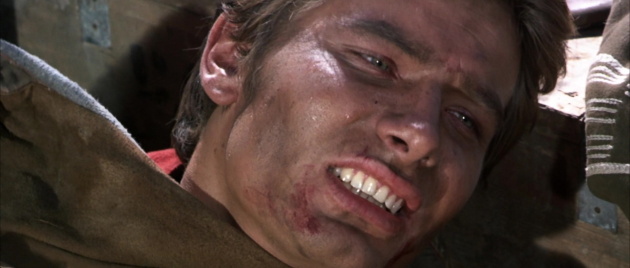
Blondie’s defining scene, playing into his role as The Good, is his encounter with the dying soldier towards the picture’s conclusion. I find this to be the most moving moment in the film, in which Blondie gives the dying, shivering young Confederate his coat and tobacco to comfort him in his final living moments; a distillation of pure, raw human emotion (aided in no small part by Ennio Morricone’s incredible score). The soldier is then seen to pass away once the final breath of the cigar smoke comes out of his mouth, itself a reference to a scene in Jean-Luc Godard’s Breathless (A Bout De Souffle). This moment is a metamorphosis for Blondie, as he abandons his coat and starts wearing the poncho he wore in the other two Dollars pictures. On the historical timeline, The Good, The Bad And The Ugly takes place before A Fistful Of Dollars and For A Few Dollars More, but whether or not Eastwood is playing the same character in all three pictures, well, you can leave that to your own personal canonicity.
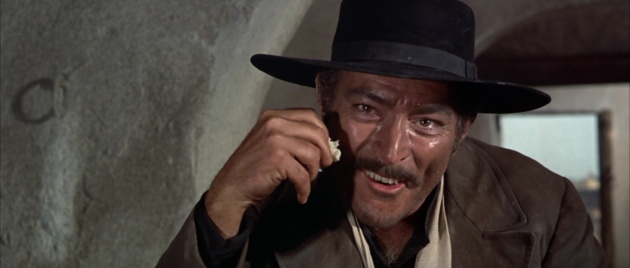
The spectre of death haunts the entirety of The Good, The Bad And The Ugly, from the bloodshed of the Civil War, the regular inclusion of nooses, to the finale in the cemetery. When watching a film like this, it’s difficult to comprehend that someone could so easily and casually kill another human being, yet, in this environment, men do it without flinching. The man, however, who embodies the spectre of death is Lee Van Cleef as the ice-cold and frighteningly intelligent (and ironically named) Angel Eyes. A man with the devil’s good looks and a pair of hawk eyes lining up his prey. During his introductory scene, the manner in which he says “Nice family” (I expect him to follow up with the words “Shame if something were to happen to them”), followed by his unrepentant killing of a minor, sends shivers down one’s spine. Even the manner in which Van Cleef walks (to make another comparison with said film) is very Terminator-like (reportedly this is due to a previous accident Van Cleef had). Dressed in black attire, Angel Eyes serves the role of a grim reaper-like figure. When Angel Eyes approaches you, you know your time has come.
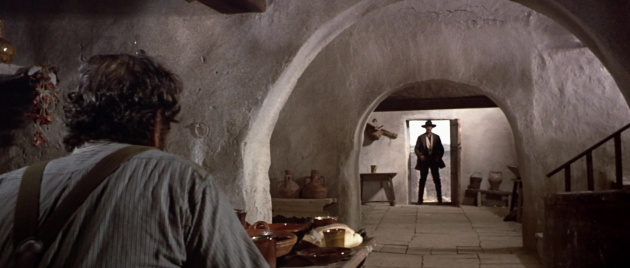
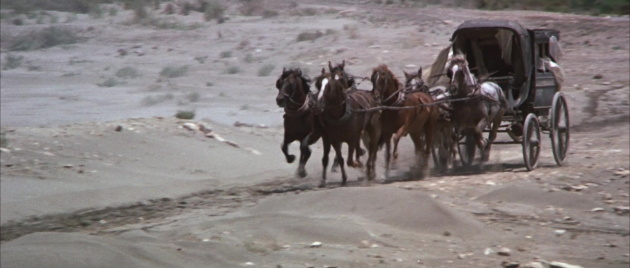
During the sequence at the prisoner-of-war camp, it is established that Tuco and Angel Eyes have had previous contact in the past. Yet oddly, when Tuco first sees Angel Eyes at the camp, he asks, “Hey Blondie, isn’t that Angel Eyes?”, in a manner which indicates that Blondie also knows who Angel Eyes is even though the film hasn’t established that the two have had any prior contact. That said, coming back to film structure, when your picture is this immaculately constructed, you can get away with a certain amount of unexplained loose ends and coincidences. This is especially true if the film engages in effective and subtle forms of set-up and payoff. For example, early in the film, when Angel Eyes sees that Tuco is about to be hanged, he comments to an onlooker, “Even a filthy beggar like that has got a protecting angel… A golden-haired angel watches over him”. Later in the film, when the carriage full of dead Confederate soldiers arrives at Tuco and Blondie, is it just a conveniently timed coincidence or a case of divine intervention? When a film subtly establishes an idea, your brain is more likely to accept the less logical elements as the story progresses.
With these three main roles, the labels in the film’s title are not absolutes. The good is not entirely good, the bad is not entirely bad, and the ugly is not entirely ugly. Although to recontextualize the deeper meaning behind these three titular characters, for anyone who is aware of the final speech in the film Team America: World Police, in which the character of Gary explains three different types of people in the tapestry of humanity. If you know, you know. “There are two kinds of people in this world my friend”, perhaps make that three.
As the sound in Italian movies at the time was post-synchronised, the obvious dubbing remains the only big technical fault within The Good, The Bad And The Ugly, although once you get used to it, it does become part of the character and charm of spaghetti westerns. This does bring me to the one scene in the film which I do take issue with, albeit a scene which was deleted after the film’s 1966 Italian premiere, only to be restored for the 2003 extended English-language version of the film. The scene in question is that featuring Tuco meeting his gang in the cave. Unlike just about every other scene in the movie, the cinematography of the scene is quite poor, with a very flat image which lacks any depth. Likewise, with all due respect to Mr. Wallach, they shouldn’t have let him dub his own voice 36 years after the fact (the scene was not dubbed in English for its original 1967 English-language release), as his evidently aged voice, alongside the lack of any echo (or any foley sound of the on-screen fire), is very distracting. The scene does slow down the action, and not knowing where Tuco’s men came from when they are trying to capture Blondie doesn’t hurt the film’s verisimilitude.
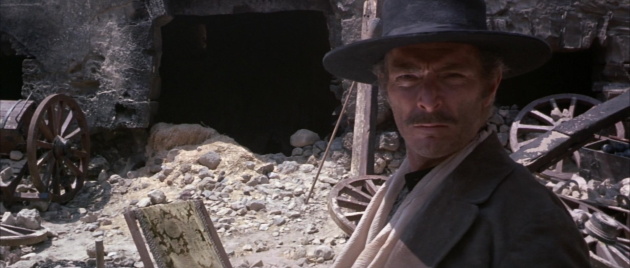
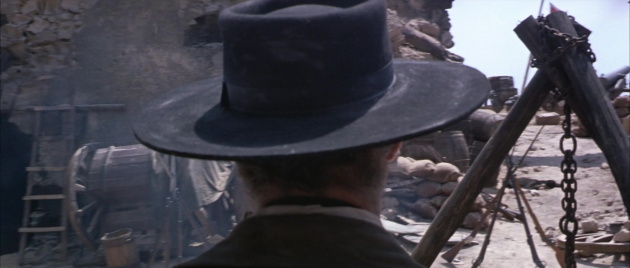
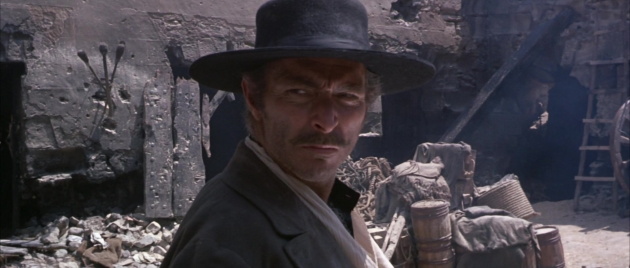
Of the restored scenes in the full-length version, by far my favourite is that of Angel Eyes at the Confederate unit. The rotating shot which circles Angel Eyes to the trumpets of Ennio Morricone’s piece The Strong, is not only a stunning piece of cinematic mastery; the sequence is the one moment which gives Angel Eyes a small amount of humanity, as he looks on with sympathy at the horrors of war which surrounds him (the one time he has a look of concern on his face). The scene also serves to reduce Angel Eyes’ lengthy absence during the middle portion of the film. The other restored scenes in the extended cut are fine, but ultimately I feel that they don’t add nor take anything from the film. My perfect cut of The Good, The Bad And The Ugly would be the original American theatrical release with the inclusion of the scene of Angel Eyes at the Confederate unit.
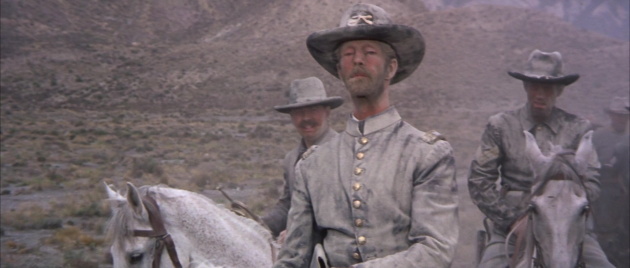
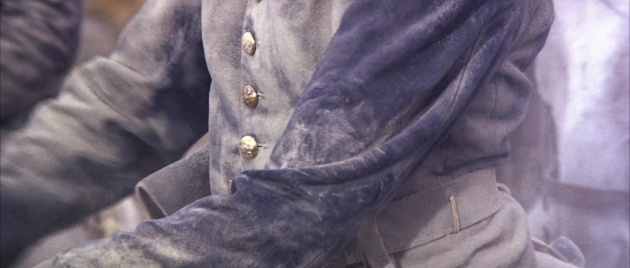
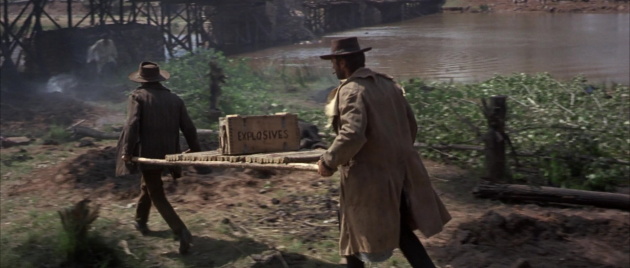
Many will describe The Good, The Bad And The Ugly as a revisionist western, which, in many ways, it is, with its violence and other explicit content which would not have been featured in American westerns from years prior. That said, I really loathe this singular, cynical analysis that a film’s merits are attained by tearing down what came before it. The Good, The Bad And The Ugly is a film which shows much reverence for Hollywood cinema. Its scenes of the Civil War call back to both Gone With The Wind (1939) and The General (1926); the destruction of the bridge towards the film’s end is reminiscent of The Bridge On The River Kwai (1957), the gun shop scene calls back to similar scenes in the James Cagney movies The Public Enemy and Blonde Crazy (both 1931), while Tuco’s train stunt to free himself from his chains is right out of the Buster Keaton playbook. Likewise, I’d be remiss if I didn’t mention the film’s moments of comedy, from the white dust on the Union soldiers’ uniforms, Tuco’s absurdly long rap sheet to the Laurel & Hardy-like image of Tuco and Blondie carrying a box simply titled “explosives” on a stretcher. It might as well just say ACME; however, look closely at the boxes in the background of the aforementioned gun shop scene. What is that imprinted on them? “ACME: Extra Black Powder”. On the same note, 24 minutes into the film, the editing oddly employs a horizontal flip transition, the only instance in which the film uses a comical, non-conventional edit.
Yet, everything I have mentioned would be for nothing if not for the music, composed by the great Ennio Morricone. The music by Morricone is one of a handful of film scores I have repeatedly listened to in its entirety over the years (I even once had the pleasure of travelling through rural Spain while listening to the score). It’s a close call when it comes to choosing a favourite piece; however, I have to go with The Strong (Il Forte) (and its more divine counterpart, The Carriage of the Spirits (La Carrozza Dei Fantasmi)), a deeply emotional piece of music that feels fatalistic yet optimistic at the same time. Like much of Morricone’s work, many pieces in The Good, The Bad And The Ugly are like haunting lullabies; pieces such as The Mission of San Antonio (La Missione San Antonio) or The Story of a Soldier (La Storia De Un Soldato), I will listen to as I reminisce, sometimes with pain or heartache, other times just to quietly contemplate. Then, there is The Ecstasy of Gold (L’estasi dell’oro)…
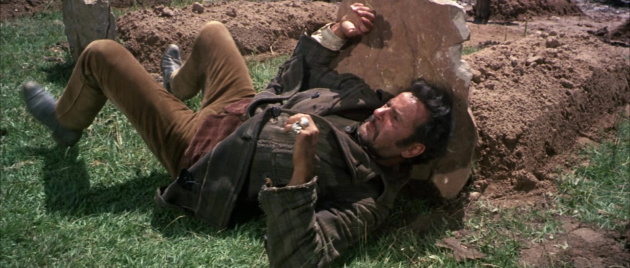
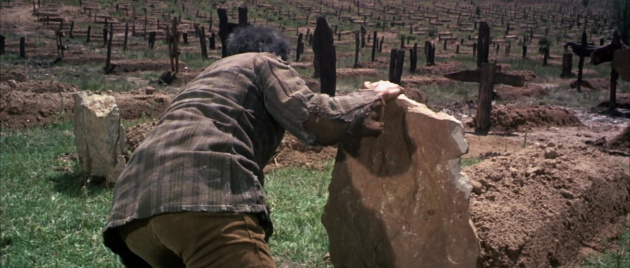
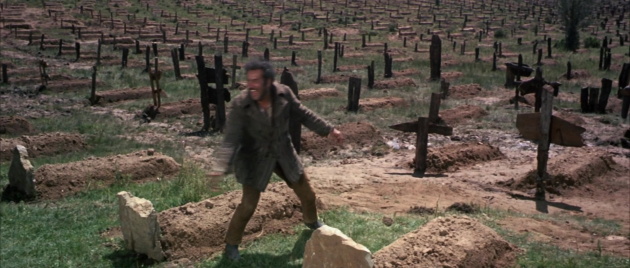
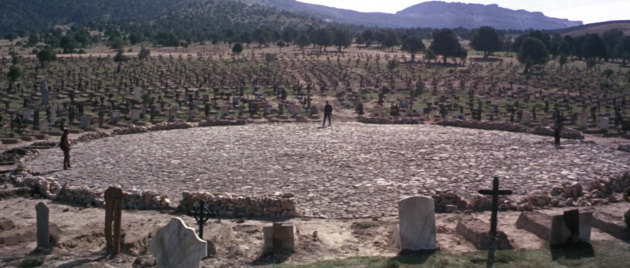
One of the greatest movies of all time concludes with one of the greatest endings of all time. By what accounts we know off, the finale in the Sad Hill Cemetery (a set created for the film) was filmed with the music being composed beforehand to match the filmed actions, not just thrown on top as an afterthought, making it a sort of predecessor to the music video. When Tuco’s head hits a stone, we come to realise at the same time as the character that it was not just any stone, but a grave, in one of the best character realisations ever seen in a film. As Tuco joylessly throws a piece of paper away and starts frantically searching the cemetery for the grave of Arch Stanton and the $200,000 (equivalent to $6.68 million in 2026), there is a real sense of joy and catharsis. Yet there is an oddly fascinating juxtaposition between the almost religious intensity of the haunting, soaring choir in The Ecstasy of Gold and the rotating pov camera shots, with Tuco prancing around with his T-Rex arms. There is an extreme contrast between the greedy motivations of Tuco and the transcendental quality of the music, turning his pursuit into a moment of divine revelation and elevating him into a mythological figure.
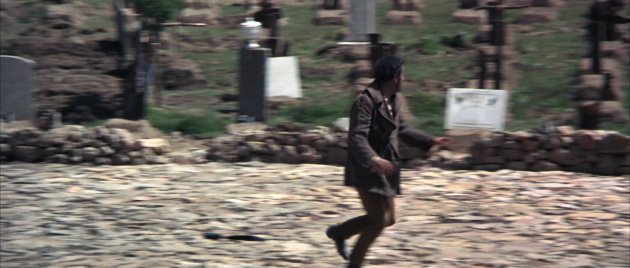
It is moments like these that make the hairs rise on your body, which leave you unconsciously holding your breath and transfixed on the screen. It’s moments like these in which people can recall the exact circumstances of what was happening when they first saw it. I can. I was watching The Good, The Bad And The Ugly alone in my bedroom when my two friends turned up and we watched the last 20 or so minutes together. One of my friends then went onto YouTube to check the name of the piece of music over the famous scene. It’s moments like these which turn mere mortals into lifelong cinephiles.