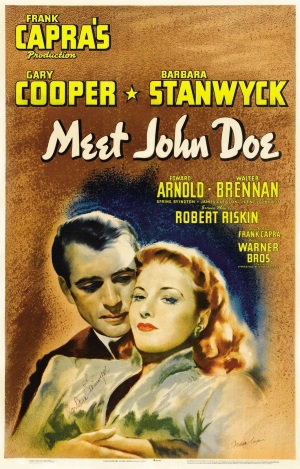
Meet John Doe (1941)

A Face In the Crowd

Sadly Meet John Doe appears to be an uncared about film falling into the public domain. I’ve previously wondered if this film could have the power to inspire real-life John Doe clubs, like Fight Club inspiring real-life fight clubs. Meet John Doe is the ancestor to film’s like A Face in the Crowd and Network, chronicling the rise and fall of a media built character. Meet John Doe is not thought of as a conspiracy/paranoia film but is a few actions scenes away from being a conspiracy thriller. After watching you’ll start feeling more like tin foil hat wearing conspiracy theorist untrusting of government and the establishment.

John Doe is a Christ-like figure; he preaches loving thy neighbour when he is disgraced a newspaper editor proclaims “chalk one up for the Pontius Pilates of the world” and even plans to sacrifice himself on Christmas day. On top of that, Barbara Stanwyck’s speech at the end in which she tells John he doesn’t have to die for the idea of the John Doe movement – that somebody else already did – the first John Doe and he has been keeping the idea alive for 2000 years, all while the Christmas bells ring. Classic Hollywood films sure love their hard-hitting symbolism and metaphors.

Barbara Stanwyck is a phenomenon here with so much life and energy she can make any bit of exposition entertaining. As for Gary Cooper and Walter Brennan in of their many film pairings; what is it makes them a great duo? Perhaps it’s just the humorous interactions of two folksy Americans. Cooper’s boyish charm is on full display here, such his baseball pitching in a hotel room to his curious on look at a naked statuette. Meet John Doe is one of the finest performances he ever gave with his outburst at the dinner meeting making the hairs on my neck stand up. Walter Brennan’s The Colonel, on the other hand, doesn’t trust any media, authority or society in general. He’s comically cynical in the extreme and probably be a conspiracy theorist if he had lived in later decades. Throughout the film he refers to others as “helots”; state-owned serfs of the ancient Spartans (“When you become a guy with a bank account, they got you, yes sir, they got you”).

Although the John Doe movement claims the John Does are inheriting the Earth, the movement is funded by a corporation; so did they not see someone like D.B Norton taking advantage of them? Edward Arnold as D.B Norton is one scary, menacing guy who is complete with his own personal army force, giving the full authoritarian dictator vibes. When he sees his servants listening to Doe’s speech on the radio and applauding, he realises the political power he can have if he can get John Doe on his side. Under a scheme to buy his way to power he uses the John Doe movement to further his own agenda, to create a political party of which he leads in order to become President of the United States. His description that he plans to create “a new order of things” and “the American people need an iron hand and discipline” sounds like he has the intent of turning the country into a fascist dictatorship. There’s no doubt that Meet John Doe among other things was an argument against American isolationism in the war.

Another striking moment of Meet John Doe is the monologue given by Bert Hanson, the soda jerker (Regis Toomey) on how little we know about our neighbours and how a failure to get the whole picture leads to misconceptions of other people. It’s true in real life, people you live next to for years and you never contact them: perhaps the guy next door isn’t a bad egg.

Many of Capra’s films showcase the people’s need for a leader (Mr. Deeds, Mr. Smith or George Bailey) and in turn, they appear to be clueless and misguided with one (think of Pottersvillie in It’s a Wonderful Life) in a showcase of Capra’s darker side. Here the public buying up what the media tells them such as when Norton exposes John Doe for being an apparent fraud in one of the movie’s most powerful scenes as the movie captures so vividly the destruction of a dream. As dark as the movie’s ending is, it still remains optimistic in which the fight goes on (“there you are Norton, the people!”).

Rocky IV (1985)

80’s: The Movie

***This Review Contains Spoilers***

Rocky IV is one of the most entertaining movies ever made. If there was ever a movie I can turn to for just 90 minutes of pure, immense, adrenaline filled, inspirational entertainment, it’s Rocky IV. The runtime is the shortest of the series, but those 90 minutes are perfect. The poster for Rocky IV is displayed proudly in my bedroom, and every now and then I look at it in all its majesty with Rocky sticking his glove up in the air while draped in the stars and stripes. I feel the Rocky movies had the ideal lifespan for a movie franchise; start off serious, goof out for some fun, but then end again on a serious note.

There’s no question about it, Rocky IV is the most 80’s movie ever. Case in point:

– Synthesized rock soundtrack.

-Cold war propaganda.

-Conservative, Reagan era values.

-MTV music video style montages.

-Larger than life villain.

-It’s a sequel of a long-running franchise.

-There’s a robot.

-Rocky drives a sports car.

-Display of decadence.

-Brigitte Nielsen, star of other very 80’s movies Red Sonja and Cobra.

-Action movie revenge plot.

-Full of cheesy/corny quotable lines (“If he dies, he dies”, “Whatever he hits, he destroys”).

Stallone’s inspiration for Rocky IV came from the two fights between Joe Louis and Max Schmeling in 1936 and 1938 respectively; two fights which embodied the political and social conflict of the time – an African American taking on a supposed representation of Aryan superiority. Thus in Rocky IV we get Ivan Drago, the terrifying Aryan superman Rocky must challenge to avenge the death of his friend (could that sound more 80’s?).  Ivan Drago is a terminator; the strongest opponent humanly possible; however is Drago an interesting villain? I say yes; one of my favourite screen villains of all time as a matter of fact. In a memorable Siskel & Ebert moment, Roger Ebert described Drago as a “moderately interesting villain” but complained “how come he never has a single scene alone with his wife” and “why does she have nine times more dialogue than he has?”. Drago doesn’t speak for himself as there is no individualism in communism. I feel Dolph Lundgren gives a great physical performance, playing a character who is the opposite of Clubber Lang in that he speaks few words; succeeding in being an intimidating monster with his physical presence alone. I also love Drago’s reaction to Apollo’s entrance at the exhibition fight; that of a Soviet being welcomed to America.

Ivan Drago is a product of a state that sponsors his training as exemplified in the movie’s two training montages. Drago’s music theme is cold, intimidating and mechanical, just like his training. He is given steroids by his trainers and at a press conference an American reporter says “There have been rumors of blood doping and widespread distribution of anabolic steroids in the Soviet Union”; feels like an eerie foreshadowing to the state-operated Russian doping scandal of 2016. Following the boycotts at the 1980 and 1984 Olympics, Rocky IV couldn’t have come at a better time when sports and politics were going hand in hand. Drago’s fit of rage near the end of the fight in which he proclaims “I fight to win. For me! For me!”, is clearly a jab at communism as he wants to work for himself and not for the glory of the country. Likewise, when he lifts up and throws the Russian official who criticises him, it’s a classic Frankenstein moment; the monster turning on its creator.

Apollo Creed’s entrance, on the other hand, is one of the most capitalistic things ever put on film, with James Brown singing Living In America among Belly Dancers and Creed himself dressed in stars and stripes; and to top it all off, it’s in Las Vegas. A stark contrast to the Russians who open the Rocky-Drago fight later in the movie to their national anthem (yet another awe-inspiring musical highlight in the film). Did Apollo’s ego untimely kill him? Apollo’s patriotic egotism clouded his better judgment and no idea just how strong Drago would be. The sheer power of Drago’s punches during the fight with Creed (if you could even call it that) are exemplified by the sound effects. Also, why does Drago receive no punishment for throwing the referee aside, but if I was going to point out every little thing in this movie which makes no sense I’d be here all day. There’s such brutality to Creed’s death; pure slow motion brutality. I’ll never forget my mum’s reaction the first time I watched Rocky IV, a gasping “oh my God!”.

When I was studying for my GCSE examinations, the Rocky IV soundtrack was one of my primary sources of music listening. Whenever I have a stressful day of work I listen to the Rocky IV soundtrack when I need that extra bit of adrenaline to make me go on. Feeling down? Rocky IV soundtrack! Need inspiration? Rocky IV soundtrack! Having a workout? Rocky IV soundtrack! 20% of the Rocky IV or 23 minutes is comprised montages with songs which can make anything look epic in one of the epitomes of the 1980’s soundtrack; everything you would expect from a score which won the Razzi for worst music score. The score by Vince diCola has been officially released but copies are not easy to come by. The actual Rocky IV soundtrack features different versions of War and Training Montage than those which appear in the film, although these variants are good in their own right.

If there is one word associated with Rocky IV, its montage. I can watch these montages over and over again and still be enthralled by them. The first training montage is heavy on its symbolism of nature vs. machine and showcases the beauty of the Russian wilderness. Ok, it’s actually Wyoming but I can buy into it being a vast frozen expanse of the Soviet Union. But it’s training montage number 2 which has to be my favourite training montage in film history. This is partly due to John Cafferty’s Hearts On Fire – a motivating, pumping anthem if there ever was one (that synth, God I love it!) In the spirit of everything in Rocky IV being larger than life, instead of running up the steps of the Philadelphia Museum of Art, the montage ends with Rocky climbing a mountain.

The editing of Rocky IV also contributes to the film’s bombastic nature. The transitional shots of magazine covers and newspaper articles make the film play out like more of a comic book than it already is. Likewise, shots such as that of Rocky’s Russian chaperone looking into binoculars gets repeated three times within a few seconds but zoomed in further each time and edited to the rhythm of the score; it’s just so cool. On the other hand, I even recall a review I heard for Star Wars: The Forces Awakens refer the final shot of that movie as a Rocky IV shot, in reference to the aerial shot of Rocky on top of the mountain. Is Rocky IV a more influential film than the history books let on?

Rocky IV is incredibly distant from the first movie but this is appropriate as Rocky is out of his element and in a foreign land. This is the only film in the series not to take place in Philadelphia unless you include the scene in the Balboa mansion although it’s never made clear where the mansion is located. The No Easy Way Out montage is comprised of clips from the first movie, so the film allows you to bask in the stark contrast between the movies; a man who used to be a not very intelligent nobody and made money from prizefighting and working for a loan shark is now at the center of international politics.

Even the sheer predictably of Rocky IV is wonderful, such as when Adrian shows up in Russia to support Rocky; it’s all cliché but in the best sense of the word. The build-up to the final fight and the atmosphere is so immense; there could never be a Rocky film more epic than this. By this point, I’m actually scared for Rocky and fearful for his life, and Paulie’s emotional outpour before the fight, it gets me every time. I don’t care what anyone says, this is the greatest fight in film history. Rules don’t apply and Rocky somehow lasts the 15 rounds and even wins over the crowd (“Suddenly Moscow is pro-Rocky!”). This isn’t just Rocky against another opponent, this is Rocky against a superhuman, a hostile crowd, a Mikhail Gorbachev lookalike and an entire world superpower. Keep your superhero movies with their city-destroying battles; this is what I call a duel! Rocky’s final speech is naive in the most wonderful way. The words of the speech are so juvenile, yet when I hear Stallone utter them in the movie; it brings a tear to my eye. Did Rocky IV really help end the cold war? Who knows? Oh, and the end credits provide us with yet another awesome montage!

Rocky IV embodies the essence of capitalism the American Dream; if you work hard, success is attainable. I know many would just look at the movie and scoff at it as a simplified look at the Cold War with an “us and them” mentality. But as a piece of propaganda does it work? Oh, you bet it does. Rocky IV, I salute you to your over the top, cheesy 80’s perfection.

Rocky IV > Citizen Kane
Mr Smith Goes to Washington (1939)

Life, Liberty and the Pursuit of Happiness

***This Review Contains Spoilers***

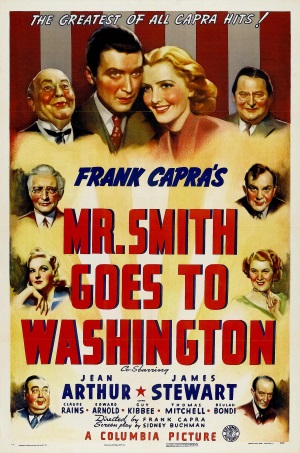
If anyone asks me why James Stewart is my favourite actor I just say watch the final scene of Mr Smith Goes to Washington. The final scene of this movie is simply of the greatest things I have ever witnessed in any film ever. That may sound like a hyperbole but I’ll never forget the very exact feeling of goosebumps I had when first watching it. Mr Smith Goes to Washington is one of a small handful of films I would call life-changing, one of the films which helped to mold the way I think and ultimately turn me into the person I am today. It encouraged me to be more skeptical, not to believe everything you here and stand for what you believe despite great opposition. It’s thanks to films like these why cinema is my bible. As much however as Capra is criticised for his films being overly idealist, Mr Smith Goes to Washington does not exactly paint the most glowing picture of the American political system. To quote Thomas Paine (Claude Raines), “The duty of a true patriot is to protect his country from its government”.

One of my favourite scenes in Mr Smith is that in which Clarissa Saunders (Jean Arthur) attempt to explain to Jefferson Smith (James Stewart) the entire procedure of creating a bill and submitting it to Congress. For starters, the scene is incredibly funny with the comedic timing and Stewart’s childlike reactions. Secondly, it’s a very informative civics lesson and thirdly, this scene shows us how Jefferson Smith acts of the film’s ambassador the for the average Joe watching film who’s just as confounded by Sauder’s lecture as Smith is. The scene lays out in an entertaining manner the political hoo-ha for the politically lay; my knowledge on politics was very limited when I first watched Mr Smith Goes to Washington but that wasn’t a barrier to being engrossed in the film’s state of affairs.

This is as good an opportunity as any to raise the question, why is Jean Arthur such a forgotten actress? Despite working with several big-name directors, co-starring with famous actors and appearing in a number of beloved classics, her presence is incredibly overlooked as the definitive urbanite career woman with her wit, warmth, and innocence. Also, that voice! Her role as Saunders is the opposite of Mr Smith. She is cynical, jaded and knows the ins and outs of the system with its corruption and cronyism. It takes Smith, the Americaphille who appears to know more about American history than the people working in Washington to restore faith in her with his childlike optimism and perseverance.

Along with the attack on the American political system, Mr Smith Goes to Washington is just as harsh with its portrayal of the press as a pack of ravenous vultures. The scene in which Smith confronts the reporters in a bar is truly shocking as they flat up tell him about their lack of journalistic ethics as reality hits Smith like a ton of bricks (also among the crowd of reporters if Jack Carson, always a scene-stealer). I just have to question the morals on the part of Smith prior to this scene in which he literally goes around punching reporters in the face although it could be argued this was more of a social norm back then between men.

Another striking monologue is that in which Smith’s mentor Thomas Paine justifies corruption as a comprise in order to achieve good deeds, a process which has existed since the birth democracy as he puts it. As convincing as he might sound at first, through the course of the film you can tell he’s a man who knows he’s sold out on is ideals partially from the complete look of shame which bestows Claude Rains’ face. Even at the beginning of the film just look at the reaction of Paine’s face when Smith declares “Dad used to tell me Joe Paine was the finest man there ever was”.

The relationship between Paine and the business mogul James Taylor (Edward Arnold) is like that of The Emperor and Darth Vader. Taylor hovers above Paine only for his conscious to be put to the ultimate test by the end of the film. Taylor’s ability to control the media of Smith’s home state and preventing any of his words from the Senate reaching the state is frightening. I can just be glad that in the age of the internet and mass communication that such control of the narrative isn’t as easy as it once was.

Mr Smith Goes to Washington is very snappy and faced paced; with the culmination of some of Hollywood’s finest character, acting talent helps carry the exposition in an entertaining and at times screwball like manner. The final 30 minutes of the film in which Smith filibusters is one of the greatest things ever caught on celluloid with its immense hair-raising build up to an exhausted, out of breath James Stewart declaring that he will fight for this lost cause, even if this room gets filled with lies like these!

Like other political films to arise from classic Hollywood, no party is mentioned during the film nor do we know what state Smith is from and which he fights so hard for. Those on the modern right could see Mr Smith as a little guy standing up against big government and the Washington elites. By contrast, those on the left can view Smith as a rebel fighting against corporate, capitalist fat cats like James Taylor. Independents could see Smith as someone who stood alone without backing from any party to fight for his beliefs. Like many of Capra’s films, Mr Smith Goes to Washington is hard to place on the political spectrum. Anyone can see what they want to within the film which is part of its enduring power.  Really, if I ever met someone in elected office, I will be asking them if they have seen this film. Mr Capra and Mr Stewart, thank you for this film.

The Mortal Storm (1940)

I Did Nazi That Coming

I try to avoid calling movies underrated or saying “Why is this not more well known?!”, otherwise, I would sound like the most malfunctioning record but as to why The Mortal Storm is not more famous goes beyond just my own personal preferences. The fact that Hollywood’s then biggest studio Metro Goldwyn Mayer would release an anti-Nazi film at a time when the US and Germany were not involved in any conflict should be a bigger deal than it is. To give some historical context, although it seems hard to believe nowadays, fascist and other Nazi-like ideas were out in the open throughout the United States during the 20’s and 30’s (heck, just look at the film Gabriel Over the White House from 1933, also released by MGM, or the public initial backlash against films with pro-interventionist sentiments such as Sergeant York or To Be Or Not To Be). Prior to the US involvement in the war, there was even uncertainty as to whether or not the US should take part in the conflict in Europe.

The Mortal Storm being overlooked is criminal. It deserves the special edition DVD treatment with documentaries behind its production. I’m sure there must be an interesting story behind the making of this film. MGM has generally been seen as a studio who played it safe, thanks in part to its conservative studio head Louis B. Mayer. So it comes as a surprise The Mortal Storm would come from this studio and they paid the price. The Mortal Storm lead to MGM films being banned in Germany. The word Nazi is never used once throughout the film, while the characters I can only assume are Jews are referred to as Non- Aryan. I wonder if this was done to prevent further controversy surrounding the film but it’s still an incredibly brave picture.

The core story is about how Nazism tore German families and friends apart due to racial and political differences. The Roths (Jewish I assume) are a happy picture postcard family one day, the next there are completely torn apart. Things go bad for the family from the moment in which it’s announced Hitler has become chancellor of Germany as the adopted, non-Jewish sons of the Roth family begin saying disturbing yet enthusiastic comments (“If peasants want to keep their cows they better have the right politics”). Likewise, the patriarch of the Roth family and the professor of the town’s local university played by Frank Morgan is treated with the highest levels of respect one day and is awarded for his contributions to the fatherland. Not long after Hitler’s rise to power his students are boycotting his class after he states that science has shown there is no difference between the blood of various races.

The Mortal Storm is a work of propaganda, not that there’s anything wrong with that. Propaganda is an art form in itself, one which tries to get an emotional reaction out of the viewer in order to convert them to one side. The Mortal Storm achieves just that. The tension during the film just builds and builds, concluding in an ending which is one huge punch to the gut.

Watching the film again in order to write this review I surprised just how engaging it was on a further viewing. There are many little touches I never noticed previously, such as when Robert Young’s character announces his engagement to Margaret Sullavan, James Stewart is the only character the room who does react with joy. I do also have to ask how Stewart, a man who would become a World War II hero and later supporter of the Vietnam war must have felt playing a character who is a pacifist.

Majority of the film is shot on sets with the use of painted backgrounds and miniatures, yet the whole thing still looks fantastic and looks more idyllic than real-world locations could. You really get a sense for this small town in the Alps. The only complaint if any I can find with the film is that opening narration which is overly bombastic.

The casting of the previously paired Shop Around the Corner stars couldn’t be more perfect. James Stewart and Margaret Sullavan play two friends who are forced to become lovers due to the impending circumstances – I can’t recall any other movies which portray a love story like this. Sullavan often portrayed characters who represented bravery; her voice is so fragile yet powerful at the same time. The cast isn’t the only tie the film shares with The Shop Around the Corner; both films represent a European society which was on the brink of destruction. The Mortal Storm shows how even an enlightened society can turn to authoritarianism.

The Cheyenne Social Club (1970)

Quit Badmouthing the House!

The Cheyenne Social Club sounds like a bad idea on a number of levels. For beginners it stars two elderly actors towards the end of their careers in a comedy about prostitution, not to mention Gene Kelly would be one of the last people I would expect to be directing a western. For a long time it remained a movie I doubt I would ever watch yet much to my surprise the film turned out not only to be perfectly dignified but also very funny and surprising endearing. The idea of Jimmy Stewart being the owner of a brothel and becoming a sugar daddy sounds wrong on paper yet somehow it manages to work. The Cheyenne Social Club paints an idealized version of a whore house in which the women are proud of their profession and worship their boss. The movie doesn’t shun prostitution and while propaganda might be a strong word I certainly got the impression the movie was voicing its support for the legalisation of prostitution.

Henry Fonda is by far the funniest thing in the film; a child in an adult’s body living out a completely carefree existence with Stewart being the straight man and the grown-up one of the two. Even as soon as the film begins Fonda babbles through the entire opening credits which according to the movie lasts for literally over a thousand miles which helps distract from how ordinarily plain the test in the opening credits are. The relationship between the two is incredibly endearing with one of my favourite moments of the film is the two of them innocently sleeping in the same bed together. It is also very amusing as Fonda just follows Stewart wherever he goes as he has nothing else to do with his time but also because he just likes his company. It’s evident through their own screen chemistry that the two where lifelong friends. The film’s other major highlight is Stewart and Fonda’s discussing of politics (Stewart being a Republican and Fonda a Democrat) mirroring their real-life personas and bringing to mind an occasion when their friendship was almost brought to an end when they got engaged in a fist fight over politics in 1947 (“I don’t like to dispute you John but didn’t you always vote democratic?, Well…that was when I didn’t know any better”) .

The Cheyenne Social Club is the third of three films James Stewart and Henry Fonda starred in together. The first two of which are among the weakest films I’ve seen from ether actor. Thankfully the third time was the charm; it took 35 years to get these two legendary actors in a great film together but it was worth the wait.