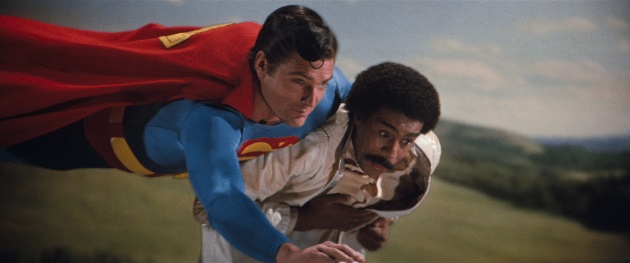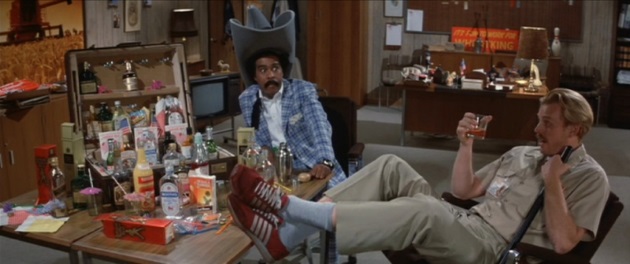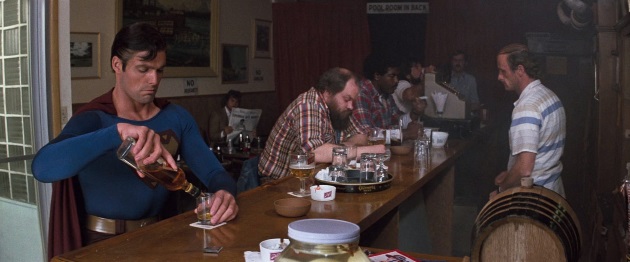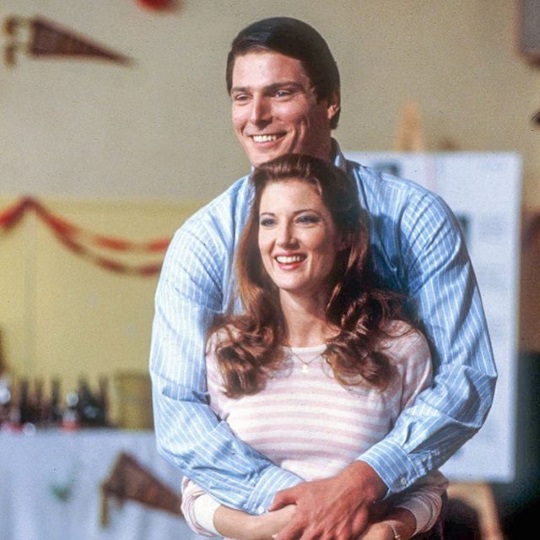
Superman IV: The Quest For Peace (1987)

No Longer Believing A Man Can Fly

***This Review Contains Spoilers***

Superman IV: The Quest for Peace, one of the most fascinating disasters in film history. There are bad movies which are straight-up boring, others are cringe-worthy and/or unpleasant to watch, while others fall into the category of being so bad they’re good. For this infamous production made at the madhouse that was Cannon Films, where does Christopher Reeve’s final outing as the Man Of Steel fit in among the pantheon of notorious cinematic failures?

So what is the explosive, hot-button main theme in the fourth instalment of the Superman film franchise? Well no need to fallout as you try to guess, it’s the nuclear arms race! So bear in mind this isn’t just Superman IV, no this is Superman IV: The Quest For Peace. A motion picture dealing with a topic so important that the powers at be gave the film a subtitle, whereas the previous films in the series had been given no such ovation. When listening to the DVD audio commentary for Superman IV by one of the film’s two writers, Mark Rosenthal (which I do highly recommend listening to), Rosenthal states that the plot of Superman IV stems from the idea that if God is an all-benevolent and all-powerful then why does he let bad things happen? Thus, if Superman is all-powerful, why does he allow bad things to happen? However, when thinking about this for more than a few seconds it quickly becomes apparent this notion is nonsensical as Superman is not equivalent to God. He is powerful but not all-powerful, he can’t be everywhere all at once. This shows that while one might argue Superman IV had good intentions behind it, these good intentions were seriously misguided. So why does Superman IV: The Quest For The Remaining Pieces Of Christopher Reeve’s Career choose the nuclear arms race as its main theme? Well, it’s because of Christopher Reeve himself. One of his demands when agreeing to reprise his most famous role was to have creative control over the story. When watching promotional materials for the four Reeve Superman movies, it’s clear the man did take great pride in the role of Superman and cared about the quality of the franchise. Unfortunately, the Film Actor’s Guild from Team America: World Police was in full swing back during the 80’s too, and lefty liberal Christopher Reeve made a Superman movie to act as a platform for his own politics. 

The general plot of Superman IV: The Quest For The Remaining Cinematic Integrity Of The Superman Film Franchise sees the Soviet Union overtake the US in the arms race and as a response, a concerned young school boy named Jeremy (Damian McLawhorn in his only on-screen role) writes a letter to the Man Of Steel asking him to rid the world of nuclear arms “because only he can do it”. Ok, number 1, why are you taking moral guidance and advice on geopolitics from a child? Number 2, you do realise if all nuclear weapons were to suddenly disappear then the geopolitical landscape would become highly destabilised? But Number 3, how are you going to get the cooperation of the world’s governments to voluntarily give up their nuclear arsenals? It’s not like Superman is just going to walk into the United Nations and announce he going to rid the world of all nuclear weapons and have the representatives of the Earth’s nations give a huge round of applause and voice no objection whatsoever. Oh wait, that’s exactly what happens. Thus the world’s governments cooperate with Superman as they help him in this process of nuclear disarmament as Supes gathers all of the world’s nuclear missiles, places them into a giant net and then throws said net into the sun. Just how did Superman get a hold of such a net or did he make it himself? Additionally, he does realise throwing hundreds of nukes into the sun doesn’t sound like a very smart or safe idea. The first three Superman movies are full of ridiculous moments but you could gleefully suspend your disbelief at them. Superman IV: The Quest For A Plausible Premise on the other hand is so illogically constructed that it foregoes any such privilege with its moon moving, humans breathing in space, kindergarten levels of science-breaking shenanigans. 

Superman IV: The Quest For A Competent Script takes no advantage of its theme of nuclear arms. There’s no political insight or analyses, no thought-provoking debate is brought up as to whether Mutually Assured Destruction is the reason why we have never had World War III. Just a simple “nukes suck” and everyone in the film’s universe agrees so why did we even have them in the first place? I have heard it argued before that Superman IV is a terrible film but it had a good message. No, Superman IV has a terrible message and the one aspect of the film which legitimately enrages me. What Superman is doing is deeply sinister as he is overriding the actions of democratically elected governments yet the film presents it as something oh-so wonderful. One of the many deleted scenes for Superman IV does feature Superman addressing this very point when he tells Jeremy “I’m going to pass the letter onto the leaders of the world, see they’re the ones, not I, who represent the people of the world”. However, the inclusion of this scene in the film would have made it less sensical as Superman just goes on to betray this principle. Betrayed! Betrayed! Betrayed! BETRAYED! 

So how do you end this cinematic embodiment of what Thomas Sowell refers to as the unconstrained vision, well with one of the worst lines in film history as Superman proudly and sincerely says in a speech “There will be peace when the people of the world, want it so badly, that their governments will have no choice but to give it to them”. Oh Superman, if only life were that simple. But, it could be even worse! In the film’s deleted, extended ending, Superman once again returns to our young idealistic whip snapper Jeremy and flies him above the Earth (what is it with this movie and humans being able to survive in the vacuum of space?). Once there, he asks Jeremy what he sees so he can tell the people of Earth, to which he gives a response which sounds like a lost verse of John Lennon’s Imagine – “I can’t tell where one country begins and another one ends, there’s no borders, it’ just one world”.

Under the direction of Sidney J. Furie, for the most part, Superman IV: The Quest For A Sustainable Budget is a very bland film for one’s viewing displeasure. Scenes look very flat, the blocking is uninspired and the lighting is often poor. As one of the film’s many, many, many cost-cutting measures, Superman IV was primarily shot in Milton Keynes, a city in Buckinghamshire, England, one of many planned settlements built in the post-war era. With these architecturally contemporaneous developments often looking more like American cities than traditional British towns, Superman IV does convincingly turn merry old England into downtown USA (and humorously so by simply throwing a lone fire hydrant prop here and a hot dog wagon there) but still not in a way that does anything the elevate the bland nature of the film’s visual aesthetic. Superman IV appears to take place in an almost corporate post-apocalyptic world of sterile conference centres. The sets and locations feel very condensed and repetitive and even the offices of The Daily Planet look very generic. You can’t just throw several decals of the newspaper’s logo onto a few windows and expect that to do the job. Additionally, the film’s set design is also subject to much anatopism from subway advertising using the name New York and not the fictional Metropolis to a Daily Planet newsstand using the British-English spelling of “Favourite” over the American “Favorite”. Likewise, the film’s low-budget recreation of the United Nations has the delegate for the United Kingdom whom has a sign on his desk which reads “England”. Oh, you silly Yanks. England is not a country within itself, it is a constituent nation within The United Kingdom Of Great Britain And Northern Ireland. There is no such title as the King/Queen of England or Prime Minister of England. Stop referring to the UK as England. We understand? Ok? Comprende? Capeesh? Regardless, the use of Milton Keynes as a location in Superman IV does appear to be a bit of a claim to fame for the city, with scenes from Superman IV being recreated by various fans and locals at their original locations for the film’s 30th anniversary in 2017. The Milton Keynes Superman IV location-tour anyone? 

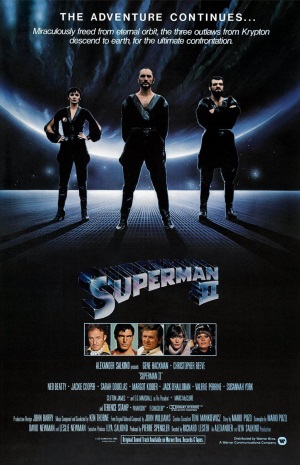
It takes only a matter of seconds until it is apparent this production is in deep trouble as Superman IV: The Quest For A Decent SFX Team has some of the cheapest-looking opening credits for a major motion picture. At least the title screen has the classic Superman comic book typography if that’s any consolation (these movies did become more pop art as they went along and even the film’s poster is superbly drawn just like a comic book cover).To create a list of all the SFX failures of Superman IV would be a gargantuan task – repeating that same shot of Superman flying towards the screen many times, the lame small-scale recreation of The Fortress of Solitude, the obvious wireframes, the use of the famous image The Blue Marble to represent the Earth or the subway scene in which they resort to using gimmicky edits to create an action scene. Although my favourite special effects failure would have to be the shot of The Statue Of Liberty flying at a 90-degree angle through the Metropolis skyline, I can’t help but chuckle.

Superman IV: The Quest To Occupy 90 Minutes Of Run Time can also lay claim to having the most pointless scene in the history of the art form that is the motion picture. In this scene, Lois visits Clark in his apartment to which Clark says he needs to go outside and get some fresh air. The two walk onto his balcony and Clark pretends he is going to commit suicide by walking off the ledge and taking Lois with him only to then turn into Superman and recreate the romantic flying sequence from the first movie but with the ugliest rear projection you’ve ever seen. Once they return to the apartment, Superman/Clark uses the memory-erasing kiss from Superman II on Lois as if the whole thing never happened. What on under God’s green Earth was the point of that sequence?  What was Clark’s motivation for doing this? Was he just bored one day and wanted to use his Superman powers to screw around with Lois for a good laugh? More significantly, why did the filmmakers decide to recreate a bastardised version of one the most magical scenes from the first film and what relevance does this scene have on the rest of the film’s plot? In the words of every wannabe late-2000’s angry YouTube movie critic, “What were they thinking?!”.

But enough negativity! In what ways does Superman IV succeed in a legitimate, unironic way? There are some brief flashes of greatness and interesting ideas within Superman IV which show a movie which could have been. For starters, the legacy cast is as great as ever. Christopher Reeve puts his all into the role of Superman with the same level of sincerity as before (“Stop! Don’t do it, the people!”), not to mention Reeve hasn’t aged a day since the first film back in 1978. The chemistry with the employees at The Daily Planet is as always a joy to watch with that old-school screwball comedy vibe (even if Marc McClure is too old at this point to be playing Jimmy Olsen). While Reeve looks amazing, sadly the same can’t be said for Margot Kidder who is looking very rough this time around. Reportedly the woman has battled many mental health issues throughout the years and sadly the effects of this do show themselves on screen. Regardless, Reeve and Kidder still have that on-screen magic, with the scene in which Lois visits Clark in his apartment while he is suffering from a terrible case of flu being the most touching in the film (interestingly, this is also the first time in the series in which we actually see Clark’s Metropolis residence).

As for new faces, Mariel Hemingway is a welcome addition to the cast and showcases her gifts as a comic actress in the role of Lacy Warfield. The relationship between Lacy and Clark has no real development although Reeve and Hemingway do share a good chemistry making their attraction believable as the bad girl meets the boy scout. I do enjoy their quintessentially 80s scene as the two slide into their lycra and do some aerobics, while the double date screwball comedy sequence is amusing but does feel a bit comically stale (should have had the Benny Hill theme thrown in for good measure). A scene was also filmed in which Clark and Lacy go to a disco of which production photos do exist but sadly it remains unknown if the footage has survived. In the role of Lacy’s father is Sam Wanamaker as the media mogul and obvious Rupert Murdoch stand-in David Warfield. Wanamaker makes Warfield an entertaining caricature with his booming voice while his takeover of The Daily Planet and his attempts to turn the paper into a sleazy, irresponsible tabloid (“We can double our circulation with a good international crises”) is one piece of social commentary which Superman IV performs in a less ham-fisted manner. This plot thread is also visualised through the character of Lacy as she gradually comes to understand the power of journalism with this transformation being illustrated by having Hemingway wear suits with successively smaller shoulder pads. Sadly, this subplot in Superman IV has a very lazy, deus ex-machina conclusion in which Perry White simply announces he has secured a loan to buy a controlling interest in the newspaper thus taking it out of the hands of Warfield. There is no set-up and pay-off leading to this conclusion, rather it just lazily comes out of left field. 

Likewise, another subplot which is raised (and this one doesn’t even receive a conclusion), is Clark’s adamant desire to sell the Kent farm to an actual farmer and not to a company looking to build a shopping mall (which does foreshadow The Daily Planet’s corporate takeover). The scene on the Kent farm near the beginning of the film is one of the better and more emotional moments in the film in which they surprisingly do make the English countryside where it was filmed look like rural USA. It has a real sense of reflection for times long gone as the place is no longer used or lived in (plus the baby crib with the broken wood at the foot’s end is a nice touch). Unfortunately, the fate of the farm never comes up again during the rest of the film. Correspondingly, a scene was filmed involving Clark visiting the grave of his adoptive parents in what sounds like could have been a real emotional highlight (Mark Rosenthal does speak highly of it in the audio commentary). Production photos of this scene do exist but sadly the footage has never seen the light of day.

The other major returning cast member in Superman IV: The Quest To Make Superman III Look Decent By Comparison (Well That Is If You’re A Hater of Superman III, I’m A Fan Of It Myself Personally But Whatever) is Gene Hackman as Superman’s most famed nemesis Lex Luthor. Hackman is as enjoyably hammy and charismatic as he was in the first two Superman films and Superman IV even allows him the opportunity to portray Luthor as a Dr Frankenstein-like figure in a scene that feels like it’s straight out of a Universal monster film. Luthor’s layer is even the most dynamic in the film with its art deco design in which he spends his time dancing with a woman dressed as Marie Antoinette (you know, like you do). Luthor’s sidekick this time around is his nephew Lenny Luthor (another original character not from the comics), portrayed by Jon Cryer. Lenny himself increases the movie’s 80’s factor to the most extreme, far out, tubular heights with his New Wave band fashion choices and California surfer dude speak. I get this character annoys many viewers but I get some laughs out of this male equivalent of a valley girl.

Aside from taking out Supes, Luthor wants to reignite the nuclear arms industry but like most aspects of Superman IV, this plot point (you guessed it!) doesn’t make any sense. The movie has already established that the entire world is in unanimous agreement with Superman in regards to him getting rid of the planet’s nuclear arsenal and the world’s governments even aided him in doing this. Thus just how is Lex Baby supposed to reintroduce nuclear arms? We can see him attempting to do so in a deleted scene in which Luthor speaks to the government of the USSR and convinces them that world peace is a capitalistic plot and then subsequently appears before the US government to claim that world peace is a communist plot. I can only speculate as to why this scene was not included in the film as it is fun to watch in isolation but in the wider context of the film it does make the people who inhabit this universe incredibly vulnerable to being easily swayed and manipulated. It’s like that scene in The Simpsons in which Skinner and Krabappel are each trying to convince the children’s parents on what’s more important, their children’s future or tax increases. What is included in the film is Luthor’s honest stated aim, “Nobody wants war. I just want to keep the threat alive”. Well, at least the movie has one pertinent quote concerning the military-industrial complex.

Now let’s get to the real fun part and talk about my boy, Nuclear Man! The poorly thought out and unintentionally hilarious villain in Superman IV, portrayed by Dolph Lundgren lookalike Mark Pillow in his only screen role (an actor with three IMDB acting credits and no Wikipedia page). I’m not going to lie, I love Nuclear Man. Everything about the character screams 1980s with his dripped out black and gold spandex outfit, the lightning animations that travel over his figure, the Southern California hairdo and the most tubular animation of his birth from foetus to a fully blown Adonis. Like Ivan Drago in Rocky IV, every one of his lines is memorable (“If you do not tell me, I will hurt people”, “Destroy Superman!”, “First, I have fun!”), with his booming voice (roars and all) provided by Gene Hackman himself. Due to the sheer enjoyment I get from watching this bombastic bad guy, I can forgive the fact that power-wise, Nuclear Man’s one major weakness is so easily exploitable since he loses his power when he is not in direct sunlight. Likewise, Nuclear Man also has the most glaring non-motivation in the entire film. Due to the sheer amount of material from Superman IV that ended up on the cutting room floor, in the final cut of the film Nuclear Man just randomly looks at a copy of The Daily Planet and sees a picture of Lacy (whom he has no established knowledge off) and thinks “yeah, I want some of that!” and proceeds to kidnap her. Superman tries to stop Nuclear Man and tells him “Give it up, you’ll never find her” in response to Nuclear Man asking “Where is the woman?”. How does Superman know the woman Nuclear Man is talking about? His motivation for kidnapping Lacy is explained in the film’s deleted scenes but it appears someone or something must have thought,” Let’s just skip all the character motivation mumbo jumbo and just get straight to the action scenes!”. Speaking off…

Not the crossover event I was expecting.

Superman IV offers viewers two fights between Supes and Nuclear Man, with both being very slow and mundane. The first is a world-spanning bash of unintentional hilarity as Superman essentially follows Nuclear Man, repairing all the damage he creates from plugging up a volcano in Italy with a giant rock to using his laser vision to repair The Great Wall of China (a random power that came out of nowhere but the stop-motion special effect of the repairing wall looks cool). Likewise, various international cuts of Superman IV also include a sequence in which Nuclear Man creates a tornado which Superman must eliminate, in which the special effects are actually not too shabby. The fight nonetheless concludes in the most pathetic manner, as Nuclear Man uses his fabulous, long, manicured nails to take out Supes. But never fear, as Supes gets his revenge in round 2 as they fight on the Moon in agonising slow motion- It’s so tedious to watch! The two barely even fight, they more so just push against each other – it’s like watching two geriatrics go at it. Regardless, decades on Mark Pillow himself has no embarrassment regarding the character, as evidenced by his entertaining Instagram profile in which he celebrates the bizarre cinematic creation that is Nuclear Man. However, when delving into the treasure trove of deleted scenes for Superman IV: The Quest For What Didn’t Make Into The Final Cut, arguably the most prominent aspect which didn’t make it into the final cut was another Nuclear Man (portrayed by Clive Mantle) originally created Lex Luthor (and subsequently defeated by Superman). I have no love for this Nuclear Man and I fail to see why having two, very different versions of Luthor’s creation was necessary. On top of that, the design of the character is just very unpleasant, looking like an ugly version of Billy Idol and whom bizarrely is born with a metal plate attached to his crouch (an image I’d rather burn from my mind).

The music for Superman IV is actually the one aspect in which the film entirely exceeds…well almost. The rendition of the Superman theme during the opening credits is a very weak, low-energy version, however, the rest of the score features the best original work since the first film alongside some top-notch reworking of previous music. The reason that the new material is so good, is that while he is not credited, it is written by none other than John Williams himself in his first involvement in the series since the first film (with Alexander Courage composing the score). The first of these is Lacy’s Theme (aka Someone Like You), a delightfully cheesy saxophone piece which is accompanied by some lush orchestrations which would easily fit in with a Fred Astaire dance number (the full score also includes a great variation titled the Disco Version). Likewise, Jeremy’s Theme is suitably innocent and childlike but it’s the Nuclear Man Theme which absolutely slaps with its cartoonish villainy (alongside the more epic, drawn-out rendition which is played during the first fight). It goes without saying Williams is the GOAT of film composing but Courage does a fine job reappropriating William’s earlier compositions and the film does feature some relaxing and breezy variations of the iconic Superman theme. Although If I were to pick one original highlight from Courage it would have to be the piece United Nations which is suitably grandiose (just a shame it’s used for such a ridiculous scene).

Superman IV: The Quest For the Non-Existent Box Office would be the last time Christopher Reeve would dawn the red cape and blue spandex of Superman (Superman V: The Quest For Embryonic Stem Cell Research would never see the light of day). Yet despite everything that is wrong with the film, I can’t bring myself to call Superman IV a film I hate. It does remain at the end of the day, a fascinating demonstration of how not to make a motion picture (why else would I have just written a 4,100-word review analysing it within an inch of its life). Superman IV can stand alongside the bad movie greats such as Batman & Robin, The Room and Troll II for its moments of unintentional hilarity and sheer quotability. Honestly, if I were given the choice between watching Superman IV and some Ikea furniture-style assembly superhero movie that Hollywood regurgitates these days, give me the former. With all said and done as I complete my journey extensively reviewing all four Christopher Reeve Superman movies, I can still find some love in my heart for Superman IV: The Quest For Peace.
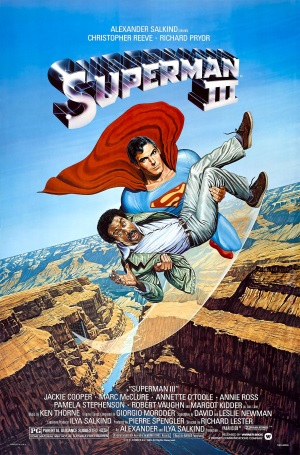
Superman III (1983)

Clark v Evil Superman

***This Review Contains Spoilers***

Superman III, often dismissed as “the Richard Pryor Superman movie”, is a film with many highly questionable moments and bizarre decisions on the part of the filmmakers (most notably the far greater emphasis on comedy), but dam if it’s not a movie I have an immensely fun time watching. Even during the film’s pre-opening credits scene I already found myself relating to Richard Pryor’s character of August ‘Gus’ Gorman and I thought to myself “Isn’t this supposed to be a bad movie?” Ah yes, the monotonous and degrading experience of going to a jobs & benefits office and dealing with the employees who don’t want to be there and probably don’t like you as evident from their body language. The down-on-his-luck Gus then complains about his experience being employed at a fast-food restaurant and how “they expect you to learn that stuff in one day” – let’s say I’ve had some similar real-life experiences. This is later followed by another one of Gus’ relatable frustrations – having your pay undercut by taxes (“State tax, federal tax, social security tax”). I wasn’t bothered by Pryor sharing the spotlight with Superman regarding screen time as I very quickly became endeared by this regular Joe who bites off more than he can chew and finds himself in extraordinary circumstances. Gus, you are my spirit animal!

The text for the opening credits of Superman III looks like it was created using Windows Movie Maker (or whatever the equivalent was circa 1983) but I’d be lying if I didn’t say the slapstick comedy in the opening credits amuses me with its classic vaudeville-like elements (including a haphazard blind man, a pie in the face and even a clumsy mime). This opening is very intricately set up and is done by a director who understands and knows how to do physical comedy aided by a delightfully mischievous-sounding score from Ken Throne. Now you might be asking dear reader, “Even if all that is true, what is this sequence doing in a Superman film? This isn’t a Jacques Tati film”, and you would be absolutely correct in that assessment. I could try to post-hoc rationalise its inclusion, arguing that it ties in with the fact that Clark Kent is often a bumbling clutz, plus the series is light-hearted and campy as a whole. However, at the end of the day, all I can say is that it simply entertains me and makes me laugh. So please let me enjoy the one time in history in which the unique and odd combination of the Superhero genre and classic vaudeville comedy came together into one.

Not all of the comedy in Superman III is successful in my eyes. If I was to pick out the weakest scene in the entire film it would be that in which Gus explains Superman’s exploits in Columbia as the Man Of Steel disrupts the villain’s plans for economic manipulation (“But this one miserable, puissant little country, has the gall to think it can dictate the economy of an open market!”). I can understand the writers were trying to give Pryor room to express his comic chops however the scene fails on such a level and rather just comes off as a lengthy and awkward expositional monologue edited to several brief flashbacks of Superman in Columbia – why not create an action scene out of this plot point instead?. Then there’s the gag of the green man and the red man in the traffic lights fighting each other. I find the moment funny in isolation, but when viewed within the context of the film you have to ask yourself, “Did that really just happen?”. Nowadays with smart technology, someone with the know-how could actually programme such a thing to happen, so perhaps the gag was ahead of its time after all.

Amongst the comedy which does succeed, I do enjoy the gags which use Superman’s powers for comedic effect such as Evil Superman straightening of the Leaning Tower of Pisa or the blowing out of the Olympic Torch just as it reaches its final destination. However, If I was to pick a comic highlight of the film, it would have to be the sequence in which Gus breaks into the Webscoe offices in Smallville, with all the drunken antics and the improvised use of a passed out inebriated body of a security guard to turn on a computer which requires “both keys at the same time” to activate (a very Mr. Bean-like scenario) – plus the sight of Pryor in a tweed suit and an oversized cowboy hat which keeps bobbing around is a funny image in itself. Corresponding, the film also has its share of more subtle comic moments such as Gus foolishly flaunting his ill-gotten wealth by driving to work in a Ferrari to Jimmy Olsen’s incessant yammering to Clark as they ride on the bus. I also enjoy Pamela Stephenson as the Jean Harlow-like dumb blonde Lorelei who conceals her intelligence (“How can he say that pure categories have no objective meaning and transcendental logic? What about synthetic unity?”). Then there’s the other brand of comic moments in Superman III, those which I can’t quite determine if they were intentionally supposed to be funny or not, such as the bizarre sight of the unshaven Evil Superman in a bar drinking as he flicks peanuts to smash glass bottles. Regardless, moments like this are now a goldmine for internet memes galore.  

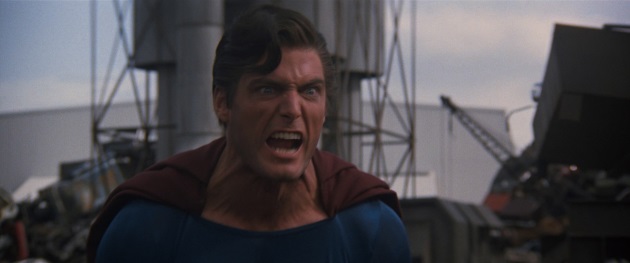
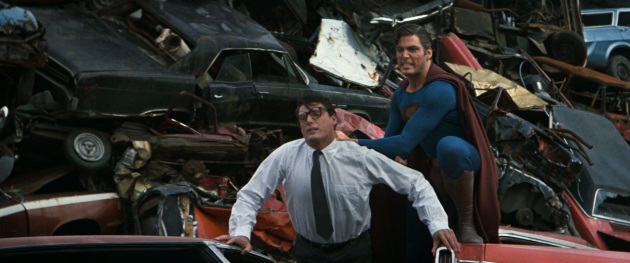
Third time’s the charm and Christopher Reeve finally gets top-billed in his own series. Superman III is Reeve’s finest performance as the Man of Steel as he has the task of portraying three different personalities in one film – Clark Kent, Superman and Evil Superman (which he has been retroactively referred to as the persona is never actually given a name in the movie). While these are all persona variations of the same character, it does show Reeve held the same ability alongside the likes of Peter Sellers or Eddie Murphy to play multiple characters in the same film and even interact with each other in the same scene. How one man can look so vastly different from three versions of the same character? Reeve even showcases his physical acting abilities to be on par with the greatest silent film actors with the level of expression he can convey through body language and facial expressions (just look how tightly the skin is pulled back around Reeve’s neck as he shouts “Come on!” during the junkyard fight). Moreover, as with Superman II, one of the elements of the movie I found myself enjoying most was the character relationships. I was surprised I was engaged with the relationship and dynamic with Clark’s Smallville sweetheart Lana Lang (Annette O’Toole) as much as I did with Lois Lane in the previous film. In one of my favourite moments in Superman III, Clark and Lana are cleaning up the gym together following the class reunion party as she tells him about her ambitions and how she wants to leave Smallville as Clark plays an instrumental rendition of Earth Angel on the piano (in a great combination of diegetic and non-diegetic music). At this point in the movie, I thought to myself how people can dismiss this movie as much as they do when you have brilliant, intimate moments like this which showcase performers with such marvellous chemistry. What really differentiates Clark’s relationship with Lana in contrast to his love interest in Superman II is that Lois is in love with Superman but ignores Clark, whereas Lana is in love with Clark but not so much Superman. Thus Clark is much more confident, suave and debonair with Lana, and not the bumbling clutz he is with Lois. Sadly, the status quo of the Superman universe can’t allow Clark and Lana to become a couple, but what a superb pairing they are. I do have to ask though, why are the class of 1965 having a reunion in an off-year, assuming the film is set in the year it was released (but I digress)? 

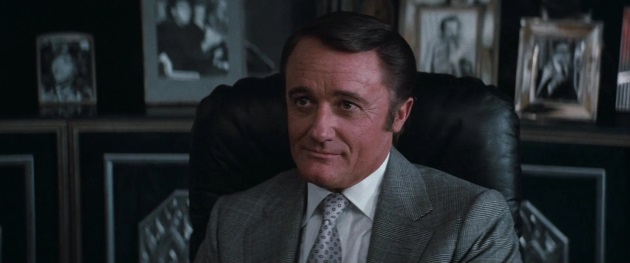
Initially, the big bad of Superman III, Ross Webster (Robert Vaughn) disappointingly came off to me as a lesser Lex Luthor. However, on further viewing, I’ve really come to appreciate the Bond villain-like character and Robert Vaughn’s charismatic and suave performance as well as that of Annie Ross as Webster’s butch, somewhat comical sister Vera. Like Luthor’s underground, abandoned subway layer in the first film, Webster’s own layer is like a character in itself, with his own ski resort atop a Metropolis skyscraper and a memorable, grey, art deco design in his grand office. Additionally, I’m not the first person to point out that the reimagining of Lex Luthor in the comics starting with the Crises Of Infinite Earth series in 1986, portrayed Luthor as not the mad scientist archetype as he had been for decades until that point, but rather as an entrepreneurial head of Lexcorp – not too dissimilar to Ross Webster and his company Websco with both being complete with tall, extravagant skyscraper penthouses as a testament to their larger-than-life egos.

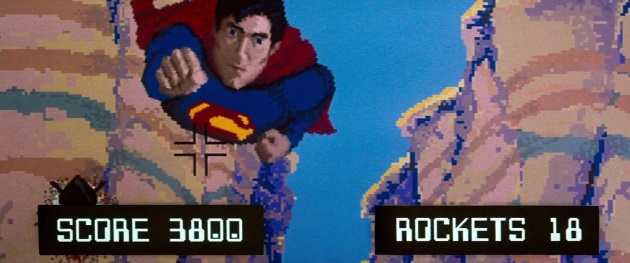
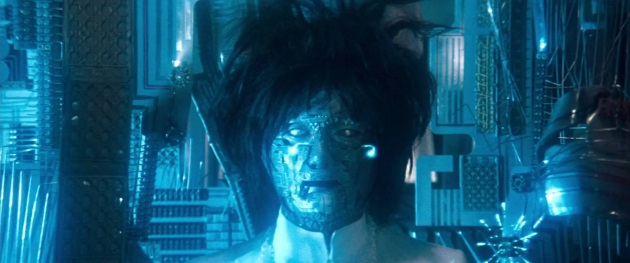
One of the most notable and unique aspects of Superman III is its semi-serious early screen depiction of computers and cyber-terrorism. Gus’s get-rich-quick scheme of writing a computer programme to gather up fractions of a cent remaining from other Webscoe employee’s pay cheques does have its basis in reality in a practice known as salami slicing (with this aspect of Superman III having influenced the movie Office Space as directly referenced in that film itself). However, I do use the term semi-serious as by the film’s climax, the understanding of computers in Superman III goes from having a basis in reality to becoming pure science-fiction with the super-computer designed by Gus. Just how did Gus accumulate the knowledge to design a machine which can feed itself by absorbing power from the electric grid, is able to grab people by using its wiring like a series of tentacles, can levitate people into the air and even turns Vera into a robot (I don’t think even the likes of Bill Gates are capable of creating a computer quite like this). Vera’s robotic transformation (or is she a cyborg as she appears to still have flesh skin albeit painted grey) is particularly frightening as she screams in agony during the process and then proceeds to walk like Boris Karloff in her new robotic form. I’d also be remiss if I didn’t mention, why does the villain’s view of Superman flying through the canyon looks like a video game complete with score points and those infamous Atari Pac-Man sounds? It doesn’t make sense (not to mention they do realise Superman is indestructible so why are they bothering to fire missiles at him?) but it sure is a fun sequence to watch. This entire action climax of the film is ridiculous but makes for very entertaining viewing and is topped with many memorable special effects shots from stop motion to miniatures (bringing the 80’s factor of Superman III up to 11).

I find Superman III to be the most visually and aesthetically appealing of all four Reeve films, and with Richard Lester being the only director at the helm (unlike Superman II which went through two directors), Superman III is consistent in its visual style with its use of warm, pastel colours and coupled with the picture’s use creative old-school practical effects. These films became more pop art in style as they went along, with another major unique contribution of Superman III to the series being the wholesome, small-town Americana feel with the scenes in Clark’s hometown of Smallville (ironically though filmed in High River, Alberta, Canada). Superman III is full of very comic book-like, very Superman-ey (for lack of a better term) moments such as Clark sneezing to create a bowling ball strike or Superman freezing an entire lake and then carrying it as a huge piece of ice in order to extinguish a chemical plant fire – a joyously simple and effective solution which feels like it’s taken right off the pages of a comic book. Furthermore, the TV version of Superman III contains 18 minutes of extra footage but unlike the TV versions of the first two films, the extra footage is mostly unnecessary padding for existing scenes and contains nothing that I was wishing was included in the theatrical cut. Even the Frank Oz cameo as the surgeon comes off as an awkward and unfunny attempt at shock humour while the clear indication that Evil Superman is definitely getting it on with Lorelei (whereas in the theatrical cut, this is only implied) is pushing it too far for what’s supposed to be a family film. Additionally, the opening credit sequence in this version which goes back to the traditional outer-space credits of the first two films is very dull with the repetitive use of scrolling text. This is one Superman movie in which I will stick with the theatrical version. Or if you would rather have an abridged version of Superman III, watch the infamous trailer which explains the entire main plot in 3 minutes.

An aspect of Superman III which is not often discussed is the film’s many references to indulgence and substance abuse, with Evil Superman being a potential metaphor for this. When analysing a movie for a deeper meaning like this, you can question if any such messages were intentionally incorporated by the scriptwriters. However, in Superman III, this theme is very on the nose that I can’t see it being something which the writers didn’t knowingly include. Firstly, how did Evil Superman come to be? Well by man-made kryptonite which substituted tar with an unknown substance of 0.57% after Gus Gorman choose the substance after seeing it as an ingredient on the side of a cigarette package. It’s like the film is saying smoking turned Superman evil (then again, didn’t your last movie have product placement for Marlboro Cigarettes?). Reeve plays Evil Superman in a manner in which he appears to always be intoxicated, while in pursuit of hedonistic pleasures (including getting super-laid). In general, Superman III is full of references to addictive substances including alcohol, cigarettes, coffee and fast food from the character of Brad Wilson (Gavin O’Herlihy) being in a state of near-constant inebriation to Ross Webster himself being a coffee mogul. Even Webster’s line “Every time a drunk sobers up, he’ll be drinking Webster coffee” is very on the nose. Gus himself also indulges in his newfound wealth (after previously complaining that he wants his pension money now) causing him to lose sight of his moral compass. On top of that, the film’s co-writer Leslie Newman refers to the Evil Superman as being “under the influence” in the documentary The Making Of Superman III – make of that what you will. During the film Evil Superman never kills anyone nor causes catastrophic damage or destruction (bar the oil tanker incident which is the worst action he performs) as Superman’s own inherit morality would prevent him from doing so – it makes sense that hedonism (and general trolling) would be the worst thing a corrupted Superman would do. When watching the movie through this thematic lens of indulgence and substance abuse it makes the confrontation between Clark and Evil Superman all the more compelling, speaking off…

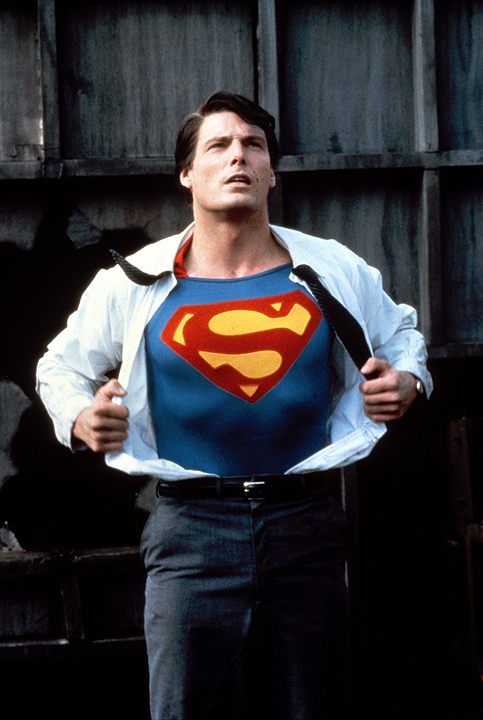
The grand highlight of Superman III has to be the inner conflict of good and evil that is the in-head fight between Evil Superman and Clark Kent in the junkyard – never before has a fight which doesn’t actually happen been so exciting. It’s intriguing to see the Clark persona involved in combat with the juxtaposition of a dorky guy who can give and receive such a brutal beating (“I can give as good as I get”). The use of composite shots and body doubles sells the illusion of two versions of Christopher Reeve fighting each other (pre-dating Back To The Future: Part II by six years), while the junkyard environment is used to great effect with the use of conveyor belts and trash compactors. While none of Ken Throne’s original music reaches anywhere near the heights of John Williams’ work, his music for this fight is a highlight with its eerie use of synthesisers. In addition, I find the moment of Clark being crushed in the trash compactor to be scary stuff. Even though as a viewer I know he will be fine as he is Superman after all, his heavy breathing and the look of horror on his face as he is trying to escape from the machine alongside the pov shot in which he catches his last glimpse of daylight in a scenario of which a normal human would be crushed to death is very unsettling to watch. In the end, the better angels of our nature prevail as Clark defeats Evil Superman, followed by a glorious victory shot in which Clark does the iconic shirt rip and subsequently flies off as regular Superman as the John Williams theme plays is one of those triumphant movie moments that make you want to just cheer on – “Yeah, go Supes!”. I’m not ashamed to proclaim my un-ironic love for the imperfect but joyous cinematic outing that is Superman III (perhaps I can reclaim some cinephile street-cred by reviewing some pretentious, European art-house that everyone pretends to love in order to look cool and artistically enlightened). Will I be able to find any merit in Part IV of the Superman film franchise? Let us embark on the next stage of our quest…a quest for peace?

Superman II (1980)

What Is The Story With That Cellophane S?

***This Review Contains Spoilers***

Due to the complex and troubled production behind Superman II it seems likely it would have been destined to become a disaster of a film with the switching of directors from Richard Donner to Richard Lester during the principal photography process. However, instead of turning into a Frankensteinian mess of two director’s visions stitched together into one, I consider Superman II to be the perfect Superman film. A film which improves on the original in so many ways and delivers a more emotionally satisfying film and offering two hours of pure escapist bliss. A rare instance of the perfect combination of cast and crew coming together to create something wonderful. I will also take this opportunity to say: Lester cut > Donner cut (yes, this is a hill I am willing to die on). After watching Superman II: The Richard Donner Cut I thought to myself “Thank God Donner was fired from this production and replaced with Richard Lester”. Within the Donner cut, the romance between Lois and Clark is very forced and underdeveloped; there is a lack of humour, and no exaggeration, one of the absolute worst endings I’ve ever seen – but that’s for another review.

Lester’s style for Superman II forsakes the more epic scope Richard Donner employed for the first film, instead opting for scenes in the film to more resemble the frames of a comic book – Superman II does have more of a comic book/pop-art vibe. Lester brought on cinematographer Robert Paynter for the film to evoke the colour scheme of the comics however the contrast between Lester’s new footage and that shot by Donner which still made it into the film (i.e. all of Gene Hackman’s scenes) isn’t great enough to become distracting.  Superman II has a much more brisk pace than the first film, as evident by the opening scene which re-edits the Kryptonian council’s trial of Zod, Ursa and Non to that of a more frantic pace. It does create a continuity issue with the first film as Marlon Brando has been completely removed from the scene (and is absent for the entire film), however, I am able to look past this as the opening is just so darn exciting and perfectly establishes the tone for the rest of the film. With all the setting up done in the first film, Superman II is able to get straight into the thick of it with the action sequence involving terrorists at the Eiffel Tower, and creating high stakes right off the bat. Correspondingly, another individual who doesn’t return for Superman II is that of composer John Williams and thus is lacking the sounds of The London Symphony Orchestra. Rather the film is scored with a smaller orchestra led by composer Ken Throne, however, I actually don’t mind the stripped-down approach to the music and find it does work in its own way. John Williams may have written the iconic Superman theme, but I find Ken Throne’s faster rendition for the opening credits of Superman II to be the best version of the famous theme with its quicker tempo. Likewise, someone in the production must have been fond of the Average White Band song Pick Up The Pieces as not only does it appear in the film, there is a neat orchestral version of it during the second dinner scene.

While their appearance in Superman: The Movie was fleeting, Superman II finally gives us General Zod (Terrence Stamp) and his two accomplices Ursa (Sarah Douglas) and Non (Jack O’Halloran) in all their glory. Terrence Stamp as Zod is one of those performances which bring me eternal levels of respect for an actor. Every one of his beautiful hammed-up, menacing lines I could listen to all day (a posh English accent makes any on-screen villain all the more evil). Alongside Stamp’s scenery-chewing, part of what makes the trio so intriguing is the innocence of their evil. The three don’t actually seem to be unaware of the immorality of their actions, with Ursa, in particular, taking great joy in her evil misdeeds (one of the many international TV cuts of Superman II does feature a scene in which Non kills a child off-screen, although I prefer this scene’s non-inclusion in the theatrical cut as it is too dark in tone with the rest of the film). Likewise, I greatly enjoy the trio’s genuine curiosity during their time on Earth, such as when Zod is genuinely baffled by Lex Luthor’s impudence (“Why do you say this to me when you know I will kill you for it?”). Much humour is devised from this 3rd Rock From the Sun-type humour such when the trio mistake Earth’s name as planet Houston, nor would any comical/semi-comical act be complete without the dumb one, as even the Kryptonian Council denounces Non for his lack of intelligence (ouch!).

As Zod, Ursa and Non have the same strength as Superman when on Earth, their characters do harken back to the original predecessor story to Superman, Jerry Siegel and Joe Shuster’s short story The Reign Of The Superman from 1933, in which an indestructible “superman” imposes tyranny on the world rather than using his powers for good. However, once Zod becomes supreme leader of Earth in Superman II, he doesn’t actually do anything. He, Ursa and Non just lounge around the Oval Office and don’t do anything while the rest of the world continues as normal. As I argued in my review of Superman: The Movie, Zod was correct to stand up to the authoritarian dystopia that was Krypton, and on Earth, he is the libertarian hero we need. I for one welcome our new Kryptonian overlords (#ZodWasRight). It is also worth noting that in the TV cut of Superman II, during the invasion of The White House, Zod takes particular umbrage at a portrait of Richard Nixon and starts frantically shooting it even though he should have no knowledge of who this man is, I guess it just rubbed him the wrong way.

Although I may put my defence of Zod on hold in favour of the film’s grand action set-piece as the son of Jor-El takes on the Kryptonian trio in a climatic fight which spawns the city of Metropolis. As combat with a villain was absent in the first film, this fight more than satisfies that desire (”Man, this is gonna be good”), with all those wonderfully kitschy special effects on display just getting better with age. The fight also includes multiple humorous uses of product placement as Superman gets thrown onto a Marlboro Cigarettes truck followed by Zod being flung into a Coca-Cola sign only a few seconds later to my great amusement. The inclusion of product placement for Marlboro Cigarettes is odd though considering early in the film there is some very subtle humour coming from Lois Lane speaking about how she is trying to stay healthy her via her intake of orange juice, all while she continues to chain smoke.

As with the first film, the scenes in The Daily Planet have that screwball comedy vibe, however, I feel the dialogue in Superman II is even wittier this time around. The recurring players in all the Christopher Reeve-era Superman films have such a great dynamic together that even in a movie as poor as Superman IV I can still enjoy their interactions. The major cast member absence of Superman II is Marlon Brando, however Susannah York as Superman/Kal-El’s mother does an effective job filling Brando’s shoes as she is commanding and stoic and like Brando, is a comforting presence in The Fortress Of Solitude. Moreover, Superman II offers further insights into the character of Lex Luthor with his desire just to be the ruler of Australia (and then later Cuba). He may be an egomaniac, but at least knows his limits; he can’t have the world but can happily make do with a continent. The TV cut of Superman II also interestingly features an interaction between Luthor and Jimmy Olson (Marc McClure), two characters that otherwise never encounter nor interact with each other at any other point in the series. I also adore how Superman refuses to look Luthor in the eye when speaking to him as he is that unamused by Luthor’s antics (probably in part since Hackman still got billed above Reeve in the opening credits). Other memorable characters from Superman II include Rocky (aka Mr Wonderful), the perfectly executed love-to-hate character, not to mention that kid from the redneck town who for some bizarre reason sounds like he’s from Victorian-era London.

The other aspect which makes Superman II so great is the romance between Lois and Clark. I was left so badly wanted to see these two get together, two down-to-earth souls who are too perfect a match for each other. Their interactions at the beginning of the film are so endearing as Lois almost mothers the clumsy and meek Clark, not to mention you can really feel the pain as Clark gets friend-zoned big time. Following Lois’ discovery that Clark is indeed Superman, Clark surrenders his powers as Superman to live as a mortal in order to be with Lois. This is followed by the two of them going all the way which I assume Clark would be unable to do as Superman as his superhuman strength would literally kill her (so am I to assume Superman gave up his powers just because he was that thirsty?). The crescendo to the Lois & Clark romance comes to ahead with easily the most emotionally powerful moment in the series, as following the restoration of Superman’s powers, the two try to comprehend continuing to professionally work together in the same vicinity despite their feelings for each other. Margot Kidder’s voice is so emotive and she has that Margaret Sullavan-like quality to her (at the film’s most intense romantic moments her tearful pleas kill me). This conflict is resolved by Clark giving Lois a memory-erasing kiss (another addition to the list of bizarre powers Superman uses once and never again alongside going back in time, repairing the Great Wall Of China with his laser eyes and the infamous cellophane S from earlier in the film). A conclusion like this could easily have come off as a cop-out but I will argue in its favour. Firstly, the manner in which he erases Lois’s mind is via the romantic gesture of a kiss is tonally consistent with the scene, and secondly, the sacrifice that is endured on the part of Clark. Lois can have her mind erased to forget the pain, but Clark is not offered that privilege, he must continue to remain stoic to carry the heartache. That said, with the status quo returned, another Superman adventure beckons, to which the beginning of the end credits to Superman II offers the viewer a tease:

Coming soon

“Superman III”

The Face Of Another [Tanin no Kao] (1966)

Look At Me, Drunken One Night Stand. I Mean She Is My Wife

***This Review Contains Spoilers***

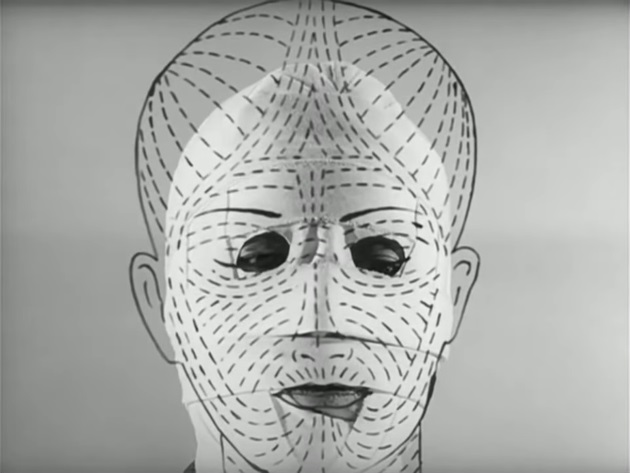
The Face Of Another is an imperfect but intriguing viewing experience from the ever-fascinating face-swap genre. I would call The Face Of Another a unique film but the only thing preventing me from doing so is a similarly themed film (and one released the same year nonetheless) in the form of John Frankenheimer’s Seconds. Both films involve a man in a loveless marriage who goes behind his wife’s back to get both a new face and new identity with the two films being full of avant-garde and neo-realist imagery. Both films have major differences between them too but hold enough similarities to make the pair a great double-feature. The visuals present in The Face Of Another stick with the viewer long after watching, even right from the opening scene which features an x-ray of a skull delivering exposition, while the black & white, high contrast cinematography beautifully captures a documentary-like look at mid-1960’s urban Japan (even Japan wasn’t immune to those dodgy looking 60’s tower block apartments).

We only receive a vague description of how engineer Mr. Okuyama (Tatsuya Nakadai) came to have a disfigured face. It appears to have be an industrial accident as in his own words as he was acting carelessly when inspecting a new factory owned by the company he works for (“We should have used liquid air. But we ran out… we used liquid oxygen instead. I thought it was liquid air”). Mrs. Okuyama (Machiko Kyo) is the wife who has fallen out of love with her disfigured husband – it’s never stated but it’s obvious as she can’t bear to look at his face with the bandages removed. He is no longer the husband she once knew, he is now a skin suit of a husband. The Face Of Another explores how a transformed physical appearance might impact one’s inner personality. It’s not indicated much his disfigurement has changed Mr. Okuyama’s personality or was he always rather unpleasant, neurotic and borderline psycho? Just observe the manner he berates a secretary for not asking who he is when walking into the office. Furthermore, Mr. Okuyama lives in a westernized house with no traditional Japanese ground furniture and is littered with trendy 60’s decor yet there still remain a few traditional Japanese ornaments in the home – showing a modern couple who are caught between tradition and what is seen as modern and hip.

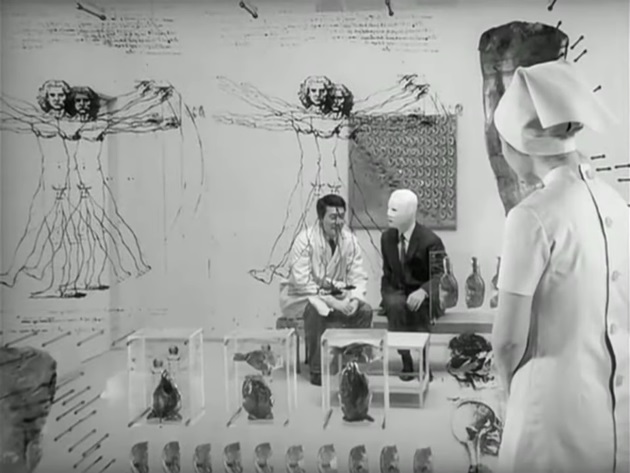
The Face Of Another contains a B-movie story presented within a sophisticated, art-house style. The film is in the mould of the Universal Monsters tradition with the plot’s similar themes to Frankenstein and Dr. Jekyll & Mr. Hyde. Correspondingly, when Mr. Okuyama wears his bandages and fedora he bears more than a striking resemblance to the Phantom of the Opera and Claude Raines’ The Invisible Man (Okuyama later comes to think his newfound face makes him invincible). Throughout the course of the picture, Okuyama visits Dr. Hira (Mikijiro Hira), who is able to offer Okuyama a face transplant in which the facial mask is from that of a donor (a concept which was science-fiction in 1966 but has become a reality today with French woman Isabelle Dinoire receiving the world’s first face transplant in 2005). Just how much of Dr. Hira’s technique creating a face mould which can be taken on and off another’s face still remains science-fiction is a question I am unable to answer. The Cronenbergian figure of Dr. Hira is a more down to Earth mad scientist (if that’s not an oxymoron). He has a slight, subtle twinge of madness to him, with the interactions shared between doctor and patient being my favourite part of the film. He is a medical doctor yet also a plastic surgeon at the same time complete with several nurse assistants within his dreamlike and surreal clinic, which itself is really something to behold. It is a blank space with no observable windows or doors in which the background changes upon every visit and is littered with transparent panels and prosthetic pieces hanging around like works of modern art. 

One of the film’s most interesting dialogue exchanges takes place between husband and wife as they have a discussion about the covering of one’s face. They speak of how during Japan’s Genji era it was considered virtuous to conceal one’s face as well this continuing to be the case for women in Islamic countries. There is an accidental modern relevance to this conversation as following the Covid-19 pandemic, the covering of one’s face in the west has become seen as a virtuous act in the eyes of some. Okuyama chooses to use his new appearance to seduce his own wife (unbeknownst to her that the man is her husband), and there is a preserve intrigue that comes from watching this play out. The seduction proves successful however afterwards she claims to have known it was him all along. Did she really know it was him? Would the presence of body markings have given it away?

The Face Of Another also contains a subplot unconnected to the main plot about a young woman whose face is beautiful on one side but disfigured on the other. She is shunned by others and has never been treated like a lady by men other than her older brother (her introductory scene even features an extra whom I swear to God looks like the Japanese half brother of one of The Beatles). Her brother is the only man who understands her pain and solitude and even kisses the disfigured part of her face, leading to an incestuous relationship between the two. Her story acts as a doppelganger to the main plot although I feel it is the weaker and less interesting aspect of the film. The Face Of Another does move at a slow pace and like any art-house film, said elements can test the viewer’s patience but ultimately the patient viewer is rewarded in the end.

During one scene with the disfigured girl, she is walking through a mental asylum housing Japanese war veterans, of which she volunteers her time, all while non-diegetic Hitler chants play in the background. Likewise, throughout the film, Mr. Okuyama and Dr. Hira visit a traditional Munich-style German bar complete with traditional German music. Is the film trying to make comment on Japanese war crimes and the country’s coalition with Nazi Germany? Along with the film hinting the disfigured girl may have received her scars from radiation poising from the bombing of Nagasaki, the spectre of World War II looms over The Face Of Another. Although the pink elephant in the room for anyone familiar with Japan’s involvement in World War II is the clear parallels between the film’s theme of medical experiments and the Japanese war crimes including the experimentation of humans at Unit 731.

Robocop (1987)

He Has Risen!

***This Review Contains Spoilers***

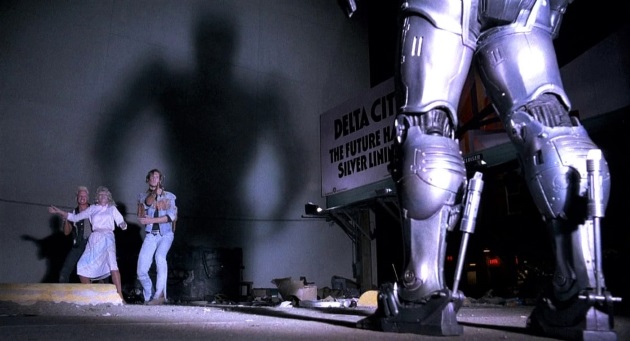
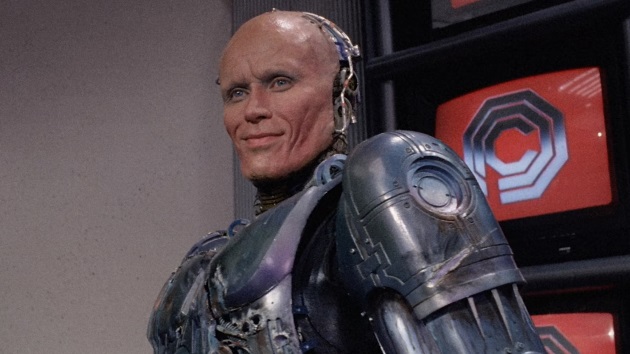
Despite its schlocky, B-movie title and the premise of a cyborg cop in a semi-dystopian Detroit, the Paul Verhoeven directed Robocop would prove to be one of the smartest films from the 1980s, an era when blockbuster movies were made for adults and their appeal would trickle down to younger audiences. Everything about the cyborg police officer oozes pure 1980’s cool from the slick metal look to that unforgettable voice (“your move creep!”). It feels like an actual robot and not simply a man wearing a suit, largely in part thanks to Peter Weller’s performance in which he nails the robotic body movements (I can suspend my disbelief that it never occurs to the bad guys just to shoot Robocop in the flesh of his uncovered lower face).

Robocop himself is the creation of Omni Consumer Products (OCP), a company which in its own words deals in “markets traditionally regarded as non-profit” such as hospitals, prisons and space exploration (funny I am writing this review as Jeff Bezos and the Richard Branson have just recently flown into space); a company that is essentially part of the military-industrial complex (“you got access to military weaponry? We practically are the military”). OCP runs the Detroit police force which raises the question, does there exist a public police force that is actually privatized (to which I’m unable to find a clear answer)? The world inside OCP is a combination of sexy and sinister yuppiedom full of Godfather-esque inner dealings and in which stock boards are placed above urinals. I like how during the presentation for the company’s other police robot ED-209, one of the board members is brutally gunned down by the machine and the best anyone can say is “does somebody want to call a paramedic?” and the board just continue to talk business and finance (also notice how Bob Morton (Miguel Ferrer) stubbornly pays no attention during the ED-209 presentation). It ultimately comes as no surprise when it turns out OCP has links to Detroit’s most prominent gang lead by Clarence Boddicker, a figure of pure menace with his sinister look and a man who can go down as one of cinema’s great villains (notice how he’s always doing something with his mouth). Yet I wouldn’t say OCP is portrayed as an overtly evil company in Robocop, the companies’ head, the sympathetic old man (Dan O’Herlihy) appears to be oblivious the shadier dealings within his company rather than actively taking part in them (by contrast in Robocop 2 OCP is portrayed as a far more sinister company, right down to having Nazi-esque flags on displays). Robocop can join the club of sci-fi movies that warned us about the dangers of corporate power, but did we listen?

Jay-sus love!

So how does OCP come to literally own the body of Robocop’s previous alter alias, Detroit police officer Alex Murphy? We are only given a single line of dialogue in which company member Donald Johnson (Felton Perry) states “Well he signed the release forms when he joined the force. He’s legally dead. We can do pretty much what we want to”. It’s also not clear if Murphy has literally been brought back from the dead (although with Robocop being a clear Christ metaphor that argument could be made). Clarence Boddicker shot Murphy in the forehead and he clearly appeared deceased lying in a pool of his own blood, yet when Murphy is being rushed to the operating room we do see what appears to be flashbacks in his head to his family life suggesting he was still alive. Regardless if weather OCP has literally possesses the ability to reincarnate a human, it is a disturbing prospect how a company can literally own your body and in effect, a person (regardless if they’re technically still classified as a human upon becoming a cyborg) can become a company product. As the film progresses there are subtle signs of Murphy regaining his humanity and like fellow similarly themed 80’s sci-fi masterpiece Blade Runner, the question is asked, what is the dividing line between man and machine? Unlike say 2001: A Space Odyssey which makes the viewer fear technology with HAL 9000, Robocop has a message of man learning to live side by side with technology. The scene in which Murphy removes his visor and looks upon his face for the first time since becoming Robocop is heart-wrenching and easily the most moving scene in the film, with the makeup effects themselves being something of awe.

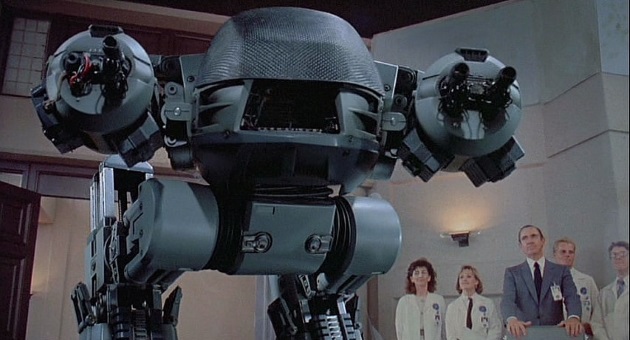
Robocop’s competitor at OCP, ED-209 is one cool looking beast but is a product that clearly hasn’t been well thought through since it’s incapable of accessing areas such as a simple staircase. It’s the little touches though which give it a personality from its lion growl before attacking from its pig squeal when it falls over to its little foot twitch. It goes without saying stop motion effects will never cease being cool to look at (likewise, Robocop I also great a showcase for the lost art that is the matte painting). Contrarily, Murphy’s partner Anne Lewis (Nancy Allen), while instrumental in helping Murphy rediscover his humanity, I do find myself slightly resenting her character as she does bear some responsibility for Murphy’s death and for a ridiculous reason. She just had to look down at that gang members’ package and as a result, be knocked out and disarmed. Had she not been distracted Murphy might still be a regular cop. That said, Murphy’s twirling of his gun to emulate the fictional futuristic cop T.J. Lazer in order to impress his son is a massive firearms violation (tut, tut), even if “role models can be very important to a boy”.

One of the memorable aspects of Robocop and something which really makes the film unique are the television segments, of which the news bulletins are in themselves an effective manner to deliver exposition while the commercials are incredibly entertaining and quotable (“That’s it buster! No more military aid!”). Perhaps most memorable of all is the fictional sitcom It’s Not My Problem! and that infectiously quotable line “I’d buy that for a dollar!” – the punch line to a joke we never hear yet the characters in the movie watching this low brow sitcom find hilarious. Much of the acting in Robocop is deliberately very campy. I can remember on one occasion channel surfing and I stumbled onto Robocop, my mother could not stop laughing at just how campy the acting was.

No specific date is given for when Robocop is set, whereas like Blade Runner, there exists technology that is still science-fiction in the real world and the President of the United States makes speeches from outer space (likewise male and female police officers sharing the same changing room appears to be the norm), yet within this universe, televisions are still bulky boxes with Cathode-ray tubes. Perhaps the film’s most memorable tech anomaly is the appearance of what you could possibly call a DVD, in which Boddicker uses a CD to carry visual information which was not possible in 1987. I also find the interior of Murphy’s house (owned by a company called Zem Industries) looks so heartless and sterile. This world isn’t quite Soylent Green but it’s still not desirable.

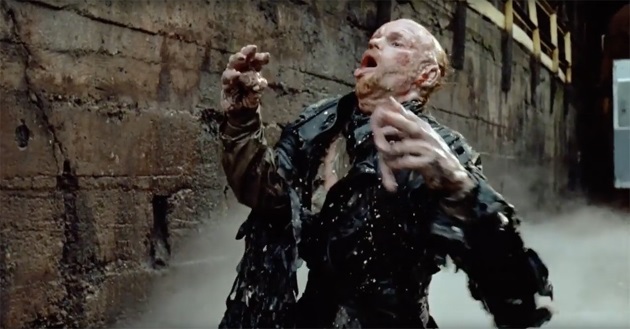
Even for a film that is as violent and drenched in blood as Robocop, the one moment which still manages to come out of left field is the death of the Boddicker’s henchman Emil Antonowsky (Paul McCrane). The death of Emil is equally disturbing yet darkly comic as he turns into a creature resembling the toxic avenger after driving into a toxic waste container. What makes it so funny is the horror-like organ music that plays over the graphic, horrifying sight of a man who rivals Joseph Merrick followed by his body splattering all over a car windshield after Boddicker accidentally drives into him. Conversely, the film’s action climax does end on a more beautiful moment of violence as Boddicker penetrates Robocop with a spear, a shot that has a very mythic quality to it.

Robocop as a series is also one of the great tragedies of contemporary cinema in that the first film set up so much sequel potential which failed to be utilized upon (I do like Robocop 2 but it is a downgrade from the first film) – regardless, we will always have the original. The ending of Robocop is just about the perfect explosion of catharsis to an already sublimely paced film as our titular hero gets revenge on the corporate bad guy Dick Jones (Ronny Cox). I do love that brief cutaway shot in which Donald Johnson looks on with glee at Robocop guns down Jones while that charmingly dodgy falling shot in which Jones has unusually long arms is so wonderfully cliché. This is followed by one of the best single lines in film history as the old man praises Robocop for his shooting and asks him for his name. A Robocop who has regained his humanity gives a simple utterance of “Murphy” as Basil Poledouris’ superb theme plays over the end credits and the audience cheers on.

Blade Runner (1982)

I’ve Seen The Future And It Will Be

***This Review Contains Spoilers***

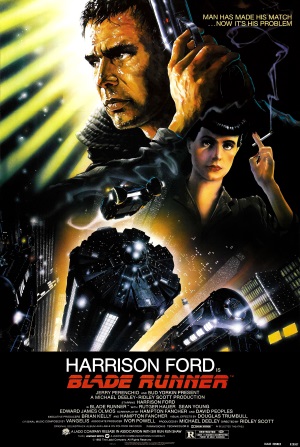
I often hear similar stories of people’s first experiences watching Blade Runner, finding the film dull but coming to appreciate it years later – my story has the same trajectory. I first tried to watch Blade Runner (of what I believe was The Final Cut) on TV in Christmas 2009, only to stop watching after half an hour due to boredom. Over the years, however, I would be compelled to return to Blade Runner several times and get more out of it with each viewing. The tech-noir world of Blade Runner is one to get lost in with its use of neon and many billboards of geishas, albeit a more depressing, dystopian one than say that of Star Wars; one in which the city of Los Angeles appears to be stuck in a state of perpetual darkness and it very frequently rains. Now when watching Blade Runner, I’m watching a movie set in the past date of November, 2019. Once again, like Star Wars, the technology present is highly contradictory, this is a world in which flying cars exist and photographs have unimaginably high pixel counts, yet they still use CRT televisions and mobile phones don’t appear to exist. It contradictions like these which we can observe in the real world just adds to the unique and fantasy aspect of the Blade Runner universe. 

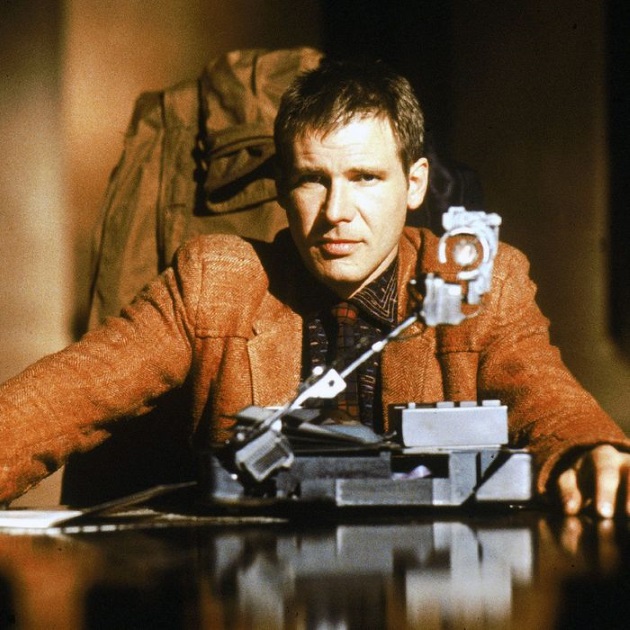
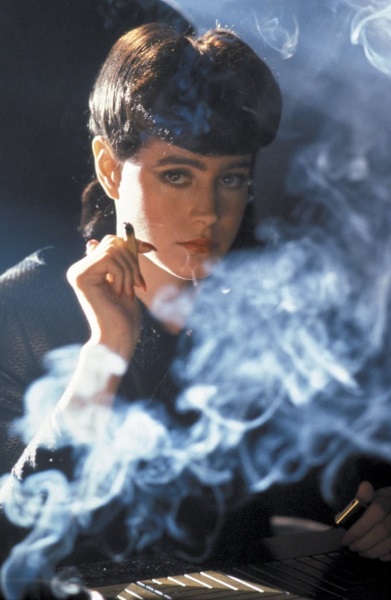
The visual style of Blade Runner has since become a massive cliché – often imitated but never equaled. It feels like every shot or background prop has a story to tell such as those many photographs in Rick Deckard’s apartment. The man-cave interior of Deckard’s apartment is perfectly suited to his loner personality, a classic world-weary noir protagonist. The film’s blurring of the lines between what is human and what is machine results in me always having to remind myself that these replicants of whose plight I’ve drawn emotional investment towards, are not humans at the end of the day. Why should I feel sorry for the vulnerable replicant Rachael with her smudged eye makeup created from her tears? Blade Runner provokes many a thought of what it means to be human. I suspect the appearance of Rachael must have come about from a desire to create an ideal woman since nobody else in Blade Runner casually dresses like a 1940’s femme fatale (I haven’t heard of anyone else note Rachael has a strong resemblance to Rosalind Russell in My Sister Eileen from 1942). Likewise, I don’t want to know if Deckard is a replicant or not, I prefer the ambiguity and the mystery along with the many unanswered questions of this universe. 

The love scene between Deckard and Rachael is one of the greatest in cinema history. The sexual tension builds up as a shirtless Deckard wipes away the blood of his face and Rachael lets her hair loose. Subsequently, the manner in which Deckard prevents Rachael from leaving the apartment as he shuts the door with his fist and then proceeds to kiss her along with the saxophone solo from the love them being as close to cheesy as it can get without it being so, brings the swoon factor up to 11. My shallow desires just wish the extended, deleted version of the scene was left in any of the version of the film (in the 80’s Sean Young got to have a sex scene with both Harrison Ford and Kevin Costner).

The effects of globalization as seen in Blade Runner present L.A. (or at the very least one portion of the city) having Japanese inhabitants as the majority population. If the filmmakers were intending to make accurate predictions of the future, the world of Blade Runner would be more likely dominated by Chinese influence. What Blade Runner does reflect accurately about our modern world is the increasingly oppressive corporate culture and the surveillance of everyday life. There are no evident signs of government in Blade Runner yet corporations rule the roast as the Mayan pyramid-shaped headquarters of the Tyrell Corporation dominates the skyline. Like Cyberdyne Systems in The Terminator and Omni Consumer Products in Robocop, 1980’s pulp sci-fi tried to warn us of the dangers of unbridled corporate power. Such power is seen turning in on itself as the film’s corporate overlord, the slimy, dubious Eldon Tyrell with his magnificent glasses succumbs to a gruesome death in the only moment of the film in which I want to avert my eyes from the screen in a classic case of the Frankenstein monster turning on its creator. It’s little often pointed out that Tyrell’s death is very similar to the murder of Mr. Gaines in The Manchurian Candidate (1962). In both films, the murders take place at night in the victim’s bedroom as they are lying in bed reading. Both characters are wearing a robe while having a chessboard, statues of animals and candles next to their beds.

Lucas and Spielberg gave special editions a bad name, but Ridley Scott’s Final Cut of Blade Runner actually shows they have a place (providing the option of viewing the original still exists). There are no pointless CGI additions and it fixes the niggling technical flaws of the original such as the shot of Roy Batty’s dove flying towards the sky. While I appreciate the Final Cut, there is a charm to those imperfections of the original, showing that even the masters can make mistakes. I will also defend the voice-over narration present in the theatrical version. It’s not up to the poetic quality of Fred MacMurray in Double Indemnity and is hokey but I find it endearingly so and does make the plot easier to follow and gives the film a bit more character (plus we get to hear Harrison Ford drop the “N” word).

Blade Runner is by no means a nihilistic film, rather it is one that shows beauty in despair (the original ending shows that green pastures apparently still exist in this world of ecological ruin). This display of goodness, truth and beauty culminates in Roy Batty’s final 42 word Tears In The Rain monologue, as the obviously Christ-like figure conjures magnificent images of Attack ships on fire off the shoulder of Orion and C-beams glittering in the dark near the Tannhäuser Gate to the magnificent score by Vangelis. The Blade Runner soundtrack is one of the few film scores in which I can listen to the entire thing (even John Williams Ladd Company jingle is awe-inspiring). It is the perfect accompaniment to walking down any urban landscapes at night (I can recall multiple mornings when I would listen to Tears In The Rain as the sun would rise back when I worked night shifts) as oneself reflects over its romantic nature and harkens for nostalgia, often and like the replicants in the movie, for memories we don’t even have. 

Woman In the Moon [Frau im Mond] (1929)

Destination Moon

I first heard of Woman in the Moon (Frau im Mond) as a child reading about it in the Newsround Book of Space. In a section of the book about science fiction movies, the film was mentioned accompanied by a photograph of the film. This picture always intrigued and stuck with me – three people and their rocket on the moon; very retro-futuristic looking. I finally saw it many years later and was not disappointed.

Woman In the Moon really does deserve the title of a unique film, the movies feels like 50’s science fiction movie, yet was released in 1929. The design of the rocket has that retro-futuristic, egg-shaped 1950’s look while the painted moon backdrops look as if they could be in a 50’s space fantasy film. Likewise actress Gerda Maurus has a very futuristic, metallic looking hairstyle. Science Fiction wouldn’t become a staple genre in cinema for another 21 years and Fritz Lang himself was to create a sci-fi movie in the 1950’s, which unfortunately never came to be. The movie also mixes together other time periods. Portions of the movie feel reminiscent of a Jules Verne story with that 19th century sci-fi aesthetic such as the apartment of Professor Mannfeldt with its vintage 19th century furniture, chairs and telescope.

Woman In the moon combines genres with a mix of espionage, melodrama, comic book sci-fi and even a helping of comedy thrown into the mix. Other moments feel like a documentary with scenes of scientists and diagrams explaining things; I love that stuff. Woman in the Moon was the first time ever (film or otherwise) in which space travel was depicted through the use of a multistage liquid fuel rocket; 40 years before man first landed on the moon. Considering this it’s a shock that this movie isn’t more widely known, especially in compassion to Lang’s previous sci-fi epic Metropolis. Even later Nazi rocket science (and eventual American rocket scientist) Wernher Von Braun acted as an advisor for the film.

The film has its Cartoony moments such as the ever cliché image of close-minded bearded scientists laughing and the insane or seemingly insane person is the one who is right but the message is clear, as Professor Mannfeldt angrily puts it “The progress of the world will not fail due to learned ignoramuses lacking in fantasy whose brains work in inverse proportion to their calcification”. The movie’s villain, on the other hand, is obviously modeled after everyone’s least favourite evil dictator Adolf Hitler; he doesn’t have a mustache but has the same parted hairstyle. Lang hated the Nazis before it was cool or before they even came to power.

The only major downside of Woman In the Moon is the run time at 2 hours and 50 minutes which I felt could have been cut down. At the 26 minutes in until 50 minute mark was a section of the film which really tried my patience with its painfully slow setting up in real time but it’s largely smooth sailing after that.

The rocket launch is something to behold with the impressive miniatures and the very gradual build up. The rocket interior is in tune with a space fantasy even with its design taking the absence of gravity in space and G-force taken into account. The actors do an effective job of conveying G-force and not coming off as laughable. When on the moon the astronauts do not wear space suits, are able to breathe on the moon and did I mention there is also gold on the moon. I assume the filmmakers intentionally created a film which combined scientific accuracy and fantasy to create a film which has a great sense of adventure. The child stowaway on the rocket represents the schoolboy adventurer in us. The moon as seen here is a fantasy land full of mountains and caverns. Plus I love and I do mean LOVE the film’s ending. Such an uplifting moment after we’re led to believe the opposite but doesn’t come off as contrived.

There are some subtitle issues on the Masters of Cinema Blu-ray release with white English text overlaying white German text.

“For the human mind, there is no never – only a not yet.”

Soylent Green (1973)

Spoiler Green

Of the major movie stars of the 20th century, one who has certainly secured his immortality with a succession of highly iconic films is Charlton Heston. Soylent Green was the last of these and the final film of what I like to call the Charlton Heston dystopian sci-fi trilogy along with Planet of the Apes and The Omega Man. Now that we have arrived in the future itself by meeting the timeline of Back to the Future Part II and with the dates of Blade Runner and Soylent Green being not far away let us bask in the dystopian wasteland Earth has become. Ok, maybe not quite.

Soylent Green was Edward G Robinson’s final film from a career spanning over 40 years, and the man is still as complete a pro as he ever was. Charlton Heston may be the main star but Robinson steals the show holding some of the best scenes in the film. Take the scene in which Robinson becomes emotional and cries at seeing beef for the first time in years; it takes a great actor to avoid such a scene becoming comical. Likewise, the interaction between Robinson and Heston is simply a pleasure to watch and his last moments on screen where some of his most affecting of his long career. This is also a role in which Robinson’s real-life personality comes through as a man of high culture and a lover of art. The apartment he shares with Heston is full of books, paint brushes, classical music is often played not to mention his character is Jewish. I do love this little sanctuary they have in a world in which crowds people are sleeping on the stairs outside their apartment. I also get the impression there is something more between them than just friendship? During the movie, they claim their love for each other in an un-ironic nature and speak intimately with each other about their personal feelings. Or is there simply just share a platonic love for each other as friends? Who knows?

There are only two uses of matte painting cityscapes throughout Soylent Green. The film shows how you can really create a believable world through the use of intimate on set shooting. I’m sure a remake of Soylent Green would feature a vast CGI city which would have none of the characters which is presented here. This is not a movie which is made for kids. Towards the end of the film, there are surprisingly horrifying scenes and of course there is the ending; an ending which has been spoiled by pop culture. The ending would have affected me more if I had not known it but are spoilers just a part of life?

The Omega Man (1971)

Apocalypse Now?

I began The Omega Man with some initial trepidation from the not so great editing (including a pointless fade away on zooming out shot) the use of sped-up footage and obvious line dubbing; thankfully after that, it gets better. It must appreciated the filmmakers clearing the streets of Los Angles with spanning, wide shots of the city in which it is deserted; no easy task. To accomplish this the filmmakers had to film during Sunday morning and due to filming at this golden hour, the deserted streets and the golden light reflecting off the buildings has a real beauty to it. I don’t know of the film’s budget but it does come off feeling like a low budget production but does so in a charming way. The campy 70’s sounding music score feels like it’s on the verge of killing the mood and being too corny but just about manages to avoid doing so.

Charlton Heston’s Nevillie feels like the predecessor to modern action movie heroes with his use of one-liners. The scene in which he pretends to negotiate with a dead salesman at a car dealership feels very Arnold Schwarzenegger. On the other hand I do find there is some Initial unintentional humour coming from seeing Heston dressed as an aristocrat and talking to a chess-playing bust of Julius Caesar but once that settles these do showcase some poignant scenes of the last man alive trying to keep himself occupied; also I do love this little world he has created for himself in his apartment. Likewise seeing the later Republican Heston watching and the enjoying the film Woodstock and even reciting lines is intriguingly odd. The Omega Man also features one of the earliest on-screen interracial kisses between black and white. I don’t know if it was intentional that a film about repopulating the Earth has an interracial romance but thankfully doesn’t have to call attention to itself.

The Omega is a perfect example of Charlton Heston’s immense screen presence and his ability to carry a movie as he spends much of the runtime alone. When I think “screen presence” several actors will pop into my head, Burt Lancaster, Kirk Douglas, Clark Gable and of course Charlton Heston.

Star Wars Episode I: The Phantom Menace (1999)

The Farce Awakens

Star Wars Episode I: The Phantom Menace is a movie I’m apprehensive to review; perhaps more than any other film ever. I only review movies if I feel I have something to interesting and unique to say. What unique viewpoint to do I have to give to the Star Wars prequels? –  possibly the three most heavily critiqued films ever. I decided to watch all three prequels again (and hopefully for the last time) in order to get a fresh perspective on them. I believe I may have some unique points of view to offer; plus I am among the populace who is addicted to discussing every aspect of George Lucas’ pop culture behemoth.

Don’t be too surprised when I tell you I hate the prequels – big shocker, right? However, The Phantom Menace is the prequel I dislike the least. The major aspect I find The Phantom Menace does have going for it over the other two prequels are the aesthetics. It comes the closest to resembling the original trilogy, if still incredibly far off. The Phantom Menace was shot on film and does feature on location filming and even some practical effects here and there, so the whole thing doesn’t come off looking like a video game as Episodes II and III did. There is a lot of eye candy to behold, such as the locations such as the Palace of Caserta in Italy (why do you want to film everything on a green screen when beautiful places like this exist in the world?), while the costume design – not something I would normally comment on – is very pleasing to the eyes. The only two scenes in The Phantom Menace which has a little bit of that excitement that I get watching the original trilogy are the pod race and final lightsaber duel between Obi-Wan, Qui-Gon and Darth Maul; an impressive display of acrobatics and is it’s not choreographed within an inch of its life like the duels in Episodes II and III. But even these few aspects of the film I do enjoy are ultimately superficial as there is no internal conflict nor am I emotionally invested.

What surprised me watching The Phantom Menace for the first time in a decade was just how incredibly frustrated I got. I’ve seen and read more reviews of this film over the years, analysing it to death and mocking every aspect of it. Watching the film again I expected to have reactions of “yeah it sucks, what else is new”, but sitting down and watching the entire thing my brain became so numb from the never-ending monotone exposition. I’m not even that keen on the John Williams score; it’s not bad by any means – far from it – but it feels too dark and moody for a Star Wars movie. As fine a piece of music as Duel of the Fates is, those booming choirs feel out of place for Star Wars. In regards to the most hated fictional character of all time, I don’t think Jar Jar is the absolute worst thing ever, I can at least tolerate him (if there’s any character in the prequel trilogy that bothers me for how ridiculous they are: its General Grievous). Plus at least he’s responsible for the only line from this film I like; “The ability to talk does not you intelligent”.

All three prequels lack the space western elements of the original trilogy, and I recall a comment that George Lucas intended The Phantom Menace to play out like a costume drama. Perhaps it’s own such a direction could have worked if you know, the execution wasn’t total pants. I can see what Lucas was perhaps going for in the story in trying to portray the fall of a democracy; the idea of radicals using political unrest as a means of coming to power – such as the Nazis using the turmoil caused by the great depression to amass power. Perhaps the empire isn’t such a bad thing, it appears under their command the universe became a more interesting place.

As someone who is interested in the relationship people have with popular culture, I find the most interesting aspect of The Phantom Menace is nothing in the film itself but rather its place in history. Think about it, the most anticipated movie of all time and it was a colossal letdown, and this occurring during the early days of the internet. What would the world of geekdom be like if The Phantom Menace actually lived up to expectations? Would an entire generation be less cynical?  Would internet culture be the same as it is today, possibly for the better?