Love Crazy (1941)

Serving the Nuts

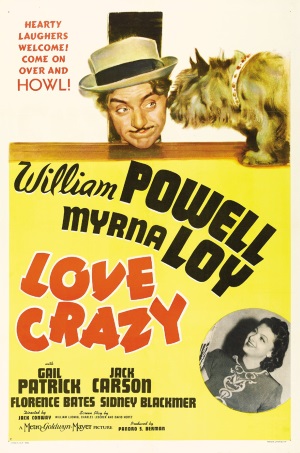
I believe every great actor should have at least one movie in which they get to go completely over the top and out of character (Barrymore in Twentieth Century, Leslie Howard in Its Love I’m After, Bogart in Treasure of the Sierra Madre, Stewart in Vertigo). For William Powell, Love Crazy provided him with his opportunity in easily the most slapstick oriented comedy ether Powell or Myrna Loy ever done; from heads being stuck in elevator doors to characters slipping on the same rug several times throughout the film. It’s not John Barrymore levels of over the top but compared to William Powell’s usual soft-spoken persona it’s pretty over the top.

Love Crazy is the William Powell show all the way, showcasing the complete range of his abilities as a comedic actor in a plot which is like a tabloid newspaper story turned into a screwball comedy; a jokey representation of mental illness which wouldn’t be politically correct by today’s standards. All the more fun then! One of the scenes from any film Powell has appeared which I feel best demonstrates his comedic timing is when he is tasked with convincing a lunacy commission of his sanity by placing shaped blocks into their corresponding holes. It’s such a basic task yet with his overzealous confidence he still manages to convincingly screw it up; it works on so many levels. Yet as the film progresses, I end up feeling particularly sorry for his character due to losing a wife like Myrna Loy and having her despise you, all over one improbable misunderstanding.

But not to undo Myrna Loy with her stand out moment being a surprisingly erotic scene with Jack Carson in which both of them are bare-shouldered and she even utters the line, “It will smell like an orgy”. On top of that, I find myself in awe that there is a straight up dick joke in this movie (“He has to have his torso free when he shoots his bow and arrow”). Of all the sneaky jokes they got past the censors I’ve heard in screwball comedies, this is one of the most unsubtle. Likewise, Gail Patrick who plays Powell’s former girlfriend appears to be a bit of a nymphomaniac; badly wanting him shortly after meeting for the first time in years despite both of them now being married, not to mention it’s his anniversary night! Just listen as the seductively tells Powell “Stevie I’m bored!”. There’s quite a bit of setting up in Love Crazy but the payoffs are worth it. Love Crazy also gets a big boost from the apartment sets designed by Cedric Gibbons. The painted backdrops of skyscrapers high in the sky and the art deco shading, it’s beautiful.

I had the benefit of going into Love Crazy unaware of the screwball hijinks which occur during the third act. If it’s not too late for you, I recommend doing the same otherwise stop reading but yes, William Powell dresses up in drag as a tall, butch woman and convincingly at that. He even goes to the length of sacrificing his trademark moustache – now that’s commitment.

The Lady Eve (1941)

So Close, Yet So Far

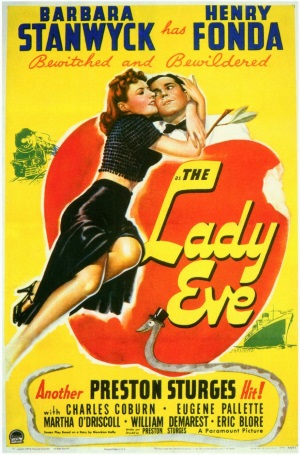
The Lady Eve is a conflicting film. The first hour is some of the most perfect romantic comedy I’ve ever seen, however, it falls apart around the one hour mark. However, what is it that makes the first hour so perfect? Firstly it didn’t take too long for me to realise that Henry Fonda and Barbara Stanwyck are one of the most flawless screen pairings ever, the perfect combination of sexy meets innocent. Watching these two I get the impression they must have been head over heels for each other. I’ve read that apparently Henry Fonda would later tell his wife he was still in love with Barbara Stanwyck, dam! But then again, after having your hair caressed by Stanwyck for 3 minutes and 51 seconds, who wouldn’t be?!

The Lady Eve is a prime example of a “How did they get away with that?!” movie. I’m not aware of what Stanwyck’s ideological or moral beliefs were but a number of her films are some of most sexually suggestive old Hollywood films I’ve seen. There’s her pre-code work such as Baby Face but in the postcode era, we have Ball of Fire, Double Indemnity and of course, The Lady Eve. Call me old-fashioned but movies were sexier when the actors kept their clothes on. Vilma Banky did more with one raised eyebrow than an entire (Warning! Problem in Sector 7G).

So where does it all go wrong, well about 50 minutes into The Lady Eve, the movie pulls my least favourite movie cliché of all time, “the liar revealed”. You know, when a character is exposed as a fraud causing a relationship to end, even though you know they’re going to get back together again by the end of the movie. Having this cliché is bad enough, however, I thought it was only a contrived modern invention but here it is in 1941. At least they don’t drag it out like any rubbish modern-day romantic comedy would.

I’ve found Preston Sturges’ films to be indiscipline, his films all have their moments of greatness but at times they delve into over the top absurdity, even by screwball comedy standards. During the later part of The Lady Eve it’s hard to buy into Stanwyck disguising herself as another woman who doesn’t look massively different from her previous self in order to win back Henry Fonda. Oh, and he buys into the charade, the dope! Part of me wished the entire movie could have just been the two of them on the boat and it would have been a perfect film, however the final third still has some hilarious moments, such as Eugene Pallette frantically banging the table demanding his breakfast, or Fonda getting his suit destroyed three times at a party, a perfectly timed slapstick gag if I’ve ever seen one.

On a second viewing of The Lady Eve, I still have the same reaction to the first hour but I did find myself more forgiving of the last third. With my love of screwball comedies and the pairing of Stanwyck and Fonda, perhaps with additional future viewings, I may become completely forgiving of the last half hour. The first hour is just that perfect.

JFK (1991)

JFK, Blown Away, What Else Do I Have To Say?

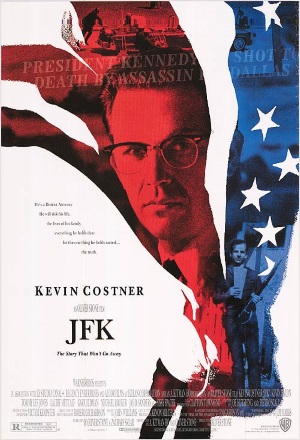
I’m aware in modern times conspiracy theories have become detrimental in discovering the actual truth (largely thanks to the internet) but I can’t deny that I just love this sort of stuff. JFK requires your utmost attention and at a runtime of three hours, it feels like the movie leaves no stone upturned (pardon the pun) in its examination and deconstruction of the Kennedy assassination. Admittedly the first time I watched JFK I didn’t understand much of what is discussed in the film. It’s a lot to digest in a single viewing but there are more intriguing theories here than an entire season of Ancient Aliens (minus the bad haircuts and awkward line delivery); but I can happily watch JFK multiple times to further understand it and eat up every single word of dialogue. I doubt we will ever need another film made about the Kennedy assassination; what highly talented filmmaker could be more passionate about the subject matter? I also highly recommend watching the director’s cut for even more conspiracy goodness to evoke the paranoia in you.

JFK is one of those movies which makes you most appreciate the art of editing, incorporating many layers of time and reels of stock footage; no scene during the movie’s three hours is edited in a standard fashion. The editing help make the film’s exposition exciting; a character may be describing an event as the scene cuts to just that in an obscured or dreamlike manner. The Mr. X sequence with Donald Sutherland is a perfect example of how to pull of engrossing exposition; plus is there a more classic cold war, spy movie type scene than meeting a suited man in the park to receive classified information. Likewise, John Williams’ theme for JFK evokes my inner patriotic American, even if I’m not American. The militaristic and at other times conspiratorial nature of the score helps make the movie as compelling as it is. The black & white scenes such as those featuring the military feel reminiscent of Seven Days In May with shades throughout of the John Frankenheimer style. I’m sure Stone must have also taken some pointers from the first movie about the Kennedy assassination, 1973’s Executive Action.

JFK continues the tradition of films such as The Longest Day in which a large ensemble cast of familiar faces and great screen presences to help guide us through the story. It’s amazing seeing different generations of actors doing some of the best work their careers and utilizing their screen personas to full effect even if many of them are only on screen for short spaces of time. Some of the figures in the story strike me as too bizarre to have been real-life people, especially David Ferrie and Claw Shaw.

I’ve always been in defense of Kevin Costner against criticisms of being a dull actor. Granted his career did go downhill in mid 90’s and has never fully recovered but in his heyday of the late 1980’s/early 90’s he was such a hot streak of films. Casting him in the role of Jim Garrison couldn’t be more perfect as Costner is much like a modern-day classic movie actor in the vein of everymen like James Stewart, Henry Fonda or Gary Cooper. He’s been most commonly compared to Cooper (the courtroom section of the film is reminiscent of Cooper’s role in The Fountainhead) although with his southern demeanor I would compare him to being a modern-day Henry Fonda. I would defy anyone to call Costner a bad actor after watching the film’s courtroom scene. Talking almost non-stop for 40 minutes and never losing my attention while exuding a stern, emotional and towards the end of the speech, a fragile voice; with his final conclusion bringing a tear to my eye.

I find Jim Garrison’s family life interesting itself, mostly from the relationship with his wife. What does he see in her? She does not support his endeavors, despite his noble cause and unlike her husband, she is susceptible to believing what the media tells her. Here is a man who spends the movie questioning and fighting the system yet has a wife with a conformist personality. I can’t say for certain what they were like in real life but the in film I grew to dislike her character.

JFK  draws no conclusions, it doesn’t prove who assassinated Kennedy and allows the viewer to make up their own mind. Stone may be often criticized for his use of a dramatist’s license but as I say with many films based on historical events; this can make for a more compelling story. Even if there are untruths present, the film can act as a gateway to wanting to discover the real story. The movie did leave me a feeling of (good) anger and is one of the films I can credit with helping to influence the way I think.

“Dedicated to the young in whose the spirit the search for truth marches on.”

Jewel Robbery (1932)

Pre-Code Jewel

***This Review Contains Spoilers***

I remember people criticizing The Wolf of Wall Street as immoral, then I’d love to see their reaction to this 83-year-old gem.

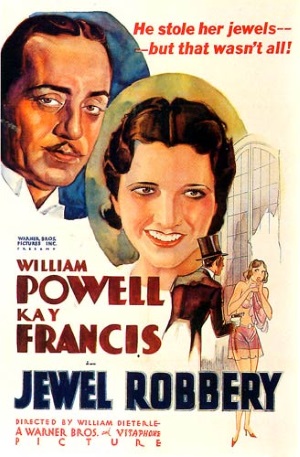
Kay Francis has one of my favourite character introductions ever, as an army of servants march to pamper her after getting up in the afternoon, lying in a bathtub, briefing showing off one leg shot up in the air then being pampered like a goddess ahead of her day of leisure. Jewel Robbery’s display of wealth would be explicit for any era, never mind the great depression. Francis’ reaction to being handed a box of jewels from Powell makes Lorelei Lee of Gentlemen Prefer Blondes look like less of a gold digger. Yes, these are shallow, superficial characters who never get punished for their actions, but that’s ok, only classic Hollywood actors could pull this off, making us enjoy rooting for characters like this. Although Francis’ character is at least self-aware of this, in one pivotal scene stating that she is shallow and weak as she leads a shallow and weak life and with a little courage she could run away from it.

William Powell is the coolest criminal ever; you would enjoy being held in a stick up by this guy. This being pre-code, a criminal is the hero of the story who deceives dim-witted guards. His methods of robbery, differentiating from what he calls “the stick ‘em up and shoot ‘em down school, no mess, no confusion” is so fascinating. Would his methods work in real life or is this just movie fantasy? He even gives his victims marijuana to calm them down. This movie waves the whole gauntlet of sex, drugs and rock ‘n’ roll. Ok, there’s no rock ‘n’ roll but there’s sex and drugs. The jewel robbery itself is so snappy and fast-paced. It takes up a large portion of the film (which at one point made me wonder if the film would be a sort of high-class version of Dog Day Afternoon) and it’s over in a jiffy.

Jewel Robbery is one of the most erotic and sexist films I’ve ever seen. Many of the scenes and dialogues are provoking in some way from Kay Francis wearing dress looks like it’s about to fall of her and exposes her backside to William Powell wrapping his arms around Francis to grab a ring of her finger; this is what you call a titillating movie. I also love Kay Francis and her girlfriend’s excited reaction to discovering a man infiltrated their house. Plus has there ever existed an actual dwelling that has an interior similar to that of William Powell’s hideout? If I ever win the lottery I am going to hand a copy of this movie to an interior decorator. Also, the newspaper which appears near the beginning of the movie is called “Weiner Journal”.

Jack Frost (1998)

He’s Snowboarding On His Flesh

When I was a kid, nothing got me and my friends more hyped up in anticipation than snow. Yep – the glorious white stuff. To us, there were few other activities as fun as playing in the snow. One major problem, however; I grew up in a country in which we only get about 3-4 days a year of significant snowfall in which it would actually settle on the ground. So when there was a significant level of snowfall, we would make the utmost use of it. Snowball fights, sledding, snow angels and of course, making a snowman.

Snowmen were a subject of my childhood fascination. Why? They just have a certain magical appeal. Whenever I would see one in someone else’s garden, I would always have to point it out, “Look, a snowman!” So when my friends and I heard about the movie Jack Frost, in which a snowman comes to life, we were psyched to see it. Although there already existed the 1982 animated short The Snowman which had a similar premise, I believe Jack Frost appealed to us more for several reasons:
-It was a movie more of our generation.
-It was live action and the snowman looks just like a real snowman we could have created ourselves.
-But most importantly, the movie was called Jack Frost. When I was younger, whenever there was a frosty night, we would always say that Jack Frost is out tonight.

So one weekend myself and one of my friends rented Jack Frost on video and we thought it was an absolute blast. However even at that age we thought there were some stupid moments, such as when Charlie is hanging over a wall of snow and he’s supposed to be in danger, yet the drop itself is tiny; or during the sledge chase sequence when two kids just happen to have a snowball the size of a boulder on standby to stop Charlie and Jack. However, the one aspect of the film we found to be the most unbelievable was in how Charlie had not got over his father’s death one year on. The reason for this is that a friend of ours had recently lost his father to an illness, yet was back in school one week later, acting as he normally would. To us, Charlie isolating himself from his friends due to his father’s death one year on seemed far-fetched. In retrospect, however, this view was short-sighted.

Regardless we could only look on in envy at just how much snow this fictional picture perfect postcard town of Medford, Colorado had. In my home country when it did snow our teachers wouldn’t even let us go outside to play in it. Yet in Jack Frost, the kids are able to go into the snow and have trench warfare battle snowball fights. Plus they don’t even wear school uniforms?! You can imagine the jealousy us kids had for our Yankee counterparts.

Several years later, I saw Jack Frost again on TV one weekend and the following Monday in school, it seems half the class also watched it and were all raving about how much we loved it; discussing our favourite moments, talking about the scenes we found to be the funniest. Even my teacher had watched it over the weekend and called it – and I quote – “a wonderful film”.

Now years later with the advent of the internet, I find out that Jack Frost is considered a terrible film and the critics trashed it. However, when watching it again after all these years it still strikes a chord with me as a pool of happy, nostalgic memories coming flooding back. But what I can I take from the film and examine now with an adult perspective?

One of the biggest criticisms I hear against the movie is that the snowman is creepy. Even Roger Ebert criticised the design with its anorexic looking twigs for arms. Well, it’s all in the eye of the beholder I guess. I also liked the design of the snowman as I think not only does he look cute but looks just like a snowman the average kid would make. The snowman was originally designed for George Clooney and I can see Clooney’s face within it. Apparently, the casting change to Michael Keaton caused major problems for the film’s SFX team. Watching my late 90’s DVD copy of Jack Frost, the CGI doesn’t look half bad. Although if I was to ever watch the film on an HD transfer perhaps it might not look as good.

Jack Frost belongs to that breed of film which was everywhere in the ’90s in which a workaholic father can’t make time for his kids. As drawn out as this cliché was in the 90s, it does raise the question – should you even have children if you’re going to dedicate yourself to a lifelong career or venture? Jack Frost does go a step further with this examination of fatherlessness with the character of Rory whom as the movie states, never saw his old man and resents it (“It sucks, it sucks big time”). Any coincidence his character is a delinquent. The father-son relationship in Jack Frost does tug at my heartstrings and yes, that ending kills me.

Many aspects of Jack Frost scream this is a late 90’s movie from those early CGI credits to the film’s emphasises on extreme sports such as hockey and snowboarding. Even the antagonist is named Rory Buck – might as well be called 90’s Mc 90’serson. Even the radio presenter at the beginning of the film states: “we got more music coming from the 70’s and 90’s. No 80’s I promise” (Boo!).

Viewing Jack Frost from a more mature perspective I am forced to suspend my disbelief at my many aspects of the film’s plot. So for starters, does the afterlife exist within the universe of Jack Frost? Where was Jack for the entire year before he came back as a snowman? Was he in purgatory? How did he suddenly find out how to change back to his human self then leave? What’s the deal with the magic harmonica? Does God himself exist in this universe?

Then there’s that whole snowboarding sequence. It’s a blast to watch even though I have to refrain from questioning how illogical it is. I already thought the conveniently placed snow boulders where stupid as a kid but I also notice how snowboards and snowbikes are all conveniently placed. But more importantly, the kids do notice that Charlie is sledding with a sentient snowman? Also, have you considered that he’s essentially snowboarding on his flesh? But who cares, this sequence is a ton of fun and Hey Now Now by Swirl 360 is a tune. That money shot of Jack Frost snowboarding in mid-air brings a smile to my face.

Rock on Jack Frost! Snow dad is better than no dad!
It’s Always Fair Weather (1955)

Stormy Weather Ahead

It’s Always Fair Weather will go down in history as the film musical which “could have been”. Had it been made a few years earlier it could have been in the same leagues as Singin’ In the Rain and On the Town but several shortcomings, some determined by the period the film was made prevent it from being so. Even the studio had that little faith in it they dumped it as a second feature alongside Bad Day At Black Rock.

It’s Always Fair Weather differs from other musicals of its time in its sombre tone with the tale of three war buddies who are reunited ten years later to find out they can’t stand each other upon discovering one is a hick, a snob and a goon. This is juxtaposed to a world of beautiful, bright colours and welcome artificiality with urban sets to die for. It’s Always Fair Weather was originally conceived as a sequel to On the Town, reuniting Gene Kelly with co-stars Frank Sinatra and Jules Munshin. However, by 1955, Munshin no longer had box office credibility while Sinatra was too big a star that the studio was unwilling to work with him. In their place, we get Dan Dailey and Michael Kidd, both of whom get the job done but lack the same electric chemistry Kelly’s On the Town co-stars possessed. Frank Sinatra in particular I find is sorely missed as I loved his three-picture partnership with Kelly in which they made an excellent comedic duo. None the less the roaster does get a big boost with the casting of the great Cyd Charisse, whom like Ann Miller in On the Town, plays a glamorous woman with contradictory personality and an encyclopedic knowledge of well, pretty much any topic.

However, I find It’s Always Fair Weather’s biggest drawback are the sections of the film which are uneventful and doesn’t have the lightning-fast pace of On The Town or Singin’ In The Rain. The film could definitely benefit from the trimming or removal of whole scenes; there is a faster-paced, snappier film in here. The film does help make up for this though in its musical numbers. It’s Always Fair Weather does showcase some of the best moments of any MGM musical with the soundtrack being one of the best in the MGM catalogue. The musical numbers and compositions are fantastic and all written for the film itself by the great Betty Comden and Adolph Green, while the majority of MGM musicals took their songs from their back catalogue as well as other stage musicals.

The five-minute Gershwin like dance number “The Binge” showcases the then-new cinemascope format by having three dancers occupy their own third of the screen as they dance and create percussion with trash can lids on their feet as they work together in great physical tandem of drunken joy. Once Upon a Time, on the other hand, is a heart aching number if there was one as the three men sing about their broken dreams while Music is Better Than Words couldn’t be more enchanting if you asked for it. The centrepiece of the film, however, is Gene Kelly’s number ‘I Like Myself’, featuring him tap dancing on roller skates, no trickery! Like Singin’ In the Rain, the number is an encapsulation of pure happiness (just look at the faces of the onlooking extras). This is of my favourite musical numbers of all time and is an unbelievable display of talent if I ever saw it. The film’s only crime in the song and dance department is the lack of a dance number between Gene Kelly and Cyd Charisse, despite one actually being filmed.

I feel widescreen technology came too late the MGM musicals which could have used it to great advantage but by 1955 musicals had already lost most of their economic viability due to the rise of television. It’s Always Fair Weather is Hollywood coming to terms with the existence of its rival television but relishes the opportunity to satirize the format as superficial and ridden with advertising.

It Happened One Night (1934)

What Is the Deal With Donut Dunking?!

***This Review Contains Spoilers***

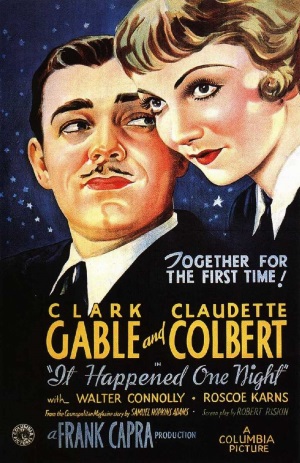
It Happened One Night was my first exposure to what I now consider to be my favourite genre of film, the screwball comedy. I’ll never forget the feeling of exuberance at watching Clark Gable run to his boss at the newspaper to pitch a story about how he’s fallen in love with a princess, such energy, such emotion; I had never felt such a way from watching a movie before. It Happened One Night is the famous and most widely seen film of its genre and I believe it deserves such an accolade; something unforgettable is happening in every scene, whether funny or tender, jam-packed little details to spot on every viewing. It Happened One Night along with Twentieth Century gave birth to the screwball comedy, but it isn’t the only sub-genre it set a standard for. The runaway princess movie, the road movie and the newspaper comedy all owe their debts to it.

In his opening scene, Clark Gable is introduced as the king; couldn’t be more adapt. Watching the movie closely I can say that everything this man says is pure gold from his art of donut dunking, art of clothes removal, the different methods hitchhike signaling and his wall of Jericho. Then it dawned on me just how Seinfeldian this movie is. Much of Clark Gable’s dialogue in this movie could be a Jerry Seinfeld stand up routine. It’s easy to see how many screwball comedies have influenced modern day sitcoms; all that’s missing is the laugh track.

Claudette Colbert is one of the most famous incumbents of The Gable Treatment; what I like to call the macho manner in which Gable treats his leading ladies. Of course for any other actor to have this characteristic they would be an unlikable brute, but because it’s Gable it works. I also have to ask did the scene in which Gable eats a raw carrot while attempting to hitch-hike with his usual confidence and cockiness inspire Bugs Bunny? Ah Gable, has never ever existed a more charismatic human being?

Indiana Jones and the Temple of Doom (1984)

Fortune & Glory

***This Review Contains Spoilers***

Ah, Indiana Jones and the Temple of Doom. One of those films which I thought was beloved for many years until the advent of the internet in which I discovered it actually gets a lot of stick. Well never fear Temple of Doom, as I am here to defend you against waves of undeserved criticism. So hold onto yo potatoes, it’s time for a controversial review of unpopular opinion.

I’ll begin my defense of Temple of Doom by discussing the movie’s two not so beloved supporting characters. First up its Short Round as delightfully played by child actor Jonathan Ke Quan. I love Short round for several reasons with the first being the endearing relationship he shares with Indiana Jones. Unlike Indy’s other companions, Short Round idolizes Indy. The moment in which Indy places Short Round’s cap on his head after freeing him from the Thuggee cult’s spell perfectly sums up their relationship and it gets me every time. Short Round saves Indy’s life on multiple occasions; In fact, sometimes I wonder how he’s even still alive without him. In comparison to a more beloved character in the series, Henry Jones senior, who almost gets Indy killed on a number of occasions thus rendering the criticism of Short Round being a hindrance to Indy invalid. But I hear you say, Short Round has an annoying voice? – Not at all. Short projects a voice of juvenile innocence and adventure. Short Round is like a kid’s fantasy, what’s cooler than getting to be Indiana Jones’ sidekick? Who wouldn’t want to be Short Round? Well, I’d rather be Indy himself, but being Short Round is the next best thing.

But how do I defend Willie Scott?! This bastion of female serotypes! Oh please, quit the feminist double standard. Outrage is none existent when a character exhibits male stereotypes (not that there should be). Shouldn’t true equality between the sexes allow for a female character to be portrayed as incompetent rather than imposing creative limitations on how women can be portrayed in fiction.

For those who call Willie annoying; well let’s agree to disagree. I’ve never found the character of Willie to be annoying and I believe one of the reasons for this is that she is punished for her selfish actions throughout the film. Her character is supposed to be unlikeable and the movie is fully aware of this by making her receive comeuppance. Willie holds some similarities with Marilyn Monroe in Gentlemen Prefer Blondes with her preoccupation with diamonds and her intention to get rich by marrying a particular wealthy gentleman, only to find out they’re a child. Just like Monroe, Capshaw displays a wide range of facial expressions and excels in her comedic timing. During the movie Willie matures, she shows concern for Indy and Short Round during the later portion of the film and even punches bad guys during the mine cart chase, a far cry from her earlier self. I love this trio of characters, so yeah, what are you going to do about it?!

Temple of Doom begins not with the build-up to an action scene but rather a musical number (with the opening shot of the gong is surely a little tribute to the Rank Organisation). I’ve never heard every rendition of Cole Porter’s Anything Goes but surely this has to be the best version of the tune with Kate Capshaw singing it in Mandarin. The superb rendition of the song along with the dance choreography, the costumes and shear sparkling on-screen, this may be the greatest musical number from a non-musical film. It might seem odd to start an Indiana Jones movie with a musical number but as it captures the 1930’s setting and exotic tone of the series so against the odds it works and works magnificently. Temple of Doom even serves as a travelogue for India with its gorgeous landscapes, accompanied by John Williams at his most exotic.

Temple of Doom is a film that doesn’t beat about the bush and gets over the top very quickly. This is another aspect that sets it apart from Raiders and Last Crusade as the action in Temple of Doom is the least plausible from the original three movies; hence why moments such as the trio escaping from the plane via jumping out of it on a rubber raft come under criticism. However, I believe there’s a fine line between action being implausible but not the point in which you can’t suspend your disbelief (yes I’m looking at you Nuke the Fridge) and I feel Temple of Doom achieves this fine line. The second half of Temple of Doom is one huge roller coaster ride with many classic B-movie and adventure serial pitfalls; a room with a descending spiked roof, a conveyor belt with a crushing roller at the end, a scene atop a rope bridge and the best of all, the mine cart chase sequence – an absolute master class of action movie filmmaking. After the trio escape from metaphorical hell, the final kiss between Indy and Willie is one of the most satisfying in all of cinema.

Temple of Doom is too juvenile you say? You’re saying juvenile like it’s a bad thing. I like all the weird creepy stuff; the bugs, the monkey brains, hearts being ripped out of people’s chests. It’s repulsive in the best sense of the word. But Temple of Doom isn’t a stupid film. No one ever seems to mention Indy’s character arc of overcoming his selfish streak. During the first half of the film, he is only concerned with obtaining his “fortune and glory”. Even after visiting the baron village and obtaining the Sankara Stones, his personal gain remains his only objective. It’s not until he sees with his own eyes the children in slave labour that he changes his ways. Likewise, people praise The Empire Strikes Back for being “dark”, why doesn’t this logic of darkness being synonymous with quality not work for Temple of Doom?

But let’s get into the real serious stuff – the film’s portrayal of Hinduism. I don’t claim to be an expert on Hinduism but I’ll attempt to the best of my ability to defend this most controversial aspect of the film. The villains of Temple of Doom, The Thuggee, were a cult who resided in India over several hundred years who would strangle travelers and steal their belongings (hence the origin of the term ‘thug’). The Thuggee were followers of the Hindu Goddess Kali, however, in Hinduism, Kali is not an evil entity, but rather the goddess of time, change and energy. As what The Thuggee believes is not what Kahali stands for, it makes the villains more interesting as they religious extremists, desecrating a faith for their own selfish gain, such as The Westro Baptist Church to Christianity or Isis to Islam. I believe the filmmakers are aware of this, as evident in the scene towards the end of the film on the dangling rope bridge. Just before Indy sends Mola Ram to his death, he utters “You betrayed Kali!”. Raiders and Last Crusade both show that the God of Christianity exists in the Indiana Jones universe. Does the spiritual power to the Shankara Stones lend legitimacy to Hinduism then?

Then you’ve got the usual crowd with their screams of “racism!”. Does the movie have a stereotypical portrayal of Indians? I don’t see Raiders or Last Crusade having such a loving portrayal of the German people but of course, they’re white so it doesn’t count. I’m sick of engaging in this game. When a film is labeled for apparent racism I think to myself, was there malicious intent behind it? Temple of Doom doesn’t give into any pretense of political correctness with its white saviour protagonist, touchy religious subject matter and stereotypical female lead; deal with it.

I consider Temple of Doom to be no less worthy of a film than Raiders or Last Crusade. Like how Temple of Doom dared to be different and the black sheep of the series, I dare not to bow to the will of popular opinion. What are you going to do about it!? For you see my opinion is always correct, except for the times when I am wrong, which is never.

Indiana Jones and the Last Crusade (1989)

Now That’s What I Call Archaeology!

***This Review Contains Spoilers***

Indiana Jones and the Last Crusade takes everything that made Raiders of the Lost Ark great to begin with and builds on top of that. Last Crusade is unquestionably my favourite of the series and the main reason for this being the role of Sean Connery as Indy’s father Henry Jones Sr, which I consider to be one of the greatest casting choices ever made. This casting was largely due to James Bond being one of the inspirations for Indiana Jones although oddly enough despite my love of Indiana Jones I’ve never been keen on the James Bond films. There’s something about father-son stories that I’ve always had a particular affection for and the relationship between Indy and his father is challenging to put into words how thematically in-depth it is. The search for the bond between father and son ends up becoming more important than the search for the grail

Their personalities differ from Henry being more of an academic and Indy being more of an adventurer (at the film’s beginning Indy is struggling to even find the time to grade his student’s papers), yet at heart, they are both giddy schoolboys. Their emotionally distant relationship is beautifully conveyed during their exchange on the airship in which Indy complains to his father about never being there for him. His father replies by asking him what does he want to talk about and Indy struggles to find a conversation point to dwell on. The tone of Henry’s response, “well what are you complaining about?!” sums it up beautifully. At the film’s climax when Henry finally calls his son Indiana rather than Junior, it gives me chills alongside his words of “Let it go” as legitimate advice I apply to many real-life situations (when has a James Bond movie had anything as remotely substantive as this?).

Their scenes together are so melancholic and full of complex emotions that further humanises the character of Indiana Jones. I really do think this may be the greatest pairing of two actors ever and when I contemplate on it. I also feel this is the best performance Harrison Ford ever gave in his career, never has he been able to convey such emotion on-screen (and impersonate and art-loving Scotsman). Ford is one of few actors who can make any normal line of dialogue into something memorable.

The Last Crusade is also a comedy classic in its own right from the North by Northwest type moments (“No ticket!”) to more slapstick-oriented gags. The Hitchcock influence even extends to borrowing a moment from The Lady Vanishes in which young Indy escapes from a train via a magician’s box. Likewise, the Forest Gump type moment in which Indy inadvertently confronts Hitler face to face is brilliant on so many levels. – It works the same way the clothes hanger scene from Raiders did.

The supporting cast of players in the Last Crusade are second to none. Indy, Henry, Sallah (John Rhys-Davies) and Marcus Brody (Denholm Elliot) are simply so much fun to watch together on screen, with the clumsy Marcus going on the adventure (whereas in Raiders he is only seen at the beginning and end of the film) also really gives Last Crusade a big boost. Even his line “The pen is mightier than the sword” always cracks me up with the manner in which he delivers it in an English gentlemanly way, or Indy Sr’s uttering of “Junior!”; music to my ears. Likewise, I’m more than happy to listen to the eloquent and well-spoken Julian Glover as Walter Donavon as himself and Harrison Ford deliver exposition and tell each other “bedtime stories” (and subsequently transform into Doc Brown just before his untimely demise). Ernest Vogel (Michael Byrne) on the other hand is a completely two-dimensional villain in the best way possible with his intimidating presence as one really evil, tall, uniformed Nazi with a powerful music cue to introduce him in any scene. He has also has one of the most comical deaths in any film ever in a bizarrely campy two-second shot on him falling towards the camera. – Even the actor playing the Grail Knight (Robert Eddison) is mesmerizing in his brief part.

If I was the make a list of my favourite action scenes in film, I swear my list would be dominated by scenes from the original Star Wars trilogy and its sister franchise. Sequences such as that on the circus train or in the belly the steel beast make such clever use of props and their surroundings. Last Crusade was one of the last blockbusters to have such extensive use of practical effects, you know, before CGI had to go and ruin everything. Two years later Terminator 2 was released and things would never be the same again. As for the film’s music, the score by John Williams is not only one of his best but one of his most moving, perfectly capturing the melancholic and deep thematic nature of the film. I regularly listen to the movie’s soundtrack in moments of personal reflection, it’s that powerful.

Indiana Jones and the Last Crusade is one of those rare films which gives me everything I could ask for in a motion picture. Like the filmmakers specifically made it just for me, encapsulating everything I love about cinema. The final shot of the four characters riding off into the sunset brings to an end to a decade of filmmaking like no other.

I Wanna Hold Your Hand (1978)

Fanboys

***This Review Contains Spoilers***

I Wanna Hold Your Hand follows a group of fanboys and fanboyettes who put all modern day internet fan communities to shame on a journey to meet their idols. There’s a lot of screaming, shouting and overall hyperactivity with its lightning fast, 1930’s-like repertoire and I watched the entire film with the biggest smile on my face. Crazy over the top comedies like these are my forte and I Wanna Hold Your Hand is one of the most energetic I’ve ever seen. The film begins with Ed Sullivan (Played by Ed Sullivan look-a-like Will Jordan) on the set on his own show off air introducing the movie Patton style, setting the stage for just how big The Beatles had become by January 1964. This was only three months after the assassination of JFK but this is never mentioned in the film. The film shows how Beatlemania provided an escape from the real world.

Wendie Jo Sperber and Eddie Deezen (a voice forever implanted into my head from years of childhood exposure on Dexter’s Laboratory) as Rosie and Ringo (as he calls himself) are the two most hyperactive of the cast members. I find it adorable that these two, one a social outcast and the other puppy dog eyed time bomb being brought together through their insane Beatles’ worship; especially when Rosie tells Ringo, “You’re the only boy I feel I can really talk to”. Likewise, Pam Mitchell’s (Nancy Allen) scene in which she invades The Beatles’ hotel room as she strokes and licks Ringo Star’s guitar neck is erotic cinema at its finest (she even takes off her engagement ring and puts t into her shoe beforehand, nice touch). The cinematography really puts a lot of emphases put on that guitar neck only for Ringo himself to later comment that it’s covered in sticky stuff, sexy. I’d do the same thing as well, not with The Beatles but there are other celebrities of whom I was in their hotel room I would be rubbing my face against everything they’ve touched and don’t lie, you would too.

I Wanna Hold Your Hand also features Paul Newman’s daughter Susan Kendall Newman in her second of three film appearances. Her character of Janis is introduced complaining to the manager of a record store that “all I see around the store is Beatle albums. What about Bob Dylan, Joan Baez, don’t they get equal floor space?”; back to the USSR for you Ms. Frankfurt School. It seems every generation has their socially righteous trying to ruin everyone’s fun although the movie does manage to make her into a sympathetic and more likable character as the film progresses. The film even gives significant attention to Beatles’ haters. One of the film’s greasers Tony (Bobby Di Cicco) hates The Beatles so much he abuses Beatles’ fans and even attempts to sabotage their appearance on The Ed Sullivan Show; talk about haters gonna hate.

The other stroke of genius is while we do see The Beatles they are never shown in their entirety. Rather the film takes the Ben-Hur Jesus approach in which only the bodies are seen but never the faces. If they actually did cast actors to play The Beatles in which we see their faces it would take you out of the film. There are even shades of American Graffiti present in I Wanna Hold Your Wand with its early 1960’s setting, young people, rock music and cars.

I Wanna Hold Your Hand marked the directorial debut of Robert Zemeckis. Like in Zemeckis’ Forrest Gump years later, I Wanna Hold Your Hand combines fiction surrounding a historical event. Much of the film’s cast being reunited the following year in the comically less successful 1941 (directed by Steven Spielberg) despite also being written by Zemeckis and Bob Gale. I’ve always considered Zemeckis to be a much better director than Spielberg.

I Wanna Hold Your Hand captures that feeling of having such a strong devotion to something. As you become increasingly attached to these characters you feel that if they really did miss The Beatles performance on The Ed Sullivan Show then their lives really wouldn’t be worth living.