Jewel Robbery (1932)

Pre-Code Jewel

***This Review Contains Spoilers***

I remember people criticizing The Wolf of Wall Street as immoral, then I’d love to see their reaction to this 83-year-old gem.

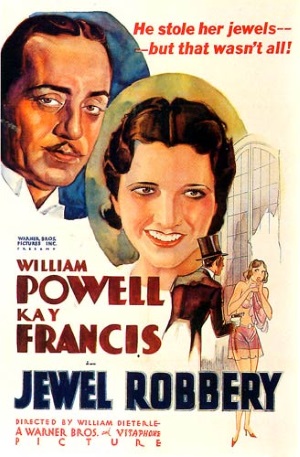
Kay Francis has one of my favourite character introductions ever, as an army of servants march to pamper her after getting up in the afternoon, lying in a bathtub, briefing showing off one leg shot up in the air then being pampered like a goddess ahead of her day of leisure. Jewel Robbery’s display of wealth would be explicit for any era, never mind the great depression. Francis’ reaction to being handed a box of jewels from Powell makes Lorelei Lee of Gentlemen Prefer Blondes look like less of a gold digger. Yes, these are shallow, superficial characters who never get punished for their actions, but that’s ok, only classic Hollywood actors could pull this off, making us enjoy rooting for characters like this. Although Francis’ character is at least self-aware of this, in one pivotal scene stating that she is shallow and weak as she leads a shallow and weak life and with a little courage she could run away from it.

William Powell is the coolest criminal ever; you would enjoy being held in a stick up by this guy. This being pre-code, a criminal is the hero of the story who deceives dim-witted guards. His methods of robbery, differentiating from what he calls “the stick ‘em up and shoot ‘em down school, no mess, no confusion” is so fascinating. Would his methods work in real life or is this just movie fantasy? He even gives his victims marijuana to calm them down. This movie waves the whole gauntlet of sex, drugs and rock ‘n’ roll. Ok, there’s no rock ‘n’ roll but there’s sex and drugs. The jewel robbery itself is so snappy and fast-paced. It takes up a large portion of the film (which at one point made me wonder if the film would be a sort of high-class version of Dog Day Afternoon) and it’s over in a jiffy.

Jewel Robbery is one of the most erotic and sexist films I’ve ever seen. Many of the scenes and dialogues are provoking in some way from Kay Francis wearing dress looks like it’s about to fall of her and exposes her backside to William Powell wrapping his arms around Francis to grab a ring of her finger; this is what you call a titillating movie. I also love Kay Francis and her girlfriend’s excited reaction to discovering a man infiltrated their house. Plus has there ever existed an actual dwelling that has an interior similar to that of William Powell’s hideout? If I ever win the lottery I am going to hand a copy of this movie to an interior decorator. Also, the newspaper which appears near the beginning of the movie is called “Weiner Journal”.

Jack Frost (1998)

He’s Snowboarding On His Flesh

When I was a kid, nothing got me and my friends more hyped up in anticipation than snow. Yep – the glorious white stuff. To us, there were few other activities as fun as playing in the snow. One major problem, however; I grew up in a country in which we only get about 3-4 days a year of significant snowfall in which it would actually settle on the ground. So when there was a significant level of snowfall, we would make the utmost use of it. Snowball fights, sledding, snow angels and of course, making a snowman.

Snowmen were a subject of my childhood fascination. Why? They just have a certain magical appeal. Whenever I would see one in someone else’s garden, I would always have to point it out, “Look, a snowman!” So when my friends and I heard about the movie Jack Frost, in which a snowman comes to life, we were psyched to see it. Although there already existed the 1982 animated short The Snowman which had a similar premise, I believe Jack Frost appealed to us more for several reasons:
-It was a movie more of our generation.
-It was live action and the snowman looks just like a real snowman we could have created ourselves.
-But most importantly, the movie was called Jack Frost. When I was younger, whenever there was a frosty night, we would always say that Jack Frost is out tonight.

So one weekend myself and one of my friends rented Jack Frost on video and we thought it was an absolute blast. However even at that age we thought there were some stupid moments, such as when Charlie is hanging over a wall of snow and he’s supposed to be in danger, yet the drop itself is tiny; or during the sledge chase sequence when two kids just happen to have a snowball the size of a boulder on standby to stop Charlie and Jack. However, the one aspect of the film we found to be the most unbelievable was in how Charlie had not got over his father’s death one year on. The reason for this is that a friend of ours had recently lost his father to an illness, yet was back in school one week later, acting as he normally would. To us, Charlie isolating himself from his friends due to his father’s death one year on seemed far-fetched. In retrospect, however, this view was short-sighted.

Regardless we could only look on in envy at just how much snow this fictional picture perfect postcard town of Medford, Colorado had. In my home country when it did snow our teachers wouldn’t even let us go outside to play in it. Yet in Jack Frost, the kids are able to go into the snow and have trench warfare battle snowball fights. Plus they don’t even wear school uniforms?! You can imagine the jealousy us kids had for our Yankee counterparts.

Several years later, I saw Jack Frost again on TV one weekend and the following Monday in school, it seems half the class also watched it and were all raving about how much we loved it; discussing our favourite moments, talking about the scenes we found to be the funniest. Even my teacher had watched it over the weekend and called it – and I quote – “a wonderful film”.

Now years later with the advent of the internet, I find out that Jack Frost is considered a terrible film and the critics trashed it. However, when watching it again after all these years it still strikes a chord with me as a pool of happy, nostalgic memories coming flooding back. But what I can I take from the film and examine now with an adult perspective?

One of the biggest criticisms I hear against the movie is that the snowman is creepy. Even Roger Ebert criticised the design with its anorexic looking twigs for arms. Well, it’s all in the eye of the beholder I guess. I also liked the design of the snowman as I think not only does he look cute but looks just like a snowman the average kid would make. The snowman was originally designed for George Clooney and I can see Clooney’s face within it. Apparently, the casting change to Michael Keaton caused major problems for the film’s SFX team. Watching my late 90’s DVD copy of Jack Frost, the CGI doesn’t look half bad. Although if I was to ever watch the film on an HD transfer perhaps it might not look as good.

Jack Frost belongs to that breed of film which was everywhere in the ’90s in which a workaholic father can’t make time for his kids. As drawn out as this cliché was in the 90s, it does raise the question – should you even have children if you’re going to dedicate yourself to a lifelong career or venture? Jack Frost does go a step further with this examination of fatherlessness with the character of Rory whom as the movie states, never saw his old man and resents it (“It sucks, it sucks big time”). Any coincidence his character is a delinquent. The father-son relationship in Jack Frost does tug at my heartstrings and yes, that ending kills me.

Many aspects of Jack Frost scream this is a late 90’s movie from those early CGI credits to the film’s emphasises on extreme sports such as hockey and snowboarding. Even the antagonist is named Rory Buck – might as well be called 90’s Mc 90’serson. Even the radio presenter at the beginning of the film states: “we got more music coming from the 70’s and 90’s. No 80’s I promise” (Boo!).

Viewing Jack Frost from a more mature perspective I am forced to suspend my disbelief at my many aspects of the film’s plot. So for starters, does the afterlife exist within the universe of Jack Frost? Where was Jack for the entire year before he came back as a snowman? Was he in purgatory? How did he suddenly find out how to change back to his human self then leave? What’s the deal with the magic harmonica? Does God himself exist in this universe?

Then there’s that whole snowboarding sequence. It’s a blast to watch even though I have to refrain from questioning how illogical it is. I already thought the conveniently placed snow boulders where stupid as a kid but I also notice how snowboards and snowbikes are all conveniently placed. But more importantly, the kids do notice that Charlie is sledding with a sentient snowman? Also, have you considered that he’s essentially snowboarding on his flesh? But who cares, this sequence is a ton of fun and Hey Now Now by Swirl 360 is a tune. That money shot of Jack Frost snowboarding in mid-air brings a smile to my face.

Rock on Jack Frost! Snow dad is better than no dad!
It’s Always Fair Weather (1955)

Stormy Weather Ahead

It’s Always Fair Weather will go down in history as the film musical which “could have been”. Had it been made a few years earlier it could have been in the same leagues as Singin’ In the Rain and On the Town but several shortcomings, some determined by the period the film was made prevent it from being so. Even the studio had that little faith in it they dumped it as a second feature alongside Bad Day At Black Rock.

It’s Always Fair Weather differs from other musicals of its time in its sombre tone with the tale of three war buddies who are reunited ten years later to find out they can’t stand each other upon discovering one is a hick, a snob and a goon. This is juxtaposed to a world of beautiful, bright colours and welcome artificiality with urban sets to die for. It’s Always Fair Weather was originally conceived as a sequel to On the Town, reuniting Gene Kelly with co-stars Frank Sinatra and Jules Munshin. However, by 1955, Munshin no longer had box office credibility while Sinatra was too big a star that the studio was unwilling to work with him. In their place, we get Dan Dailey and Michael Kidd, both of whom get the job done but lack the same electric chemistry Kelly’s On the Town co-stars possessed. Frank Sinatra in particular I find is sorely missed as I loved his three-picture partnership with Kelly in which they made an excellent comedic duo. None the less the roaster does get a big boost with the casting of the great Cyd Charisse, whom like Ann Miller in On the Town, plays a glamorous woman with contradictory personality and an encyclopedic knowledge of well, pretty much any topic.

However, I find It’s Always Fair Weather’s biggest drawback are the sections of the film which are uneventful and doesn’t have the lightning-fast pace of On The Town or Singin’ In The Rain. The film could definitely benefit from the trimming or removal of whole scenes; there is a faster-paced, snappier film in here. The film does help make up for this though in its musical numbers. It’s Always Fair Weather does showcase some of the best moments of any MGM musical with the soundtrack being one of the best in the MGM catalogue. The musical numbers and compositions are fantastic and all written for the film itself by the great Betty Comden and Adolph Green, while the majority of MGM musicals took their songs from their back catalogue as well as other stage musicals.

The five-minute Gershwin like dance number “The Binge” showcases the then-new cinemascope format by having three dancers occupy their own third of the screen as they dance and create percussion with trash can lids on their feet as they work together in great physical tandem of drunken joy. Once Upon a Time, on the other hand, is a heart aching number if there was one as the three men sing about their broken dreams while Music is Better Than Words couldn’t be more enchanting if you asked for it. The centrepiece of the film, however, is Gene Kelly’s number ‘I Like Myself’, featuring him tap dancing on roller skates, no trickery! Like Singin’ In the Rain, the number is an encapsulation of pure happiness (just look at the faces of the onlooking extras). This is of my favourite musical numbers of all time and is an unbelievable display of talent if I ever saw it. The film’s only crime in the song and dance department is the lack of a dance number between Gene Kelly and Cyd Charisse, despite one actually being filmed.

I feel widescreen technology came too late the MGM musicals which could have used it to great advantage but by 1955 musicals had already lost most of their economic viability due to the rise of television. It’s Always Fair Weather is Hollywood coming to terms with the existence of its rival television but relishes the opportunity to satirize the format as superficial and ridden with advertising.

It Happened One Night (1934)

What Is the Deal With Donut Dunking?!

***This Review Contains Spoilers***

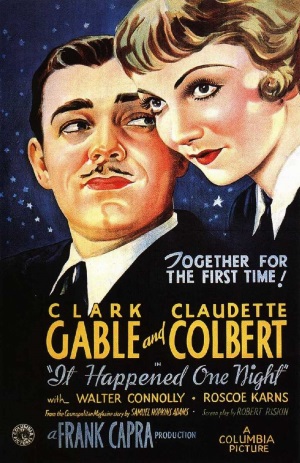
It Happened One Night was my first exposure to what I now consider to be my favourite genre of film, the screwball comedy. I’ll never forget the feeling of exuberance at watching Clark Gable run to his boss at the newspaper to pitch a story about how he’s fallen in love with a princess, such energy, such emotion; I had never felt such a way from watching a movie before. It Happened One Night is the famous and most widely seen film of its genre and I believe it deserves such an accolade; something unforgettable is happening in every scene, whether funny or tender, jam-packed little details to spot on every viewing. It Happened One Night along with Twentieth Century gave birth to the screwball comedy, but it isn’t the only sub-genre it set a standard for. The runaway princess movie, the road movie and the newspaper comedy all owe their debts to it.

In his opening scene, Clark Gable is introduced as the king; couldn’t be more adapt. Watching the movie closely I can say that everything this man says is pure gold from his art of donut dunking, art of clothes removal, the different methods hitchhike signaling and his wall of Jericho. Then it dawned on me just how Seinfeldian this movie is. Much of Clark Gable’s dialogue in this movie could be a Jerry Seinfeld stand up routine. It’s easy to see how many screwball comedies have influenced modern day sitcoms; all that’s missing is the laugh track.

Claudette Colbert is one of the most famous incumbents of The Gable Treatment; what I like to call the macho manner in which Gable treats his leading ladies. Of course for any other actor to have this characteristic they would be an unlikable brute, but because it’s Gable it works. I also have to ask did the scene in which Gable eats a raw carrot while attempting to hitch-hike with his usual confidence and cockiness inspire Bugs Bunny? Ah Gable, has never ever existed a more charismatic human being?

I Wanna Hold Your Hand (1978)

Fanboys

***This Review Contains Spoilers***

I Wanna Hold Your Hand follows a group of fanboys and fanboyettes who put all modern day internet fan communities to shame on a journey to meet their idols. There’s a lot of screaming, shouting and overall hyperactivity with its lightning fast, 1930’s-like repertoire and I watched the entire film with the biggest smile on my face. Crazy over the top comedies like these are my forte and I Wanna Hold Your Hand is one of the most energetic I’ve ever seen. The film begins with Ed Sullivan (Played by Ed Sullivan look-a-like Will Jordan) on the set on his own show off air introducing the movie Patton style, setting the stage for just how big The Beatles had become by January 1964. This was only three months after the assassination of JFK but this is never mentioned in the film. The film shows how Beatlemania provided an escape from the real world.

Wendie Jo Sperber and Eddie Deezen (a voice forever implanted into my head from years of childhood exposure on Dexter’s Laboratory) as Rosie and Ringo (as he calls himself) are the two most hyperactive of the cast members. I find it adorable that these two, one a social outcast and the other puppy dog eyed time bomb being brought together through their insane Beatles’ worship; especially when Rosie tells Ringo, “You’re the only boy I feel I can really talk to”. Likewise, Pam Mitchell’s (Nancy Allen) scene in which she invades The Beatles’ hotel room as she strokes and licks Ringo Star’s guitar neck is erotic cinema at its finest (she even takes off her engagement ring and puts t into her shoe beforehand, nice touch). The cinematography really puts a lot of emphases put on that guitar neck only for Ringo himself to later comment that it’s covered in sticky stuff, sexy. I’d do the same thing as well, not with The Beatles but there are other celebrities of whom I was in their hotel room I would be rubbing my face against everything they’ve touched and don’t lie, you would too.

I Wanna Hold Your Hand also features Paul Newman’s daughter Susan Kendall Newman in her second of three film appearances. Her character of Janis is introduced complaining to the manager of a record store that “all I see around the store is Beatle albums. What about Bob Dylan, Joan Baez, don’t they get equal floor space?”; back to the USSR for you Ms. Frankfurt School. It seems every generation has their socially righteous trying to ruin everyone’s fun although the movie does manage to make her into a sympathetic and more likable character as the film progresses. The film even gives significant attention to Beatles’ haters. One of the film’s greasers Tony (Bobby Di Cicco) hates The Beatles so much he abuses Beatles’ fans and even attempts to sabotage their appearance on The Ed Sullivan Show; talk about haters gonna hate.

The other stroke of genius is while we do see The Beatles they are never shown in their entirety. Rather the film takes the Ben-Hur Jesus approach in which only the bodies are seen but never the faces. If they actually did cast actors to play The Beatles in which we see their faces it would take you out of the film. There are even shades of American Graffiti present in I Wanna Hold Your Wand with its early 1960’s setting, young people, rock music and cars.

I Wanna Hold Your Hand marked the directorial debut of Robert Zemeckis. Like in Zemeckis’ Forrest Gump years later, I Wanna Hold Your Hand combines fiction surrounding a historical event. Much of the film’s cast being reunited the following year in the comically less successful 1941 (directed by Steven Spielberg) despite also being written by Zemeckis and Bob Gale. I’ve always considered Zemeckis to be a much better director than Spielberg.

I Wanna Hold Your Hand captures that feeling of having such a strong devotion to something. As you become increasingly attached to these characters you feel that if they really did miss The Beatles performance on The Ed Sullivan Show then their lives really wouldn’t be worth living.

How To Steal a Million (1966)

Precious Venus!

***This Review Contains Spoilers***

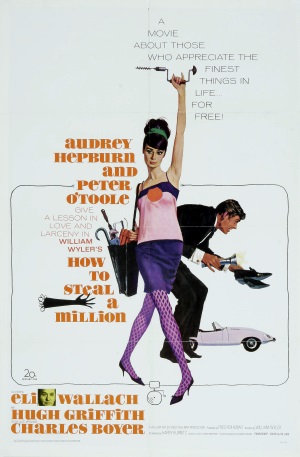
William Wyler is one of my very favourite directors and this being his third last film of a forty year career is a testament to the phenomenal director he was. Wyler didn’t direct many comedies, and with a comedy as perfect as How To Steal a Million that’s a crying shame. In fact, the last straight-up comedy he directed was 31 years earlier with The Gay Deception and the Ernst Lubitsch inspired The Good Fairy. How To Steal a Million defiantly owes something to Ernst Lubitsch. The character’s interactions have that Lubitsch touch while the European setting and the high society elegance are unmistakably Lubitsch. Speaking of elegance, does this movie have style! At the beginning of the film, we see Audrey Hepburn driving an unusually small car, wearing sunglasses and all white apparel; setting the tone for one heck of an eye-pleasing film.

Since How to Steal a Million was made after the demise of Hollywood’s production code and the character’s we’re rooting for are essentially criminals it did surprise me that they didn’t let the character’s get away with their actions at the end of the film. Peter O’Toole (one of Hepburn’s few age-appropriate leading man) shows that he could be as suave and debonair as the likes of William Powell. I often say this with a lot of primarily dramatic actors; I wish he could have done more comedies. It can’t be easy to ask the person whose house you were in the process of robbing to give you a lift home in a perfectly convincing manner.

The robbery process itself makes want to shout “genius” at the screen. The manner in which the heist is pulled of is so inventive and suspenseful as all hell. This was the days before CCTV so their plan probably wouldn’t work nowadays. How to Steal a Million is one of the rare comedies which is consistently funny from start to finish; almost without a laugh-free minute.

Hot Fuzz (2007)

Proper Action and Sh*t

***This Review Contains Spoilers***

Hot Fuzz is my favourite comedy of the new millennium as well as in my top 5 favourite films of said era. I already thought Shaun of the Dead itself was a perfect film yet Hot Fuzz is even better. There are so many film and pop culture references, inside jokes and foreshadowing ranging from the subtle to the more obvious. Just how long does it take to write a movie this layered? It’s like Bad Boys meets The Vicar of Dibley meets The Wicker Man. British comedy has long been about quality over quantity, just look at the small episode count of British sitcoms or films by Aardman Animations which employee a similar style of humour to Hot Fuzz; there is more comedy in this one film than several Hollywood comedies combined. The pacing and consistency of the jokes in Hot Fuzz are perfect, never is there more than 10 seconds that I’m not laughing. For me, the best laugh was saved until the end when the swan attacks the police officer in the car.

Those moments when Danny (Nick Frost) asks Nicholas Angel (Simon Pegg) about films he has seen; just how many times have I been in this situation in real life when someone names films one by one (usually junk food films) and when you say you haven’t seen one they keep going onto you about it. Angel himself manages to be a likable character despite his overt political correctness but for me, Timothy Dalton steals the show. He really is one of the last of his kind as a Shakespearean trained actor who can play these types of debonair villains; here he just has the smuggest look on his face.

It’s easy for a film to mock bureaucracy but this seems to be one film which speaks in its favour, then again how many films can make the act of filling out paperwork look exciting. The film’s use of fascism and the concept of “The Greater Good” (the greater good!) as a theme surprisingly is highly thought-provoking.

Hot Fuzz satirizes action movies by being grounded in reality and with Danny’s misconceptions between fantasy and reality yet at the same time also celebrates them. Having an action movie with British police officers, set in a small English town and full of Hollywood action movie tropes; the concept works on so many levels – likely because there doesn’t exist a tradition of cop movies in the UK. Plus having the bad guy’s hideout being an outlet for an actual British supermarket chain is another stroke of brilliance. There’s just something refreshing and satisfying watching these Hollywood clichés spoofed in a British manner. Action movies have never been a favourite genre of mine, especially this brand of shaky cam, fast cut action, but the action scenes here are legitimately edge of your seat thrilling. The film’s use of CGI blood is my only complaint but when a film is this amazing I can look past this one flaw. Thank you, Edgar Wright and Simon Pegg for improving the greater good of British cinema (the greater good!).

Holiday (1938)

Is This Where the Club Meets?

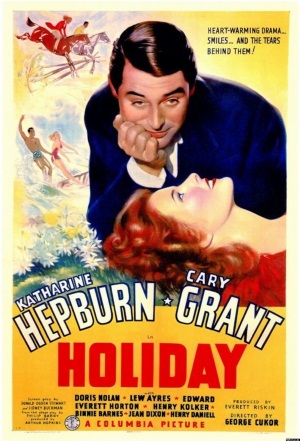
Holiday is my favourite Cary Grant film and my favourite of Cary Grant & Katharine Hepburn’s partnership. Between this, Bringing Up Baby and The Philadelphia Story it’s almost like having to choose my favourite child; yes all three are that good but ultimately Holiday is the most beloved of my offspring. I find Kate & Cary to be one of the five greatest instances of chemistry I’ve seen between an actor and actress (my other selections being Astaire & Rogers, Powell & Loy, Stewart & Sullivan and Fonda & Stanwyck), even preferring them to the longer running Tracy-Hepburn partnership.

However, the two stars aren’t actually romantically engaged throughout Holiday, with Johnny Case (Grant) preparing to get married to Julia Seaton (Doris Nolan), the sister of Linda Seaton (Hepburn). This dynamic in which Linda is more passionate about her sister’s relationship than Julia herself and the obvious feelings she has for Johnny is a much more interesting and complex dynamic than the more standard romance. Linda is far more interesting than her comparably dull sister. The whole time I’m thinking to myself Kate & Cary are beyond perfect for each other in this coming together of two intellectuals.  – I simply don’t want to see them being involved with anyone else.

I feel Cary Grant has never looked more youthful than he does in Holiday and even gets a rare opportunity to show off his acrobatic skills, with Hepburn even getting in on the action. I’ll also take this opportunity to mention that man sure could wear clothes like no other. The discussions Kate & Cary engage on what their characters want to do with their lives are so deep and profound. The difficulty of finding their place in life, the obstacles of trying to live it and not wanting to miss out on an ever-changing world full of ideologies and ideas, all while trying to get by with an optimistic attitude despite the imperfections in their life. It’s hard to take it all in on and decipher in a single viewing, which makes Holiday one of my most life-affirming movies.

Katharine Hepburn, on the other hand, had the opportunity in her career to play roles which reflected her real-life personality as a non-conformist oddball. In Holiday she is the black sheep in a wealthy, business-driven family. Linda is a character who comes up with what her family describes as “little ideas” which they outright dismiss. Her “little idea” of throwing an engagement party for Julia in their childhood playroom (a playroom which looks so much fun! You could almost set the entire movie in there) on New Year’s Eve is one of the most powerful and harrowing moments I’ve seen in any film. The feeling of being an outsider and a lonely at that (I know I’ve been there before) has never been captured more effectively on celluloid than it has when Cary Grant and Katharine Hepburn are dancing alone in the playroom and welcome in the New Year. I do make it an aim during a future new year’s eve to watch Holiday with the film synchronized with real time so I can introduce the new year at the exact same time the character’s in the movie do so.

The High Sign (1921)

Keaton Komedy Klassic

The ‘High Sign’ has to be my favourite Buster Keaton short and it just so happens to be the first independent film Keaton produced, giving birth to his iconic unnamed character. However, Keaton was reportedly disappointed with the short and didn’t release it until the following year, instead making One Week his first solo short. I question why though as I feel the premise of The ‘High Sign’ is one of Keaton’s most inspired and even worthy of being used as the set-up for a feature – it’s true what they say, the artist is often wrong about their own work. The opening prologue of The High Sign states “Our hero came from Nowhere– he wasn’t going Anywhere and got kicked off Somewhere”; and considering his superhuman stunts, Keaton is like an alien who just landed on Earth. This opening prologue reminds me of a statement Roger Ebert made in his review of The General; “[Keaton] seems like a modern visitor to the world of silent clowns”.

The ‘High Sign’ packs in so much gags and material into its 21-minute runtime, chocked full of blink-and-you-miss-it moments in the story of a wannabe gangster who also becomes a bodyguard for the man he is assigned to kill. The gag involving Keaton’s set-up with the dog, the meat and the string (it’s hard to explain) is reminiscent of something Mr. Bean would conjure while the short also features the earliest example I’ve seen in a film of a recurring gag with the high sign itself, a secret signal between the members of a gang known as The Blinking Buzzards. Keaton even messes with the audience’s expectation for comic effect by walking past a banana peel on the ground only to not slip on it. Furthermore, the short’s finale is a real “How did they do that?” sequence. The house with its traps and secret hatches is an astounding piece of set design and when four rooms on duel levels appear in the frame at once in which Keaton jumps back and forth between them, it reminds me of a 2D platform video game. I was laughing, in awe and was even shocked (when the gangster’s neck is closed on the door) all at once. All of this takes place within a nostalgic, Coney Island-like setting (filmed at Venice Pier in Los Angeles) and even features the appearance of a man at the 11 minutes mark who bears quite a resemblance to that other great silent comic, Charlie Chaplin (intentional or not?). I’ll say it now and I’ll say it again; the genius of Buster Keaton will never cease to amaze me.

Grace Quigley (1984)

Seymour! Mother!

Old Hollywood stars who were still working by the 1980’s where usually appearing in films dealing with old age (On Golden Pond, Tough Guys, The Whales of August). Grace Quigley was one such film and would be Katharine Hepburn’s last starring role in a theatrical film. The movie’s alternative title is ‘The Ultimate Solution of Grace Quigley’ although I’m assuming that title is less commonly used since it echoes a certain 20th-century atrocity.

Starring alongside Nick Nolte, Grace Quigley has a Harold and Maude element of a young man and an old woman becoming an unlikely team but the Hal Ashby comparison doesn’t end there as I’ve read several sources stating he was originally set to direct the project. The plot of the film involves retired widow Grace Quigley and hitman Seymour Flint getting together through a series of events (and eventfully he adorably starts calling her mom) and starting their own assisted suicide enterprise.  Yes, that’s the plot. Grace Quigley is one of my favourite dark comedies with much of the film’s humour coming from the characters talking so casually about killing themselves as if it’s something they do every day as well as the inclusion of possibly the happiest funeral ever.

The film has a pro-assisted suicide message with one scene involving Grace’s neighbour played by William Duell telling Seymour about dying with dignity and her unwillingness to go to a retirement home as well as “dying in front of a TV set”. In one of the more serious moments of the film, Grace takes Seymour to a retirement home to show him the horrors. I applaud the film for having the courage to make these unapologetic statements about one’s right to take their own life and society’s treatment of the elderly.  As Grace Quigley was a pet project for Katharine Hepburn she must have strongly believed in the issues raised in the film (and a sequel was even planned!).

I also recommend looking up Grace Quigley’s UK VHS cover art. The film I not actually that action-packed (although there is one brief car chase) but I still say it is the single greatest piece of home video artwork ever created.