Sometimes a Great Notion (1970)

Sometimes a Great Motion Picture

***This Review Contains Spoilers***

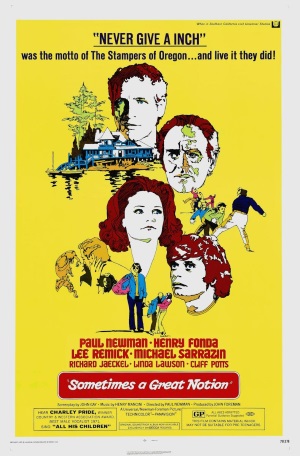
There is no overarching plot in Sometimes a Great Notion yet I was still engaged with the life of this family with their ongoing effort to try and make a living and their own family dilemmas all occurring among the beautiful forest scenery of Oregon. This is a man’s movie reminiscent of the male bonding films from Howard Hawks such as Only Angels Have Wings and Tiger Shark.

Henry Fonda plays a character called Henry so I like to imagine his interactions on set with Paul Newman occur just like they do in the movie. I’ve also often championed Henry Fonda’s unsung abilities as a comedic actor and here he provides the film with some great moments of comic relief. Michael Sarrazin gives the most interesting performance though as the girly man Leeland Stamper who doesn’t fit in with the rest of the men largely due to his long hair. There’s a quiet confidence to his character though as he is unbothered by the remarks of the other men and eventfully wins their respect, by how? Winning a game of the ever manly sport of football.

The logging scenes themselves are actually quite suspenseful, seeing men who are putting their lives in danger in order to make a living, you’re expecting someone to get injured or killed at any time and that brings me to scene in the film which left the greatest impression on me. There are two death scenes towards the end of the film. First, there’s Henry Fonda’s death which is sad, itself but that is but nothing compared to the death of Richard Jaeckel; I was thinking about this scene for days after watching the film and it’s even more powerful watching it a second time as I’m waiting in dread for the scene to arrive. For starters, the character is trapped under a log while the tide is slowly rising and he spends the whole time joking about it and when he is eventually submerged in the water he can only stay alive through constant mouth to mouth resuscitation until help shows up to move the giant log. I can’t imagine a more terrifying situation a person could be in; you can possibly get rescued and live but in order to do so you must remain completely calm; one mistake and you’re a goner. This one of the most harrowing things I’ve ever seen in a film. I doubt I will ever see a more intense death scene or one so difficult to watch.

Sleuth (1972)

It Was Only a Bloody Game

***This Review Contains Spoilers***

I believe the title of Sleuth may be misleading. When I first approached it I wasn’t aware of the stage play it was based on and thought the film was going to be a standard “whodunit?” and thus wasn’t expecting much from it. I couldn’t have been more wrong. Watching it I soon discovered it to be a different film entirely, a giant mind game, a battle of wits and a tale of revenge. I’ve never seen a film quite like Sleuth before. The exploits between Michael Caine and Laurence Oliver trying to outwit each other with the plot’s many twists, surprises and under the direction of Joseph L. Mankiewicz’ (a master at handling dialogue) makes for a film that’s hard to forget.

Watching this film I quickly came to realize that Caine and Olivier may be the only two cast members throughout, which had me thinking if they could carry the film to the very end by themselves it will be nothing short of an acting marvel, so I was disappointed when the movie introduced what appeared to be a third cast member, Alec Cawthrone as Inspector Doppler; I felt the movie was making a mistake by doing so. That was until it turned out that Inspector Doppler was Michael Caine in disguise the whole time, yes, there’s no such actor as Alec Cawthrone, he was simply created for the film’s credits. I’m not sure how many people will be as perceptible as I was but the movie successfully fooled this viewer. On second viewing I can clearly see Caine through the disguise but I’ll always have the memory to cherish of being spellbound the first time round from seeing Caine taking off all that makeup, which itself makes up appreciate the art form. Sleuth actually has a fake cast list in the opening credits in an attempt to fool the audience; this includes three other nonexistent actors, one of which is named after the character Eve Channing from Joseph L. Mankiewicz’ earlier film All About Eve. Up until the film’s very last scene in which police sirens and knocking on the door can be heard, I was on the edge of my seat hoping the movie would not introduce another cast member.

I’ve always liked Michael Caine but Sleuth greatly increased my respect for him, while also making me a fan Laurence Olivier; their ability to carry this film is nothing short of phenomenal. Milo Tindle is one of Caine’s more effeminate roles, a hairdresser who even takes joy in wearing a piece of women’s clothing at one point. Olivier, on the other hand, is the given the opportunity to have tons of fun with his role of Andrew Wyke, doing impressions and playing dress up with another grown man and with all those gadgets, gizmos and games everywhere, it’s always a pleasure to look into the background of Andrew Wyke’s manor. Likewise, the humor that comes from seeing a man being convinced that dressing as a clown is the way to go when doing a staged crime, has me laughing nonstop through the entire charade.

The Shop Around the Corner (1940)

The Other Jimmy Stewart Christmas Movie

The Shop Around the Corner was the first Ernst Lubitsch film I saw and as soon as the characters started interacting with each other I instantly knew this was a guy who knew how to handle dialogue in what is referred to as the so-called ‘Lubitsch Touch’. With such levels of subtly, this is the kind of movie that needs to be watched multiple times and gets better every time you do so. Often there will be a verbal joke in which I am unaware it even is a joke and it will take a few seconds to catch onto it. Most of Lubitsch’s films were set in Europe as this was where he was from. The shop of Shop Around the Corner is in Budapest, Hungary. The world this movie is set was on the brink of destruction in 1940 but there is no mention of this in the film. Just like how the film harkens back to a more peaceful time it also acts like a nostalgia portal to a time before the internet or big corporate businesses. A shop which is a physical, hands-on and above all a communal experience. The shop is a world onto its own populated by unforgettable characters.

Like Lubitsch, most of Margaret Sullavan’s movies also took place in Europe, I don’t know of the reason for this, however; a big coincidence or did she deliberately choose to star in movies with European settings? James Stewart and Margaret Sullavan aren’t remotely Hungarian but classic Hollywood movies aren’t exactly known for their realism in this regard. I also find it humorous how Klara is able to get a job by walking into a store and proving she is capable of selling items; if only it were that easy in real life!

The Shop Around the Corner is one of the prime examples of the classic “they hate each other but are really in love”; in fact, they really hate each other. Stewart’s Alfred Kralik is actually a real asshole; he’s brash and very opinionated. Likewise, Margaret Sullavan isn’t a sexy, glamorous Hollywood star; Klara Novak is a down to Earth, intellectual. As the movie progresses you so badly want these two characters to end up together to the point that it hurts. These aren’t two performers with great chemistry, these are two performers with incredible lifelike chemistry which blends the dividing line between fiction and reality. If ever there was an on-screen couple how where made for each other, this is it.

Sherlock Jr. (1924)

Silent Perfection

I’m not a silent film aficionado, I’m more of a tourist when it comes to this era of filmmaking. Sherlock Jr. is the only silent film I’ve ever awarded a perfect five-star rating and I doubt I will ever come across another silent movie as fun, thrilling, inventive or as mind-blowing as Sherlock Jr.; in my view Buster Keaton’s crowning achievement. Most of Keaton’s silent output is great but even by his impeccable standards, Sherlock Jr. goes beyond the call of duty. It’s more surreal and avant-garde than his other work with Keaton plays a wannabe detective who gets to go into the cinema screen and live out his fantasy as a great detective. Like an audience member watching a movie, Keaton’s character gets to escape the real world and be what you can’t be in real life. Sherlock Jr. captures the magic of cinema like few other films have and at an economic length of only 44 minutes, it’s a film you can pop on any time.

The special effects on display here blow my mind every time. Just how did he do that stuff? Part of me doesn’t want to know in order to keep the mystery alive. Perhaps a special effect isn’t so special if you look at it and can and immediately know who they did it. CGI can take a back seat! These are true special effects. Keaton’s trademark of physical humor and stunt work is on full display here with the film’s climactic chase sequence being nothing short of astounding. It is my second favourite high-speed pursuit in a movie after the final car chase in The Blues Brothers. The gags and stunts in this film never cease to amaze me and always take me by surprise no matter how times I watch the film. I also must give props to the fantastic jazzy, noir-like score of the Thames Silent’s print of the film, and is it just me or is that James Bond music at exactly 39 minutes and 56 seconds in?

You know all the cliché terms people throw around in movie reviews: “timeless”, “classic”, “ahead of its time”. If there was ever a movie which completely deserved them then this is it.

Rope (1948)

Is Murder an Art?

Rope is one of those rare movies which is totally engrossing within less than five minutes, no doubt in my top 5 films by the master himself. Hitchcock successfully recreates the theatrical experience for the big screen. The set of Rope looks a bit fake and washed out and even the colour cinematography has a washed out feel to it, this all being part of the charm of course. The actors strand in unnatural positions when talking, avoiding having their back facing the audience when speaking; unnatural for real life that is, normal for the warped reality of a stage play. Above all, the entire movie takes place in real time through a series of ten minute takes and all this happens while there is a dead body in the room.

The characters played by Farley Granger and John Doll, as well as their teacher (James Stewart), hold a Nazi-like ideology that murder is “an art a few superior beings should be allowed to practice”, rather than those such as say, people who are Harvard undergraduates. The character’s discussion on the justification for murder is chilling as they make it sound scarily convincing. Rope is based a true story from the 1920’s and adapted into a play in 1929 although it’s clear the movie is set during the period it was made due to the fashions and the mentioning of movie stars from the era. It does seem unlikely in the aftermath of the atrocities during the Second World War that people would be so openly discussing such fascist ideas which were more common in the United States during the 20’s and 30’s.

The movie is about homosexuality although I didn’t catch onto this. I’m not the best person when it comes to identifying gay characters unless they’re really gay (hey sisters!). I’ve heard criticism of Stewart being miscast in the role as he apparently doesn’t make a convincing gay character thus the homosexual love triangle from the play is not present in the film. Judging the film on its own merits however Rope is a major step in his evolution as an actor, away from his gawky roles he was known for up until this point. His breakdown at the end is one of the acting highlights of his career and gives me the chills watching it.

Raiders of the Lost Ark (1981)

The Return of the Great Adventure!

***This Review Contains Spoilers***

Indiana Jones is my second favourite movie character of all time. My number one favourite is Han Solo. Yes, the same actor played my first and second favourite movie characters. I don’t care how many mediocre movies Harrison Ford may appear in during his later career, that’s like eternal levels of respect and a miracle that this is even the case.

The character of Indiana Jones is the ultimate escapist fantasy. A tough hero who goes on adventures around the world when he feels like it to obtain relics, escapes life and death situations, thwarts the bad guys and gets the girl in the end. Even his action moves are so identified with his character (e.g., climbing underneath the back of a moving vehicle then holding onto it with his whip).

Yet Indy is still human like the rest of us because of his overzealous confidence, thinking he’s several steps ahead of the bad guys when he is not, his ability to make mistakes and his irrational fear of snakes. If there’s a scene which I feel sums up the character of Indiana Jones, it’s when he pulls out a gun on the sword-wielding Arab, a moment which wasn’t even supposed to be the film (likewise that clothes hanger gag is also truly the product of genius minds). Making the character an unassuming nerdy professor is the other stroke of genius and making him a Clark Kent like figure; It’s the biggest contrast of personalities, yet entirely believable. Just look at any Han vs. Indy debate for people pulling every facet of this character’s personality apart but you can’t blame them. Would Harrison Ford have had the career he had if it wasn’t for Raiders? Or would he have faded away like his co-stars in a galaxy far far away?

Does Raiders of the Lost Ark have the best character introduction of all time? The opening of the film tells you everything you need to know about the character of Indiana Jones, as well as having the hairs stand up on your back – Just that boulder alone permeates our culture. Raiders of the Lost Ark is one of those movies which everyone has seen, even those who haven’t seen it. So many frames in the film are ingrained into the subconscious of film buffs and the general public alike. I feel what makes a film moment iconic is when you’re pondering to yourself as you watch it of ways it could be parodied of spoofed; there’s no shortage of that in Raiders.

Nazis are the ultimate cinematic bad guys and this was even more poignant in 1981 than today when survivors of the Second World War were still alive. Even Ronald Lacy as Thot is no less scary with his baby face. The movie captures and emphasises the fear of Nazis and their quest for world domination; “The army which carries the Ark before it…is invincible”. Yet the film’s climax seems to state that within the Indiana Jones universe, the Judeo Christian God exists or at the very least some higher power.

There are shots in Cairo in Raiders which feel very Lawrence of Arabia and I’m not talking about the grand landscape shots. Likewise, in Lawrence of Arabia, there are moments which I could swear could have been a shot from Raiders of the Lost Ark. As for the music, I can remember listening to John Williams’ The Raider’s March when I was younger simply to lift my mood and inspire me. From the beauty of Marion’s theme, the excitement of the desert chase music to the otherworldly Ark theme, how can one argue John Williams isn’t the greatest film composer of all time? With all the Indiana Jones movies, I will watch the entire end credits just to listen to the score.

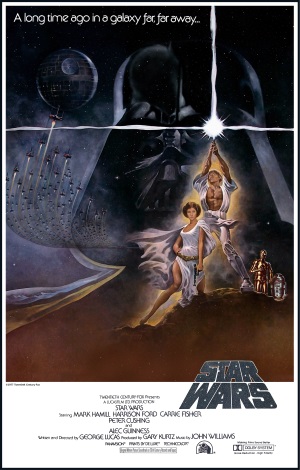
The genius behind Raiders of the Lost Ark is the same stroke of genius which made Star Wars so great; I believe it’s all to do with simplicity. They took such a simple B-movie level concept and glorified and made it larger than life. Spielberg and Lucas did it first and better than anyone has since and that’s why these movies have such a widespread appeal and endure the way they do.

The Petrified Forest (1936)

This Is How The World Ends, Not With a Bang But With a Whimper

***This Review Contains Spoilers***

When I first watched The Petrified Forest I was at an unsure time in my life; fearful of the future and with my own sense of individualism and artistic ambitions. Watching Leslie Howard as Alan Squier, a failed artist who eventually takes his own life so a young girl could be the artist he never was made me fearful and depressed of what my own future held in store for me. I felt for this character to the point that it hurt because I was worried that someday I could become that character, perhaps not to that extreme but destined to a similar fate. Gabrielle (Bette Davis) on the other hand is stuck in a rut and dreams of going to France. No one in The Petrified Forest has much to look forward to; even the old man played by Charlie Grapewin gets very excited by the prospect of gangsters being nearby. Anything to create some excitement in the middle of the desert, excitement which doesn’t wain when he’s being held hostage by them. At the time when I watched this film and I was dealing with the uncertainty of if I would ever leave my hometown or would I always be stuck here. Few other films have ever had characters which spoke so directly to me.

The atmosphere in The Petrified Forest is intense enough that I can forgive the not so seamless transitions between real-life locations and the sets. With little to no use of non-diegetic music, the sound of a windstorm is more than enough to emphasize the prison of which the characters reside. I also highly recommend checking out Heat Lightning from 1934 which contains many similarities to The Petrified Forest in its setting and atmosphere as well as characters and plot points.

The Petrified Forest’s most notable contribution to cinema is the breakthrough role of Humphrey Bogart as Duke Mantee, a role in which he has never been more terrifying. I generally don’t think of Bogart as an actor who is scary but here he is a guy I would not want to be stuck in an elevator with, even with that distinct walk with his slouch and his arms bent in that manner as the dangle. – In most cases this would look ridiculous by Bogart makes it work. Bogart’s acting career had been marred with failure up until this point with this likely being his final chance to make it in Hollywood and no doubt must have fueled his performance. I know a film is good when I have to think and contemplate which actor (Howard or Bogart) gave the better performance.

How often do you get to see gangsters and intellectuals involved in such profound conversations? Howard and Bogart play characters whom are worlds apart yet develop a mutual respect for each other as they discover they share a bond with their individualism (also look out for Bogart’s head being framed over a moose head so it looks like he has antlers). Fascinating characters (all with such unique dynamics between each other) in a fascinating story is already one of the most important things I could ask for from a movie, even better when they affect me on a personal level.

The People Vs. George Lucas (2010)

A Sad Devotion to an Ancient Religion?

In this day and age when people use pop culture as an extension of themselves, it surprises me there haven’t been more documentaries like this (how about a documentary about the decline of The Simpsons?). I hate what has happened to the Star Wars franchise beginning with the special editions in 1997 as much as the next fan, and The People Vs. George Lucas helps ventilate the anger but it is so much more than that. It isn’t just mindless Lucas bashing but does give the man a fair shake.

The documentary raises many thought-provoking points of speculation about the man. Does he believe that what he’s doing to Star Wars is the right thing? Is he getting revenge on a franchise which turned him into the thing he hated and promised himself he would never become, a corporate entity. It goes to show you how the man is a much of an enigma as the characters in his films, as pointed out in the documentary, the rise and fall of George Lucas parallels Anakin Skywalker’s descent to the dark side. By the end of the documentary, I felt as one of the fans interviewed puts it, “I love/hate George Lucas”. The other major debate raised in the documentary is that of who owns art, the artist or the public and does the public have the right to the material of its own culture?

You don’t have to start a Star Wars related conversation before people start talking about their disdain for the prequels or the changes to the special editions, yet no official Star Wars documentary is certainly going to address this, nor do I doubt this documentary would be shown at the annual Star Wars convention Celebration.

The People Vs. George Lucas showcases a large range of fans from the mature to the more childish, to those defending Lucas. The documentary both celebrates fan culture as well as makes fun of it, whether intentional or not (I wonder if the guy who compares Lucas to a Holocaust denier regrets it?). My favourite part of the documentary is the section which perfectly captures the anticipation and undaunted optimism towards the release of The Phantom Menace and the following disappointment and disenchantment.

Intercut between the interviews are an astounding showcase of fan films (recreating scenes from the movies, telling their own Star Wars stories and those ridiculing George Lucas). This along with the perfect balance between the more serious debates related to artistic ethics all the way to the more trivial, such as whether or not George Lucas raped people’s childhoods, makes The People Vs. George Lucas immensely entertaining to watch, as I’ve now done so several times, making this my personal favourite documentary.

The Ox-Bow Incident (1943)

The Mob Doesn’t Think. It Has No Mind of Its Own. The great Spencer Tracy said in Fury!

***This Review Contains Spoilers***

When I think to myself what are the most pessimistic films, The Ox-Bow Incident is one of the first to come to mind. This is the type of film you never forget. Whenever I hear a story in the news related to mob mentality, I always think ‘The Ox-Bow Incident’! In the same way how any news story of political corruption or ineffectiveness makes me think Mr Smith Goes to Washington. The eerie music throughout the film sets the tone that something bad is going to happen.

This is the type of film that needs public exposure. It showcases how people can be pack animals who will rally behind something whether or not it’s true; demanding quick, speedy justice regardless of the consequences, with an ending which is a pessimistic punch to the gut, making you feel bad about humanity. The characters having no patience for the legal system and bend the law to fit their own agendas by allowing a deputy sheriff to deputise others. The result: three men are lynched on flimsily evidence that later turn out to be innocent. And if that wasn’t bad enough; the man they were accused of murdering is actually still alive. Remember just how easily false information can spread – do you hear that internet?

All the cast members of The Ox-Bow Incident have their moment in the sun, although it’s Dana Andrews is the one of who steals the show for me – just what you expect for a man threatened with lynching for a crime he is not proven to have committed. The hung bodies themselves don’t appear on screen as this would have been too graphic for the time. Only their shadows appear which is no less a powerful image.

Henry Fonda’s character is like the man in the painting in the saloon who is about to reach out for a woman – “In reach but can’t do anything about it”. Henry Fonda was not a producer on The Ox-Bow Incident but it’s likely had more of a role than just an actor. At the age of 14, Fonda’s father took him to witness the lynching of a young black man accused of rape – an event which had a profound impact on him, so it’s clear the material of The Ox-Bow Incident was of prime interest to him. Even in the film’s trailer he appears as himself talking about the book and film, and states “it’s not ethical for an actor to talk about a picture he’s in”. Yikes, times have changed!

Lynching was still prevalent in 1943 and the movie takes a jab at southerners with much of the posse being southern stereotypes. One of them even says at one point “Down in Texas where I come from we just get a man and string him up”, and even the unofficial leader of the posse Major Tetley wears a Confederate uniform.

The movie also packs a punch with its critique on machismo. The character of Major Tetley tries to make himself out to be more than he is while trying pathetically to be manly and tough. He tries to make a man out his effeminate and possibly gay adopted son (Tetley refers to him at one point as a “female boy”) by forcing him to be part of the lynching mob; needless to say things end in a tragic state. The son barely utters a word throughout the film until the end in which he gives a monologue to his father on what a depraved animal he is – such a release of anger. Likewise, Jane Darwell plays an annoying loud-mouthed old hag (ugh, that laugh) who is essentially one of the guys and believe you me: you just want to tape her mouth shut.

At only 75 minutes the film doesn’t screw around and gets straight to the point. The only disruption in the film’s pacing is a subplot regarding Henry Fonda’s character and his ex-girlfriend. I haven’t got any answers to how this is relevant to the rest of the plot. Westerns are not my favourite genre so to enjoy one they have to be incredibly well done or stand out of the crowd. In The Ox-Bow Incident, the western setting is merely a backdrop. The film has a low budget complete with obviously fake backdrops but it’s unlike anything else being made in Hollywood at the time. The film I found it held the most resemblance towards was Paths of Glory but preceding it by 14 years. The world wasn’t ready for The Ox-Bow Incident in 1943 – but is it still ready?

On Golden Pond (1981)

My Knight In Shining Armour

On Golden Pond deserves the title of “something you don’t see every day”.  Movies which deal with old age don’t usually become box office hits in a world obsessed with being young, yet On Golden Pond became the 2nd highest grossing film of 1981. Plus it stars two elderly actors who hadn’t appeared in a major box office picture in over a decade.

Despite their six decades in the industry, not only was it the first time Henry Fonda and Katharine Hepburn starred in a film together but they the first time they had even met each other. I never ceased to be amazed by the longevity of the careers of these two actors, especially Henry Fonda, whom I consider to have the most impress careers of any actor I’ve come across, scoring great films in every decade from the 30’s right up to the 80’s. On Golden Pond would be his last film and what a way to end a career. On Golden Pond reflects Fonda’s real-life relationship with his children. Reportedly the man was emotionally distant from his children, as are characters of Norman and his daughter Chelsea (Jane Fonda) in On Golden Pond. It makes you wonder how much of the interactions between the Fondas in the film are genuine with their intentionally forced and un-naturalistic manner of speaking to each other. Yet Norman will accidentally utter Chelsea’s name at several points showing that deep down he really cares about her. Also, what’s up with the bikini shots Jane Fonda? Was she trying to promote her exercise videos?

Norman Thayer actually reminds me of my own grandfather in how he enjoys screwing with people’s minds, such as the scene in which his future son in law tries to ask him if he would have a problem with having sex with his wife in their house.  Norman Thayer seems like a stereotypical old man at first but we grow to empathize with his character. Just look at that battered old face of his which manages to say so much while his cranky, grump, smart-aleck old man shtick helps the ease the likeability of his character. Norman is a man nearing the end of his life played by a man who literally was nearing the end of his life. Compared to Henry Fonda’s appearance in the film Meteor which he stared in two years earlier, he aged quite a lot in that short period of time.

Katharine Hepburn is one badass old lady in On Golden Pond. Just look at the scene in which jumps of a boat and into a lake to save her husband and nephew and doing her own stunts too. She also reportedly told Jane Fonda on set that she hated her but watching their scenes together you’d never know it but she’s Kate, she can hate whoever she wants. Plus it’s nifty to hear old stars curse, as well as flipping the bird. Norman and Ethel Thayer represent the old couple I believe most people would strive to be, married for decades but still madly in love with each other as ever.