The Mad Genius (1931)

Emphasis on the Word Mad

I feel like no other decade seems to have as many obscure gems lost to time as the 1930’s; case in point, The Mad Genius. Coming out in the same year as the iconic adaptations of Frankenstein, Dracula, and Dr. Jekyll & Mr. Hyde; but in my humble opinion, The Mad Genius is a better and more intriguing film than any of those.

The opening of The Mad Genius does a superb job at setting a time and place; central Europe in the early 20th century. There is an impeccable level of detail in creating the world of a traveling performer; with the falling of the rain, the wind and the sound of horse and carriage taking full advantage of sound technology to create a world. Equally as impressive is Vladimar Ivan Tsarakov’s (John Barrymore) Berlin theatre and the large-scale stage set with hints of German expressionism throughout and the widespread use of music in the soundtrack, unlike other early talkies.

John Barrymore is (unsurprisingly) mesmerising as Vladimar Ivan Tsarakov (quite a name), one of the most repulsive characters he ever played as he spends the movie spewing pompous and at times mad scientist like dialogue. He has a misogynistic attitude towards women and is even seen ogling up the skirts of his dancers, in one of the film’s very pre-code elements. He is even a drug dealer, although the word drug is never used in the film nor is it identified what substances appear in the film. In one scene in which he refuses to deal drugs with the stage director played by Luis Alberni, I love his summary on drugs when he throws them into the fire; “If I drop this, you will be free, but you will suffer of course, but in the end, you will be happier than you could ever dream”. Likewise In one of the movie’s comic highlights, there is an early use of profanity in the film; “It’s unbelievable that there’s any human being living, who should be such a stupid ass”.

One of the many interesting observations in The Mad Genius is the combination of elements from other movies. The plot itself is derivative of Barrymore’s previous horror outing Svengali, while Tsarakov’s desire to create a great ballet dancer out of a young boy is a variation on Dr. Frankenstein (which the movie itself alludes to). When Tsarakov is wearing on overcoat he is bent over like Quasimodo; Barrymore’s facial appearance is very similar to that of Bela Lugosi in White Zombie, likewise, his voice is reminiscent of Lugosi’s Dracula. The theatre setting has vibes of The Phantom of the Opera and perhaps most interestingly are the elements of The Red Shoes with the film’s inclusion of ballet and the themes of going to extremes for one’s art. Could Powell and Pressburger have taken inspiration from The Mad Genius?

The Omega Man (1971)

Apocalypse Now?

I began The Omega Man with some initial trepidation from the not so great editing (including a pointless fade away on zooming out shot) the use of sped-up footage and obvious line dubbing; thankfully after that, it gets better. It must appreciated the filmmakers clearing the streets of Los Angles with spanning, wide shots of the city in which it is deserted; no easy task. To accomplish this the filmmakers had to film during Sunday morning and due to filming at this golden hour, the deserted streets and the golden light reflecting off the buildings has a real beauty to it. I don’t know of the film’s budget but it does come off feeling like a low budget production but does so in a charming way. The campy 70’s sounding music score feels like it’s on the verge of killing the mood and being too corny but just about manages to avoid doing so.

Charlton Heston’s Nevillie feels like the predecessor to modern action movie heroes with his use of one-liners. The scene in which he pretends to negotiate with a dead salesman at a car dealership feels very Arnold Schwarzenegger. On the other hand I do find there is some Initial unintentional humour coming from seeing Heston dressed as an aristocrat and talking to a chess-playing bust of Julius Caesar but once that settles these do showcase some poignant scenes of the last man alive trying to keep himself occupied; also I do love this little world he has created for himself in his apartment. Likewise seeing the later Republican Heston watching and the enjoying the film Woodstock and even reciting lines is intriguingly odd. The Omega Man also features one of the earliest on-screen interracial kisses between black and white. I don’t know if it was intentional that a film about repopulating the Earth has an interracial romance but thankfully doesn’t have to call attention to itself.

The Omega is a perfect example of Charlton Heston’s immense screen presence and his ability to carry a movie as he spends much of the runtime alone. When I think “screen presence” several actors will pop into my head, Burt Lancaster, Kirk Douglas, Clark Gable and of course Charlton Heston.

Ben-Hur (1959)

You Truly Are The King Of Kings

Metro Goldwyn Mayer hadn’t created a production this big since Gone with The Wind some twenty years earlier. Ben-Hur was created with the intent of lifting the studio out of financial trouble, yet somehow along the way art managed to be created. With the gloriously pompous opening credits set to the backdrop of The Creation of Adam by Michelangelo and the booming horns of Miklos Rozsa’s score, the stage is set. During the early scenes of Ben-Hur, I get the satisfaction of knowing that everything in front of the camera is real and had to be assembled, such as every single extra in those trails of Roman soldiers which go back as far as the eye can see. Ben-Hur was William Wyler’s Cecil B. DeMille picture, well certainly thematically. Technologically Ben-Hur is an incredibly different film to those made by DeMille. The films of DeMille’s where largely staged despite their epic scope which does work in its own way and while I’m not trying to dismiss The Ten Commandments (it is my favourite biblical epic) it can’t be denied Wyler is a far superior craftsman and that comes through in Ben-Hur; his filling of the frame is more rich and vibrant with a great sense of depth of field. At nearly four hours long, Ben-Hur is the perfect example of how to pace a movie of long length; it feels shorter than it is.

Ben-Hur was only one of a handful of movies shot using the MGM Camera 65; an extremely wide aspect ratio. The wide lens is not just for grand sweeping shots, it helps make the intimate, close up moments more immense and make the actors more godlike. Any close up of only one actor in the middle of the frame with an out of focus background looks majestic. Ben-Hur seems to be a movie largely remembered for just its spectacle, which is a shame. It is also a movie of rich layered vibrancy, evoking the senses and full of emotion.

The story also includes that age-old idea of one’s destiny being by a seemingly insignificant event. If that tile didn’t fall off the roof during the Roman parade and killed the governor then things may have turned out very differently. I also love Jack Hawkins’ words of “You have the spirit to fight back, but a good sense to control it”, and “[hate] That’s good, hate keeps a man alive; it gives him strength”; two more additions to my book of life advice from movie quotes.

People will be quick to dismiss Charlton Heston as a ham actor. He’s a classically trained actor, over the top and boisterous at times (in a good way) but so was Laurence Oliver yet everyone gives him a free pass; I guess when you’re the star of mainstream, blockbuster films then you don’t garner as much respect. The style of acting is not everyone’s cup of tea, but I relish in it.

One of the reasons why the famous chariot race is so great is because the action is real; people were actually put in danger’s way for the creation of art. There is no music during the race; just primarily the sound effects of the chariots and horses storming across the ground with the cheers from the immense crowd of spectators nor was any rear screen projections used; it’s all the real deal. The filmmakers brought 2,000 years ago back to life; nine minutes of cinema history in which your eyes are truly glued to the screen; the chariot race is one of the reasons why the 1959 film version of Ben-Hur will always be the definitive version. If anyone thinks they can do a chariot race which is better then they are fooling themselves. Imagine if Hollywood remade Ben-Hur with a CGI chariot race, that would be really awful, wouldn’t it? Oh wait, never mind. The ship battle sequence on the other hand, while superb I do feel the battle in the 1925 version of Ben-Hur is more effective in which lifeboats full of extras were used rather than the remake’s use of miniatures and rear projection shots. Not to mention the 1925 sequence is more brutal, with people being tied to the front of ships and snakes are catapulted into enemy boats.

Even as someone who is not religious I can’t deny the power of the film’s religious moments such as the scene of Jesus giving Judah water and the Roman guard being unable to whip him, and even the birth of Jesus appears very dreamlike. Even the use of miracles as a device to resolve plot points doesn’t hurt my enjoyment of the film such as the section of the movie at the Leper colony; a powerful and disturbing pair of sequences in which people segregated from the rest of society with a debilitating illness. Yet is it not an easy way out when the leprosy of Judah’s mother and sister are cured instantly via a miracle? Regardless, such use of Deus Ex Machina does not hurt my enjoyment of Ben-Hur.

The Yakuza [ザ・ヤクザ/Za Yakuza] (1974)

Perhaps You’ve Heard of the Yakuza, the Poison Fists of the Pacific Rim. The Japanese Mafia!

***This Review Contains Spoilers***

In the audio commentary for The Yakuza, director Sydney Pollack speaks of what attracted him to the project, that he wanted to create a film which examines the clash between western and eastern cultures. In particular, the opposing view the two share on forgiveness. The Christian ethic in the West believes that confession absolves one of guilt and sin, whereas in Japanese culture, forgiveness is something you must earn; if you cause pain, then the only way to atone for it is to inflict pain upon yourself. As protagonist Harry Kilmer (Robert Mitchum) is described at one point in the film, “When my brother spoke of you as a unique stranger, I took it to mean that you were a westerner who had values consistent with our own, that a man pays his own debts, discharges his own obligations, that they are all that make him a man”.

Kilmer is a World War II veteran who remained in Japan after the war and fell in love with a Japanese woman, Eiko Tanaka (Keiko Kishi). I find it difficult to imagine a better choice for the role of Harry Kilmer than Robert Mitchum. The ultra-cool, world-weary actor (who still retained a magnificent mane of hair in his old age) carries a real level of gravitas. An icon of film noir and someone who was often cast in movies about the war in the Pacific, his casting in this neo-noir on the seedy underworld of Japanese gangsters is a perfect marriage of actor and role.

The Yakuza is a love letter to Japanese cinema. You couldn’t ask for a non-Japanese production about Japan to be more respectful, thoroughly researched and authentic than The Yakuza. The opening credits themselves are reminiscent of the film Kaidan (1964), while the names of the Japanese actors appear in the traditional last name, first name format. The score by Dave Grusin is itself magnificent, combining eastern and western influences, delivering a real sense of aching beauty as it plays alongside scenes of the bustling, neon-lit Tokyo streets. The filmmakers clearly took full advantage of the Japanese locations at their disposal; the Kyoto International Conference Centre is an incredible piece of architecture (it’s not a 70’s movie unless there’s some brutalist architecture), while the sento (public bath) with its minimalist waterfall and carp-filled aquariums has a real Blade Runner vibe. Westernisation in Japan is often a shock to outsiders, and that is on display in The Yakuza, in particular, the scene in the nightclub in which patrons are singing My Darling Clementine. However, as stated early in the picture, “The farmers in the countryside may watch TV on their tatami mats, and you can’t see Fuji through the smog, but don’t let it fool you. It’s still Japan. And the Japanese are still Japanese.”

Kilmer and his friend Oliver Wheat (Herb Edelman) are so engaged with Japanese culture and its customs to the point that they’re second nature to them. Richard Jordan, as Dusty, on the other hand, acts as the audience surrogate character for the non-Japanese viewer as he experiences Japanese culture for the first time. He expresses a genuine interest and curiosity, such as when he gets too comfortable examining a katana sword, to expressing his observations; “When an American cracks up, he opens the window and shoots up a bunch of strangers. When a Japanese cracks up, he closes the window and shoots himself. Everything’s in reverse, isn’t it?”. The Yakuza is part of the Gaijin subgenre of films. A long lineup of films about foreigners’ interaction and navigation through Japanese culture, often confronting their own cultural blind spots. The Yakuza wouldn’t even be actor Ken Takakura’s (as Eiko’s brother Ken) final appearance in such a film, as he would also appear in Ridley Scott’s thematically similar Black Rain (1989) and the sports comedy Mr. Baseball (1992), playing the cultural counterpart to a foreigner. From what I understand, Takakura only had a perfunctory understanding of English, although watching The Yakuza, you would think the man is fully fluent.

The scenes involving the dealings of The Yakuza themselves give the film the vibe of being the oriental Godfather; suited men negotiating at desks while smoking cigarettes, with a strict hierarchy and their own set of customs (such as the introduction of extending their hand from their right knee to show they have no weapon). The Yakuza is a film with some very violent scenes, but it is not a schlocky film; thus, the violence is portrayed in a classy, arty tone and not gratuitously, with an effective combination of gunfire and katana duels. The film does, however, have one reality-bending moment in which a gangster has his arm chopped off, yet the severed arm continues to hold a gun and fires it in mid-air (either way, it looks cool). The film’s rescue plot, in which Harry, Dusty and Ken have to rescue a kidnapped American girl, and its messy aftermath is quite complicated and hard to follow with its web of conspiracy and double crossing, but even during my first viewing of The Yakuza, it didn’t detract from the film’s emotional core.

The romance angle of The Yakuza is established with a Casablanca-like set-up. After Eiko refuses to marry Harry (a love made forbidden due to family ties), Harry leaves Japan, but leaves Eiko a café named the Kilmer House as a sayonara gift. Following Harry’s return to Japan, he arrives at the Kilmer House just as the café is closing for the night, to greet Eiko for the first time in 20 years, as they subsequently spend the evening reliving their nostalgic memories of the occupation years. The Yakuza shows that Mitchum was not only a tough guy, but could also play a great romantic lead with a tough yet tender personality. So why did Eiko refuse to marry Harry despite being in love with him? In the film’s big final third twist, the man we are led to believe is Eiko’s brother, Ken (who returned from the jungle several years following the end of the war), is actually her husband. Although Ken was always grateful to Harry for saving Eiko’s life after the war, his current return to Japan is what leads to the death of their daughter, Hanako (Christina Kokubo), at the hands of Yakuza – a disbalancing of debt and obligation.

Upon Harry’s realisation that ‘’I destroyed his past and future”, Harry offers Ken an apology fitting of a former Yakuza, completing the overarching theme of the film. In a scene featuring some of the finest acting of Mitchum’s career, Harry performs the Yakuza ritual of Yubitsume (cutting off the tip of one’s little finger). During the scene, there is the nervous anticipation as Harry sits down, takes a deep breath, then takes out a handkerchief and knife with the look on his face of “I can’t believe I’m really going to do this”, before proceeding with the act itself. He offers the severed fingertip to Ken, as Harry’s face and voice are overcome with physical and emotional pain as he delivers words of sorrow in both English and Japanese (“No man has a greater friend”). The Yakuza ends with a sense of tragic yet melancholic closure. However, why did Eiko never tell Harry the truth all those years ago? Would the truth not have caused less heartache? The final interaction between Harry and Eiko puts a cap on this ambiguity:

I have no more secrets, do I, Harry?

Never run out of those darling.”

Ash Wednesday (1973)

The Fountain of Youth

***This Review Contains Spoilers***

Richard Burton hated this movie, calling it a “f***ing bloody, lousy, nothing film”: I must strongly disagree. Ash Wednesday paints a haunting picture of a plastic surgery hospital, with patients walking around like zombies with bandages over their heads in a last desperate bid to be young again. As Keith Baxter’s character puts it “we all simply refuse to accept reality”. One moment during the film is in which a group of patients are playing cards; reminds me of the ‘waxworks’ scene from Sunset Boulevard. Realistic or not, this whole section of the movie is eerie and effective. Even after Elizabeth Taylor has left the hospital there is this continuing sense of unease, as if she has just sold her soul to the devil; helped in part by Maurice Jarre’s music score. The movie’s theme of fading beauty is made all the more poignant since its Elizabeth Taylor of all people doing the role.

The first act of Ash Wednesday features graphic scenes of plastic surgery. Watching the film I didn’t know if they were real or just really convincing special effects. Nope, it turns out it is real footage with skin being cut open and plenty of exposed flesh in close up detail. I do wonder who is actually under the knife in this footage but it is an effectively put together sequence in which I believed Elizabeth Taylor’s character was the one undertaking plastic surgery.

The opening credits of the film feature a series of cut and paste photographs of Elizabeth Taylor and Henry Fonda in an effort to make it appear they have been a married couple as they age over the years. Fonda being much older than Taylor in real life, these series of photos feature the two at the same age periods, so a photo of Fonda in the 30’s will be cut and paste with a picture of Taylor from the 50’s. It’s not entirely convincing but is neat to look at.

What I appreciate most about Ash Wednesday is just honest the storytelling is. Taylor’s husband played by Henry Fonda simply doesn’t love her anymore, there is no sexual attraction between the two them and they don’t satisfy each other’s needs anymore; yet he doesn’t come off as a jerk getting these points across. Untimely the two learn to accept this but not without having an understanding of each other and move on with their lives.

Ash Wednesday has yet to ever see the light of day on DVD, remaining VHS only.

Summertime (1955)

Summer Summer Summertime

***This Review Contains Spoilers***

Watching Summertime kind of feels like going on a holiday, it just has that summer-like feel to it which is hard to describe. The film doesn’t have the epic scope of David Lean’s Lawrence of Arabia or Doctor Zhivago yet it still has that same epic feel. I’ve never been to Venice but with the European cities I have been to, you know that they feel like time capsules. Summertime also feels like a documentary that could have been filmed in subsequent decades (whenever 1950’s fashion isn’t apparent on screen) adding to the timeless aspect of the film. I often say it but the world itself is the greatest movie set of them all. Just as impressive is the sound design. The ambient noise of footsteps, dogs barking, birds singing or music in the faint background; Summertime is a good movie to have playing the in the background to create an atmosphere in your own house. I am however disappointed to report however the UK DVD release of Summertime from Second Sight is pan & scan only, shame on you!

Katharine Hepburn plays a tourist who exhibits a number of stereotypical tourist habits including the need to record everything she sees, I guess that’s not such an annoying modern trait (all that is missing are the selfies). At least though she is an independent spinster who wants to see the authentic side of another country and not the phony stuff in comparison to the couples she meets who fall for the tourist traps and guided tours. This is one of the aspects of Summertime which I can relate to as the older I get I have less patience for organised group trips abroad and just want to go off for an adventure at my own will. That and the romantic fantasy of going to an exotic place by yourself in search of love. At its, heart Summertime is a deeply tragic film once we discover just how lonely Katharine Hepburn’s character is as she tries to mask her emotion and not feel awkward when conversing with married couples. We know little of this character’s background and why she is going on holiday on your own?

David Lean may be known for his epic visuals, but the man can create an incredibly emotional story (I still say the ending of Brief Encounter is one of the most powerful film moments I’ve ever witnessed). Summertime draws a number of parallels to Brief Encounter and of course, the movie ends with the two being separated at a train station as he rushes to get there before the train leaves. It’s a cliché ending used for decades but for good reason, I believe.

Night Nurse (1931)

I’m Nick…the Chauffeur!

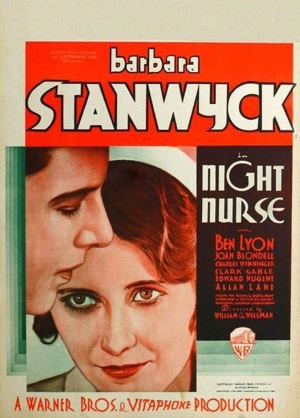
It doesn’t take long into Night Nurse to see the film isn’t a very positive portrayal of the health care service circa depression-era United States. Dr. Kildare this is not and even makes 1934’s Men In White come off as a more an idealised vision of the health care system in the 1930’s; Night Nurse is anything but. All within the picture’s first ten minutes Lora Hart (Barbara Stanwyck) is turned down for the job as a nurse but then gets it after catching the fancy from another doctor. Likewise one of the interns is a pervert and fellow nurse Maloney (Joan Blondell) recommends tricking patients into thinking you’ve saved their life in order to get money out of them. Blondell’s character, in particular, I really found myself loathing from an actress who normally played such likable characters. She clearly dislikes her profession and even recites the Florence Nightingale pledge while chewing gum – Night Nurse is a movie with a wide range of despicable human beings on display. There is even a scene which appears to show an actual baby in distress and another in which children talk about in graphic terms of the mental and physical abuse they and their dead sister have received – not very comfortable viewing.

Director William Wellman was one of the most interesting filmmakers during the pre-code era, whose film’s go against the conception of movies from the early 1930s being static and lacking camera movement or fluidity. Night Nurse is a perfect example of the kind of pictures Warner Bros produced during the 1930’s; a thought-provoking socially conscious melodrama. Whether or not it’s exaggerated, the plot of hospital corruption and the ineffectiveness of both the hospital and the authorities to prevent child abuse, the movie does succeed in packing a punch. What does it say when the intervention of gangsters, people working outside the law are required to save the lives of two children? Warner Bros was also known for featuring ethnic casts in their movies. At the beginning of the movie a shot focuses on a group of Chinese people sitting around a hospital bed speaking in their native language, helping to set the film’s gritty mood. There is also an emphasises later in the film that the shop which is broken into in order to steal milk for a bath in order to save the lives of malnourished children is from a Kosher delicatessen. Is there a particular reason for this? This was 1931 but history has made of this scene of the delicatessen windows being smashed unintentional creepy.

The other major reason to watch Night Nurse is to see Clark Gable in the pre-stardom role of Nick the Chauffeur in his glorious 5 minutes and 25 seconds (approx) of screen time (yes, I timed it). The film builds up to his reveal with the name of this unscrupulous “Nick” being thrown around. His character’s introduction with the use of a camera zoom and the uttering of “I’m Nick…the chauffeur” gives me chills in one of the most memorable moments in pre-code cinema. Gable is scary enough as a dominating brute who wants to murder children and isn’t afraid to punch women or the elderly but this is multiplied by the fact that he’s dressed like a Nazi. Ok not really, it’s a chauffeur’s uniform but when I first saw him wearing this, my instant reaction was “Why is he dressed like an SS officer?” (likewise, just as equally striking is his costume choice of a black kimono). The role of Nick is an odd duckling in the career of Gable which shown he had the knack for playing terrifying villains – such unrealised potential. As much as the man’s appearance in the background is enough to make you go, “oh s—t!”, and in a big way sister.

They Drive By Night (1940)

We’ve Got a Great Big Convoy Running Through the Night!

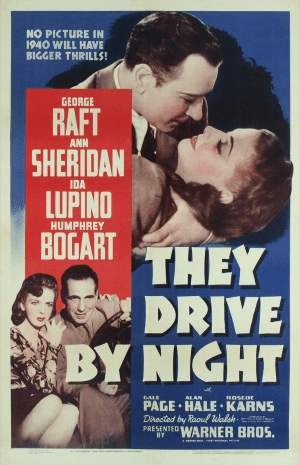
They Drive By Night captures the seedy and often dangerous world of the truck driver; the lack of sleep, the long distances to travel, the time missed with family, the comradery between truckers. The movie definitely highlights the dangers of trucking from the risk of falling asleep at the wheel, which in part lends itself to one very thrilling action sequence. With Warner Bros being the master of social commentary pictures, I enjoy movies like this which give you an insight into the lives of the lower class at the time; people trying to get by a day at a time with clearly little money to spare.

Thirty minutes into the picture we meet Ida Lupino, in my view possibly the epitome of the tough dame. Talk about a star-making performance, she owns the show as soon as she enters the picture. Every time she is in frame it’s hard to take your eyes off her as struts, poses and applies makeup to herself, even when her comedic foil of a husband Alan Hale is in frame acting like a buffoon. Her most notable scene in the film is one of the greatest, most gloriously over the top on-screen breakdowns ever committed to film. Charles Manson blamed The Beatles, Ida Lupino blamed the doors. Seeing Bogart as a family man is odd at first, the total opposite of his persona he would have in films such as those with Lauren Bacall. But he fits comfortably into the role, showing how adaptable an actor he was. George Raft is the weakest player out of the four stars, I’ve never seen Raft as much of an actor, but playing alongside these heavyweights manages to bring out the best in him.

What is the overall plot of They Drive By Night? There isn’t one; there’s no three-act structure. It’s almost like getting two movies for the price of one, with the first half focusing on trucking and the second half focusing on a murder. Comparing the two you wouldn’t think this is the same movie, but the odd combination works and makes for a unique viewing experience.

The Prizefighter and the Lady (1933)

Women Weaken Legs!

I’ve seen many a boxing film and despite having no real interest in the sport I find they often make for great stories – I consider The Prizefighter and the Lady (written by the great Francis Marion) as one of the great unsung boxing films with its less than conventional and exceedingly well acted and conveyed love triangle. What’s particularly striking about this romance is how intriguingly pathetic in a way it is. Belle (Myrna Loy) falls in love with a dunce of a jock named Steven (played by real-life boxer Max Baer) – “A big kid” as Belle calls him. Steven is a man who doesn’t seem to know any better and Belle is fully aware of this but can’t help that she has fallen for him; you really can feel the raw sexual attraction between these two, especially in their introductory scene in which Loy has nothing but a blanket draped over her.

The third end of the triangle of this not so swooning love story is Willie Ryan (Otto Kruger) as Belle’s original lover. Willie is a crime boss but is not presented as your typical hardnosed gangster (nor is it clear what the extent of his criminal activities are). Willie cares deeply for Belle and the two even talk openly about Belle’s newly found feelings for Steven. However, Belle eventually informs Willie she has got married to Steven and leaves him and her life as a socialite for more mundane and dowdy existence, leaving Willie with one heartbroken face with two tears coming off his face. – The Prizefighter and the Lady is full of little, subtle acting moments like this you wouldn’t notice on first viewing.

Perhaps that would be enough drama but no, Steven, the ladies man who is all muscles and no brain is cheating on Belle with multiple women. It does raise the question of what sane man would play adultery when you’re married to Myrna Loy?! The female lead of Prizefighter and the Lady would be a unique part for any major Hollywood actress. MGM was known for their glamorous stars yet here is Myrna Loy appearing dowdy and I suspect at times not be wearing any makeup – we are even introduced to her being lifted out of a car wreck and covered in dirt. While I’m not a fashion connoisseur every once in a while I will see a film from the 1930s and fawn over the outfits. Every outfit worn by Loy in The Prizefighter and the Lady is to die for. Likewise, her singing of the song Downstream River in the nightclub is enchanting, even if it’s obviously not her voice doing the singing. – She is a quintessential symbol of urbanity.

Oh yeah, and there is boxing in this film too, right? Older films generally aren’t known for their stellar boxing scenes. The film’s combination of slowed down footage and frequent cuts doesn’t look fantastic but it’s not totally immersion breaking. Likewise, I just wish the film could have done without the rather cheap, 7-minute long musical number entitled “Lucky Fella, Lucky Guy”. What more than compensates is the gorgeous high contrast cinematography in the boxing arenas; you can feel the grit and grime of the sweaty, smoke-filled atmosphere in another example of the type of neo-realism the pre-code era had to offer.

The Greatest Show On Earth (1952)

The Show Must Go On

***This Review Contains Spoilers***

The DVD release for The Greatest Show On Earth plays down its Academy Award win for Best Picture. Hang on, isn’t this supposed to be the highest accolade in the film world? Why would you downplay that your film won the award?  I guess Paramount are fully aware of the film’s reputation as one of the “worst Best Picture winners”. I normally have a rule when reviewing movies not to mention the Oscars because I feel it is so redundant to do so. “How did this beat ‘x’ picture?”, “Why didn’t ‘x’ get an Oscar nomination?” – such tiring statements. I believe Best Picture winners attract viewers to a film which they would unlikely watch otherwise and because of this many films get a bad reputation as “the film which beat such and such for Best Picture”.

The Greatest Show On Earth is one such film, made out to be worse than it is due to attracting an audience who would otherwise never watch it if it wasn’t for its Best Picture win. The Greatest Show On Earth is tons of fun; at times I had a carefree feeling that I was at an actual circus (minus the smell of elephant dung) with actual circus equipment being used for the movie’s filming. The Greatest Show On Earth beautifully captures this un-PC relic of another age (“you mean we all got to play in blackface?”) full of clowns, animals in captivity and human freaks. There is even an appearance of performers wearing costumes of Disney characters; good luck trying to put that in a non-Disney film nowadays! Likewise, the acrobatic scenes are suspenseful and you really get a sense of the scope and awe; the whole thing even feels like it has weight to it so I can forgive the odd jumpy edit. – The film packs a lot of material and dramatics into its runtime and I felt like I got my money’s worth.

You could look at The Greatest Show On Earth cynically and say it’s a commercial for Barnum and Bailey, well it’s a very entertaining commercial at that and a very informative one offering a documentary-like look at how the circus operates with the guidance of DeMille’s passionate narration. This was a change of pace to DeMille’s usual fare of historical and biblical epics but he still manages to throw some Christianity in there with the scene in which a priest and his Alter boys bless the circus train before it begins its season.

Tasked with Herculean effort of running a circus, you couldn’t get a more commanding choice than Charlton Heston in the Clark Gable type role as a man under great pressure to keep the operation running and pull the strings behind the scenes; not even a train crash or near-death deter him from putting on a show. However, when your movie stars James Stewart (albeit a supporting performance), isn’t any surprise he’s the best aspect of the film. I believe his role of Buttons the Clown is an underrated performance of his and one of his most tragic. He has a permanent smile on his face (really, his makeup never comes off at any point), yet has a dark, troubled past. Yep, it’s obvious symbolism but you can feel his pain throughout thanks to his quiet, subtle performance. As the movie progresses it takes a surprisingly dark turn, not only with the shockingly intense train wreck sequence (which really set a standard for special effects) but also the implication that Buttons, a former doctor had assisted his wife to kill herself. It’s very subtly implied but it’s still surprising that a mainstream blockbuster would have an assisted suicide subplot in an era dictated by the censorship of the Hay’s Code.