The Swimming Pool [La Piscine] (1969)

Euromaxing

***This Review Contains Spoilers***

I bestow Jacques Deray’s The Swimming Pool (La Piscine) with the oddly specific accolade of being the 2nd best 1960s swimming pool-centric movie. The other film of this double feature I am referring to is Frank Perry’s The Swimmer (1968). Both movies not only share aesthetic similarities but also explore a seemingly idyllic existence that isn’t quite what it seems, with the use of swimming pools as a metaphor. A pool creates a refracted, warped image, and it’s only when seeing through the surface that things become clear.

The majority of The Swimming Pool takes place within the confines of a holiday villa in the French Riviera town of Saint-Tropez (which I am reliably informed is pronounced san troh-pay for us word ending consonant pronouncing English speakers). This setting makes The Swimming Pool an oxymoron of a film in that it is a thriller, yet a relaxing one at that. I find myself watching on in jealous enchantment as the sexy, shirtless and effortlessly cool Alain Delon and his glamorous, bronzed-fleshed co-star Romy Schneider flex their sculpted physiques as they relax and make love in the nostalgic, rustic, sun-soaked atmosphere (as 60’s lounge music along with the film’s repeated song of choice Ask Yourself Why sung by Ruth Price echo in the background). Jean-Paul Leroy (Delon) and his girlfriend of two years, Marianne (Schneider), are madly infatuated with each other as they intensely make out (back scratching and all) and engage in light-hearted power plays and one-upmanship. However, there is soon trouble in paradise with the unexpected arrival of the couple’s old friend Harry Lannier (Maurice Ronet). 
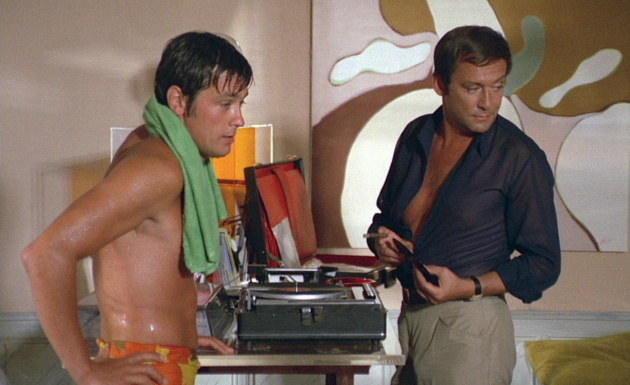
Harry is a figure who gives off mid-life crisis vibes; a cringeworthy dad with his prized sports car and top shirt buttons always undone. Harry, however, merely goes from being a figure of cringe to one of great suspicion from the accompaniment of Penelope (Jane Birkin), a girl he claims to be his daughter. Harry speaks of his daughter and interacts with her in a very intimate manner, commenting to others that she is pretty and telling her that her skin is smooth and that she smells nice. Both Jean-Paul and Marianne are surprised to discover their old friend even has a daughter. Penelope is apprehensive to talk about her background when Marianne asks her questions, while Harry simply tells Jean-Paul, “Her mother is simply an Englishwoman, you don’t know her”. Even the very scenario of a father and daughter going on a European road trip together is an unlikely one, with the film never making it clear if Harry is her Daddy or her “daddy”.
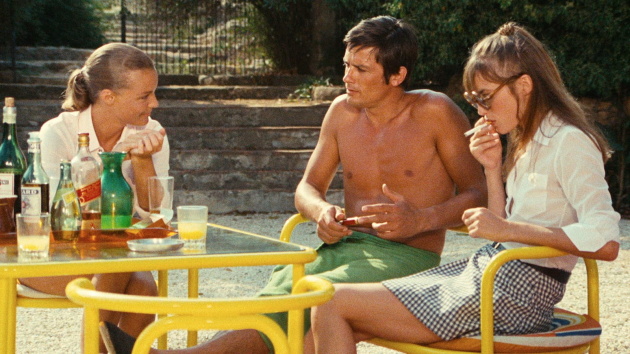
Throughout the film, Penelope wears short dresses and skirts (even to a funeral), although regardless of whether she is trying to provoke, she ignites a lust within a youth-chasing Jean-Paul. Even from their first meeting, Jean-Paul grabs her by the hand and asks, “How old are you?”, to which she responds mildly nervously, “Eighteen”. This eventually culminates in the two making love and, by extension, the dissolution of his relationship with Marianne. Delon and Schneider were real-life ex-fiancés, with the word through the grapevine being that he continued to be infatuated with her, with Delon being instrumental in getting Schneider cast in the film. Regardless, I’m sure their real-life background contributed to their on-screen chemistry and to the emotional weight of the gradual, undramatic breakdown of a relationship and the quiet acceptance of such within the film’s very slow build approach. 
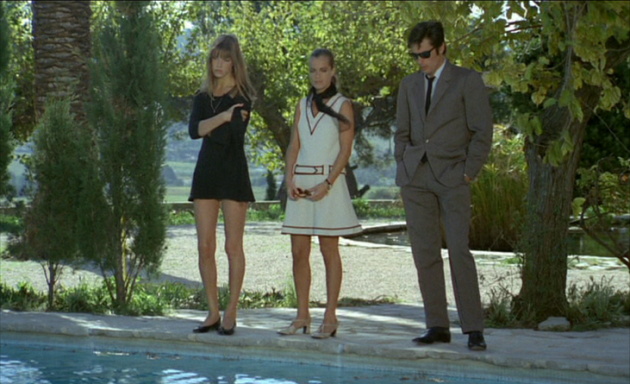
Harry brings about Jean-Paul’s gradual emasculation, both through Harry’s subtle flirting with Marianne but more so through his low-key taunting of Jean-Paul in relation to his failed and abandoned career as a writer. Jean-Paul now works for an ad agency while Harry has no issue showing off the expected-to-be hit music records he is producing (he even has to rub it in his face that Mariane herself is a successful writer). After several days, the once cool Delon is now grumpy and carrying a bad posture. The glamorous film star now comes off as a loser. It is this aspect of The Swimming Pool which makes the film strangely comforting, that the rich and beautiful, our betters, are just as miserable as John Doe. On the surface, Jean-Paul has an incredible life, from a gorgeous girlfriend to a high-paying job that permits him to enjoy month-long summer holidays. Deep down, however, he is unhappy as he gave up on his ambitions of becoming a professional writer (with it even being revealed that he has attempted suicide in the past). Just like how social media in the modern day shows other people’s seemingly perfect and amazing lives, the swimming pool offers a distorted reflection that hides what lies beneath.

On a more humorous observation, The Swimming Pool showcases the dangers that arise when close friends start living with each other and/or spend prolonged periods of time together when travelling. The Swimming Pool takes it to the extreme, with the outcome being murder, as the tension between Harry and Jean-Paul reaches its boiling point (both Delon and Ronet had previously appeared alongside each other in Purple Noon (1960), to which both characters see a similar fate). The film’s final act delves into Columbo-like territory, as an inspector (Paul Crauchet), questions Jean-Paul and Marianne about the irregularities in the investigation of Harry’s death. These being Harry wearing a non-waterproof watch when he was found in the pool (which is itself foreshadowed earlier in the film when Harry asks for his watch immediately after coming out of the pool), and perhaps the biggest smoking gun, the clean, perspiration-free clothes lying next to the pool (like someone had taken clean clothes and just put them next to the pool, hmmm). It is this final act in which the picture increases the suspense as the possibility of Jean-Paul being outwitted by the inspector feels dangerously close. Was it an irrational decision for Jean-Paul to remove the clothes from Harry’s corpse and lay clean ones next to the pool, or should he have just left Harry as he was? I guess when you’ve just committed murder in a fit of jealous rage, you cease to think rationally.  

During Jean-Paul and Harry’s final confrontation by the pool, both men are dressed in corresponding white tops and blue jeans. The two look like mirror images of each other, a metaphor that Jean-Paul’s interest in Penelope is partly an expression of Harry’s taboo desire for his own daughter. Likewise, when Jean-Paul is dunking Harry beneath the water, it echoes the myth of Narcissus, in which a young mortal, in love with his own beauty, drowns while trying to possess his reflection. Just like The Swimmer before it, The Swimming Pool takes its setting to its ultimate metaphorical height. The pool only reveals its true depth once you look beneath the surface.
Gigi (1958)

Not With A Bang But With A Whimper

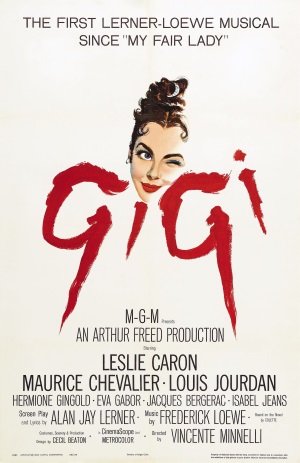
By all indications, Gigi should be a musical masterpiece, the last hurrah of Metro Goldwyn Mayer’s Freed Unit and yet, it took me several viewing attempts to actually sit through Gigi in its entirety, extracting as much appreciation as I can from what the film has to offer. While there are aspects of this musical vacation I enjoy, there is a synergy derived from one of the film’s songs which sums up this disappointing production, the ironically titled It’s A Bore.

So how did a major Hollywood movie about a girl being trained to become a prostitute get made in 1958? The film is full of gags about the French stereotype of impropriety however the film doesn’t outright state that Gilberte “Gigi” (Leslie Caron) is being trained to become a courtesan and a less in-tune viewer looking at the film from an anglo-centric perspective as opposed to a continental one may just think she is receiving lessons in etiquette. One of the film’s more successful elements is its (often dark) Ernst Lubitsch-style comedy from casual conversation on Laine d’Exelman’s (Eva Gabor) failed suicide attempts to Gigi’s mentally ill, off-screen mother’s out-of-tune singing. The other aspect of the film tying it to Lubitsch is the casting of the ever charming epitome of Frenchness, Lubitsch pre-code regular Maurice Chevalier. However, when it comes to the film’s two leads, Leslie Caron and Louis Jordan as Gigi’s eventual love interest Gaston Lachaille, I’m not seeing many sparks. They make for a decent pairing but I’m never left thinking these two were made for each other nor am I dying to see them end up together. This romance fails to create any real conflict in the story nor does Gaston’s boredom with everyday life or Gigi’s disdain for her training and the Parisian obsession with love. Gigi’s age is never stated however Caron was 26 at the time of filming yet she looks like a girl in her teens and like Ginger Rogers in The Major and The Minor, it is an impressive transition (in earlier films she looked older).

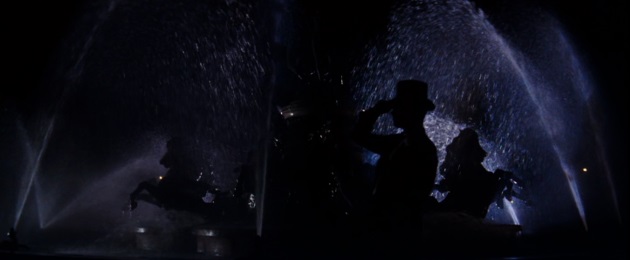
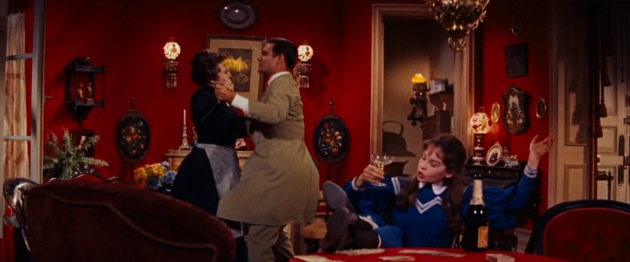
Ah Paris, the preferred setting of every romantic comedy made in the ’50s and ’60s. Gigi does deliver the goods with a slice of turn-of-the-century nostalgia (if only the characters knew they would have two world wars ahead of them, you cheese-eating surrender monkeys). However, this world is captured using Metrocolor which was never as visually eye-popping as Technicolor (nor was any colour process post-Technicolor). Compare Gigi with earlier Vincente Minnelli-directed musicals such as Meet Me In St Louis or An American In Paris and there is a clear downgrade in aesthetic beauty. Despite this (as well as some less than stellar rear projection during It’s a Bore number) Minnelli was one of the best directors when it came to the ability to compose shots (or mise-en-scène to use a pretentious French term) that look like paintings. Gigi does contain some stunning frames from Gaston’s silhouette at the fountain to any of the shots within the Grandmother’s apartment in which the bright red background beautifully contrasts Gigi’s blue dress. The real-world locations also give the picture a big boast from the Ice Palace skating rink (the former Palais des Glaces) to the interior of Gaston’s home which was filmed inside an actual museum (Musée Jacquemart-Andre).

The lush orchestrations of the MGM Studio Orchestra do deliver the goods however none of the songs has me rushing out to listen to the film’s soundtrack (while Thank Heaven For Little Girls doesn’t help matters with its unintentionally creepy lyrics). Gigi is an all singing but no dancing affair; there is no hoofer action and the cast sings while walking, riding or just sitting down (The Night They Invented Champagne being the only number with a brief stint of dancing). On top of that, Gigi also lacks any grand finale like the ballet in An American In Paris. Come the conclusion I was left with the reaction of “that’s it?”. What a legacy the MGM musicals left behind, it’s just a shame they went out not with a bang but with a whimper.

Le Samouraï (1967)

Don’t Shoot Me I’m Only The Piano Player

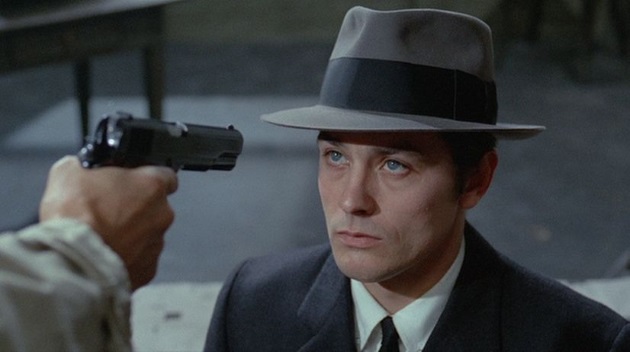
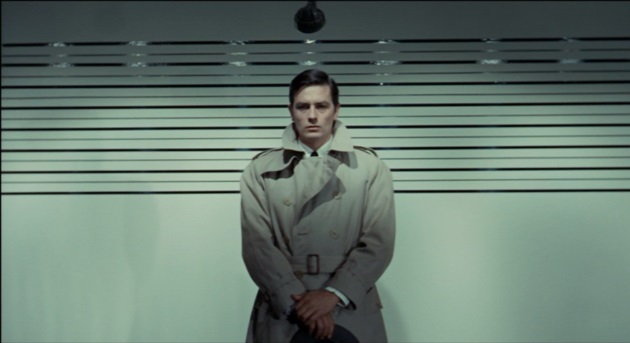
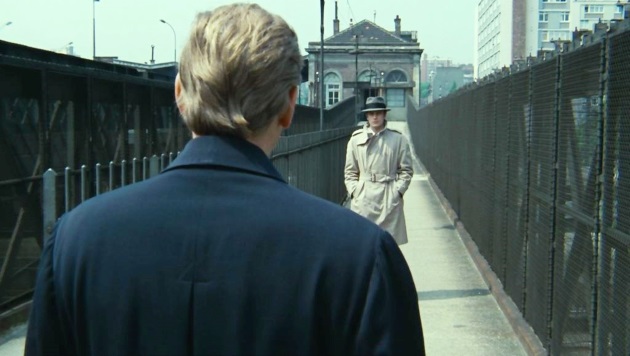
Alain Delon is Le Samouraï – hitman Jef Costello – cold yet elegant and graceful. The ever badass Delon could be identified by a silhouette of his figure. While he has those Humphrey Bogart vibes with his grey trench coat and fedora, he possesses a demeanour that’s strictly his – this is a man who knows how to wear clothes. Moreover, there is an ethereal beauty to Delon which straddles that fine line between masculine and feminine beauty with a face that conveys so much without the uttering of a single word. 

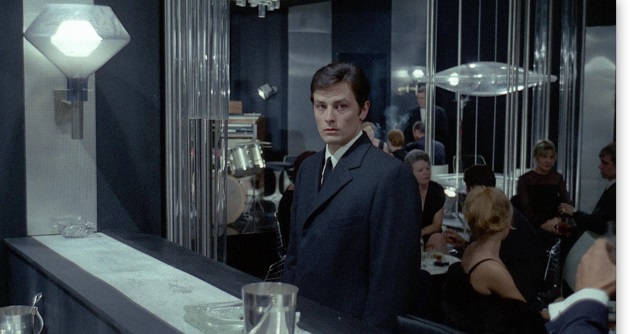
Jean-Pierre Melville’s Le Samouraï is a master class in how to make a film with long stretches featuring no dialogue with little-to-no music. When music is used, however, the haunting score by François de Roubaix with its use of hammond organs mixed in with some sections of mellow jazz is the perfect match for the grey, rainy streets of Paris (this is the kind of music you need to play when walking down an empty city street in the early hours of the morning). There is a real hypnotic quality to watching Alain Delon making his way through this urban jungle. The Paris featured in Le Samouraï is not the Paris as would be portrayed in an American film in which the Eiffel Tower and Arc de Triomphe is included in the background of every shot. Rather this is a Paris of grimy, urban locales – a real-time capsule of the city circa 1967. The locales and interiors featured in Le Samouraï make it a film that oozes class. I’ve never seen a classier looking nightclub than that featured in the film with its silver and glass décor while even the interior of the cold and sterile police station has an art deco appearance to it. 

I’ve read many of my fellow film reviews heavily critique Jef’s decision making in his criminal activity as a major dent in the believability of Le Samouraï. When carrying out his hit, Jef enters Martey’s nightclub wearing a distinct outfit, he returns to the scene of the crime the following night (despite his arrest from the previous night) and even disposes a set of blood-soaked bandages on the ground outside his apartment, knowing that the police are surveilling him. Yet, such clumsy actions strike me as being a sign of Jef’s overconfidence rather than a mark of poor writing. 

Le Samouraï can rank as one of the best police-procedural films. It makes for fascinating viewing to watch the techniques deployed by the police for identifying and questioning suspects, as well as their methods for tracking Jef through the Paris subways with a cat & mouse chase in a pre-internet, pre-mobile phone, pre-CCTV world. Le Samouraï also shows how the French citizenry is required to carry identity papers, an anathema to viewers in the anglosphere (the requirement to carry identity papers is a holdover from Roman law, unlike English common law where no such requirement exists). Within the film there are no Miranda rights as seen in American films but more worryingly, the police stalk Jef and put him under 24/7 surveillance, break into his apartment to install a bug as well as breaking into the apartment of his girlfriend and attempting to coerce her (also take note of how the commissioner turns a picture of a baby on his desk away from sight after questioning a suspect). There are however objections raised by suspects throughout the film when the police begin asking questions about their personal lives. If Le Samouraï is conveying a negative portrayal of the police, it may to conveyed most harshly but subtly with a blink and you miss it moment with a cut 50 minutes into the film in which a crime boss walks from right to left and then cuts to the police inspector continuing to walk in the same direction in perfect motion. Both bodies have the same aim of wanting to catch Costello but is the film also trying to say they both are as morally and ethically bankrupt?

Throughout Le Samouraï as Jef returns to his apartment, the sound of a caged chirping bird plays repeatedly without the aid of any music. As would be heard the proceeding year in Once Upon A Time In The West, the use of a recurring sound is shown to be as memorable and effective as a great score (I can also attain that every time I have watched Le Samouraï, the chirping bird has garnered the attention of my cat). The bird even serves the plot as Jef shares an almost telepathic relationship with the avian, as when Jef has returned to the apartment to find the bird traumatized and shedding feathers, he starts exploring his apartment only to find he has been bugged. 

Le Samouraï opens with a quotation from the book Bushido: The Soul of Japan – “There is no solitude greater than a samurai’s, unless perhaps it is that of a tiger in the jungle.” However, this quote is entirely a creation of the film and not taken from said book. How much of actual samurai mythology is present in Le Samouraï or is the film just trying to look a bit cooler with a westernized interpretation of what a samurai is? Regardless, the film earns its merits in so many other regards I can easily look past such a thing.

Love Me Tonight (1932)

Tailor Made Man

Love Me Tonight was produced and directed by the forgotten movie magic maestro Rouben Mamoulian, a name who doesn’t make the history books compared to the likes of Orson Welles but who’s work during the pre-code era deserve that cliché expression, “ahead of its time” – films which had extensive visual freedom more technical wizardry than you can shake a stick at. No more so than in the musical, comedy Love Me Tonight, the first film in history to use a zoom lens as it does several times throughout the movie (yet it would be decades until this technique would catch on). Not to mention the film’s early use of slow-motion during a very dreamlike deer hunt sequence – quite unlike anything else you’ll see in a film from the time.

Sharp Dressed Man

Love Me Tonight opens with the city of Paris coming to life in a visual manner reminiscent of the silent documentary film Berlin: Symphony of a Great City; however this is accompanied by a symphony created by everyday sounds from a construction worker hitting the ground with a pike axe to a woman sweeping a pathway. Likewise, the Paris street sets look authentic (with shots reminiscent of Gene Kelly’s apartment and neighbourhood from An American In Paris), I would believe it was real-world location but it was a set in the Paramount back lot, which is equalled by the opulence and detail of the chateau seen later on in the film.

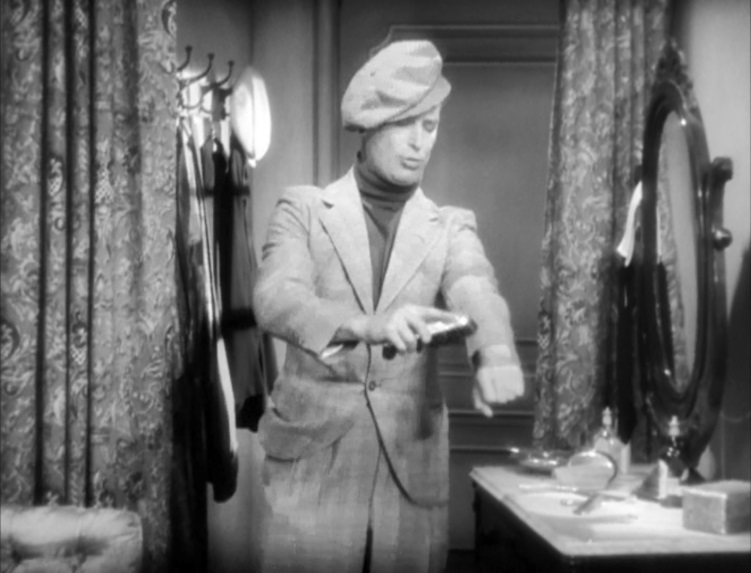
Love Me Tonight is an Ernst Lubitsch style romantic comedy focusing on European aristocracy. Our protagonist and his Supreme Frenchness is Maurice Chevalier in the role of well…Maurice – the stereotypical Frenchman who’s life revolves around the concept of romance (is there any truth to Hollywood’s fantasy of France and Paris in particular?). He is one fine dressed man in his dashing turtle neck and a distinct walk (he is a tailor after all) along with a shade of Groucho Marx aspect to his personality with his witty comebacks to all the bourgeois snobs he encounters. 

It was a novelty in 1932 for musical numbers to be so interwoven into the text and pushing the plot along, in particular, the Isn’t It Romantic number which cleverly connects future lovers by song as Maurice begins singing it in his Paris tailor shop and it ends up being carried out of the city and across the countryside to a chateau in which Jeanette MacDonald (who feels like she was tailor-made to play nobility) and her magnificent pair of pipes finish it off. Love Me Tonight has no shortage of character actors galore such as the inclusion of the three spinster sisters (a more benevolent version of the three witched from Macbeth) being a very humorous touch, especially when they sound like chickens as they frantically pace. Also take note of MacDonald’s reaction to Charles Butterworth falling off ladder and landing on his flute – priceless. 

The other great addition to Love Me Tonight is an always show-stealing Myrna Loy in a part which helped turn her career around from being typecast as the exotic temptress to performing high comedy as the sex-hungry Countess Valentine. The bored sex fiend spends her time around the chateau sleeping on chairs and furniture, becoming excited when the prospect of a male encounter arises. She gets many of the film’s best and not to subtle innuendo-laden lines and even sings for the only time in her career during her few lines in The Son Of A Gun Is Nothing But A Tailor. Currently, the only version of Love Me Tonight known to exist is the censored 1949 re-issue which includes among other potentially suggestive cuts, an omission of Myrna Loy’s reprise of “Mimi” due to her wearing of a suggestive nightgown. Why yes I’m outraged that a piece of film history has been erased and in no way does being deprived of seeing a scantily clad Myrna Loy factor into it. 

Regardless of what we are left with, it surprises me the Love Me Tonight would even receive a post-code rerelease with every other line of dialogue being a sexual innuendo (not to mention one particularly luring pan of MacDonald in lingerie as the Doctor inspects her). We can always hope one day an uncensored print we surface.

Eyes Without a Face [Les Yeux Sans Visage] (1960)

A Woman’s Face

***This Review Contains Spoilers***

Eyes Without  A Face is the type of horror film which earns more respect than your average film of the genre, thanks in part to its class and sophistication. It’s essentially a glorified B-movie but one which turns archetypes found in the mad scientist genre on its head. After all, horror stereotypes are not actually scary; normal people acting in an abnormal way is what’s truly frightening.

Doctor Genessier (Pierre Brasseur) has the look of a potential madman even resembling the maniac John Barrymore yet remains subdue throughout the film as a man wrestling with his conscience. His assistant isn’t a hunchback but rather a manipulative woman Louise (Alida Valli) who kidnaps young girls of the doctor’s behalf; much like in William Wyler’s The Collector, in which victims can be so easily kidnapped and taken to a secluded house without a trace. Without the creepy carnival-like music she would appear a different character – not so manipulative and eerie; ah the power of editing.

Eyes Without a Face presents by far the best combination I’ve ever seen of a movie which is unsettling yet beautiful at the same time; the two keywords which sum up the viewing experience. I’m not a massively squeamish person yet the thought of plastic surgery makes my body muscles tighten. Watching any scene with the facially disfigured Christiane (Edith Scob) makes me feel uneasy but simultaneously enraptured at the same time creating a unique combination of viewer emotion. Even with the absence of a woman’s most important physical asset, Edith Scob is the pinnacle of femininity in Eyes Without a Face. The manner in which she walks and moves in that white coat-like dress couldn’t be more angelic and I haven’t even mentioned the mask.  If there is ever a cinematic image more implanted into one’s mind, it’s Edith Scob wearing that mask. It’s creepy, it’s unsettling, it’s emotionless, yet it’s one of the most beautiful things I’ve ever seen more so than most flesh and blood faces. The masks used in the film were moulded to fit Edith Scob’s own face, could that be the contributing factor to its beauty? Or is it the angelic figure which carries the mask, whose surrogate mother still brushes her hair despite the disfigurement.

Equally as eerie and hauntingly beautiful is the only scene in which Christiane appears without the mask. Out of context, it wouldn’t entirely seem this way but the very idea that this face has been transplanted onto her from another girl is so uncanny to watch. This is also helped in part of Scob’s stunning piece of facial acting in which the Christiane is not yet used to her new face with the limited, almost robotic like display of facial movements.

My only issue with Eyes Without  Face are two plot contrivances. At the beginning of the film when Dr Genessier identifies the remains of a recovered body as those of his missing daughter, the authorities at the morgue don’t even bother asking the other man they asked to come along to look at the remains to view the body for himself. Likewise, when the character of Paulette goes missing after leaving the hospital to investigate Dr Genessier on their behalf, the police don’t follow up on her disappearance. Are these plot contrivances for the connivance of the plot or did the filmmakers deliberately set out to portray the authorities as being that incompetent?

Regardless, such plot contrivances are only a minor annoyance in a movie with such startling scenes, imagery and set design from the painting of Christiane’s mother to Dr Genessier’s chamber. I’ve long felt that a medical or laboratory-like aesthetic is one of the most effective surroundings to capture in glorious black and white. This beauty culminates in the film’s ending in which Christiane performs a simple undoing of everything her father has been working on. This is not a Charles Foster Kane style destruction of a room but rather she gracefully stabs her surrogate mother and symbolically sets dogs and birds used for Genessier’s experiments free. Aside from the doctor getting mauled by the dogs, the ending is intense yet peaceful. Some films stick with you more than others: Eyes Without a Face is one of those which I found myself thinking about its visual images for days after seeing and they won’t be leaving me soon.

Start the Revolution Without Me (1970)

Revolution 1789

To my surprise Start the Revolution Without Me begins with none other than Orson Welles introducing the film as well as narrating it; this along with the stylistic opening credits featuring footage of John Barrymore in Don Juan I know I had to be in for a treat. Start the Revolution Without Me is largely unheard of but surely paved the way for other large-scale historical comedies of the 70’s and 80’s from the likes of Monty Python and Mel Brooks; a type of film comedy which is long extinct. The recurring repetition of the date “1789” in the narration has vibes of Monty Python while the film’s ending reminds me of that from Monty Python and the Holy Grail. Likewise, the film is probably the closest thing to a spoof of costume dramas; think the costume drama getting the Mel Brooks treatment. The film includes references to works of fiction including A Tale of Two Cities, The Corsican Brothers and The Man in the Iron Mask (portrayed here as a bumbling fool). With the film’s historical references, King Louis XVI is a slow-witted cuckold and Marie Antoinette is portrayed as a nymphomaniac.

The production spared no expense getting the shoot in actual historical locations in France. You would think they would only allow such locations for more dignified films, not a slapstick comedy. The film itself is as lavish as any big-budget costume drama but not in tone of course. Costume pictures are always a genre I’ve struggled with, dare I say I find them dull with characters I can’t identify with or care about; you know, rich people problems. Thus there’s a sense of satisfaction seeing the genre turned into a slapstick farce. Not only do you get an impressive display of madcap physical comedy, but you even get some swashbuckling action with Gene Wilder getting the opportunity to display his abilities as a swordsman.

Gene Wilder and Donald Sutherland play two sets of identical twins who are accidentally switched at birth resulting in an aristocrat with a false brother who was supposed to be born into life as a peasant and vice versa. I get the impression Sutherland plays the twins intended to be aristocrats as they seem more comfortable and in tune with the lifestyle than the two twins played by Wilder. Mistaken identity humour is often looked down upon but it makes laugh whenever it is done well. Start the Revolution Without is inspired zaniness if I’ve ever seen it.