Love Crazy (1941)

Serving the Nuts

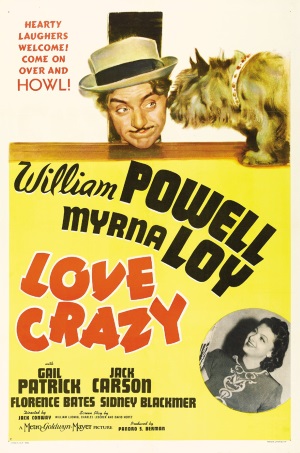
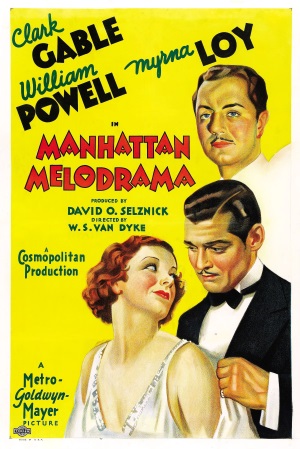
I believe every great actor should have at least one movie in which they get to go completely over the top and out of character (Barrymore in Twentieth Century, Leslie Howard in Its Love I’m After, Bogart in Treasure of the Sierra Madre, Stewart in Vertigo). For William Powell, Love Crazy provided him with his opportunity in easily the most slapstick oriented comedy ether Powell or Myrna Loy ever done; from heads being stuck in elevator doors to characters slipping on the same rug several times throughout the film. It’s not John Barrymore levels of over the top but compared to William Powell’s usual soft-spoken persona it’s pretty over the top.

Love Crazy is the William Powell show all the way, showcasing the complete range of his abilities as a comedic actor in a plot which is like a tabloid newspaper story turned into a screwball comedy; a jokey representation of mental illness which wouldn’t be politically correct by today’s standards. All the more fun then! One of the scenes from any film Powell has appeared which I feel best demonstrates his comedic timing is when he is tasked with convincing a lunacy commission of his sanity by placing shaped blocks into their corresponding holes. It’s such a basic task yet with his overzealous confidence he still manages to convincingly screw it up; it works on so many levels. Yet as the film progresses, I end up feeling particularly sorry for his character due to losing a wife like Myrna Loy and having her despise you, all over one improbable misunderstanding.

But not to undo Myrna Loy with her stand out moment being a surprisingly erotic scene with Jack Carson in which both of them are bare-shouldered and she even utters the line, “It will smell like an orgy”. On top of that, I find myself in awe that there is a straight up dick joke in this movie (“He has to have his torso free when he shoots his bow and arrow”). Of all the sneaky jokes they got past the censors I’ve heard in screwball comedies, this is one of the most unsubtle. Likewise, Gail Patrick who plays Powell’s former girlfriend appears to be a bit of a nymphomaniac; badly wanting him shortly after meeting for the first time in years despite both of them now being married, not to mention it’s his anniversary night! Just listen as the seductively tells Powell “Stevie I’m bored!”. There’s quite a bit of setting up in Love Crazy but the payoffs are worth it. Love Crazy also gets a big boost from the apartment sets designed by Cedric Gibbons. The painted backdrops of skyscrapers high in the sky and the art deco shading, it’s beautiful.

I had the benefit of going into Love Crazy unaware of the screwball hijinks which occur during the third act. If it’s not too late for you, I recommend doing the same otherwise stop reading but yes, William Powell dresses up in drag as a tall, butch woman and convincingly at that. He even goes to the length of sacrificing his trademark moustache – now that’s commitment.

The Lady Eve (1941)

So Close, Yet So Far

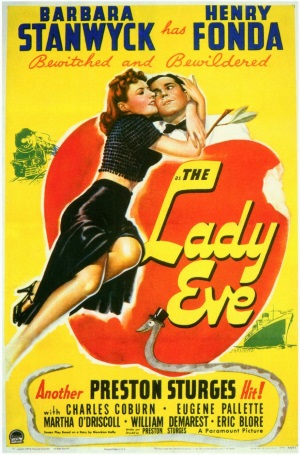
The Lady Eve is a conflicting film. The first hour is some of the most perfect romantic comedy I’ve ever seen, however, it falls apart around the one hour mark. However, what is it that makes the first hour so perfect? Firstly it didn’t take too long for me to realise that Henry Fonda and Barbara Stanwyck are one of the most flawless screen pairings ever, the perfect combination of sexy meets innocent. Watching these two I get the impression they must have been head over heels for each other. I’ve read that apparently Henry Fonda would later tell his wife he was still in love with Barbara Stanwyck, dam! But then again, after having your hair caressed by Stanwyck for 3 minutes and 51 seconds, who wouldn’t be?!

The Lady Eve is a prime example of a “How did they get away with that?!” movie. I’m not aware of what Stanwyck’s ideological or moral beliefs were but a number of her films are some of most sexually suggestive old Hollywood films I’ve seen. There’s her pre-code work such as Baby Face but in the postcode era, we have Ball of Fire, Double Indemnity and of course, The Lady Eve. Call me old-fashioned but movies were sexier when the actors kept their clothes on. Vilma Banky did more with one raised eyebrow than an entire (Warning! Problem in Sector 7G).

So where does it all go wrong, well about 50 minutes into The Lady Eve, the movie pulls my least favourite movie cliché of all time, “the liar revealed”. You know, when a character is exposed as a fraud causing a relationship to end, even though you know they’re going to get back together again by the end of the movie. Having this cliché is bad enough, however, I thought it was only a contrived modern invention but here it is in 1941. At least they don’t drag it out like any rubbish modern-day romantic comedy would.

I’ve found Preston Sturges’ films to be indiscipline, his films all have their moments of greatness but at times they delve into over the top absurdity, even by screwball comedy standards. During the later part of The Lady Eve it’s hard to buy into Stanwyck disguising herself as another woman who doesn’t look massively different from her previous self in order to win back Henry Fonda. Oh, and he buys into the charade, the dope! Part of me wished the entire movie could have just been the two of them on the boat and it would have been a perfect film, however the final third still has some hilarious moments, such as Eugene Pallette frantically banging the table demanding his breakfast, or Fonda getting his suit destroyed three times at a party, a perfectly timed slapstick gag if I’ve ever seen one.

On a second viewing of The Lady Eve, I still have the same reaction to the first hour but I did find myself more forgiving of the last third. With my love of screwball comedies and the pairing of Stanwyck and Fonda, perhaps with additional future viewings, I may become completely forgiving of the last half hour. The first hour is just that perfect.

Jewel Robbery (1932)

Pre-Code Jewel

***This Review Contains Spoilers***

I remember people criticizing The Wolf of Wall Street as immoral, then I’d love to see their reaction to this 83-year-old gem.

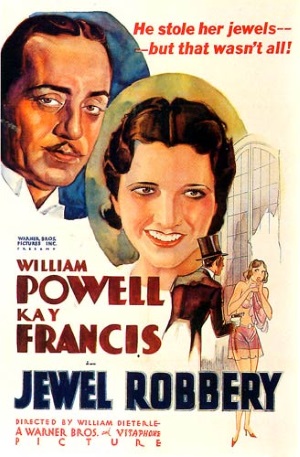
Kay Francis has one of my favourite character introductions ever, as an army of servants march to pamper her after getting up in the afternoon, lying in a bathtub, briefing showing off one leg shot up in the air then being pampered like a goddess ahead of her day of leisure. Jewel Robbery’s display of wealth would be explicit for any era, never mind the great depression. Francis’ reaction to being handed a box of jewels from Powell makes Lorelei Lee of Gentlemen Prefer Blondes look like less of a gold digger. Yes, these are shallow, superficial characters who never get punished for their actions, but that’s ok, only classic Hollywood actors could pull this off, making us enjoy rooting for characters like this. Although Francis’ character is at least self-aware of this, in one pivotal scene stating that she is shallow and weak as she leads a shallow and weak life and with a little courage she could run away from it.

William Powell is the coolest criminal ever; you would enjoy being held in a stick up by this guy. This being pre-code, a criminal is the hero of the story who deceives dim-witted guards. His methods of robbery, differentiating from what he calls “the stick ‘em up and shoot ‘em down school, no mess, no confusion” is so fascinating. Would his methods work in real life or is this just movie fantasy? He even gives his victims marijuana to calm them down. This movie waves the whole gauntlet of sex, drugs and rock ‘n’ roll. Ok, there’s no rock ‘n’ roll but there’s sex and drugs. The jewel robbery itself is so snappy and fast-paced. It takes up a large portion of the film (which at one point made me wonder if the film would be a sort of high-class version of Dog Day Afternoon) and it’s over in a jiffy.

Jewel Robbery is one of the most erotic and sexist films I’ve ever seen. Many of the scenes and dialogues are provoking in some way from Kay Francis wearing dress looks like it’s about to fall of her and exposes her backside to William Powell wrapping his arms around Francis to grab a ring of her finger; this is what you call a titillating movie. I also love Kay Francis and her girlfriend’s excited reaction to discovering a man infiltrated their house. Plus has there ever existed an actual dwelling that has an interior similar to that of William Powell’s hideout? If I ever win the lottery I am going to hand a copy of this movie to an interior decorator. Also, the newspaper which appears near the beginning of the movie is called “Weiner Journal”.

It’s Always Fair Weather (1955)

Stormy Weather Ahead

It’s Always Fair Weather will go down in history as the film musical which “could have been”. Had it been made a few years earlier it could have been in the same leagues as Singin’ In the Rain and On the Town but several shortcomings, some determined by the period the film was made prevent it from being so. Even the studio had that little faith in it they dumped it as a second feature alongside Bad Day At Black Rock.

It’s Always Fair Weather differs from other musicals of its time in its sombre tone with the tale of three war buddies who are reunited ten years later to find out they can’t stand each other upon discovering one is a hick, a snob and a goon. This is juxtaposed to a world of beautiful, bright colours and welcome artificiality with urban sets to die for. It’s Always Fair Weather was originally conceived as a sequel to On the Town, reuniting Gene Kelly with co-stars Frank Sinatra and Jules Munshin. However, by 1955, Munshin no longer had box office credibility while Sinatra was too big a star that the studio was unwilling to work with him. In their place, we get Dan Dailey and Michael Kidd, both of whom get the job done but lack the same electric chemistry Kelly’s On the Town co-stars possessed. Frank Sinatra in particular I find is sorely missed as I loved his three-picture partnership with Kelly in which they made an excellent comedic duo. None the less the roaster does get a big boost with the casting of the great Cyd Charisse, whom like Ann Miller in On the Town, plays a glamorous woman with contradictory personality and an encyclopedic knowledge of well, pretty much any topic.

However, I find It’s Always Fair Weather’s biggest drawback are the sections of the film which are uneventful and doesn’t have the lightning-fast pace of On The Town or Singin’ In The Rain. The film could definitely benefit from the trimming or removal of whole scenes; there is a faster-paced, snappier film in here. The film does help make up for this though in its musical numbers. It’s Always Fair Weather does showcase some of the best moments of any MGM musical with the soundtrack being one of the best in the MGM catalogue. The musical numbers and compositions are fantastic and all written for the film itself by the great Betty Comden and Adolph Green, while the majority of MGM musicals took their songs from their back catalogue as well as other stage musicals.

The five-minute Gershwin like dance number “The Binge” showcases the then-new cinemascope format by having three dancers occupy their own third of the screen as they dance and create percussion with trash can lids on their feet as they work together in great physical tandem of drunken joy. Once Upon a Time, on the other hand, is a heart aching number if there was one as the three men sing about their broken dreams while Music is Better Than Words couldn’t be more enchanting if you asked for it. The centrepiece of the film, however, is Gene Kelly’s number ‘I Like Myself’, featuring him tap dancing on roller skates, no trickery! Like Singin’ In the Rain, the number is an encapsulation of pure happiness (just look at the faces of the onlooking extras). This is of my favourite musical numbers of all time and is an unbelievable display of talent if I ever saw it. The film’s only crime in the song and dance department is the lack of a dance number between Gene Kelly and Cyd Charisse, despite one actually being filmed.

I feel widescreen technology came too late the MGM musicals which could have used it to great advantage but by 1955 musicals had already lost most of their economic viability due to the rise of television. It’s Always Fair Weather is Hollywood coming to terms with the existence of its rival television but relishes the opportunity to satirize the format as superficial and ridden with advertising.

It Happened One Night (1934)

What Is the Deal With Donut Dunking?!

***This Review Contains Spoilers***

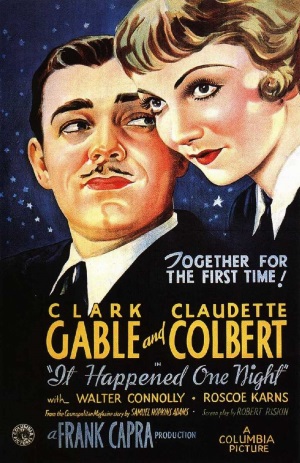
It Happened One Night was my first exposure to what I now consider to be my favourite genre of film, the screwball comedy. I’ll never forget the feeling of exuberance at watching Clark Gable run to his boss at the newspaper to pitch a story about how he’s fallen in love with a princess, such energy, such emotion; I had never felt such a way from watching a movie before. It Happened One Night is the famous and most widely seen film of its genre and I believe it deserves such an accolade; something unforgettable is happening in every scene, whether funny or tender, jam-packed little details to spot on every viewing. It Happened One Night along with Twentieth Century gave birth to the screwball comedy, but it isn’t the only sub-genre it set a standard for. The runaway princess movie, the road movie and the newspaper comedy all owe their debts to it.

In his opening scene, Clark Gable is introduced as the king; couldn’t be more adapt. Watching the movie closely I can say that everything this man says is pure gold from his art of donut dunking, art of clothes removal, the different methods hitchhike signaling and his wall of Jericho. Then it dawned on me just how Seinfeldian this movie is. Much of Clark Gable’s dialogue in this movie could be a Jerry Seinfeld stand up routine. It’s easy to see how many screwball comedies have influenced modern day sitcoms; all that’s missing is the laugh track.

Claudette Colbert is one of the most famous incumbents of The Gable Treatment; what I like to call the macho manner in which Gable treats his leading ladies. Of course for any other actor to have this characteristic they would be an unlikable brute, but because it’s Gable it works. I also have to ask did the scene in which Gable eats a raw carrot while attempting to hitch-hike with his usual confidence and cockiness inspire Bugs Bunny? Ah Gable, has never ever existed a more charismatic human being?

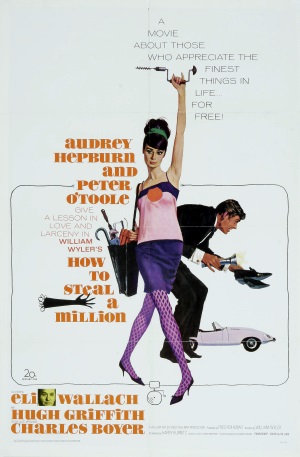
How To Steal a Million (1966)

Precious Venus!

***This Review Contains Spoilers***

William Wyler is one of my very favourite directors and this being his third last film of a forty year career is a testament to the phenomenal director he was. Wyler didn’t direct many comedies, and with a comedy as perfect as How To Steal a Million that’s a crying shame. In fact, the last straight-up comedy he directed was 31 years earlier with The Gay Deception and the Ernst Lubitsch inspired The Good Fairy. How To Steal a Million defiantly owes something to Ernst Lubitsch. The character’s interactions have that Lubitsch touch while the European setting and the high society elegance are unmistakably Lubitsch. Speaking of elegance, does this movie have style! At the beginning of the film, we see Audrey Hepburn driving an unusually small car, wearing sunglasses and all white apparel; setting the tone for one heck of an eye-pleasing film.

Since How to Steal a Million was made after the demise of Hollywood’s production code and the character’s we’re rooting for are essentially criminals it did surprise me that they didn’t let the character’s get away with their actions at the end of the film. Peter O’Toole (one of Hepburn’s few age-appropriate leading man) shows that he could be as suave and debonair as the likes of William Powell. I often say this with a lot of primarily dramatic actors; I wish he could have done more comedies. It can’t be easy to ask the person whose house you were in the process of robbing to give you a lift home in a perfectly convincing manner.

The robbery process itself makes want to shout “genius” at the screen. The manner in which the heist is pulled of is so inventive and suspenseful as all hell. This was the days before CCTV so their plan probably wouldn’t work nowadays. How to Steal a Million is one of the rare comedies which is consistently funny from start to finish; almost without a laugh-free minute.

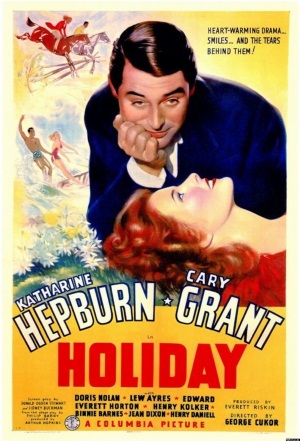
Holiday (1938)

Is This Where the Club Meets?

Holiday is my favourite Cary Grant film and my favourite of Cary Grant & Katharine Hepburn’s partnership. Between this, Bringing Up Baby and The Philadelphia Story it’s almost like having to choose my favourite child; yes all three are that good but ultimately Holiday is the most beloved of my offspring. I find Kate & Cary to be one of the five greatest instances of chemistry I’ve seen between an actor and actress (my other selections being Astaire & Rogers, Powell & Loy, Stewart & Sullivan and Fonda & Stanwyck), even preferring them to the longer running Tracy-Hepburn partnership.

However, the two stars aren’t actually romantically engaged throughout Holiday, with Johnny Case (Grant) preparing to get married to Julia Seaton (Doris Nolan), the sister of Linda Seaton (Hepburn). This dynamic in which Linda is more passionate about her sister’s relationship than Julia herself and the obvious feelings she has for Johnny is a much more interesting and complex dynamic than the more standard romance. Linda is far more interesting than her comparably dull sister. The whole time I’m thinking to myself Kate & Cary are beyond perfect for each other in this coming together of two intellectuals.  – I simply don’t want to see them being involved with anyone else.

I feel Cary Grant has never looked more youthful than he does in Holiday and even gets a rare opportunity to show off his acrobatic skills, with Hepburn even getting in on the action. I’ll also take this opportunity to mention that man sure could wear clothes like no other. The discussions Kate & Cary engage on what their characters want to do with their lives are so deep and profound. The difficulty of finding their place in life, the obstacles of trying to live it and not wanting to miss out on an ever-changing world full of ideologies and ideas, all while trying to get by with an optimistic attitude despite the imperfections in their life. It’s hard to take it all in on and decipher in a single viewing, which makes Holiday one of my most life-affirming movies.

Katharine Hepburn, on the other hand, had the opportunity in her career to play roles which reflected her real-life personality as a non-conformist oddball. In Holiday she is the black sheep in a wealthy, business-driven family. Linda is a character who comes up with what her family describes as “little ideas” which they outright dismiss. Her “little idea” of throwing an engagement party for Julia in their childhood playroom (a playroom which looks so much fun! You could almost set the entire movie in there) on New Year’s Eve is one of the most powerful and harrowing moments I’ve seen in any film. The feeling of being an outsider and a lonely at that (I know I’ve been there before) has never been captured more effectively on celluloid than it has when Cary Grant and Katharine Hepburn are dancing alone in the playroom and welcome in the New Year. I do make it an aim during a future new year’s eve to watch Holiday with the film synchronized with real time so I can introduce the new year at the exact same time the character’s in the movie do so.

Continental Divide (1981)

The Continental

***This Review Contains Spoilers***

Early during Continental Divide as I was gradually enjoying the film more and more and becoming emotionally invested in its two characters (very emotionally invested I might add), storm clouds began forming over me. I came to the realisation that at some point the movie was going to pull of my least favourite movie cliché, the liar revealed. You know, the woman finds out the man isn’t what he claims to be, after a big monologue about how betrayed she feels, they break up, cue the sad montage music but 20 minutes late they forgive each other and live happily ever after, the end.

Thus it was a huge sigh of relief when Blair Brown’s (not the former British government cabinet) Nell Porter discovers John Belushi’s Ernie Souchak (a name which sounds like it’s taken from a 1930’s newspaper comedy) is secretly writing a news piece on her after he agreed not to during this early point in the film. They don’t argue about it, she happily accepts it. How about when Ernie discovers Nell has been meeting a man in the wilderness purely for sexual intercourse and not for a passionate relationship, does he freak out? No, he has no problem with it and that’s the way it should be! That’s one of the things I loved most about Continental Divide, it was like a big middle finger to the inane and contrived clichés which plague modern-day romantic comedies.

Continental Divide is one of my favourite man and woman alone in the wilderness type movies, in this screwball comedy for the 1980’s; which at the time advertised Belushi and Brown as the next Hepburn & Tracy. With the likes of His Girl Friday and Libeled Lady, Continental Divide has the underlying theme that long-term romantic relationships and careers in journalism are an apparent impossibility; only the typewriters are out in favour of computers. Although I do have to ask how many journalists have the levels of a celebrity among the populace as Ernie Souchak has, in which he is constantly recognised in the street. Likewise, Ernie Souchak’s employment of the Chicago Sun-Times is the paper film critic Rodger Ebert writes for, although there is no cameo or mention of him in the film, likely due to a conflict of interest.

Nell Porter is a woman so reclusive she lives in the mountains while attending to her study of Eagles. She has a desire for peace and quiet and I get the impression she is disenfranchised with civilisation, partly due to her dislike of the media. Having a female character like this is one of the reasons I’m so attracted to a love story like this, since weird girls are my thing. Plus speaking of the wilderness, does this movie look good! Filmed atop of actual mountains in Montana and Washington State, It just shows you that Planet Earth is the greatest movie set of all.

It is evident from both Continental Divide and his final film Neighbours that John Belushi was trying to escape typecasting. Continental Divide proves he had what it takes to be a romantic leading man, however, his time left on this world was short at this point but the legend lives on.

The Barbarian (1933)

Complete and Utter Bonkers

***This Review Contains Spoilers***

The Barbarian has to be seen to be believed. That’s if you’re able to believe this unbelievably ridiculous plot. Ramon Navarro’s Jamil is the textbook definition of a creep and why the characters in the movie take as long as they do to realise this is beyond me. Throughout much of the film, he treats the Myrna Loy’s Diana like dirt. He kidnaps her, drags her into the desert, has her whipped by another man so he can pretend to save her and on top of that, or at least what’s implied, he rapes her. Throughout The Barbarian I was thinking there’s no way these two are getting together at the end of the film but with only five minutes run time left to go, Diana ditches her nice loving fiancé for the man who earlier in the film kidnapped her and made her life a living hell. Why?! Stockholm syndrome, abused wife syndrome, girls just love a bad boy syndrome?

The final scene of the movie shows the two in a loving embrace on a barge under the moonlight, implying that his ending is supposed to be happy. Uh no, this is dark and disturbing. This woman is with a man who is the most morally dubious character being presented as the hero of the story I’ve ever seen. Is it supposed to be ironic or just horribly misguided? The Barbarian, however, is a rare instance of a movie which I feel kind of bad for having enjoyed, like I have to have the TV facing the wall in the corner of a room with the volume lowered, not letting anyone knowing I’m watching such a thing; or at least that was the case until I decided to post a review on the internet.

So what makes this movie enjoyable? For starters, there is the unmitigated joy that comes from watching politically incorrect pre-code movies. I’ve seen some crazy pre-code films but this just takes the cake.  It’s like a train wreck, it’s so shocking but you can’t look away. Moments of The Barbarian are shocking, other times it’s unintentionally funny, yet despite this bizarre mishmash, the film works. It’s engaging and there’s tension throughout, the sets and locations are superb, feeling like a tourist brochure at its exotic interiors and landscapes and there’s Myrna Loy’s bathtub scene, a moment of astounding risqué beauty and one of the sexiest scenes in all of cinema. Loy actually shows a lot of skin throughout the film in a range of skimpy attire. This is also the only movie I’ve seen to date which shows that the Pyramids of Giza are right beside the city of Cairo and not in the middle of nowhere – Who knew! Watch and observe The Barbarian in all its unbelievable pre-code glory.

The Band Wagon (1953)

Fred Astaire 1953!

The Band Wagon is the film Fred Astaire’s career was culminating to: his best film in my view. Like Ninotchka with Greta Garbo or A Star Is Born with Judy Garland, this was the role he was born to play; one catered to his on-screen persona. Fred Astaire is Tony Hunter! An ageing hoofer who no longer is the star he once was. The Band Wagon contains little references to Astaire’s past: from Bill Bojangles Robinson to the opening credits feature an image of a top hat and cane, to the mentioning of a fictional movie “Swinging Down to Panama” perhaps a reference to Swing Time and Flying Down to Rio (although I do wish there could have been a little reference to Ginger Rogers herself in there).

The Band Wagon provides Astaire with some of the best musical numbers of his career. However, the film also allows him to showcase other avenues of his talent, such as his outburst scene over his dissatisfaction over rehearsals – a fine example of the acting prowess he possessed. While Ginger Rogers is obviously Astaire’s greatest partner Cyd Charisse is his most accomplished; could there be a more graceful figure?

Was I gullible that when I first watched The Band Wagon that the movie manipulated me into thinking the pretentious and egotistical stage director Jeffrey Cordova’s (Jack Buchanan) idea of a musical inspired by the Faust legend was a good idea? This isn’t the same old backstage musical plot; The Band Wagon is a thinking person’s musical. Likewise, Charisse’s Gabrielle Gerard has a mature subplot of her own involving her trying to deal with her dominating boyfriend and her feeling towards Tony; giving the film that extra mature edge.

Not only is there a great story, but there is also great comedy with a cast gels so well together. Oscar Levant and Nanette Fabray as a bickering couple and their hysterical fanboy reactions to meeting Tony Hunter, to Jack Buchanan’s over the top histrionics and his terrible ideas for a stage musical. My favourite moment in comedy in The Bandwagon is the scene in which Jeffrey Cordova manipulates Gabrielle’s boyfriend from being dead set against allowing her to be cast in his stage production to then begging him to allow her to be in the show. It’s like a Bugs Bunny-Yosemite Sam type moment but on a much more subtle level and made even more impressive by occurring in an uncut shot. Likewise, the sets in The Band Wagon have an astounding level of detail that scenes near the beginning of the film taking place on the street had me wondering where they sets or real-world locations.

Up until The Band Wagon, it was uncommon for a film musical to have a soundtrack entirely composed for it rather than having songs and compositions taken from other sources; which makes it all the more impressive that the entire soundtrack to The Bandwagon is superb. If I was to choose my three favourite musical numbers of all time, in terms of epic scope they would be The Broadway Melody Ballet from Singin’ In the Rain, The Lullaby of Broadway from Gold Diggers of 1935 and The Girl Hunt Ballet from The Band Wagon in all its 13-minute glory. Here noir meets musical, with Astaire at his most badass. His line delivery could be in an actual crime film itself, plus it inspired the music video for Michael Jackson’s Smooth Criminal. There’s also the Shine on Your Shoes number, one which I could watch again and again just to look at all those gizmos in the background and the genuine reactions on people’s faces at seeing Fred Astaire dance; while That’s Entertainment has become a semi-official anthem for Hollywood. Oh and there’s the Triplets number; one of the weirdest musical numbers ever filmed and they’re actually dancing on their knees!

The early to mid-1950’s where a phenomenal period for the musical genre. Hollywood produced some of its finest musicals in these years before television brought this era of film musicals to an end. Films like The Band Wagon elevated the genre to new heights. A Fred Astaire musical which has everything and more!