The Bad Sleep Well [悪い奴ほどよく眠る/Warui Yatsu Hodo Yoku Nemuru/The Worse The Villian, The Better They Sleep] (1960)

The Corporations Sit There In Their Corporation Buildings And See, They’re All Corporationy And They Make Money

***This Review Contains Spoilers***

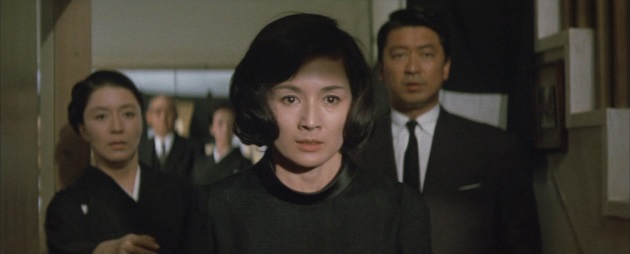
The Bad Sleep Well (悪い奴ほどよく眠る/ Warui Yatsu Hodo Yoku Nemuru, which translates to The Worse The Villain, The Better They Sleep) is Akira Kurosawa’s loose adaptation of Hamlet. By replacing the kings and queens of ye olden days with the chairmen of mega corporations, Kurosawa transports Shakespeare’s tale to the (then) contemporaneous sinister underworld of corporate Japan (in which the opening music score by Masaru Sato infuses jazz in with primal toms-toms as a perfect musical metaphor for this deadly urban jungle). Koichi Nishi (Toshiro Mifune) marries Yoshiko (Kyoko Kagawa), the daughter of wealthy industrialist Iwabuchi (Masayuki Mori), in an attempt to avenge the death of his father, of whom he believes Iwabuchi and his corporation are to blame. This, however, is only scratching the surface of a bizarre revenge scheme. Is Nishi’s wild and crazy plan to be or not to be?

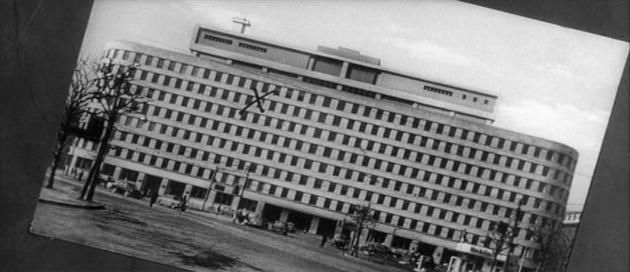
The Bad Sleep Well has one of cinema’s most intriguing and unique first acts. The plot, characters and relationships are established through the wedding of Nishi and Yoshiko. This is not your average ceremony, however. Rather, it is a public, voyeuristic and somewhat dystopian affair swarming with journalists in which the main focus is not on the coming together of two families but rather a focus on corporate business. The wedding not only acts as the tying of a union between a man and a woman, but more so the amalgamation of the fictional entities of Dairyu Construction and Public Corp. Whereas in Hamlet the titular protagonist stages a play referencing his father’s murder, watching for the King’s reaction to the scene to ascertain whether he did commit the crime in question, in The Bad Sleep Well Nishi  (unbeknownst to the attendees) has the most bizarre and superlative wedding cake delivered. A cake which is modelled after the company headquarters with a rose marking the window from which Nishi’s father plunged to his death. Aside from the intriguing, bizarre nature of this opening 20 minutes, the sequence is also made highly effective by the chatter of the onlooking journalists as well as the wedding narrator, acting as an effective way to deliver exposition – as a viewer, you become just as curious as the onlooking media men. The sequence concludes with a fitting meta-reference by two of the journalists: “Best one act I’ve ever seen.” “One act? This is just the prelude.”

The not-so-benevolent conglomerate that is Public Corp are sending officials instructing people to take their own lives or else an assassin will be sent out to do so. This is seen early in the film when a man is told by company officials, “You’ll carry this through until the end”, and immediately proceeds to throw himself in front of a moving car. With this threat in place, a government official named Wada (Kamatari Fujiwara) attempts to commit suicide by throwing himself into a volcano (and I thought Hara-Kiri was hardcore), but is prevented from doing so by Nishi (in order that he can use Wada to expose Public Corp). I might be able to accept Nishi knows about Wada’s attempt to commit suicide, but how does he know the location where he intends to do so? Likewise, at the volcano itself, Nishi waits until he can make a bad-ass entrance, even though Wada has had the opportunity to go ahead and jump into the volcano – typical movie-land logic.

In The Bad Sleep Well, Mifune is clean-shaven and suited up with specs. Yet, Mifune has the ability to play such a dorky-looking character and still look cool (“Well, well, a big muscle-bound nerd”). Likewise, he is playing a male secretary in Japan circa 1960, although no reference is made to working in a traditionally female job being beneath him. Nishi, however, is not a man you want to get on the wrong side of. From his unsettling use of a whistle motif (similar to that which is seen in Fritz Lang’s M), to going full Christian Bale’s Batman through extorting a man by hanging him out of the same window his father supposedly committed suicide. He even torments the already suicidal Wada even more by showing him his own funeral (itself a dystopian affair in which a corporation itself shows its respect by laying two huge wreaths).

Nishi’s plan, however, is complicated by the fact that he inadvertently finds himself falling in love with Yoshiko, stating he can’t take advantage of the girl after being “touched by her innocent nature on their wedding night”. Yoshiko is particularly vulnerable due to having limb length discrepancy (one leg is longer than the other), due to a motorcycling accident. In a film full of humanity at its worst, the sweet and sentimental love story within does act as a counterbalance. We get classic aborted kiss cliché, but I do appreciate films of many decades past never partaking in the dreaded liar-revealed cliché. Yoshiko’s feelings towards Nishi are reciprocated even when she is fully aware of his plan, rather than having that scene in every contemporary rom-com (you know the one); “No Yoshiko-chan, I can explain!”. Nishi, however, is not alone in his revenge plan, as he is assisted in creating a fake identity by his long-time friend and war buddy, Itakura (Takeshi Kato). There is something endearing about their bromance in that friends could be so tight to the point that he is willing to assist in such an elaborate plan. Like, yes, I will help you switch identity and use my car-repair store as a hideout in order to help you marry into a family so that you can expose an evil corporation. 

The most contentious aspect of The Bad Sleep Well, however, is that of Nishi’s death. His murder occurs off-screen and is described to the viewer by Itakura, in a reverse of the classic “show, don’t tell rule” of storytelling. I am off two minds on this aspect of the story. On the one hand, it comes as a big shock to be told Nishi has suddenly been killed, and like the characters hiding out in the bombed-out factory, you can feel their palpable sense of anger and disappointment. On the other hand, for a movie which in many ways was very over the top with its jumping-into-volcanoes levels of shenanigans, it does feel quite anti-climactic. Yet, in a way, this anti-climax feels somewhat appropriate. After all, this is a story in which the bad guys win. The Public Corporation Vice President, Iwabuchi is a perfect representation of the banality of evil. While he has a human side when he is seen being a homely, domestic figure as he cooks dinner at home for his children, he is the head of a corporation which literally Jeffery Epsteins anyone how could speak out of turn with their Clinton-style body count and can shut down stories in the media, Hunter Biden laptop style (it’s hard to watch The Bad Sleep Well and not find analogies through the lens of 2020’s online political discourse). Iwabuchi speaks of his plans to run for political office, so it’s your best guess at what happens next. 

Good does not always triumph. Sometimes, the dark side overcomes what Lincoln called the better angels of our nature.
Supermarket Woman [スーパーの女/ Sūpā no onna] (1996)

Can I Speak To The Manger?

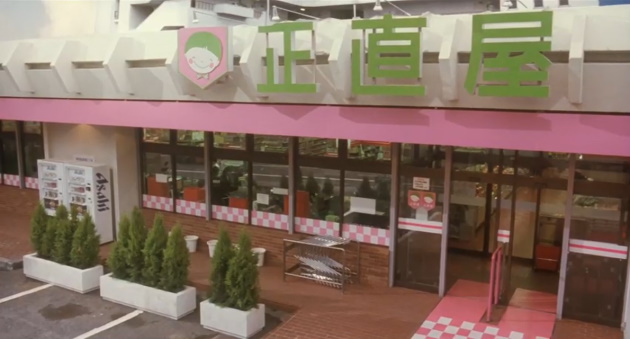
Juzo Itami’s penultimate film Supermarket Woman has all the hallmarks of a movie intentionally trying to position itself for cult classic adoration from its quirky premise to the film’s comic book-like aesthetic in terms of both its visuals as well as the comiclly clear-cut distinction of good-guys and bad-guys. Above all, Supermarket Woman feels like a film in which its visual motifs were created with the intention of selling real-world merchandise. I’d happily buy t-shirts with the logos of fictional supermarket rivals Honest Mart and Discount Demon.

The noble but failing Honest Mart is struggling against its absurdly evil rival Discount Demon, a supermarket run like a militaristic operation out of Imperial Japan (with their business meetings emitting strong Yakuza vibes). Discount Demon is the Chum Bucket to the Krusty Krab or Mondo Burger to Good Burger, thus it takes the ever-fabulous Nobuko Miyamoto as Hanako Inoue to use her womanly, housewife intuition to reinvigorate Honest Mart. Miyamoto’s impeccable comic timing both physical and verbal has a real sense of contagious enthusiasm. Much of the sheer fun within Supermarket Woman comes from the screwball comedy-like antics of Hanako and her co-workers as they try to please customers and right various wrongs, from gathering hoards of shopping carts left in the parking lot to dealing with frustrated Karens on the verge of asking for the manager. Equally as memorable is Miyamoto’s wardrobe of bright, contrasting colours. Even when she wears an informal blazer it is accompanied alongside tartan trousers and sneakers, in keeping with a character who never takes herself too seriously.

Just how accurate a reflection is Supermarket Woman of Japanese commerce in the post-bubble 1990s? It is unique to observe a wholly independent supermarket that doesn’t trade under a franchise name (something which I’ve never even seen in my own country). This is emblematic of the world Supermarket Woman inhabits, one which presents Japanese supermarkets like the Wild West with the absence of any legal regulations or government oversight. Discount Demon is determined to eliminate the competition so they can raise prices, while both outlets engage in actions such as repacking food with a new expiry date, mixing meats and passing them off as more expensive cuts and even falsely advertising imported meat as being home-breed Japanese.

The exterior and interior of Honest Mart is a world of unbridled, Americana-inspired artifice with its frequent use of checkered patterns and bright colours (in particular the film’s prominent use of pink and red) as well as a general warm and fuzzy atmosphere. To accompany this is the film’s soundtrack to consumer capitalism – stereotypically, catchy department store music by composer Toshiyuki Honda. Can any lost media sleuths track down an isolated version of the score? As far as weirdly specific film accolades go, Supermarket Woman is the 2nd best Supermarket-themed film I’ve ever seen. The top spot goes to oddly enough, another Japanese film, Mikio Naruse’s Yearning (1964). Recommend for a slightly more unorthodox double-feature experience.

Scattered Clouds [Two in the Shadow/Midaregumo] (1967)

Wait A Minute, There Were No Scattered Clouds In Scattered Clouds!

***This Review Contains Spoilers***

The plot synopsis of Scattered Clouds (aka Two In The Shadow or its original Japanese title Midaregumo) sounded fascinating and had me asking myself, how does such a scenario play out in a believable and non-contrived manner? A man falls in love with the widow of a man whom he killed in a car accident and eventually, she falls in love with him in return. Sounds like the type of intriguing fodder for a daytime talk show, I can just imagine the Jerry Springer-style title – “I’m In Love With The Man Who Killed My Husband”. However, the closest counterpart to Scattered Clouds is Lloyd C Douglas’ 1929 novel Magnificent Obsession (itself later adapted into a 1954 film by Douglas Sirk).

There is a little-known acronym for a person who is responsible for the accidental death or injury of another known as a CADI (Caused Accidental Death Or Injury). The term has no official recognition but to date is the closest term in existence for such an individual. Mishima Shiro (Yūzō Kayama) accidentally kills another man by the name of Hiroshi Eda (Yoshio Tsuchiya) in a car accident, leaving his wife Yumiko (Yōko Aizawa) widowed. The accident itself is not portrayed on screen nor does it have any build-up, it is just announced out of nowhere 8 minutes into the film, making its impact all the more shocking and reflective of reality. Mishima is later found in court to be not guilty of negligence (lost control of his vehicle due to a burst tire) and the film shows the negative toll it takes on the CADI with his company forcing him to relocate which in turn ends his current relationship and leads to depression. At the same time, his guilt and compassion result in him paying money in monthly installments to the newly widowed Yumiko even though he has no legal obligation. That said, Mishima doesn’t have the wisest of intentions when he chooses to actually attend the funeral of the man he accidentally killed (even if it is to pay his respects), and easily gives away that he is the man responsible (keeping in mind he hasn’t been acquitted at this point). Evidently, his unwise decision-making extends to later in the film with his cringe-worthy attempt to woo Yumiko with a Tommy Wiseau-level line (“You were so cute, like a child, when I surprised you. Actually, you were amazingly sexy too”). 

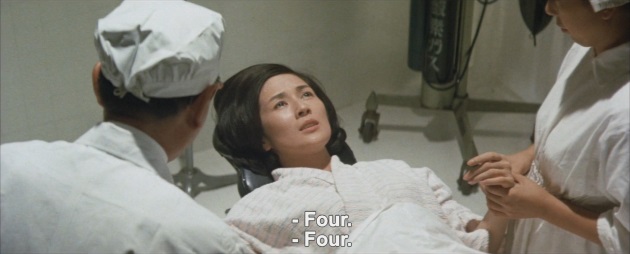
The tragedy of Yumiko Eda on-the-other-hand actually reminded me of George Bailey from It’s A Wonderful Life, a character whom the world is their oyster with the prospect of travelling and seeing the world, only to have it taken away and instead find themselves stuck living in a dead-end town. Before his untimely death, Yumiko and Hiroshi were set to move to Washington D.C. after he got the job as an ambassador for the company he works for. This plight of a woman who was dependent on her late husband also results in the disappearance of her unborn baby, only in the womb for three months at the time of her husband’s accident. Shortly afterwards she goes to a hospital in which all that is shown is a doctor telling her to count to seven, after which there is no mention of the baby: miscarriage, abortion, stillborn? Abortion was and still is legal in Japan if the mother meets an economic threshold of poor living conditions. Prior to this scene in the hospital, Yumiko is forced to endure dehumanizing bureaucracy following her husband’s death (not to mention there are even discussions of Hiroshi’s replacement at his own funeral) in which she is told “No additional postnatal allowance will be paid for a pregnancy under five months” – make of that that what you will.

The plot in Scattered Clouds does have some reliance on coincidence bringing the characters of Yumiko and Mishima together. In particular, Mishima is relocated by his company to the town in which Yumiko grew up and decides to move back following her husband’s death (that being Aomori in the prefecture of the same name) but does so without the contrivance getting in the way. Scattered Clouds does a remarkable job of conveying the naturalistic evolution of their relationship, going from Yumiko’s inability to even look at Mishima to the pair eventually falling in love. Much has to be commended for the chemistry of the two actors in making this transition believable but the real turning point in the relationship is when Mishima finally challenges Yumiko on the way she treats him despite all the amends he has tried to make, only then does she herself begin to feel a sense of guilt. I believe the other aspect which aids the believability of this unorthodox romance is the Florence Nightingale syndrome from when Yumiko spends the night caring for Mishima after he catches a fever. Scattered Clouds can serve as a companion piece to Mikio Naruse’s earlier film Yearning (Midareru), with both films featuring Yūzō Kayama in a highly unlikely will they/won’t they relationship.

Scattered Clouds also has an odd distinction of featuring quite a few “put-downs” of various eastern hemisphere cities. Aomori, where much of the picture takes place (not to mention filmed) is described as having people who are blunt and unfriendly as evidenced by the waitress at the café, serving coffee with no care. Then the city of Lahore in western Pakistan (from which Mishima is to be transferred) is described as an “awful place” as well as the movie claiming it is the birthplace of cholera. I can’t find any evidence this is the case so was this a misconception in Japan at the time (I suppose it doesn’t help when your city sounds like the name of a French prostitute)? To wrap things off, whether justly or unjustly, the film describes Dhaka, Laos, Saigon and Karachi as places no one wants to go.

Scattered Clouds was Mikio Naruse’s final film of a 37-year career and can go down as one of the finest directorial finales. Scattered Clouds is only Naruse’s 3rd film in colour and only work in the post-black & white era and while the picture does have a more cotemporaneous feel than had it been made a few years earlier, there is still a dreamlike quality present. I just have to enquire as to what is the meaning of the film’s title as nowhere in Scattered Clouds are scattered clouds present. Well, the original Japanese title Midaregumo actually translates to Turbulent Clouds (which are present within the film during a key scene in which Mishima comes down with a fever). I guess Scattered Clouds has a more romantic ring evoking classic melodrama.

Yearning [Midareru] (1964)

The High Cost Of Low Price

***This Review Contains Spoilers***

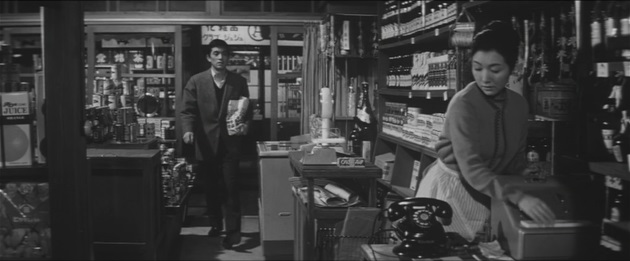
Mikio Naruse’s Yearning is a unique melodrama with its story combing unorthodox romance/family drama alongside commerce with the Morita family struggling to keep their Mom & Pop store in business against the closet the picture has to a villain in the form of the Walmart-esqe Shimizuya Supermarket. This scourge of modernity with its low prices and ease of convenience is represented throughout the film by a promotional truck as it drives through this small, unnamed town accompanied by music with sinister undertones to it and even more so when it is seen driving along the town’s outskirts with its barren wastelands making it all the more haunting. The supermarket simply doesn’t have the human touch that the shop around the corner such as the Morita’s store provides. However, they simply can’t compete when the supermarket sells a single egg for 5 yen when Mom & Pop need to sell them at 11 yen in order to turn a profit. It is surprising to see this subject matter being explored in 1964, but is the film’s fatalism justified with the supermarket owners acting like bullies and one of the town’s shop owners even committing suicide over the prospect of another supermarket opening? At least in the UK the corner store still soldiers on, many trading under franchise names but independent ones do exist. Yearning does have that British kitchen sink vibe with the store itself having an English feel to it with all its canned goods, glass bottles and weighing scales. Even the music score courtesy of Ichirō Saitō is oddly kitschy at times, throwing in what appears to sound like a theremin or synthesizer on occasions.

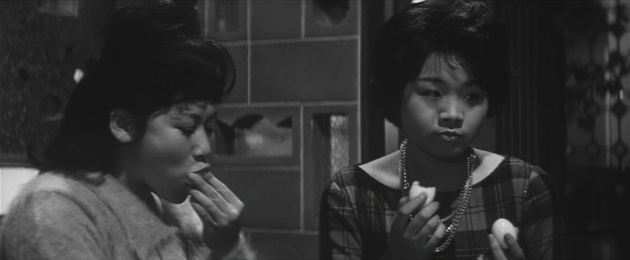
At the beginning of Yearning, we are treated to a scene in which a group of young people hold an egg-eating contest in a bar (move over Cool Hand Luke!). Before the contest begins, one woman speaks of how she “ate 12 of those, had diarrhoea and couldn’t stop burping for 3 days” (you know, like you do), as the gross, undignified spectacle proceeds with the young folk frantically stuffing eggs into their mouths while the referee sings the Can-Can (man, the Japanese are weird). The scene does introduce the character of Koji Morita (Yūzō Kayama) and establishes the rivalry his family’s store has with the supermarket, but why do it in such a bizarre manner? A potential metaphor that Koji is a bad egg is the best I can derive from the spectacle. I think of this scene like the Thunderlips fight in Rocky III, one which has no greater purpose or relevance to the plot but it sure is entertaining to watch.

Koji Morita is a total beta-male. This 25-year-old is unemployed with no desire to work, no concern for his future, takes no responsibility for his actions and frequently gets into trouble with the law (Kayama would play another spoiled-brat type character the following year in Kurosawa’s Red Beard). However, his sister-in-law Reiko (Hideko Takamine) is the polar opposite. Reiko has been with the family for 18 years, marrying in when she was 19 and Koji was 11 years her junior at 9 (the film forces the viewer to do some mental arithmetic to figure out the character’s ages). Following the death of Reiko’s husband during the war, she stayed with the family and rebuilt their business after it was destroyed in bombing raids. There is an odd and fascinating relationship between Reiko and Koji, the manner in which they interact you would believe they are biological siblings who grew up together, partially aided by Koji referring to Reiko throughout the picture as “sister”. Koji has an unhealthy dependence on Reiko, relying on her to run the family business which allows him to pursue a gallivanting lifestyle – in ways she is like a mother figure to him, often addressing him like a child. This already unconventional relationship is made all the more so with the film’s big reveal, Koji admits to Reiko that he is in love with her, leading to the most awkward will they/won’t they in cinema history (talk about the extreme opposite of being out with the in-laws, amirite?). Koji appears to be oblivious to the issues which could arise from the taboo and emasculating nature of an older woman/younger man relationship and while the film makes no mention of this, the question should be asked as to how much does he resemble his deceased brother? Moral and ethical conundrums are often raised in Naurse’s films. In the case of Yearning, one of these is to what extent can an in-law remain part of a family after the spouse has passed away – blood is thicker than water. This alongside the business implications of the family’s plan to merge their business with another in order to open their own supermarket puts pressure on Reiko to ultimately leave the family.

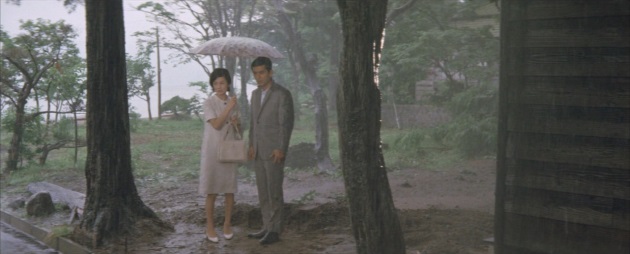
During the act of Yearning, Reiko embarks on the train journey home to her original family in Tokyo, only for Koji to unexpectedly accompany her. During their time on the train, there is a natural build-up of her affection towards him. Reiko eventually decides the two of them should get off at the next station and they travel to a little village in the woods called Silver Mountain, the most romantic setting imaginable. At this point it appears they may actually get together as Reiko delivers one of the film’s most poignant lines; “I’m a woman too. You told me that you loved me. To tell you the truth, I was so happy when you said that”. This period of romantic bliss doesn’t last long however as Reiko suddenly comes back to her senses when Koji attempts to kiss her. Yearning concludes with a final image which does stay burned into your memory after watching. When Reiko discovers the following morning that Koji has been found dead after falling off a cliff (boy, that escalated quickly), the picture finishes with a Leone-style close-up of Takamine’s face followed by a hard cut to “The End”. It is a very abrupt ending but I do believe it is appropriate as is does enhance the tragedy and also metaphorically relates to the film’s original Japanese title “Midareru”, meaning to be disordered, disarranged, disarrayed, dishevelled or to lapse into chaos.

As of writing this review, Yearning has never had any western home media release but you can watch it on the Criterion Channel but only in the US & Canada, that is of course unless you head over to our friends over at Express VPN and get three extra months for free, ok only joking (I’m not going to do a Ben Shapiro style ad read).

When A Woman Ascends The Stairs [Onna ga Kaidan o Agaru Toki] (1960)

It’s 9 O’Clock On A Saturday, The Regular Crowd Shuffles In

***This Review Contains Spoilers***

Kurosawa, Ozu, Mizoguchi, the three big boys of Japanese cinema, but who is the fourth Beatle in this group of filmmakers? It would have to be one Mikio Naruse, a director in the genre of Shomin-geki – realist films which focus on the everyday lives of the lower to middle class. With this review, I will do what little I can to get this unsung master of cinema the attention he deserves.

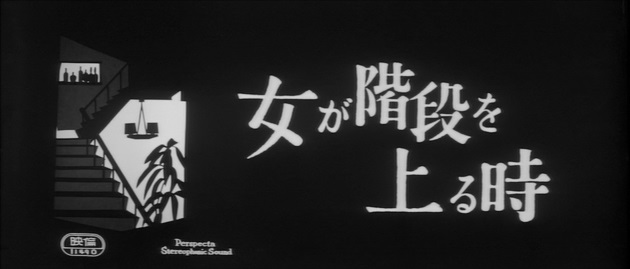
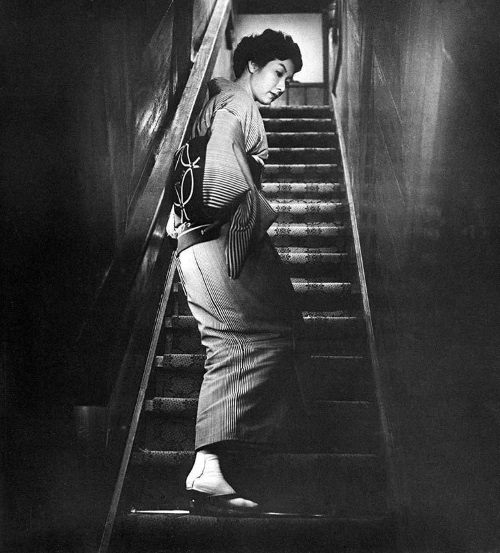
Hideko Takamine is Keiko “Mama” Yashiro, the titular heroine of When A Woman Ascends The Stairs, the hostess with the mostest working in a bar within Tokyo’s Ginza district, one of the most expensive and luxurious districts in the world. The profession of bar hostess is very much a Japanese phenomenon, primarily female staff who cater to men seeking drinking and attentive conversations. Regardless of what exactly defines a bar vs. pub vs. nightclub, the establishments featured in When A Woman Ascends The Stairs are of the highest class with the bar deco seen throughout the film being to absolutely die for. When A Woman Ascends The Stairs is one of the best examples of a film to really capture the essence of the nocturnal urban jungle with this dark and brooding melodrama being shot in velvety black & white with stunning widescreen cinematography. This mood is also exemplified right from the opening credits with its Saul Bass-style minimalist illustrations of bar interiors accompanied by the music score courtesy of Toshiro Mayuzumi, comprised of very soothing, xylophone-infused, 60’s-style lounge music (sadly no soundtrack release or isolated score appears to exist). With this setting, When A Woman Ascends The Stairs has a Casablanca-like flavour with a cast (featuring many character actors) conducting conversations with sublime etiquette amongst a smoke-drenched atmosphere. 

It is established in a subtle manner that there is an expectation for hostesses to sleep with their clients. Keiko outright says she is a conservative woman who doesn’t want to lower her standards as she battles to make a living while retaining her self-respect as well as staying faithful to her late husband. Keiko does not actually enjoy the job of being a bar hostess, hence the metaphor of the film’s title – ascending the stairs is an uphill battle to survive as she faces her job and life in general with a fake smile and glass in hand (at one point she is desperate enough to even visit a fortune teller to fork out a future path). Keiko is given the nickname of Mama-san, which I do find odd as she is only 30 years old but I guess that is still past the spring of her life. Due to this, she faces a crossroads in her life if she wants to maintain her standards – get married or open her own bar.

In one key scene, Keiko speaks to the bar’s owner after closing time whom she tells Keiko, “Isn’t your kimono rather subdued? A colourful one is better” (according to the film’s opening, Takamine herself designed the film’s costuming). A lot of implications come out of this one request and it is by another woman, enforcing a culture and expectation for hostesses to sleep with their clients. That brings to mind the other famous form of Japanese hostess, the geisha (of whom during the film one does appear in the bar Keiko works in much to her displeasure). There do exist a number of parallels between When A Woman Ascends The Stairs and Kenji Mizoguchi’s A Geisha (1953), both detailing women who are being forced to sleep with clients in order to stay afloat with such cultures being enforced by the female owners of the establishments – I do recommend both pictures for a double feature. Following the despair brought on by her failure to either get married or open her own bar, Keiko does eventually sleep with a client, Mr Fujisaki (Nobuhiko), or I should more accurately say is raped by him. Yet the morning after she expresses happiness to Fujisaki and expresses her love to him (make of that what you will). The closest the film has to a purveyor of morality is the bar manager Kenichi Komatsu (Tatsuya Nakadai), as he always refuses the advances of women in the bar and holds great admiration for Keiko for her conservative standards (“You can’t find many women like her in Ginza”). 

When A Woman Ascends The Stairs features a lot of talk about money and the pursuit of it (we even see the use of the ancient abacus is still in effect as electronic calculators were not yet the norm) from unpaid bills from Keiko’s last bar to the investment of her own place to the money she has to send to her ungrateful family. Even in this heartless world, the talk of finance doesn’t even halt when Keiko is recovering from a stomach ulcer but more significantly, in the wake of a woman’s suicide over her own financial woes, creditors make an appearance at her funeral to ask the family for the money she owed them (debt cancellation after death doesn’t appear to exist). All this discussion of money does slightly work against the film’s favour to the western viewer unless you are an expert in Japanese currency as due to the nature of the Japanese yen and inflationary changes since 1960, it’s hard to quantify just how much money the character’s in the film are discussing. Nonetheless, I have done the research to quantify several key amounts mentioned throughout the picture. The 170,000 yen of Keiko’s unpaid bills from her last place is approximately 7,500 US dollars in 2023, her 30,000 yen apartment rent is 1,700 dollars and the 20,000 yen she gives to her family every month is 1,100 dollars.

By the conclusion of When A Woman Ascends The Stairs, nothing is resolved, Keiko is back at square one and has resigned to her fate. Hideko Takamine has that balance of lovability but also a strong sense of perseverance and stoicism and with the universality of many films from Japan’s golden age of cinema and regardless of the specifics of Keiko’s story, being stuck in a vicious circle of which there is no easy escape is one many a viewer can relate to with the continued ascension of those stairs.

House [Hausu] (1977)

A Method To The Madness

***This Review Contains Spoilers***

What struck me most on my first viewing of House (or Hausu)was that alongside the film’s sheer over-the-top, phantasmagoric madness, I found the whole thing to be weirdly endearing. Initially, I was concerned I was getting into something awfully pretentious but I was able to surrender myself to the fact that I was watching a film which employees a different filmmaking technique in just about every scene. House has one of themost cliché of horror movie premises, yet it gives way to one of the most unique and weirdest viewing experiences with descriptions ranging from “Evil Dead on steroids” to “a Scooby-Doo episode directed by Mario Bava” – perhaps no other film holds a better claim to the title of being “one wild and crazy ride”.

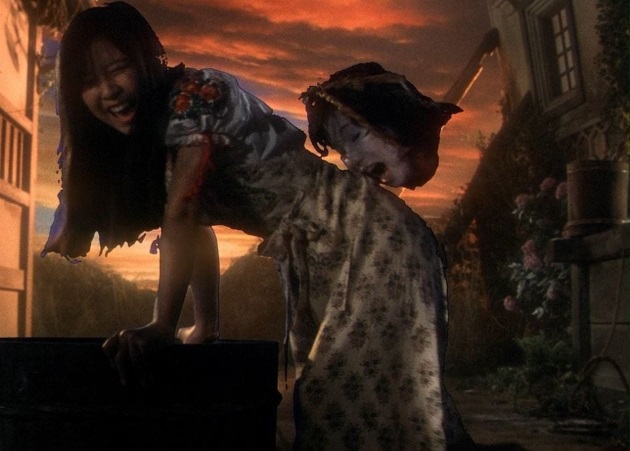
Japan’s reputation for “WTFness” could make House a film easy to dismiss, however, there is a method to the madness. Director Nobuhiko Obayashi was a director of commercials before taking on the mantle of House, and the artifice of commercials is all over the film alongside (pre-MTV) music video style editing, of which I’m sure it’s no coincidence that House was shot using the 4:3 aspect ratio – the aesthetics of House are all about the embrace of artifice. A film of contradictions, House is an art-house film (or art-hausu film one could say, ba-tum-tiss!) and one which was reportedly a huge success with the youth demographic in Japan upon its release (with the film’s extraction of sex appeal from its young female stars as well as nudity in several scenes may have got many young men into the theatres). In this regard it’s also worth mentioning House stands out as it is uncommon for Japanese films to have an English language title. Yet at the same time House symbolizes a return to tradition, a rejection of realism in 1970’s cinema. Right from the opening prologue, the movie proclaims in the vintage Broadway font what you are about to see is “A Movie Presentation”. This is part of the reason why beyond its scenes with killer futons, man-eating pianos and decapitated heads biting girls on the derrière, House is as I previously mentioned, weirdly endearing – the director’s love for cinema comes through and feels like a celebration of the medium. If I were to compare House to another film it would have to be Buster Keaton’s Sherlock Jr. Both films celebrate the art form with their use of special effects which blur the line between reality and fantasy with both also featuring a movie within a movie. House has a Technicolor-look reminiscent of the work of Jack Cardiff with its use of deep, saturated colour with the film’s colour scheme remains largely consistent throughout with its use of oranges, reds and blues and being a horror picture, it does have that autumnal/Halloween vibe (even though it is set during the summer). Speaking of, as a horror film is House actually scary? Well, this measure is subjective of course but I did personally jump at the reveal of severed head of the character Mac as well as Gorgeous’ giant profile suddenly entering to the screen from the right.

House is like a feature-length dream with its mad array of images. The images from the film were conjured from the mind of a child, Obayashi’s pre-teen daughter Chigumi Obayashi (who does receive a conceptual credit and even has a cameo in the film as a shoemaker). I am dubious of having a child being a film’s creative consultant since the last movie I saw to do so was those dreadful Robert Rodriguez Spy Kids films but in House, this influence works and another aspect which makes the film endearing. To anyone who has never seen House, it’s difficult to put into words just how insane a film this is without sounding melodramatic. This encyclopedia of movie storytelling and its array of practical special effects wizardry is a joy to behold from primitive blue screen to the use of stop motion – there are a few films in which an obscene amount of effort is put into every shot. On the other hand, there are sections of House which do have a chilled-out nature to them and the cheesy vibes of Beach Party film. Just a warning that several sequences in the film do contain strobe lighting effects (as if the Japanese weren’t content enough with giving people seizures through Pokémon episodes). Upon my third viewing of House, I did find myself becoming more desensitized to its bizarre nature and more understanding the filmmakers’ mindset on how they could have created something like this. That said, where Mr. Togo’s transformation into a pile of bananas and the bear wearing the chef outfit fit into the grander scheme of things I can’t explain. I guess you got to have some randomness for randomness’ sake.

House follows seven girls each named after a single personality trait- Gorgeous, Kung Fu, Prof, Fantasy, Mac, Sweet and Melody. At the beginning of their summer break, they decide to spend some time at the country house of Gorgeous’ aunt, where all is not what it seems. The story does play as an inverse of Snow White and The Seven Dwarfs, seven girls each defined by a single personality trait, show up at a house in the middle of nowhere which is in need of cleaning, owned by an old woman who lives alone. Of the ensemble, Gorgeous is the closet to the film having a protagonist as she has a clearly defined arc, beginning with a subplot involving her father attempting to bring a stepmother into the family and freeing his daughter from domestic chores such as ironing his shirts in a story right out of a Yasujirō Ozu film. Even in the film’s opening scene, a teacher mentions how she is having an arranged marriage during the summer, a topic often explored in Ozu’s work. The only girl in the group named after a purely negative trait (and of course, she dies first) is the gluttonous Mac (derived from the English word “stomach”), although fantasy itself holds its negative aspects, My favourite of the group however has to be alpha in the form of Kung Fu, whose speciality skill leads to several very humorous (whether intentional or not) fight scenes against an array of moving objects.

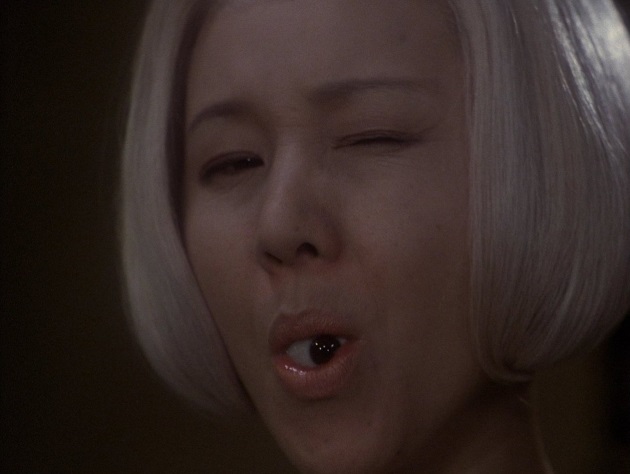
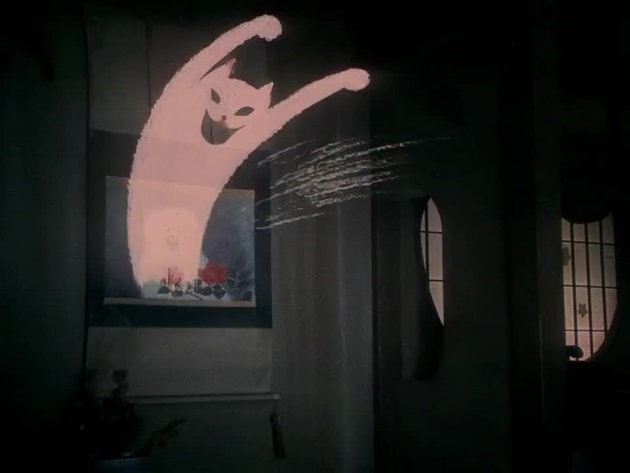
Acting as a mascot for House with its prominence in promotional material is the white ragdoll cat that joins the girls on their adventure (good kitty!). Cats hold a supernatural significance in Japan and it’s evident the cat in House is doing the bidding of a witch, even preventing Mr. Togo from joining the girls at the house to potentially rescue them. This witch in question is the aunt (Yōko Minamida) herself who proves to be an interesting figure. She has an ominous ghostly look to her and is portrayed in the mould of the classic Yurei, a ghost from Japanese folklore that cannot pass onto the afterlife. She is also vampiric in nature, wearing tinted glasses when going outside, and feeling unwell after being in the sun not to mention the interior of her house is very dark. Oddest of all, she feels revitalized by the presence of the girls which allows herself to not require the use of her wheelchair. The aunt is a Willy Wonka-like figure and the house is her factory as the girls are taken out one by one by the house itself, much of this done through the watchful eye of Gorgeous assuming the mantle of her aunt, becoming possessed by her in act of metamorphosis. Like the kids in Willy Wonka And The Chocolate Factory, it’s not made clear if the girls are actually killed literally or just in a metaphorical sense. Usually, in slasher films, the young people are killed as a comeuppance for their promiscuous actions, but do the girls in House deserve what they receive? One of the film’s themes and one which is confirmed by the director is how the trauma of World War II still affects the aunt whose finance never returned from the war and correspondingly how the seven girls take their peacetime living for granted. To quote Obayashi; “These girls born after the war and therefore unaware of how precious peace is, come to the house on summer vacation. The old woman’s bitterness about the war turns into an evil spirit and devours the girls”. This taking of peace for granted is showcased during the movie within a movie,  in which a flash from a camera cuts to an atomic cloud, to which one of the girls makes the trite comment, “That looks like cotton candy”. This is at least the case with the subtitles on the US Criterion Collection release. On the UK Masters Of Cinema release, there are no subtitles on this shot even though giddy chatter from the girls can be heard. Speaking of subtitle differences between these two aforementioned releases, in the scene introducing Gorgeous’ father, a film composer who has just returned from Italy after working with Sergio Leone, his line of dialogue in the Criterion release states the rather unbelievable comment “Leone said my music was better than Morricone’s”. However, in the Masters Of Cinema release, the line is the less dramatic “Both Leone and Morricone liked it very much”. Is someone taking liberties in the translation process?

Of the various interpretations of House, that which strikes me the most is the film being a coming-of-age tale of Gorgeous’ urge to stay a young woman and refusal to enter womanhood. As the house eats the young girls, blood erupts from it, the blood of menstruation – a symbol of womanhood triumphing over youth. It’s also worth noting the blood in question comes from the cat, an alternative name for a cat is a…, ok you know what I mean. Likewise, when people are young they will have certain friends and as they become older they may move on from these friends as a result of maturity. Gorgeous’ dying friends can be seen to represent this while her stepmother going up in flames in the film’s final scene could be viewed as her lack of need for a mother figure in adulthood. I have read theories bringing this theory to greater extremes of analyses, in particular, an extensive write-up on the now defunct (but thankfully archived) IMDB boards in which a user by the name of nemuro8 proposes the seven girls all represent aspects of puberty (I’m not sure if I buy into it but it’s food for thought); “Fantasy represents naivety and the fear of the change. Mac represents hormonal changes with her increased appetite. Sweet represents the desire to fill expectations and the role of domestic life. Melody represents creativity and the desire to have fun. Kung-Fu represents courage and brashness. Prof represents logic and leadership. Gorgeous represents vanity and beauty.”

The soundtrack to House (which was released before the film had even entered production) deserves a review in its own regard as it works as a cohesive album rather than just a collection of songs (with most but not all of the tracks you wouldn’t guess are from a horror film). The jovial main theme of the film has a section with a superb synthesized rendition of the melody, which is only heard briefly in the film itself. Hungry House Blues on the other hand is a delta blues style track that only appears very briefly in the picture, however, this version on the soundtrack is a whooping 6 minutes long complete with plenty of slide guitar action and even has vocals in the style of a 1930’s Mississippian black man (who provided these vocals?). Buggy Boogie is a piece of early ’60s, rockabilly cheese while The Beach Boys style Cherries Were Made For Eating is a real uplifting, banger of a choon, provided by the band Godiego (whom makes a cameo in the film as the song is being played). Eat is in a way the defacto theme of Kung Fu, as the piece is played every time she gets involved in her trademark skill – a good piece if you need a quick dose of adrenaline and the one track which has an undeniably funky, 70’s sound. In The Evening Midst is the most profound track and the real centrepiece of both the film and album, an instrumental played by Melody several times throughout the film which acts as a relief to the horror surrounding it. The track feels similar to the piano melodies from David Bowie’s Hunky Dory and ends on a beautiful crescendo (it’s also worth noting, this piano melody does bear a striking resemblance to the piano riff on the song Welcome to the Black Parade by My Chemical Romance). The final track of both the album and film is titled House Love Theme, this Beatles-like calm after the storm which feels reminiscent of Abbey Road side B. This is the only song in House which actually features Japanese lyrics of which I am unable to find a translation of thus I can’t comment if the lyrics actually hold any thematic relevance to the film.

House is the kind of film to be watched on the big screen at a midnight showing alongside the likes of The Rocky Horror Picture Show. It does feel like was designed and destined to become one of the ultimate cult films. I do find myself fascinated by films such as this which remained unknown in the west for decades before obtaining a mass following. Of the film’s 149 reviews on IMDB, only 14 were written prior to the film’s first North American release in 2009. It makes you wonder what’s still out there…

From Up On Poppy Hill [Kokuriko-zaka Kara] (2011)

Close Knit Family

***This Review Contains Spoilers***

Opening a film in which the protagonist is seen getting out of bed and going about their morning routine is one of the most cliché ways of beginning a story (i.e, every student film ever), but From Up On Poppy Hill is so utterly likeable that I don’t care. Set in Japan’s port city of Yokohama circa 1963, the romantic, seaside setting really amps the film’s likeability with the accompanying nostalgic soundtrack being a pure delight from the opening ragtime theme to the Nina Rota style compositions as well as the use of Kyu Sakamoto’s Ue o Muite Arukō (known in the US as Sukiyaki in which it charted at number 1 in 1963). With a script from Miyazaki Sr and directed by Miyazaki Jr, From Up On Poppy Hill is structured like a melodrama with its use of dramatic flashbacks and the common melodramatic trope of a maritime setting. At one point the picture even makes reference to its melodramatic state (“It’s like some cheap melodrama”).

Umi Matsuzaki is the eldest child in her family and has responsibility thrust upon her following her father’s death and her mother’s departure to study abroad resulting in her making everyone’s meals, keeping fiancés in check and raising maritime signal flags every morning. The selfless and humble nature of a character like this could easily come off as aggrandizing but rather the character of Umi does come off as somewhat inspirational with her ability to bring out the best in those around her, earning her the title of “Goddess of good luck”. Umi develops feelings for fellow student Shun Kazama, however, Shun ends up discovering as a result of post-war circumstances, that Umi is actually his sister (although this turns out not to be the case come the film’s end). The two are forced to continue as only friends although it’s evident they are trying to retrain their feelings for each other. This culminates in a scene by a bus stop in which Umi states “I’m in love with you Shun. Even if we’re related, even if you’re my brother, my feelings will never change” to which Shun responds “I feel the same about you”. There is historic precedence for this as From Up On Poppy Hill is set at the time following the war in which young couples in Japan couldn’t be too sure that they were not related in some way but it doesn’t change the fact that the scene is an absolutely jaw-dropping moment. The scene is played out to be romantic and perhaps the movie could have dealt with the subject matter in a different manner as opposed to upping the swoon factor over an incestuous relationship but I digress.

The other major plot point present in From Up On Poppy Hill regards the theme of traditionalism vs modernism as the students of the local high-school try to save their clubhouse known as The Latin Quarter which is set to be demolished and replaced with a new building ahead of the 1964 Tokyo Olympics. The Latin Quarter in its old state is a massive, creaky building with so much character contained within its walls in which every inch is in use – as a viewer I did become invested in its conservation. At a demolition meeting, Shun runs onto the stage like Elmer Gantry and declares “There’s no future for people who worship the future and forget the past”. Unintentionally prescient with this theme is that come the turn of the decade when From Up On Poppy Hill was released, the west had entirely done away with traditional animation on the big screen (bar a few pockets), whereas Japan has so far never let it go. Correspondingly, it is wholesome just how passionate these students are about learning (in particular the overly enthusiastic philosophy-loving giant) with The Latin Quarter having a club for just about every intellectual pursuit. Compare this to any American film set in a frat house where anarchy, mischief and mayhem are the name of the game. Alongside Umi and the responsibility thrust upon her, all these kids are more than ready for adulthood. I for one welcome our new oriental overlords.

Speaking of references to other pictures, in one of the film’s establishing shots, a single factory chimney is shown emitting Pink smoke whereas the others emit regular smoke. Anyone who has seen Akira Kurosawa’s High and Low will understand this possible reference, keeping in mind the Kurosawa picture is also set in Yokohama and was released in 1963 (so I can assume both these movies unofficially take place in the same universe). Likewise, when Umi sees her mother’s red slippers as an indication that she has returned home after months away, is this a nod to The Wizard Of Oz and its famous line “There’s no place like home”?

If there is one great standout supporting character in From Up On Poppy Hill has to be the high school’s chairman Chief Director Tokumaru, a total chad with his rough, gravely voice, larger-than-life figure, flawless posture and upbeat personality. He is not at all a typical, slimy bureaucrat and understands the kids on their level and is sympathetic to their cause. When the kids go to visit his office in Tokyo, he asks Umi in the past tense “what did your father do?”. There is no indication that he knew the kids beforehand and seems to instinctively know her father was dead. Having a figure like this in a position of power probably explains how the students were able to infiltrate the Ikiru level bureaucracy to save The Latin Quarter.  

Whisper Of The Heart [Mimi o Sumaseba] (1995)

I Don’t Think There’s Any Artist Of Any Value Who Doesn’t Doubt What They Are Doing

***This Review Contains Spoilers***

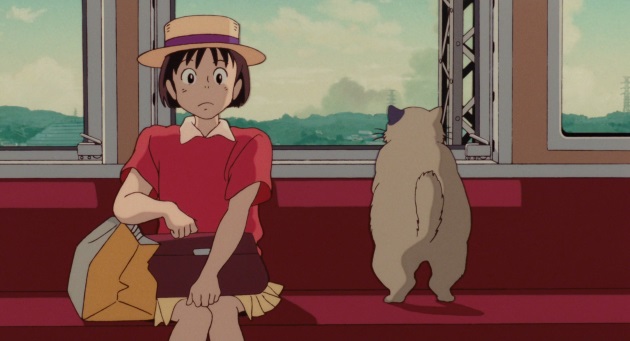
Whisper Of The Heart is Studio Ghibli’s love letter to creatives and a picture which contains great insight into the uncertainty derived from growing up and the role of education in this nostalgic coming-of-age tale. Fourteen-year-old Shizuku Tsukishima is the cheerful and infectiously optimistic protagonist of the story. She manages to find the joy in the mundanity of everyday life from something as simple as the sun coming out to seeing a positive message on the side of a blimp. Just observe the pure joy she gets from finding a quirky antiques store in a suburb (perhaps a bit too much as she nearly gets hit by a car while running across the road and never realizes it). The eccentricity of Japan is even on subtle display from the fact that a pork pie hat can be worn in common parlance and a girl can pursue a chonky cat for quite some distance just for the fun of it. It’s this aspect of Whisper Of The Heart which really makes you want to cherish life’s little moments.

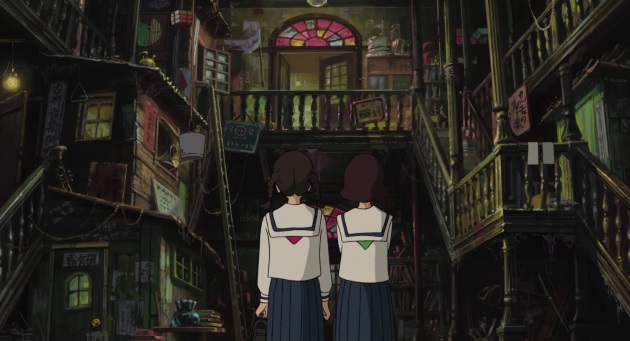
Whisper Of The Heart is set over the course of 1994 (as indicated by Shizuku’s calendar), with a number of subtle indications for the passing of time throughout the film. The most noticeable of these being the seasonal variation of Shizuku’s school uniform with a white top for spring/summer and a navy-blue alternative for fall/winter. The initial catalyst of the story is set into motion when Shizuku’s father informs her that the local library is going through a transition from the old-fashioned book card system to a barcode system, much to her disappointment (I can recall my local library still using book cards in the early 2010’s). Goddammit modernity, sometimes the old ways are just better! It’s this tradition which ignites the film’s romance as Shizuku notices someone by the name of Seiji Amasawa has been taking out all the same books as her in this variation on The Shop Around The Corner formula re-imagined for the 1990’s. Shizuku and Seiji themselves aren’t too dissimilar to Jimmy Stewart and Margaret Sullavan in Ernst Lubitsch’s 1940 romantic comedy with Seiji’s initially jerky behaviour and Shizuku’s bookworm personality (unfortunately, when I was off this age any expression of a desire to read was social suicide – sad but true). 

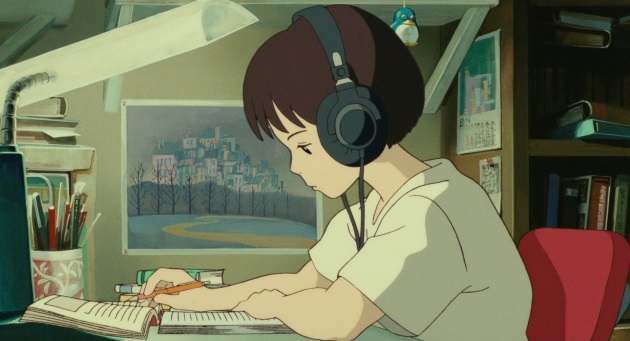
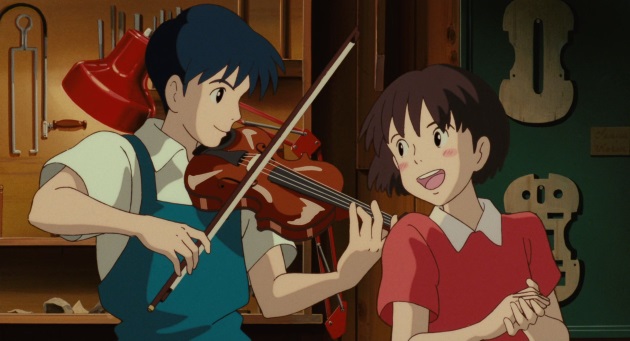
As is a common recurrence in Studio Ghibli’s films, Whisper Of The Heart is the story of a young, teenage girl forced into a position of maturity (it does make sense that the female sex tends to be the focus of these stories as research has shown that girls on average mature faster than boys). One major interlocked aspect of Whisper Of The Heart is the classic conflict of education vs. hands-on/real-world experience. Shizuku is attending middle school (aka junior high school) and is studying for her high-school entrance exams. Her love interest Seiji on-the-other-hand opts to attend a trade school in Cremona, Italy to further learn the craft of making violins rather than attend high school, much against his parent’s wishes (high school is not compulsory in Japan). This disapproval highlights the lack of respect one can entail for a practical hands-on profession over a more middle-class, so-called “real job”. Part of Shizuku’s impetus to embark on her writing of a novel comes from the insecurity that Seiji is far more developed in his own art form. Her focus on writing begins to affect her school grades, feeling that her need to write a first draft of her novel within two months before Seiji returns from Italy is more important than her school grades. Unlike Seiji, Shizuku doesn’t know what she wants to do with her future. She asks her older sister Shiho when she decided on her future, to which she responds with the dubious answer, “I’m at university finding that out”. This quote is particularly prevalent from a UK-centric point-of-view, when official figures state in the year 2017/18, 50.2 per cent of English 17-30-year-olds had participated in higher education, 20 years after the New Labour government set the target of having 50% of young people attend university (with these degrees often being of a useless nature and provide no stepping stone to a future career). From a personal point of view, I didn’t know what I wanted to do with the rest of my life when I was 14 and it’s self-evident very few people of that age either have any idea. Seiji’s oddball choice of profession as a violin maker is an appropriate one at the end of the day as his character is an outlier of a person in their teens who has a definitive idea of what they want to do with their life. The film doesn’t take a position on the question on the role of higher education but does raise many a thought-provoking point as to its effectiveness. Come the film’s end, Shizuku returns to studying for her entrance exams. I can however relate to Shizuku’s unwillingness and nervous disposition to tell the rest of her family about her writing project even though they are aware something is occupying her time, to which her understanding parents sympathize and don’t question her on it any further.

Seiji’s grandfather and owner of the antiques store Shiro explains how artists or writers develop and grow in their talents with a simple metaphor – “The rough stone is inside you. You have to find it and then polish it”. Shizuku holds intense self-doubt about her work, disagreeing with anyone when they praise her work. This intensely self-critical manner and strive for perfection overtakes her and leads to overpowering anxiety when she shows Shiro the first draft of her novel. To quote filmmaker Francis Ford Coppola, “I don’t think there’s any artist of any value who doesn’t doubt what they are doing.” – It’s this which really drives at the heart of Whisper Of The Heart. The picture showcases the highs and the lows that can be endured by creatives and parallels between the feeling of falling in love and the thrill that comes with creative pursuits. That scene in which a band has an impromptu performance of Country Roads as Shizuku sings her little heart out and gradually falls for Seiji (still unaware he is the boy on her book cards) combines these elements in a wonderfully corny scene. Whisper Of The Heart does hold parallels to fellow Ghibli film Kiki’s Delivery Service with protagonists succumbing to stress, burnout and depression (also is Shizuku’s older sister a recycled character model of Ursula?). Whisper Of The Heart is after all set in a country in which death by overwork is so tragically common that it even has a name – Karoshi (“You doctor yet? No Dad I’m 12. Talk to me when you doctor!”). The ultimate irony of this is that the Whisper Of The Heart’s director Yoshifumi Kondo would pass away 3 years following the film’s release from an aneurysm brought on by overwork. Whisper Of The Heart would be his only directorial feature, with Kondo joining the likes of Charles Laughton or Walter Murch as directors who have helmed only a single film, but what a film it would be.

My first viewing of Whisper Of The Heart was somewhat marred by the film’s misleading (albeit still beautiful) poster, giving me the false assumption that Whisper Of The Heart was going to be a fantasy film in the vein of a picture like Labyrinth. This lead me to wonder when this non-existent fantasy element was going to kick in during the film’s first third, only to then realize it wasn’t that kind of film. The fantasy sequence inside Shizuku’s head which inspired the poster in which Shizuku and an anthropomorphic cat known as The Baron fly Superman ’78 style is a beautiful combination of fantasy and reality as those giant pillars (which do remind me of the backgrounds in Super Mario World) raise high into the sky above the suburbs of Shizuku’s world of West Tokyo. It’s easy to sound like a broken record when talking about the aesthetics of Studio Ghibli’s films, but god, this film is just so beautiful to look at it puts a smile on my face from the eye-popping colour of suburban Tokyo to those urban night-time landscapes. Even the film’s more mundane subjects such as the apartment block in which the Tsukishima family resides would be ugly in real life but has a certain beauty to it in the animated form. Correspondingly, the music score by Yuji Nomi is one of great variety from the whimsical nature of A Hilly Town to the Aussie outback vibe from The Cat Chases and even medieval-themed compositions with the track Engelszimmer. These pieces of orchestrated beauty make for a welcome contrast with the film’s urban setting however the film does also provide some more in-tune accompaniments to the Tokyo landscape with its use of electronic sounds and synthesizers as heard in Taking The Train and Starry Night Sky. Furthermore, I can’t help but notice similarities between the track A Hilly Town and the piece In The Evening Midst from the oddball, Japanese horror movie House, while these two aforementioned pieces of music surely must have influenced Michael Giacchino’s piece Married Life from Pixar’s Up (is it just me or do these three pieces of music work extremely well when listened to in tandem?). Whisper Of The Heart is also a rare instance of Ghibli film to feature licensed music with its recurring use of variations with John Denver’s Country Roads, including a real humdinger of a cover during the film’s end credits in which it is given the city-pop treatment. Correspondingly, like many a Japanese film, the always reliable sound of cicadas increases the atmosphere of anything tenfold.

Whisper Of The Heart concludes with a very sudden marriage proposal from Seiji to Shizuku. In the original manga from which the film is adapted, Seiji only says “I love you” but the film’s screenwriter Hayao Miyazaki changed the line to “I can’t say how soon it’ll be, but would you marry me?“. To quote the big man himself in defending this position – “I wanted to make a conclusion, a definite sense of ending. Too many young people now are afraid of commitment, and stay on moratorium forever. I wanted these two to just commit to something, not just ‘well, we’ll see what will happen”. Putting aside the oddity of receiving and accepting a marriage proposal when neither are of legal marrying age, I do agree this sense of commitment coming from these characters gives the film’s conclusion greater emotional weight (although I will say the film ends very abruptly and could have done with a few seconds to let the viewer take it all in). The Japanese and English dubs have different lines of dialogue in this final scene. In the Japanese version, Seiji makes the aforementioned proposal to which Shizuku nods and Seiji asks if she’s sure to which she replies “That’s exactly what I wanted.” However, in the English dub, their discussion of marriage is more tenuous. Seiji asks, “Could you see us getting married someday?” to which Shizuku nods and they agree that his question was corny. It feels like those responsible for the picture’s English dub had a lack of faith in the source material and outright disrespected it with said changes. Regardless, I am a sucker for a good story of hopeless romantics and this impulsive love present in the original Japanese version of Whisper Of The Heart defiantly delivers on the desired level of swooning.

Drunken Angel [Yoidore Tenshi] (1948)

Drain The Swamp

***This Review Contains Spoilers***

Drunken Angel marks the beginning of Akira Kurosawa’s golden age in the first of the 16 film collaboration with Toshiro Mifune (6th out of a whopping 21 films with Takashi Shimura). Drunken Angel is a movie thick with atmosphere, set in a slum with worn out buildings in which a lone guitar player comes out at night overlooking a toxic bog (possibly created from a bomb crater) laden with prostitutes next to a medical practice – a metaphor for all that was rotten about life in the wake of Japan’s catastrophic wartime defeat. You can almost feel the heat and humidity come off the screen while during the film’s daytime scenes the city comes alive with the diegetic music echoing in the background. No city is mentioned by name but a sign in the background of one scene reads in English “Social Center Of Tokyo”.

The chemistry between Toshiro Mifune and Takashi Shimura is electric – The chemistry between Toshiro Mifune and Takashi Shimura is electric – watching the two interact in the film’s opening scene they could easily carry the entire picture by themselves. A very youthful, handsome and suave Mifune is Matsunaga, a big shot member of the Yakuza (although the word is never mentioned in the film). With athletic agility, cat-like moves and his fashion choices of striped shirts and zoot suits, I do get some George Raft vibes from his performance. He shares a fascinating relationship with the brash, ill-tempered but dedicated Dr Sanada (Shimura) as he attempts to cure him of tuberculosis. The two hesitantly develop mutual respect for each other (Matsunaga reminds Sanada of himself during his youth as he states at one point) despite their highly tumultuous, sometimes violent interactions. In Drunken Angel Kurosawa doesn’t want to glamorize the Yakuza, but rather expose them as a blight on Japanese society. 

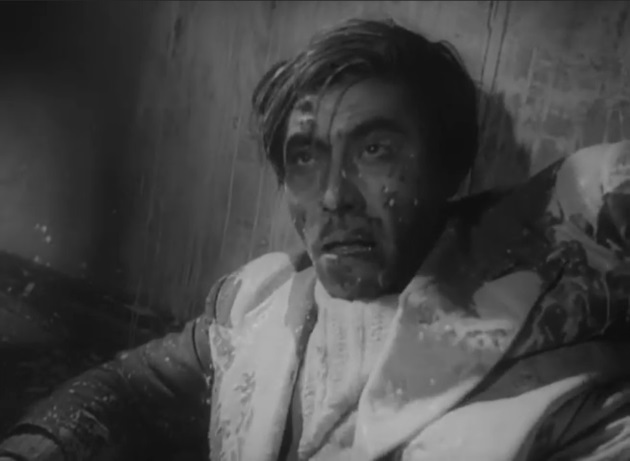
Drunken Angel is a classic story of addiction, in which “just one more drink” turns into a night of binging as Matsunaga drinks himself to death. The fantasy dream sequence involving Matsunaga opening a coffin on the beach only to find himself inside feels like something from a silent horror movie and is even quite Bergman-esque. It also feels reminiscent of the scene in The Empire Strikes Back in which Luke Skywalker finds his own face within Darth Vader’s helmet. The climax of Drunken Angel on the other hand features the type of cinematic images that you never forget as a weak and ill Matsunaga tries to fight his boss Okada as the two are covered in paint and scrambling on the ground before Mutsunga is stabbed and collapses by a balcony – it feels reminiscent of the iconic endings in various Warner Bros gangster films. Had this been a Hollywood production I can easily see it being a vehicle for James Cagney and Pat O’Brien, with perhaps Bogart as Okada?

It’s fascinating to see how much western trends are embraced in Japan, something which is often surprise to newcomers of Japanese film (I do love the interior of the dance hall with the giant playing cards on the walls as well as the Bolero Club with its Iberian ascetics and music). Yet at its heart Drunken Angel remains a story of post-war Japan with its characters and setting being an allegory using illness and contamination as a metaphor for the state of the nation. Matsunaga can be seen as a symbol of the Japan of yesteryear, struggling to find relevance in this new world while Sanada is a broken Japan trying to forge ahead. Sanda’s assistant Miyo (Chieko Nakakita) refuses to let go of her gangster, ex-boyfriend who ruined her life – a Japan which is pinning for what has been lost. However it is the young schoolgirl (Yoshiko Kuga) of whom Dr Sanda cures of tuberculosis provides the film with an optimistic, wholesome ending -a sign of Japan yet to come.