How to Marry a Millionaire (1953)

One Million Dollars!

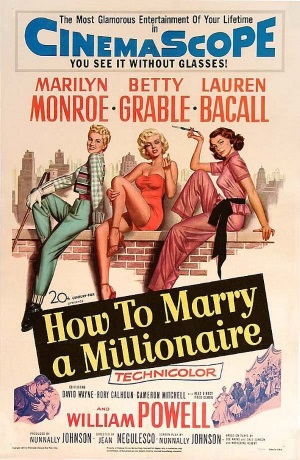
How To Marry a Millionaire was the first movie filmed in Cinemascope (second to be released) and thus is a bit like the Avatar of 1953; a technological showcase but provides little in the way of interesting story or characters. The first five minutes of the film is comprised of composer Alfred Newman and his orchestra showcasing the visual and stereophonic capabilities of the new technology and trying to get audiences away from their televisions and into the movie theatre. TV is square and in black & white, movies are in colour and on a big widescreen. I can imagine this being quite a spectacle for audiences back in 1953 but why is it part of the movie and not a separate short? As for the visuals in the film itself, they do take advantage of the frame showing New York in full cinemascope although the use of a fisheye like lens in many shots is a little bothersome.

How to Marry a Millionaire was the first film I saw William Powell in and he didn’t leave any impression on me despite me later becoming a huge fan of his. As Roger Ebert put it, “William Powell is to words as Fred Astaire is to dance”, but he has not killer material to work off here. The three leading ladies do have their own personalities but there is not much in the way of playing off each other nor is there any fast and witty dialogue. Overall the screwball comedy type plot isn’t hugely fleshed out and there’s no real sense of urgency although there are a few laughs to be had. I do particularly like Betty Grable’s grouchy, grumpy date played by Fred Clark. I find Marilyn Monroe, however, gets the most interesting dynamic in the film playing a woman who is afraid to wear glasses which feels like a statement on conformity in the 1950’s.

How To Marry a Millionaire is a prime example of what you would call an ‘ok’ film; a time passer, not terrible but not great either. The most enjoyment I do get from it is largely superficial as I do love me some 50’s fluff with the colourful aesthetic and the high fashion. Plus three beauties in cinemascope, as a heterosexual male I’m not complaining.

Brigadoon (1954)

You Saw Brigadoon!

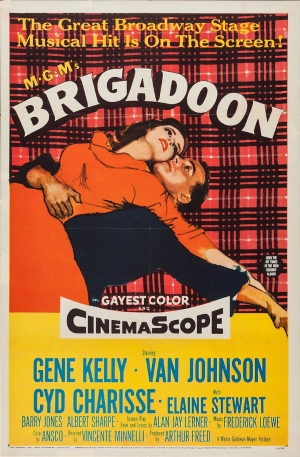
Brigadoon was originally conceived as a musical on the scale of a John Ford production but that didn’t come to be. Due to budget cuts, the entire movie is set bound but as far as set bound movies go Brigadoon is still an impressive display of production design. The sets themselves look impressive and expansive complete with fog effects, animals, vegetation and backdrops which do appear vast; something I imagine would be more challenging to accomplish in colour and Cinemascope. Brigadoon was made after the Technicolor era had ended and while it might be lacking the eye-popping colour of previous MGM musicals it’s still a beauty of a film.

Brigadoon was Vincente Minnelli’s first musical in cinemascope and while the widescreen technology allows for more space for the dancers I couldn’t help but notice there is not a single close up shot in the entire film. As it turns out Minnelli actually had disliked the use of close-ups in cinemascope. It’s not a major issue but I do find it to be somewhat of a mild irritance.

The fantasy setting of Brigadoon doesn’t make a whole lot of sense and requires the old suspension of disbelief. The village of Brigadoon rises out of the mist every 100 years for just one day thus the village will never be changed or destroyed by the outside world. Travelling through time at this rate the village will have gone 3,650,000 years into the future after only one year Brigadoon time. What happens if the location of Brigadoon has something constructed on it or succumbs to natural geographical change? Regardless the movie still works despite its illogical concept plus it is fun trying to theorise how it would play out. The Scottish setting of Brigadoon, on the other hand, is how the rest of the world imagines Scotland is like with its tartan layered aesthetic and I love it. The Scottish accents, however, do feel right and are not exaggerated as you would expect a Hollywood movie to do.

Gene Kelly and Van Johnson make an entertaining duo with Johnson playing the grumpy and sarcastic comic relief. But the real jewel pairing is between Kelly and Cyd Charisse as the romantic love interests. Just look at the Heather on the Hill number for a better expression of falling in love through dance. The soundtrack is no Singin’ in the Rain (but then again so few musicals are) but still a fine selection of gems and lush orchestrations, many of which help make Brigadoon a very relaxing film to watch and as pleasant a musical excursion as you could ask for.

The Lady Vanishes (1938)

Strangers on a Train

***This Review Contains Spoilers***

The Lady Vanishes is often imitated but never equaled. Many movies have done the “person vanishes but their accomplice finds out they apparently never existed” plot; but never has it been done as immaculately as The Lady Vanishes. Likewise, the train is the perfect cinematic device; there are an infinite amount of possibilities for scenarios based on trains and Hitchcock sure took advantage of this throughout his career.

The Lady Vanishes is a movie with a great sense of adventure to it, traveling through the picturesque mountains of a politically unstable Europe. It’s never identified what country the movie is set in, only that is “one of Europe’s few undiscovered corners”, letting the viewer’s imagination fill in the blanks. I also love the charming miniature of the train station and hotel in the opening, making no attempt to disguise that is it just that, complete with little moving figures and a car driving with no one in it.

Once the lady vanishes, is it a head-scratcher, leaving me to hope this better have a dam good outcome and not cop out. The intensity ramps up to crazy levels as the mystery deepens with the atmosphere created by the train sound effects and the impending claustrophobia increases. On further viewings all the elements of the mystery make sense; the couple lying to avoid scandal, the cricket fans lying so they won’t be late and the relevance of the serenading man, genius! My favourite scene in the move is the sequence in the cargo bay in which Redgrave and Lockwood investigate magic props and start doing impressions; it’s such a fun scene to watch.

The film’s first act in the hotel could be a movie by itself; a sort of screwball comedy set in a hotel full of characters slightly off their rocker. Michael Redgrave reminds me and even looks like Errol Flynn here. Playing an adventurous free spirit and a character who could have come right out of a screwball comedy as evident by the manner in which he infiltrates Margaret Lockwood’s room, creating a ruckus in order to “put on record for the benefit of mankind one of the lost folk dances of central Europe”. Lockwood herself also plays an adventurous, free spirit (“been everywhere and done everything”), yet it takes the two of them some time to realise they have more in common with each other than they think.

The two English gentlemen who talk about nothing but cricket, on the other hand, showcase the British turning a blind eye to the spread of fascism in Europe. They are the only two who would stand to another country’s so-called national anthem and dismiss a newspaper article on England being on the brink of war as sensationalism. On a lighter-hearted note, they even discuss how baseball is referred to as rounders in the UK in a still relevant joke (“Nothing but baseball you know. We used to call it rounders, children play it with a rubber ball and a stick”). Of course, it wouldn’t be an unashamedly British movie if someone did mention tea (“What you need if a good strong cup of tea”).

Our Hospitality (1923)

Deliverance

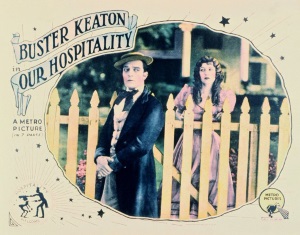
All of Buster Keaton’s silent films had a beauty and a grace to them, but Our Hospitality exemplifies this best. A mini-epic, full of beautiful, lush scenery and landscape shots; visually speaking, I consider this to be Keaton’s best film. Take the film’s finale as an example, as Keaton walks along the edge of a cliff with huge forest backdrops stretching as far as the eye can see or the equally as impressive sequence in which an entire dam is blown up. But the sequence which best showcases this idealised look at 1830’s America is the supreme majesty of the steam locomotive sequence; a predecessor to what would come in The General. This is one of the greatest sequences Keaton ever captured on film, with the music score on the Thames Silent’s version giving it (as well as the film as a whole), an even greater sense of awe. Filming as well the construction of such large-scale props must have been no easy feat. It’s a sequence which is beautiful, funny and thrilling at the same time, filled with so many inventive sight gags. When Keaton’s top hat doesn’t fit on his head in the locomotive carriage, he puts on his iconic pork pie hat; that’s more like it! It’s a bumpy unstable ride to say the least, and even has a dog chasing it throughout for that extra bit of amusement

The set up of Our Hospitality is the type of melodrama which was rife during the silent period (and what Keaton himself parodied in his short The Frozen North). One family has a feud with another which lasts from one generation to the next, and nobody remembers what caused the feud to begin with (“Men of one family grew up killing men of another for no other reason expect their fathers had done so”). Ah simple but effective naivety; why can’t we all just get along?

Keaton’s birthplace is not stated during the film, but it’s clearly located in Appalachia, prior to his character being sent to New York for a better upbringing; Keaton the sophisticated New Yorker vs. hillbilly red necks. Yep, we have a movie here ripe with hillbilly stereotypes. On top of tapping into the Appalachian cultural stereotype of feuding families, there are plenty of guns stored in the Canfield house, but when they’re not allowed to use them due to their comical dedication to be hospitable, they just ask the townspeople to borrow a gun. Likewise in another scene, Keaton sees a husband abusing his wife, steps in and throws the husband aside, yet the wife starts attacking Keaton himself. Keaton then runs away, followed by the husband ordering the wife back into the house. Ah, the glorious lack of political correctness.

An American In Paris (1951)

We’ll Always Have Paris

***This Review Contains Spoilers***

An American In Paris is a very different beast of a movie than Singin’ in the Rain. It’s not as fun as other MGM musicals (although there is fun to be had) but it’s better described as a more intellectual viewing experience. The film is light on plot like other classic Hollywood musicals but there is much going on internally between and within the characters. Simply put, this movie musical is dark. Gene Kelly’s role of Jerry Mulligan is a cynical loser who is not a very successful painter (although I do like when he tells of the pretentious art student, telling it like it is!). Likewise the romance between Jerry and Lise Bouvier (Leslie Caron) is a hopeful but not entirely a happy one. Even with Kelly and Caron ending up together at the end, the character relationships in the film are never resolved. During the film I kept thinking is she not better off with Henri Baurel (Georges Guetary)? The guy who is a successful actor and saved your life during the war or the loser whom you only recently met? Likewise in Milo Robert’s (Nina Foch) final appearance she states “I think I need some champagne” and is never heard or seen again. Even though her character denies wanting more with Kelly than championship and only wants to help him professionally in a surprising prostitution reference (“If you’re hard up for companionship there are guys in town who do this kind of thing for a living, call one of them”), I never felt convinced by this. Who says classic Hollywood is all just happy endings?

An American In Paris is the perfect display of the artistry of director Vincente Minnelli. He found French painting an inspiration for his own style; a skill he would incorporate into other productions such as Lust for Life. There couldn’t be a better or more obvious choice of director for An American In Paris than Minnelli. Not many other directors can use space as effective as Minnelli and display such a fluid motion of the camera. Just look as the film’s introductory sequence to Gene Kelly and his chums or the shot of Kelly walking down several flights of stairs in his apartment building; thus I can forgive the very visible camera shake 47 minutes into the movie during the Tra-la-la number. Even though he was a contract director (he made 33 films, only three made outside of MGM) he rose above these constraints and formed his own style whereas contract directors where usually assigned to conform to the studio’s standard and aesthetic. Whether or not he can be classified as an auteur there has been no other filmmaker like him in Hollywood history.

The film’s sets themselves look like they’ve been lived in instead of coming off as totally shiny and glossy with frames still looking like Paris as the impressionists saw it. Have neighbourhoods in Paris ever looked like this or is it just movie fantasy? Likewise take in the appearance of the Beatnick nightclub and observe the early incarnation to the modern day world of the hipster.

Kelly’s ability to dance alongside children and interact with them is something no one could do better than him which is evident from the genuine reactions from the on looking kids during the I Got Rhythm number; truly the dancing figure for the everyman. Leslie Caron’s introductory ballet sequence on the other hand is a Technicolor assault on the senses; the backgrounds are one solid colour while she wears dresses which totally contrasts them. Could you ask for a more memorable first ever screen appearance; complete with a sexual chair dance and one flexible body. Likewise the contradictory humour from the sequence’s narration always makes me laugh. Another major musical highlight is Oscar Levant’s dream sequence which reminds of the Buster Keaton short The Playhouse in which every member of the theatre is played by Keaton; likewise here he have an army of Oscar Levant. The sequence was actually his idea and along with the character he portrays in the film reflects his real life personality as a neurotic. The appearance and the colours of the sequence definitely remind me of Powell and Pressburger; surely the filmmakers must have taken inspiration.

They do save the best for last however in the form of the American In Paris Ballet; among one of the greatest things ever committed to film. A sequence which takes full advantage of cinema as an art form; could the entire thing be recreated on the stage? Watch French impressionism come to life in a 17 minutes feast for the senses which is artful without being artsy. There’s chorography and then there’s this with so many people moving, dancing and doing their own thing; with Gene Kelly’s graceful yet masculine dancing still being at the centre of it. Fred Astaire once said he didn’t want the camera to dance for him but rather stay stationary with as few cuts as possible. Kelly’s style is very much the opposite of this in that the camera movement is integral to the dance but doesn’t take away from his talent, not one bit. Yet I haven’t I even mentioned the music of Gershwin; could it be more lush and rich?

Singin’ in the Rain (1952)

That’s Entertainment!

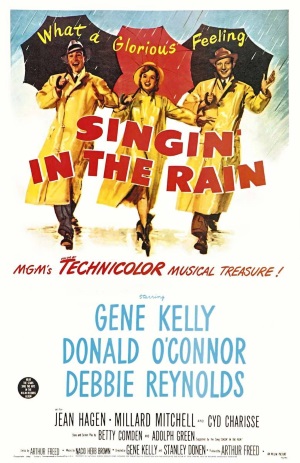
What is about Singin’ in the Rain that even the film elite hold it in such high regard and has even appeared on a previous Sight & Sound poll as one of the ten greatest films of all time, ranking among traditional highbrow films? Singin’ in the Rain is not just a great musical but also a film with a great story. It is not as harsh a critique on Hollywood as Sunset Boulevard but who would have still believed the content of fan magazines to be genuine after this film. Singin’ in the Rain has a cynical side as it pulls apart the Hollywood myth; beginning with Don Lockwood’s back-story as to how he rose to fame, which the movie comically shows us is full of crap. “Dignity, always dignity” but not if you want to make it to the top but at the end of the day  Singin’ in the Rain is a movie for movie lovers which celebrates Hollywood as much as it makes fun of it.

The film is set in 1927 albeit a very colourful 1927. In 1952 Technicolor films were in their final years of production and would soon become a thing of the past. The movie is a tribute to MGM producer and songwriter Arthur Freed – head of the MGM Freed unit – the producers of some of the greatest film musicals of all time. Although the days of the studio system where coming to an end in the early 1950’s as films from different studios started becoming homogenous and not containing unique aesthetics to each studio, the MGM musical still remained its own unique beast that no other studio could replicate. Likewise, the film studio in Singin’ in the Rain is a fictional studio and not MGM itself, I guess that would have been too much of a self-endorsement.

The soundtrack itself has entered the pop culture lexicon for good reason. I’ve had no shortage of listening to my CD soundtrack; glorious corn and camp topped with beautiful orchestrations, all of which never leaves your head and contributing to making Singin’ in the Rain one of the go-to anti-depressant films. Few other songs can lift my mood more than Moses Supposes or the film’s title number: could there be a greater expression of joy? After all, it is in the title; he is singing in the rain; turning the dreary rain into carefree joy, finding joy in despair. As for Make ‘em Laugh, even though it is a plagiarism of Cole Porter’s Be a Clown from The Pirate (1948), I considering Make ‘em Laugh is a superior rendition. There is also that disorienting fashion parade sequence which could be removed and have no effect on the plot but I do love me some 50’s fluff. But they do save the best for last in the form of the Broadway Melody Ballet. A number of MGM musicals had a lengthy ballet sequence, and to say they outdid themselves here would be an understatement as Gene Kelly dressed as Harold Lloyd with the go-getter attitude of the 1920’s celebrates a simple notion, “gotta dance!”. The visually asserting array of bright colours and impressionistic backgrounds is aided by Cyd Charisse; what a talent, what a figure!

Singin’ in the Rain presents a light-hearted and comical look at what actors and studios went through during the transition to sound. Few other scenes in cinema are as entertaining as Lina Lomant’s failure to understand sound recording technology. This scene not only showcases the problems with the technology in its early days by picking up unwanted sounds (complete also with the classic angry movie director) but it perfectly captures the relatable frustration that comes with filmmaking. I can tell you there is nothing more frustrating than out-of-sync sound. Likewise, the star’s difficulty in adapting to talkies and being laughed at by audiences parallel the legend of audiences being in howls of laughter as actor John Gilbert’s attempts to deliver dialogue on screen. Jean Hagan playing the dumb broad Lina Loment does a comedy act similar to Judy Holiday but in my view better than Holiday ever did. Donald O’Connor on the other hand surely isn’t human with his vaudeville-style act his facial and body movements and ability to walk up walls. Just name me a film with a more astounding display of talent. Here’s to you Singin’ In the Rain, I bow humbly to your cinematic and musical perfection.

Three Ages (1923)

History of the World, Part I

***This Review Contains Spoilers***

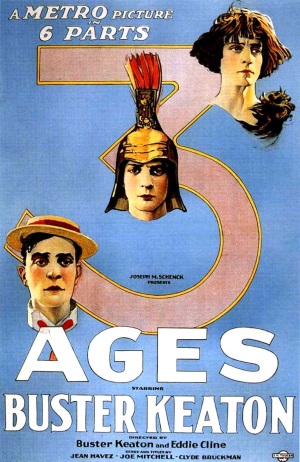
Three Ages is one of the earliest spoof movies, a feature-length parody of D.W. Griffith’s Intolerance, cutting between three different historical periods in which in men set about obtaining the love of a woman. The Stone Age portions of the film are a fantasy stone age in which people wear fur, carry clubs and man and dinosaur live side by side and there is even a sequence with a stop-motion dinosaur; I wish I could see more of it. Three Ages long precedes The Flintstones with its use of anachronisms; with clever stone age equivalents of modern days things such as the turtle operated ‘wee-gee board’. Likewise just like in a D.W. Griffith film, the Rome featured in Three Ages actually looks vast and expansive while featuring the most amusing chariot race ever complete with sleds and huskies. It’s moments like these which give Three Ages a sense of cuteness and innocence to it.

The role of a caveman is perfect for Wallace Beery, Keaton’s more manly opponent. Many of Keaton’s films show him with a feminine side and this is particularly true with the stone age portions of Three Ages, not just with his rivalry with Wallace Beery but also in a scene in the stone age in which he is overpowered by a woman bigger and stronger than him whom the audience is led to believe is a man to begin with. Yet the prevalence of gender-bending is taken a step further in one of the modern age portions of the film in which the wife of a household whom is dressed like a man has the final say on who marries her daughter. Do girls like bad boys or nice sensitive guys? Buster Keaton films would have you believe the latter. Margaret Leahy is Keaton’s leading lady in Three Ages, an actress came to Hollywood because of a beauty competition and supposedly couldn’t act. The filmmakers appear to work their way around this as her performance largely consists of just mildly reacting to things.

Unlike Keaton’s other silent films, Three Ages has a larger emphasis on non-slapstick gags and not as much stunt work. The film still has one major def defying stunt sequence in which he failed to make a leap between two buildings; however, this happy accident resulted in a pure classic Keaton stunt sequence as he effortlessly descends several stories through a building. Likewise, the finale of stopping a wedding at the last minute is such a cliché but Keaton manages to put an unexpected spin on it. It would be easy for a film like Three Ages to be cynical and pessimistic but like Keaton’s other work it’s optimistic in the end.  The three Keatons go through much hardship and pain but through much perseverance, they get the girl in the end.

The Hudsucker Proxy (1994)

The Sweet Smell of Success

***This Review Contains Spoilers***

The Coen Brothers are hit and miss with me (I tend to have a preference more towards their comedy then their drama) but The Hudsucker Proxy is by far my favourite movie of theirs, a film which feels like it was tailor made for me. The Hudsucker Proxy takes place in its own unique universe; the acting style in the film is reminiscent of the 1930’s yet the film is set in the 1950’s. Likewise there appears to be a clash of fashion; the outfits are from the 30’s yet the cars or the beatnik coffee house which Norvillie visits are unmistakably 1950’s but I like this combination of two eras, two distinct time periods of Hollywood’s golden age wrapped into one. The Hudsucker Proxy is a movie with so many layers and homage’s to other movies (Sweet Smell of Success, Metropolis, The Apartment, The Producers, various Frank Capra movies); I’m sure with future viewings I will unlock even more secrets the movies holds.

The Hudsucker Proxy is a love letter to anyone who loves the aesthetic of classic Hollywood movies with set designs to die for such as Paul Newman’s office, an art deco fantasy land; yet the movie even injects some Terry Gilliam-esque cinematography with the scene in the mail room feeling like the world from 1985’s Brazil. Likewise this is a movie of drawn out colours, mostly greys in what I feel is an attempt to emulate the appearance of black & white.

What happened to Tim Robbins? He was on such a hot streak of films during the first half of the 90’s, just after this he was in The Shawshank Redemption (one of the best two film streaks ever?); since then, not so much. The character of Norvillie Barnes is a Preston Sturges hero trapped in a Frank Capra story; although due to Robbin’s resemblance to a young Orson Welles the character comes off to me as someone who has the look of Welles but has the personality of Gary Cooper; a young entrepreneurial go getter with a wide eyed innocence who is not fully in tune with reality, or at least hasn’t been subjected to it yet. When he first arrives in New York and tries looking for a job, the word “experience” is plastered all over the frame, oh the reliability.

Jennifer Jason Leigh is a revelation here; channelling Rosalind Russell, yet I can still detect elements of Katharine Hepburn, Barbara Stanywck and Jean Arthur in there. The coordination of her gestures is perfect and I’m also fascinated by her character dynamic in which she becomes insecure about her femininity or lack therefore off at Norville’s comments of her trying to be one of the boys. Although it’s never resolved, this still gives her character another layer of depth. Paul Newman on the other hand rarely ventured into comedy but he pulls of the cigar chomping, “you’re fired!” type boss with ease.

The film’s combination of numerous elements from various genres is also carried over in its humour, from dry jokes to more overt, fast talking screwball antics. The gag with the circle drawn on the piece of paper followed by the uttering of “you know, for kids!” never gets old, even if the movie’s poster somewhat spoils the joke. While the sequence detailing the creation and distribution of the Hula Hoop, I don’t think I could you ask for a better fast paced quirky montage. Likewise the (almost literal) Deus Ex Machina ending could have easily come off as a copout but I feel is rescued from being so from the plot element of the blue letter; I completely forgot that even existed until the angel of Warren Hudsucker reminds a suicidal Norville about it; now that’s a sign of an engaging film.

Sporting Blood (1931)

My Lovely Horse

Sporting Blood was Clark Gable’s first top-billed role, playing a gangster with a softer side, willing to take the shots but not at the expense at the life of a dumb animal. Just one problem though; he doesn’t show up until halfway through! I’ve seen some movies in which it takes a long time for the top-billed star to show up but this is the most extreme example I’ve seen of this; so don’t go in expecting Gable from scene 1. Sporting          Blood has an odd narrative structure with characters introduced late in the game and a second half which largely contrasts the first half but it works. The first half takes place in a peaceful farm paradise, the latter in a world of gangsters in which Tommy Boy becomes a commodity merely being passed around.

Sporting Blood is a romantic tribute to the world of equestrianism, set in the horse racing heartland of Kentucky; and when I say romantic, I mean romantic. This is a movie which would have you believe an entire group of horses would come running to a horse being taken away in a truck as a sign of farewell. But the anamorphisation of animals doesn’t end there; when Madge Evans proclaims, “What do I want to run him in the Derby for? For himself, for running for himself. Don’t you think a horse has some rights, the same as you and me to run straight and honest and to give his best in order to win what he can.” We’re all guilty of it though, aren’t we?

“Since the beginning of time the Horse has been Man’s loyal friend…BUT Man has not always been the friend the Horse has to Man….”, this section of the opening prologue confuses me; didn’t early man hunt horses for food? But I digress. I found myself getting engaged in the story with the death of Tommy Boy’s mother Southern Queen (was a real horse injured here?) and I believe must of this can be credited to the very naturalistic acting present in Sporting Blood. Unlike other films of the classic Hollywood era, Sporting Blood features African American actors in prominent roles. While they are still presented in a stereotypical manner and seem dim-witted at times, they are treated with more dignity and illicit genuine emotion, especially the black children near the beginning of the film feel just like real kids.

Sporting Blood gets a major benefit from its handsome production values, location filming and impressive race footage which gets right up close to the action. The film is full of in-depth compositions and extensive camera pans; just look at the gorgeous use of lighting and shadows when Tommy Boy is introduced to his new mother. It also wouldn’t be pre-code without some drug use thrown in there, ok its horse narcotics but still (“We’ve hopped him up so much in the last few months that it ain’t working like it used to”). Sporting Blood isn’t the most intense film ever but is one with a relaxing charm to it.

Meet John Doe (1941)

A Face In the Crowd

Sadly Meet John Doe appears to be an uncared about film falling into the public domain. I’ve previously wondered if this film could have the power to inspire real-life John Doe clubs, like Fight Club inspiring real-life fight clubs. Meet John Doe is the ancestor to film’s like A Face in the Crowd and Network, chronicling the rise and fall of a media built character. Meet John Doe is not thought of as a conspiracy/paranoia film but is a few actions scenes away from being a conspiracy thriller. After watching you’ll start feeling more like tin foil hat wearing conspiracy theorist untrusting of government and the establishment.

John Doe is a Christ-like figure; he preaches loving thy neighbour when he is disgraced a newspaper editor proclaims “chalk one up for the Pontius Pilates of the world” and even plans to sacrifice himself on Christmas day. On top of that, Barbara Stanwyck’s speech at the end in which she tells John he doesn’t have to die for the idea of the John Doe movement – that somebody else already did – the first John Doe and he has been keeping the idea alive for 2000 years, all while the Christmas bells ring. Classic Hollywood films sure love their hard-hitting symbolism and metaphors.

Barbara Stanwyck is a phenomenon here with so much life and energy she can make any bit of exposition entertaining. As for Gary Cooper and Walter Brennan in of their many film pairings; what is it makes them a great duo? Perhaps it’s just the humorous interactions of two folksy Americans. Cooper’s boyish charm is on full display here, such his baseball pitching in a hotel room to his curious on look at a naked statuette. Meet John Doe is one of the finest performances he ever gave with his outburst at the dinner meeting making the hairs on my neck stand up. Walter Brennan’s The Colonel, on the other hand, doesn’t trust any media, authority or society in general. He’s comically cynical in the extreme and probably be a conspiracy theorist if he had lived in later decades. Throughout the film he refers to others as “helots”; state-owned serfs of the ancient Spartans (“When you become a guy with a bank account, they got you, yes sir, they got you”).

Although the John Doe movement claims the John Does are inheriting the Earth, the movement is funded by a corporation; so did they not see someone like D.B Norton taking advantage of them? Edward Arnold as D.B Norton is one scary, menacing guy who is complete with his own personal army force, giving the full authoritarian dictator vibes. When he sees his servants listening to Doe’s speech on the radio and applauding, he realises the political power he can have if he can get John Doe on his side. Under a scheme to buy his way to power he uses the John Doe movement to further his own agenda, to create a political party of which he leads in order to become President of the United States. His description that he plans to create “a new order of things” and “the American people need an iron hand and discipline” sounds like he has the intent of turning the country into a fascist dictatorship. There’s no doubt that Meet John Doe among other things was an argument against American isolationism in the war.

Another striking moment of Meet John Doe is the monologue given by Bert Hanson, the soda jerker (Regis Toomey) on how little we know about our neighbours and how a failure to get the whole picture leads to misconceptions of other people. It’s true in real life, people you live next to for years and you never contact them: perhaps the guy next door isn’t a bad egg.

Many of Capra’s films showcase the people’s need for a leader (Mr. Deeds, Mr. Smith or George Bailey) and in turn, they appear to be clueless and misguided with one (think of Pottersvillie in It’s a Wonderful Life) in a showcase of Capra’s darker side. Here the public buying up what the media tells them such as when Norton exposes John Doe for being an apparent fraud in one of the movie’s most powerful scenes as the movie captures so vividly the destruction of a dream. As dark as the movie’s ending is, it still remains optimistic in which the fight goes on (“there you are Norton, the people!”).