The Frisco Kid (1979)

Hanukkah Solo

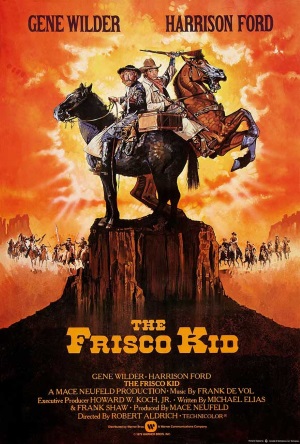
Its movies like The Frisco Kid which are right up my alley – a totally bizarre, odd ball comedy. A movie which feels like a classic Hollywood western but about a man who is in a totally alien world. The odd pairing of actors Gene Wilder and Harrison Ford works like a charm. Just like how you wouldn’t expect these actors to team up, you wouldn’t expect a rabbi and a Wild West cowboy to be a duo. There’s such pleasure watching the two interact and develop their odd, endearing bromance; Tommy (Ford) has no reason to stay with Avram (Wilder) other than he’s formed a liking to him. Harrison Ford goes from space cowboy in Star Wars to actual cowboy in The Frisco Kid, showing he really had a knack for playing ruffians. However, his character is not just a Han Solo redux. Unlike Solo, he’s not just out for himself but wants to give a helping hand to underdogs.

The Frisco Kid showcases the absurdity of faith but also celebrates it at the same time. Rabbi Avram Belinski follows his faith to a tee (despite being ranked almost last among his peers strangely enough). He would put his life and the lives of others on the line for the Torah or in order to obey the Sabbath. Yet Tommy defends and even lauds Avram’s actions as a man dedicated to his faith, even if he put his life in danger for religious reasons.

Likewise the Native Americans they encounter along their travels have a failure to understand the God of Judaism, Christianity and Islam. In one dialogue exchange, the Indian chief is perplexed that this God can make rain yet he doesn’t because as Avram puts it, “that’s not his department”. Yet the chief asks if he wanted to he could, and Avram replies yes. Yet Avram contradicts this statement later in their discussion when he proclaims God can do anything; the chief responds with “then why can’t he make rain?” and Avram loudly states “because he doesn’t make rain!”. However, on top of this Avram tells the chief that there is only one God and that he’s your God too. Take that as a bit of falsifying another’s faith.

However, The Frisco Kid is a movie which showcases peace and unity between cultures. Along his travels, Avram encounters whites, blacks, Native Americans, Christian monks and the Amish. When he first encounters the Amish he mistakes them for rabbis due to their similar attire, perhaps symbolising that we’re not all so different. Here Gene Wilder shows he is an actor who is not afraid to celebrate their religion and culture on screen; even if he is playing a neurotic Jew but not in an annoying way. The Frisco Kid is a movie which could possibly appeal to the both the religious minded and the atheist alike.

Rocky II (1979)

Rocky II: Electric Boogaloo

***This Review Contains Spoilers***

Rocky II picks right off where the first movie ended and with the characters are already established, we can get right into the story. Stallone writes and directs this time, and who knows his own creation better than him?

Rocky II has a much higher budget than the first film and thus doesn’t have the guerrilla filmmaking tactics of the first so while it loses something in that regard it’s still no less a beauty of a film. They can even afford to have a huge crowd of kids following him during the training montage and possibly the cheesiest moment in any Rocky movie. We now get two montages instead of one and the series obsession with them would grow from here. The final fight benefits the most from the higher budget. We actually get to see a large crowd of spectators instead of relying on stock footage and camera angels disguising the lack of extras; while the use of slow-motion captures the pain and barbaric nature of fighting in glorious detail. When Rocky and Apollo both fall to the ground at the end of the fight, the suspense is crazy! The final shot of Rocky’s beat up face as he slurs in classic Stallone fashion is so barbaric; a perfect shot to end the movie on.

In Rocky II we get to see what Rocky does now that he has lots of money for the first time in his life and you really get a sense of the character’s new found happiness. However, he becomes blinded by this happiness and it goes to his head such as when he buys a house without even checking the upstairs. Rocky struggles with his new found fame and can’t even film a simple commercial. Just like how the public turn their back on Rocky, the public turned their back on Stallone after his two follow up films to Rocky bombed; Paradise Alley and F.I.S.T. Like how Stallone had to do a sequel to Rocky in order to get by, Rocky has to fight Apollo again to get by and prove that he is not a fluke or a one hit wonder. Apollo’s trainer Duke also has a bigger role here and would continue to be more prevalent in Rocky III and IV; I love this guy and his intense words of inspiration.

Rocky II is easily the funniest movie in the series, from his poor driving skills to his mispronunciation of words when trying to film a commercial (“Smeel mainly”) but my favourite moment is when he tries to a catch a chicken as part of his training (“I feel like a Kentucky Fired Idiot”). I also find it funny the scene in which Apollo is being consumed by hate mail telling him to kill himself; it’s a good thing for him the web doesn’t yet exist. In terms of more twisted humour, Rocky takes Adrian to the zoo and even proposes to her there, because you know, retards like the zoo.

Rocky II was the first film in the series to use synthesizers in its score and the music feels very late 70’s and at times disco inspired (listen to the vocal version of All of My Life, it’s beautiful). Bill Conti’s ‘Redemption’ is by far the best piece of original music in the movie; it makes me want to climb a mountain.
Just a side note: In regards to the Rocky DVDs, only the first movie gets the special edition treatment and the rest are just bare bones releases. I know the first is considered the best but that doesn’t mean there’s no merit to the sequels that they’re just tossed aside on the home video releases.

Rocky II offers everything I could ask for in a sequel, a movie which stays true to the original but offers new elements along the way. It advances the story and adds an extra layer of depth to already complex characters. In 1979 the New Hollywood movement was coming to an end and the age of the blockbuster had begun. In 1976 Rocky lost the final fight but keeping with the newfound optimism in Hollywood movies, in 1979 Rocky wins the fight (although timeline wise its late 1976).

Rocky (1976)

The Philadelphia Story

I may sound like a bit of a fanboy when I talk about the Rocky franchise but I just legitimately love all these movies so much. This is a series which always inspires me and has aided me during my darkest days. Rocky was one of the first movies to have such a profound impact on me, making me appreciate cinema on a deeper level. I first saw Rocky on TV and week after week came back to watch the sequels; such joy I had and memories I never forget.

I don’t think there is a fictional character whom I’ve been more emotionally invested in than Rocky Balboa. Could there be a character who is more honest or down to Earth? A man who has next to nothing yet has such a positive outlook on life (“Naw I ain’t got no phone, I had to pull it you know because people calling me all the time, and who needs the aggravation, right?” – such profound wisdom). The character is also a mystery and an enigma; who are his parents and what about his early years? Apart from a few brief snippets of information, it’s up to the viewer’s imagination instead of giving us a pointless origin story which Hollywood is so keen on nowadays. The character is biographical of his creator Sylvester Stallone throughout the whole series; his fictional alter ego. Just like Rocky, Stallone had next to nothing before making it as a star. Just like how the character rises to the challenge against impossible odds, the movie also beat impossible odds by becoming one of the biggest sleeper hits of all time. Likewise what movie or character is more identified with a city or has such reverence for the location it was filmed.

All the films in the series reflect the periods in which they were made. It’s 1976, America’s Bicentennial year. Perhaps the country didn’t know it needed an injection of optimism after years of cynical and pessimistic film as well as political upheaval. Don’t get me wrong, there will always be a place for cynicism in movies but with such movies dominating the mainstream at the time it was clear that enough was enough. It seems like happy endings where against the law in the first half of the 70’s, but Rocky brought them back for better or worse, and film snobs will look down on it for that. But yes, I do blubber away at this ending and Adrian’s uttering of “I love you!” is the greatest “I love you!” in cinema history. The ending has that same feeling of joy and happiness as seen in the ending of many Frank Capra movies. Speaking of Capra, Rocky’s response to being asked if he wants to fight Apollo Creed for the world heavyweight championship is like Gary Cooper in Mr Deeds Goes to Town when he is told of the vast sum of money he has inherited.

As the filmmakers didn’t get permission to shot for many of the on locations, guerilla filmmaking techniques where employed in the making of Rocky; capturing the streets of Philadelphia in all their glory with that distinctive that gritty look of 70’s films while aided with the use of the then-new technology in the form of the steady cam. You’d be hard pressed to find a movie which is more naturalistic and unmanufactured as Rocky.

It’s astounding that such a low budget film could have had such a great soundtrack and score. Bill Conti’s score to Rocky always makes me feel melancholic; the Rocky soundtracks have given me hours upon hours of listening pleasure. I even watch the end credits of all the films for the music (well except the first one as the end credit music here is quite dreary). The Rocky movies are also responsible for my love of montages. I’ll never forget the feeling of exuberance I felt watching the film’s training montage for the first time and hearing Gonna Fly Now; we’re talking the goosiest of goosebumps.

Roger Ebert compared Stallone to Marlon Brando in his original review, and in 1976 no one could have seen this man being a future action movie star, but I maintain the man is more intelligent than people make him out to be. He’s made a respectable career out of what he is capable of doing. How many people can claim to have been able to write installments in a film series which has lasted four decades and still manage to keep the long-running story interesting? During the filming of Rocky, he had to do script rewrites on the spot such as upon discovering the ice rink for Rocky and Adrian’s was completely empty or the shorts on the giant poster of Rocky in the stadium where the wrong colour.

When I watched this film at a younger age, I never fully appreciated the romantic angle, yet watching it from a more mature perspective. Rocky and Adrian are like two misfits who don’t fully fit in with the rest of society. There is a goddess with Adrian, and only Rocky can see it. The scene in which Rocky invites Adrian to his apartment after their first date took my breath away like few other love scenes have ever done. The sexuality on display is immense with Stallone in a vest and the gradual build-up to their first kiss, and I’m sure they did it.

The world of Rocky is populated with such unforgettable characters. Rocky’s trainer Mickey Goldmill is one of the greatest mentors in film history (either him or Obi-Wan Kenobi in my book) with his grouchy and curmudgeon manner. I feel Burgess Meredith is an actor who got better with age, so no surprise his most famous role came to him at the age of 68. Paulie (Burt Young) is one pathetic hateful loser, abuses his sister, is violent and yet you can’t help but feel sorry for him. Apollo Creed (Carl Weathers) on the other hand, dam! What a showman with his charisma, confidence, cockiness, and ego; the archetype of a leading man from a blacksploitation film. Yet despite being a black man, he is surely one of the most patriotic characters ever put on screen who shuns any left wing mentality of victimhood; sounds like a dam monster movie!

One more recent viewings of Rocky I’ve also come to appreciate Tony Gazzo (Joe Spinell) more as a character. A charismatic loan shark who employs Rocky and has a real liking for him, giving him money for his date, attends his fight with Apollo and doesn’t try to take over his boxing career whereas many other mobsters would. Yet Rocky’s lenient collecting style by refusing to break the thumbs of clients who don’t pay up causes problems for Gazzo yet he treats Rocky almost like a brother. It shouldn’t come as a surprise then that in the original script for the film, Rocky and Gazzo where brothers.

When Rocky visits the empty arena before the fight you can feel the pressure and weight that bestows him. By the time the final fight comes around I’m so emotionally invested in this character that I’m rooting for him like it’s a real fight. During the fight itself, the punches look real and there’s no sped up footage like boxing films of the past; while Bill Conti’s score ups the intensity and suspense for some serious emotional impact.

Soylent Green (1973)

Spoiler Green

Of the major movie stars of the 20th century, one who has certainly secured his immortality with a succession of highly iconic films is Charlton Heston. Soylent Green was the last of these and the final film of what I like to call the Charlton Heston dystopian sci-fi trilogy along with Planet of the Apes and The Omega Man. Now that we have arrived in the future itself by meeting the timeline of Back to the Future Part II and with the dates of Blade Runner and Soylent Green being not far away let us bask in the dystopian wasteland Earth has become. Ok, maybe not quite.

Soylent Green was Edward G Robinson’s final film from a career spanning over 40 years, and the man is still as complete a pro as he ever was. Charlton Heston may be the main star but Robinson steals the show holding some of the best scenes in the film. Take the scene in which Robinson becomes emotional and cries at seeing beef for the first time in years; it takes a great actor to avoid such a scene becoming comical. Likewise, the interaction between Robinson and Heston is simply a pleasure to watch and his last moments on screen where some of his most affecting of his long career. This is also a role in which Robinson’s real-life personality comes through as a man of high culture and a lover of art. The apartment he shares with Heston is full of books, paint brushes, classical music is often played not to mention his character is Jewish. I do love this little sanctuary they have in a world in which crowds people are sleeping on the stairs outside their apartment. I also get the impression there is something more between them than just friendship? During the movie, they claim their love for each other in an un-ironic nature and speak intimately with each other about their personal feelings. Or is there simply just share a platonic love for each other as friends? Who knows?

There are only two uses of matte painting cityscapes throughout Soylent Green. The film shows how you can really create a believable world through the use of intimate on set shooting. I’m sure a remake of Soylent Green would feature a vast CGI city which would have none of the characters which is presented here. This is not a movie which is made for kids. Towards the end of the film, there are surprisingly horrifying scenes and of course there is the ending; an ending which has been spoiled by pop culture. The ending would have affected me more if I had not known it but are spoilers just a part of life?

Start the Revolution Without Me (1970)

Revolution 1789

To my surprise Start the Revolution Without Me begins with none other than Orson Welles introducing the film as well as narrating it; this along with the stylistic opening credits featuring footage of John Barrymore in Don Juan I know I had to be in for a treat. Start the Revolution Without Me is largely unheard of but surely paved the way for other large-scale historical comedies of the 70’s and 80’s from the likes of Monty Python and Mel Brooks; a type of film comedy which is long extinct. The recurring repetition of the date “1789” in the narration has vibes of Monty Python while the film’s ending reminds me of that from Monty Python and the Holy Grail. Likewise, the film is probably the closest thing to a spoof of costume dramas; think the costume drama getting the Mel Brooks treatment. The film includes references to works of fiction including A Tale of Two Cities, The Corsican Brothers and The Man in the Iron Mask (portrayed here as a bumbling fool). With the film’s historical references, King Louis XVI is a slow-witted cuckold and Marie Antoinette is portrayed as a nymphomaniac.

The production spared no expense getting the shoot in actual historical locations in France. You would think they would only allow such locations for more dignified films, not a slapstick comedy. The film itself is as lavish as any big-budget costume drama but not in tone of course. Costume pictures are always a genre I’ve struggled with, dare I say I find them dull with characters I can’t identify with or care about; you know, rich people problems. Thus there’s a sense of satisfaction seeing the genre turned into a slapstick farce. Not only do you get an impressive display of madcap physical comedy, but you even get some swashbuckling action with Gene Wilder getting the opportunity to display his abilities as a swordsman.

Gene Wilder and Donald Sutherland play two sets of identical twins who are accidentally switched at birth resulting in an aristocrat with a false brother who was supposed to be born into life as a peasant and vice versa. I get the impression Sutherland plays the twins intended to be aristocrats as they seem more comfortable and in tune with the lifestyle than the two twins played by Wilder. Mistaken identity humour is often looked down upon but it makes laugh whenever it is done well. Start the Revolution Without is inspired zaniness if I’ve ever seen it.

The Omega Man (1971)

Apocalypse Now?

I began The Omega Man with some initial trepidation from the not so great editing (including a pointless fade away on zooming out shot) the use of sped-up footage and obvious line dubbing; thankfully after that, it gets better. It must appreciated the filmmakers clearing the streets of Los Angles with spanning, wide shots of the city in which it is deserted; no easy task. To accomplish this the filmmakers had to film during Sunday morning and due to filming at this golden hour, the deserted streets and the golden light reflecting off the buildings has a real beauty to it. I don’t know of the film’s budget but it does come off feeling like a low budget production but does so in a charming way. The campy 70’s sounding music score feels like it’s on the verge of killing the mood and being too corny but just about manages to avoid doing so.

Charlton Heston’s Nevillie feels like the predecessor to modern action movie heroes with his use of one-liners. The scene in which he pretends to negotiate with a dead salesman at a car dealership feels very Arnold Schwarzenegger. On the other hand I do find there is some Initial unintentional humour coming from seeing Heston dressed as an aristocrat and talking to a chess-playing bust of Julius Caesar but once that settles these do showcase some poignant scenes of the last man alive trying to keep himself occupied; also I do love this little world he has created for himself in his apartment. Likewise seeing the later Republican Heston watching and the enjoying the film Woodstock and even reciting lines is intriguingly odd. The Omega Man also features one of the earliest on-screen interracial kisses between black and white. I don’t know if it was intentional that a film about repopulating the Earth has an interracial romance but thankfully doesn’t have to call attention to itself.

The Omega is a perfect example of Charlton Heston’s immense screen presence and his ability to carry a movie as he spends much of the runtime alone. When I think “screen presence” several actors will pop into my head, Burt Lancaster, Kirk Douglas, Clark Gable and of course Charlton Heston.

The Yakuza [ザ・ヤクザ/Za Yakuza] (1974)

Perhaps You’ve Heard of the Yakuza, the Poison Fists of the Pacific Rim. The Japanese Mafia!

***This Review Contains Spoilers***

In the audio commentary for The Yakuza, director Sydney Pollack speaks of what attracted him to the project, that he wanted to create a film which examines the clash between western and eastern cultures. In particular, the opposing view the two share on forgiveness. The Christian ethic in the West believes that confession absolves one of guilt and sin, whereas in Japanese culture, forgiveness is something you must earn; if you cause pain, then the only way to atone for it is to inflict pain upon yourself. As protagonist Harry Kilmer (Robert Mitchum) is described at one point in the film, “When my brother spoke of you as a unique stranger, I took it to mean that you were a westerner who had values consistent with our own, that a man pays his own debts, discharges his own obligations, that they are all that make him a man”.

Kilmer is a World War II veteran who remained in Japan after the war and fell in love with a Japanese woman, Eiko Tanaka (Keiko Kishi). I find it difficult to imagine a better choice for the role of Harry Kilmer than Robert Mitchum. The ultra-cool, world-weary actor (who still retained a magnificent mane of hair in his old age) carries a real level of gravitas. An icon of film noir and someone who was often cast in movies about the war in the Pacific, his casting in this neo-noir on the seedy underworld of Japanese gangsters is a perfect marriage of actor and role.

The Yakuza is a love letter to Japanese cinema. You couldn’t ask for a non-Japanese production about Japan to be more respectful, thoroughly researched and authentic than The Yakuza. The opening credits themselves are reminiscent of the film Kaidan (1964), while the names of the Japanese actors appear in the traditional last name, first name format. The score by Dave Grusin is itself magnificent, combining eastern and western influences, delivering a real sense of aching beauty as it plays alongside scenes of the bustling, neon-lit Tokyo streets. The filmmakers clearly took full advantage of the Japanese locations at their disposal; the Kyoto International Conference Centre is an incredible piece of architecture (it’s not a 70’s movie unless there’s some brutalist architecture), while the sento (public bath) with its minimalist waterfall and carp-filled aquariums has a real Blade Runner vibe. Westernisation in Japan is often a shock to outsiders, and that is on display in The Yakuza, in particular, the scene in the nightclub in which patrons are singing My Darling Clementine. However, as stated early in the picture, “The farmers in the countryside may watch TV on their tatami mats, and you can’t see Fuji through the smog, but don’t let it fool you. It’s still Japan. And the Japanese are still Japanese.”

Kilmer and his friend Oliver Wheat (Herb Edelman) are so engaged with Japanese culture and its customs to the point that they’re second nature to them. Richard Jordan, as Dusty, on the other hand, acts as the audience surrogate character for the non-Japanese viewer as he experiences Japanese culture for the first time. He expresses a genuine interest and curiosity, such as when he gets too comfortable examining a katana sword, to expressing his observations; “When an American cracks up, he opens the window and shoots up a bunch of strangers. When a Japanese cracks up, he closes the window and shoots himself. Everything’s in reverse, isn’t it?”. The Yakuza is part of the Gaijin subgenre of films. A long lineup of films about foreigners’ interaction and navigation through Japanese culture, often confronting their own cultural blind spots. The Yakuza wouldn’t even be actor Ken Takakura’s (as Eiko’s brother Ken) final appearance in such a film, as he would also appear in Ridley Scott’s thematically similar Black Rain (1989) and the sports comedy Mr. Baseball (1992), playing the cultural counterpart to a foreigner. From what I understand, Takakura only had a perfunctory understanding of English, although watching The Yakuza, you would think the man is fully fluent.

The scenes involving the dealings of The Yakuza themselves give the film the vibe of being the oriental Godfather; suited men negotiating at desks while smoking cigarettes, with a strict hierarchy and their own set of customs (such as the introduction of extending their hand from their right knee to show they have no weapon). The Yakuza is a film with some very violent scenes, but it is not a schlocky film; thus, the violence is portrayed in a classy, arty tone and not gratuitously, with an effective combination of gunfire and katana duels. The film does, however, have one reality-bending moment in which a gangster has his arm chopped off, yet the severed arm continues to hold a gun and fires it in mid-air (either way, it looks cool). The film’s rescue plot, in which Harry, Dusty and Ken have to rescue a kidnapped American girl, and its messy aftermath is quite complicated and hard to follow with its web of conspiracy and double crossing, but even during my first viewing of The Yakuza, it didn’t detract from the film’s emotional core.

The romance angle of The Yakuza is established with a Casablanca-like set-up. After Eiko refuses to marry Harry (a love made forbidden due to family ties), Harry leaves Japan, but leaves Eiko a café named the Kilmer House as a sayonara gift. Following Harry’s return to Japan, he arrives at the Kilmer House just as the café is closing for the night, to greet Eiko for the first time in 20 years, as they subsequently spend the evening reliving their nostalgic memories of the occupation years. The Yakuza shows that Mitchum was not only a tough guy, but could also play a great romantic lead with a tough yet tender personality. So why did Eiko refuse to marry Harry despite being in love with him? In the film’s big final third twist, the man we are led to believe is Eiko’s brother, Ken (who returned from the jungle several years following the end of the war), is actually her husband. Although Ken was always grateful to Harry for saving Eiko’s life after the war, his current return to Japan is what leads to the death of their daughter, Hanako (Christina Kokubo), at the hands of Yakuza – a disbalancing of debt and obligation.

Upon Harry’s realisation that ‘’I destroyed his past and future”, Harry offers Ken an apology fitting of a former Yakuza, completing the overarching theme of the film. In a scene featuring some of the finest acting of Mitchum’s career, Harry performs the Yakuza ritual of Yubitsume (cutting off the tip of one’s little finger). During the scene, there is the nervous anticipation as Harry sits down, takes a deep breath, then takes out a handkerchief and knife with the look on his face of “I can’t believe I’m really going to do this”, before proceeding with the act itself. He offers the severed fingertip to Ken, as Harry’s face and voice are overcome with physical and emotional pain as he delivers words of sorrow in both English and Japanese (“No man has a greater friend”). The Yakuza ends with a sense of tragic yet melancholic closure. However, why did Eiko never tell Harry the truth all those years ago? Would the truth not have caused less heartache? The final interaction between Harry and Eiko puts a cap on this ambiguity:

I have no more secrets, do I, Harry?

Never run out of those darling.”

Ash Wednesday (1973)

The Fountain of Youth

***This Review Contains Spoilers***

Richard Burton hated this movie, calling it a “f***ing bloody, lousy, nothing film”: I must strongly disagree. Ash Wednesday paints a haunting picture of a plastic surgery hospital, with patients walking around like zombies with bandages over their heads in a last desperate bid to be young again. As Keith Baxter’s character puts it “we all simply refuse to accept reality”. One moment during the film is in which a group of patients are playing cards; reminds me of the ‘waxworks’ scene from Sunset Boulevard. Realistic or not, this whole section of the movie is eerie and effective. Even after Elizabeth Taylor has left the hospital there is this continuing sense of unease, as if she has just sold her soul to the devil; helped in part by Maurice Jarre’s music score. The movie’s theme of fading beauty is made all the more poignant since its Elizabeth Taylor of all people doing the role.

The first act of Ash Wednesday features graphic scenes of plastic surgery. Watching the film I didn’t know if they were real or just really convincing special effects. Nope, it turns out it is real footage with skin being cut open and plenty of exposed flesh in close up detail. I do wonder who is actually under the knife in this footage but it is an effectively put together sequence in which I believed Elizabeth Taylor’s character was the one undertaking plastic surgery.

The opening credits of the film feature a series of cut and paste photographs of Elizabeth Taylor and Henry Fonda in an effort to make it appear they have been a married couple as they age over the years. Fonda being much older than Taylor in real life, these series of photos feature the two at the same age periods, so a photo of Fonda in the 30’s will be cut and paste with a picture of Taylor from the 50’s. It’s not entirely convincing but is neat to look at.

What I appreciate most about Ash Wednesday is just honest the storytelling is. Taylor’s husband played by Henry Fonda simply doesn’t love her anymore, there is no sexual attraction between the two them and they don’t satisfy each other’s needs anymore; yet he doesn’t come off as a jerk getting these points across. Untimely the two learn to accept this but not without having an understanding of each other and move on with their lives.

Ash Wednesday has yet to ever see the light of day on DVD, remaining VHS only.

Star Wars (1977)

The Greatest Story Ever Told

***This Review Contains Spoilers***

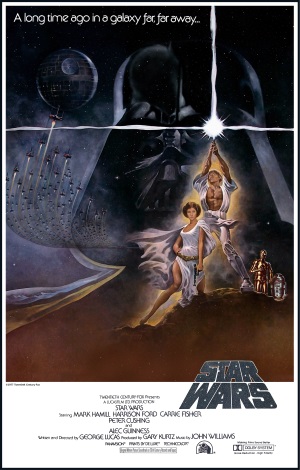
Reviewing the might that is Star Wars; part of me wonders if there is even any point. You know that cliché review term “what can I say about this movie that hasn’t been said before?” Should I pretend its 1977 and I’m just back from the movie theatre – if only I could have experienced it firsthand. With the hype underway for the upcoming The Force Awakens, I’ve been rekindling my love for Star Wars (the good trilogy, not the crummy one) so allow me to be the zillionth person to give their own perspective on Star Wars. Before I had ever even seen Star Wars I felt like I had watched it before. You could probably recreate the film from the parodies it has received. It’s hard not to get caught up in a five-hour conversation about these movies and talking in depth about every single frame. From the archetypes, the plot structure, the glorified B movie tropes and the inspirations coming from the Bible to ancient mythology to westerns to Japanese Samurai films; Star Wars is the story of stories.

I can’t help by getting tearful over the beauty of the original trilogy; whether it’s the introduction of Luke Skywalker to the achingly beautiful John William’s score, or Luke and Leia’s scene in which they try to get away from oncoming Star Troopers by swinging on a rope over a drop – but not before she kisses him – such a classic image taken from any swashbuckler. The sights and sounds of lasers blasting or dogfights in space have an aesthetic and a charm which I could never tire from. What makes the Star Wars universe feel so human? There is advanced technology but it feels used and it doesn’t always function properly. Also, I’ll say it now and I’ll say it again: CGI isn’t anything on practical effects. Part of me doesn’t want to know how they did these effects just to be kept alive the thought of “how did they do that?!” I can still enjoy the special editions despite the changes (it would take a lot more CGI to entirely ruin a film like this), yet the original theatrical versions do have a charming, 70’s hokeyness (particularly during the Mos Eisley scenes and the final assault on the Death Star), which the special editions take away.

What imagination or imaginations can come up with something so wonderful, which raises the question of just how much of genius within Star Wars can be actually credited to George Lucas? Is the guy an untalented hack who got lucky by being surrounded by talented people? It’s disheartening to think the man may never have been the genius we all thought he once was making the man as much of an enigma as the fictional universe he came up with.

Is Mark Hamill’s performance in the original Star Wars the greatest? No, but I feel it works in the trilogy’s favour as his performances in Empire and Jedi are much improved just like how the character of Luke matured and even within the original Star Wars by itself, I do get a sense of enjoyment from how charmingly amateurish Hamill’s performance is. Alec Guinness as Obi-Wan, however, is by far the most tender performance ever given by an actor in a Star Wars film; the comforting mentor and father figure who is wise without any pretension. Also what gives C-3P0 and R2-D2 such a great dynamic? They’re both robots and one is essentially a talking fax machine, either way, best robot chemistry ever.

But If I’m going to really talk about one Star Wars characters it’s Han Solo as played by the greatest of all time, Harrison Ford. Simply put Han Solo is my favourite movie character of all time; the cinematic embodiment of masculinity and individuality. He’s badass, cocky, funny, has a legendary vest, is the most handsome man ever and every word of dialogue he utters I would frame and hang on my wall. Yes, he is God himself.

The other thing I love about Star Wars which like many things was sorely missed in the prequels is the entourage of British actors. To me Star Wars isn’t Star Wars without an imperial star destroyer on which every commander on board has a sinister English accent. Even the presence of Peter Cushing as Grand Moff Tarkin I feel elevates Episode IV over other films in the saga.

The confrontation between Obi-wan and Darth Vader still remains my lightsaber duel in the series. Two old men, minimal movement, no music, choreography as basic as it gets, yet it is infinitely more emotional and substantial than Ewan McGregor and Hayden Christensen doing somersaults inside a volcano for five hours.

Star Wars changed cinema, pop culture and the world as we know it for a reason. Something which has brought joy and happiness to myself and millions around the world (as well as much anger and despair). Many film snobs will dismiss Star Wars as the film which ruined cinema helping bring about the end of the New Hollywood era which it total tosh. I could go on and on and on with this review, adding more to it like Lucas likes to add changes to his already existing films but I feel the best way to review what Is one of the most talked-about films of all time I too try and convey the sense of emotion and euphoria I get from watching such a film.

Sometimes a Great Notion (1970)

Sometimes a Great Motion Picture

***This Review Contains Spoilers***

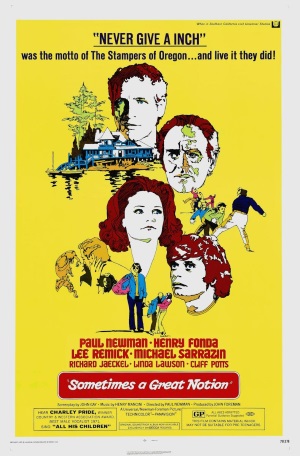
There is no overarching plot in Sometimes a Great Notion yet I was still engaged with the life of this family with their ongoing effort to try and make a living and their own family dilemmas all occurring among the beautiful forest scenery of Oregon. This is a man’s movie reminiscent of the male bonding films from Howard Hawks such as Only Angels Have Wings and Tiger Shark.

Henry Fonda plays a character called Henry so I like to imagine his interactions on set with Paul Newman occur just like they do in the movie. I’ve also often championed Henry Fonda’s unsung abilities as a comedic actor and here he provides the film with some great moments of comic relief. Michael Sarrazin gives the most interesting performance though as the girly man Leeland Stamper who doesn’t fit in with the rest of the men largely due to his long hair. There’s a quiet confidence to his character though as he is unbothered by the remarks of the other men and eventfully wins their respect, by how? Winning a game of the ever manly sport of football.

The logging scenes themselves are actually quite suspenseful, seeing men who are putting their lives in danger in order to make a living, you’re expecting someone to get injured or killed at any time and that brings me to scene in the film which left the greatest impression on me. There are two death scenes towards the end of the film. First, there’s Henry Fonda’s death which is sad, itself but that is but nothing compared to the death of Richard Jaeckel; I was thinking about this scene for days after watching the film and it’s even more powerful watching it a second time as I’m waiting in dread for the scene to arrive. For starters, the character is trapped under a log while the tide is slowly rising and he spends the whole time joking about it and when he is eventually submerged in the water he can only stay alive through constant mouth to mouth resuscitation until help shows up to move the giant log. I can’t imagine a more terrifying situation a person could be in; you can possibly get rescued and live but in order to do so you must remain completely calm; one mistake and you’re a goner. This one of the most harrowing things I’ve ever seen in a film. I doubt I will ever see a more intense death scene or one so difficult to watch.