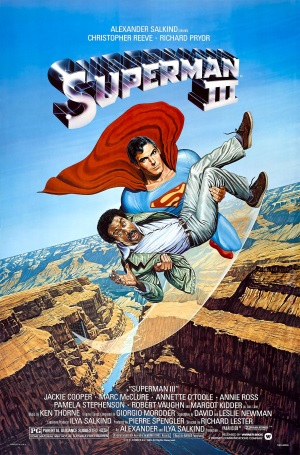
Superman III (1983)

Clark v Evil Superman

***This Review Contains Spoilers***

Superman III, often dismissed as “the Richard Pryor Superman movie”, is a film with many highly questionable moments and bizarre decisions on the part of the filmmakers (most notably the far greater emphasis on comedy), but dam if it’s not a movie I have an immensely fun time watching. Even during the film’s pre-opening credits scene I already found myself relating to Richard Pryor’s character of August ‘Gus’ Gorman and I thought to myself “Isn’t this supposed to be a bad movie?” Ah yes, the monotonous and degrading experience of going to a jobs & benefits office and dealing with the employees who don’t want to be there and probably don’t like you as evident from their body language. The down-on-his-luck Gus then complains about his experience being employed at a fast-food restaurant and how “they expect you to learn that stuff in one day” – let’s say I’ve had some similar real-life experiences. This is later followed by another one of Gus’ relatable frustrations – having your pay undercut by taxes (“State tax, federal tax, social security tax”). I wasn’t bothered by Pryor sharing the spotlight with Superman regarding screen time as I very quickly became endeared by this regular Joe who bites off more than he can chew and finds himself in extraordinary circumstances. Gus, you are my spirit animal!
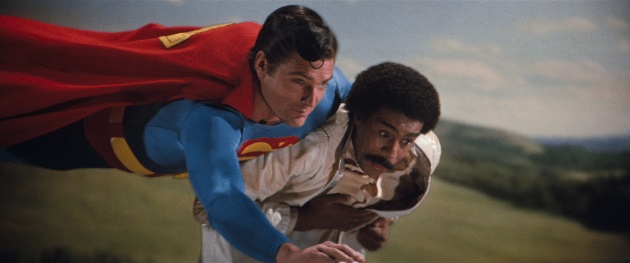
The text for the opening credits of Superman III looks like it was created using Windows Movie Maker (or whatever the equivalent was circa 1983) but I’d be lying if I didn’t say the slapstick comedy in the opening credits amuses me with its classic vaudeville-like elements (including a haphazard blind man, a pie in the face and even a clumsy mime). This opening is very intricately set up and is done by a director who understands and knows how to do physical comedy aided by a delightfully mischievous-sounding score from Ken Throne. Now you might be asking dear reader, “Even if all that is true, what is this sequence doing in a Superman film? This isn’t a Jacques Tati film”, and you would be absolutely correct in that assessment. I could try to post-hoc rationalise its inclusion, arguing that it ties in with the fact that Clark Kent is often a bumbling clutz, plus the series is light-hearted and campy as a whole. However, at the end of the day, all I can say is that it simply entertains me and makes me laugh. So please let me enjoy the one time in history in which the unique and odd combination of the Superhero genre and classic vaudeville comedy came together into one.
Not all of the comedy in Superman III is successful in my eyes. If I was to pick out the weakest scene in the entire film it would be that in which Gus explains Superman’s exploits in Columbia as the Man Of Steel disrupts the villain’s plans for economic manipulation (“But this one miserable, puissant little country, has the gall to think it can dictate the economy of an open market!”). I can understand the writers were trying to give Pryor room to express his comic chops however the scene fails on such a level and rather just comes off as a lengthy and awkward expositional monologue edited to several brief flashbacks of Superman in Columbia – why not create an action scene out of this plot point instead?. Then there’s the gag of the green man and the red man in the traffic lights fighting each other. I find the moment funny in isolation, but when viewed within the context of the film you have to ask yourself, “Did that really just happen?”. Nowadays with smart technology, someone with the know-how could actually programme such a thing to happen, so perhaps the gag was ahead of its time after all.
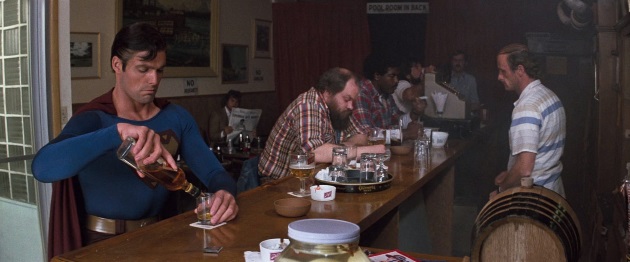
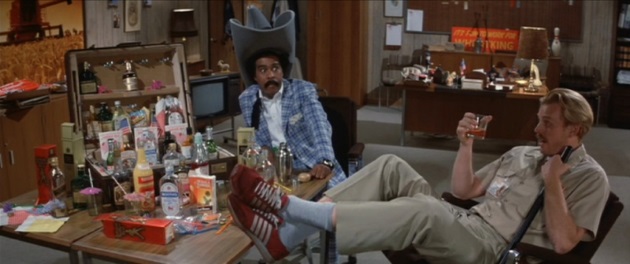
Amongst the comedy which does succeed, I do enjoy the gags which use Superman’s powers for comedic effect such as Evil Superman straightening of the Leaning Tower of Pisa or the blowing out of the Olympic Torch just as it reaches its final destination. However, If I was to pick a comic highlight of the film, it would have to be the sequence in which Gus breaks into the Webscoe offices in Smallville, with all the drunken antics and the improvised use of a passed out inebriated body of a security guard to turn on a computer which requires “both keys at the same time” to activate (a very Mr. Bean-like scenario) – plus the sight of Pryor in a tweed suit and an oversized cowboy hat which keeps bobbing around is a funny image in itself. Corresponding, the film also has its share of more subtle comic moments such as Gus foolishly flaunting his ill-gotten wealth by driving to work in a Ferrari to Jimmy Olsen’s incessant yammering to Clark as they ride on the bus. I also enjoy Pamela Stephenson as the Jean Harlow-like dumb blonde Lorelei who conceals her intelligence (“How can he say that pure categories have no objective meaning and transcendental logic? What about synthetic unity?”). Then there’s the other brand of comic moments in Superman III, those which I can’t quite determine if they were intentionally supposed to be funny or not, such as the bizarre sight of the unshaven Evil Superman in a bar drinking as he flicks peanuts to smash glass bottles. Regardless, moments like this are now a goldmine for internet memes galore.  
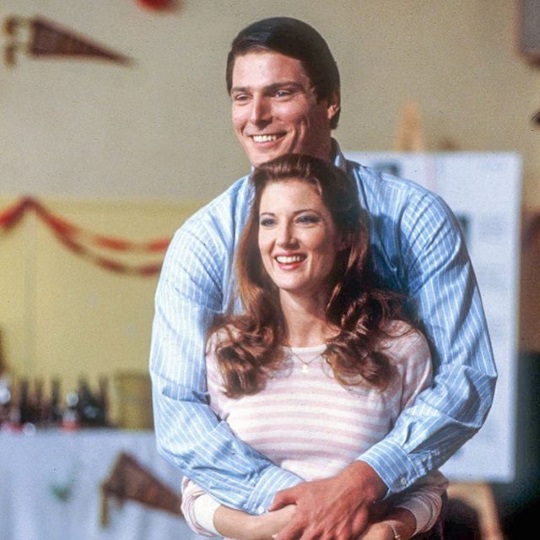
Third time’s the charm and Christopher Reeve finally gets top-billed in his own series. Superman III is Reeve’s finest performance as the Man of Steel as he has the task of portraying three different personalities in one film – Clark Kent, Superman and Evil Superman (which he has been retroactively referred to as the persona is never actually given a name in the movie). While these are all persona variations of the same character, it does show Reeve held the same ability alongside the likes of Peter Sellers or Eddie Murphy to play multiple characters in the same film and even interact with each other in the same scene. How one man can look so vastly different from three versions of the same character? Reeve even showcases his physical acting abilities to be on par with the greatest silent film actors with the level of expression he can convey through body language and facial expressions (just look how tightly the skin is pulled back around Reeve’s neck as he shouts “Come on!” during the junkyard fight). Moreover, as with Superman II, one of the elements of the movie I found myself enjoying most was the character relationships. I was surprised I was engaged with the relationship and dynamic with Clark’s Smallville sweetheart Lana Lang (Annette O’Toole) as much as I did with Lois Lane in the previous film. In one of my favourite moments in Superman III, Clark and Lana are cleaning up the gym together following the class reunion party as she tells him about her ambitions and how she wants to leave Smallville as Clark plays an instrumental rendition of Earth Angel on the piano (in a great combination of diegetic and non-diegetic music). At this point in the movie, I thought to myself how people can dismiss this movie as much as they do when you have brilliant, intimate moments like this which showcase performers with such marvellous chemistry. What really differentiates Clark’s relationship with Lana in contrast to his love interest in Superman II is that Lois is in love with Superman but ignores Clark, whereas Lana is in love with Clark but not so much Superman. Thus Clark is much more confident, suave and debonair with Lana, and not the bumbling clutz he is with Lois. Sadly, the status quo of the Superman universe can’t allow Clark and Lana to become a couple, but what a superb pairing they are. I do have to ask though, why are the class of 1965 having a reunion in an off-year, assuming the film is set in the year it was released (but I digress)? 
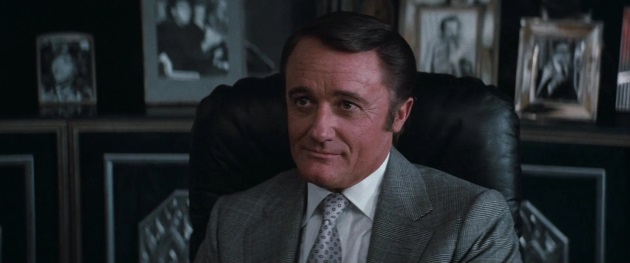
Initially, the big bad of Superman III, Ross Webster (Robert Vaughn) disappointingly came off to me as a lesser Lex Luthor. However, on further viewing, I’ve really come to appreciate the Bond villain-like character and Robert Vaughn’s charismatic and suave performance as well as that of Annie Ross as Webster’s butch, somewhat comical sister Vera. Like Luthor’s underground, abandoned subway layer in the first film, Webster’s own layer is like a character in itself, with his own ski resort atop a Metropolis skyscraper and a memorable, grey, art deco design in his grand office. Additionally, I’m not the first person to point out that the reimagining of Lex Luthor in the comics starting with the Crises Of Infinite Earth series in 1986, portrayed Luthor as not the mad scientist archetype as he had been for decades until that point, but rather as an entrepreneurial head of Lexcorp – not too dissimilar to Ross Webster and his company Websco with both being complete with tall, extravagant skyscraper penthouses as a testament to their larger-than-life egos.
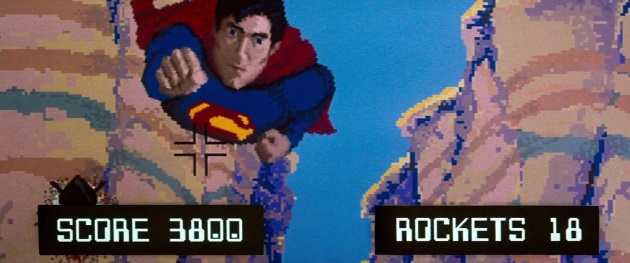
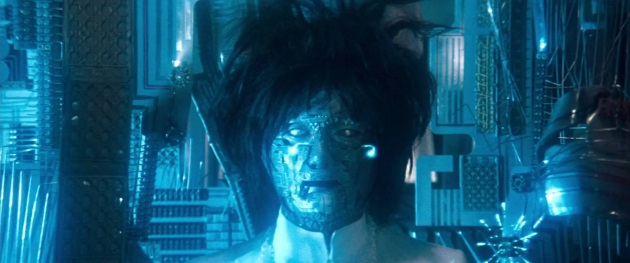
One of the most notable and unique aspects of Superman III is its semi-serious early screen depiction of computers and cyber-terrorism. Gus’s get-rich-quick scheme of writing a computer programme to gather up fractions of a cent remaining from other Webscoe employee’s pay cheques does have its basis in reality in a practice known as salami slicing (with this aspect of Superman III having influenced the movie Office Space as directly referenced in that film itself). However, I do use the term semi-serious as by the film’s climax, the understanding of computers in Superman III goes from having a basis in reality to becoming pure science-fiction with the super-computer designed by Gus. Just how did Gus accumulate the knowledge to design a machine which can feed itself by absorbing power from the electric grid, is able to grab people by using its wiring like a series of tentacles, can levitate people into the air and even turns Vera into a robot (I don’t think even the likes of Bill Gates are capable of creating a computer quite like this). Vera’s robotic transformation (or is she a cyborg as she appears to still have flesh skin albeit painted grey) is particularly frightening as she screams in agony during the process and then proceeds to walk like Boris Karloff in her new robotic form. I’d also be remiss if I didn’t mention, why does the villain’s view of Superman flying through the canyon looks like a video game complete with score points and those infamous Atari Pac-Man sounds? It doesn’t make sense (not to mention they do realise Superman is indestructible so why are they bothering to fire missiles at him?) but it sure is a fun sequence to watch. This entire action climax of the film is ridiculous but makes for very entertaining viewing and is topped with many memorable special effects shots from stop motion to miniatures (bringing the 80’s factor of Superman III up to 11).
I find Superman III to be the most visually and aesthetically appealing of all four Reeve films, and with Richard Lester being the only director at the helm (unlike Superman II which went through two directors), Superman III is consistent in its visual style with its use of warm, pastel colours and coupled with the picture’s use creative old-school practical effects. These films became more pop art in style as they went along, with another major unique contribution of Superman III to the series being the wholesome, small-town Americana feel with the scenes in Clark’s hometown of Smallville (ironically though filmed in High River, Alberta, Canada). Superman III is full of very comic book-like, very Superman-ey (for lack of a better term) moments such as Clark sneezing to create a bowling ball strike or Superman freezing an entire lake and then carrying it as a huge piece of ice in order to extinguish a chemical plant fire – a joyously simple and effective solution which feels like it’s taken right off the pages of a comic book. Furthermore, the TV version of Superman III contains 18 minutes of extra footage but unlike the TV versions of the first two films, the extra footage is mostly unnecessary padding for existing scenes and contains nothing that I was wishing was included in the theatrical cut. Even the Frank Oz cameo as the surgeon comes off as an awkward and unfunny attempt at shock humour while the clear indication that Evil Superman is definitely getting it on with Lorelei (whereas in the theatrical cut, this is only implied) is pushing it too far for what’s supposed to be a family film. Additionally, the opening credit sequence in this version which goes back to the traditional outer-space credits of the first two films is very dull with the repetitive use of scrolling text. This is one Superman movie in which I will stick with the theatrical version. Or if you would rather have an abridged version of Superman III, watch the infamous trailer which explains the entire main plot in 3 minutes.
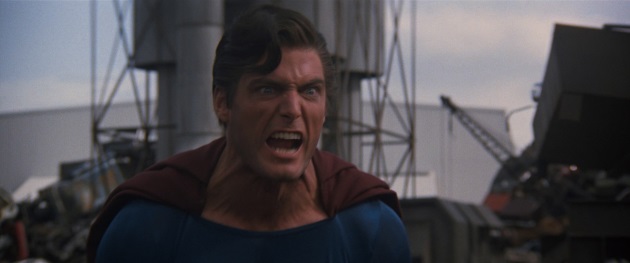
An aspect of Superman III which is not often discussed is the film’s many references to indulgence and substance abuse, with Evil Superman being a potential metaphor for this. When analysing a movie for a deeper meaning like this, you can question if any such messages were intentionally incorporated by the scriptwriters. However, in Superman III, this theme is very on the nose that I can’t see it being something which the writers didn’t knowingly include. Firstly, how did Evil Superman come to be? Well by man-made kryptonite which substituted tar with an unknown substance of 0.57% after Gus Gorman choose the substance after seeing it as an ingredient on the side of a cigarette package. It’s like the film is saying smoking turned Superman evil (then again, didn’t your last movie have product placement for Marlboro Cigarettes?). Reeve plays Evil Superman in a manner in which he appears to always be intoxicated, while in pursuit of hedonistic pleasures (including getting super-laid). In general, Superman III is full of references to addictive substances including alcohol, cigarettes, coffee and fast food from the character of Brad Wilson (Gavin O’Herlihy) being in a state of near-constant inebriation to Ross Webster himself being a coffee mogul. Even Webster’s line “Every time a drunk sobers up, he’ll be drinking Webster coffee” is very on the nose. Gus himself also indulges in his newfound wealth (after previously complaining that he wants his pension money now) causing him to lose sight of his moral compass. On top of that, the film’s co-writer Leslie Newman refers to the Evil Superman as being “under the influence” in the documentary The Making Of Superman III – make of that what you will. During the film Evil Superman never kills anyone nor causes catastrophic damage or destruction (bar the oil tanker incident which is the worst action he performs) as Superman’s own inherit morality would prevent him from doing so – it makes sense that hedonism (and general trolling) would be the worst thing a corrupted Superman would do. When watching the movie through this thematic lens of indulgence and substance abuse it makes the confrontation between Clark and Evil Superman all the more compelling, speaking off…
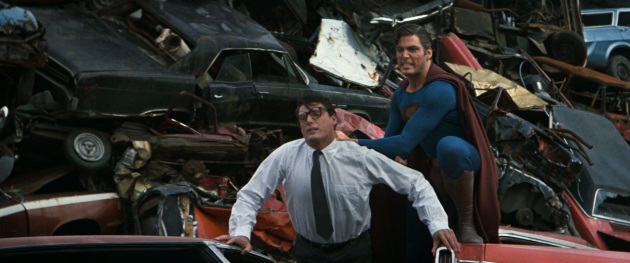
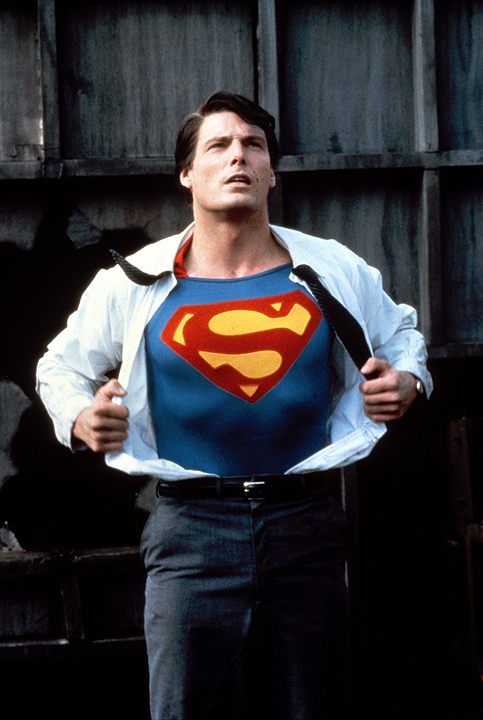
The grand highlight of Superman III has to be the inner conflict of good and evil that is the in-head fight between Evil Superman and Clark Kent in the junkyard – never before has a fight which doesn’t actually happen been so exciting. It’s intriguing to see the Clark persona involved in combat with the juxtaposition of a dorky guy who can give and receive such a brutal beating (“I can give as good as I get”). The use of composite shots and body doubles sells the illusion of two versions of Christopher Reeve fighting each other (pre-dating Back To The Future: Part II by six years), while the junkyard environment is used to great effect with the use of conveyor belts and trash compactors. While none of Ken Throne’s original music reaches anywhere near the heights of John Williams’ work, his music for this fight is a highlight with its eerie use of synthesisers. In addition, I find the moment of Clark being crushed in the trash compactor to be scary stuff. Even though as a viewer I know he will be fine as he is Superman after all, his heavy breathing and the look of horror on his face as he is trying to escape from the machine alongside the pov shot in which he catches his last glimpse of daylight in a scenario of which a normal human would be crushed to death is very unsettling to watch. In the end, the better angels of our nature prevail as Clark defeats Evil Superman, followed by a glorious victory shot in which Clark does the iconic shirt rip and subsequently flies off as regular Superman as the John Williams theme plays is one of those triumphant movie moments that make you want to just cheer on – “Yeah, go Supes!”. I’m not ashamed to proclaim my un-ironic love for the imperfect but joyous cinematic outing that is Superman III (perhaps I can reclaim some cinephile street-cred by reviewing some pretentious, European art-house that everyone pretends to love in order to look cool and artistically enlightened). Will I be able to find any merit in Part IV of the Superman film franchise? Let us embark on the next stage of our quest…a quest for peace?
Superman II (1980)

What Is The Story With That Cellophane S?

***This Review Contains Spoilers***

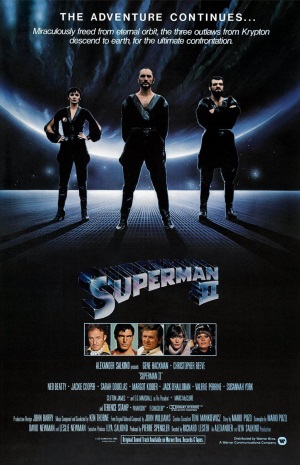
Due to the complex and troubled production behind Superman II it seems likely it would have been destined to become a disaster of a film with the switching of directors from Richard Donner to Richard Lester during the principal photography process. However, instead of turning into a Frankensteinian mess of two director’s visions stitched together into one, I consider Superman II to be the perfect Superman film. A film which improves on the original in so many ways and delivers a more emotionally satisfying film and offering two hours of pure escapist bliss. A rare instance of the perfect combination of cast and crew coming together to create something wonderful. I will also take this opportunity to say: Lester cut > Donner cut (yes, this is a hill I am willing to die on). After watching Superman II: The Richard Donner Cut I thought to myself “Thank God Donner was fired from this production and replaced with Richard Lester”. Within the Donner cut, the romance between Lois and Clark is very forced and underdeveloped; there is a lack of humour, and no exaggeration, one of the absolute worst endings I’ve ever seen – but that’s for another review.

Lester’s style for Superman II forsakes the more epic scope Richard Donner employed for the first film, instead opting for scenes in the film to more resemble the frames of a comic book – Superman II does have more of a comic book/pop-art vibe. Lester brought on cinematographer Robert Paynter for the film to evoke the colour scheme of the comics however the contrast between Lester’s new footage and that shot by Donner which still made it into the film (i.e. all of Gene Hackman’s scenes) isn’t great enough to become distracting.  Superman II has a much more brisk pace than the first film, as evident by the opening scene which re-edits the Kryptonian council’s trial of Zod, Ursa and Non to that of a more frantic pace. It does create a continuity issue with the first film as Marlon Brando has been completely removed from the scene (and is absent for the entire film), however, I am able to look past this as the opening is just so darn exciting and perfectly establishes the tone for the rest of the film. With all the setting up done in the first film, Superman II is able to get straight into the thick of it with the action sequence involving terrorists at the Eiffel Tower, and creating high stakes right off the bat. Correspondingly, another individual who doesn’t return for Superman II is that of composer John Williams and thus is lacking the sounds of The London Symphony Orchestra. Rather the film is scored with a smaller orchestra led by composer Ken Throne, however, I actually don’t mind the stripped-down approach to the music and find it does work in its own way. John Williams may have written the iconic Superman theme, but I find Ken Throne’s faster rendition for the opening credits of Superman II to be the best version of the famous theme with its quicker tempo. Likewise, someone in the production must have been fond of the Average White Band song Pick Up The Pieces as not only does it appear in the film, there is a neat orchestral version of it during the second dinner scene.

While their appearance in Superman: The Movie was fleeting, Superman II finally gives us General Zod (Terrence Stamp) and his two accomplices Ursa (Sarah Douglas) and Non (Jack O’Halloran) in all their glory. Terrence Stamp as Zod is one of those performances which bring me eternal levels of respect for an actor. Every one of his beautiful hammed-up, menacing lines I could listen to all day (a posh English accent makes any on-screen villain all the more evil). Alongside Stamp’s scenery-chewing, part of what makes the trio so intriguing is the innocence of their evil. The three don’t actually seem to be unaware of the immorality of their actions, with Ursa, in particular, taking great joy in her evil misdeeds (one of the many international TV cuts of Superman II does feature a scene in which Non kills a child off-screen, although I prefer this scene’s non-inclusion in the theatrical cut as it is too dark in tone with the rest of the film). Likewise, I greatly enjoy the trio’s genuine curiosity during their time on Earth, such as when Zod is genuinely baffled by Lex Luthor’s impudence (“Why do you say this to me when you know I will kill you for it?”). Much humour is devised from this 3rd Rock From the Sun-type humour such when the trio mistake Earth’s name as planet Houston, nor would any comical/semi-comical act be complete without the dumb one, as even the Kryptonian Council denounces Non for his lack of intelligence (ouch!).

As Zod, Ursa and Non have the same strength as Superman when on Earth, their characters do harken back to the original predecessor story to Superman, Jerry Siegel and Joe Shuster’s short story The Reign Of The Superman from 1933, in which an indestructible “superman” imposes tyranny on the world rather than using his powers for good. However, once Zod becomes supreme leader of Earth in Superman II, he doesn’t actually do anything. He, Ursa and Non just lounge around the Oval Office and don’t do anything while the rest of the world continues as normal. As I argued in my review of Superman: The Movie, Zod was correct to stand up to the authoritarian dystopia that was Krypton, and on Earth, he is the libertarian hero we need. I for one welcome our new Kryptonian overlords (#ZodWasRight). It is also worth noting that in the TV cut of Superman II, during the invasion of The White House, Zod takes particular umbrage at a portrait of Richard Nixon and starts frantically shooting it even though he should have no knowledge of who this man is, I guess it just rubbed him the wrong way.

Although I may put my defence of Zod on hold in favour of the film’s grand action set-piece as the son of Jor-El takes on the Kryptonian trio in a climatic fight which spawns the city of Metropolis. As combat with a villain was absent in the first film, this fight more than satisfies that desire (”Man, this is gonna be good”), with all those wonderfully kitschy special effects on display just getting better with age. The fight also includes multiple humorous uses of product placement as Superman gets thrown onto a Marlboro Cigarettes truck followed by Zod being flung into a Coca-Cola sign only a few seconds later to my great amusement. The inclusion of product placement for Marlboro Cigarettes is odd though considering early in the film there is some very subtle humour coming from Lois Lane speaking about how she is trying to stay healthy her via her intake of orange juice, all while she continues to chain smoke.

As with the first film, the scenes in The Daily Planet have that screwball comedy vibe, however, I feel the dialogue in Superman II is even wittier this time around. The recurring players in all the Christopher Reeve-era Superman films have such a great dynamic together that even in a movie as poor as Superman IV I can still enjoy their interactions. The major cast member absence of Superman II is Marlon Brando, however Susannah York as Superman/Kal-El’s mother does an effective job filling Brando’s shoes as she is commanding and stoic and like Brando, is a comforting presence in The Fortress Of Solitude. Moreover, Superman II offers further insights into the character of Lex Luthor with his desire just to be the ruler of Australia (and then later Cuba). He may be an egomaniac, but at least knows his limits; he can’t have the world but can happily make do with a continent. The TV cut of Superman II also interestingly features an interaction between Luthor and Jimmy Olson (Marc McClure), two characters that otherwise never encounter nor interact with each other at any other point in the series. I also adore how Superman refuses to look Luthor in the eye when speaking to him as he is that unamused by Luthor’s antics (probably in part since Hackman still got billed above Reeve in the opening credits). Other memorable characters from Superman II include Rocky (aka Mr Wonderful), the perfectly executed love-to-hate character, not to mention that kid from the redneck town who for some bizarre reason sounds like he’s from Victorian-era London.

The other aspect which makes Superman II so great is the romance between Lois and Clark. I was left so badly wanted to see these two get together, two down-to-earth souls who are too perfect a match for each other. Their interactions at the beginning of the film are so endearing as Lois almost mothers the clumsy and meek Clark, not to mention you can really feel the pain as Clark gets friend-zoned big time. Following Lois’ discovery that Clark is indeed Superman, Clark surrenders his powers as Superman to live as a mortal in order to be with Lois. This is followed by the two of them going all the way which I assume Clark would be unable to do as Superman as his superhuman strength would literally kill her (so am I to assume Superman gave up his powers just because he was that thirsty?). The crescendo to the Lois & Clark romance comes to ahead with easily the most emotionally powerful moment in the series, as following the restoration of Superman’s powers, the two try to comprehend continuing to professionally work together in the same vicinity despite their feelings for each other. Margot Kidder’s voice is so emotive and she has that Margaret Sullavan-like quality to her (at the film’s most intense romantic moments her tearful pleas kill me). This conflict is resolved by Clark giving Lois a memory-erasing kiss (another addition to the list of bizarre powers Superman uses once and never again alongside going back in time, repairing the Great Wall Of China with his laser eyes and the infamous cellophane S from earlier in the film). A conclusion like this could easily have come off as a cop-out but I will argue in its favour. Firstly, the manner in which he erases Lois’s mind is via the romantic gesture of a kiss is tonally consistent with the scene, and secondly, the sacrifice that is endured on the part of Clark. Lois can have her mind erased to forget the pain, but Clark is not offered that privilege, he must continue to remain stoic to carry the heartache. That said, with the status quo returned, another Superman adventure beckons, to which the beginning of the end credits to Superman II offers the viewer a tease:

Coming soon

“Superman III”

Castle In The Sky [Tenkū no Shiro Rapyuta/Laputa: Castle In The Sky] (1986)

Just The Two Of Us, Building Castles In The Sky

***This Review Contains Spoilers***

Castle In The Sky is one of those films upon a first-time viewing, it’s easily apparent how much of its fingerprints are over so much media that proceeded it in this Jules Vernesque, steampunk adventure. The heroes’ journey, chase movie follows youthful protagonists Pazu & Sheeta as they embark on the search for Laputa, a floating Tower of Babel of which the surface has the appearance of a deserted Hanging Gardens of Babylon. Little information is given about the history of Laputa, with the viewer given the task of filling in the blanks.

Castle In The Sky is littered with moments of pure wonderment and melancholy from scenes such as a cave being turned into a makeshift planetarium with the use of the element volucite (a fictional element sadly) to the sense of awe upon the arrival to Laputa itself. There is something about the blue skies in Studio Ghibli’s films which is endlessly beautiful to look at while the lighting present in the animation provides much visual stimulus (although I would just say the contrast with Sheeta’s pirate outfit between light and dark is too drastic). The physicality and sense of space the animators are able to convey as well as the suspense created in the film’s action sequences through the medium really is a remarkable feat. Correspondingly, a Ghibli film ain’t a Ghibli film without a rich and melodious score, especially courtesy of Joe Hisaishi. The main theme of the picture itself balances a line between its dark, mischievous yet optimistic tone. Some of my favourite highlights include Morning In Slag Ravine which is the ideal accompaniment to any morning sunrise to that piece which plays as Sheeta slowly Ancient Aliens herself from the sky is one catchy ditty. Likewise, the Celtic-sounding Memories of Gondoa conjures visions of the rural landscape of the British Isles and appropriately is used as Sheeta tends to cattle resembling that of the Scottish highlands. 

Pazu resides and works in a fantasy version of a Welsh mining town and I do have to ask was John Ford’s How Green Was My Valley used as a visual pretext for the film? Hayao Miyazki visited a Welsh mining town a year prior to the film’s release and in he appears to pay tribute to them in the film when Pazu utters the line, “Miners aren’t exactly wimps”. Ah Pazu & Sheeta, one true pairing if there ever was one. It is remarkable how attached one becomes towards this duo and their shared chemistry which is able to be portrayed through the medium of animation (take a sip every time Pazu screams “Sheeeeeta!”). No full-on romance ever develops between the two nor do they ever kiss but small displays of affection are present in this young love. In the sweetest scene in the film, Pazu & Sheeta are atop the pirate’s airship at night as Pazu gives reassurances to Sheeta that all will be fine, all while the pirate captain Dola unintentionally hears their endearingly innocent conversation.

As is recurring in Miyazaki’s films, Castle In The Sky showcases the innocence of youth and having minors overcome obstacles which force them into maturity. Like In Kiki’s Delivery Service, the young protagonists are thrust into positions of adult reasonability. Pazu lives by himself and works a full-time job (literally a minor-miner) while Sheeta is left to run her parent’s estate after their passing and it’s later revealed she has the responsibility of being part of the Laputa royal family. Furthermore, during the sequence as the military base is going up in flames, the absolute trauma in the face and voice of Sheeta is intense (although the duo later show no fear walking and even celebrating on platforms with drops in which they could fall to their deaths). I do believe the medium of anime is the best at portraying this sense of innocence and vulnerability due to the hallmarks of anime character design with those big wide eyes, the almond face shapes and the head-to-body ratio. This is where the English dub by Disney really falls short, James Van Der Beek and Anna Paquin sound far too mature for Pazu & Sheeta. Not only do their voices not match their clearly pre-pubescent appearance, but it also takes always from their characters and doesn’t replace it with an alternative that has any merit on its own (as was the case with Jiji in the Disney dub of Kiki’s Delivery Service). This is a shame as Mark Hamill and Cloris Leachman are fantastic in their respective roles but the casting of the children makes this dub hard listening.

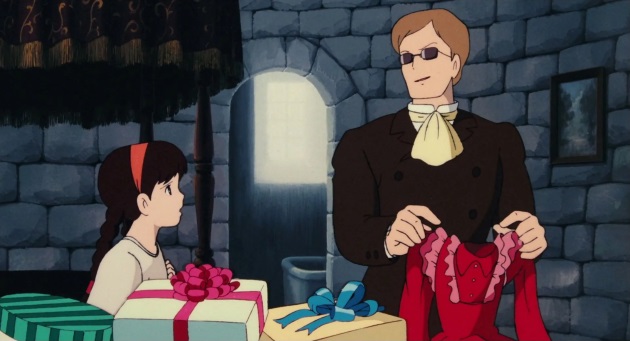
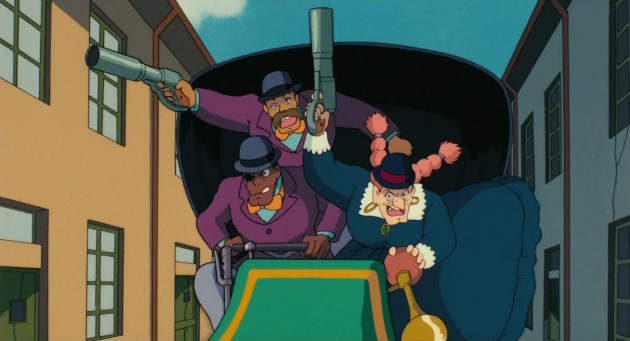
Castle In The Sky is a rare instance of Studio Ghibli film with an outright villain in the form of “that pencil pushing upstart” Colonel Muska. The man is one dapper gentleman but I never can brush off the creepy, groomer vibes when he tries to bribe Sheeta with fancy clothes. The other major foe in Castle In The Sky is none other than the government of this fictional land, and what better way to portray an overbearing, authoritarian government than by turning them into ze Germans of course, you vill eat ze boogs and vill like it! Furthermore, the appearance of firearms and ammunition in children’s animation is a shock to the western viewer rather than a fantasy Star Wars-style blaster. Once adjusted to this reality it is far more preferable rather than having them digitally altered into walkie-talkies. Then there are the bay guys turned good mid-film with the Marty Feldman look-a-like Dola and her band of pirates. The film doesn’t make it clear if Dola is the biological mother of her crew or mother in spirit but either way, their dynamic is like a more endearing version of Mom and her three sons from Futurama. Dola herself is really made an interesting character by her belief in traditional gender roles despite being a model of non-conformity herself. Despite wearing the pants, she insists Sheeta be ladylike and holds concern for Pazu’s lack of masculinity following his initial surrender when trying to rescue Sheeta.

I’ve read accounts that Castle In The Sky aired on UK television channel ITV 1 on Christmas Day 1989, with other accounts stating various surrounding dates including Christmas Day and New Year’s Eve of 1988. Either way, it’s remarkable that Castle In The Sky was able to make it to the west so quickly back then and odd by the way of a one-off TV airing. I’ve tried to find recordings or promotion material for this broadcast but have come up empty-handed – hopefully, someone can close a chapter on this lost media mystery.

Kiki’s Delivery Service [Majo no Takkyūbin] (1989)

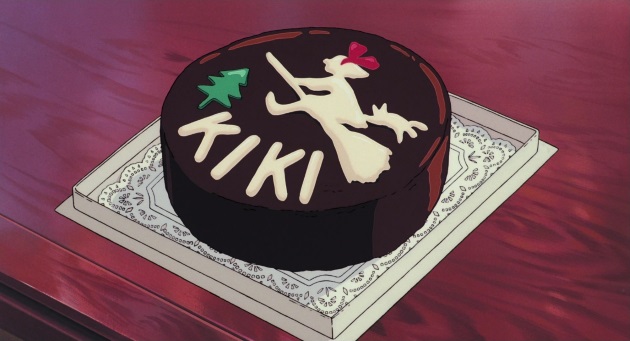
Someone Left The Cake Out In The Rain

***This Review Contains Spoilers***

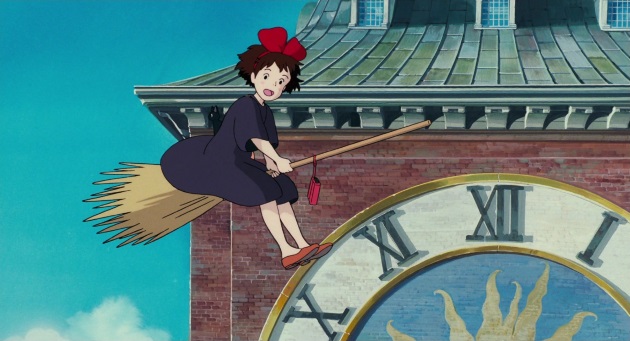
For a country which reportedly has one of the world’s highest stress rates (and perhaps as a result), Japan has produced some of the screen’s most tranquil and relaxing viewing experiences, whether it’s the works of Yasujirō Ozu or Studio Ghibli. Kiki’s Delivery Service tells the story of a trainee witch travelling to a city and using her flying skills to start her own delivery service. Set in the fictional city of Koriko (or Corico as some sources spell it), an urban dwelling inspired by Stockholm and the small Swedish town of Visby which is given no real-world area however the geographical layout of the city within the film feels incredibly well defined (bring on the Kiki’s Delivery Service open-world video game). Director Hayao Miyazaki is quoted as having said “Kokiro has one side on the shores of the Mediterranean, and the other on the Baltic Sea [laughs]”. Correspondingly, Miyazaki states Kiki’s Delivery Service takes place in an alternative 1950s Europe in which both world wars never happened and this rejection of modernity is a constant theme throughout Studio Ghibli’s output. It’s easy to lose yourself in the world within Kiki’s Delivery Service with its classical European architecture, cobblestone streets and houses equipped with traditional ovens. During the film’s opening, Kiki wants to leave her tiny village in the countryside for the city, yet to the viewer, this place is heaven on Earth with its green fields, bright blue skies and cosy cottages. The accompanying music score by Joe Hisaishi features many moments of joyful bliss with a mix of classical European, vaudevillian and ragtime music. On A Clear Day radiates that feeling of a sunny day while the piece which plays as Kiki arrives in her newfound hometown titled A Town With An Ocean View is dark yet optimistic. My favourite piece is that played over the unveiling of painting featuring Kiki titled An Unusual Paining in which the dreamlike, new-age mystic piece leaves one with a sense of wonder.

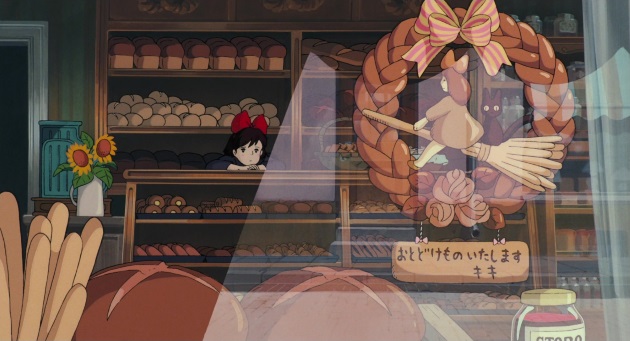
Kiki’s Delivery Service is one of the best films about entrepreneurialism and the entrepreneurial spirit. The world of Kiki’s Delivery Service appears to be a libertarian paradise, a world which appears to be devoid of any business regulation (“Oi mate, you got a loicense to deliver that cake?”) in which children are driving cars, flying permits are not required for amateur aircraft, a minor can own a business, there is no mention of child labour laws nor any mention of Kiki continuing or ever having attended a school and a place in which you can invent flying machines without any apparent regulations – what Ayn Rand would describe as “full, pure, uncontrolled laissez-faire capitalism”. This lack of regulation or government oversight extends to the fact that Kiki leaves her home to be independent while still a minor at the age of 13. Her mother does mention “nobody leaves home that young anymore”, but aside from this, no concern is raised for a 13-year-old going off to live by herself nor any form of social services is present to get involved. Is this form of libertarianism and capitalism presented here ultimately a fantasy that would not work in real life with the presence of predatory big business (or am I over-analyzing a film for subtext that’s not there)? Miyazaki once stated about capitalism: “During the time I was trying to conclude Nausicaä , I did what some might think is a turnabout. I totally forsook Marxism. I decided it was wrong, that historical materialism is also wrong, and that I shouldn’t see things with it.” Only a few years following the release of Nausicaä of the Valley of the Wind, Miyazaki would craft fictional benevolent capitalists like the ever so loving and joyful Osono, the owner of the bakery Gütiokipänjä and a compassionate, benevolent landlady who showcases the human side of business (likewise, there’s something comic about the mere presence of Osono’s unnamed husband, the tall, buff, stoic figure who utters little more than a grunt). Kiki’s Delivery Service is a film which conveys the value of money as Kiki has to carefully budget what money she has after arriving in town, forcing herself to live off pancakes and work for her money while other kids her age spend their time procrastinating and driving cars. It’s moments like her visit to the grocery store and her sticker shock over the price of items which really makes the film so down to Earth.

The overall sweet, wholesome nature of Kiki’s Delivery Service makes my inner valley girl wants to proclaim, “like omg, cutest movie ever!!”. Everything about the titular heroine is unbearably cute from her facial expressions to her over the top reactions to even the slightest bit of good news and her occasional hyperactive nature. Kiki is seen as modern by the standards of her village yet old fashioned by the standards of the city. She struggles to fit in with the city’s children yet is able to engage with two elderly ladies thanks in part to her knowledge of how devices such as how a wood-burning oven works. Kiki is repulsed by how rude the children in the city act from the overly-inquisitive girl hunter Tombo to the ungrateful girl who receives the herring pie from her grandmother. This theme of maturity extends to the relationship Kiki shares with her cat Jiji. After she loses her powers which include the ability to speak to Jiji, it remains the one power she does not regain at the film’s conclusion. I do find it somewhat heartbreaking that Kiki never regains this ability but then again, speaking to a cat as if they’re human is in itself a rather childish thing to do and thus a sign of Kiki’s newfound maturity as she gets older. It does raise the question if Jiji could actually speak to Kiki in the first place or was it just in her mind? Yet in the English dub, Kiki restores her ability to speak to Jiji at the end, regardless Phil Hartman’s sarcastic Jiji makes the English dub worth watching.

So by all accounts, Kiki’s Delivery Service sounds like the most based, conservative, red-pilled, right-wing movie ever made espousing the values of tradition, power of the individual and the pick yourself up from the bootstraps mentality? Well not quite. Kiki is after all practising pagan witchcraft rather than being a good God-fearing Christian. Although in all seriousness, God is actually mentioned in both the dubbed version and the English subtitles of the original Japanese version in which Ursula states – “The spirit of witches. The spirit of artists. The Spirit of bakers! I suppose it must be a power given by God. Sometimes you suffer for it”. Although this is not the line in the original script and is a creation of the English subtitles the film still contains the ever slight reference to religion with Kiki flying past a Christian church in the opening credits. It’s not difficult to buy into the fantasy premise in which witches with supernatural abilities openly co-exist in society, and can even marry non-witches such as Kiki’s father (are her powers genetically passed down from her mother?). However these are not witches in the traditional sense, there are no devils, pentagrams or virgin sacrifices present in the film (Kiki’s mother is introduced creating a potion using modern science equipment). There does appear to be one dark side presented about these witches in which Jiji remarks “Crows used to be witches’ servants” to which Kiki angrily responds “That was a long time go, okay?” – make of that what you will. Also, while it is odd to bring up, I am forced to mention as it does come off as peculiar for the western viewer is the inclusion of many up-skirt shots throughout the film. It’s not sexual but no doubt will cause some monocles to fall into champagne glasses. That said, Miyazaki actually has a reasoning for this. On page 138 in The Art Of Kiki’s Delivery Service, he is quoted saying “It’s a rite of passage for her to fly over the city with her underwear exposed” – make of that what you will.

Despite lacking a villain within the story, Kiki’s Delivery Service does manage to set up a finale with an action set piece and one which utilizes Miyazaki’s love of aviation. Likewise, I do enjoy how Studio Ghibli’s films make the end credits a part of the movie-watching experience, something I wish more films would do general (Kiki’s continued use of a bassline broom after the destruction of her traditional witches’ broom is a nice touch). The aforementioned subplot of Kiki losing her powers immediately reminded me of the similar subplots in Superman II and Spider-Man 2. In all three films, the loss of powers comes from stress, burnout, the descent into depression and the inability to lead a normal life (granted Superman choose to give his powers up voluntarily but the comparison still holds). Kiki’s Delivery Service can be read as an allegory for modern young creatives trying to make it on their own with Kiki’s magic being used as a metaphor for artistic expression whether it’s attempting to become a YouTuber or trying to run a successful movie review blog (wink, wink) and attempting to accompany this into a work-life balance. The other character who reflects the passion for a creative to turn their passion into a job is the painter Ursula. She speaks of how her pursuit of painting is what gets rid of her frustrations and her remedy for the loss of creativity involves “Take[ing] long walks, look at the scenery, doze off at noon. Don’t do a single thing” – and yes, on a personal level this I can relate to. Kiki’s Delivery Service is as fine a tribute to the creative and entrepreneurial spirit and regardless of your passion, “Sometimes you suffer for it”.

Robocop (1987)

He Has Risen!

***This Review Contains Spoilers***

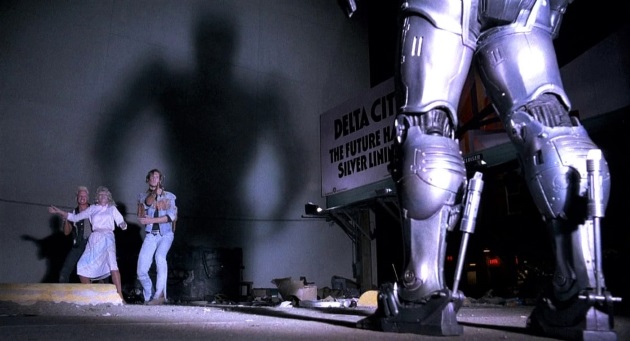
Despite its schlocky, B-movie title and the premise of a cyborg cop in a semi-dystopian Detroit, the Paul Verhoeven directed Robocop would prove to be one of the smartest films from the 1980s, an era when blockbuster movies were made for adults and their appeal would trickle down to younger audiences. Everything about the cyborg police officer oozes pure 1980’s cool from the slick metal look to that unforgettable voice (“your move creep!”). It feels like an actual robot and not simply a man wearing a suit, largely in part thanks to Peter Weller’s performance in which he nails the robotic body movements (I can suspend my disbelief that it never occurs to the bad guys just to shoot Robocop in the flesh of his uncovered lower face).

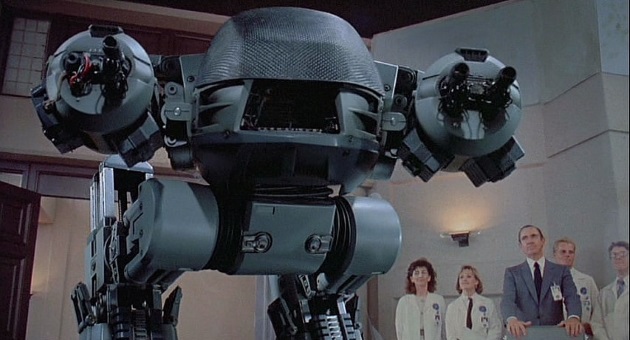
Robocop himself is the creation of Omni Consumer Products (OCP), a company which in its own words deals in “markets traditionally regarded as non-profit” such as hospitals, prisons and space exploration (funny I am writing this review as Jeff Bezos and the Richard Branson have just recently flown into space); a company that is essentially part of the military-industrial complex (“you got access to military weaponry? We practically are the military”). OCP runs the Detroit police force which raises the question, does there exist a public police force that is actually privatized (to which I’m unable to find a clear answer)? The world inside OCP is a combination of sexy and sinister yuppiedom full of Godfather-esque inner dealings and in which stock boards are placed above urinals. I like how during the presentation for the company’s other police robot ED-209, one of the board members is brutally gunned down by the machine and the best anyone can say is “does somebody want to call a paramedic?” and the board just continue to talk business and finance (also notice how Bob Morton (Miguel Ferrer) stubbornly pays no attention during the ED-209 presentation). It ultimately comes as no surprise when it turns out OCP has links to Detroit’s most prominent gang lead by Clarence Boddicker, a figure of pure menace with his sinister look and a man who can go down as one of cinema’s great villains (notice how he’s always doing something with his mouth). Yet I wouldn’t say OCP is portrayed as an overtly evil company in Robocop, the companies’ head, the sympathetic old man (Dan O’Herlihy) appears to be oblivious the shadier dealings within his company rather than actively taking part in them (by contrast in Robocop 2 OCP is portrayed as a far more sinister company, right down to having Nazi-esque flags on displays). Robocop can join the club of sci-fi movies that warned us about the dangers of corporate power, but did we listen?

Jay-sus love!

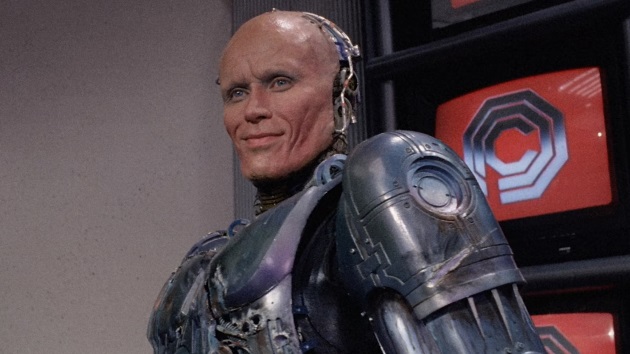
So how does OCP come to literally own the body of Robocop’s previous alter alias, Detroit police officer Alex Murphy? We are only given a single line of dialogue in which company member Donald Johnson (Felton Perry) states “Well he signed the release forms when he joined the force. He’s legally dead. We can do pretty much what we want to”. It’s also not clear if Murphy has literally been brought back from the dead (although with Robocop being a clear Christ metaphor that argument could be made). Clarence Boddicker shot Murphy in the forehead and he clearly appeared deceased lying in a pool of his own blood, yet when Murphy is being rushed to the operating room we do see what appears to be flashbacks in his head to his family life suggesting he was still alive. Regardless if weather OCP has literally possesses the ability to reincarnate a human, it is a disturbing prospect how a company can literally own your body and in effect, a person (regardless if they’re technically still classified as a human upon becoming a cyborg) can become a company product. As the film progresses there are subtle signs of Murphy regaining his humanity and like fellow similarly themed 80’s sci-fi masterpiece Blade Runner, the question is asked, what is the dividing line between man and machine? Unlike say 2001: A Space Odyssey which makes the viewer fear technology with HAL 9000, Robocop has a message of man learning to live side by side with technology. The scene in which Murphy removes his visor and looks upon his face for the first time since becoming Robocop is heart-wrenching and easily the most moving scene in the film, with the makeup effects themselves being something of awe.

Robocop’s competitor at OCP, ED-209 is one cool looking beast but is a product that clearly hasn’t been well thought through since it’s incapable of accessing areas such as a simple staircase. It’s the little touches though which give it a personality from its lion growl before attacking from its pig squeal when it falls over to its little foot twitch. It goes without saying stop motion effects will never cease being cool to look at (likewise, Robocop I also great a showcase for the lost art that is the matte painting). Contrarily, Murphy’s partner Anne Lewis (Nancy Allen), while instrumental in helping Murphy rediscover his humanity, I do find myself slightly resenting her character as she does bear some responsibility for Murphy’s death and for a ridiculous reason. She just had to look down at that gang members’ package and as a result, be knocked out and disarmed. Had she not been distracted Murphy might still be a regular cop. That said, Murphy’s twirling of his gun to emulate the fictional futuristic cop T.J. Lazer in order to impress his son is a massive firearms violation (tut, tut), even if “role models can be very important to a boy”.

One of the memorable aspects of Robocop and something which really makes the film unique are the television segments, of which the news bulletins are in themselves an effective manner to deliver exposition while the commercials are incredibly entertaining and quotable (“That’s it buster! No more military aid!”). Perhaps most memorable of all is the fictional sitcom It’s Not My Problem! and that infectiously quotable line “I’d buy that for a dollar!” – the punch line to a joke we never hear yet the characters in the movie watching this low brow sitcom find hilarious. Much of the acting in Robocop is deliberately very campy. I can remember on one occasion channel surfing and I stumbled onto Robocop, my mother could not stop laughing at just how campy the acting was.

No specific date is given for when Robocop is set, whereas like Blade Runner, there exists technology that is still science-fiction in the real world and the President of the United States makes speeches from outer space (likewise male and female police officers sharing the same changing room appears to be the norm), yet within this universe, televisions are still bulky boxes with Cathode-ray tubes. Perhaps the film’s most memorable tech anomaly is the appearance of what you could possibly call a DVD, in which Boddicker uses a CD to carry visual information which was not possible in 1987. I also find the interior of Murphy’s house (owned by a company called Zem Industries) looks so heartless and sterile. This world isn’t quite Soylent Green but it’s still not desirable.

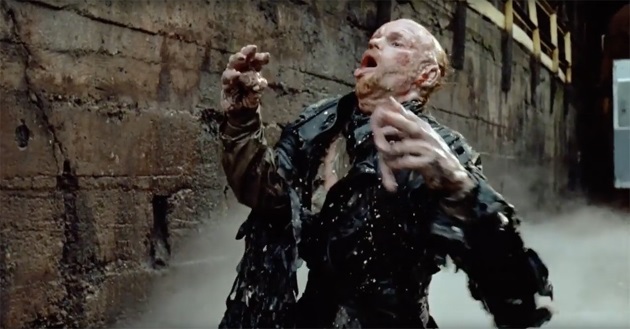
Even for a film that is as violent and drenched in blood as Robocop, the one moment which still manages to come out of left field is the death of the Boddicker’s henchman Emil Antonowsky (Paul McCrane). The death of Emil is equally disturbing yet darkly comic as he turns into a creature resembling the toxic avenger after driving into a toxic waste container. What makes it so funny is the horror-like organ music that plays over the graphic, horrifying sight of a man who rivals Joseph Merrick followed by his body splattering all over a car windshield after Boddicker accidentally drives into him. Conversely, the film’s action climax does end on a more beautiful moment of violence as Boddicker penetrates Robocop with a spear, a shot that has a very mythic quality to it.

Robocop as a series is also one of the great tragedies of contemporary cinema in that the first film set up so much sequel potential which failed to be utilized upon (I do like Robocop 2 but it is a downgrade from the first film) – regardless, we will always have the original. The ending of Robocop is just about the perfect explosion of catharsis to an already sublimely paced film as our titular hero gets revenge on the corporate bad guy Dick Jones (Ronny Cox). I do love that brief cutaway shot in which Donald Johnson looks on with glee at Robocop guns down Jones while that charmingly dodgy falling shot in which Jones has unusually long arms is so wonderfully cliché. This is followed by one of the best single lines in film history as the old man praises Robocop for his shooting and asks him for his name. A Robocop who has regained his humanity gives a simple utterance of “Murphy” as Basil Poledouris’ superb theme plays over the end credits and the audience cheers on.

The Color of Money (1986)

The Rules of the Game

I’ve never been more aroused by a film’s editing and cinematography than that featured in The Color of Money, a film which I ultimately enjoyed more than it’s predecessor The Hustler. It just so happens I first watched The Color of Money during my time as a film student and attempted to replicate many of the film’s shots and edits for a music video (and an intentionally 80’s music video at that) as I studied the cuts present in the film frame by frame. Needless to say, I was not entirely successful in my endeavour.

The Color of Money has the fast pace and rhythm of MTV music videos but still with a sense of old-school class and sophistication; right from the opening credits, I can tell this would be a movie dripping in atmosphere. A movie so snappy, fast-paced and full of quick edits, many of which come unexpectedly along with many unconventional camera movements yet it never feels disorientating or distracting as the scenes glide with such fluidity and ease. The cinematography on display here isn’t that of a David Lean production, no this is a movie which largely takes place in bars and pool halls yet it still has a sense of majesty and scope even if the shot in question is a close up of a drinking glass. Really the only edit I can fault is the very cheesy freeze frame of Paul Newman jumping out of a swimming pool. On the other hand, nobody uses licensed soundtracks better than Martin Scorsese. I get the impression scenes in the film were shot with the music in mind and not as an afterthought. With the opening scene, it feels like Phil Collins’ One More Night was specifically composed to fit the mood and tone of the scene.

The Color of Money however is not style over substance. I love the intriguing character triangle of a trio of hustlers as well as the harmony of two generations coming together. Tom Cruise is an actor I only like in certain parts but in roles such as Vincent, a cocky, male fantasy indulging character who embodies the entrepreneurial and capitalistic spirit of the 1980’s (like his character in Risky Business), I simply revel in – as Eddie puts it “a natural character”. Just as impressive are pool shots done by Cruise himself (he performed all but one of his own trick shots); makes me energised to play some pool myself.

Rocky IV (1985)

80’s: The Movie

***This Review Contains Spoilers***

Rocky IV is one of the most entertaining movies ever made. If there was ever a movie I can turn to for just 90 minutes of pure, immense, adrenaline filled, inspirational entertainment, it’s Rocky IV. The runtime is the shortest of the series, but those 90 minutes are perfect. The poster for Rocky IV is displayed proudly in my bedroom, and every now and then I look at it in all its majesty with Rocky sticking his glove up in the air while draped in the stars and stripes. I feel the Rocky movies had the ideal lifespan for a movie franchise; start off serious, goof out for some fun, but then end again on a serious note.

There’s no question about it, Rocky IV is the most 80’s movie ever. Case in point:

– Synthesized rock soundtrack.

-Cold war propaganda.

-Conservative, Reagan era values.

-MTV music video style montages.

-Larger than life villain.

-It’s a sequel of a long-running franchise.

-There’s a robot.

-Rocky drives a sports car.

-Display of decadence.

-Brigitte Nielsen, star of other very 80’s movies Red Sonja and Cobra.

-Action movie revenge plot.

-Full of cheesy/corny quotable lines (“If he dies, he dies”, “Whatever he hits, he destroys”).

Stallone’s inspiration for Rocky IV came from the two fights between Joe Louis and Max Schmeling in 1936 and 1938 respectively; two fights which embodied the political and social conflict of the time – an African American taking on a supposed representation of Aryan superiority. Thus in Rocky IV we get Ivan Drago, the terrifying Aryan superman Rocky must challenge to avenge the death of his friend (could that sound more 80’s?).  Ivan Drago is a terminator; the strongest opponent humanly possible; however is Drago an interesting villain? I say yes; one of my favourite screen villains of all time as a matter of fact. In a memorable Siskel & Ebert moment, Roger Ebert described Drago as a “moderately interesting villain” but complained “how come he never has a single scene alone with his wife” and “why does she have nine times more dialogue than he has?”. Drago doesn’t speak for himself as there is no individualism in communism. I feel Dolph Lundgren gives a great physical performance, playing a character who is the opposite of Clubber Lang in that he speaks few words; succeeding in being an intimidating monster with his physical presence alone. I also love Drago’s reaction to Apollo’s entrance at the exhibition fight; that of a Soviet being welcomed to America.

Ivan Drago is a product of a state that sponsors his training as exemplified in the movie’s two training montages. Drago’s music theme is cold, intimidating and mechanical, just like his training. He is given steroids by his trainers and at a press conference an American reporter says “There have been rumors of blood doping and widespread distribution of anabolic steroids in the Soviet Union”; feels like an eerie foreshadowing to the state-operated Russian doping scandal of 2016. Following the boycotts at the 1980 and 1984 Olympics, Rocky IV couldn’t have come at a better time when sports and politics were going hand in hand. Drago’s fit of rage near the end of the fight in which he proclaims “I fight to win. For me! For me!”, is clearly a jab at communism as he wants to work for himself and not for the glory of the country. Likewise, when he lifts up and throws the Russian official who criticises him, it’s a classic Frankenstein moment; the monster turning on its creator.

Apollo Creed’s entrance, on the other hand, is one of the most capitalistic things ever put on film, with James Brown singing Living In America among Belly Dancers and Creed himself dressed in stars and stripes; and to top it all off, it’s in Las Vegas. A stark contrast to the Russians who open the Rocky-Drago fight later in the movie to their national anthem (yet another awe-inspiring musical highlight in the film). Did Apollo’s ego untimely kill him? Apollo’s patriotic egotism clouded his better judgment and no idea just how strong Drago would be. The sheer power of Drago’s punches during the fight with Creed (if you could even call it that) are exemplified by the sound effects. Also, why does Drago receive no punishment for throwing the referee aside, but if I was going to point out every little thing in this movie which makes no sense I’d be here all day. There’s such brutality to Creed’s death; pure slow motion brutality. I’ll never forget my mum’s reaction the first time I watched Rocky IV, a gasping “oh my God!”.

When I was studying for my GCSE examinations, the Rocky IV soundtrack was one of my primary sources of music listening. Whenever I have a stressful day of work I listen to the Rocky IV soundtrack when I need that extra bit of adrenaline to make me go on. Feeling down? Rocky IV soundtrack! Need inspiration? Rocky IV soundtrack! Having a workout? Rocky IV soundtrack! 20% of the Rocky IV or 23 minutes is comprised montages with songs which can make anything look epic in one of the epitomes of the 1980’s soundtrack; everything you would expect from a score which won the Razzi for worst music score. The score by Vince diCola has been officially released but copies are not easy to come by. The actual Rocky IV soundtrack features different versions of War and Training Montage than those which appear in the film, although these variants are good in their own right.

If there is one word associated with Rocky IV, its montage. I can watch these montages over and over again and still be enthralled by them. The first training montage is heavy on its symbolism of nature vs. machine and showcases the beauty of the Russian wilderness. Ok, it’s actually Wyoming but I can buy into it being a vast frozen expanse of the Soviet Union. But it’s training montage number 2 which has to be my favourite training montage in film history. This is partly due to John Cafferty’s Hearts On Fire – a motivating, pumping anthem if there ever was one (that synth, God I love it!) In the spirit of everything in Rocky IV being larger than life, instead of running up the steps of the Philadelphia Museum of Art, the montage ends with Rocky climbing a mountain.

The editing of Rocky IV also contributes to the film’s bombastic nature. The transitional shots of magazine covers and newspaper articles make the film play out like more of a comic book than it already is. Likewise, shots such as that of Rocky’s Russian chaperone looking into binoculars gets repeated three times within a few seconds but zoomed in further each time and edited to the rhythm of the score; it’s just so cool. On the other hand, I even recall a review I heard for Star Wars: The Forces Awakens refer the final shot of that movie as a Rocky IV shot, in reference to the aerial shot of Rocky on top of the mountain. Is Rocky IV a more influential film than the history books let on?

Rocky IV is incredibly distant from the first movie but this is appropriate as Rocky is out of his element and in a foreign land. This is the only film in the series not to take place in Philadelphia unless you include the scene in the Balboa mansion although it’s never made clear where the mansion is located. The No Easy Way Out montage is comprised of clips from the first movie, so the film allows you to bask in the stark contrast between the movies; a man who used to be a not very intelligent nobody and made money from prizefighting and working for a loan shark is now at the center of international politics.

Even the sheer predictably of Rocky IV is wonderful, such as when Adrian shows up in Russia to support Rocky; it’s all cliché but in the best sense of the word. The build-up to the final fight and the atmosphere is so immense; there could never be a Rocky film more epic than this. By this point, I’m actually scared for Rocky and fearful for his life, and Paulie’s emotional outpour before the fight, it gets me every time. I don’t care what anyone says, this is the greatest fight in film history. Rules don’t apply and Rocky somehow lasts the 15 rounds and even wins over the crowd (“Suddenly Moscow is pro-Rocky!”). This isn’t just Rocky against another opponent, this is Rocky against a superhuman, a hostile crowd, a Mikhail Gorbachev lookalike and an entire world superpower. Keep your superhero movies with their city-destroying battles; this is what I call a duel! Rocky’s final speech is naive in the most wonderful way. The words of the speech are so juvenile, yet when I hear Stallone utter them in the movie; it brings a tear to my eye. Did Rocky IV really help end the cold war? Who knows? Oh, and the end credits provide us with yet another awesome montage!

Rocky IV embodies the essence of capitalism the American Dream; if you work hard, success is attainable. I know many would just look at the movie and scoff at it as a simplified look at the Cold War with an “us and them” mentality. But as a piece of propaganda does it work? Oh, you bet it does. Rocky IV, I salute you to your over the top, cheesy 80’s perfection.

Rocky IV > Citizen Kane

Rocky III (1982)

Rocky III: An American Tradition

After the recap of the fight from the previous movie, Rocky III opens with a montage which begins with fireworks and giant light up sign of Rocky as if to say “Welcome to the 80’s!”; a decade when everything was larger than life. The song of choice is Eye of Tiger, the montage is edited like an MTV music video and Rocky even appears on The Muppet Show; and all that merchandise, me want!

Rocky III is ridiculously entertaining while still managing to have thematic substance. Rocky is no longer struggling with fame. A man who couldn’t film a simple commercial in Rocky II is now making all sorts of endorsements. He could barely drive a car in Rocky II, now he can now drive with ease. Rocky has also become a more intelligent man instead of the dum dum he was in first two movies. Not to mention does he looks different, very handsome I might add and in such physical shape. I think Stallone looks like Al Pacino here, especially when wearing a suit.

Rocky III brought the series in a different direction, distant from the first two movies. But despite Rocky’s wealth and fame, Rocky III is not a movie which cheapens out. The primary theme of the movie is about Rocky’s fame making him soft or as Mickey puts it, “You got civilised”. Once Rocky discovers Mickey has been hand picking fighters his seemingly perfect bubble of a life is burst; “You wake up after a few years, thinking you’re a winner, but you’re not, you’re really a loser”. This continues the series theme of being semi-autobiographical of Stallone’s own life as the movie examines what fame and fortune can do to a person. Adrian’s role is smaller is time round although her character still sees an evolution as the famous lifestyle has taken away her shyness and made her more outspoken and pretty hot too I might add. Just listen to the words of motivation she gives Rocky on the beach; a far cry from the Adrian in the first movie.

Even when Rocky discovers Mickey has been hand picking fighters prior to his first fight with Clubber Lang, Rocky is training in the most superficial gym. It’s full of photographers and visitors, musicians are playing and merchandise is being sold.  Unsurprisingly he gets the worst beating of his life at the hands of Clubber Lang. The solution to Rocky getting his so-called “eye of the tiger” back; get away from the superficiality of his wealthy lifestyle and back to the nitty-gritty. As Apollo Creed puts it, “Man, when we fought, you had that eye of the tiger man, the edge! And the only way to get it back is to go back to the beginning; you know what I’m saying?”. I stick by these words as some of the wisest words I’ve heard uttered in a motion picture. Whenever you lose your mindset of determination whether physically or mentality, go back to where you first started in order to reclaim it. Rocky III humanises Apollo Creed with Rocky and Apollo becoming friends being a great spin on the story. I always think of his intense shouting of “There is no tomorrow!” whenever I need some motivation.

The hypnotic, uneasy music which plays when Rocky is training poorly under Apollo and stuck with the threat of living with failure reminds me of Bernard Herman’s score to Vertigo in possibly the most uneasy scenes in the series. Likewise, the scene of Paulie in the arcade has to be the most surreal scene in the entire series in which he throws a bottle pinball machine in slow motion complete with odd sound effects; it’s an image which doesn’t leave your head.

Mr. T as Clubber Lang, oh man! What a beast! A true larger than life villain with outbursts of immensely entertaining lightning fast dialogue; he sure has a way with words with such a violent temper and high levels of anger. You do not want to be stuck in an elevator with this guy. Which raises the question; is Clubber responsible for the death of Mickey by pushing him to the side? Yet even close to death Mickey can still inspire with scenery-chewing words of motivation; his death being one of the series most emotional moments. The boxer vs. wrestler charity fight on the other hand between Rocky and Thunderlips (Hulk Hogan) has nothing to do with the rest of the movie but dam is it entertaining. It’s so over the top with such intense pain on display. The referee and police officers are thrown to the side, the audience is assaulted and even Paulie gets in on the action (I do love those bits of humour Paulie provides).

The final fight in Rocky III is the only in ring fight in the series which takes place in real time until Creed.  Meanwhile, the final scene of the movie is such fun, with Rocky and Apollo playing off each other which along with the training montage gives off some homoerotic vibes along the way with sweaty, shirtless, muscular men in tank tops as well as men hugging and jumping in the sea.

Also, the film’s trailer refers to Rocky III as an “American tradition”. What’s the tradition? Hollywood sequels?

Vacation (1983)

Getting Away From It All

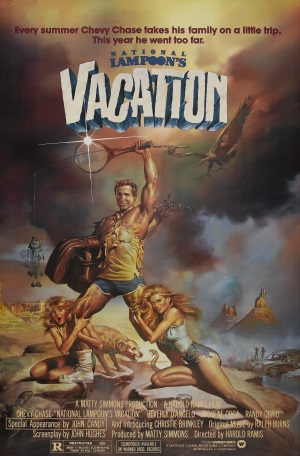
The noble all American pursuit of taking your family on vacation (or holiday as we call it in the UK); that is the ultimate aim of Clark Griswold. Chevy Chase is Clark Griswold in one of those roles which is so identified with one actor. He’s such a family man in an extreme yet subtly comic way with is repressed frustration making him a ticking time bomb. He’s a proponent of the American dream if there ever was one; an unashamedly white Anglo Saxon protestant who takes family ideals a little too far at times.

Vacation is my favourite John Hughes movie and a very American movie at that. You can’t do this in the UK; here you can hop in your car and you will be at the other end of the country in a day. It seems like the idea of a road trip was designed for the vast open country of the United States in which you drive for days on end. However, the theme of vacation (or holiday) frustration is relatable to anyone who has been on vacation. As Clark puts it “When I was a boy just about every summer we would take a vacation, and you know in 18 years, we never had fun”. Even the most out there jokes such as the car still moving while Clark has fallen asleep at the wheel or the death of the aunt still manage to feel relatable to some degree and remain grounded in reality.

Road movies give some of the best opportunity to create great amounts of character development and I feel there are few other writers in cinema history who had the ability to generate so much character development within such a short space of time than John Hughes; and like The Blues Mobile of The Blues Brothers, the car in Vacation is a character itself. As seen in many of Hughes’ film, the kids and/or young people are fully sexually aware (In Vacation Rusty’s cousin teaches him about masturbation for the first time) which I find liberating to watch as Hughes is a writer who treats young people like adults with themes which were explored further in films like Sixteen Candles and The Breakfast Club. Sigh, why wasn’t I a child of the 80’s?

Vacation is one of the most summery movies; watch it during the cold months of the year to escape the winter blues.

Tonight (1984)

Don’t Look Down On This Album

I don’t make any apologies when I say I enjoy this much-dismissed album more than I do some of David Bowie’s more acclaimed works. Tonight is an actual album, unlike Let’s Dance which was more a collection of songs. In fact, from Bowie’s so-called “sell out” period I honestly think Tonight and Never Let Me Down are much stronger albums than Let’s Dance, half of which is comprised of very disposable tracks.

Loving the Alien is one of my very favourite Bowie songs. I didn’t think much of it when I first heard it in a single edit on The Best of Bowie but that changed when I heard the full-length version with the instrumental orchestral second half make for one hell of an atmospheric seven-minute epic. The lyrics are also among some of the most fascinating on a Bowie song, comparing the Templars (Christians) and the Saracens (Muslims) of the Middle Ages to the current Holy War in Palestine today, in other words, history is doomed to repeat itself – and who is the alien? God himself? The one both sides claim to be on their side.

The one issue with Tonight is that most the songs are not actually Bowie songs, they’re mostly covers of Iggy Pop songs but they’re quality covers. Compare them to Bowie and Mick Jagger’s cover of Dancing In the Street, which for the life of me I can’t figure out why people like that cover so much; the covers on Tonight have far superior arrangement and production values. Don’t Look Down is one of Bowie’s most relaxing songs, I don’t know how anyone could listen to it and say “this is a bad song”. Never being a Beach Boys fan, God Only Knows was never a favourite song of mine and I like Bowie’s version more than the original. The orchestral segments of the cover as well as it’s grander and atmospheric nature really does it for me over the original. Tina Turner’s appearance on the song Tonight doesn’t add anything to the song but doesn’t take anything away either, while Neighbourhood Threat is a terrific rocker, it’s so 80’s I love it. I found the final two songs on the album disappointing, I Keep Forgettin’ is disposable while Dancing With the Big Boys doesn’t do anything for me, although even these weak song I consider to be better than Let’s Dance’s weak songs. Also, that beautiful stained glass album cover alone would make Tonight worth buying on vinyl.

Why does 1980’s Bowie get dismissed as much as it does; because an artist who spent the previous decade working in the avant-garde started to make commercial pop music? If David Bowie was a new artist who first hit the scene with Let’s Dance would this output of music be looked upon with more respect? I like both sides of Bowie, the avant-garde and the mainstream pop star. However, if you’re back catalog is only comprised of music which is serious and there’s nothing which is just simply fun and laid back to counterbalance it, then things get stale.