Hit and Run [Moment Of Terror/Hikinige] (1966)

What Car Company Do You Work For? A Major One

Hit And Run (a direct translation from the film’s Japanese title Hikinige) aka Moment Of Terror, has never been released via official means in any country (home media, streaming etc), yet I was able to get hold of an unofficial physical DVD copy which was in shockingly good quality (and in English subtitles) for such an obscure film, and what a film it is! Ah the joy (and in some parts frustration) of discovering a motion picture which knocks your socks off, yet you are the only person who knows about it.

Hit And Run is Mikio Naruse’s foray into a Hitchcockian-style thriller and a film which shares a number of similarities with Akira Kurosawa’s High And Low (1963), albeit a bit more schlocky (in line with the type of films Bette Davis or Joan Crawford spent the 1960’s appearing in). After the unfaithful wife (Yoko Tsukasa) of a business mogul named Kakinuma (Etaro Ozawa) accidentally kills the child of single mother Kuniko (Hideko Takamine) in a hit-and-run accident, they conspire in order to save the bottom line of the company (as well as the wife covering her own back) by having their lowly chauffeur (Yutaka Sada) be the fall guy. However once Kuniko hears word of this conspiracy, she plots her revenge by posing as a maid in the house of the killer. Hit And Run is the final of the 14 film collaboration from Naruse and Hideko Takamine, as the vigilante mother whose love is taken too far. Takamine delivers one intense, angry and histrionic performance of maternal anguish, completely losing her mind come the film’s conclusion in which she becomes a nervous scenery-chewing wreck. However, the film’s more subtle moments do showcase Takamine’s impeccable ability to convey so much without the aid of dialogue. 

Comparisons to Kurosawa’s High And Low quickly become evident in Hit And Run, as the business mogul of Yamano Motors Kakinuma attempts to justify his reasoning to cover up the incident in order to save the company’s bottom line as well as their new product (which is ironically a high-speed motorcycle), and the calm manner in which he does so is fascinating in how it portrays the banality of evil. This is reminiscent of how Toshiro Mifune’s character in High And Low attempts to do the same by justifying not paying a ransom in order to save the life of someone else’s child in order to save his company. Likewise, both films showcase the stark differences between the upper and the lower classes, with both films featuring families living in a property up in the hills overlooking the plebs. Additionally, the chauffeur who takes the fall is indeed played by the same actor who portrayed the unfortunate chauffeur in High And Low, Yutaka Sada. There are no moral actors present in the Hit And Run. Kuniko’s revenge goes beyond “an eye for an eye” for “a child for a child” as she attempts to murder the wife’s son but at least struggles to fully go through with her intentions. The unnamed wife however (whom has a child of her own at the same age of the one she killed) is a highly reprehensible character. I never derive any sympathy for her, even when she continues to be plagued by bad dreams of the incident. Although it is never stated, it wouldn’t be unlikely that the husband and wife are in an arranged marriage due to their age difference and lack of commitment. 

One scene from Hit And Run involves a flashback to how Kuniko meet her late husband, a Japanese soldier who is pushed into a ditch by prostitutes as they mock him for losing the war, to which he is retrieved by Kuniko as a more sympathetic prostitute followed by a subsequent fast forward to the birth of their son. This flashback however appears to be from another movie starring Hideko Takamine as evidenced by the fact that she appears significantly younger alongside the drastic change in film grain and tone. The inclusion of this flashback is the one criticism I would have with the Hit And Run as its inclusion feels very out of place as this other film is more saccharine in tone nor does it add anything to the larger narrative. Likewise, it also throws into disarray as to when the film is actually set as the flashback is clearly set in the immediate aftermath of the war yet the film’s setting is clearly contemporary for the mid-1960s. That said, would any cinema sleuths be able to identify this film within the film?

Regardless, any other criticism aimed at the very tightly plotted and brisk Hit and Run is largely inconsequential as it doesn’t negatively affect the film based on the strength of its material. Some suspension of disbelief is required that the family at no point would have seen an image of Kuniko (even with her brother doing all the negotiating on her behalf, she is still seen in court). Likewise, what happened to the original maid from whom Kuniko stole the identity from? There is also a piece of set-up in which the housekeeper tells Kunkio “the boiler is dangerous, let me handle that”, however, this never leads to any payoff. Throughout the film, there is also the recurring use of heightened lighting when portraying Kuniko’s murder fantasies. These are cheesy and cliché but do add to the film’s enjoyable schlock value, while the use of a rollercoaster to create a sense of unease is something that would be repeated time and again for years to come (Fatal AttractionFalse Face, the aptly titled Rollercoaster).

At its core Hit And Run is about the dangers of automobiles and those who drive them (not exactly news to me having lived in Northern Ireland my whole life with our incredibly graphic road safety adverts). There is however a historical context for this as Takashi Oguchi of The University of Tokyo states:

“Japan has experienced an enormous increase of traffic accidents as a result of the country’s rapid economic growth from the late 1950s to the year 1970. Observers in the early 1960s called the proliferation of traffic accidents the “Traffic War” as the annual traffic-accident fatalities exceeded the average annual fatalities during the First Sino-Japanese war…”

There are several moments in Hit And Run featuring some very impressive two-dimensional shots of automobiles driving by so fast in the street as the drivers give no heed to any children attempting to cross (even as a child stands alone in the middle of the road) while the film concludes on a shot featuring a scoreboard detailing the injuries and deaths from road accidents in a local area to hammer the point home. Then there is the additional metaphorical irony that the company featured in the film itself is an automobile manufacturer that is currently testing high-speed motorcycles while using the intentionally provocative slogan “gamble your life on the moment” (and even laughing that the police object to it). The film ultimately goes as far as it can with this theme without crossing the line into being preachy or overbearing. There is something all the more unsettling at the sight of a body outline when it’s that of a child. Women drivers, amirite?

Contraband [Blackout] (1940)

Hello Darkness My Old Friend

***This Review Contains Spoilers***

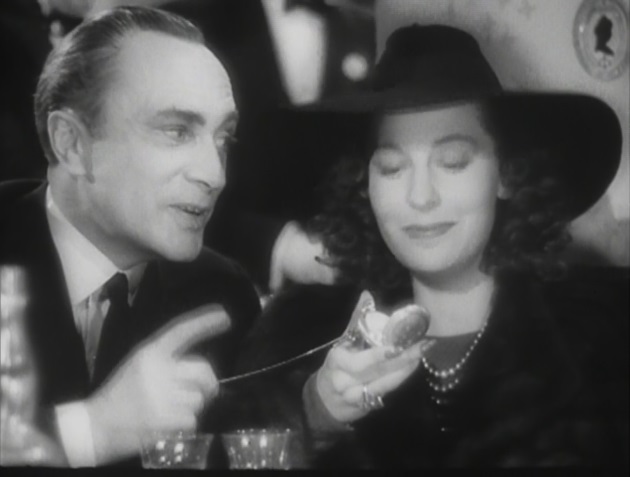
Contraband holds a number of similarities to All Through The Night (released by Warner Bros the following year). Both films are Hitchcockian thrillers and (as the title of the latter suggests) take place all through a single night in which a romantic hero inadvertently infiltrates a Nazi spy ring (even though the word “Nazi” is never used in ether film). On top of that, Conrad Veidt appears in both films, although he is cast as a villain in All Through The Night. I love films that effectively play out within a condensed time frame and Contraband is simply enormous fun to watch – one of those films which I felt like I had to tell someone about it afterwards I was left that thrilled. Contraband would be renamed Blackout for the US release, but I think Contraband is the cooler title.

Contraband would offer Conrad Veidt the rare role of a hero as Danish seaman, Captain Anderson. Veidt doesn’t have the looks matinee idol but he is very suave and pulls of the romantic hero with ease (sadly this great actor would pass away only three years following the release of Contraband from a heart attack aged 50). The bane to Captain Anderson, Mrs Sorensen (Valerie Hobson) is introduced defying the captain’s orders and not wearing a life jacket despite what the chattering gossips around her say. This defiance and Hepburn-esque, free-spirit attitude establishes Mrs Sorensen as a real badass.

The chemistry between Veidt and Hobson has shades of William Powell & Myrna Loy, with the two sharing moments reminiscent of screwball comedies. For example, the scene in which Sorensen calls for a taxi in a feminine voice after multiple taxis ignore Anderson is similar to the hitchhiking scene from It Happened One NightContraband makes reference to bondage on a number of occasions from Anderson’s early foreshadowing asking Sorensen “Have you ever been put in irons?” to the rather erotic, James Bond-style scene in which they attempt to break free after being tied up by their Nazi captors. All this sexual tension culminates by the film’s final scene in which Anderson directs Sorensen to drop her life jacket as it hits the floor and they go into a clinch, followed by phallic symbolism of a dripping wet anchor in the final shot – as steamy as a film from the 1940s can get.

Contraband is set in November 1939, the phoney stage of World War II. Like Powell & Pressburger would do in their subsequent film 49th Parallel, Contraband is clearly a rally call to other nations against neutrality in the war. Although a British film, Contrband is one which should ignite the patriotism in any Dane as Captain Anderson and his fellow Danish patriots from the Three Vikings restaurant in London work together to infiltrate the London based Nazis. Contraband offers an insight into life in London during the blackout as people try to go about their lives as normal, using torches to navigate their way in the street (they must be pointed down or else the blackout warden will call you out) and closing their eyes for ten seconds before going back outside. In one scene two wardens approach a man lighting up a cigarette in the street to which the man angrily responds “Why don’t you do something to earn your 3 quid a week and leave taxpayers alone”. With this portrayal of the restriction of liberties as well as the aforementioned refusal of Mrs Sorensen to be compelled to wear a life jacket, I can’t help for Contraband to directly remind me of recent world events as of writing this review. Due to the blackout setting, much of Contraband is visually dark and makes great use of chiaroscuro lighting and expressionist visuals – appropriate considering that the film stars the most notable cast member from the granddaddy of German Expressionist films, The Cabinet Of Dr Caligari. Unfortunately Contraband has yet to receive the special edition, 4K re-master treatment, with the film only being available in a scratchy print on an old Region 1, Kino DVD.

I do have to question if escapade off Captain Anderson’s ship and into London by Mrs Sorensen and her accomplice Mr Pidgeon (Esmond Knight) was part of a mission or a spur of the moment decision since we are lead to believe the British interception of the ship was unplanned.  It’s never made clear who or what Sorensen or Pidgeon are working for however it is reveled their aim is to find out under what neutral names, German vessels sail across the Atlantic, so in all likelihood, they’re probably British spies. Thus I do theorise that Sorensen and Pidgeon had a part to play on the British authorities stopping the ship and forcing it to dock overnight. This theory is backed up by the film’s ending in which one of the British authorities gives Anderson what he is told is a box containing painkillers to help him with his illness. Afterwards Mrs Sorensen tells him to look in the box only to find it contains the pocket watch which he lost in London, proving more or less she is working for the British authorities.

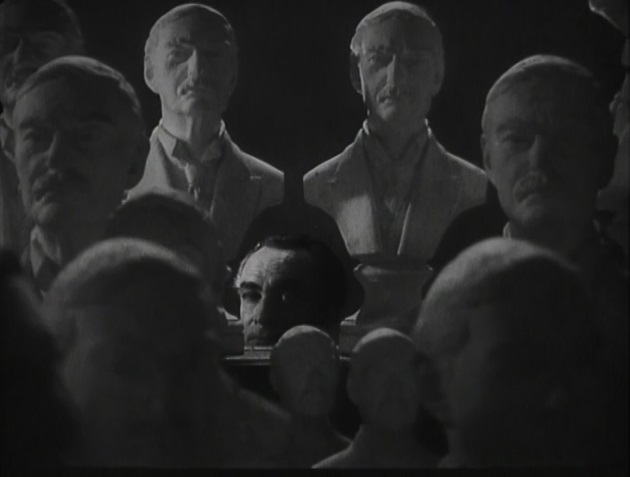
Adjoining the Nazi’s London layer is a warehouse full of busts of then British Prime Minister Neville Chamberlain by a company known as “Patriotic Plaster Products”. Why does a Nazi spy ring have a warehouse full of busts of Neville Chamberlain? Likewise, I can’t tell whether or not the film is trying to denigrate Chamberlain. After Anderson knocks out one of the Nazi ring leaders using one of the busts which simultaneously smashes it to pieces, Anderson responds “They always said he was tough”. Chamberlain left office on May 10th, 1940 and Winston Churchill became Prime Minister –Contraband was released in UK theatres the following day.

The Wrong Man (1956)

hitchcock-blogathon-4

Manny Balestrero Dindu Nuffin

***This Review Contains Spoilers***

The Wrong Man is based on the true story of Christopher Emmanuel “Manny” Balestrero (Henry Fonda), who was arrested in 1953 after being mistaken for an armed robber. Like in the other Henry Fonda film 12 Angry Men, The Wrong Man is also an examination of the flaws in human cognition – in this case, the issue of faulty eyewitness testimony. However, this isn’t actually Fonda’s first film on the subject matter. Previously he starred in 1939’s Let Us Live, another film about a man who is falsely arrested due to poor eyewitness testimony. Both films differ greatly in their plot structure and characters but surprisingly the one thing they share in common other than the subject matter and the lead actor is interestingly enough, an emphasis on Catholicism. It remains to be seen however if Alfred Hitchcock looked at Let Us Live as a source of inspiration for The Wrong Man.

The Wrong Man is absent of any Alfred Hitchcock or Hollywood artifice but rather the movie has that European, neo-realism feel. A film which really captures the urban landscape in all its glory which is only enhanced more by the sounds of the city and the jazz music score; a hallmark which really characterises noir in this period with films such as The Sweet Smell of Success. Likewise, the film has several shots really worth examining from Fonda walking through the doorway of his house and closing a door we the viewer never see to the zoom through the open slit in the prison door onto Fonda and then back out again.

The Wrong Man has no witty dialogue or Roger O’Thornhill style adventures to capture the real culprits. Rather Hitchcock creates something which is oppressively real. A story which really gets under your skin, questions your faith in the criminal justice system, arises your inner skeptic and makes you ask: what if this happened to me? The Wrong Man does as effective a job as possible in both showing and making us feel the degradation Manny Balesterero goes through. In my mind there existed the doubt that Manny really did commit the crime but such a crazy plot twist never comes to fruition.

During the scene early in the film in which Manny visits the Insurance Company Office and the woman at the booth goes over to her work colleagues and asks them to look at the man standing over there in which they all agree he is the man who robbed them months earlier is an example of what we would now refer to as confirmation bias. It this scene an unintentional representation of this or did Hitchcock have knowledge of this phenomenon (the term itself wasn’t coined until 1960).

Some of the elements of the criminal procedure shown in The Wrong Man would not be permissible today; subjects being arrested without being given the Miranda Rights or informed of the crime they are suspected off, interviews being conducted without a written or taped recording being kept, two witnesses allowed to be present together during an identification parade. Manny is even denied the formality of letting his wife know where he’s going despite literally being in the house he is right outside off: would that even have been allowed at the time? Likewise, notice how the friendly cops keep referring to Manny as Chris. The name on his license if Christopher Emmanual Balestrero thus they assume he is called Chris. – The Wrong Man is full of little details like this.

On a lighter note though, what is up with the Balestrero’s two kids?  “We ought to get two music lessons today because we didn’t get any yesterday” – You’re father was just in prison yesterday child, cut him some slack. Likewise in another scene on the kids answers the phone and just puts it down and when his mother asks who it was he just says “it was some man, he didn’t say” – stupid kids.

When Manny is at the police station being questioned by two cops he is made to write down on a piece of paper the words from a note the robber had written himself. The results show that Manny’s handwriting is similar to that found on the note (although the cops don’t hold this against him as they state people tend to write in a similar manner when using upper case) but also that Manny misspells the word “drawer” as “draw” in the same manner that the criminal did on the original note. Surely this is a flawed piece of evidence? Firstly a real criminal could take advantage of the situation and alter his handwriting. Secondly, the officer reading out the note to Manny has a heavy accent and made his pronunciation sound like “draw” not to mention the actual note he is reading from says “draw” and not “drawer” which could have affected his pronunciation a very subtle, subconscious way. Not to mention there is something very suspicious about the way the two cops handle the notes as they hand them back and forth between each other.

The courtroom scene in The Wrong Man is itself chilling. People are chatting, walking in and out, bored, dozing off, the jury is disinterested and Manny’s lawyer appears to just ask the witnesses stupid questions which lead nowhere. Manny’s entire future is on the line yet nobody seems to care. Regardless the real criminal gets caught and Balestrero is acquitted. However, the Fonda “lookalike” does not resemble Fonda and looks far more thuggish other than having the same face shape and cheekbones (in the real-life case Balestrero and the actual criminal looked far more alike). The last appearance of those two smarmy women who first identified Manny at the police station, making no apology to Manny when they see him after his exoneration for all that has happened to him and his family. I always had a bad feeling about them since their very first appearance.

The Lady Vanishes (1938)

Strangers on a Train

***This Review Contains Spoilers***

The Lady Vanishes is often imitated but never equaled. Many movies have done the “person vanishes but their accomplice finds out they apparently never existed” plot; but never has it been done as immaculately as The Lady Vanishes. Likewise, the train is the perfect cinematic device; there are an infinite amount of possibilities for scenarios based on trains and Hitchcock sure took advantage of this throughout his career.

The Lady Vanishes is a movie with a great sense of adventure to it, traveling through the picturesque mountains of a politically unstable Europe. It’s never identified what country the movie is set in, only that is “one of Europe’s few undiscovered corners”, letting the viewer’s imagination fill in the blanks. I also love the charming miniature of the train station and hotel in the opening, making no attempt to disguise that is it just that, complete with little moving figures and a car driving with no one in it.

Once the lady vanishes, is it a head-scratcher, leaving me to hope this better have a dam good outcome and not cop out. The intensity ramps up to crazy levels as the mystery deepens with the atmosphere created by the train sound effects and the impending claustrophobia increases. On further viewings all the elements of the mystery make sense; the couple lying to avoid scandal, the cricket fans lying so they won’t be late and the relevance of the serenading man, genius! My favourite scene in the move is the sequence in the cargo bay in which Redgrave and Lockwood investigate magic props and start doing impressions; it’s such a fun scene to watch.

The film’s first act in the hotel could be a movie by itself; a sort of screwball comedy set in a hotel full of characters slightly off their rocker. Michael Redgrave reminds me and even looks like Errol Flynn here. Playing an adventurous free spirit and a character who could have come right out of a screwball comedy as evident by the manner in which he infiltrates Margaret Lockwood’s room, creating a ruckus in order to “put on record for the benefit of mankind one of the lost folk dances of central Europe”. Lockwood herself also plays an adventurous, free spirit (“been everywhere and done everything”), yet it takes the two of them some time to realise they have more in common with each other than they think.

The two English gentlemen who talk about nothing but cricket, on the other hand, showcase the British turning a blind eye to the spread of fascism in Europe. They are the only two who would stand to another country’s so-called national anthem and dismiss a newspaper article on England being on the brink of war as sensationalism. On a lighter-hearted note, they even discuss how baseball is referred to as rounders in the UK in a still relevant joke (“Nothing but baseball you know. We used to call it rounders, children play it with a rubber ball and a stick”). Of course, it wouldn’t be an unashamedly British movie if someone did mention tea (“What you need if a good strong cup of tea”).

The Prize (1963)

A Different Kind of Stockholm Syndrome

The Prize is my second favourite Hitchcock film he didn’t direct (my favourite being 1941’s All Through the Night). It’s not instantly engaging from the start as there is a lot of setting up to do but becomes more and more tense as the film progresses. In classic Hitchcock fashion, once the mystery kicks in your left scratching your head wondering if the protagonist just paranoid or is something fishy really going on.

I consider The Prize one of Paul Newman’s best films, giving him the opportunity to show off his not often exposed comedic chops. Newman is one of few select actors in which I can ask the question, “honestly, who doesn’t like Paul Newman?”; does there exist a more likable screen presence?  Likewise, Edward G. Robinson’s role is reminiscent of his part in The Whole Town’s Talking, playing a dual role of characters identical in appearance but with polar opposite personalities; while the hotel setting rings a bell of MGM’s own Grand Hotel some 31 years prior. plus when you set your movie in Sweden it seems inevitable that someone will mention Greta Garbo along the way. Hitchcock himself also never fully took advantage of the cold war. Torn Curtain, although I do think is underrated, is imperfect while Topaz is one of his dullest outings. It’s satisfying to see a superb Hitchcockian thriller with a plot about West vs. East.

North By Northwest has the auction scene in which Cary Grant makes a fool of himself to get caught by the police in order to get away from the bad guys; The Prize has the same scene but ups the ante with having it taking place during a nudist meeting and of course naturally of all the countries in the world to a nudist meeting, where else but Sweden. The Prize is not quite Hitchcock’s greatest hits but it’s the closet a film comes to being so. There are other allusions to other Hitchcock films including The Lady Vanishes, Foreign Correspondent, Saboteur, and Torn Curtain. Hang on, that one didn’t come until three years after this movie. Huh, was Hitchcock inspired by this Hitchcock clone/rip-off/ homage/whatever you want to call it. As far as imitations of someone else’s work goes it doesn’t get pulled off any better than this.

Rope (1948)

Is Murder an Art?

Rope is one of those rare movies which is totally engrossing within less than five minutes, no doubt in my top 5 films by the master himself. Hitchcock successfully recreates the theatrical experience for the big screen. The set of Rope looks a bit fake and washed out and even the colour cinematography has a washed out feel to it, this all being part of the charm of course. The actors strand in unnatural positions when talking, avoiding having their back facing the audience when speaking; unnatural for real life that is, normal for the warped reality of a stage play. Above all, the entire movie takes place in real time through a series of ten minute takes and all this happens while there is a dead body in the room.

The characters played by Farley Granger and John Doll, as well as their teacher (James Stewart), hold a Nazi-like ideology that murder is “an art a few superior beings should be allowed to practice”, rather than those such as say, people who are Harvard undergraduates. The character’s discussion on the justification for murder is chilling as they make it sound scarily convincing. Rope is based a true story from the 1920’s and adapted into a play in 1929 although it’s clear the movie is set during the period it was made due to the fashions and the mentioning of movie stars from the era. It does seem unlikely in the aftermath of the atrocities during the Second World War that people would be so openly discussing such fascist ideas which were more common in the United States during the 20’s and 30’s.

The movie is about homosexuality although I didn’t catch onto this. I’m not the best person when it comes to identifying gay characters unless they’re really gay (hey sisters!). I’ve heard criticism of Stewart being miscast in the role as he apparently doesn’t make a convincing gay character thus the homosexual love triangle from the play is not present in the film. Judging the film on its own merits however Rope is a major step in his evolution as an actor, away from his gawky roles he was known for up until this point. His breakdown at the end is one of the acting highlights of his career and gives me the chills watching it.