I bestow Jacques Deray’s The Swimming Pool (La Piscine) with the oddly specific accolade of being the 2nd best 1960s swimming pool-centric movie. The other film of this double feature I am referring to is Frank Perry’s The Swimmer (1968). Both movies not only share aesthetic similarities but also explore a seemingly idyllic existence that isn’t quite what it seems, with the use of swimming pools as a metaphor. A pool creates a refracted, warped image, and it’s only when seeing through the surface that things become clear.
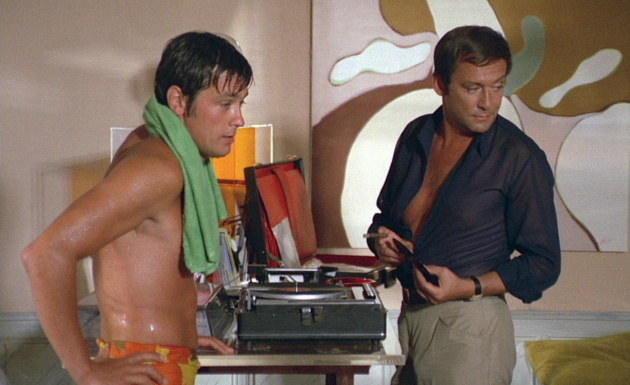
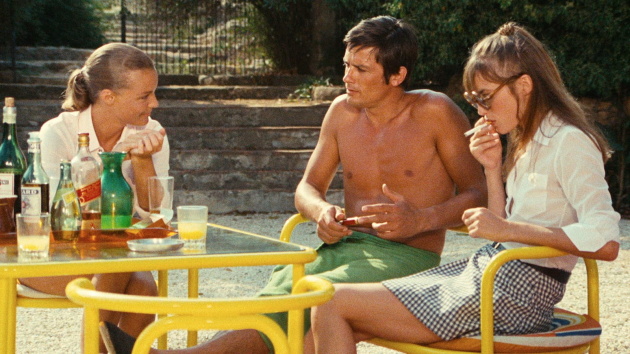
The majority of The Swimming Pool takes place within the confines of a holiday villa in the French Riviera town of Saint-Tropez (which I am reliably informed is pronounced san troh-pay for us word ending consonant pronouncing English speakers). This setting makes The Swimming Pool an oxymoron of a film in that it is a thriller, yet a relaxing one at that. I find myself watching on in jealous enchantment as the sexy, shirtless and effortlessly cool Alain Delon and his glamorous, bronzed-fleshed co-star Romy Schneider flex their sculpted physiques as they relax and make love in the nostalgic, rustic, sun-soaked atmosphere (as 60’s lounge music along with the film’s repeated song of choice Ask Yourself Why sung by Ruth Price echo in the background). Jean-Paul Leroy (Delon) and his girlfriend of two years, Marianne (Schneider), are madly infatuated with each other as they intensely make out (back scratching and all) and engage in light-hearted power plays and one-upmanship. However, there is soon trouble in paradise with the unexpected arrival of the couple’s old friend Harry Lannier (Maurice Ronet).
Harry is a figure who gives off mid-life crisis vibes; a cringeworthy dad with his prized sports car and top shirt buttons always undone. Harry, however, merely goes from being a figure of cringe to one of great suspicion from the accompaniment of Penelope (Jane Birkin), a girl he claims to be his daughter. Harry speaks of his daughter and interacts with her in a very intimate manner, commenting to others that she is pretty and telling her that her skin is smooth and that she smells nice. Both Jean-Paul and Marianne are surprised to discover their old friend even has a daughter. Penelope is apprehensive to talk about her background when Marianne asks her questions, while Harry simply tells Jean-Paul, “Her mother is simply an Englishwoman, you don’t know her”. Even the very scenario of a father and daughter going on a European road trip together is an unlikely one, with the film never making it clear if Harry is her Daddy or her “daddy”.
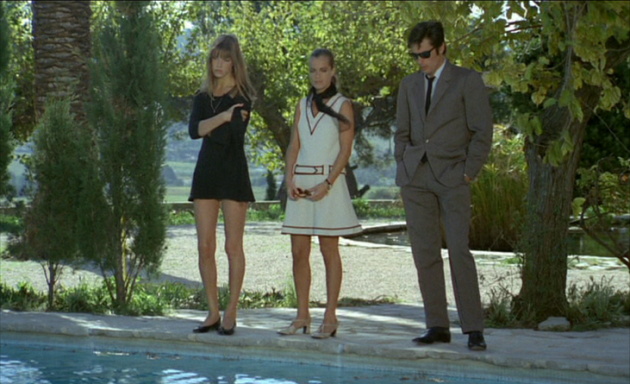
Throughout the film, Penelope wears short dresses and skirts (even to a funeral), although regardless of whether she is trying to provoke, she ignites a lust within a youth-chasing Jean-Paul. Even from their first meeting, Jean-Paul grabs her by the hand and asks, “How old are you?”, to which she responds mildly nervously, “Eighteen”. This eventually culminates in the two making love and, by extension, the dissolution of his relationship with Marianne. Delon and Schneider were real-life ex-fiancés, with the word through the grapevine being that he continued to be infatuated with her, with Delon being instrumental in getting Schneider cast in the film. Regardless, I’m sure their real-life background contributed to their on-screen chemistry and to the emotional weight of the gradual, undramatic breakdown of a relationship and the quiet acceptance of such within the film’s very slow build approach.
Harry brings about Jean-Paul’s gradual emasculation, both through Harry’s subtle flirting with Marianne but more so through his low-key taunting of Jean-Paul in relation to his failed and abandoned career as a writer. Jean-Paul now works for an ad agency while Harry has no issue showing off the expected-to-be hit music records he is producing (he even has to rub it in his face that Mariane herself is a successful writer). After several days, the once cool Delon is now grumpy and carrying a bad posture. The glamorous film star now comes off as a loser. It is this aspect of The Swimming Pool which makes the film strangely comforting, that the rich and beautiful, our betters, are just as miserable as John Doe. On the surface, Jean-Paul has an incredible life, from a gorgeous girlfriend to a high-paying job that permits him to enjoy month-long summer holidays. Deep down, however, he is unhappy as he gave up on his ambitions of becoming a professional writer (with it even being revealed that he has attempted suicide in the past). Just like how social media in the modern day shows other people’s seemingly perfect and amazing lives, the swimming pool offers a distorted reflection that hides what lies beneath.
On a more humorous observation, The Swimming Pool showcases the dangers that arise when close friends start living with each other and/or spend prolonged periods of time together when travelling. The Swimming Pool takes it to the extreme, with the outcome being murder, as the tension between Harry and Jean-Paul reaches its boiling point (both Delon and Ronet had previously appeared alongside each other in Purple Noon (1960), to which both characters see a similar fate). The film’s final act delves into Columbo-like territory, as an inspector (Paul Crauchet), questions Jean-Paul and Marianne about the irregularities in the investigation of Harry’s death. These being Harry wearing a non-waterproof watch when he was found in the pool (which is itself foreshadowed earlier in the film when Harry asks for his watch immediately after coming out of the pool), and perhaps the biggest smoking gun, the clean, perspiration-free clothes lying next to the pool (like someone had taken clean clothes and just put them next to the pool, hmmm). It is this final act in which the picture increases the suspense as the possibility of Jean-Paul being outwitted by the inspector feels dangerously close. Was it an irrational decision for Jean-Paul to remove the clothes from Harry’s corpse and lay clean ones next to the pool, or should he have just left Harry as he was? I guess when you’ve just committed murder in a fit of jealous rage, you cease to think rationally.
During Jean-Paul and Harry’s final confrontation by the pool, both men are dressed in corresponding white tops and blue jeans. The two look like mirror images of each other, a metaphor that Jean-Paul’s interest in Penelope is partly an expression of Harry’s taboo desire for his own daughter. Likewise, when Jean-Paul is dunking Harry beneath the water, it echoes the myth of Narcissus, in which a young mortal, in love with his own beauty, drowns while trying to possess his reflection. Just like The Swimmer before it, The Swimming Pool takes its setting to its ultimate metaphorical height. The pool only reveals its true depth once you look beneath the surface.
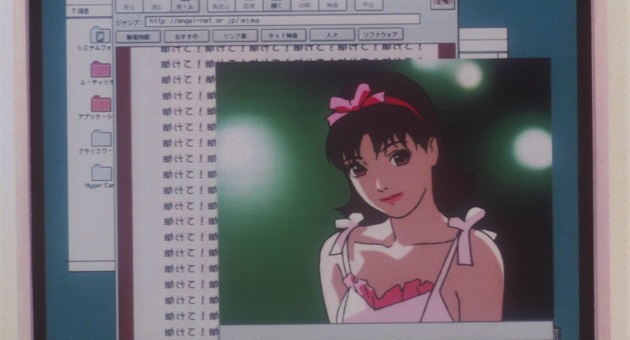
While I hate to use a cliché, normie-tier phrase, Satoshi Kon’s animated psychological thriller Perfect Blue, the story of a pop singer who transitions to become an actress and loses her grip on reality in the process, is a film exceedingly more relevant now than when it was first released back in 1997, and scarily so. Fast forward to the current age of the content creator in which people who hold a dedicated online following but are not household names nor would get recognized in the street are a dime a dozen. This stands in contrast to the 1990s and prior when the status of being a low to med-level celebrity with a niche fanbase like Perfect Blue’s protagonist, Mima Kirigoe, was not so democratized – as the famous quote often misattributed to Andy Warhol states, “In the future, everyone will be world-famous for 15 minutes”. The status of Mima Kirigoe is showcased during the film’s opening which cuts between an energetic live concert performance to Mima doing mundane activities such as buying groceries or riding the train before returning to her small, modest Tokyo apartment (itself a representation of the fascinating ecosphere that is the interior of tiny Japanese apartments in which every inch is in use). Perfect Blue features an early screen depiction of the internet from an age when web page design was at a very primitive and clunky stage (all the film is missing is that nostalgic dial-up connection sound). Likewise, the internet browser Mima uses is Netscape Navigator which at the time of the film’s production was the most popular internet browser on the planet, however, its popularity declined over the years and its development ceased in 2008. Mima is a total boomer when it comes to the internet and the dark side of fandom as seen through the web is something Mima is not prepared for. The majority of Mima’s fans throughout Perfect Blue are shown to be perfectly respectable, even standing up to the small minority of troublemakers at the opening concert and giving her friendly words of encouragement when she arrives at a TV studio. There is one fan however who gives Mima much more than she bargained for.
The fan in question is the creepy inbreed-looking stalker who is later given the name of Mr. Me-Mania – a terrifying figure with his crooked teeth, eyes so wide apart and even the build of Michael Myers. He is a counterbalance to the sweet and pleasant nature of Mima whose puppy dog eyes are larger than most other character’s in the film. Me-Mania is a man who cannot reconcile the image of Mima the wholesome pop-star with Mima the provocative actress – just observe the look of pure joy on his face during the performance of the song Alone But At Ease (even though this image occurs in a scene within Mima’s head and may not have actually occurred in reality, but more on that later). Me-Mania sets on getting revenge for having his perception of reality betrayed, murdering individuals involved in Mima’s transition to becoming an actress and (as he would see it) the perversion of her image, eventfully trying to take out Mima herself. There is one shot which tells the viewer everything about Me-Mania and how he views Mima – the point-of-view shot of him holding the image of Mima in his hand during the opening concert.
Within this early portrayal of the information superhighway, Perfect Blue explores the concept of the duality that exists between an individual and what would be referred to in years to come as an avatar, the image that comes to represent one’s carefully chiselled, romanticized image and personality – the image we present to the world as opposed to the lives we actually lead. Mima is informed of a website known as Mima’s Room in which someone (who is later revealed to be Me-Mania) is not only pretending to be Mima but is posting accurate information about her day-to-day life. The idea of not being in control of your image (whether online or off) as well as having no control over your own narrative is something Perfect Blue explores terrifying well and how it can lead to one losing their grip on reality. The image of the avatar is also metaphorically presented in the film by a ghostly image of Mima’s pop idol persona (with this metaphor doubly enforced by it appearing in the computer screen itself). This doppelganger acts as a sort of court jester with its bright colourful appearance as it bounces around like a near-weightless object and taunts Mima by telling her the (seemingly at the time) harsh truth that she has made the wrong career choice.
To return to the opening paragraph, only individuals of Mima’s status or higher would have been prone to becoming victims of this loss of control, but today any online content creator, online personality (or influencer to use that dreadfully narcissistic phrase) or even any random individual posting selfies on Instagram opens themselves as a target. Furthermore, most people can point to performers they were once a fan off but disliked a change of direction their image or career took – they didn’t fit the narrative we wanted or expected. Any sane person won’t dwell on this like an obsessive fan and go commit murder as a result; your average Joe has more important things in their life to worry about. Regardless, one lesson to take from Perfect Blue is that as a fan or consumer, one should not lose track of where a person starts and an avatar ends. As Satoshi Kon himself is quoted saying; “There’s a gap between the image people see of me and what I see myself. Perfect Blue is about the tragedy caused by that gap becoming too large”. A real-life example of when this did come to fruitarian was during the production of Perfect Blue itself in 1996, life would imitate art with the case of the Björk stalker Ricardo Lopez, whose extreme disillusionment in learning that Björk’s personal and romantic life didn’t align with his perception of who the artist was, culminated in him sending a bomb in the mail to the Icelandic singer (of which was intercepted by the police and no one was harmed), and proceeding to commit suicide himself believing the two of them would meet in the afterlife.
Satoshi Kon continued to explore the theme of fandom in his next film Millennium Actress, which is the yin to Perfect Blue’s yang, a film which explores the positive impact fandom can have. Perfect Blue also acts as an examination of the sacrifices and hardship one must endure for their art as well as the conflict between art and their personal life, with one of the most notable cinematic explorations of this theme being The Red Shoes (1948). In Perfect Blue, the later vision of Mima’s alter ego is seen wearing alongside a red dress, a pair of red shoes. Is there a connection or is my cinematic brain trying to draw strenuous ties that aren’t there? Furthermore, it’s well documented the influence Perfect Blue has had on Darren Aronofsky’s Requiem For A Dream and Black Swan, although two other films I can feel the influence from Perfect Blue would have to be One Hour Photo and Birdman or (The Unexpected Virtue Of Ignorance). However, if I was to select one film predating Perfect Blue which explores similar themes, it would have to be The Swimmer (1968), which going back to the theme of the duality between the person and the avatar, tells the story of a man who projects an avatar onto the world as opposed to the reality of his life which is vastly different.
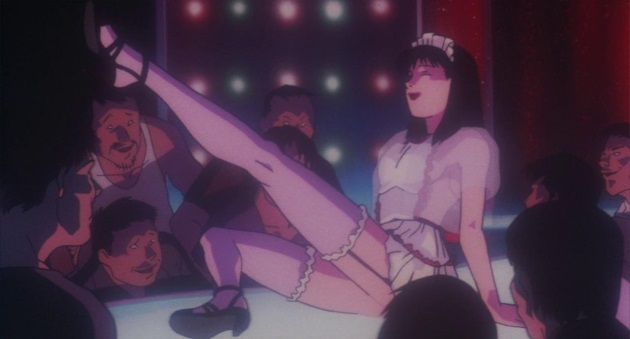
Prior to making the transition to become an actress, Mima was a pop-singer in a girl group known as CHAM!. More specifically, Mima is a certain type of Japanese pop-star known as an Idol. This form of Japanese pop-singer may come off as odd to the western viewer who is not initiated into Japanese popular culture with the sight of grown men at a concert watching three women dancing in titillating, pink maid outfits while singing to 90’s Euro Dance style songs. Yes, what a bunch of weirdoes. I myself am a man of more refined taste who is above such coomerish degeneracy…maybe. CHAM! has three songs featured in the film, two good uplifting jams (Angel Of Love and Alone But At Ease) and a solid ballad (Now Embraced By One’s Memories) when listened to in their full, uninterrupted versions rather than hearing brief snippets within the film intercut to the movie’s more unsettling content. Correspondingly, I was taken back on my first viewing of Perfect Blue by moments in the animation appearing that they wouldn’t look out of place in Clutch Cargo, although charm and character are derived from the film’s modest production values of a picture which is only 77 minutes in length (81 minutes with credits). Even with the film’s references to various 90’s-isms such as mini-disc players and outdated internet browsers, the film’s rich, saturated, film-noir-like colour scheme has a real 80’s, Blade Runner-esque vibe (throw a vaporwave soundtrack over the picture and it wouldn’t be out of place). Correspondingly, the piece titled Virtua Mima is the musical highlight of the film’s score, a piece which itself calls to the vocal-laden music in the Blade Runner score. However, the real musical mystery of Perfect Blue is that synth-pop song featuring a female vocal which plays during the strip club scene. The song is unlisted in the film’s credits and not included in any official or bootleg release of the soundtrack. The song is however used in the Japanese trailer in which a snippet can be heard in greater clarity than that edited into the film, however, the song’s title and the artist remain a mystery. Get on the case lost media sleuths!
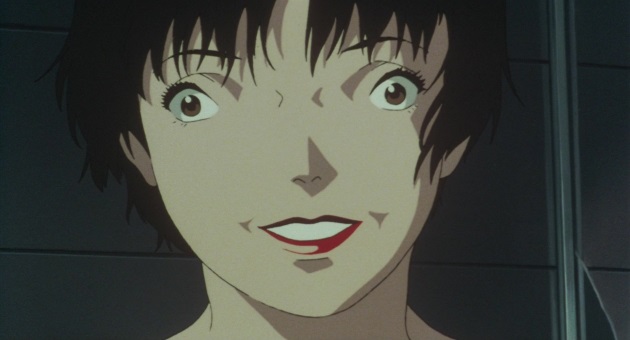
For Mima’s acting debut she lands a supporting role in a TV series called Double Bind. A cliché, CSI-like show featuring a Mulder & Scully style duo as unrealistically glamorous people attempting to solve crimes (“Why do psycho thrillers made in Japan turn out that way?”). The name Double Bind could be interpreted as a metaphor for how the show reflects the events occurring in the film from the various murders to Mima’s loss of sanity and her duels with an alternative persona. The show also foreshadows the twist ending regarding Mima’s manager Rumi Hidaka and her Dissociative Identity Disorder. Yes, it is revealed near the film’s conclusion that Mima’s manager Rumi was collaborating with Mr Me-Mania to get revenge on not only Mima but those who facilitated her image change (I also have to ask is there any connection between these two characters having their eyes spaced so far apart?). Like Me-Mania, Rumi herself could not reconcile Mima’s image change but went one step further. Rumi herself is a failed pop idol and instead became a manager of celebrity agency and was living through Mima’s success but took this to a more literal level with Rumi coming to see herself as Mima, leading to the disturbing sight of an overweight Rumi wearing a red idol dress and believing she is Mima the pop idol. Rumi attempts to take Mima out herself in a final clash, which once again going back to Blade Runner, does remind me of the final showdown between Rick Decker and Roy Batty on the rooftops in the sci-fi classic. During this clash, Rumi is shown as Mima’s pop idol doppelganger in a red dress, and like Roy Batty, displays superhuman jumping abilities and a distinct stain of blood on her face. As is the case of life imitating art with the parallels between Me-Mania and Ricardo Lopez, there is the reverse of art imitating life with the case of the murder of Mexican pop singer Selena by the president of her fan club Yolanda Saldíva in 1995. The most striking similarity between this real-life case and the fiction presented within Perfect Blue is Yolanda Saldíva reportedly turned her apartment into a shrine for her idol, which Rumi does by creating a duplicate of Mima’s living space within her own apartment. Ironically for a movie about pop idols, idolatry itself is one of its major themes. Therefore, my dear friends, flee from idolatry.
On first viewing of Perfect Blue, it would appear Rumi’s reaction to the filming of a rape scene featuring Mima for an episode of Double Bind is simply out of her concern for protégé, but when watching the film again aware of the real context, the scene takes on a different meaning. It is this key moment with Mima’s agreement and subsequent filming of a rape scene in which she plays a stripper at a club who is held down by multiple men as one man proceeds to penetrate her which signifies the destruction of Mima’s innocence. Even though the actions are not real and are only performances for a TV show it’s no less uncomfortable to watch (the actor pretending to rape even apologizes to Mima between takes). Mima’s other agent Mr. Tadokoro attempts to reassure Mima by telling her “Jodie whatshername did it too!”. The film they are referring to is The Accused (1988) starring Jodie Foster, which has a similarly staged rape scene atop a pinball machine in a bar. One of the questions raised by the filming of such an act is whether or not the scene is exploitive – for one I don’t like the slimy look on the writer’s face when is talking about the idea over the phone. Whereas The Accused is a serious film on a serious subject matter, Double Bind appears to be a show of the more trashy kind. Following the filming of the scene, Mima has a breakdown and admits to herself that she didn’t want to do it but the destruction of her innocence is complete as afterwards she starts giving interviews in provocative outfits and even poses for a nude photoshoot. This phenomenon is repeated time and again in the real world with numerous instances of child stars (more than often employed by Disney) whom once reaching an older age attempt to shed their squeaky clean images with a daring, more provocative one.
The opening moments of Perfect Blue feature three Power Rangers-looking dudes known as the Powertrons fighting a stereotypical bad guy, throwing off the viewer and giving the impression you’ve started watching a different genre of film, foreshadowing the reality-breaking nature of the picture. I’m not alone when I say I was left confused after my first viewing of Perfect Blue with the film’s 2nd half, in particular, being hard to decipher and even thinking about it several viewings later it still makes my head spin. This sense of disorientation along with scenes rarely transitioning in a conventional manner places the viewer inside the deteriorating mind of Mima. There are several times in which the film deliberately gives a false impression such as when Mima believes the statement “a link to Mima’s Room” means cameras are peeping into her apartment or when Mr. Tadokoro meets Mima alone in the car without Rumi, it gives the impression he’s going to do something sinister but no such thing occurs and the moment is never referenced again. Questions I have found myself asking when watching Perfect Blue several times include but is not limited to:
-Questioning if Mr. Me-Mania is real or not?
-When is the image of Mima’s pop-star doppelganger just her mental projection or Rumi dressed up as Mima?
-When is Mima actually in her apartment as opposed to the duplicate apartment created by Rumi?
-Is Rumi dressed as the pizza boy murdering the photographer or is Mima dressed as the pizza boy in a dream?
-During the four instances when Mima wakes up does that mean the proceeding scenes actually occurred or were they her dreams?
My brain hurts. Nonetheless, Perfect Blue brings to mind films like The Thin Man, The Maltese Falcon or Clue, films in which it is extremely difficult to make heads or tails of the story but trying to make sense of it ends up being beside the point.
Much tension during Perfect Blue is derived from whether or not Mima has made a big mistake quitting CHAM!, since they have found increased success without her (reaching the pop-charts for the first time) whereas Mima is only getting a few lines per episode of Double Bind and is soon being taunted by the image of her pop-idol doppelganger that she has made the wrong decision. However, Mima’s career decision appears to be affirmed come the end but I don’t believe the film entirely dismisses Mima’s tenure as a pop-singer as Mima herself states when visiting Rumi at a mental asylum, “I know I’ll never see HER ever again. But, thanks to her I am who I am today”. I believe with this she is referring to both Rumi and her former alter ego (I also believe this is the same reason why Mima chooses to prevent Rumi from getting hit by the van during their final clash despite the fact Rumi was trying to stab her to death). The lyrics to the CHAM! song Alone But At Ease reflects the un-intellectual nature of their pop music (“from comics than difficult books and I want to stay the way I am forever”), although to quote C.S Lewis, “When I became a man I put away childish things, including the fear of childishness and the desire to be very grown up”. Likewise, there is the key message as notably derived from Preston Struges’ film Sullivan’s Travels (1941), that you might not be creating high art, but the joy it brings to people’s lives is a more than worthy endeavour. The final moments of Perfect Blue show Mima is no longer only famous among a niche crowd but is known to normies as evidenced by the gossiping nurses who spot her leaving the asylum. There is a cheeky nature of the final shot as Mima does a semi-4th wall break, looking into the camera and cheerfully stating “No, I’m real!” (followed by the end credits featuring a song which is tonally at odds with much of the film but in a good, playful sort of way). Mima’s smile and comment are not only a play on the nurses but also solidifies the key point of the story – that she is now in control of her own identity.
![The Swimming Pool [La Piscine] (1969)](https://satinyourlap.com/wp-content/uploads/2026/06/mv5bzdlinguyytmtzwm5os00zmq1ltg5ngitm2i4ytg0n2e0ywqwxkeyxkfqcgc40._v1_fmjpg_ux1000_.jpg?w=300)



![Perfect Blue [パーフェクトブルー/Pāfekuto Burū] (1997)](https://satinyourlap.com/wp-content/uploads/2022/11/perfect_blue-402927995-large1.jpg?w=300)