The Bad Sleep Well [悪い奴ほどよく眠る/Warui Yatsu Hodo Yoku Nemuru/The Worse The Villian, The Better They Sleep] (1960)

The Corporations Sit There In Their Corporation Buildings And See, They’re All Corporationy And They Make Money

***This Review Contains Spoilers***

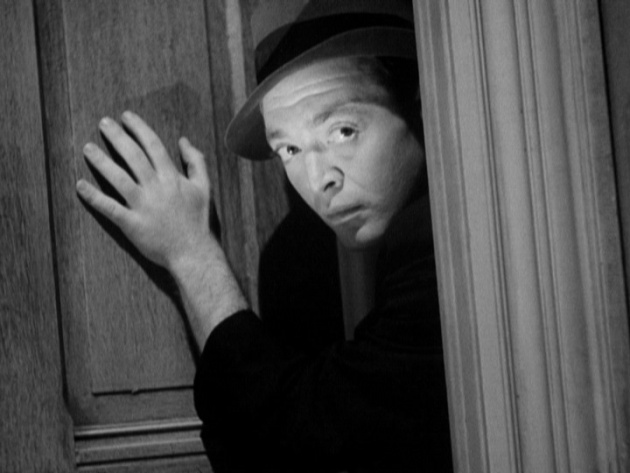
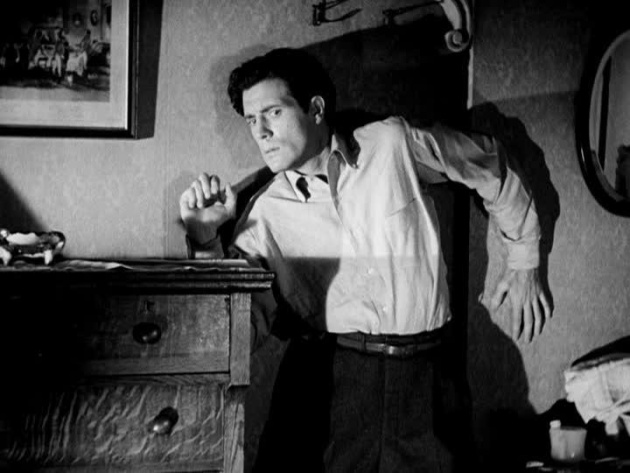
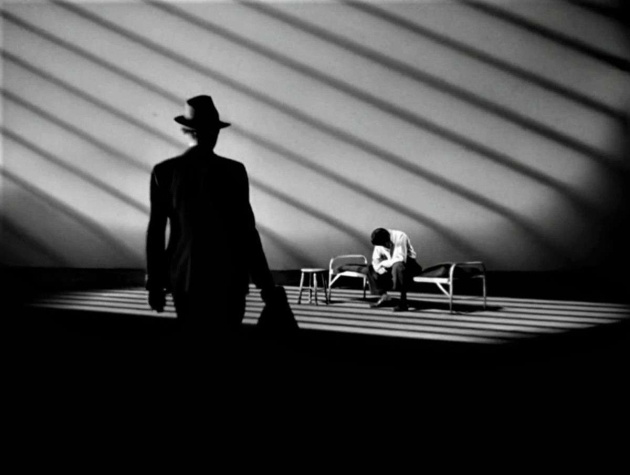
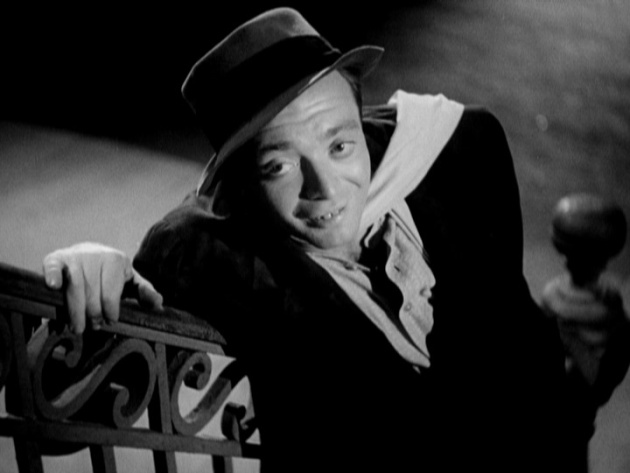
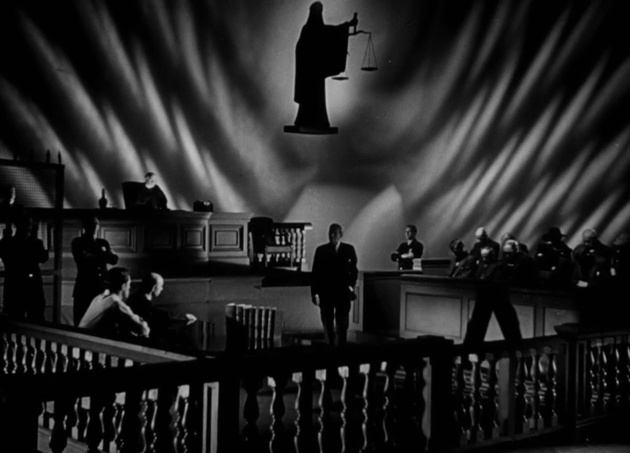
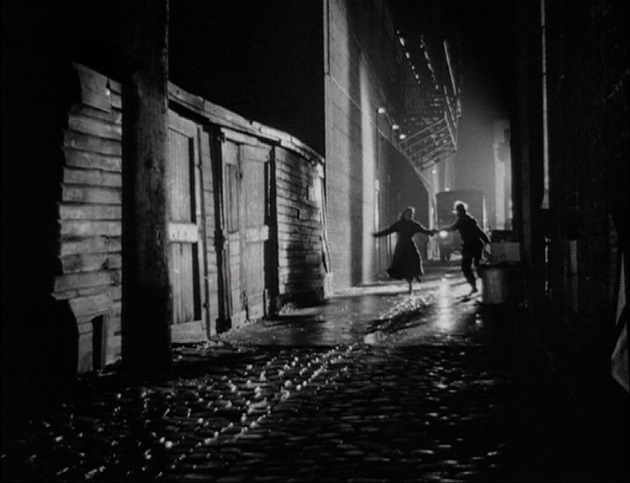
The Bad Sleep Well (悪い奴ほどよく眠る/ Warui Yatsu Hodo Yoku Nemuru, which translates to The Worse The Villain, The Better They Sleep) is Akira Kurosawa’s loose adaptation of Hamlet. By replacing the kings and queens of ye olden days with the chairmen of mega corporations, Kurosawa transports Shakespeare’s tale to the (then) contemporaneous sinister underworld of corporate Japan (in which the opening music score by Masaru Sato infuses jazz in with primal toms-toms as a perfect musical metaphor for this deadly urban jungle). Koichi Nishi (Toshiro Mifune) marries Yoshiko (Kyoko Kagawa), the daughter of wealthy industrialist Iwabuchi (Masayuki Mori), in an attempt to avenge the death of his father, of whom he believes Iwabuchi and his corporation are to blame. This, however, is only scratching the surface of a bizarre revenge scheme. Is Nishi’s wild and crazy plan to be or not to be?

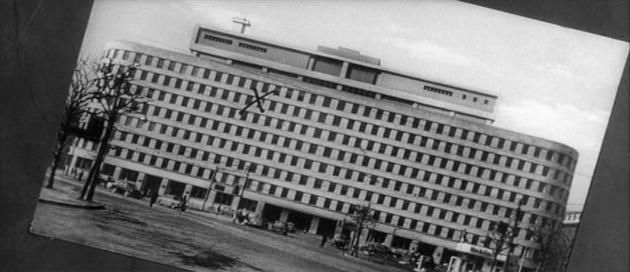
The Bad Sleep Well has one of cinema’s most intriguing and unique first acts. The plot, characters and relationships are established through the wedding of Nishi and Yoshiko. This is not your average ceremony, however. Rather, it is a public, voyeuristic and somewhat dystopian affair swarming with journalists in which the main focus is not on the coming together of two families but rather a focus on corporate business. The wedding not only acts as the tying of a union between a man and a woman, but more so the amalgamation of the fictional entities of Dairyu Construction and Public Corp. Whereas in Hamlet the titular protagonist stages a play referencing his father’s murder, watching for the King’s reaction to the scene to ascertain whether he did commit the crime in question, in The Bad Sleep Well Nishi  (unbeknownst to the attendees) has the most bizarre and superlative wedding cake delivered. A cake which is modelled after the company headquarters with a rose marking the window from which Nishi’s father plunged to his death. Aside from the intriguing, bizarre nature of this opening 20 minutes, the sequence is also made highly effective by the chatter of the onlooking journalists as well as the wedding narrator, acting as an effective way to deliver exposition – as a viewer, you become just as curious as the onlooking media men. The sequence concludes with a fitting meta-reference by two of the journalists: “Best one act I’ve ever seen.” “One act? This is just the prelude.”

The not-so-benevolent conglomerate that is Public Corp are sending officials instructing people to take their own lives or else an assassin will be sent out to do so. This is seen early in the film when a man is told by company officials, “You’ll carry this through until the end”, and immediately proceeds to throw himself in front of a moving car. With this threat in place, a government official named Wada (Kamatari Fujiwara) attempts to commit suicide by throwing himself into a volcano (and I thought Hara-Kiri was hardcore), but is prevented from doing so by Nishi (in order that he can use Wada to expose Public Corp). I might be able to accept Nishi knows about Wada’s attempt to commit suicide, but how does he know the location where he intends to do so? Likewise, at the volcano itself, Nishi waits until he can make a bad-ass entrance, even though Wada has had the opportunity to go ahead and jump into the volcano – typical movie-land logic.

In The Bad Sleep Well, Mifune is clean-shaven and suited up with specs. Yet, Mifune has the ability to play such a dorky-looking character and still look cool (“Well, well, a big muscle-bound nerd”). Likewise, he is playing a male secretary in Japan circa 1960, although no reference is made to working in a traditionally female job being beneath him. Nishi, however, is not a man you want to get on the wrong side of. From his unsettling use of a whistle motif (similar to that which is seen in Fritz Lang’s M), to going full Christian Bale’s Batman through extorting a man by hanging him out of the same window his father supposedly committed suicide. He even torments the already suicidal Wada even more by showing him his own funeral (itself a dystopian affair in which a corporation itself shows its respect by laying two huge wreaths).

Nishi’s plan, however, is complicated by the fact that he inadvertently finds himself falling in love with Yoshiko, stating he can’t take advantage of the girl after being “touched by her innocent nature on their wedding night”. Yoshiko is particularly vulnerable due to having limb length discrepancy (one leg is longer than the other), due to a motorcycling accident. In a film full of humanity at its worst, the sweet and sentimental love story within does act as a counterbalance. We get classic aborted kiss cliché, but I do appreciate films of many decades past never partaking in the dreaded liar-revealed cliché. Yoshiko’s feelings towards Nishi are reciprocated even when she is fully aware of his plan, rather than having that scene in every contemporary rom-com (you know the one); “No Yoshiko-chan, I can explain!”. Nishi, however, is not alone in his revenge plan, as he is assisted in creating a fake identity by his long-time friend and war buddy, Itakura (Takeshi Kato). There is something endearing about their bromance in that friends could be so tight to the point that he is willing to assist in such an elaborate plan. Like, yes, I will help you switch identity and use my car-repair store as a hideout in order to help you marry into a family so that you can expose an evil corporation. 

The most contentious aspect of The Bad Sleep Well, however, is that of Nishi’s death. His murder occurs off-screen and is described to the viewer by Itakura, in a reverse of the classic “show, don’t tell rule” of storytelling. I am off two minds on this aspect of the story. On the one hand, it comes as a big shock to be told Nishi has suddenly been killed, and like the characters hiding out in the bombed-out factory, you can feel their palpable sense of anger and disappointment. On the other hand, for a movie which in many ways was very over the top with its jumping-into-volcanoes levels of shenanigans, it does feel quite anti-climactic. Yet, in a way, this anti-climax feels somewhat appropriate. After all, this is a story in which the bad guys win. The Public Corporation Vice President, Iwabuchi is a perfect representation of the banality of evil. While he has a human side when he is seen being a homely, domestic figure as he cooks dinner at home for his children, he is the head of a corporation which literally Jeffery Epsteins anyone how could speak out of turn with their Clinton-style body count and can shut down stories in the media, Hunter Biden laptop style (it’s hard to watch The Bad Sleep Well and not find analogies through the lens of 2020’s online political discourse). Iwabuchi speaks of his plans to run for political office, so it’s your best guess at what happens next. 

Good does not always triumph. Sometimes, the dark side overcomes what Lincoln called the better angels of our nature.

Hit and Run [Moment Of Terror/Hikinige] (1966)

What Car Company Do You Work For? A Major One

Hit And Run (a direct translation from the film’s Japanese title Hikinige) aka Moment Of Terror, has never been released via official means in any country (home media, streaming etc), yet I was able to get hold of an unofficial physical DVD copy which was in shockingly good quality (and in English subtitles) for such an obscure film, and what a film it is! Ah the joy (and in some parts frustration) of discovering a motion picture which knocks your socks off, yet you are the only person who knows about it.

Hit And Run is Mikio Naruse’s foray into a Hitchcockian-style thriller and a film which shares a number of similarities with Akira Kurosawa’s High And Low (1963), albeit a bit more schlocky (in line with the type of films Bette Davis or Joan Crawford spent the 1960’s appearing in). After the unfaithful wife (Yoko Tsukasa) of a business mogul named Kakinuma (Etaro Ozawa) accidentally kills the child of single mother Kuniko (Hideko Takamine) in a hit-and-run accident, they conspire in order to save the bottom line of the company (as well as the wife covering her own back) by having their lowly chauffeur (Yutaka Sada) be the fall guy. However once Kuniko hears word of this conspiracy, she plots her revenge by posing as a maid in the house of the killer. Hit And Run is the final of the 14 film collaboration from Naruse and Hideko Takamine, as the vigilante mother whose love is taken too far. Takamine delivers one intense, angry and histrionic performance of maternal anguish, completely losing her mind come the film’s conclusion in which she becomes a nervous scenery-chewing wreck. However, the film’s more subtle moments do showcase Takamine’s impeccable ability to convey so much without the aid of dialogue. 

Comparisons to Kurosawa’s High And Low quickly become evident in Hit And Run, as the business mogul of Yamano Motors Kakinuma attempts to justify his reasoning to cover up the incident in order to save the company’s bottom line as well as their new product (which is ironically a high-speed motorcycle), and the calm manner in which he does so is fascinating in how it portrays the banality of evil. This is reminiscent of how Toshiro Mifune’s character in High And Low attempts to do the same by justifying not paying a ransom in order to save the life of someone else’s child in order to save his company. Likewise, both films showcase the stark differences between the upper and the lower classes, with both films featuring families living in a property up in the hills overlooking the plebs. Additionally, the chauffeur who takes the fall is indeed played by the same actor who portrayed the unfortunate chauffeur in High And Low, Yutaka Sada. There are no moral actors present in the Hit And Run. Kuniko’s revenge goes beyond “an eye for an eye” for “a child for a child” as she attempts to murder the wife’s son but at least struggles to fully go through with her intentions. The unnamed wife however (whom has a child of her own at the same age of the one she killed) is a highly reprehensible character. I never derive any sympathy for her, even when she continues to be plagued by bad dreams of the incident. Although it is never stated, it wouldn’t be unlikely that the husband and wife are in an arranged marriage due to their age difference and lack of commitment. 

One scene from Hit And Run involves a flashback to how Kuniko meet her late husband, a Japanese soldier who is pushed into a ditch by prostitutes as they mock him for losing the war, to which he is retrieved by Kuniko as a more sympathetic prostitute followed by a subsequent fast forward to the birth of their son. This flashback however appears to be from another movie starring Hideko Takamine as evidenced by the fact that she appears significantly younger alongside the drastic change in film grain and tone. The inclusion of this flashback is the one criticism I would have with the Hit And Run as its inclusion feels very out of place as this other film is more saccharine in tone nor does it add anything to the larger narrative. Likewise, it also throws into disarray as to when the film is actually set as the flashback is clearly set in the immediate aftermath of the war yet the film’s setting is clearly contemporary for the mid-1960s. That said, would any cinema sleuths be able to identify this film within the film?

Regardless, any other criticism aimed at the very tightly plotted and brisk Hit and Run is largely inconsequential as it doesn’t negatively affect the film based on the strength of its material. Some suspension of disbelief is required that the family at no point would have seen an image of Kuniko (even with her brother doing all the negotiating on her behalf, she is still seen in court). Likewise, what happened to the original maid from whom Kuniko stole the identity from? There is also a piece of set-up in which the housekeeper tells Kunkio “the boiler is dangerous, let me handle that”, however, this never leads to any payoff. Throughout the film, there is also the recurring use of heightened lighting when portraying Kuniko’s murder fantasies. These are cheesy and cliché but do add to the film’s enjoyable schlock value, while the use of a rollercoaster to create a sense of unease is something that would be repeated time and again for years to come (Fatal AttractionFalse Face, the aptly titled Rollercoaster).

At its core Hit And Run is about the dangers of automobiles and those who drive them (not exactly news to me having lived in Northern Ireland my whole life with our incredibly graphic road safety adverts). There is however a historical context for this as Takashi Oguchi of The University of Tokyo states:

“Japan has experienced an enormous increase of traffic accidents as a result of the country’s rapid economic growth from the late 1950s to the year 1970. Observers in the early 1960s called the proliferation of traffic accidents the “Traffic War” as the annual traffic-accident fatalities exceeded the average annual fatalities during the First Sino-Japanese war…”

There are several moments in Hit And Run featuring some very impressive two-dimensional shots of automobiles driving by so fast in the street as the drivers give no heed to any children attempting to cross (even as a child stands alone in the middle of the road) while the film concludes on a shot featuring a scoreboard detailing the injuries and deaths from road accidents in a local area to hammer the point home. Then there is the additional metaphorical irony that the company featured in the film itself is an automobile manufacturer that is currently testing high-speed motorcycles while using the intentionally provocative slogan “gamble your life on the moment” (and even laughing that the police object to it). The film ultimately goes as far as it can with this theme without crossing the line into being preachy or overbearing. There is something all the more unsettling at the sight of a body outline when it’s that of a child. Women drivers, amirite?

Hell’s Highway (1932)

Takin’ It Off Here Boss

***This Review Contains Spoilers***

Hell’s Highway is the lesser-known chain gang picture from 1932, overshadowed by its more famous counterpart, Warner Bros. I Am A Fugitive From A Chain Gang, however, according to sources, this RKO production was released two months prior to the Warner Bros. picture. There are some notable differences between the two socially-conscience, pre-code films. Unlike I Am A Fugitive…, the majority of Hell’s Highway takes place within the chain gang itself rather than the events leading to the protagonist being imprisoned. Richard Dix stars as Frank ‘Duke’ Ellis, whom unlike Paul Muni’s character in IAAFFAGC, is not an innocent man who has been falsely imprisoned, therefore as a viewer, one’s sympathies lie differently with him. The film cleverly creates sympathy for the character in two ways. Firstly it is established he has been locked up for the crime of bank robbery, which means he isn’t as morally reprehensible as say a murderer. Secondly, he forgoes an escape opportunity when he learns his idolizing younger brother Johnny (Tom Brown) has also been sentenced to the chain gang, thus Duke remains put in order to protect him. Duke is also a World War I veteran; however, the manner in which this is revealed is a brilliant piece of visual storytelling. In a scene in which Duke has been tied up to receive a whipping on the back, the guard is apprehensive about doing so. The camera then pans to Duke’s shirtless back to reveal a giant Tattoo of the American flag accompanied by the text “42nd Machine Gun Co, 167th INF.”, as the screen then fades to black – powerful stuff. Dix himself is a silent-era holdover and like his contemporary’s such as Richard Barthelmess, he has an intense presence and a face which is able to convey so much.

While Duke Ellis is a man who has been rightfully locked up, Hell’s Highway does raise the question of when does the punishment outdo the crime? When does punishment become even too hardcore for the likes of Dirty Harry – a system which has prisoners are in bondage the majority of the day, even as they sleep and eat in the mess hall. One of the most distinguishing images in Hell’s Highway is the prison uniforms which have a target on the back of them, a target for prison guards or bounty hunters to aim at as seen later in the film (however, I can’t find any real-life example of these uniforms actually existing). Likewise, the trousers worn by the prisoners have flaps on their rear ends, looking like an exposed diaper and another way (whether intentional or not) of removing dignity from these men. However, it’s the sweat box which is the most inhumane piece of torture present in the film. Alec Guinness might have survived one on the River Kwai but here it is a death sentence, as occurs early in the picture as indicated by the haunting sound of a crying dog (although one minor criticism I would deliver is from this moment having its impact weakened as a character immediately explains the dog’s crying means someone has died rather than just allowing the moment speak for itself).

Hell’s Highway opens with a prologue stating “Dedicated to an early end of the conditions portrayed herein – which though a throwback to the Middle Ages, actually exists today”, followed by a montage of newspaper headlines covering abuses taking place in chain gangs across the states. I am unable to find any evidence these headlines are real. For example, one of them reads “Prison Guards Accused Of Murder As Tortured Youth Dies Chained In Sweat Box” from the Seattle Post, a publication of which I can’t find any evidence of actually existing. Regardless, this along with the haunting acapella of chain gang singers over the opening credits sets the tone for the film. These chain gang chants serve as the film’s diegetic soundtrack (with prolific composer Max Steiner acting as the picture’s music director), which is put to its most effective use during a memorable montage which is accompanied by sketches made by prisoners depicting previous events in the film.

Hell’s Highway is one dirty, sweaty film full of fascinating, rugged faces which say a thousand words. Firstly I have to ask is the character of Maxie (Sandy Roth) supposed to look like the film’s producer David O. Selznick? Furthermore, it wouldn’t be a pre-code film without an overtly homosexual man thrown in; a prisoner who does what else, cooks the food and does the laundry.  Moreover, the head guard of the chain gang, Mr. Skinner (C. Henry Gordan) has a moustache primed for twirling. However, throughout the course of the film, he is seen trying to learn the violin in his downtime – a corny but effective way to make him more human and show he has a soft side. However, if the film has one show stealer it has to be religious/spiritual prisoner Mathew, a man who claims to be Christian despite having three wives at once and an expansive knowledge of astrology (of which he highfalutin, astrological predictions do come true throughout the film). When I first watched Hell’s Highway I had to know who this actor was a dead ringer for Harry Dean Stanton (or certainty in this picture at least). It turns out the actor is known as Charles Middleton, whose biggest claim to fame was playing Ming With Merciless in three Flash Gordon serials made between 1936-1940.

Hell’s Highway concludes with justice actually being served by the film’s end in which the Of Michigan State Governor arrives at the chain gang prison to issue injunctions against the corrupt prison officials for their violation of state law (although it is not stated where the film is actually set until ¾ into the picture). The Governor himself is presented in one of the most comically, stereotypical images of an American authority figure (usually a southerner but not always the case as seen here) wearing the Col. Sanders white suit, hat, shoes and the black bow tie. The ending is another major deviation from I Am A Fugitive…, which does not conclude in such a manner with everything being neatly tied up. It’s not a bad ending by any means, but I do feel the film’s impact could have been stronger with justice not remaining delivered at the end. Regardless, perspective viewers can find this pre-code gem on the Warner Archive Forbidden Hollywood Collection: Volume 9.

On The Waterfront (1954)

Snitches Get Stitches

***This Review Contains Spoilers***

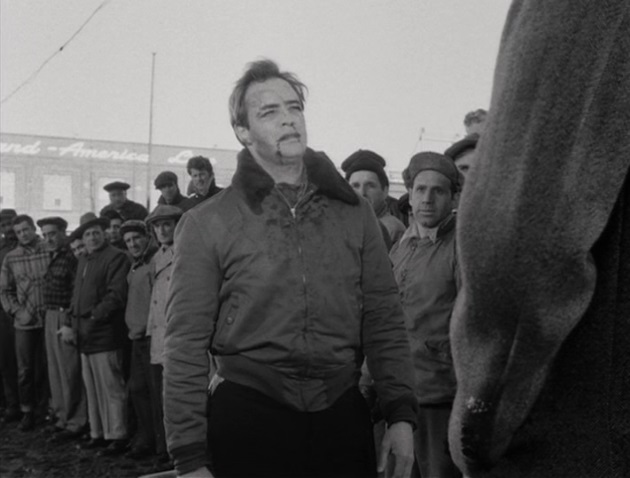
On The Waterfront is one of the most strikingly humble films to ever come out of Hollywood. Inspired by a series of articles on union violence and longshoremen corruption titled “Crimes On The Waterfront” by Malcolm Johnson, On The Waterfront doesn’t get classified within the ranks as a gangster film or a film noir even though elements of both genres are present within it. The film has several noir trademarks including a mood of pessimism, fatalism, and menace however as common with the genre, there is no glamour within its cynicism – there is nothing glamorous in On The Waterfront. Set and filmed on location in Hoboken, New Jersey where men scrap by making a living, this neo-realist world of dock-side urbanity is absent of any Hollywood artifice. You can feel the chilly atmosphere from the cold breath coming from the actor’s mouths to the smoke emanating from trash burnt by homeless men on the street. Even the rooftops themselves showcase a vast urban jungle of chimneys and TV antennas encompassed within the use of deep focus as the docks, the city and even The Empire State Building dominate the background.

The ecosystem of Hoboken’s waterfront is a world in which no one sees anything or hears anything. The longshoremen who work there operate by a system known as D&D, no not Dungeons & Dragons but Deaf & Dum. The waterfront is controlled by a corrupt union led by Michael J. Skelly aka Johnny Friendly (Lee J Cobb) and his right-hand man Charley Malloy (Rod Steiger). On The Waterfront is a film of four powerhouse performances as the cast attempts to out-Stanislavski each other with Cobb and Steiger making for a very entertaining scenery-chewing combo. The intimidating and manipulative figures with their cigars, fedoras and expensive coats attempt to make their racket sound justified and legitimate (“But my old lady raised us ten kids on a stinkin watchman’s pension!”) and even features some early semi-cursing (“Just too much shhhh, Marquis of Queensbury. It softens him up”) delivered in those thick New York accents (Steiger himself would go onto play a similar character in The Harder They Fall).

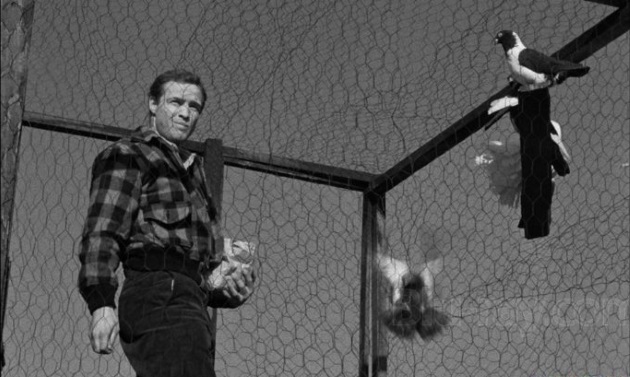
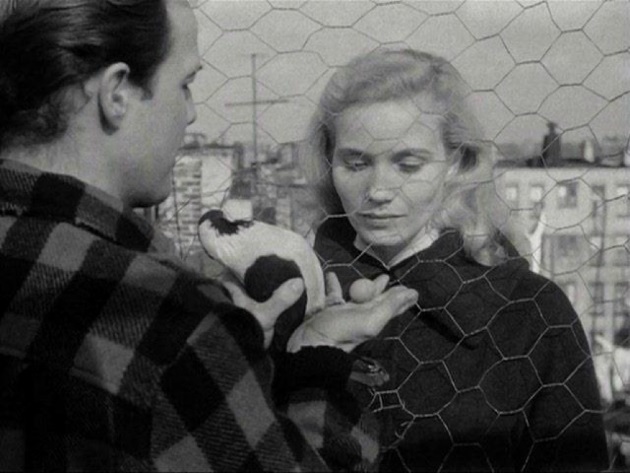
On The Waterfront paved the way for the Italian-American dominated DeNiro/Pacino/Scorsese/Coppolla school of cinema, thanks in part to the method acting performance of one Marlon Brando as cooperator turned informer Terry Malloy. One of the aspects which make Brando’s performance so striking is the balance between being macho and tender. Beneath his exterior, Terry has a soft side and a conscience with one of the avenues which really showcases this is his interaction throughout the film with pigeons. It is somewhat wholesome that Terry Malloy spends his free time pigeon-raising as a hobby, once a common practice on the rooftops of New York City although one which has waned since the 1950’s. The pigeons also serve an additional means of being metaphorical of the film’s themes. Early in the picture, Terry describes how hawks perched atop big hotels will occasionally swoop in and snatch a pigeon. The pigeons can be seen as symbolic of the longshoremen with Johnny Friendly and his band of union thugs being symbolic of hawks. This metaphor is best showcased in the harrowing sight of the workers outside the dockyard trying to get the work tokens after one of the bosses throws them up in the air, similar to how pigeons will frantically go after birdseed after it has been thrown on the ground. 

The film’s method acting prowess reaches its height with the famous scene in the back of the taxi (putting to one side the oddity of the taxi having Venetian blinds in the back window). The back and forth between Brando and Steiger is some of the rawest acting ever committed to celluloid. You can really feel the affection between these two brothers and I’m particularly struck by Steiger’s line “When you weighed 168 pounds, you were beautiful”, it really conveys the platonic love between the two. What makes Brando’s most famous line on his squandered career as a prizefighter (“I coulda had class..”) so effective is not only the sheer tragedy it conveys but as a viewer, anyone can apply their own experience to the quote with any great opportunities one could have missed out on in life.

The picture’s female lead comes as Eva Marie Saint in her film debut as the virginal and innocent Edie Doyle, whom acts as a counterbalance to the rough and unsanctified Terry Malloy. A love does blossom between the mismatched couple of the bad boy and the catholic school girl (who cares for a six-toed, cockeyed cat) acting as a form of relief to the otherwise dower nature of the film. The picture’s other face of saintly conviction in the form of the great Karl Malden as Father Pete Barry, a naïve figure at first who goes on a learning journey and acts as a stand-in for the audience themselves to understand how this world operates. Like Father Flanagan in Boy’s Town or Father Jerry Connolly in Angels With Dirty Faces, it’s intriguing to see there was once a time when men of the collar would have been portrayed as heroes in media instead of pedophiles or simply being the butt of jokes (“These are small, but the one’s out there are far away”).

On The Waterfront is widely interpreted to be director Elia Kazan’s response to those who criticized him for identifying eight (former) communists in the film industry before the House Committee on Un-American Activities (HUAC) in 1952. There are those who deny this, however, I feel the film is too on the nose for this not to be the case with lines such as Father Barry’s monologue in the church (“There’s one thing we’ve got in this country and that’s a way of fightin’ back. Now, getting the facts to the public, testifying for what you know is right, against what you know is wrong. And what’s ratting to them is telling the truth for you”) to Terry’s angry outburst during the film’s climax (“You hear that? I’m glad what I done!”). In popular culture, a so-called snitch is almost universally presented as a bad person, as indicated by the associated slang (rattattle-talefinknarcsquealerstoolieweaselJudas). However, On The Waterfront is a film in which the informer is the hero.  So what are the ethics of informing or snitching? Since On The Waterfront is a film in which the characters are motivated by biblical morality, what does the good book say on the matter? From GotQuestions.org:

[The Bible] records the accounts of several informers. Sometimes the informers acted evilly; other times, nobly. Examples of evil informers include the Ziphites, who betrayed David into Saul’s hand twice (1 Samuel 23:19–20; 26:1; cf. Psalm 54); Doeg the Edomite, who “snitched” on those who helped David, resulting in a massacre (1 Samuel 21:7; 22:9–19); the Persian satraps who “snitched” on Daniel (Daniel 6:10–13); and, of course, Judas Iscariot, who betrayed the Lord (Matthew 26:14–16). Examples of noble informers include Mordecai, who informed the king of a plot to assassinate him (Esther 2:21–23).

To summarize, the difference between good snitching and bad snitching can be interrupted by its effect on innocent people. However, if passing along information can upload justice and thwart evil, then informing or snitching can be seen as a moral good.

I had long assumed On The Waterfront must have been among the last films shot in the 4:3 aspect ratio prior to Hollywood’s mass adoption of widescreen since that was the only ratio I had ever seen the film being presented. However, with the film’s Criterion Collection release I was surprised to discover On The Waterfront exists in three different aspect rations including the widescreen presentations of 1:66:1 and 1:85:1. What is the best viewing option? The presentation on 4:3 is not a pan & scan of a wider alternative but rather the widescreen versions are cropped from the full frame 4:3 version. I didn’t have an issue watching the film in 1:66:1 but the wider 1:85:1 version cuts out too much information from the frame and feels unnecessarily claustrophobic. Personally, I find the near square frame of the 4:3 version to feel more cinematic than its wide-screen alternatives.

On The Waterfront concludes with Terry Malloy striping Johnny Friendly of his authority following a fight with his goons, as Terry pulls off a Christ metaphor as he walks and stumbles three times upon reaching the dockyard entrance, silently demanding to be allowed in for a day’s work despite being blacklisted following his testimony. Multiple factors cause this ending to make the hairs on your neck stand up. Firstly, the music by Leonard Bernstein (in only one of three film scores he composed) with its bombastic use of drums heightens the drama. Furthermore, there is the union man starring Terry in the face and triumphantly shouting, “Alright, let’s go to work!” followed by the men walking behind Terry while ignoring Friendly who is in a fit of rage. Finally, there is the sense of finality which comes from the concluding shot of the dockyard door closing after all the men have entered. According to author James T Fisher, the longshoremen involved in the real-world events which inspired On The Waterfront have stated the film is misleading and not an accurate depiction of real-life events, and watching this ending there is the part of your brain questioning if this would this happen in real life but within the context of the movie, it does not at all feel contrived. An ending which involves men arriving at their workplace in the morning ahead of a shift, yet it leaves one with a sense of euphoria. Workers of the world unite, I guess.

Le Samouraï (1967)

Don’t Shoot Me I’m Only The Piano Player

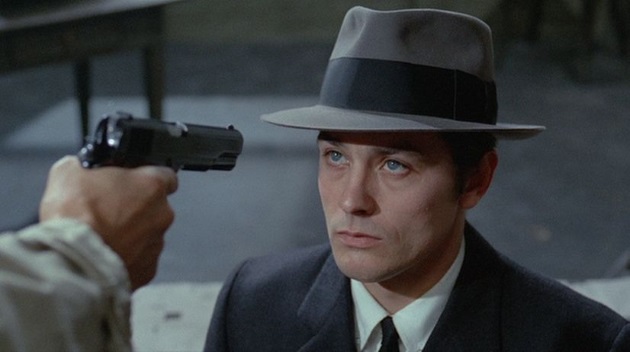
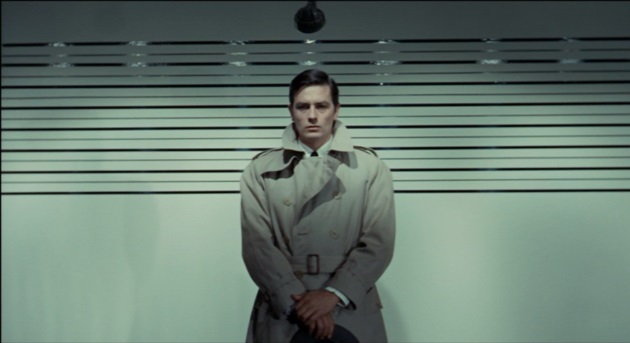
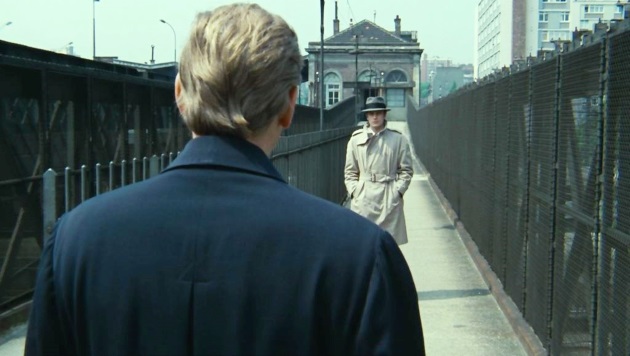
Alain Delon is Le Samouraï – hitman Jef Costello – cold yet elegant and graceful. The ever badass Delon could be identified by a silhouette of his figure. While he has those Humphrey Bogart vibes with his grey trench coat and fedora, he possesses a demeanour that’s strictly his – this is a man who knows how to wear clothes. Moreover, there is an ethereal beauty to Delon which straddles that fine line between masculine and feminine beauty with a face that conveys so much without the uttering of a single word. 

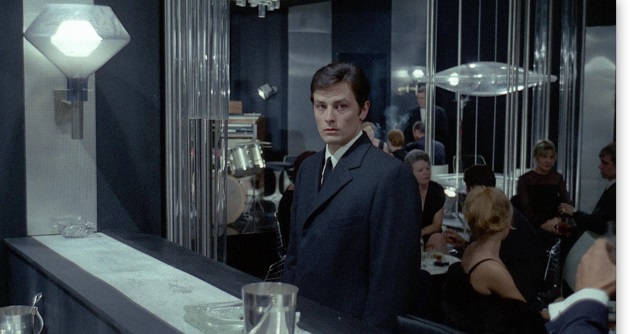
Jean-Pierre Melville’s Le Samouraï is a master class in how to make a film with long stretches featuring no dialogue with little-to-no music. When music is used, however, the haunting score by François de Roubaix with its use of hammond organs mixed in with some sections of mellow jazz is the perfect match for the grey, rainy streets of Paris (this is the kind of music you need to play when walking down an empty city street in the early hours of the morning). There is a real hypnotic quality to watching Alain Delon making his way through this urban jungle. The Paris featured in Le Samouraï is not the Paris as would be portrayed in an American film in which the Eiffel Tower and Arc de Triomphe is included in the background of every shot. Rather this is a Paris of grimy, urban locales – a real-time capsule of the city circa 1967. The locales and interiors featured in Le Samouraï make it a film that oozes class. I’ve never seen a classier looking nightclub than that featured in the film with its silver and glass décor while even the interior of the cold and sterile police station has an art deco appearance to it. 

I’ve read many of my fellow film reviews heavily critique Jef’s decision making in his criminal activity as a major dent in the believability of Le Samouraï. When carrying out his hit, Jef enters Martey’s nightclub wearing a distinct outfit, he returns to the scene of the crime the following night (despite his arrest from the previous night) and even disposes a set of blood-soaked bandages on the ground outside his apartment, knowing that the police are surveilling him. Yet, such clumsy actions strike me as being a sign of Jef’s overconfidence rather than a mark of poor writing. 

Le Samouraï can rank as one of the best police-procedural films. It makes for fascinating viewing to watch the techniques deployed by the police for identifying and questioning suspects, as well as their methods for tracking Jef through the Paris subways with a cat & mouse chase in a pre-internet, pre-mobile phone, pre-CCTV world. Le Samouraï also shows how the French citizenry is required to carry identity papers, an anathema to viewers in the anglosphere (the requirement to carry identity papers is a holdover from Roman law, unlike English common law where no such requirement exists). Within the film there are no Miranda rights as seen in American films but more worryingly, the police stalk Jef and put him under 24/7 surveillance, break into his apartment to install a bug as well as breaking into the apartment of his girlfriend and attempting to coerce her (also take note of how the commissioner turns a picture of a baby on his desk away from sight after questioning a suspect). There are however objections raised by suspects throughout the film when the police begin asking questions about their personal lives. If Le Samouraï is conveying a negative portrayal of the police, it may to conveyed most harshly but subtly with a blink and you miss it moment with a cut 50 minutes into the film in which a crime boss walks from right to left and then cuts to the police inspector continuing to walk in the same direction in perfect motion. Both bodies have the same aim of wanting to catch Costello but is the film also trying to say they both are as morally and ethically bankrupt?

Throughout Le Samouraï as Jef returns to his apartment, the sound of a caged chirping bird plays repeatedly without the aid of any music. As would be heard the proceeding year in Once Upon A Time In The West, the use of a recurring sound is shown to be as memorable and effective as a great score (I can also attain that every time I have watched Le Samouraï, the chirping bird has garnered the attention of my cat). The bird even serves the plot as Jef shares an almost telepathic relationship with the avian, as when Jef has returned to the apartment to find the bird traumatized and shedding feathers, he starts exploring his apartment only to find he has been bugged. 

Le Samouraï opens with a quotation from the book Bushido: The Soul of Japan – “There is no solitude greater than a samurai’s, unless perhaps it is that of a tiger in the jungle.” However, this quote is entirely a creation of the film and not taken from said book. How much of actual samurai mythology is present in Le Samouraï or is the film just trying to look a bit cooler with a westernized interpretation of what a samurai is? Regardless, the film earns its merits in so many other regards I can easily look past such a thing.

Robocop (1987)

He Has Risen!

***This Review Contains Spoilers***

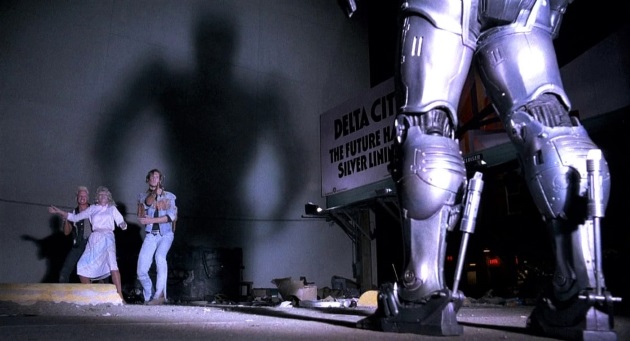
Despite its schlocky, B-movie title and the premise of a cyborg cop in a semi-dystopian Detroit, the Paul Verhoeven directed Robocop would prove to be one of the smartest films from the 1980s, an era when blockbuster movies were made for adults and their appeal would trickle down to younger audiences. Everything about the cyborg police officer oozes pure 1980’s cool from the slick metal look to that unforgettable voice (“your move creep!”). It feels like an actual robot and not simply a man wearing a suit, largely in part thanks to Peter Weller’s performance in which he nails the robotic body movements (I can suspend my disbelief that it never occurs to the bad guys just to shoot Robocop in the flesh of his uncovered lower face).

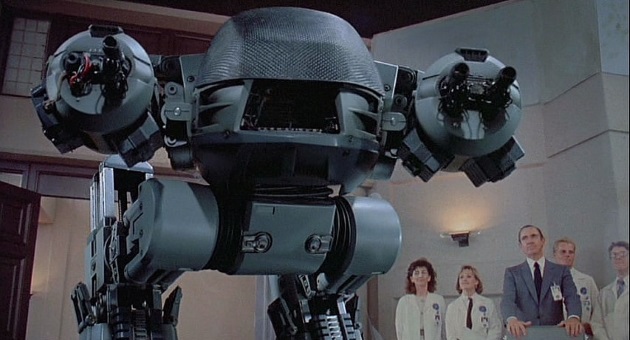
Robocop himself is the creation of Omni Consumer Products (OCP), a company which in its own words deals in “markets traditionally regarded as non-profit” such as hospitals, prisons and space exploration (funny I am writing this review as Jeff Bezos and the Richard Branson have just recently flown into space); a company that is essentially part of the military-industrial complex (“you got access to military weaponry? We practically are the military”). OCP runs the Detroit police force which raises the question, does there exist a public police force that is actually privatized (to which I’m unable to find a clear answer)? The world inside OCP is a combination of sexy and sinister yuppiedom full of Godfather-esque inner dealings and in which stock boards are placed above urinals. I like how during the presentation for the company’s other police robot ED-209, one of the board members is brutally gunned down by the machine and the best anyone can say is “does somebody want to call a paramedic?” and the board just continue to talk business and finance (also notice how Bob Morton (Miguel Ferrer) stubbornly pays no attention during the ED-209 presentation). It ultimately comes as no surprise when it turns out OCP has links to Detroit’s most prominent gang lead by Clarence Boddicker, a figure of pure menace with his sinister look and a man who can go down as one of cinema’s great villains (notice how he’s always doing something with his mouth). Yet I wouldn’t say OCP is portrayed as an overtly evil company in Robocop, the companies’ head, the sympathetic old man (Dan O’Herlihy) appears to be oblivious the shadier dealings within his company rather than actively taking part in them (by contrast in Robocop 2 OCP is portrayed as a far more sinister company, right down to having Nazi-esque flags on displays). Robocop can join the club of sci-fi movies that warned us about the dangers of corporate power, but did we listen?

Jay-sus love!

So how does OCP come to literally own the body of Robocop’s previous alter alias, Detroit police officer Alex Murphy? We are only given a single line of dialogue in which company member Donald Johnson (Felton Perry) states “Well he signed the release forms when he joined the force. He’s legally dead. We can do pretty much what we want to”. It’s also not clear if Murphy has literally been brought back from the dead (although with Robocop being a clear Christ metaphor that argument could be made). Clarence Boddicker shot Murphy in the forehead and he clearly appeared deceased lying in a pool of his own blood, yet when Murphy is being rushed to the operating room we do see what appears to be flashbacks in his head to his family life suggesting he was still alive. Regardless if weather OCP has literally possesses the ability to reincarnate a human, it is a disturbing prospect how a company can literally own your body and in effect, a person (regardless if they’re technically still classified as a human upon becoming a cyborg) can become a company product. As the film progresses there are subtle signs of Murphy regaining his humanity and like fellow similarly themed 80’s sci-fi masterpiece Blade Runner, the question is asked, what is the dividing line between man and machine? Unlike say 2001: A Space Odyssey which makes the viewer fear technology with HAL 9000, Robocop has a message of man learning to live side by side with technology. The scene in which Murphy removes his visor and looks upon his face for the first time since becoming Robocop is heart-wrenching and easily the most moving scene in the film, with the makeup effects themselves being something of awe.

Robocop’s competitor at OCP, ED-209 is one cool looking beast but is a product that clearly hasn’t been well thought through since it’s incapable of accessing areas such as a simple staircase. It’s the little touches though which give it a personality from its lion growl before attacking from its pig squeal when it falls over to its little foot twitch. It goes without saying stop motion effects will never cease being cool to look at (likewise, Robocop I also great a showcase for the lost art that is the matte painting). Contrarily, Murphy’s partner Anne Lewis (Nancy Allen), while instrumental in helping Murphy rediscover his humanity, I do find myself slightly resenting her character as she does bear some responsibility for Murphy’s death and for a ridiculous reason. She just had to look down at that gang members’ package and as a result, be knocked out and disarmed. Had she not been distracted Murphy might still be a regular cop. That said, Murphy’s twirling of his gun to emulate the fictional futuristic cop T.J. Lazer in order to impress his son is a massive firearms violation (tut, tut), even if “role models can be very important to a boy”.

One of the memorable aspects of Robocop and something which really makes the film unique are the television segments, of which the news bulletins are in themselves an effective manner to deliver exposition while the commercials are incredibly entertaining and quotable (“That’s it buster! No more military aid!”). Perhaps most memorable of all is the fictional sitcom It’s Not My Problem! and that infectiously quotable line “I’d buy that for a dollar!” – the punch line to a joke we never hear yet the characters in the movie watching this low brow sitcom find hilarious. Much of the acting in Robocop is deliberately very campy. I can remember on one occasion channel surfing and I stumbled onto Robocop, my mother could not stop laughing at just how campy the acting was.

No specific date is given for when Robocop is set, whereas like Blade Runner, there exists technology that is still science-fiction in the real world and the President of the United States makes speeches from outer space (likewise male and female police officers sharing the same changing room appears to be the norm), yet within this universe, televisions are still bulky boxes with Cathode-ray tubes. Perhaps the film’s most memorable tech anomaly is the appearance of what you could possibly call a DVD, in which Boddicker uses a CD to carry visual information which was not possible in 1987. I also find the interior of Murphy’s house (owned by a company called Zem Industries) looks so heartless and sterile. This world isn’t quite Soylent Green but it’s still not desirable.

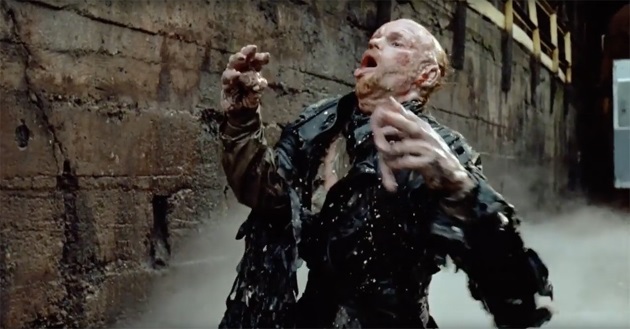
Even for a film that is as violent and drenched in blood as Robocop, the one moment which still manages to come out of left field is the death of the Boddicker’s henchman Emil Antonowsky (Paul McCrane). The death of Emil is equally disturbing yet darkly comic as he turns into a creature resembling the toxic avenger after driving into a toxic waste container. What makes it so funny is the horror-like organ music that plays over the graphic, horrifying sight of a man who rivals Joseph Merrick followed by his body splattering all over a car windshield after Boddicker accidentally drives into him. Conversely, the film’s action climax does end on a more beautiful moment of violence as Boddicker penetrates Robocop with a spear, a shot that has a very mythic quality to it.

Robocop as a series is also one of the great tragedies of contemporary cinema in that the first film set up so much sequel potential which failed to be utilized upon (I do like Robocop 2 but it is a downgrade from the first film) – regardless, we will always have the original. The ending of Robocop is just about the perfect explosion of catharsis to an already sublimely paced film as our titular hero gets revenge on the corporate bad guy Dick Jones (Ronny Cox). I do love that brief cutaway shot in which Donald Johnson looks on with glee at Robocop guns down Jones while that charmingly dodgy falling shot in which Jones has unusually long arms is so wonderfully cliché. This is followed by one of the best single lines in film history as the old man praises Robocop for his shooting and asks him for his name. A Robocop who has regained his humanity gives a simple utterance of “Murphy” as Basil Poledouris’ superb theme plays over the end credits and the audience cheers on.

Drunken Angel [Yoidore Tenshi] (1948)

Drain The Swamp

***This Review Contains Spoilers***

Drunken Angel marks the beginning of Akira Kurosawa’s golden age in the first of the 16 film collaboration with Toshiro Mifune (6th out of a whopping 21 films with Takashi Shimura). Drunken Angel is a movie thick with atmosphere, set in a slum with worn out buildings in which a lone guitar player comes out at night overlooking a toxic bog (possibly created from a bomb crater) laden with prostitutes next to a medical practice – a metaphor for all that was rotten about life in the wake of Japan’s catastrophic wartime defeat. You can almost feel the heat and humidity come off the screen while during the film’s daytime scenes the city comes alive with the diegetic music echoing in the background. No city is mentioned by name but a sign in the background of one scene reads in English “Social Center Of Tokyo”.

The chemistry between Toshiro Mifune and Takashi Shimura is electric – The chemistry between Toshiro Mifune and Takashi Shimura is electric – watching the two interact in the film’s opening scene they could easily carry the entire picture by themselves. A very youthful, handsome and suave Mifune is Matsunaga, a big shot member of the Yakuza (although the word is never mentioned in the film). With athletic agility, cat-like moves and his fashion choices of striped shirts and zoot suits, I do get some George Raft vibes from his performance. He shares a fascinating relationship with the brash, ill-tempered but dedicated Dr Sanada (Shimura) as he attempts to cure him of tuberculosis. The two hesitantly develop mutual respect for each other (Matsunaga reminds Sanada of himself during his youth as he states at one point) despite their highly tumultuous, sometimes violent interactions. In Drunken Angel Kurosawa doesn’t want to glamorize the Yakuza, but rather expose them as a blight on Japanese society. 

Drunken Angel is a classic story of addiction, in which “just one more drink” turns into a night of binging as Matsunaga drinks himself to death. The fantasy dream sequence involving Matsunaga opening a coffin on the beach only to find himself inside feels like something from a silent horror movie and is even quite Bergman-esque. It also feels reminiscent of the scene in The Empire Strikes Back in which Luke Skywalker finds his own face within Darth Vader’s helmet. The climax of Drunken Angel on the other hand features the type of cinematic images that you never forget as a weak and ill Matsunaga tries to fight his boss Okada as the two are covered in paint and scrambling on the ground before Mutsunga is stabbed and collapses by a balcony – it feels reminiscent of the iconic endings in various Warner Bros gangster films. Had this been a Hollywood production I can easily see it being a vehicle for James Cagney and Pat O’Brien, with perhaps Bogart as Okada?

It’s fascinating to see how much western trends are embraced in Japan, something which is often surprise to newcomers of Japanese film (I do love the interior of the dance hall with the giant playing cards on the walls as well as the Bolero Club with its Iberian ascetics and music). Yet at its heart Drunken Angel remains a story of post-war Japan with its characters and setting being an allegory using illness and contamination as a metaphor for the state of the nation. Matsunaga can be seen as a symbol of the Japan of yesteryear, struggling to find relevance in this new world while Sanada is a broken Japan trying to forge ahead. Sanda’s assistant Miyo (Chieko Nakakita) refuses to let go of her gangster, ex-boyfriend who ruined her life – a Japan which is pinning for what has been lost. However it is the young schoolgirl (Yoshiko Kuga) of whom Dr Sanda cures of tuberculosis provides the film with an optimistic, wholesome ending -a sign of Japan yet to come.

Witness (1985)

Don’t Give This One Amish

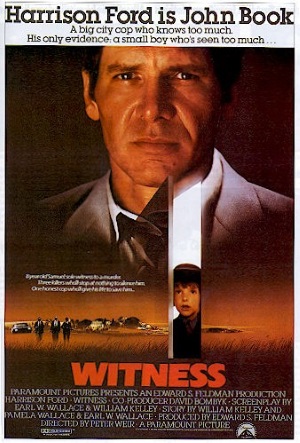
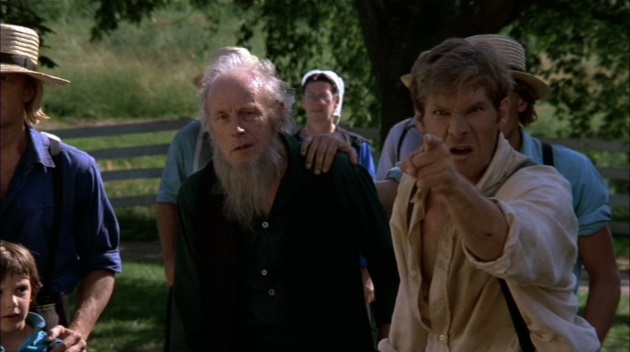
Any public fascination with the Amish and their stark contrast with the modern, civilized world sadly translates more than often to the group being the butt of jokes in movies, sitcoms and oddly enough, many TV commercials (look it up). Regardless of how accurately Witness represents the Amish, it’s as serious and as comprehensibly researched as Hollywood has ever taken the subject matter (customs, language, dialect and all) – a human portrayal without any condescension. Witness is the story of an Amish community being forced to cooperate with the outside world after a young Amish boy is a material witness to a homicide. The expertly paced story neatly falls into the classic heroes’ journey, as police detective John Book (Harrison Ford) has to leave the world he knows to take refuge in the unfamiliar but eventually has to set things right in his world.

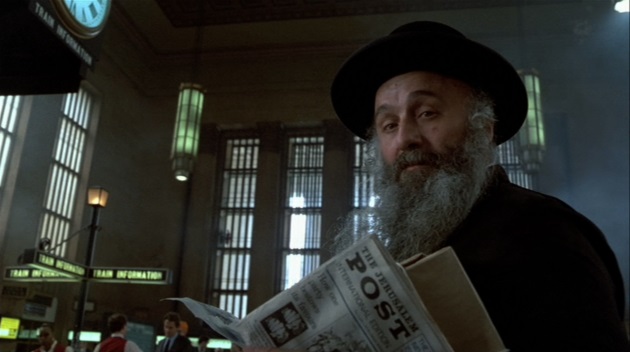
Witness was Harrison Ford’s opportunity to showcase his acting chops playing a contemporary, real-world character as John Book, the upstanding figure of morality in a world of police corruption. Ford projects much warmth with his interactions with the little Amish child Daniel (Lukas Haas), posing as a Freudian father figure, while Ford’s trademark dry wit never fails to amuse (“learning a lot about manure, very interesting”). Early in the film there is a scene in which Daniel mistakes a Rabbi for an Amish man, this is the reverse of a gag from another Harrison Ford movie, The Frisco Kid, in which Gene Wilder plays a Rabbi who mistakes an Amish man as being a fellow Rabbi. Kelly McGillis on other hand has that country girl look and conveys a sense of purity to the character of Rachael. The forbidden love she shares with Book builds up the sexual tension between the two, most memorably during the sequence as the pair dance by Book’s car to the song Wonderful World by Greg Chapman (I’ve never seen anyone drink lemonade more manly than Harrison Ford) – This repressed longing is far sexier than any sex scene could ever be.

Jew Ain’t Amish

The mid-1980’s was a period when real-world dramas featured futuristic, synth music scores. Maurice Jarre’s score for Witness wouldn’t feel out of place in Blade Runner but the odd combo of futuristic-sounding music over the rural landscapes of Pennsylvania is effective (likewise, that barn construction sequence may lack the dancing from Seven Brides For Seven Brothers but is no less splendid). It’s just ironic that this music is juxtaposed to a world in which modern technology is shunned.

One of the most interesting scenes in Witness is that in which an Amish elder speaks to Samuel about Book’s gun, tying in with the film’s broader theme of pacifism vs. conflict. In what could be seen as an anti-gun argument from the Amish perspective, the elder states “this gun of the hand is for the taking of human life” and that it is only for God to take life. Samuel however, who has witnessed a man being murdered, refutes this and states “I would only kill a bad man”. The film presents two sides of an issue without taking a side or being propagandistic, letting the viewer draw their own conclusion.

The Return of Doctor X (1939)

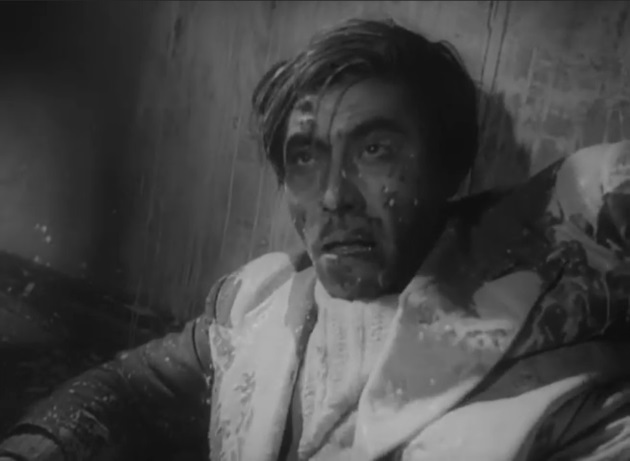
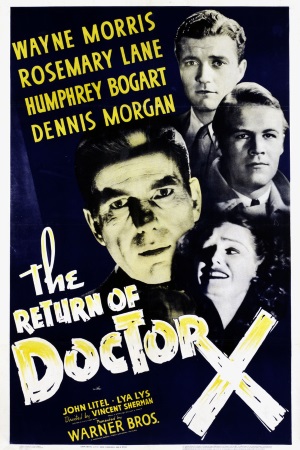
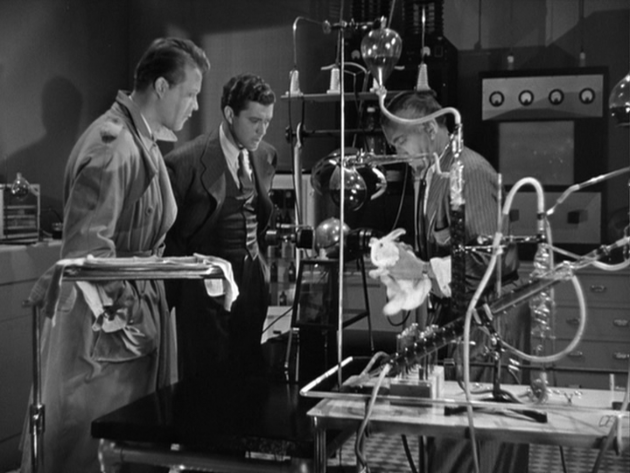
The Return Of Doctor X is a movie with very little value to it aside from the anomaly of being Humphrey Bogart’s only horror/science fiction film in which he plays the titular Dr Maurice Xavier, a.k.a. Marshall Quesne (pronounced “caine”). Dr. Xavier is essentially a zombie-vampire, a doctor who was sentenced to the electric chair after trying to see how long babies could go without eating (gruesome even for today, let alone 1939), only to be resurrected by a proto Dr Frankenstein, Dr Francis Flegg (John Litel) and is kept alive by regular injections of Type One blood. I do love the Karloff-like design of the character with his pale, white face, punk rock style hair with the white streak and a rabbit which he carries around with him (I’m making this my future Halloween costume). The Return Of Doctor X is a rare instance in which Bogart played a subservient character, of whom is quite Peter Lorre-esque with his tragic and pathetic demeanour, while his unnatural body movements and limping call back to Karloff’s Frankenstein’s Monster. The film’s climax does, however, venture into more traditional Bogart territory in which Xavier partakes in a gangster-style shootout. Bogart is a consummate professional who doesn’t phone in the role regardless of how much he was known to detest it. Just contrast him to his master played by John Litel, of whom the movie gives him somewhat of an arc in which he eventually regrets his actions playing God, he is a much more generic bad guy.

According to the audio commentary for The Return Of Doctor X featuring director Vincent Sherman (of whom went on to do better work in his career), the film had a troubled production with the original script going in one direction and then being significantly altered during filming. This is evident when watching the film’s trailer of which the majority of footage featured is not in the finished picture not to mention the film’s as various credit errors (Wayne Morris is billed as Walter Barnett but is referred to as Walter Garrett in the film). Likewise, the film oddly gives the “All persons fictitious” disclaimer full-screen treatment before the opening titles, whereas it’s usually in small print at the bottoms of the credits. What was the studio worried about?

It’s Alive!

The premise of The Return Of Doctor X has potential with its mix of vampirism and reincarnation but with the exception of Bogart, the mystery yarn fails to flesh out the story or characters (although I do find it interesting that the movie has to explain the more recent scientific discovery of blood group types, whereas today this is common, layman knowledge). Wayne Morris might have worked at the title character in Kid Galahad but he’s no leading man material in the role of a go-getter reporter from Wichita. The Return Of Doctor X is a typical example of the Warner Bros B-movie product of the late 30’s/early 40’s – the film is by the numbers and has no real flashy moments. Worst of all, it is masquerading as a sequel to the two-tier Technicolor, pre-code gem Doctor X, however, there is no connection between the two films. Many would point to The Return Of Doctor X as an embarrassment in the career of Humphrey Bogart, however I would point to it as another example of how great an actor he is as he brings so much life to an otherwise average film when he’s on-screen. Boris Karloff made a career playing roles like this, why should Bogart’s attempt at playing a monster be looked down upon?

The Mad Miss Manton (1938)

Manhattan Murder Mystery

Melsa Manton (Barbara Stanwyck) and her ilk of rich, bored socialites use Manhattan as their playground similarly to the wealthy socialites in My Man Godfrey, using the city for bizarre escapades such as sleuthing in the middle of the night and all while still dressing to impress at the same time in The Mad Miss Manton. Stanwyck’s enthusiasm alone is infectious and the quick-fire interactions of the girls are one of the film’s highlights (“I was never much of an individualist, if the upstairs has to be searched we search it together – why that’s communism!”). They even partake in a number of Scooby-Doo like moments, in particular actions reminiscent of the character Shaggy, i.e. making a sandwich in the kitchen when sleuthing in a trespassed apartment. The other memorable addition to the cast is the sarcastic, wisecracking Hattie McDaniel who takes no nonsense from anyone and has a comeback to everything despite her socio-economic status (“Comes a revolution and we’ll start being exploited by our help”).

Francis Mercer is real dead ringer for Gail Patrick

Barbara Stanwyck and Henry Fonda – one true pair if there ever was one. Their chemistry makes it more believable that Peter Ames (Fonda) with his dorky bow tie would fall head over heels for this spoiled Park Avenue princess who is trying to sue him for a million dollars over an editorial. He is even driven to the point in which he casually imposes marriage on her. Henry Fonda isn’t given enough credit for his comic abilities, in particular, the scene in which he fakes his own deathbed in order to extract information from Miss Manton. In one scene Fonda is even seen holding a knife, in the same manner he would years later in 12 Angry Men.

The Mad Miss Manton was one of many films throughout the 1930’s which attempted to get a piece of that Thin Man pie. The formula of the 1934 comedy-mystery romp was an effective one and could easily be recreated with low budgets. It doesn’t matter that the mystery in The Mad Miss Manton is incomprehensible. The comedy and the atmosphere are what makes the movie, of which the picture succeeds in creating with the high contrast, film noir-like lighting during the sleuthing sequences (especially with the sequence in the subway) even though the film is visibly a low budget production.