House [ハウス/Hausu] (1977)

A Method To The Madness

***This Review Contains Spoilers***

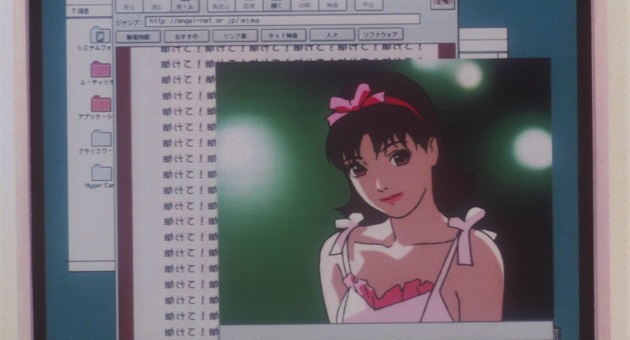
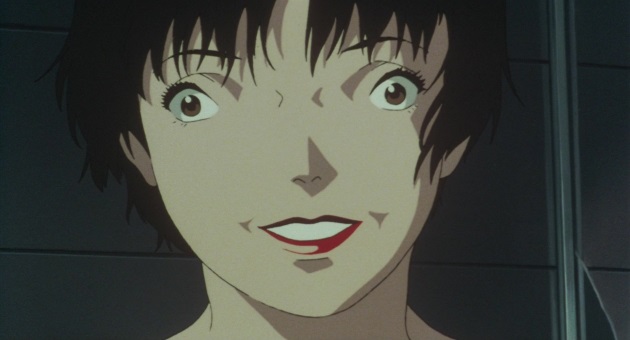
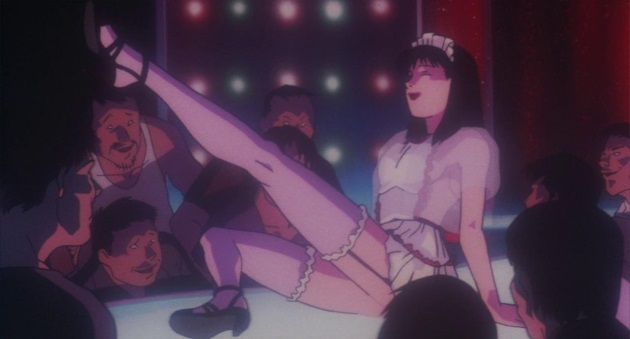
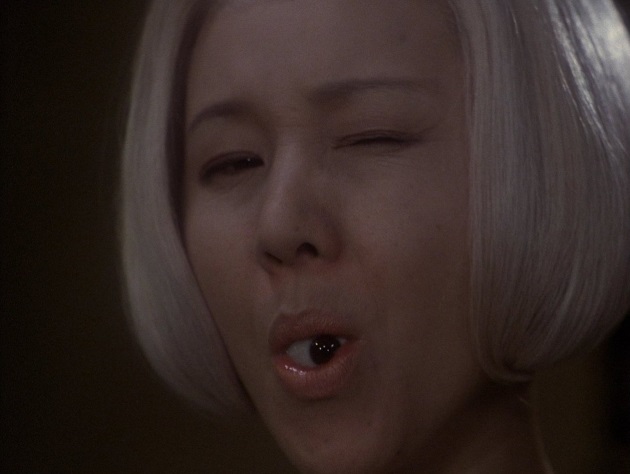
What struck me most on my first viewing of House (or Hausu)was that alongside the film’s sheer over-the-top, phantasmagoric madness, I found the whole thing to be weirdly endearing. Initially, I was concerned I was getting into something awfully pretentious but I was able to surrender myself to the fact that I was watching a film which employees a different filmmaking technique in just about every scene. House has one of themost cliché of horror movie premises, yet it gives way to one of the most unique and weirdest viewing experiences with descriptions ranging from “Evil Dead on steroids” to “a Scooby-Doo episode directed by Mario Bava” – perhaps no other film holds a better claim to the title of being “one wild and crazy ride”.

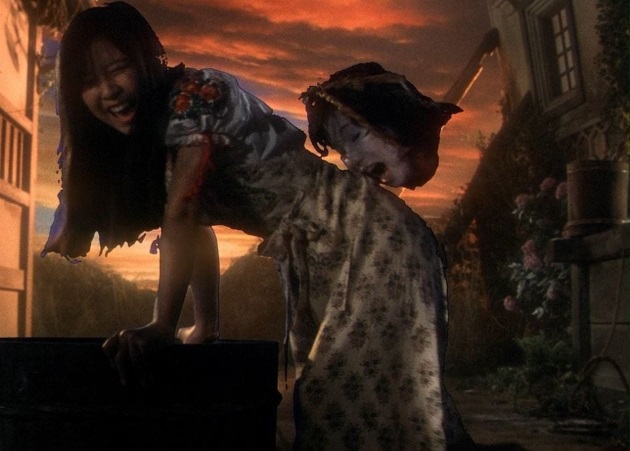
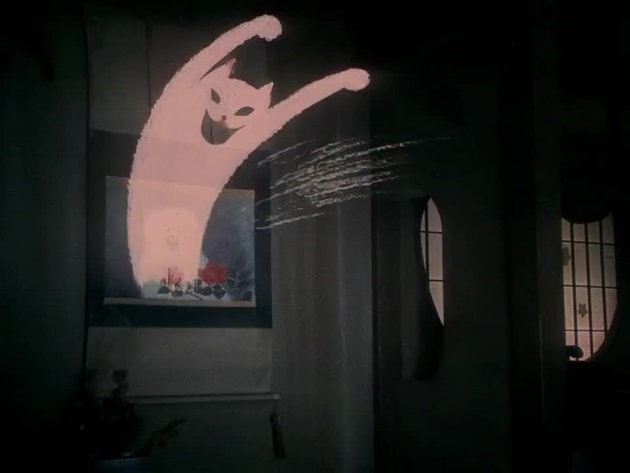
Japan’s reputation for “WTFness” could make House a film easy to dismiss, however, there is a method to the madness. Director Nobuhiko Obayashi was a director of commercials before taking on the mantle of House, and the artifice of commercials is all over the film alongside (pre-MTV) music video style editing, of which I’m sure it’s no coincidence that House was shot using the 4:3 aspect ratio – the aesthetics of House are all about the embrace of artifice. A film of contradictions, House is an art-house film (or art-hausu film one could say, ba-tum-tiss!) and one which was reportedly a huge success with the youth demographic in Japan upon its release (with the film’s extraction of sex appeal from its young female stars as well as nudity in several scenes may have got many young men into the theatres). In this regard it’s also worth mentioning House stands out as it is uncommon for Japanese films to have an English language title. Yet at the same time House symbolizes a return to tradition, a rejection of realism in 1970’s cinema. Right from the opening prologue, the movie proclaims in the vintage Broadway font what you are about to see is “A Movie Presentation”. This is part of the reason why beyond its scenes with killer futons, man-eating pianos and decapitated heads biting girls on the derrière, House is as I previously mentioned, weirdly endearing – the director’s love for cinema comes through and feels like a celebration of the medium. If I were to compare House to another film it would have to be Buster Keaton’s Sherlock Jr. Both films celebrate the art form with their use of special effects which blur the line between reality and fantasy with both also featuring a movie within a movie. House has a Technicolor-look reminiscent of the work of Jack Cardiff with its use of deep, saturated colour with the film’s colour scheme remains largely consistent throughout with its use of oranges, reds and blues and being a horror picture, it does have that autumnal/Halloween vibe (even though it is set during the summer). Speaking of, as a horror film is House actually scary? Well, this measure is subjective of course but I did personally jump at the reveal of severed head of the character Mac as well as Gorgeous’ giant profile suddenly entering to the screen from the right.

House is like a feature-length dream with its mad array of images. The images from the film were conjured from the mind of a child, Obayashi’s pre-teen daughter Chigumi Obayashi (who does receive a conceptual credit and even has a cameo in the film as a shoemaker). I am dubious of having a child being a film’s creative consultant since the last movie I saw to do so was those dreadful Robert Rodriguez Spy Kids films but in House, this influence works and another aspect which makes the film endearing. To anyone who has never seen House, it’s difficult to put into words just how insane a film this is without sounding melodramatic. This encyclopedia of movie storytelling and its array of practical special effects wizardry is a joy to behold from primitive blue screen to the use of stop motion – there are a few films in which an obscene amount of effort is put into every shot. On the other hand, there are sections of House which do have a chilled-out nature to them and the cheesy vibes of Beach Party film. Just a warning that several sequences in the film do contain strobe lighting effects (as if the Japanese weren’t content enough with giving people seizures through Pokémon episodes). Upon my third viewing of House, I did find myself becoming more desensitized to its bizarre nature and more understanding the filmmakers’ mindset on how they could have created something like this. That said, where Mr. Togo’s transformation into a pile of bananas and the bear wearing the chef outfit fit into the grander scheme of things I can’t explain. I guess you got to have some randomness for randomness’ sake.

House follows seven girls each named after a single personality trait- Gorgeous, Kung Fu, Prof, Fantasy, Mac, Sweet and Melody. At the beginning of their summer break, they decide to spend some time at the country house of Gorgeous’ aunt, where all is not what it seems. The story does play as an inverse of Snow White and The Seven Dwarfs, seven girls each defined by a single personality trait, show up at a house in the middle of nowhere which is in need of cleaning, owned by an old woman who lives alone. Of the ensemble, Gorgeous is the closet to the film having a protagonist as she has a clearly defined arc, beginning with a subplot involving her father attempting to bring a stepmother into the family and freeing his daughter from domestic chores such as ironing his shirts in a story right out of a Yasujirō Ozu film. Even in the film’s opening scene, a teacher mentions how she is having an arranged marriage during the summer, a topic often explored in Ozu’s work. The only girl in the group named after a purely negative trait (and of course, she dies first) is the gluttonous Mac (derived from the English word “stomach”), although fantasy itself holds its negative aspects, My favourite of the group however has to be alpha in the form of Kung Fu, whose speciality skill leads to several very humorous (whether intentional or not) fight scenes against an array of moving objects.

Acting as a mascot for House with its prominence in promotional material is the white ragdoll cat that joins the girls on their adventure (good kitty!). Cats hold a supernatural significance in Japan and it’s evident the cat in House is doing the bidding of a witch, even preventing Mr. Togo from joining the girls at the house to potentially rescue them. This witch in question is the aunt (Yōko Minamida) herself who proves to be an interesting figure. She has an ominous ghostly look to her and is portrayed in the mould of the classic Yurei, a ghost from Japanese folklore that cannot pass onto the afterlife. She is also vampiric in nature, wearing tinted glasses when going outside, and feeling unwell after being in the sun not to mention the interior of her house is very dark. Oddest of all, she feels revitalized by the presence of the girls which allows herself to not require the use of her wheelchair. The aunt is a Willy Wonka-like figure and the house is her factory as the girls are taken out one by one by the house itself, much of this done through the watchful eye of Gorgeous assuming the mantle of her aunt, becoming possessed by her in act of metamorphosis. Like the kids in Willy Wonka And The Chocolate Factory, it’s not made clear if the girls are actually killed literally or just in a metaphorical sense. Usually, in slasher films, the young people are killed as a comeuppance for their promiscuous actions, but do the girls in House deserve what they receive? One of the film’s themes and one which is confirmed by the director is how the trauma of World War II still affects the aunt whose finance never returned from the war and correspondingly how the seven girls take their peacetime living for granted. To quote Obayashi; “These girls born after the war and therefore unaware of how precious peace is, come to the house on summer vacation. The old woman’s bitterness about the war turns into an evil spirit and devours the girls”. This taking of peace for granted is showcased during the movie within a movie,  in which a flash from a camera cuts to an atomic cloud, to which one of the girls makes the trite comment, “That looks like cotton candy”. This is at least the case with the subtitles on the US Criterion Collection release. On the UK Masters Of Cinema release, there are no subtitles on this shot even though giddy chatter from the girls can be heard. Speaking of subtitle differences between these two aforementioned releases, in the scene introducing Gorgeous’ father, a film composer who has just returned from Italy after working with Sergio Leone, his line of dialogue in the Criterion release states the rather unbelievable comment “Leone said my music was better than Morricone’s”. However, in the Masters Of Cinema release, the line is the less dramatic “Both Leone and Morricone liked it very much”. Is someone taking liberties in the translation process?

Of the various interpretations of House, that which strikes me the most is the film being a coming-of-age tale of Gorgeous’ urge to stay a young woman and refusal to enter womanhood. As the house eats the young girls, blood erupts from it, the blood of menstruation – a symbol of womanhood triumphing over youth. It’s also worth noting the blood in question comes from the cat, an alternative name for a cat is a…, ok you know what I mean. Likewise, when people are young they will have certain friends and as they become older they may move on from these friends as a result of maturity. Gorgeous’ dying friends can be seen to represent this while her stepmother going up in flames in the film’s final scene could be viewed as her lack of need for a mother figure in adulthood. I have read theories bringing this theory to greater extremes of analyses, in particular, an extensive write-up on the now defunct (but thankfully archived) IMDB boards in which a user by the name of nemuro8 proposes the seven girls all represent aspects of puberty (I’m not sure if I buy into it but it’s food for thought); “Fantasy represents naivety and the fear of the change. Mac represents hormonal changes with her increased appetite. Sweet represents the desire to fill expectations and the role of domestic life. Melody represents creativity and the desire to have fun. Kung-Fu represents courage and brashness. Prof represents logic and leadership. Gorgeous represents vanity and beauty.”

The soundtrack to House (which was released before the film had even entered production) deserves a review in its own regard as it works as a cohesive album rather than just a collection of songs (with most but not all of the tracks you wouldn’t guess are from a horror film). The jovial main theme of the film has a section with a superb synthesized rendition of the melody, which is only heard briefly in the film itself. Hungry House Blues on the other hand is a delta blues style track that only appears very briefly in the picture, however, this version on the soundtrack is a whooping 6 minutes long complete with plenty of slide guitar action and even has vocals in the style of a 1930’s Mississippian black man (who provided these vocals?). Buggy Boogie is a piece of early ’60s, rockabilly cheese while The Beach Boys style Cherries Were Made For Eating is a real uplifting, banger of a choon, provided by the band Godiego (whom makes a cameo in the film as the song is being played). Eat is in a way the defacto theme of Kung Fu, as the piece is played every time she gets involved in her trademark skill – a good piece if you need a quick dose of adrenaline and the one track which has an undeniably funky, 70’s sound. In The Evening Midst is the most profound track and the real centrepiece of both the film and album, an instrumental played by Melody several times throughout the film which acts as a relief to the horror surrounding it. The track feels similar to the piano melodies from David Bowie’s Hunky Dory and ends on a beautiful crescendo (it’s also worth noting, this piano melody does bear a striking resemblance to the piano riff on the song Welcome to the Black Parade by My Chemical Romance). The final track of both the album and film is titled House Love Theme, this Beatles-like calm after the storm which feels reminiscent of Abbey Road side B. This is the only song in House which actually features Japanese lyrics of which I am unable to find a translation of thus I can’t comment if the lyrics actually hold any thematic relevance to the film.

House is the kind of film to be watched on the big screen at a midnight showing alongside the likes of The Rocky Horror Picture Show. It does feel like was designed and destined to become one of the ultimate cult films. I do find myself fascinated by films such as this which remained unknown in the west for decades before obtaining a mass following. Of the film’s 149 reviews on IMDB, only 14 were written prior to the film’s first North American release in 2009. It makes you wonder what’s still out there…

Porco Rosso [紅の豚/Kurenai no ButaPorco] (1992)

Bringing Home The Bacon

***This Review Contains Spoilers***

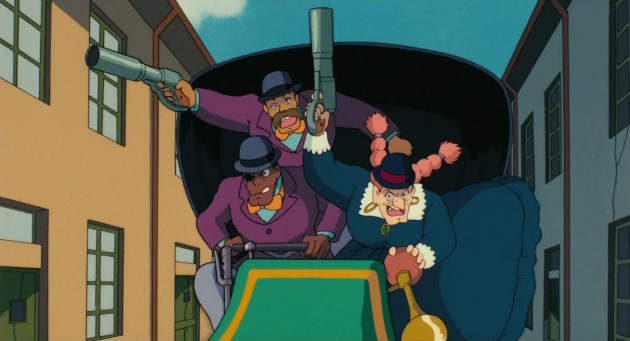
Combining elements from CasablancaOnly Angels Have Wings and A Matter Of Life And DeathPorco Rosso is Studio Ghibli’s romantic, swashbuckling cocktail. Porco Rosso (Italian for Red Pig), real name, Marco Pagot is an ex-Italian World War I fighter pilot turned bounty hunter in the Adriatic Sea. Porco is a Bogartian figure with his cool detachment, political apathy and romantic distance, but his most significant character trait is that derived from his physical appearance. Porco has had a curse put upon him turning him into, well, an anthropomorphic pig. Why is the film’s protagonist a pig? The two most apparent interpretations being firstly a reference to the saying “when pigs fly” and the cultural perception in the west (as well as in faiths such as Judaism and Islam) of pigs being dirty animals (keeping in mind the film is set in a western country). A common reading is that Porco put the spell upon himself out of survivor’s guilt when the rest of his comrades died in battle. He views himself as swine – self-loathing and unworthy of living. It’s only through the validation and the friendship he shares with the character of Fio that comes to cure him of this affliction. How someone possesses the supernatural ability to turn into an anthropomorphic animal is never explained nor does anyone in this world question why there is a walking-talking hog existing among humans. Still, the film has enough going for it to overcome this suspension of disbelief (Porco is even a hit with the ladies despite his appearance so I guess looks aren’t everything). The film’s ending indicates the curse may have been lifted but ultimately leaves the question unanswered. 

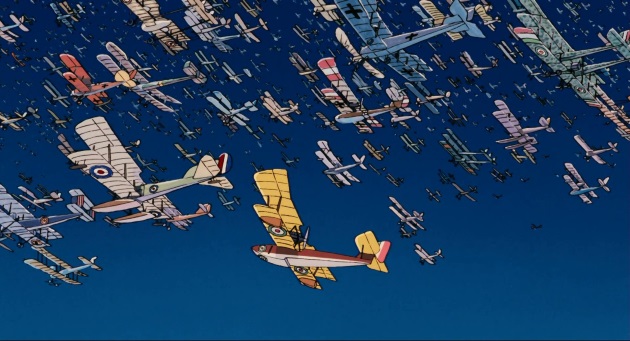
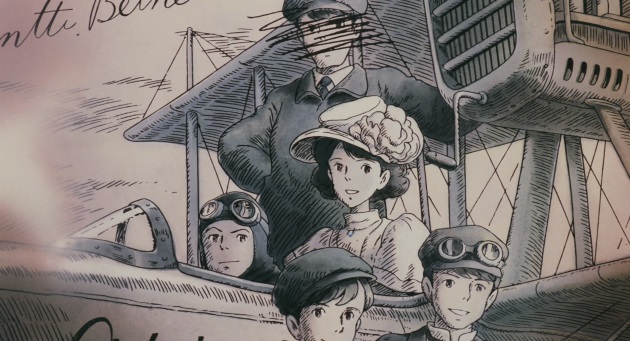
Porco Rosso is one of the few films directed by Hayao Miyazaki in which the historical and geographical setting is clearly defined and gives the director a chance to indulge in his Europhilia with the film’s picture postcard scenes of Italy and the Adriatic Sea. Academic Chris Wood states in his article “The European Fantasy Space and Identity Construction In Porco Rosso” that the film can be understood as a representation of wakon yōsai (Japanese spirit, western learning) – a tendency, since the Meiji period, for Japanese artists to paint Europe in a spectacular manner, while simultaneously maintaining the distance necessary to preserve a distinct sense of Japanese identity. Chris Wood states, “[In Porco Rosso] Europe is tamed, rendered as a charming site of pleasurable consumption, made distant and viewed through a tourist gaze“. So yes, Hayao Miyazaki is a European otaku. If there is a scene in the movie which captures this beautifully then it has to be the flashback to a young Porco (or Marco as he would have been known before his curse) and his longtime friend Gina lifting an early seaplane into the air in this display of pure unabashed nostalgia which captures the human desire to fly (thanks in large part of the enchanting music score by Joe Hisaishi). Likewise, one of the film’s most striking scenes has to be the flashback to Porco’s near-death experience and the origin of his curse. In this otherworldly sequence following a battle near the end of the war, Porco found himself in what the film describes as cloud prairie (I can’t find any reference to this term outside the movie), in which fighter planes from other nations rise above him into the sky as if there are entering heaven. The scene has similar vibes to the stairway to heaven from Powell & Pressburger’s A Matter of Life And Death while the use of synthesizers in the music score really makes it all the more captivating and eerie.

Porco Rosso is set during the final days of the roaring twenties and upon the onset of the Great Depression (“Farewell to the days of fun and freedom in the Adriatic”). The film’s setting also partakes in alternative history in which the wider Mediterranean Sea is beset with air pirates (albeit highly incompetent air pirates as reflected in their comical, circus-like theme music). From a romantic point of view it’s sad to say that air pirates are not real bar one incident in 1917 in which a civilian Norwegian schooner named Royal was boarded and captured by a party flying a German Zeppelin L23 – is the closest we’ve ever come to having steampunk fantasy become reality? As far as coinciding with actual history, Porco Rosso takes place during the days of Mussolini’s Italy as marchers in the street wave blue & green flags with bankers wearing the same design as armbands (this flag itself is fictional and was never an actual historical Italian flag). Porco is put under pressure from a former WWI comrade to join the state’s military to which he responds with the line “Better a pig than a fascist”. More sinister is the scene in which Porco pays off a loan at the bank and the teller asks him if he will invest in a patriot bond which of course, is only voluntary (wink wink). Despite its backdrop, Porco Rosso remains a largely apolitical film but if anything it shows that even under authoritarianism, life goes on.

The semi-love interest of Porco Rosso comes in the form of the pure feminine grace that is Madame Gina, of whom every flyer in the Adriatic is in love with as Fio claims. A longtime friend of Porco and his now deceased comrades, the film presents her as being “one of the guys” while not sacrificing any of her womanly demeanour. She will quickly run to a boat in a feminine stride but will make an epic and lengthy jump off the boat back onto the pier if required. Gina will dress to exemplance, even when in private and I do have to question if any particular Golden Age Hollywood actress is modeled after her? I am getting Mary Astor vibes myself. Gina occupies the island hotel known as the Hotel Adriano although it’s not made clear in the original Japanese version if she actually owns the establishment however, in the English dub, she refers to the place as “My restaurant” and the private garden as “my garden”. Regardless, the establishment is where all the hotshot flyboys of the Adriatic hang out where they kick back, relax and listen to Gina sing songs of lovers long lost. Like Rick’s Café Américain in Casablanca, there is an unwritten truce between all men. In the clouds, you may be enemies but at Gina’s place, everyone is your buddy. In her introductory scene, Gina shows little emotion in relation to having been told the news earlier in the day that her third husband had died in a flying accident, which as seen in films like Only Angels With Wings, was the norm in the early days of aviation. Porco and Gina share a “beauty and the beast” romance in which they never verbalise their feelings towards each other but you can tell there is a deep affection between the two. The other major female presence in Porco Rosso is the young Fio Piccolo, the counterbalance to Porco’s bleakness (and whose grandfather appears to be related to Hans Moleman). Porco doesn’t trust her to design him a new plane due to her being young and a girl says she understands this and doesn’t take offence. Rather Fio is aware that she needs to prove herself to him instead of just dismissing him as a sexist, well, pig (“Forgive my sins of using women’s hands to build a warplane”). However, it is somewhat odd the film concludes with narration from Fio’s point of view when this never happened at any other point in the film.

Porco Rosso does have one of the better Studio Ghibli English dubs, especially with the casting of Michael Keaton as the titular swine whose voice talents perfectly capture the world-weary cynicism of the character. I also enjoy Brad Garrett as the dopey pirate Capo while the announcer aboard the cruise liner as its being attacked by pirates adds some great deadpan humour to the proceedings. The sound mix of the dub is inferior when compared to the original while the lack of any reverb on the voices during the flying sequences is slightly jarring. Gina’s cover of the French song Le Temps Des Cerises is also re-recorded although there was no need to do so and I do consider the vocal performance on the original to be superior. Be that as it may, it’s Cary Ellwes’ southern drawl for the Errol Flynn-esque Donald Curtis which really add extra character to the dubbed version (in the Japanese version he is from Alabama whereas in the dub it mentions he is from Texas). The quasi villain of the picture, Curtis is a Hollywood actor who on his down time like Frank Sinatra, appears to converse with outlaws, while his delusions of grandeur thinking he will become President Of The United States with Madame Gina as his First Lady does make him somewhat endearing. Curtis does attempt to kill Porco by taking out his plane only to later discover his attempt was unsuccessful, eventually leading to the picture’s finale in which the two men sort out their differences through some mono e mono (in which Porco doesn’t even remove his glasses). I understand the psychological aspect of men making amends and even becoming friends after engaging in hand-to-hand combat, but Curtis did literally try to murder Porco earlier in the film, but I digress. Porco Rosso is another breed of artistic excellence from Studio Ghibli, you uncultured swine.

From Up On Poppy Hill [コクリコ坂から/Kokuriko-zaka Kara] (2011)

Close Knit Family

***This Review Contains Spoilers***

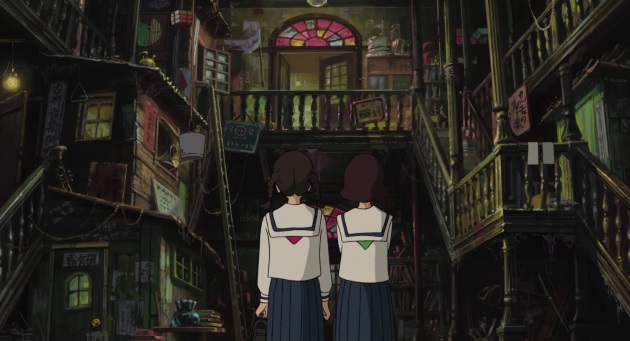
Opening a film in which the protagonist is seen getting out of bed and going about their morning routine is one of the most cliché ways of beginning a story (i.e, every student film ever), but From Up On Poppy Hill is so utterly likeable that I don’t care. Set in Japan’s port city of Yokohama circa 1963, the romantic, seaside setting really amps the film’s likeability with the accompanying nostalgic soundtrack being a pure delight from the opening ragtime theme to the Nina Rota style compositions as well as the use of Kyu Sakamoto’s Ue o Muite Arukō (known in the US as Sukiyaki in which it charted at number 1 in 1963). With a script from Miyazaki Sr and directed by Miyazaki Jr, From Up On Poppy Hill is structured like a melodrama with its use of dramatic flashbacks and the common melodramatic trope of a maritime setting. At one point the picture even makes reference to its melodramatic state (“It’s like some cheap melodrama”).

Umi Matsuzaki is the eldest child in her family and has responsibility thrust upon her following her father’s death and her mother’s departure to study abroad resulting in her making everyone’s meals, keeping fiancés in check and raising maritime signal flags every morning. The selfless and humble nature of a character like this could easily come off as aggrandizing but rather the character of Umi does come off as somewhat inspirational with her ability to bring out the best in those around her, earning her the title of “Goddess of good luck”. Umi develops feelings for fellow student Shun Kazama, however, Shun ends up discovering as a result of post-war circumstances, that Umi is actually his sister (although this turns out not to be the case come the film’s end). The two are forced to continue as only friends although it’s evident they are trying to retrain their feelings for each other. This culminates in a scene by a bus stop in which Umi states “I’m in love with you Shun. Even if we’re related, even if you’re my brother, my feelings will never change” to which Shun responds “I feel the same about you”. There is historic precedence for this as From Up On Poppy Hill is set at the time following the war in which young couples in Japan couldn’t be too sure that they were not related in some way but it doesn’t change the fact that the scene is an absolutely jaw-dropping moment. The scene is played out to be romantic and perhaps the movie could have dealt with the subject matter in a different manner as opposed to upping the swoon factor over an incestuous relationship but I digress.

The other major plot point present in From Up On Poppy Hill regards the theme of traditionalism vs modernism as the students of the local high-school try to save their clubhouse known as The Latin Quarter which is set to be demolished and replaced with a new building ahead of the 1964 Tokyo Olympics. The Latin Quarter in its old state is a massive, creaky building with so much character contained within its walls in which every inch is in use – as a viewer I did become invested in its conservation. At a demolition meeting, Shun runs onto the stage like Elmer Gantry and declares “There’s no future for people who worship the future and forget the past”. Unintentionally prescient with this theme is that come the turn of the decade when From Up On Poppy Hill was released, the west had entirely done away with traditional animation on the big screen (bar a few pockets), whereas Japan has so far never let it go. Correspondingly, it is wholesome just how passionate these students are about learning (in particular the overly enthusiastic philosophy-loving giant) with The Latin Quarter having a club for just about every intellectual pursuit. Compare this to any American film set in a frat house where anarchy, mischief and mayhem are the name of the game. Alongside Umi and the responsibility thrust upon her, all these kids are more than ready for adulthood. I for one welcome our new oriental overlords.

Speaking of references to other pictures, in one of the film’s establishing shots, a single factory chimney is shown emitting Pink smoke whereas the others emit regular smoke. Anyone who has seen Akira Kurosawa’s High and Low will understand this possible reference, keeping in mind the Kurosawa picture is also set in Yokohama and was released in 1963 (so I can assume both these movies unofficially take place in the same universe). Likewise, when Umi sees her mother’s red slippers as an indication that she has returned home after months away, is this a nod to The Wizard Of Oz and its famous line “There’s no place like home”?

If there is one great standout supporting character in From Up On Poppy Hill has to be the high school’s chairman Chief Director Tokumaru, a total chad with his rough, gravely voice, larger-than-life figure, flawless posture and upbeat personality. He is not at all a typical, slimy bureaucrat and understands the kids on their level and is sympathetic to their cause. When the kids go to visit his office in Tokyo, he asks Umi in the past tense “what did your father do?”. There is no indication that he knew the kids beforehand and seems to instinctively know her father was dead. Having a figure like this in a position of power probably explains how the students were able to infiltrate the Ikiru level bureaucracy to save The Latin Quarter.  

Castle In The Sky [Laputa: Castle In The Sky/天空の城ラピュタ/Tenkū no Shiro Rapyuta] (1986)

Just The Two Of Us, Building Castles In The Sky

***This Review Contains Spoilers***

Castle In The Sky is one of those films upon a first-time viewing, it’s easily apparent how much of its fingerprints are over so much media that proceeded it in this Jules Vernesque, steampunk adventure. The heroes’ journey, chase movie follows youthful protagonists Pazu & Sheeta as they embark on the search for Laputa, a floating Tower of Babel of which the surface has the appearance of a deserted Hanging Gardens of Babylon. Little information is given about the history of Laputa, with the viewer given the task of filling in the blanks.

Castle In The Sky is littered with moments of pure wonderment and melancholy from scenes such as a cave being turned into a makeshift planetarium with the use of the element volucite (a fictional element sadly) to the sense of awe upon the arrival to Laputa itself. There is something about the blue skies in Studio Ghibli’s films which is endlessly beautiful to look at while the lighting present in the animation provides much visual stimulus (although I would just say the contrast with Sheeta’s pirate outfit between light and dark is too drastic). The physicality and sense of space the animators are able to convey as well as the suspense created in the film’s action sequences through the medium really is a remarkable feat. Correspondingly, a Ghibli film ain’t a Ghibli film without a rich and melodious score, especially courtesy of Joe Hisaishi. The main theme of the picture itself balances a line between its dark, mischievous yet optimistic tone. Some of my favourite highlights include Morning In Slag Ravine which is the ideal accompaniment to any morning sunrise to that piece which plays as Sheeta slowly Ancient Aliens herself from the sky is one catchy ditty. Likewise, the Celtic-sounding Memories of Gondoa conjures visions of the rural landscape of the British Isles and appropriately is used as Sheeta tends to cattle resembling that of the Scottish highlands. 

Pazu resides and works in a fantasy version of a Welsh mining town and I do have to ask was John Ford’s How Green Was My Valley used as a visual pretext for the film? Hayao Miyazki visited a Welsh mining town a year prior to the film’s release and in he appears to pay tribute to them in the film when Pazu utters the line, “Miners aren’t exactly wimps”. Ah Pazu & Sheeta, one true pairing if there ever was one. It is remarkable how attached one becomes towards this duo and their shared chemistry which is able to be portrayed through the medium of animation (take a sip every time Pazu screams “Sheeeeeta!”). No full-on romance ever develops between the two nor do they ever kiss but small displays of affection are present in this young love. In the sweetest scene in the film, Pazu & Sheeta are atop the pirate’s airship at night as Pazu gives reassurances to Sheeta that all will be fine, all while the pirate captain Dola unintentionally hears their endearingly innocent conversation.

As is recurring in Miyazaki’s films, Castle In The Sky showcases the innocence of youth and having minors overcome obstacles which force them into maturity. Like In Kiki’s Delivery Service, the young protagonists are thrust into positions of adult reasonability. Pazu lives by himself and works a full-time job (literally a minor-miner) while Sheeta is left to run her parent’s estate after their passing and it’s later revealed she has the responsibility of being part of the Laputa royal family. Furthermore, during the sequence as the military base is going up in flames, the absolute trauma in the face and voice of Sheeta is intense (although the duo later show no fear walking and even celebrating on platforms with drops in which they could fall to their deaths). I do believe the medium of anime is the best at portraying this sense of innocence and vulnerability due to the hallmarks of anime character design with those big wide eyes, the almond face shapes and the head-to-body ratio. This is where the English dub by Disney really falls short, James Van Der Beek and Anna Paquin sound far too mature for Pazu & Sheeta. Not only do their voices not match their clearly pre-pubescent appearance, but it also takes always from their characters and doesn’t replace it with an alternative that has any merit on its own (as was the case with Jiji in the Disney dub of Kiki’s Delivery Service). This is a shame as Mark Hamill and Cloris Leachman are fantastic in their respective roles but the casting of the children makes this dub hard listening.

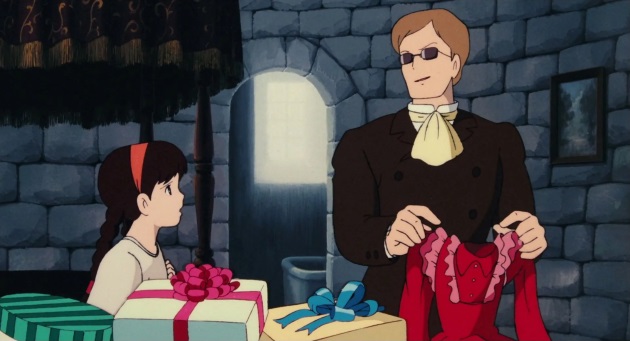
Castle In The Sky is a rare instance of Studio Ghibli film with an outright villain in the form of “that pencil pushing upstart” Colonel Muska. The man is one dapper gentleman but I never can brush off the creepy, groomer vibes when he tries to bribe Sheeta with fancy clothes. The other major foe in Castle In The Sky is none other than the government of this fictional land, and what better way to portray an overbearing, authoritarian government than by turning them into ze Germans of course, you vill eat ze boogs and vill like it! Furthermore, the appearance of firearms and ammunition in children’s animation is a shock to the western viewer rather than a fantasy Star Wars-style blaster. Once adjusted to this reality it is far more preferable rather than having them digitally altered into walkie-talkies. Then there are the bay guys turned good mid-film with the Marty Feldman look-a-like Dola and her band of pirates. The film doesn’t make it clear if Dola is the biological mother of her crew or mother in spirit but either way, their dynamic is like a more endearing version of Mom and her three sons from Futurama. Dola herself is really made an interesting character by her belief in traditional gender roles despite being a model of non-conformity herself. Despite wearing the pants, she insists Sheeta be ladylike and holds concern for Pazu’s lack of masculinity following his initial surrender when trying to rescue Sheeta.

I’ve read accounts that Castle In The Sky aired on UK television channel ITV 1 on Christmas Day 1989, with other accounts stating various surrounding dates including Christmas Day and New Year’s Eve of 1988. Either way, it’s remarkable that Castle In The Sky was able to make it to the west so quickly back then and odd by the way of a one-off TV airing. I’ve tried to find recordings or promotion material for this broadcast but have come up empty-handed – hopefully, someone can close a chapter on this lost media mystery.

The Silent Duel [The Quiet Duel/静かなる決闘/Shizukanaru kettô] (1949)

Anyway, How Is Your Sex Life?

***This Review Contains Spoilers***

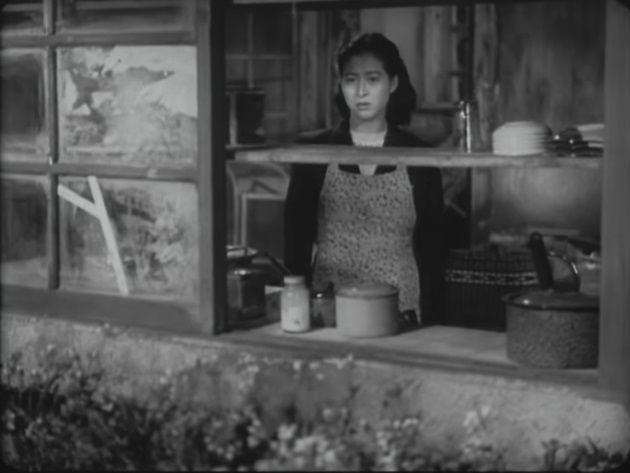
For unknown reasons, The Silent Duel (with other sources calling it The Quiet Duel) is the one Akira Kurosawa movie which has been neglected. This unsung medical melodrama has no high-quality re-master, no Criterion Collection release whilst my own hard-to-find UK DVD itself comes with some very unattractive packaging and although perfectly watchable, the frame rate is overly smooth in places (unless you’re reading this at a future date in which in a 4K release packed with bonus features exists).

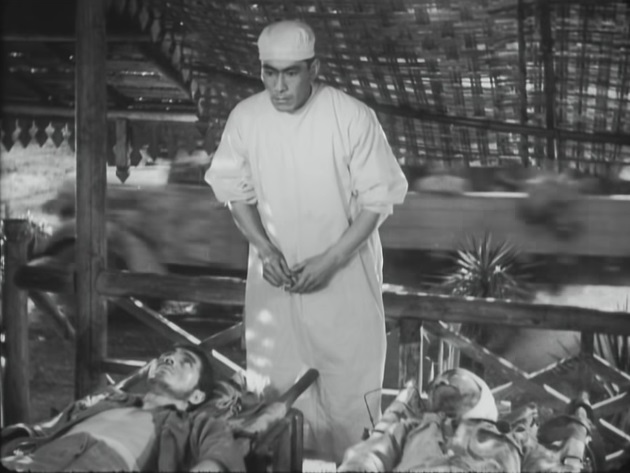
The opening wartime sequence of The Silent Duel is a superb showcase of atmospheric filmmaking from a real master of cinema. Kurosawa employs his trademark use of the elements within a makeshift medical centre as the sight and sound of rain beats down alongside an irritating drip of water and the flickering of lights distracts a surgeon and his aides while their faces are dripping with sweat (not-to-mention doctors who are smoking on the job). Right off the bat, The Silent Duel is a film with many a shot of superb composition with the moment which impressed me the most in this opening prologue is the dramatic tension created by a truck driving past in the background just at the moment when Dr. Kyoji Fujisaki (Toshiro Mifune) discovers he has contracted syphilis. Dr. Fujisaki’s transaction of syphilis is through no fault of his own, rather he received it through the blood of a patient he was operating on, although due to the stigma he chooses to tell no one he has sexually transmitted disease and secretly begins injecting himself with salvarsan as a treatment.

Following the opening wartime prologue, the majority of The Silent Duel takes place in a run-down hospital in an unnamed, bombed-out city circa 1946. Like Kurosawa’s Drunken Angel from the previous year, the story and the setting may be interpreted in a metaphoric sense that reflects the state of Japan following the war. The main driver of conflict in The Silent Duel is that of Dr. Fujisaki refusing to tell his fiancée Misao Matsumoto (Miki Sanjo) about his condition and calling of their marriage with his justification being that he knows she will spend the best years of her young life waiting for him to recover. However, is this act as noble as it first appears or is it one of pure selfishness to make him feel better about himself in this thought-provoking conundrum? His absence of trust in Misao causes her extraordinary pain and robs her of the ability to make her own decision about the matter. The scene in which Misao comes to visit Fujisaki one more time before going to marry another man is utterly heartbreaking. The two can barely look at each other in the face and it’s clearly evident she still so desperately loves him and wants to play the role of his housewife as they take one last cup of tea in the hospital kitchen in which she used to assist in. I feel like I want to shout at the screen, “just tell her the truth, you absolute cretin!”.

Notwithstanding, the big show-stealer of The Silent Duel is Noriko Sengoku as the probationary nurse Rui Minegishi. The downtrodden, scruffy, snarky, cynical character was rescued by Dr. Fujisaki and given a job after she tried to take her own life upon becoming pregnant. The character goes through a remarkable arc of maturity as she gives birth to her baby, studies to become a nurse, metamorphoses a more presentable appearance and acts as a wonderful counterpoint to the long-suffering doctor. There is even a hint at a relationship blossoming between the two after she outright tells him that she loves him although this is never drawn upon again. The Silent Duel is based on the play The Abortion Doctor by Kazuo Kikuta. I’ve been informed an abortion does actually occur in the play whereas none takes place in the film. Dr. Fujisaki criticizes Miss Minegishi for wanting an abortion and even goes as far as calling her a monster. Whether or not The Silent Duel could be classified as a pro-life film, it does take a celebratory tone when it comes to childbirth.

If I were to complain about one aspect of The Silent Duel, it would be the film’s score. The majority of the film features no music and thus alongside its subject matter, it has that same feeling present in American pre-code films (which feature little-to-no music scores) of which I particularly enjoy. When music is used it is over-the-top and interferes with the drama rather than contributing to it. In one extremely odd use of music during the scene in which Fujisaki’s father (the only instance Takashi Shimura played Mifune’s father in their many film pairings) reacts to finding out his son has syphilis, I am not joking, I thought there was an ice cream van driving through my street. The Silent Duel is the only Kurosawa film scored by Akira Ifukube (who would go on to compose for the Godzilla franchise), and I can only speculate if Kurosawa wasn’t pleased with the music.

The Silent Duel could be viewed as a public information film on how syphilis ruins lives. Towards the film’s end, Dr. Fujisaki has a powerful, emotional breakdown in front of Miss Minegishi, as he lets it all bare regarding his restrained sexual desires brought about by his syphilis (“But one day because of the blood of a shameless guy, my body became dirty without knowing any pleasure”). The Silent Duel is the only Kurosawa film to deal to really deals with themes of a sexual nature, from a filmography which is otherwise very much asexual. Man gets an STD without getting laid, perhaps that’s the greatest tragedy of all present in The Silent Duel.

A Geisha [祇園囃子/Gion bayashi] (1953)

Memoirs Of A Geisha

***This Review Contains Spoilers***

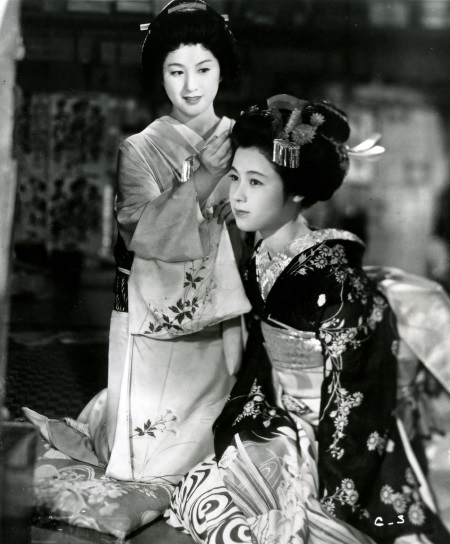
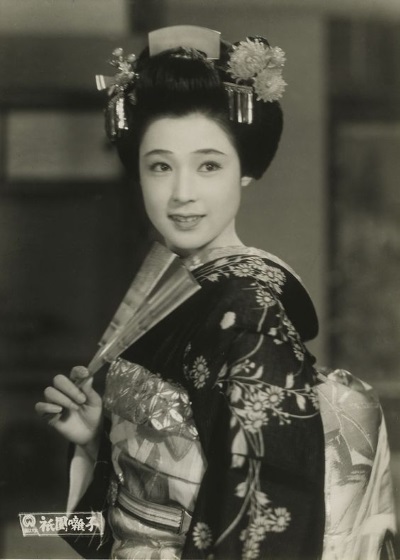
The world of the geisha is one of lies, a world in which they are selling a fantasy. As Miyoharu (Michiyo Kogure) states in the film’s opening, “A geisha’s lie is not a real lie. It’s a cornerstone of our profession” – this foreshadows what is to come in Kenji Mizoguchi’s Gion Bayashi (aka A Geisha or literally translated to Gion Music Festival) – the definitive treatment on geisha life in early post-war Japan and one of the most insightful cinematic representations of Japan’s iconic female performers (although I would call the 1962 American film My Geisha my favourite film on the profession, albeit a more comical and light-hearted take). A Geisha is an economic film at only 85 minutes long and entirely set within the confines of the Gion (only leaving for one scene set in a Tokyo apartment). The film is full of Mizoguchi’s favoured use of long, uncut takes and even channels of his inner Ozu with a number of shots reminiscent of that other great Japanese filmmaker. However, no geisha in the film are seen wearing the iconic white face makeup but we do see the makeup applied to the shoulders and neck. Is this absence of face makeup due to the black & white cinematography? Although considering the colourful nature of the geisha’s kimonos, that alone could be reason alone for A Geisha to be one film which could have benefited from colour cinematography.

Considered a loose remake of Mizoguchi’s earlier film Sisters Of The Gion, both chronicle a pair of geishas living under the same roof and encountering difficult personal circumstances. In both films, the pair share a sister relationship (with the pair in the earlier film being actual blood sisters) in which the older geisha is more traditional and the younger less so, of whom ends up rebelling against the system. Otherwise, the stories of both films go their own way, with the two women in A Geisha struggling to refuse the sexual advances of men in order to survive. This raises the question – are geisha prostitutes or have they ever been? The official answer is no. However when researching how often in the past have geisha engaged in sexual acts and have there ever been periods in which they were expected to, albeit, via unwritten rules as seen in A Geisha, I can’t find a clear answer. In one of the pivotal scenes in A Geisha, Eiko, the young trainee geisha (or maiko) is being informed about the rights granted to her under MacArthur’s constitution by the mother of the geisha house, Okimi (Chieko Naniwa). Eiko asks whether it is an infringement on her rights for a client to force himself upon her of which Okimi tries to sidestep the question and eventfully gives the reluctant answer of “in principle, yes”. The answer however is clearly the opposite and this culture of corruption is enabled by the mother of the house in which these women have to engage on the geisha casting couch in order to get ahead. Is A Geisha an accurate depiction of the profession in the early 1950s and thus did it have any impact? A Geisha can also be considered part of a late-career trilogy of the films by Mizoguchi focusing on prostitution including Woman In The Rumor and Street Of Shame.

Eiko is a post-war child, she is a Frank Serpico-like figure, determined to follow a righteous path. Eiko lives under the same roof as the older and less rebellious geisha Miyoharu (Michiyo Kogure), of whom the generational gap between the two is apparent while Eiko’s hardness serves as a counterpoint to the more delicate nature of Miyoharu. The terribly underrated Michiyo Kogure radiates elegance and has such a gentle nature to her as well as the ability to express vulnerability in her body language as the older of the two geisha (Kogure is sadly all but forgotten now with only a handful of her films being available in the west). Miyoharu and Eiko are the only two figures of dignity and virtue in a film full of morally defunct individuals including men who aren’t afraid to assault women, an uncle who demands Eiko sleep with him, Eiko’s deadbeat father and the aforementioned mother of the geisha house. Furthermore, the relationship between the two women is one of the film’s most fascinating aspects. There is much affection between the duo to the point in which Miyoharu becomes a mother figure to Eiko as she comes to symbolise Miyoharu’s own lost youth and innocence, about which she becomes increasingly protective. This is reflected in her clear apprehension and agitation at the prospect of Eiko actually sleeping with a client and although ambiguous, there are suggestions that Miyoharu is attracted to Eiko. Miyoharu is shown to have an aversion toward physical contact with any of the men in the film nor does she have a patron despite being a geisha for a number of years. In the final scene, it’s evident that Miyoharu’s feelings towards Eiko go beyond maternal feelings and she even offers to become Eiko’s patron, of which it is declared earlier in the film that a geisha’s patron is also her lover. In the end, it’s a matter of interpretation whether the relationship was homosexual or a platonic love.

The most pivotal scene in A Geisha is that set in a Tokyo apartment, in which Eiko resists the advances of the man Kusuda (Seizaburo Kawazu) who attempts to rape her as she badly injures him in her resistance. The incident not only results in the two geisha becoming ostracized and unable to find work, they unwittingly become pawns regarding a deal worth 80 million yen between a business and the government. The only way for their career’s to be restored and have pre-existing debts paid off is for Miyoharu to sleep with a man (Kanji Koshiba) who has been offering to be her patron. Watching a woman getting prepared for a sexual act she is uncomfortable taking part in is not pleasant viewing, especially when the man himself unnervingly tells Miyoharu, “you just have to close your eyes. In exchange, I promise to guarantee your future”. From the film’s opening shot of Eiko navigating the maze of streets to find Miyoharu’s house, the Gion itself can be viewed as a metaphor for these women have no exit through this labyrinth – the film paints a picture of a life which feels like it isn’t far from indentured servitude. The young geisha trainees are told that they represent the beauty of Japan to foreigners and that they are “living works of art“, but as Miyoharu states in the beginning – “A geisha’s lie is not a real lie. It’s a cornerstone of our profession”.

Kiki’s Delivery Service [魔女の宅急便/Majo no Takkyūbin] (1989)

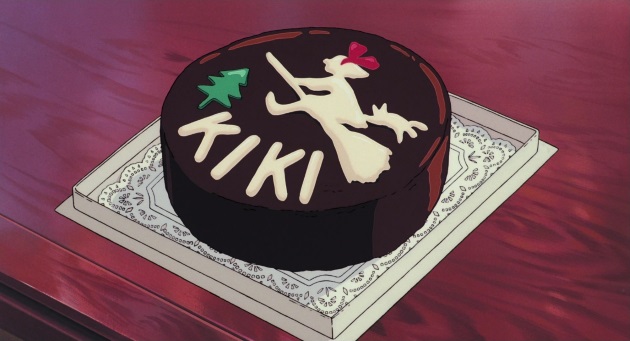
Someone Left The Cake Out In The Rain

***This Review Contains Spoilers***

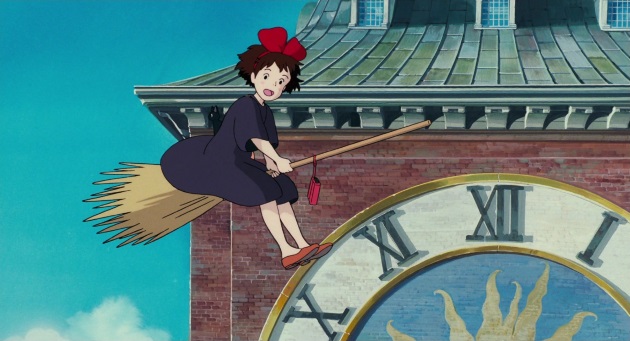
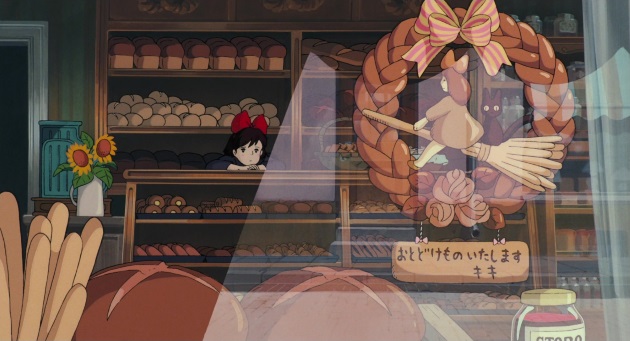
For a country which reportedly has one of the world’s highest stress rates (and perhaps as a result), Japan has produced some of the screen’s most tranquil and relaxing viewing experiences, whether it’s the works of Yasujirō Ozu or Studio Ghibli. Kiki’s Delivery Service tells the story of a trainee witch travelling to a city and using her flying skills to start her own delivery service. Set in the fictional city of Koriko (or Corico as some sources spell it), an urban dwelling inspired by Stockholm and the small Swedish town of Visby which is given no real-world area however the geographical layout of the city within the film feels incredibly well defined (bring on the Kiki’s Delivery Service open-world video game). Director Hayao Miyazaki is quoted as having said “Kokiro has one side on the shores of the Mediterranean, and the other on the Baltic Sea [laughs]”. Correspondingly, Miyazaki states Kiki’s Delivery Service takes place in an alternative 1950s Europe in which both world wars never happened and this rejection of modernity is a constant theme throughout Studio Ghibli’s output. It’s easy to lose yourself in the world within Kiki’s Delivery Service with its classical European architecture, cobblestone streets and houses equipped with traditional ovens. During the film’s opening, Kiki wants to leave her tiny village in the countryside for the city, yet to the viewer, this place is heaven on Earth with its green fields, bright blue skies and cosy cottages. The accompanying music score by Joe Hisaishi features many moments of joyful bliss with a mix of classical European, vaudevillian and ragtime music. On A Clear Day radiates that feeling of a sunny day while the piece which plays as Kiki arrives in her newfound hometown titled A Town With An Ocean View is dark yet optimistic. My favourite piece is that played over the unveiling of painting featuring Kiki titled An Unusual Paining in which the dreamlike, new-age mystic piece leaves one with a sense of wonder.

Kiki’s Delivery Service is one of the best films about entrepreneurialism and the entrepreneurial spirit. The world of Kiki’s Delivery Service appears to be a libertarian paradise, a world which appears to be devoid of any business regulation (“Oi mate, you got a loicense to deliver that cake?”) in which children are driving cars, flying permits are not required for amateur aircraft, a minor can own a business, there is no mention of child labour laws nor any mention of Kiki continuing or ever having attended a school and a place in which you can invent flying machines without any apparent regulations – what Ayn Rand would describe as “full, pure, uncontrolled laissez-faire capitalism”. This lack of regulation or government oversight extends to the fact that Kiki leaves her home to be independent while still a minor at the age of 13. Her mother does mention “nobody leaves home that young anymore”, but aside from this, no concern is raised for a 13-year-old going off to live by herself nor any form of social services is present to get involved. Is this form of libertarianism and capitalism presented here ultimately a fantasy that would not work in real life with the presence of predatory big business (or am I over-analyzing a film for subtext that’s not there)? Miyazaki once stated about capitalism: “During the time I was trying to conclude Nausicaä , I did what some might think is a turnabout. I totally forsook Marxism. I decided it was wrong, that historical materialism is also wrong, and that I shouldn’t see things with it.” Only a few years following the release of Nausicaä of the Valley of the Wind, Miyazaki would craft fictional benevolent capitalists like the ever so loving and joyful Osono, the owner of the bakery Gütiokipänjä and a compassionate, benevolent landlady who showcases the human side of business (likewise, there’s something comic about the mere presence of Osono’s unnamed husband, the tall, buff, stoic figure who utters little more than a grunt). Kiki’s Delivery Service is a film which conveys the value of money as Kiki has to carefully budget what money she has after arriving in town, forcing herself to live off pancakes and work for her money while other kids her age spend their time procrastinating and driving cars. It’s moments like her visit to the grocery store and her sticker shock over the price of items which really makes the film so down to Earth.

The overall sweet, wholesome nature of Kiki’s Delivery Service makes my inner valley girl wants to proclaim, “like omg, cutest movie ever!!”. Everything about the titular heroine is unbearably cute from her facial expressions to her over the top reactions to even the slightest bit of good news and her occasional hyperactive nature. Kiki is seen as modern by the standards of her village yet old fashioned by the standards of the city. She struggles to fit in with the city’s children yet is able to engage with two elderly ladies thanks in part to her knowledge of how devices such as how a wood-burning oven works. Kiki is repulsed by how rude the children in the city act from the overly-inquisitive girl hunter Tombo to the ungrateful girl who receives the herring pie from her grandmother. This theme of maturity extends to the relationship Kiki shares with her cat Jiji. After she loses her powers which include the ability to speak to Jiji, it remains the one power she does not regain at the film’s conclusion. I do find it somewhat heartbreaking that Kiki never regains this ability but then again, speaking to a cat as if they’re human is in itself a rather childish thing to do and thus a sign of Kiki’s newfound maturity as she gets older. It does raise the question if Jiji could actually speak to Kiki in the first place or was it just in her mind? Yet in the English dub, Kiki restores her ability to speak to Jiji at the end, regardless Phil Hartman’s sarcastic Jiji makes the English dub worth watching.

So by all accounts, Kiki’s Delivery Service sounds like the most based, conservative, red-pilled, right-wing movie ever made espousing the values of tradition, power of the individual and the pick yourself up from the bootstraps mentality? Well not quite. Kiki is after all practising pagan witchcraft rather than being a good God-fearing Christian. Although in all seriousness, God is actually mentioned in both the dubbed version and the English subtitles of the original Japanese version in which Ursula states – “The spirit of witches. The spirit of artists. The Spirit of bakers! I suppose it must be a power given by God. Sometimes you suffer for it”. Although this is not the line in the original script and is a creation of the English subtitles the film still contains the ever slight reference to religion with Kiki flying past a Christian church in the opening credits. It’s not difficult to buy into the fantasy premise in which witches with supernatural abilities openly co-exist in society, and can even marry non-witches such as Kiki’s father (are her powers genetically passed down from her mother?). However these are not witches in the traditional sense, there are no devils, pentagrams or virgin sacrifices present in the film (Kiki’s mother is introduced creating a potion using modern science equipment). There does appear to be one dark side presented about these witches in which Jiji remarks “Crows used to be witches’ servants” to which Kiki angrily responds “That was a long time go, okay?” – make of that what you will. Also, while it is odd to bring up, I am forced to mention as it does come off as peculiar for the western viewer is the inclusion of many up-skirt shots throughout the film. It’s not sexual but no doubt will cause some monocles to fall into champagne glasses. That said, Miyazaki actually has a reasoning for this. On page 138 in The Art Of Kiki’s Delivery Service, he is quoted saying “It’s a rite of passage for her to fly over the city with her underwear exposed” – make of that what you will.

Despite lacking a villain within the story, Kiki’s Delivery Service does manage to set up a finale with an action set piece and one which utilizes Miyazaki’s love of aviation. Likewise, I do enjoy how Studio Ghibli’s films make the end credits a part of the movie-watching experience, something I wish more films would do general (Kiki’s continued use of a bassline broom after the destruction of her traditional witches’ broom is a nice touch). The aforementioned subplot of Kiki losing her powers immediately reminded me of the similar subplots in Superman II and Spider-Man 2. In all three films, the loss of powers comes from stress, burnout, the descent into depression and the inability to lead a normal life (granted Superman choose to give his powers up voluntarily but the comparison still holds). Kiki’s Delivery Service can be read as an allegory for modern young creatives trying to make it on their own with Kiki’s magic being used as a metaphor for artistic expression whether it’s attempting to become a YouTuber or trying to run a successful movie review blog (wink, wink) and attempting to accompany this into a work-life balance. The other character who reflects the passion for a creative to turn their passion into a job is the painter Ursula. She speaks of how her pursuit of painting is what gets rid of her frustrations and her remedy for the loss of creativity involves “Take[ing] long walks, look at the scenery, doze off at noon. Don’t do a single thing” – and yes, on a personal level this I can relate to. Kiki’s Delivery Service is as fine a tribute to the creative and entrepreneurial spirit and regardless of your passion, “Sometimes you suffer for it”.

Ocean Waves [I Can Hear The Sea/海がきこえる/Umi ga Kikoeru] (1993)

Youth Is Wasted On The Young

***This Review Contains Spoilers***

Ocean Waves is a real unsung gem of the Studio Ghibli library, with this made-for-TV film running at a very digestible and economical length of 72 minutes. Ocean Waves tells the story of Taku Morisaki (Nobuo Tobita), a high school student in a provincial town in the Kochi prefecture whose world is turned upside by a transfer student from Tokyo named Rikako Muto (Yōko Sakamoto). I’ve read many comments and reviews that express a strong dislike for this character usually reserved for the likes of Scarlet O’Hara and it’s not hard to see why – she is spoiled, manipulative, selfish and rude. The city girl thinks herself superior to the provincial folk in the town she has been incarcerated in and even says at one point she hates the area and guys who speak with a Kochi dialect. Rikako gives no acknowledgement for all the trouble she puts Taku through from lending her money, finding himself escorting her to Tokyo at the last minute and being forced to sleep in a hotel bathtub (some men will have the patience of a saint when it comes to a pretty girl). The will they/won’t they story becomes increasingly unlikely as the relationship between the two deteriorates so bad that they end up slapping each other in public, while in another incident soon afterwards Rikako gives Taku another powerful slap for no good reason in an excellent piece of animation as the beautiful young woman suddenly appears so unattractive. Yet as a viewer I can feel sorry for her as her parents are divorced and she has been forced to move with her mother (of whom she resents) to another town against her will (and being on her period as she declares doesn’t help matters). Although I can understand for other viewers she remains unredeemable.

Ocean Waves is also a love triangle story with Taku’s best friend Matsuno Yutaka (Toshihiko Seki) also being in the pursuit of Rikako. The film hints there may be a homosexual attraction between Taku and Matsuno. In the scene in which the two meet for the first time, Taku narrates “Since then, in my mind, Matsuno was different from the others” – a possible dog whistle that the two are friends of Dorothy not to mention the scene is very romantic in nature but it’s ultimately left ambiguous. Regardless their bromance serves as another great relationship dynamic. This slice of life anime is full of those relatable high-school moments which make you go “oh yeah, I remember going through a moment like that”.

The animation present in Ocean Waves is not to the quality of Ghibli’s theatrical films, but for a TV production, it still looks great despite a few technical issues. Several background characters appear as mannequins with no face but more significantly, the film does have some framing issues. I am unable to discover if Ocean Waves was created in the 4:3 or 16:9 aspect ratio. Being a made-for-TV production from the early 90’s I would imagine it was created in the former but I can only find copies presenting it in 16:9 of which the vast majority of the film looks perfectly fine however a number of shots do appear as if a 4:3 product has been zoomed in to fill a 16:9 screen with character’s heads being unnaturally cut off. Likewise, the film does contain some dodgy edits and several scenes have white borders running around the screen of which I fail to see their purpose. That said, such technical quirks are made up for the fact that Ocean Waves is a visually beautiful piece of work featuring many a lovely Ozu style pillow shot. Animation of real-life (for lack of a better term) is something rarely seen in the west (King Of The Hill being the most well-known example and yes, my favourite anime), a shame as it provides an opportunity to create a beautiful Technicolor-like look. Concurrently, the music score by Shigeru Nagata is an underrated work of melancholic wonder. With a main theme that is somewhat reminiscent of Dave Grusin’s score for On Golden Pond, the serene, nostalgic score is the kind that makes you want to reminiscence on days gone by (where music is absent the ever atmospheric sound of cicadas fills in).

At its heart, Ocean Waves is about the complexity of human relationships and the growing pains they endure. During their high school tenure, Taku and Matsuno violently fall out over Rikako but reunite post-graduation, showing how grievance during one’s school years becomes irrelevant later in life. During the reunion party, the characters speak of how everything seemed like a big deal in high school, but post-graduation they have come to realise they were getting upset over matters which were ultimately insignificant in the years to come.  They even speak of affection for Rikako who didn’t attend the reunion, despite how snobbish and stuck up she was. Taku even looks up at a castle in the night and remembers all the times Rikako complained and ranted to him with a smile on his face accompanied by the film’s beautiful score. Ocean Waves concludes with one of Cinema’s most enduring love story tropes, as the unlikely couple find themselves reunited by chance at a train station – an ending that encapsulates pure cathartic, romantic joy.

Late Spring [晩春/Banshun] (1949)

Sometimes It Snows In April

***This Review Contains Spoilers***

For some directors, it can take time before they hit their full stride. Alfred Hitchcock had been directing movies for 25 years prior to directing his most iconic works in the 1950s and ’60s. Correspondingly, Japanese filmmaker, Yasujirō Ozu had been directing for 22 years before he made Late Spring, in my opinion, his magnum opus (although I know others will argue in favour of Tokyo Story) and the beginning of his golden age in which he created a profound series of films about Japanese middle-class domesticity (whereas his work pre-1949 tended to focus more towards poverty-stricken families).

Late Spring is also the first entry of The Noriko Trilogy (alongside Early Summer and Tokyo Story), with all three films starring Setsuko Hara, often named The Eternal Virgin in her country of origin, and it’s not hard to see why. I would defy anyone to watch Late Spring and not fall in love with this capital G Goddess of feminine virtue – with her angelic, shy demeanour emanating a slightly bent over posture alongside a smile that could kill. Late Spring showcases her as an actress of amazing depth and able to convey such deep emotional range in the role of Noriko Somiya. There is somewhat of a contradictory nature to the character of Noriko when it comes to her conservative views. Noriko finds her uncle’s remarrying to be “distasteful” and “impure” and not afraid to say it to his face (albeit in a kindly manner) and can’t bear the idea of her widowed father doing the same thing. Hara is able to portray a character of such saintly purity (it’s even mentioned she does not drink) without it ever becoming sickenly so. Yet contradicting this is the reluctance she holds to get married herself. 

The relationship Noriko shares with her widowed father, Shukichi (Chishū Ryū) is both odd and endearing. She is unemployed and takes joy in looking after her old father, acting as a housewife minus any incestuous implications. Details presented in Late Spring are scant about the character’s histories, allowing the viewer to fill in the blanks. I can assume the young woman would be inclined to share this kind of a relationship with her father due to their time during the war. It is mentioned during the course of the film that Noriko endured forced labour during this period and “had to run around to get food on her day off”, and is required to receive regular blood tests as a result. Chishū Ryū on-the-other-hand feels like he was born an old man, made to look older than he was in all three films of The Noriko Trilogy, and convincingly so.

At the age of 27 and still single, Noriko is approaching the “late spring” of her shelf life, reaching the age she would no longer be considered marriageable, but is unwilling to part from the status-quo arrangement she has with her father. Like a number of Ozu films, the story of Late Spring centers around arranged marriage, although anathema to viewers in the west, it does not detract from the universality of his work. A scene that really hits home for me is that in which Noriko’s aunt Masa (Haruko Sugimura) has a talk with Noriko about marrying. We’ve all been there, when an elder tells us to stop what we are doing and sit down to have a serious chat in which we feel uncomfortable but deep down we know they are correct even if one, like Noriko, signifies their objections but later comes to an eventual acceptance. Noriko’s arranged partner, Mr Kumataro Satake (aka Bear Boy), remains an off screen character, with the only detail passed onto the viewer about his physical appearance is that he looks like Gary Cooper, especially around the mouth but not the top half – allowing the viewer to once again fill in the blanks. 

On a further personal note, I first watched Late Spring at the age of 28, only 1 year older than the character of Noriko, and despite this being a film about a young Japanese women’s pressure to get married in the years following the war, it still spoke to me on the basis that life is passing you by, that change is an inevitable part of life with the pain and heartache which comes with that must be endured. When Noriko speaks to her father at the end of a trip to Kyoto just before the wedding, she speaks of how “I just want to be with you, like this. I don’t want to go anywhere I’m happy being with you like this.” – Just ensure you have a box of Kleenex handy.

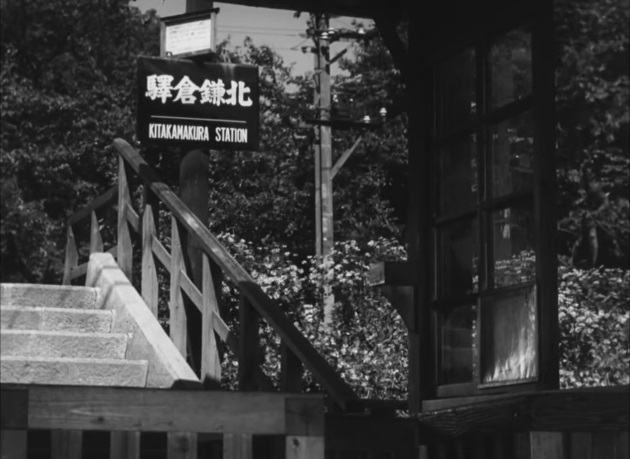
When watching any film of Ozu’s later period, the viewer will immediately be put into a great sense of ease with his trademark use of pillow shots (two or three quiet compositions usually showing an architectural detail, a banner in the wind, a tree or the sky) alongside the ever tranquil music scores. Unique however to the opening pillow shots of a railway station in Late Spring is the quaint, English feel to it, aided by the images of a gentle breeze in the leaves and the sound of birds chirping. If I was shown this opening out of context, I could swear it was neo-realist footage of a quiet, remote part of the English countryside. Likewise, the geometric nature of the interior of Japanese homes along with Ozu’s unique style of composition with use of the so called tatami shot is very pleasing to the eyes. This look into another culture extends to the film’s documentary-like aspects as we are treated to slices of everyday post-war Japanese life from kids playing baseball to the inclusion of a Noh play. The westernization present in Japanese films from this period can come off as a shock for first-time viewers of Japanese cinema such as the sight of Tokyo’s classical European architecture as seen in Late Spring.

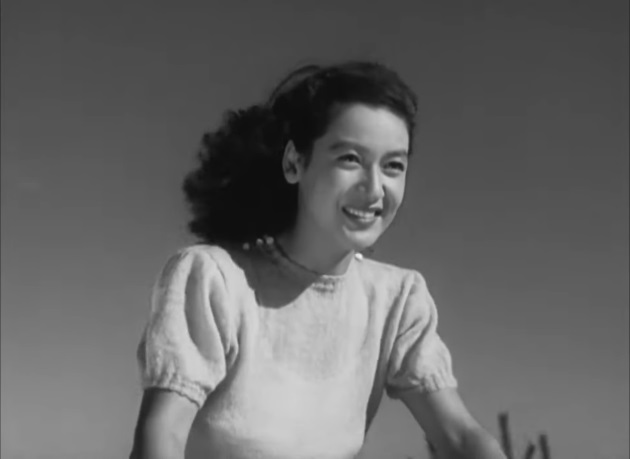
The scene in which Noriko and Hattori (Jun Usami) go for a recreational cycle by the seaside is the cinematic encapsulation for the joy of living. A scene bustling with freedom and a lust for life with the sight of a smiling Setsuko Hara with her hair blowing in the wind alongside the quirky, upbeat music which accompanies the scene should be in the pantheon of cinema’s most iconic moments. It also contains the unexpected but memorable inclusion of a Coca-Cola sign featured prominently in the foreground – one of the most memorable pieces of product placement I’ve seen in a film. This sign along with another road sign in English warning that the weight capacity of the bridge the duo are riding over is 30 tons (irrelevant information for the two cyclists but necessary for any military vehicles to pass over) could be interpreted as signs to the otherwise unseen US occupation. Concurrently, I believe it’s not unreasonable to assume that Aya’s (Yumeji Tsukioka) ex-husband of whom she speaks of throughout the course of the film is a US serviceman. Aya refers to him by the name “Ken”, which Shukichi assumes is short for “Kenkichi” however Aya never corrects him. The other significant clue is Aya’s difficulty in sitting in a traditional Japanese manner without her legs getting numb, suggesting she has become more used to the western manner of sitting.

The Wikipedia page for Late Spring is bizarrely long and extremely detailed, more famous films have less in-depth articles – the work of an eager fan perhaps? In my research, I have found Late Spring only received its first home video release in the United States in 1994 and the mass availability of the films from this master of cinema has only become reality within the last decade. Perhaps the discovery of Yasujirō Ozu‘s work in the west outside of film circles has only begun?

The Face Of Another [他人の顔/Tanin no Kao] (1966)

Look At Me, Drunken One Night Stand. I Mean She Is My Wife

***This Review Contains Spoilers***

The Face Of Another is an imperfect but intriguing viewing experience from the ever-fascinating face-swap genre. I would call The Face Of Another a unique film but the only thing preventing me from doing so is a similarly themed film (and one released the same year nonetheless) in the form of John Frankenheimer’s Seconds. Both films involve a man in a loveless marriage who goes behind his wife’s back to get both a new face and new identity with the two films being full of avant-garde and neo-realist imagery. Both films have major differences between them too but hold enough similarities to make the pair a great double-feature. The visuals present in The Face Of Another stick with the viewer long after watching, even right from the opening scene which features an x-ray of a skull delivering exposition, while the black & white, high contrast cinematography beautifully captures a documentary-like look at mid-1960’s urban Japan (even Japan wasn’t immune to those dodgy looking 60’s tower block apartments).

We only receive a vague description of how engineer Mr. Okuyama (Tatsuya Nakadai) came to have a disfigured face. It appears to have be an industrial accident as in his own words as he was acting carelessly when inspecting a new factory owned by the company he works for (“We should have used liquid air. But we ran out… we used liquid oxygen instead. I thought it was liquid air”). Mrs. Okuyama (Machiko Kyo) is the wife who has fallen out of love with her disfigured husband – it’s never stated but it’s obvious as she can’t bear to look at his face with the bandages removed. He is no longer the husband she once knew, he is now a skin suit of a husband. The Face Of Another explores how a transformed physical appearance might impact one’s inner personality. It’s not indicated much his disfigurement has changed Mr. Okuyama’s personality or was he always rather unpleasant, neurotic and borderline psycho? Just observe the manner he berates a secretary for not asking who he is when walking into the office. Furthermore, Mr. Okuyama lives in a westernized house with no traditional Japanese ground furniture and is littered with trendy 60’s decor yet there still remain a few traditional Japanese ornaments in the home – showing a modern couple who are caught between tradition and what is seen as modern and hip.

The Face Of Another contains a B-movie story presented within a sophisticated, art-house style. The film is in the mould of the Universal Monsters tradition with the plot’s similar themes to Frankenstein and Dr. Jekyll & Mr. Hyde. Correspondingly, when Mr. Okuyama wears his bandages and fedora he bears more than a striking resemblance to the Phantom of the Opera and Claude Raines’ The Invisible Man (Okuyama later comes to think his newfound face makes him invincible). Throughout the course of the picture, Okuyama visits Dr. Hira (Mikijiro Hira), who is able to offer Okuyama a face transplant in which the facial mask is from that of a donor (a concept which was science-fiction in 1966 but has become a reality today with French woman Isabelle Dinoire receiving the world’s first face transplant in 2005). Just how much of Dr. Hira’s technique creating a face mould which can be taken on and off another’s face still remains science-fiction is a question I am unable to answer. The Cronenbergian figure of Dr. Hira is a more down to Earth mad scientist (if that’s not an oxymoron). He has a slight, subtle twinge of madness to him, with the interactions shared between doctor and patient being my favourite part of the film. He is a medical doctor yet also a plastic surgeon at the same time complete with several nurse assistants within his dreamlike and surreal clinic, which itself is really something to behold. It is a blank space with no observable windows or doors in which the background changes upon every visit and is littered with transparent panels and prosthetic pieces hanging around like works of modern art. 

One of the film’s most interesting dialogue exchanges takes place between husband and wife as they have a discussion about the covering of one’s face. They speak of how during Japan’s Genji era it was considered virtuous to conceal one’s face as well this continuing to be the case for women in Islamic countries. There is an accidental modern relevance to this conversation as following the Covid-19 pandemic, the covering of one’s face in the west has become seen as a virtuous act in the eyes of some. Okuyama chooses to use his new appearance to seduce his own wife (unbeknownst to her that the man is her husband), and there is a preserve intrigue that comes from watching this play out. The seduction proves successful however afterwards she claims to have known it was him all along. Did she really know it was him? Would the presence of body markings have given it away?

The Face Of Another also contains a subplot unconnected to the main plot about a young woman whose face is beautiful on one side but disfigured on the other. She is shunned by others and has never been treated like a lady by men other than her older brother (her introductory scene even features an extra whom I swear to God looks like the Japanese half brother of one of The Beatles). Her brother is the only man who understands her pain and solitude and even kisses the disfigured part of her face, leading to an incestuous relationship between the two. Her story acts as a doppelganger to the main plot although I feel it is the weaker and less interesting aspect of the film. The Face Of Another does move at a slow pace and like any art-house film, said elements can test the viewer’s patience but ultimately the patient viewer is rewarded in the end.

During one scene with the disfigured girl, she is walking through a mental asylum housing Japanese war veterans, of which she volunteers her time, all while non-diegetic Hitler chants play in the background. Likewise, throughout the film, Mr. Okuyama and Dr. Hira visit a traditional Munich-style German bar complete with traditional German music. Is the film trying to make comment on Japanese war crimes and the country’s coalition with Nazi Germany? Along with the film hinting the disfigured girl may have received her scars from radiation poising from the bombing of Nagasaki, the spectre of World War II looms over The Face Of Another. Although the pink elephant in the room for anyone familiar with Japan’s involvement in World War II is the clear parallels between the film’s theme of medical experiments and the Japanese war crimes including the experimentation of humans at Unit 731.