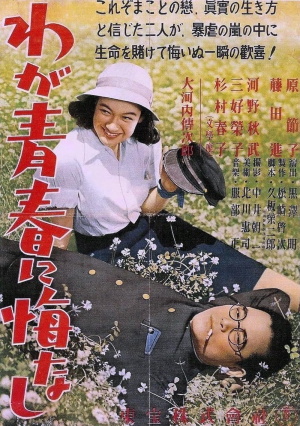
No Regrets For Our Youth [わが青春に悔なし/Waga Seishun ni Kuinashi] (1946)

Those Who Make Tomorrow

***This Review Contains Spoilers***

During the postwar occupation of Japan from 1945-1952, Japanese films had to be approved by the American occupying forces. This brings about the great paradox regarding No Regrets For Our Youth (わが青春に悔なし/ Waga Seishun ni Kuinashi). How did American authorities approve a film that commemorates a leftist? The film is a clear disavowal of the Japanese military state (authoritarian, fascist, however you may want to describe it) that existed before the Japanese surrender (“The War is Lost, But Freedom is Restored“) and is big in its theme of the glorification of the individual, views far more in line with the American ideology. I can only speculate that the American authorities were willing to overlook the former because of the latter.
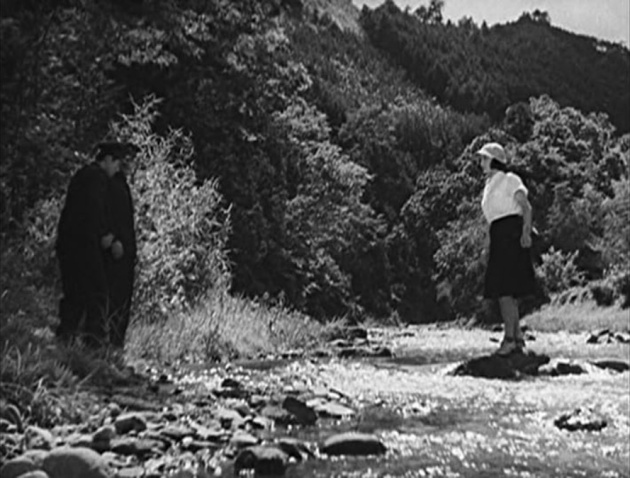
Despite its political backdrop (and even some of the overt imagery as seen in the third act), No Regrets For Our Youth has a much greater focus on being a deeply human story. Yukie Yagihara (Setsuko Hara), the daughter of a professor at Kyoto Imperial University, spends a sunny, peaceful day in 1933 with a group of the male alumni on the hills surrounding the city. As they are trying to cross a creek together, Yukie needs help at the end. The gawky and indecisive Itokawa (Akitake Kono) looks on without taking any action, while the confident Ryukichi Noge (Susumu Fujita) strides over to pick her up, much to the annoyance of the timid Itokawa, setting up the film’s love triangle. As they indulge in the whims of carefree youth, little do they know this is the calm before the storm, as gunshots suddenly rage from the university in protest against the suppression of academic freedom.
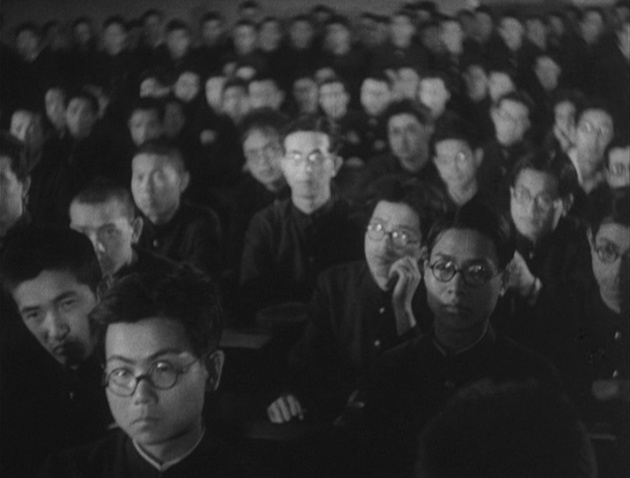
No Regrets For Our Youth is a film of modest means but largely succeeds in covering the 12-year period of time from 1933 to 1945. Even at this early stage in his career, director Akira Kurosawa’s work was displaying such dynamic use of the camera, especially during the aforementioned excursion to the hills (just how close is the camera to the river’s water in the film’s opening?). In his first post-war film, No Regrets For Our Youth is a massive leap for the director in comparison to his work during the war years (comparing No Regrets For Our Youth to The Most Beautiful from two years earlier is night & day in more ways than one). The film’s first act, however, is its weakest, relying quite heavily on some rather clunky montages to cover student protests at Kyoto Imperial University over academic freedom. Following this, however, the film quickly becomes deeply involving, thanks in no small part to an extraordinary performance by Setsuko Hara, in what is Kurosawa’s only film with a sole female protagonist.
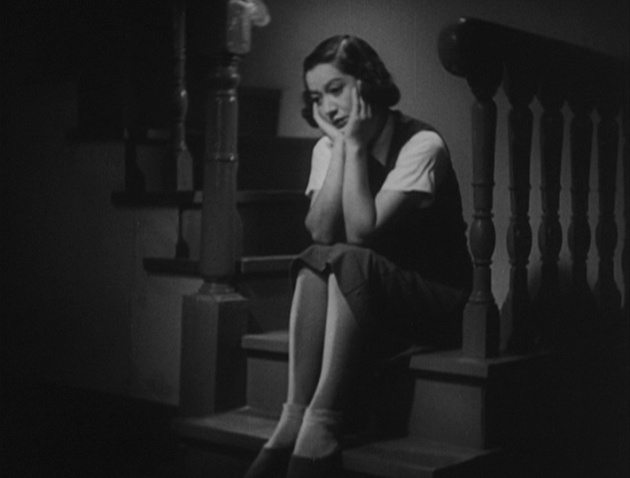
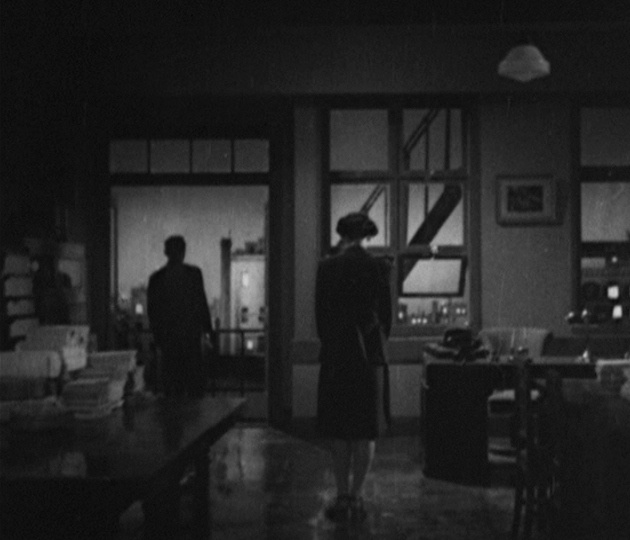
Hara’s performance in No Regrets For Our Youth showcases why she is one of the greatest actresses to ever grace the silver screen. She has the ability to express profound emotion through the simplest gestures and convey so much and so precisely without words. The strongest demonstration of this (and my favourite scene in the movie), is when Yukie and Noge meet again for the first time in years in his Tokyo office. The intensely claustrophobic scene runs seven minutes in length, as Yukie and Noge converse in the empty office building about the nostalgic days of old. With its westernised office setting and intense, drenched shadows, the scene is visually reminiscent of a Hollywood production, with Hara’s striking facial expressions being imprinted onto your psyche, creating a scene I was deeply moved by.
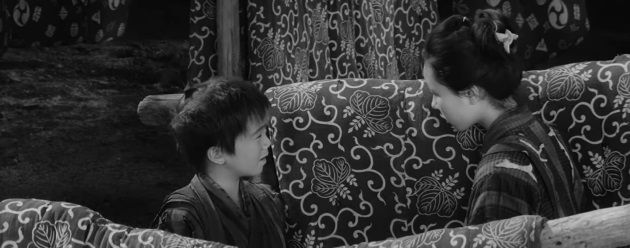
The journey which Yukie takes over the course of the film is what would now be referred to as “finding yourself” (but not in a ridiculous, cliché manner in which someone travels to an eastern land to meet a monk in a cave to gain otherworldly knowledge). This is established through the film’s love triangle between Yukie and polar opposites of the virgin Itokawa and the chad Noge. Yukie is drawn to Noge and his dangerous yet thrilling life as a social activist on the edge of society. On the other hand, she can choose the meek and mild-mannered Itokawa, a man of the system who goes with the flow. Life with him would be stable, safe, but ultimately boring. Noge is not afraid to tell Yukie off and reprimand her for her political illiteracy (“He’s just telling the truth, something you are incapable of doing”) following her professor father (Denjirō Ōkōchi) losing his position due to his opposition to the Japanese invasion of Manchuria. Following this (and to further hammer the difference between these two men), out of frustration with Noge’s comments, Yukie asks Itokawa to kneel down, to which he obliges, only to then tell him to stop and asks, “What are you doing!?”.
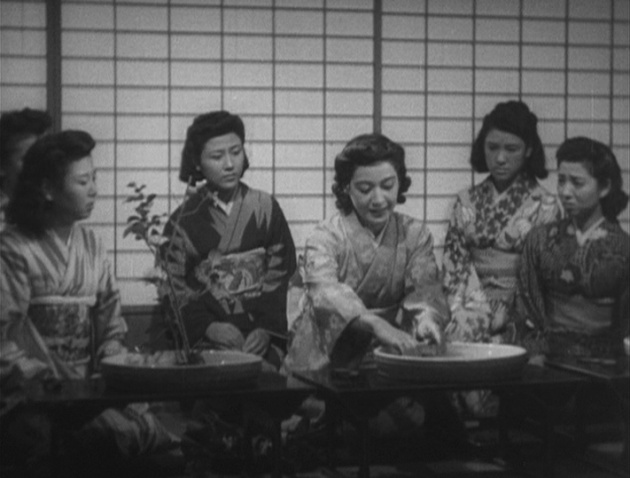
There are indications throughout the early portion of the story that only does Yukie desire a life of excitement but that she also doesn’t fit in with conventional society. In the aforementioned opening scene on the hills surrounding the university, Yukie actually becomes excited by the sounds of the gunshots (“It’s so clear and rhythmic. It makes my heart race!”. Likewise, her mother mentions that in elementary school, she only drew things like aeroplanes and locomotives, suggesting her non-conformist streak outside of traditionally expected roles. Later, to her mother’s approval, Yukie takes up flower arranging; however, she feels that none of her arrangements truly represent how she feels. In one class, frustrated, she disassembles her work and proceeds to throw three petals into a bowl, representing herself, Noge and Itokawa. Additionally, a very strange moment worth mentioning is the editing when Yukie enters a room to get away from her mother while in a state of despair; she stands by the door as 5 different fade-in shots occur over the same frame. Initially, I presumed this was to convey the passing of time, but then the mother is still there on the other side, as if she has been standing there for a comically long period of time.
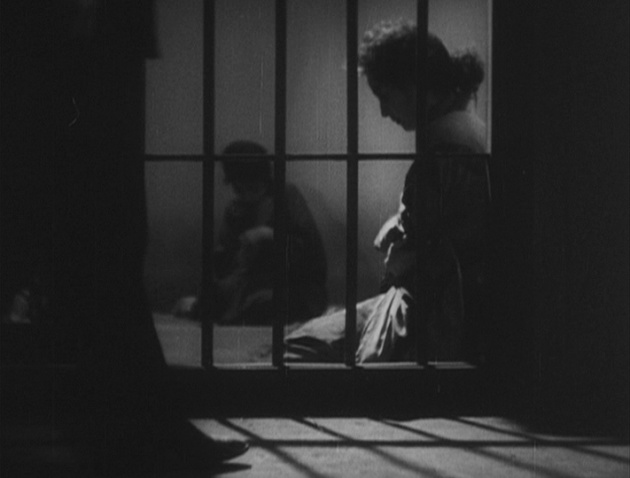
Yukie later moves to Tokyo, where she meets Noge once again, and the two start a relationship. The character of Noge himself was inspired by the real-life case of Hotzumi Ozaki, the only Japanese person to be hanged for treason against the Japanese state during World War II. The two lovebirds live together in domestic bliss; however, this is quickly cut short when Noge is arrested on charges of espionage. Noge dies in prison, although the film does not state how this happens (I can only guess that he got Epstein’d). Following Noge’s arrest and passing, Yukie becomes more politically enlightened about Japan’s oppressive state, although it could be argued her decisions seem tied more to her love for Noge than to any firm political belief. No Regrets For Our Youth does a very convincing job of showing Yukie’s ageing over the 12-year span. What is shocking, however, especially after becoming accustomed to seeing Hara as a goddess of domesticity in the Ozu films, is her brutalisation when she spends time in prison (also under espionage accusations) and, shortly after, her transformation into a hardened agrarian woman. After Yukie is bailed from prison, instead of returning to live with her parents, she finds the estranged parents of Noge in an unnamed rural village and asks to move in and assist them.
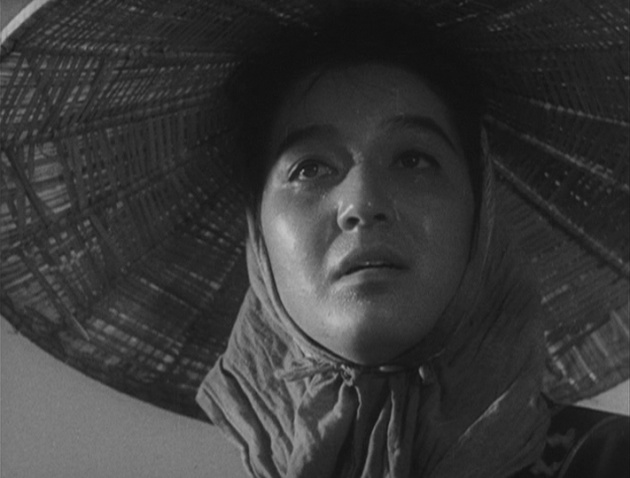
During this portion of the film, Yukie works in the fields, and it is filmed in the manner of a Soviet propaganda film, akin to the works of Alexander Dovzhenko. Just as Soviet cinema shows upward shots of giant figures working the earth, No Regrets For Our Youth employs this same style to give Yukie a heroic stature. Yet despite the cinematographic influence, this portion of the film (even more significantly than the rest of the picture) is about defiance against the collective, with Kurosawa glorifying the individual characters, not the farmers as a collective. Noge’s parents have been ostracised by the rest of the village due to their son’s political activities, with their home being covered in graffiti denouncing them as a house of spies. As a result, Yukie and Noge’s mother (Haruko Sugimura) only work the fields at night, until Yukie defies the onlooking villagers and chooses to work during the day, to the point of physical exhaustion and sickness (in Soviet Russia, you don’t work field, field works you).
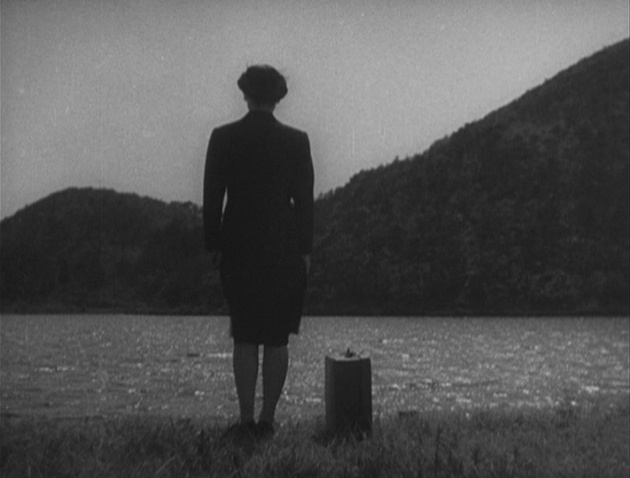
“The War is Lost, But Freedom is Restored“, states a title card as the story wraps up in a newly American-occupied Japan. Yukie’s father has his position as professor at the university restored, and the late Noge is venerated. While it feels like things have come full circle back to those peaceful, innocent days on the hills outside Kyoto back in 1933, Yukie is no longer the girl she was back then. The film concludes with Yukie hitching a ride on the back of a truck to participate in an organisation called the Rural Cultural Movement, as a defiant Yukie chooses her own path. No Regrets For Our Youth doesn’t state a reason why Yukie chose to undergo the intense hardship in the village, but I believe it’s not difficult to identify her reasons for doing so: trying to uphold the memory of a lost lover, guilt over a misspent youth, or not having been more active in political movements. Above all, however, I believe this is what was required for Yukie to undergo a metamorphosis, to achieve a quiet, indomitable pride and ultimately to free herself from having no regrets for her youth.

Late Spring [晩春/Banshun] (1949)

Sometimes It Snows In April

***This Review Contains Spoilers***

For some directors, it can take time before they hit their full stride. Alfred Hitchcock had been directing movies for 25 years prior to directing his most iconic works in the 1950s and ’60s. Correspondingly, Japanese filmmaker, Yasujirō Ozu had been directing for 22 years before he made Late Spring, in my opinion, his magnum opus (although I know others will argue in favour of Tokyo Story) and the beginning of his golden age in which he created a profound series of films about Japanese middle-class domesticity (whereas his work pre-1949 tended to focus more towards poverty-stricken families).

Late Spring is also the first entry of The Noriko Trilogy (alongside Early Summer and Tokyo Story), with all three films starring Setsuko Hara, often named The Eternal Virgin in her country of origin, and it’s not hard to see why. I would defy anyone to watch Late Spring and not fall in love with this capital G Goddess of feminine virtue – with her angelic, shy demeanour emanating a slightly bent over posture alongside a smile that could kill. Late Spring showcases her as an actress of amazing depth and able to convey such deep emotional range in the role of Noriko Somiya. There is somewhat of a contradictory nature to the character of Noriko when it comes to her conservative views. Noriko finds her uncle’s remarrying to be “distasteful” and “impure” and not afraid to say it to his face (albeit in a kindly manner) and can’t bear the idea of her widowed father doing the same thing. Hara is able to portray a character of such saintly purity (it’s even mentioned she does not drink) without it ever becoming sickenly so. Yet contradicting this is the reluctance she holds to get married herself. 

The relationship Noriko shares with her widowed father, Shukichi (Chishū Ryū) is both odd and endearing. She is unemployed and takes joy in looking after her old father, acting as a housewife minus any incestuous implications. Details presented in Late Spring are scant about the character’s histories, allowing the viewer to fill in the blanks. I can assume the young woman would be inclined to share this kind of a relationship with her father due to their time during the war. It is mentioned during the course of the film that Noriko endured forced labour during this period and “had to run around to get food on her day off”, and is required to receive regular blood tests as a result. Chishū Ryū on-the-other-hand feels like he was born an old man, made to look older than he was in all three films of The Noriko Trilogy, and convincingly so.

At the age of 27 and still single, Noriko is approaching the “late spring” of her shelf life, reaching the age she would no longer be considered marriageable, but is unwilling to part from the status-quo arrangement she has with her father. Like a number of Ozu films, the story of Late Spring centers around arranged marriage, although anathema to viewers in the west, it does not detract from the universality of his work. A scene that really hits home for me is that in which Noriko’s aunt Masa (Haruko Sugimura) has a talk with Noriko about marrying. We’ve all been there, when an elder tells us to stop what we are doing and sit down to have a serious chat in which we feel uncomfortable but deep down we know they are correct even if one, like Noriko, signifies their objections but later comes to an eventual acceptance. Noriko’s arranged partner, Mr Kumataro Satake (aka Bear Boy), remains an off screen character, with the only detail passed onto the viewer about his physical appearance is that he looks like Gary Cooper, especially around the mouth but not the top half – allowing the viewer to once again fill in the blanks. 

On a further personal note, I first watched Late Spring at the age of 28, only 1 year older than the character of Noriko, and despite this being a film about a young Japanese women’s pressure to get married in the years following the war, it still spoke to me on the basis that life is passing you by, that change is an inevitable part of life with the pain and heartache which comes with that must be endured. When Noriko speaks to her father at the end of a trip to Kyoto just before the wedding, she speaks of how “I just want to be with you, like this. I don’t want to go anywhere I’m happy being with you like this.” – Just ensure you have a box of Kleenex handy.

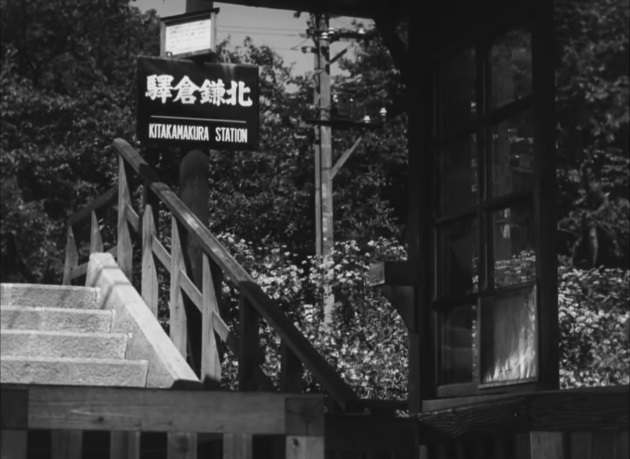
When watching any film of Ozu’s later period, the viewer will immediately be put into a great sense of ease with his trademark use of pillow shots (two or three quiet compositions usually showing an architectural detail, a banner in the wind, a tree or the sky) alongside the ever tranquil music scores. Unique however to the opening pillow shots of a railway station in Late Spring is the quaint, English feel to it, aided by the images of a gentle breeze in the leaves and the sound of birds chirping. If I was shown this opening out of context, I could swear it was neo-realist footage of a quiet, remote part of the English countryside. Likewise, the geometric nature of the interior of Japanese homes along with Ozu’s unique style of composition with use of the so called tatami shot is very pleasing to the eyes. This look into another culture extends to the film’s documentary-like aspects as we are treated to slices of everyday post-war Japanese life from kids playing baseball to the inclusion of a Noh play. The westernization present in Japanese films from this period can come off as a shock for first-time viewers of Japanese cinema such as the sight of Tokyo’s classical European architecture as seen in Late Spring.

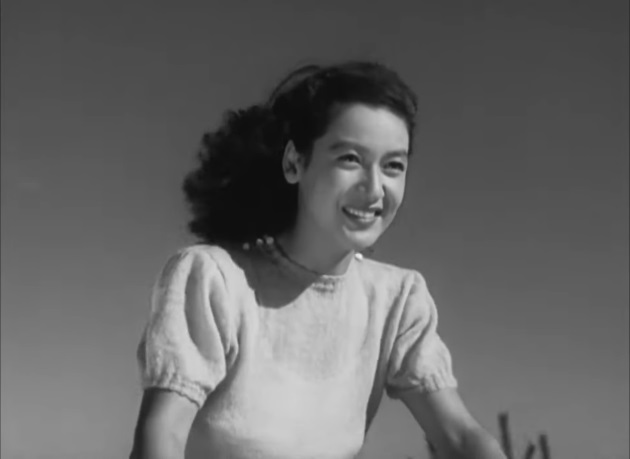
The scene in which Noriko and Hattori (Jun Usami) go for a recreational cycle by the seaside is the cinematic encapsulation for the joy of living. A scene bustling with freedom and a lust for life with the sight of a smiling Setsuko Hara with her hair blowing in the wind alongside the quirky, upbeat music which accompanies the scene should be in the pantheon of cinema’s most iconic moments. It also contains the unexpected but memorable inclusion of a Coca-Cola sign featured prominently in the foreground – one of the most memorable pieces of product placement I’ve seen in a film. This sign along with another road sign in English warning that the weight capacity of the bridge the duo are riding over is 30 tons (irrelevant information for the two cyclists but necessary for any military vehicles to pass over) could be interpreted as signs to the otherwise unseen US occupation. Concurrently, I believe it’s not unreasonable to assume that Aya’s (Yumeji Tsukioka) ex-husband of whom she speaks of throughout the course of the film is a US serviceman. Aya refers to him by the name “Ken”, which Shukichi assumes is short for “Kenkichi” however Aya never corrects him. The other significant clue is Aya’s difficulty in sitting in a traditional Japanese manner without her legs getting numb, suggesting she has become more used to the western manner of sitting.

The Wikipedia page for Late Spring is bizarrely long and extremely detailed, more famous films have less in-depth articles – the work of an eager fan perhaps? In my research, I have found Late Spring only received its first home video release in the United States in 1994 and the mass availability of the films from this master of cinema has only become reality within the last decade. Perhaps the discovery of Yasujirō Ozu‘s work in the west outside of film circles has only begun?

Red Beard [赤ひげ/Akahige] (1965)

Goodness, Truth & Beauty

***This Review Contains Spoilers***

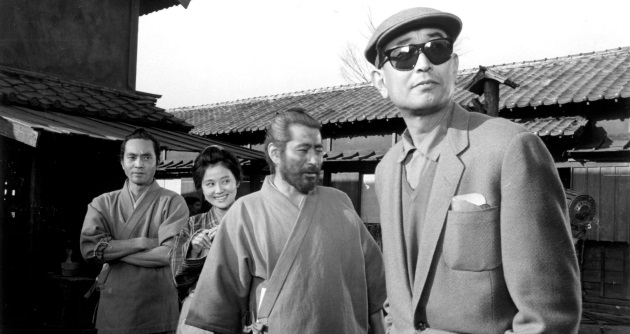
Films about medicine do hold a particular interest to me as they often make for great vehicles which to explore the human condition. Akira Kurosawa’s Red Beard, although set towards the end of Japan’s Edo period in the mid-19th century, presents no historical or geographical disconnect as the themes present are so universal. Red Beard is the final film of what I call the Kurosawa medical trilogy after Drunken Angel and The Quiet Duel but more significantly would be the final picture in the 16-film collaboration between Toshiro Mifune and Kurosawa, bringing to end Kurosawa’s greatest period.

The ambitious production shows Kurosawa at the height of his powers, and if the behind the scenes stories are to be believed, it would appear the great filmmaker was bordering on megalomania. For one it would appear Kurosawa employed the Erich Von Stroheim method of having things on set which never actually appear on camera. According to IMDB, drawers on set were filled with medical supplies from the time period even though they are never seen in the film as do whole alleyways and side streets of the picture’s main set. However, the results of this can’t be argued with as the film which came out on the other end has sets and attention to detail which are a marvel to behold, while the 3 hour run time never drags with the episodic nature of the picture working a treat and never comes off as disjointed. More infamously the production of Red Beard caused a rift between Kurosawa and Mifune and while one can only wonder about what future films the duo could have gone on to make, Red Beard is as fine as swan song as one can go out on.

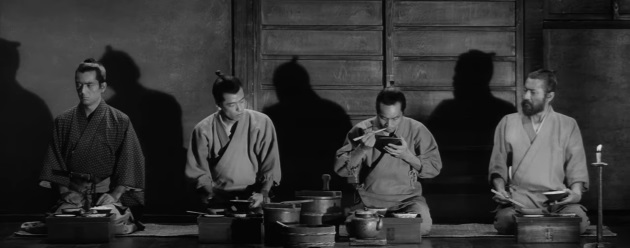
Toshiro Mifune was never better in the role of Dr. Kyojō Niide, aka Red Beard (although with the movie being black & white we never see the red in this glorious beard of his). There is a weight and a larger than life dominance that Mifune brings that is key to the role. He looks so impressive, imposing, dominant, rigid, and wild that it forces the viewer to confront his combination of humanitarianism and toughness. The nature of the material in Red Beard puts the movie at risk of falling into the cheesy, but Mifune in part prevents this from being the case. I find Red Beard’s personality doesn’t match the negative terms he is described by from an intern at the beginning of the film with phrases including stubborn, inconsiderate, drastic, proud as-well-as a dictator. Especially considering the manner in which his new intern Dr. Noboru Yasumoto doesn’t play ball at first, the world-weary mentor remains remarkably calm and patient. Red Beard is a character who shows how being tough, hardheaded and willful (even deceitful) is sometimes necessary to get humanitarian work done. The film even provides Mifune with a slice of action which would normally be reserved for Kurosawa’s samurai films as Red Beard takes on a group of men at a brothel in order to rescue a sick girl. With ease (albeit believably) he takes out each man one by one, breaking many an arm and leg in the process. Being a doctor however, he immediately disowns his actions. Still, badass Toshiro is badass.

Red Beard runs (or rules some might say) a non-profit, government-funded health facility run known as the Koshikawa Clinic. On a technical note, why is the facility classified as a clinic as opposed to a hospital since it is a rather large venue, running round-the-clock complete with wards full of patients staying overnight? – But I digress. One fascinating aspect of the clinic is the lack of consistency when it comes to sanitary standards as viewed from a modern perspective. In by far the most graphic scene in the film (or any Kurosawa film for that matter), a woman is being operated on while conscious, being tied to the operating table and blindfolded, yet the men operating on her wear no gloves or face coverings. However, conversely earlier in the film it is clearly pointed out that the clinic does not allow tatami mats as they gather dirt and moisture. Furthermore, in one scene Red Beard speaks of the issue of poverty stating “But for poverty, half these people wouldn’t be ill”, however his comments on the situation in relation to politics are rather simplistic (“If poverty’s a political problem, what has politics ever done for the poor?”, “Has a law been passed to abolish poverty and ignorance?”). Granted Red Beard is set in the mid-19th century, so one can forgive his naivety in thinking governments can solve such problems as the 20th century would show.

Dr. Noboru Yasumoto (Yūzō Kayama) is a post-graduate medical student who has been assigned to the Koshikawa Clinic against his will. The prima donna has studied to become the Shogun’s personal doctor rather than working in some down-and-out clinic, thus during his initial stay, he lounges and refuses to do any work in hopes Red Beard will just tell him to leave. However, he comes to learn just how much of a doctor he really is by a series of incidents. In one scene he is left shaken after being instructed to stay by a dying man’s side and right afterwards faints after witnessing the sight of intestines being shoved back into a woman during a surgery. Its clear Dr. Yasumoto is book smart but not street smart, however more significantly, he has become a doctor for the prestige rather than out of humanitarianism, displaying selfishness in a job that is supposed to be as selfless as possible. His eventual choice of staying with the clinic rather than becoming the Shogun’s doctor is one of many aspects which would have made Red Beard a corny film in lesser hands.

If there’s one cinematic image from Red Beard to be burned into your memory it’s that of the mentally ill girl known as The Mantis (Kyōko Kagawa) and her haunting encounter with Dr. Yasumoto after she escapes from her quarters. In another display of Dr. Yasumoto’s naivety and inexperience, she delivers a harrowing monologue in which she claims she is not mentally ill and having been sexually abused by various men in the past. Dr. Yasumoto gets suckered in by this projected innocence and vulnerability despite him previously being told that she has killed 3 clerks with a hairpin. Perhaps one could cut Dr. Yasumoto some slack for falling under the spell of The Mantis as she doesn’t meet the stereotype of a mentally ill person – she is young, beautiful, seductive and still manages to dress like a maiko. However, this perception is undone as the look on her face turns to that of pure menace and she tries to stab Dr. Yasumoto with a hairpin while being sexually aroused at the same time (“The female eats the male after mating”).What’s so visually striking about the scene is the lighting and shadows created by a single candle while the sequence contains within it an unbroken shot that lasts 6 minutes and 10 seconds. The other great subplot within Red Beard is a 17-minute detour in which a dying man named Sahachi (Tsutomu Yamazaki) tells the story of how his wife’s remains came to be buried outside his house. The romantic and haunting tragedy is very much a Japanese one, with love being interrupted by an earthquake and concluding with the wife committing harakiri. This detour has no real impact on the rest of the film but to remove it would be such a loss to the film.

Red Beard represents the triumph of the human spirit as we watch the stress and the strain put under the workers of the clinic. Above all, Red Beard is one of the best cinematic representations of the golden rule – “treat others as you want to be treated”, which is best exemplified through the character of Otoyo (Terumi Niki). After the 12-year-old girl is rescued from a brothel after years of abuse, Dr. Yasumoto treats her with kindness and dignity which she has never experience before. After Dr. Yasumoto himself falls ill, she returns the favour and nurtures him back to health. Likewise, in one scene the Madame of the brothel (played by the always fabulous Haruko Sugimura) comes to the clinic to take Otoyo back to the brothel, the other women employed at the clinic prevent the Madame from doing so in a heartwarming moment of defiance in which they show how Otoyo has become one of the group. However, more significantly is the relationship Otoyo shares with the young boy Chôji (Yoshitaka Zushi), a thief who has been stealing gruel from the clinic. Rather than just chastising him for his thievery, through mutual understanding Otoyo manages to convince Chôji to stop stealing food in one of the film’s most wholesome and moving lengthy exchanges of dialogue.

I re-watched Red Beard on a windy day in which it was bucketing rain, and honestly, it just matched the atmosphere of the film perfectly. Red Beard is a very meditative, calm and tranquil film to watch (let me ask has snow ever looked more beautiful on celluloid?). Within all the human suffering, poverty, abuse and death, there still comes a film in which the three transcendental shine through – Goodness, Truth & Beauty.

Floating Weeds [浮草/Ukikusa] (1959)

Seaside Rendezvous

***This Review Contains Spoilers***

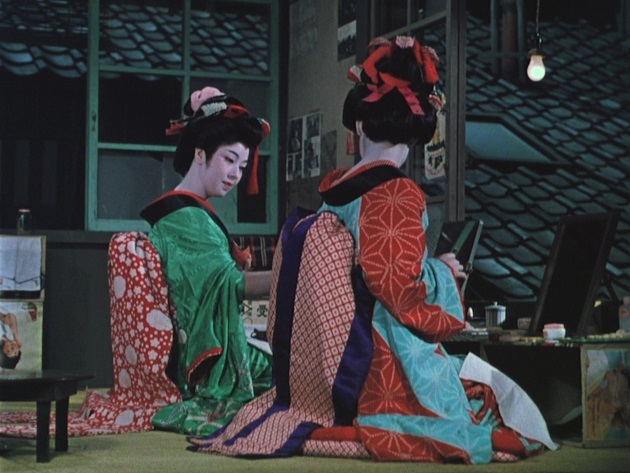
There is no other director who can make films quite as relaxing or serene than those of Yasujirō Ozu, emanating from a combination of factors, notably the absence of camera movement to his trademark use of pillow shots (two or three quiet compositions usually showing an architectural detail, a banner in the wind, a tree or the sky). Ozu is known for violating the traditional rules of visual composition such as disregarding both the 360-degree rule and matching eye-line shots while having props leap from one side of a set to another – certainly making me question that which I was taught at film school. Any scene in Floating Weeds (a remake of his own A Story of Floating Weeds from 1934) could be paused just to observe the background décor – I hate to use a cliché phrase, but every frame is a painting. Just look at the scene in the rainy street and the strategic placement of a red umbrella, incorporating the dimensions of the golden ratio. Completing the relaxing flavour of Floating Weeds is the washed-out colour cinematography, the sound of cicadas, the Nino Rota-like music score (which gives the film a European feel) as well as the fact that much of the film involves people lounging wearing kimono in a picture-postcard seaside town (likewise, take a sip of sake every time someone in a Japanese film asks for sake) – you won’t find any other films which are as cosy viewing than the works of Ozu.

At its heart, the premise of Floating Weeds is a lovely romantic, vaudevillian notion of a travelling acting troupe going from town to town. “Floating Weeds” is a Japanese term for itinerant actors and the film plays into the age-old perspective that actors are in the dregs of society and partake in an un-respectful profession (with much of the film’s comedy comes from the hornier actors of the troupe and their wed-locked female prospects). The opening scene establishes that the troupe have come via Okazaki, Kariya and Cape Chita and once played in the Big Kado Theatre in Osaka. It would appear they have been Spinal Tap-ed and fallen on hard times, now they are playing at a theatre in a small seaside town which the previous month had hosted a strip show (you can feel the loss of moral as they are forced to play to an increasingly empty house). The troupe’s stage productions themselves are intriguing to watch even if they’re devoid of full context.

There is no clear time period as to when Floating Weeds takes place. The town itself still uses telegrams from the local post office, there are no other technological references nor is there any mention of movies or TV being a competing force for the acting troupe. Conversely, I do notice one TV aerial appears in a single pillow shot (although the appearance of such could have been an incidental anachronism) and the character of Kiyoshi talks about going to study electronics at college. Regardless, this lack of a clear time period does give Floating Weeds a real timeless quality to it. Which ties into the question, where was Floating Weeds filmed? Where is this beautiful little Japanese seaside town (unlike the original which is set in an inland town)? Sources state the picture was filmed in Japan’s Kii peninsula, yet upon scouring the internet, I can’t find an exact location nor any information about this seaside town.

Komajuro Arashi (Ganjirô Nakamura) is the leader of the acting troupe, an actor from Osaka and a towering, world-weary, alpha figure of a man. Another notable difference from the original is the age difference between Komajuro and his love interest Sumiko (Machiko Kyō). The full nature of their relationship is not made clear but she is involved enough to be upset over the discovery that he is seeing his old flame Oyoshi (Haruko Sugimura) of whom he had a son named Kiyoshi (Hiroshi Kawaguchi). As an act of revenge, she sends her friend and fellow actress Kayo (Ayako Wakao) to seduce Kiyoshi in an effortlessly sexy manner with that unforgettable flick of a pencil. The ending of Floating Weeds is just about perfect as Komajuro and Sumiko meet again after their spilt, where else, but that classic cinematic convention of a train station – one late at night to the sounds of birds in the classic will they/won’t they? scenario. It’s by no means a conventionally happy ending as these two are clearly a flawed couple in a flawed relationship. It’s too late in their lives for happiness and the best they can do is compromise and endure (is it just me or does the film imply Sumiko does sexual favours to others for the couple’s career advancement during the aforementioned scene on the rainy street?). Yet the scene leaves one with a warm feeling, albeit a bittersweet one as the two share a bottle of sake in a railcar as the train disappears into the night to a romantic musical cue.