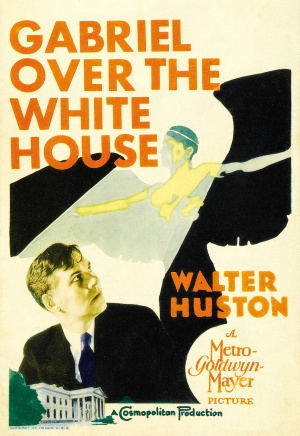
Gabriel Over the White House (1933)

I Love Democracy…

***This Review Contains Spoilers***

I do love the efficiency and streamlined nature of pre-code films. Within two minutes, the opening credits roll, followed by a montage of stock footage, and the story of Gabriel Over The White House is underway (unlike films today with a parade of 10 studio logos and a title screen that doesn’t appear until 40 minutes in).
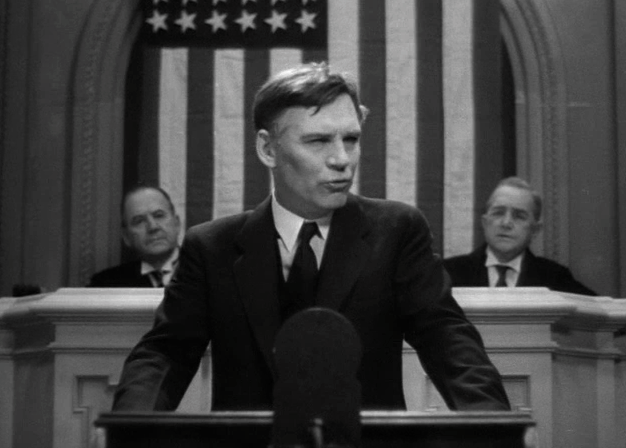
The newly elected President of the United States, Judson Hammond (Walter Huston), is sworn into office, yet behind closed doors, he and his inner circle treat the presidency as a joke. They engage in smarmy chatter and look down upon the populace (“When I think of all the promises I made to the people to get elected…by the time they realise you’re not going to keep them, your term will be over”). Hammond even takes the pen that Lincoln freed the slaves with and remarks, “Well, here it goes for Puerto Rican garbage”. To play up this disregard to an even greater degree, in a very unusual scene featuring a rare use of overlapping dialogue, the President and his nephew play a treasure hunt game in the Oval Office while the radio plays an activist speech. The audio from the dialogue between the President and his nephew becomes drawn out by that of the radio, as Hammond does not have a care in the world for what’s happening in the country. The only loyalty displayed by Hammond is towards what is simply referred to as “The Party” (“The party has a plan, I am just a member of the party”). Walter Huston has the look you would expect from a president from the early 20th century (not too dissimilar looking to Warren G. Harding or a clean-shaven William Howard Taft), while his sheer gravitas not only makes the hairs on your skin stand up, but he also prevents Hammond from coming off as just a caricature. Interestingly, however, he is a President without a First Lady, which would make him and James Buchanan the only unmarried presidents. 

Following a racing accident, Hammond goes into a coma. However, upon his reawakening, Hammond is no longer the man he once was; rather, a populist figure is born. “God might have sent the angel Gabriel to do for Jud Hammond what he did for Daniel”, states the President’s secretary, Pendie Molloy (Karen Morley), as the film makes no secret of indicating that Hammond will be enacting the will of God himself. Many scenes from this point onwards have a softer, more dreamlike look, with a higher contrast between black and white. In one moment shortly after Hudson’s awakening, he stares up in awe at a bright heavenly light shining upon his face, or as Pendie describes it, “the presence of a third being in the room”. Many a beautiful shot populates the film, from the dramatic zoom shot on Hammond (even if it does go in and out of focus) to some stunning set design with the art deco set of the film’s court martial scene.

The new Judson Hammond wastes no time getting things done with his newfound heavenly, populist political will. Right off the bat, he stops calling his staff nicknames and stands up to the members of his own party.

“Now, be careful. I might resign on you.”

“Your resignation is accepted.”

“Oh, well now, wait a minute, Jud, I was only suggesting…”

Hammond asks Congress to declare a state of national emergency to adjourn itself until normal conditions are restored, and during this period, he will assume full responsibility for the government. With the country under martial law, Hammond proceeds to tackle the issues of unemployment, mob rule, forcing over nations to pay their debts the US and by the film’s climax, literally enshrining world peace into a document signed by most nations in the world. Upon lending his own signature to the document, Hammond himself collapses and quickly passes away, lending further credence that he is enacting the will of God.
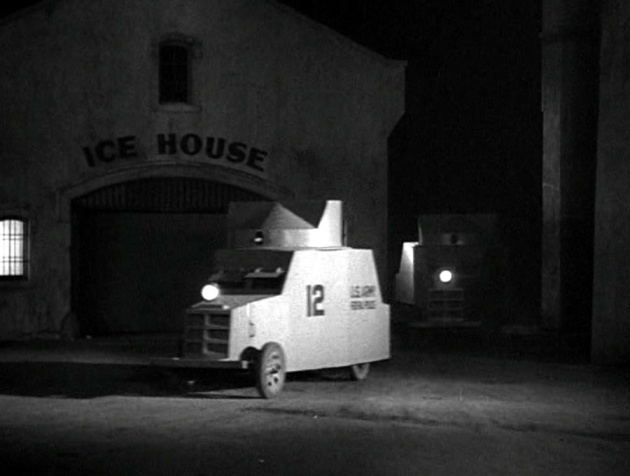
The subplot of Hammond’s efforts to eliminate the mob is particularly interesting. He praises gangster Nick Diamond (of course, he has a scar on his face) directly for “getting rid of most of his own kind”, relating to the theory in criminology that allowing one single crime syndicate to operate results in an overall reduction of crime. Hammond proceeds to create a federal police force to eliminate the mob, leading to two of the oddest scenes in the film, the first in which the mob attempts to assassinate Hammond on the grounds of The White House itself (was this more plausible in 1933?). The latter is a sequence which I can best describe as resembling the climax of every episode of Takeshi’s Castle. Following the arrest of Nick Diamond and his men, they are executed by way of an old school firing shot with the Statue of Liberty in the background (I’ll let you decide what is the intended symbolism, if any, of such a shot).

Is there a name for this kind of populist wish-fulfilment picture? The film which has the most striking similarities to Gabriel Over The White House is Ivan Reitman’s Dave (1993), in which an ineffective, uncaring president is replaced by a populist doppelganger who gets things done. Likewise, multiple sources online speak of an alternative European cut with 17 extra minutes, although such a cut has never been released on home video. Much is made of the fact that film was financed by media conglomerate William Randolph Hearst, although regardless of the agenda those behind the production may or may not have had (although it is worth noting that director Gregory LaCava would go on to direct the anti-New Deal May Man Godfrey in 1936), Gabriel Over The White House, whether by design or not, presents one central dilemma; should a nation be led by one all-powerful leader who can get things done, or have a system of checks and balances, which may be slow and inefficient? When watching Gabriel Over The White House, it’s easy to feel seduced by the temptation of having an all-powerful leader, a benevolent dictator, a king. Or once a crisis has abated, can we ever trust that a leader will lay down the powers given to him? History would say no, but Gabriel Over The White House allows the viewer to indulge in such a fantasy.

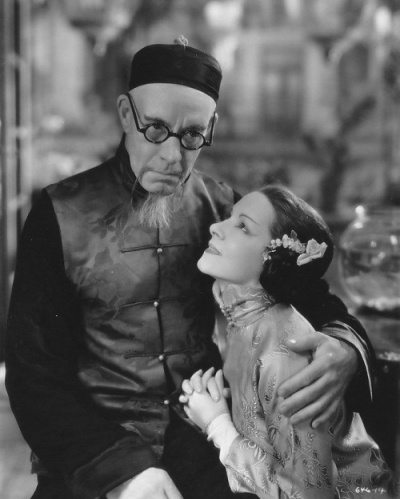
The Son-Daughter (1932)

Naaah Nah Nah Nah Naaah Naaah Nah Nah Naaah

***This Review Contains Spoilers***

1911, The Xinhai Revolution, “China under the Manchu Emperors…three centuries of unspeakable oppression…then…rebellion of wretched, starving millions”. The Son-Daughter was released in 1932, in which the supporters of the Chinese nationalists are, by and large, the good guys while the defeated royalists of China’s last emperor are ruthless hatchet men who subject their enemies to neck-straining torture devices. The head of royalists is portrayed by a moustache-twirling Warner Oland, of whom his death through strangulation with his own traditional Chinese queue (pig tail), surely signifies the death of the old. You don’t want to upset the winning side and the current government of one of the world’s largest powers, I guess.

The Son-Daughter follows an underground group of Chinese nationalists in San Francisco’s Chinatown running contraband to the Middle Kingdom, whom must raise $100,000 to release their latest ammunition ship from the wharf. The set and costume design are one of the picture’s biggest strengths, with exotic, smoke-filled rooms, noir-ish lighting and striking attention to detail. The meeting liar, seen 5 minutes into the picture, showcases a large number of extras and some stunning deep-focus cinematography; it’s a world that feels lived in and not an obvious Hollywood backlot. There’s just something fascinating about the world of a Chinatown with all its narrow corners and maze-like structure.

Based on a play, a large amount of The Son-Daughter takes place inside the apartment of Dr Tong Wong (Lewis Stone). Wong is faced with the challenge of raising the money to release the ammunition boat from the wharf. Although only third billed in the cast, Lewis Stone is the picture’s most prominent star and delivers the film’s most standout performance, as the ageing patriarch who is navigating between tradition and modernity; the values of the old world vs the new world (“Your daughter was born in America, where a girl is left free to meet her own heart”). His daughter Lien (Helen Hayes) feels guilty for being born a lady, as she can’t help her people in the way a man could. She does propose to her father that “I could do what no son could do”, to which her father promptly scolds her. Yet it is this very thing which he is forced to do to raise the required funds for the ammunition ship. The auction scene in which Lien is being bid for a man’s hand in marriage is the most fascinating scene in the film. Fascinating on the one hand to watch a woman being treated like a commodity by older, unpleasant men, but she herself is fully invested in this auction, and she works to increase the men’s offers (“Am I not all Confucius demands in a wife?”); making such a sacrifice to something which you feel is greater than yourself.

The Son-Daughter is a film in which its cast billing doesn’t accurately reflect the screen time of its stars. Second billed after Hayes is Ramon Novarro, who is actually absent for lengthy stretches of the film, but disappointingly, this is actually for the best. Novarro is the weakest aspect of the film, a great lover alongside the likes of Rudolph Valentino (thus his casting makes sense), but he is the weakest aspect of the film. He gives a very cheesy performance, but more importantly, he lacks any chemistry with Hayes. I can’t buy why she is head over heels in love with this man, and as a result, his scenes do cause the film to drag. The Son-Daughter is left as a flawed but intriguing gem in the treasure trove that is pre-code cinema. 

Hell’s Highway (1932)

Takin’ It Off Here Boss

***This Review Contains Spoilers***

Hell’s Highway is the lesser-known chain gang picture from 1932, overshadowed by its more famous counterpart, Warner Bros. I Am A Fugitive From A Chain Gang, however, according to sources, this RKO production was released two months prior to the Warner Bros. picture. There are some notable differences between the two socially-conscience, pre-code films. Unlike I Am A Fugitive…, the majority of Hell’s Highway takes place within the chain gang itself rather than the events leading to the protagonist being imprisoned. Richard Dix stars as Frank ‘Duke’ Ellis, whom unlike Paul Muni’s character in IAAFFAGC, is not an innocent man who has been falsely imprisoned, therefore as a viewer, one’s sympathies lie differently with him. The film cleverly creates sympathy for the character in two ways. Firstly it is established he has been locked up for the crime of bank robbery, which means he isn’t as morally reprehensible as say a murderer. Secondly, he forgoes an escape opportunity when he learns his idolizing younger brother Johnny (Tom Brown) has also been sentenced to the chain gang, thus Duke remains put in order to protect him. Duke is also a World War I veteran; however, the manner in which this is revealed is a brilliant piece of visual storytelling. In a scene in which Duke has been tied up to receive a whipping on the back, the guard is apprehensive about doing so. The camera then pans to Duke’s shirtless back to reveal a giant Tattoo of the American flag accompanied by the text “42nd Machine Gun Co, 167th INF.”, as the screen then fades to black – powerful stuff. Dix himself is a silent-era holdover and like his contemporary’s such as Richard Barthelmess, he has an intense presence and a face which is able to convey so much.

While Duke Ellis is a man who has been rightfully locked up, Hell’s Highway does raise the question of when does the punishment outdo the crime? When does punishment become even too hardcore for the likes of Dirty Harry – a system which has prisoners are in bondage the majority of the day, even as they sleep and eat in the mess hall. One of the most distinguishing images in Hell’s Highway is the prison uniforms which have a target on the back of them, a target for prison guards or bounty hunters to aim at as seen later in the film (however, I can’t find any real-life example of these uniforms actually existing). Likewise, the trousers worn by the prisoners have flaps on their rear ends, looking like an exposed diaper and another way (whether intentional or not) of removing dignity from these men. However, it’s the sweat box which is the most inhumane piece of torture present in the film. Alec Guinness might have survived one on the River Kwai but here it is a death sentence, as occurs early in the picture as indicated by the haunting sound of a crying dog (although one minor criticism I would deliver is from this moment having its impact weakened as a character immediately explains the dog’s crying means someone has died rather than just allowing the moment speak for itself).

Hell’s Highway opens with a prologue stating “Dedicated to an early end of the conditions portrayed herein – which though a throwback to the Middle Ages, actually exists today”, followed by a montage of newspaper headlines covering abuses taking place in chain gangs across the states. I am unable to find any evidence these headlines are real. For example, one of them reads “Prison Guards Accused Of Murder As Tortured Youth Dies Chained In Sweat Box” from the Seattle Post, a publication of which I can’t find any evidence of actually existing. Regardless, this along with the haunting acapella of chain gang singers over the opening credits sets the tone for the film. These chain gang chants serve as the film’s diegetic soundtrack (with prolific composer Max Steiner acting as the picture’s music director), which is put to its most effective use during a memorable montage which is accompanied by sketches made by prisoners depicting previous events in the film.

Hell’s Highway is one dirty, sweaty film full of fascinating, rugged faces which say a thousand words. Firstly I have to ask is the character of Maxie (Sandy Roth) supposed to look like the film’s producer David O. Selznick? Furthermore, it wouldn’t be a pre-code film without an overtly homosexual man thrown in; a prisoner who does what else, cooks the food and does the laundry.  Moreover, the head guard of the chain gang, Mr. Skinner (C. Henry Gordan) has a moustache primed for twirling. However, throughout the course of the film, he is seen trying to learn the violin in his downtime – a corny but effective way to make him more human and show he has a soft side. However, if the film has one show stealer it has to be religious/spiritual prisoner Mathew, a man who claims to be Christian despite having three wives at once and an expansive knowledge of astrology (of which he highfalutin, astrological predictions do come true throughout the film). When I first watched Hell’s Highway I had to know who this actor was a dead ringer for Harry Dean Stanton (or certainty in this picture at least). It turns out the actor is known as Charles Middleton, whose biggest claim to fame was playing Ming With Merciless in three Flash Gordon serials made between 1936-1940.

Hell’s Highway concludes with justice actually being served by the film’s end in which the Of Michigan State Governor arrives at the chain gang prison to issue injunctions against the corrupt prison officials for their violation of state law (although it is not stated where the film is actually set until ¾ into the picture). The Governor himself is presented in one of the most comically, stereotypical images of an American authority figure (usually a southerner but not always the case as seen here) wearing the Col. Sanders white suit, hat, shoes and the black bow tie. The ending is another major deviation from I Am A Fugitive…, which does not conclude in such a manner with everything being neatly tied up. It’s not a bad ending by any means, but I do feel the film’s impact could have been stronger with justice not remaining delivered at the end. Regardless, perspective viewers can find this pre-code gem on the Warner Archive Forbidden Hollywood Collection: Volume 9.

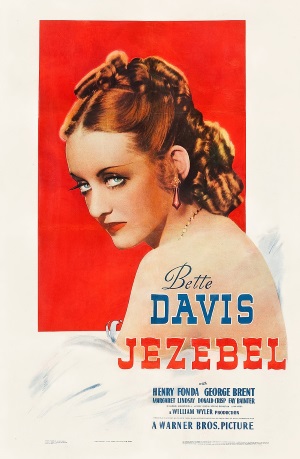
Jezebel (1938)

I Do Believe I’ll Give Room Service A Jangle And Have Them Send Up Some Étouffée

***This Review Contains Spoilers***

The antebellum south of the United States often makes the perfect setting for stories of decadence and doom as history has shown it wasn’t going to last. The Spanish moss hanging in the moonlight, the sounds of mockingbirds in the magnolia to the grand sweeping plantations and even the occasional utterance of Cajun French conjures a world which one can become lost in, but one of which it’s iconic architecture would later become associated with the dark genre of southern gothic in its future state of disrepair. This is the world present within the costume drama Jezebel, of which there are plenty of costumes and plenty of drama.

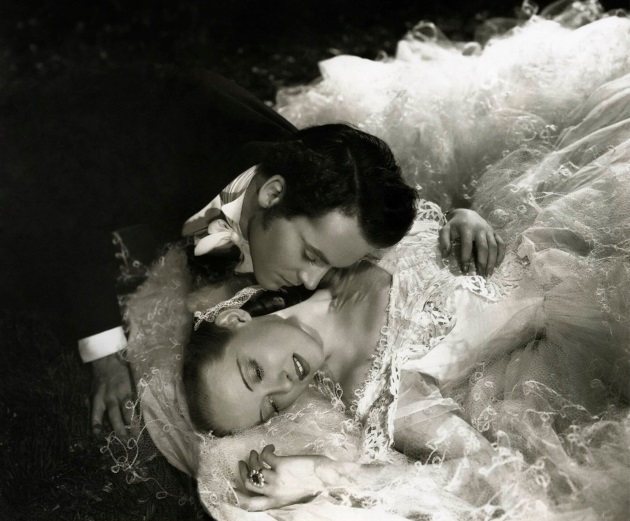
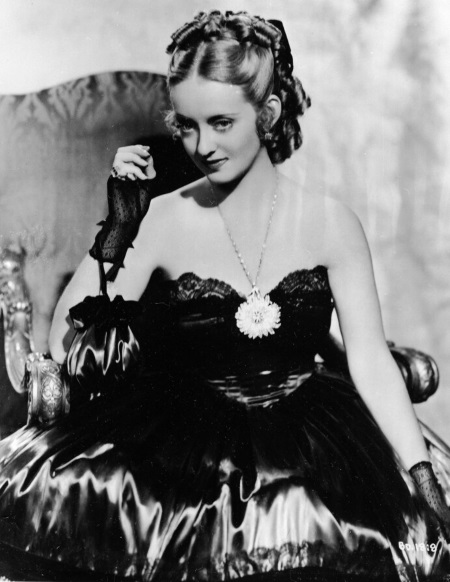
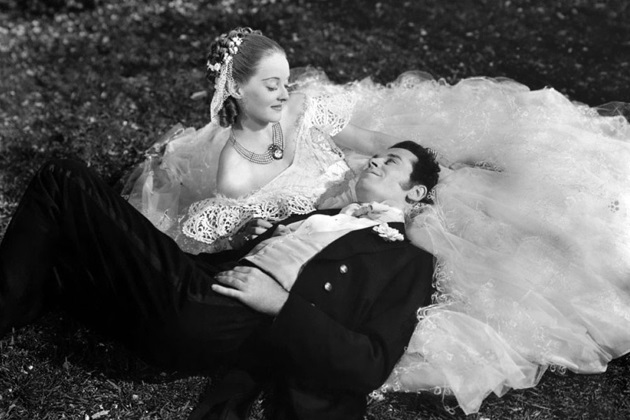
Bette Davis stars as the headstrong and manipulative southern belle Miss Julie Marsden. Contrary to the film’s title, the character is not actually called Jezebel. Rather this is the name given to her by her Aunt Massey (Fay Bainter) following Miss Julie’s less-than-stellar behaviour. The name is derived from the biblical figure present in Kings I and II, in which Jezebel is portrayed as an evil queen who engages in idolatry and leads men astray. In modern vernacular, a Jezebel is a woman who is regarded as sexually immoral or manipulative. Miss Julie Marsden resides within the upper class of New Orleans circa 1852, a world in which etiquette, dignity, good manners and dress codes are absolutely paramount and taken extremely seriously (“Punctuality is the politeness of kings”). Take the latter dinner scene at the Halcyon plantation (sounds like a ship from a science-fiction movie), tension is gradually created from the gentlemen’s political disagreements as the mood becomes increasingly passive-aggressive yet never is a voice raised. Miss Julie on-the-other-hand is a woman who likes to do as she pleases and gets a kick out of shocking people. From her character’s introduction, Miss Julie chooses to break the rules of the game by arriving at her own party late and wearing inappropriate clothes while shortly afterwards, the symbolism employed by her walking through the city bank to get her fiancé Preston Dillard (Henry Fonda) is on stark display.

The main driver of conflict in the first act of Jezebel is over an infamous red dress which Miss Julie chooses to wear to the Olympus Ball. The expectation of southern society being that only unmarried girls wear white but Miss Julie rebuffs this with her current year argument, “This is 1852, dumpling. 1852, not the dark ages”. No one in the film outright says it, but this is a whore’s dress, one which women wear in the gambling halls, steeped in the colour of both sexual sin and menstrual blood, not appropriate for a young, virginal woman of the upper class. Jezebel was made under the Production Code and the closest anyone gets to making the aforementioned connection is Julie’s rebuttal to Preston’s horrified reaction to the dress, “Are you afraid somebody will take me for one of those girls from Gallatin Street?”. I do find some unintentional humour is derived from the fact that so much hubbub is made from this dress being red, yet the movie is black & white (reminds me of that colourblind gag in Tim Burton’s Ed Wood), however in reality the dress in question was actually bronze. Miss Julie comes to regret her decision to wear the red dress to the ball, but Preston makes her go through with it, forcing her to live out the nightmare she has created. Speaking off moments which straddle the line of the production code, when Preston takes the cane up to Julie’s room to supposedly thrash her, the scene appears to linger on that thought. As Julie tries to play mind games with Preston she glances at the cane four times (with the camera even lingering on it for a mid-shot) as though she’s half expecting him to use the phallic device. As a result, the scene has an almost erotic vibe to it. 

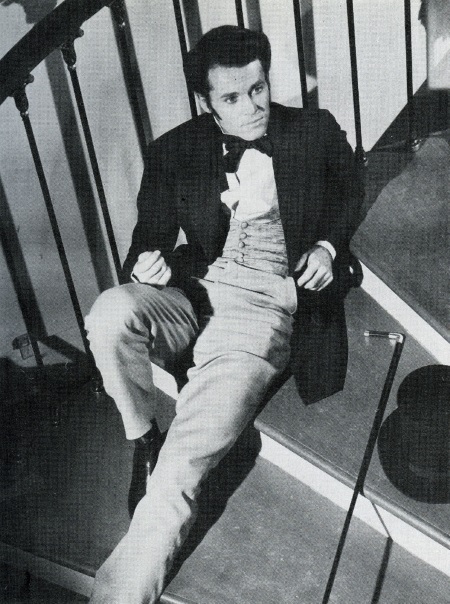
The young and dashing Henry Fonda stars as Preston ‘Pres’ Dillard. As common with many of Fonda’s roles, Pres is a man of great dignity and integrity without ever coming off as being obnoxiously righteous (“I think it was Voltaire who said I disagree with everything you say, and I will defend to the death your right to say it”). A southern-born man with a great love of his homeland, Pres Dillard has adopted the attitude of the northern states and is not content with the quo of the south, desiring civic improvements with railroads and sanitation and although he never outright says it, likely to curry public favour, it’s clear he is an abolitionist. In one key scene, he asks the slave Uncle Cato (Lew Payton) to share a drink with him, to which Cato obliges but only if he takes the drink to another room. Pres even later comes to marry a northern woman in the form of Amy (Margaret Lindsay), a woman who doesn’t have the domineering and rambunctious personality of Miss Julie. As a result of these transgressions, Pres is come to be seen as a traitor and the Uncle Tom by his fellow southern men, in particular Buck Cantrell (George Brent). 

Buck Cantrell is very much the opposite of Pres. The film’s metaphor for southern interests, the man’s foolish gallantry ends up costing him his life in a duel over a petty disagreement. I hadn’t previously thought much of Brent as an actor but his Clark Gable-like swagger in Jezebel makes him a real show stealer while his interplay with Davis really helps bring out the best in him (the virgin Buck Cantrell vs. the chad Preston Dillard, only joking, both are chads in their own way). The north vs. south dynamic as portrayed through the characters of Pres and Buck (9 years prior to the American Civil War) excludes Jezebel as being part of the Lost Cause narrative even if the film does portray slaves as being content with the status quo. The film does offer one of its funniest comedic moments to one of the black actors with his repeated utterance of “yessum” at Mrs. Kendrick’s (Spring Byington) orders upon their arrival at a party. 

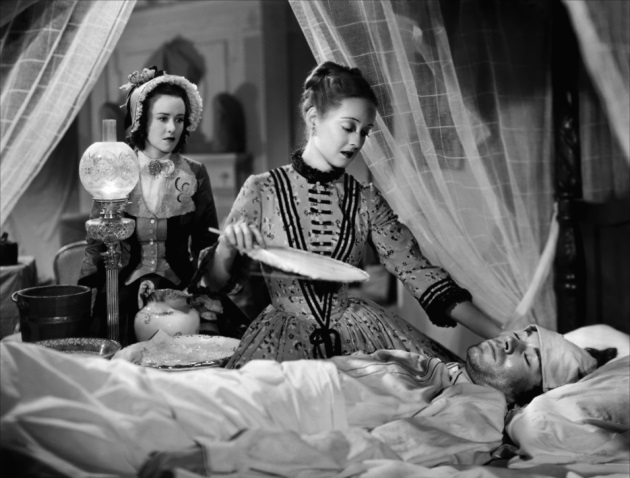
Following the film’s first act, Jezebel portrays an America going through a pandemic of yellow fever (or yellow jack as it’s often referred to) as well as being split along ideological and political lines, now doesn’t that sound familiar? In a powerful scene, Pres faints from yellow jack in a bar and all the other men back away from him as fast as they can and cover their mouths, except for Dr. Livingstone (Donald Crisp) who goes over to Pres and asks for one of the men to help him, none of whom are brave enough to go anywhere near the fallen Pres (Livingstone is no social distancing soy boy). Likewise, Livingstone reports Pres as a fever patient to the authorities, resulting in him being taken away to a colony for the unlucky infected known as Lazarette Island, justifying his actions by stating “Have you any idea what would happen to New Orleans now if folks got to thinking there was one law for the rich and another for the poor”. Crucially, in an earlier scene during a blink-and-you-miss-it moment, Pres slaps a mosquito in his hand accompanied by a spike in the music just as this occurs. Is this how Pres caught yellow jack? I’ll let you decide.

Jezebel is often compared to fellow antebellum tale Gone With The Wind and parallels between the two are evident, albeit superficial:

– Julie Marsden /Scarlett O’Hara fall for Preston Dillard/Ashley Wilkes, neither of whom can deal with her behaviour.
– Preston/Ashley decides to marry Amy/Melanie, whom is less hassle.
– Julie/Scarlett corners Preston/Ashley in the garden/smoking room and tries to
convince him of her love.
– Julie/Scarlett lives with her disapproving Aunt Belle/Pitty Pat.
– Julie/Scarlett uses Buck Cantrell/Charles Hamilton to try and make Preston/Ashley jealous.
– Julie/Scarlett wears a red dress to a ball/party and scandalizes herself.
– Julie/Scarlett realizes too late that she is responsible for her own lot (Preston dying/Rhett Butler leaving).
– Julie/Scarlett is determined to make good (escorting Preston/getting Rhett back).

It is worth noting that Jezebel as a property actually predates Gone With The Wind, with Jezebel first debuting on stage in 1933 while Gone With The Wind was first published as a novel in 1936. Could the stage version of Jezebel bared any influence from Gone With The Wind and could the film version of Jezebel have taken any influence from the novel of Gone With The Wind?

Director William Wyler holds one of the most impressive resumes in Hollywood history and Jezebel is another showcase of his craftsmanship, in particular, the extravagance on display in the Olympus Ballroom scene. The magnificent set is shown in 360 degrees from multiple camera angles and it’s clear that big bucks have been spent on this production. Reportedly Wyler would do upwards of 40 takes on individual scenes in Jezebel and when you get results such as the manner in which Davis effortlessly lifts up the end of her dress with a riding crop, it appears the agony was worth it. It is also worth noting as a humorous error in geography emanating from the film’s set design; notice how the bar seen throughout the film has stairs going downwards from its street-level entrance. This is not advisable in New Orleans with the city being below sea level.

Bette Davis is an actress I could never bring myself to consider a personal favourite of mine but her ranking as the American Film Institute’s 2nd greatest American female star of all time is hard to argue against. I do prefer her in other films such as Kid Galahad or comedies including Its Love I’m After or The Bride Came C.O.D. in which she presents a more endearing side to her persona. Whereas in films such as Jezebel she is much more cold-hearted and presents the dark side of the feminine form, but there’s no doubt she played these roles to the utmost degree of acting prowess. Miss Julie Marsden was a spoiled brat who had no sense of when and when not to pick her battles, and ultimately got what she deserved. Jezebel concludes with Miss Julie convincing Amy not to go to Lazarette Island with Pres, but rather allowing herself to go instead. The film bills this as the redemption of Miss Julie by displaying a sense of grandeur along with Max Steiner’s sweeping music (which in itself is quite moving), but just how selfless is this act? Is Miss Julie truly trying to repent for her actions by making such a sacrifice and risk catching the disease or is she just trying to make a bold, last-ditch effort to win back Pres in the off chance of his survival? It is up to you my friend, the viewer to decide. Now time to bring this review to a conclusion as this flower is wilting!

Tarzan And His Mate (1934)

Hot Jungle Sex

***This Review Contains Spoilers***

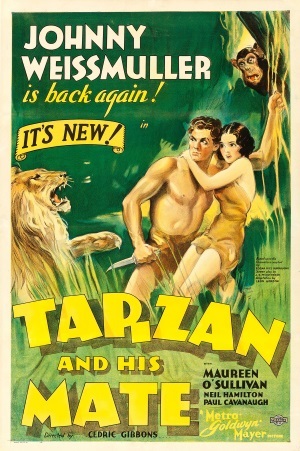
Tarzan and His Mate more than compensates for the shortcomings of the first Johnny Weissmuller Tarzan film of which the production values where a mixed bag. Tarzan and His Mate has less reliance on stock footage and rear projection with its use of matte paintings and a large amount of animals on set to recreate deepest darkest Africa in the only film directed by Cedric Gibbons, otherwise famous as an art designer for MGM. I just wish we could do without the men in not so convincing gorilla outfits, especially since the cast appears on screen with real apes (Planet Of The Apes was still 34 years off).

Pre-code cinema doesn’t get any sexier or revealing than Tarzan and His Mate, notably with its use of full-frontal nudity despite having a modern-day PG rating in the UK. During the early portion of the film, topless African natives can be seen in the background but in one of the film’s most memorable scenes, Tarzan and Jane going for a swim in which Jane goes full commando. The underwater scene was filmed in three different versions to comply with the individual censorship laws of different US states. Maureen O’Sullivan does not appear as Jane during the swimming sequence, rather she is doubled by Josephine McKim, a member of the 1928 and 1932 U.S. Women’s Olympic Swim Teams. O’Sullivan does nonetheless wear one of the screen’s most revealing costumes of the time, a halter-top and a loincloth that left her thighs and hips exposed. Needless to say, this two-piece costume did not make its way to the post-code Tarzan films. Jane sleeps in the nude and is constantly touched by Tarzan, even just watching the two of them interact while alone, there is such sexual tension portrayed on screen (we are even treated to the Austin Powers style silhouette in the tent of a woman getting undressed).

Tarzan and Jane do refer to themselves as a married couple in Tarzan and His Mate (“Never forget, I love you.” “Love who?” Jane prompts…”Love my wife”), however at this point in their relationship it is unlikely Jane and Tarzan are technically married in the eyes of the law since a justice of the peace isn’t likely to be found in the jungle. Rather you could say Jane considers Tarzan her husband because they have lived together and slept together for a long time by now, married virtually, synonymously and spiritually – a true marriage in the law of love and the jungle. Likewise, the scene at Jane’s father’s burial site, Jane takes the chain of his timepiece and puts it around Tarzan’s wrist and says “always” in which Tarzan repeats “always”. The morning after they repeat this vow, which one could interpret as a short and sweet jungle wedding – therefore monocles can remain firmly in place over the prospect of an unmarried couple living and sleeping together.

The mighty figure of a man that is Johnny Weissmuller – he is Tarzan! His short lines of limited, broken English are highly quotable (“Martin My Friend”), while he also provides moments of humour as the feral man reacts with bemusement at the ways of the civilized world such as curiously inspecting a record player like a cat, as well as inspecting Jane’s dress and stockings from Paris. It’s Jane who has to do the talking on behalf of the couple (and even performs the famous Tarzan yell herself). The pure romantic escapism of Tarzan And His Mate comes from watching these two being deeply in love and having the time of their lives in the wilderness of the jungle. The character of Jane is brilliantly summarized in a single line – “A woman who’s learned the abandon of a savage, yet she’d be at home in Mayfair”.

 It’s easy to feel sympathy for Jane’s old friend (and not so secret lover) Harry (Neil Hamilton) over his love for Jane as he nostalgically reminisces with her about old times back in England (“Those June nights in England, Murray’s Club in Maidenhead, moonlight on the Thames”). Alternatively, Paul Cavanagh as the villainous, womanising Martin Arlington has a touch of Basil Rathbone to him (expecting him at any point to literally twirl his moustache) while Nathan Curry is a striking screen presence as Saidi, the only native whose life is not expendable and even gets to go out in a moment of heroism. That can’t be said for the rest of the safari runners including one who is shot for his cowardice. Yet, its attacks from uncivilized tribes which prove to be their biggest threat, making Tarzan And His Mate one of the more graphic films of the pre-code era (including one particularly gruesome shot of a man having been impaled in the forehead).

Ouch!

I find it difficult to determine if Tarzan And His Mate is an early example of a film with an environmental/conservationist message? The film shows Tarzan has an almost supernatural connection to the non-predatory/ non-carnivorous animals of the jungle, whereas he fights predators such as lions and crocodiles throughout the picture. In particular, Tarzan has the ability to rally up herds of elephants in order to prevent the safari hunters from removing ivory from an elephant graveyard (there is no such thing as an elephant graveyard but the appearance of one in the film with its litany of skeletons is no less eerie). Is the film trying to promote a message or is it just a reflection of Tarzan’s personal feelings over the elephant graveyard being a sacred ground for the creatures and not to be disturbed or violated? Likewise, Tarzan and His Mate was reportedly banned in Germany by the National Socialist Party on the grounds that it showed a nordic man in primitive surroundings, which I do find odd since I could imagine them using Tarzan as a promotion of Aryan supremacy. Then again perhaps part of their motivation to ban the movie was based on the fact that Tarzan is played by a man whose surname is Weissmuller.

Dodge City (1939)

A Rootin-Tootin Good Time!

***This Review Contains Spoilers***

A Texas cattle agent witnesses the brutal lawlessness of Dodge City, Kansas and agrees to take up the job of sheriff to clean the town up. If that doesn’t sound like the most stereotypical summary of a western then I don’t know what does. 1939 was the year in which the western went from a B-movie genre to getting the big studio treatment almost overnight and as a result, the inclusion of just about every western trope in Dodge City almost feels slightly comical. We get a train, a stagecoach, cattle drives, a saloon brawl, dancehall girls, an evil gang terrorising the locals, the “new sheriff” in town, a schoolmarm, lynch mobs, a crusading newspaperman, poker games, herds of bison, a climactic shootout, rock and roller, cola wars, I can’t take it anymore! Perhaps the only elements which are missing are a fight with Indians and big ol’ saguaro cactus (geographically inaccurate I know)

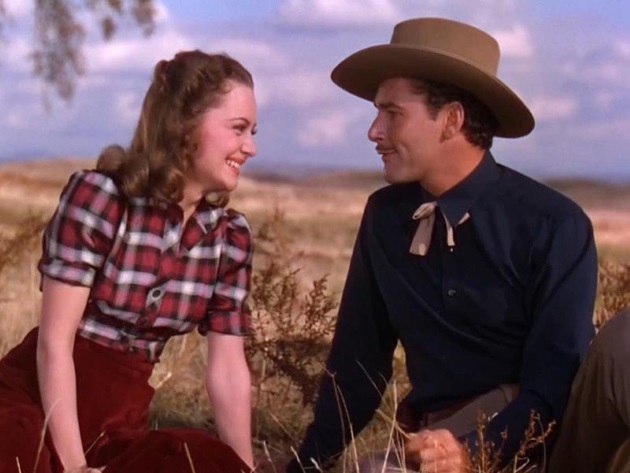
Errol Flynn transitions well to the role of a cowboy as Irishman Wade Hatton (“Thirty years ago, my father met my mother at the Londonderry fair” – excuse me, no true Irishman calls it Londonderry). Dodge City was the 5th of eight pairings of Flynn and Olivia deHavilland in which she plays feisty frontierswoman Abbie Irving. The magic is still there with any scene in which they are alone – you can tell these two really are in love, and like in The Adventures of Robin Hood, deHavilland is given many a memorable, brightly colored costume change throughout the film. Abbie’s brother Lee (William Lundigan) on the other hand is one of the biggest twats in screen history. A spoiled, trouble-making, tantrum-throwing drunkard who carelessly fires his gun into the air which causes a cattle stampede that leads to his untimely death. However, I don’t quite get why Abbie resents Wade for his involvement in Lee’s death as he ultimately got what was coming to him. None the less, Henry Travers perfectly sums up the situation – “Women’s logic and emotions are often very confusing”.

Dodge City is a story of morality and civilization – another chapter in how the west was won. The bad guys of Dodge City lead by Jeff Surrett (Bruce Cabot) are essentially gangsters, murdering for business interests, running gambling clubs and threatening the press. However, once Wade becomes the sheriff and begins cleaning up the town of its crime and degeneracy, my libertarian alarm bells start going off as he restricts gambling, gun rights (is he violating the 2nd Amendment by decreeing “No firearms permitted north of Front Street”?) and introduces taxes (at least his barber recognizes they are a necessary evil). 

Dodge City may have the best bar fight ever committed to screen. One spurred on by post-civil war tensions as the Confederate half of the saloon sings (I Wish I Was in) Dixie’s Land and the Yankee half retaliates with Marching Through Georgia before dozens of men cause utter fist-fighting destruction, destroying ever corner of the saloon and even falling through walls and multiple floors as they pummel each other. The beginning of the scene in similar to that from Casablanca (which Curtiz would also direct) in which the Germans at Rick’s Place start singing Die Wacht am Rheinin in front of the French of whom retaliate by singing the La Marseillaise.

The film’s score by Max Steiner sounds awfully similar in parts to that which Steiner would compose for Gone With The Wind, released 8 months after Dodge City. Even some of the shots present in the film are reminiscent of the scenes in Atlanta from GWTW. From the beautiful artwork in the title screens to the grand 3-strip Technicolor encompassing many scenic horizons, Dodge City is a visual delight (it’s just a shame the DVD copy of the film suffers from some colour bleeding). The film’s climactic shootout on the train, however, lets the film done slightly as the cuts back forth between the location and a studio set fail to convincing match each other.

Errol Flynn and Alan Hale once again make a great duo and Hale even receives his own comedic spotlight moment when he wanders into a temperance union known as the Pure Prairie League, only to find he’s the only man among a group of older women. Likewise in an interesting twist to convention, it’s Alan Hale and not Errol Flynn who takes out the film’s main villain played by Bruce Cabot. I’m just disappointed Ann Sheridan’s part in the film is barely beyond a cameo despite being third billed. She performs several songs as a saloon singer but has no impact on the plot – did she have any deleted scenes? I could also do without that cutesy little kid (Bobs Watson), although to be fair at least he has a major role in the progression of the plot. Regardless of any minor shortcomings, any film is worth it when it has earned its right to culminate in the most endearing of cinematic images, the hero riding off into the sunset.

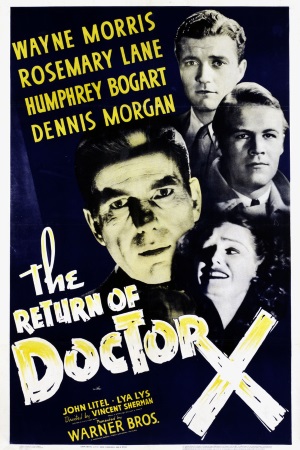
The Return of Doctor X (1939)

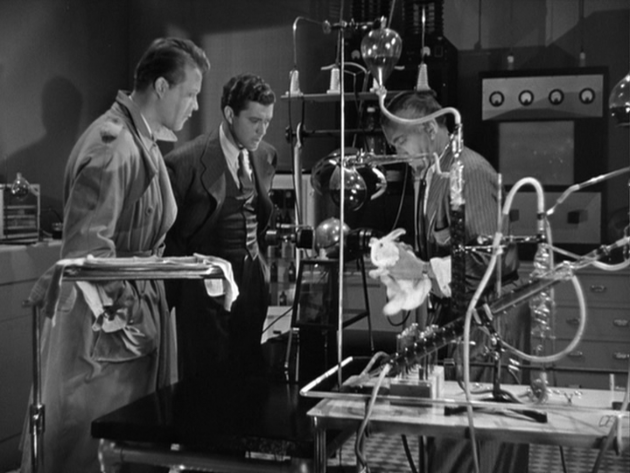
The Return Of Doctor X is a movie with very little value to it aside from the anomaly of being Humphrey Bogart’s only horror/science fiction film in which he plays the titular Dr Maurice Xavier, a.k.a. Marshall Quesne (pronounced “caine”). Dr. Xavier is essentially a zombie-vampire, a doctor who was sentenced to the electric chair after trying to see how long babies could go without eating (gruesome even for today, let alone 1939), only to be resurrected by a proto Dr Frankenstein, Dr Francis Flegg (John Litel) and is kept alive by regular injections of Type One blood. I do love the Karloff-like design of the character with his pale, white face, punk rock style hair with the white streak and a rabbit which he carries around with him (I’m making this my future Halloween costume). The Return Of Doctor X is a rare instance in which Bogart played a subservient character, of whom is quite Peter Lorre-esque with his tragic and pathetic demeanour, while his unnatural body movements and limping call back to Karloff’s Frankenstein’s Monster. The film’s climax does, however, venture into more traditional Bogart territory in which Xavier partakes in a gangster-style shootout. Bogart is a consummate professional who doesn’t phone in the role regardless of how much he was known to detest it. Just contrast him to his master played by John Litel, of whom the movie gives him somewhat of an arc in which he eventually regrets his actions playing God, he is a much more generic bad guy.

According to the audio commentary for The Return Of Doctor X featuring director Vincent Sherman (of whom went on to do better work in his career), the film had a troubled production with the original script going in one direction and then being significantly altered during filming. This is evident when watching the film’s trailer of which the majority of footage featured is not in the finished picture not to mention the film’s as various credit errors (Wayne Morris is billed as Walter Barnett but is referred to as Walter Garrett in the film). Likewise, the film oddly gives the “All persons fictitious” disclaimer full-screen treatment before the opening titles, whereas it’s usually in small print at the bottoms of the credits. What was the studio worried about?

It’s Alive!

The premise of The Return Of Doctor X has potential with its mix of vampirism and reincarnation but with the exception of Bogart, the mystery yarn fails to flesh out the story or characters (although I do find it interesting that the movie has to explain the more recent scientific discovery of blood group types, whereas today this is common, layman knowledge). Wayne Morris might have worked at the title character in Kid Galahad but he’s no leading man material in the role of a go-getter reporter from Wichita. The Return Of Doctor X is a typical example of the Warner Bros B-movie product of the late 30’s/early 40’s – the film is by the numbers and has no real flashy moments. Worst of all, it is masquerading as a sequel to the two-tier Technicolor, pre-code gem Doctor X, however, there is no connection between the two films. Many would point to The Return Of Doctor X as an embarrassment in the career of Humphrey Bogart, however I would point to it as another example of how great an actor he is as he brings so much life to an otherwise average film when he’s on-screen. Boris Karloff made a career playing roles like this, why should Bogart’s attempt at playing a monster be looked down upon?

Love Me Tonight (1932)

Tailor Made Man

Love Me Tonight was produced and directed by the forgotten movie magic maestro Rouben Mamoulian, a name who doesn’t make the history books compared to the likes of Orson Welles but who’s work during the pre-code era deserve that cliché expression, “ahead of its time” – films which had extensive visual freedom more technical wizardry than you can shake a stick at. No more so than in the musical, comedy Love Me Tonight, the first film in history to use a zoom lens as it does several times throughout the movie (yet it would be decades until this technique would catch on). Not to mention the film’s early use of slow-motion during a very dreamlike deer hunt sequence – quite unlike anything else you’ll see in a film from the time.

Sharp Dressed Man

Love Me Tonight opens with the city of Paris coming to life in a visual manner reminiscent of the silent documentary film Berlin: Symphony of a Great City; however this is accompanied by a symphony created by everyday sounds from a construction worker hitting the ground with a pike axe to a woman sweeping a pathway. Likewise, the Paris street sets look authentic (with shots reminiscent of Gene Kelly’s apartment and neighbourhood from An American In Paris), I would believe it was real-world location but it was a set in the Paramount back lot, which is equalled by the opulence and detail of the chateau seen later on in the film.

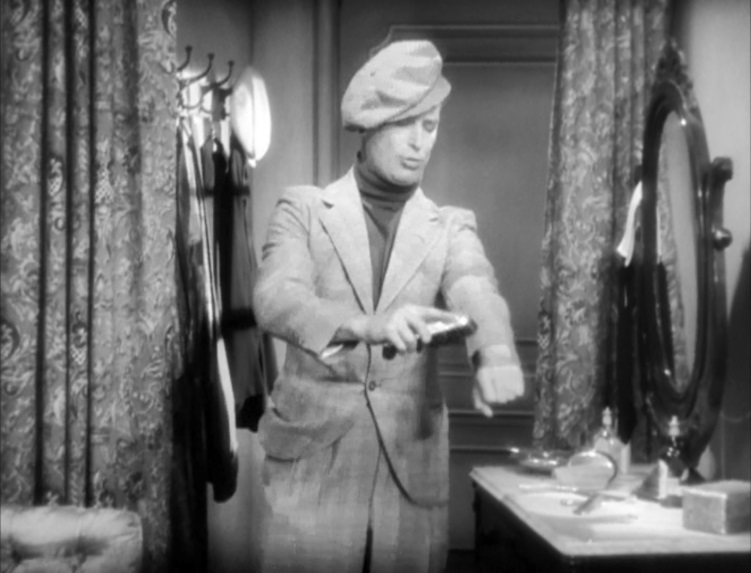
Love Me Tonight is an Ernst Lubitsch style romantic comedy focusing on European aristocracy. Our protagonist and his Supreme Frenchness is Maurice Chevalier in the role of well…Maurice – the stereotypical Frenchman who’s life revolves around the concept of romance (is there any truth to Hollywood’s fantasy of France and Paris in particular?). He is one fine dressed man in his dashing turtle neck and a distinct walk (he is a tailor after all) along with a shade of Groucho Marx aspect to his personality with his witty comebacks to all the bourgeois snobs he encounters. 

It was a novelty in 1932 for musical numbers to be so interwoven into the text and pushing the plot along, in particular, the Isn’t It Romantic number which cleverly connects future lovers by song as Maurice begins singing it in his Paris tailor shop and it ends up being carried out of the city and across the countryside to a chateau in which Jeanette MacDonald (who feels like she was tailor-made to play nobility) and her magnificent pair of pipes finish it off. Love Me Tonight has no shortage of character actors galore such as the inclusion of the three spinster sisters (a more benevolent version of the three witched from Macbeth) being a very humorous touch, especially when they sound like chickens as they frantically pace. Also take note of MacDonald’s reaction to Charles Butterworth falling off ladder and landing on his flute – priceless. 

The other great addition to Love Me Tonight is an always show-stealing Myrna Loy in a part which helped turn her career around from being typecast as the exotic temptress to performing high comedy as the sex-hungry Countess Valentine. The bored sex fiend spends her time around the chateau sleeping on chairs and furniture, becoming excited when the prospect of a male encounter arises. She gets many of the film’s best and not to subtle innuendo-laden lines and even sings for the only time in her career during her few lines in The Son Of A Gun Is Nothing But A Tailor. Currently, the only version of Love Me Tonight known to exist is the censored 1949 re-issue which includes among other potentially suggestive cuts, an omission of Myrna Loy’s reprise of “Mimi” due to her wearing of a suggestive nightgown. Why yes I’m outraged that a piece of film history has been erased and in no way does being deprived of seeing a scantily clad Myrna Loy factor into it. 

Regardless of what we are left with, it surprises me the Love Me Tonight would even receive a post-code rerelease with every other line of dialogue being a sexual innuendo (not to mention one particularly luring pan of MacDonald in lingerie as the Doctor inspects her). We can always hope one day an uncensored print we surface.

Thirteen Women (1932)

Mean Girls

***This Review Contains Spoilers***

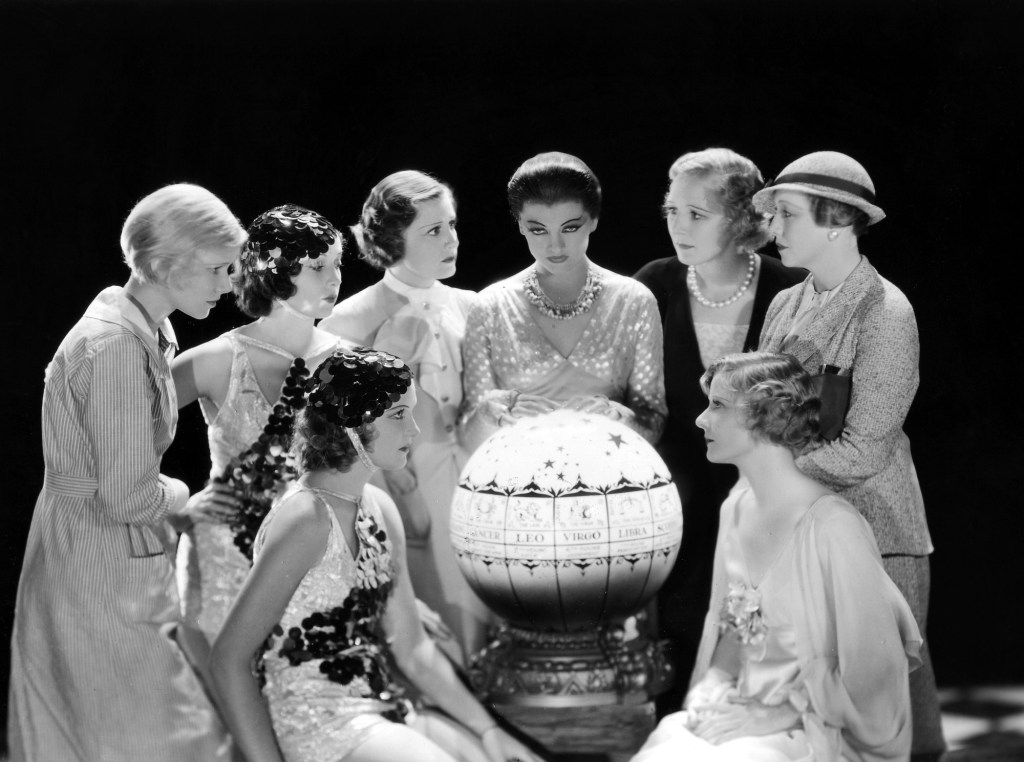
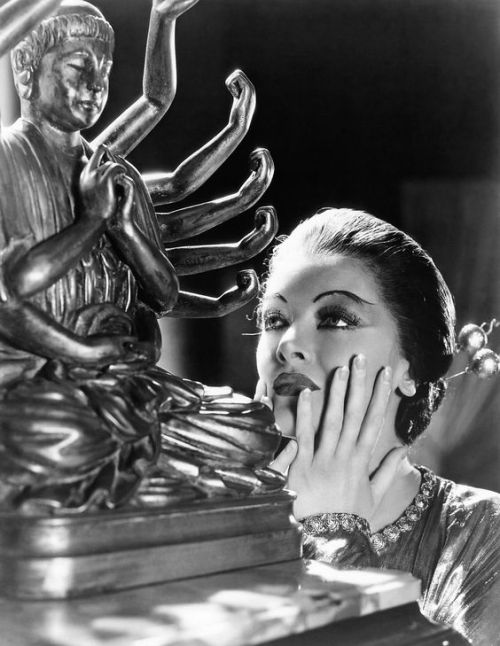
Aeons before the likes of Michael, Jason, Freddy or even Norman there was Ursula Georgi (Myrna Loy).Thirteen Women is one of the earliest prototypes of the slasher film (made at a time when most horror movies featured supernatural creatures) in which the half-Hindu, half-Javanese Ursula (even though Georgi is a name of European origin) seeks revenge on her former high school peers due to their racist mistreatment through the use of horoscopes which don’t predict a happy or successful future. Whether or not Loy actually enjoyed doing exotic roles such as this during her early career, she remains professional and doesn’t phone it in. I delight at that stoic dialogue she delivers and when she gives you that blank stare you know you’re done for, not to mention she goes through many a memorable costume change throughout the film’s short runtime.

Throughout the picture Ursula has control over her victims, leading them to commit suicide. However, the film does not make it clear if she has supernatural mind control abilities (“I was his brain as I am yours”) or simply can just manipulate her victims though psychological means as the film’s opening prologue appears to imply: 

 “Suggestion is a very common occurrence in the life of every normal individual…

…waves of certain types of crime, waves of suicide are to be explained by the power of suggestion upon certain types of mind.”

Pages 94 and 105 of Applied Psychology by Professors Hollingsworth and Hoffenberger, Columbia University.

The extent of the mistreatment towards Ursula is not made clear. In her final monologue at the film’s climax, Ursula speaks of she tried to become white and it was almost in her hands when the sorority of girls wouldn’t let her “cross the colour line”, subsequently followed by the sorority’s leader Laura Stanhope (Irene Dunne) acknowledging their cruel treatment. The film’s racial subject matter was frank for the time – this was after all when screen star Merle Oberon was hiding her mixed-race origins from the public.

Thirteen Women is an oddity in the career of Irene Dunne, being her only macabre picture in a filmography of generally light-hearted fare. Laura is the only woman in the sorority who attempts not to act so gullible and take superstitions seriously (not to mention she has one fine Beverly Hills Home). Thirteen Women is an example of a female ensemble film yet oddly all the women in the picture are comprised of divorced and single mums – there are no husbands insight and even the one who is married shoots her hubby at the beginning of the film.

Thirteen Women doesn’t disappoint with those to be expected pre-code shocker moments from the circus acrobat accident in the film’s beginning to Ursula going as far as to send poisonous chocolate and later a bomb disguised as a birthday present to kill Laura’s child. The film’s atmosphere is also aided with an exotic score by Max Steiner (topped with plenty of gongs thrown in there for good measure) at a time when most movies seldomly used scored music. Steiner would go onto compose King Kong the following year at RKO and the rest is history.

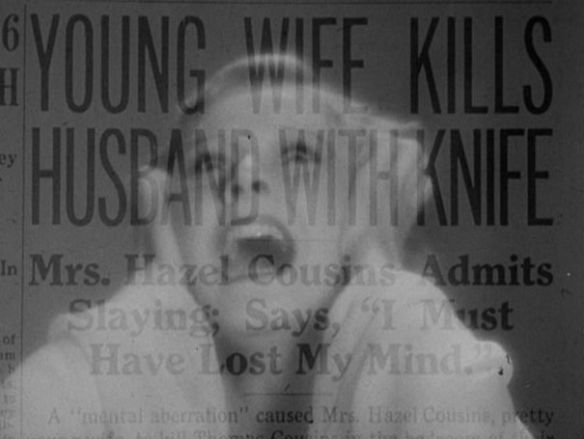
Thirteen Women’s biggest claim to fame is the film being the only on-screen appearance of the elusive Peg Entwistle, who committed suicide by hanging herself on the Hollywood sign, shortly before the Thirteen Women was released – ironically the only film she appeared in had suicide as a major theme. According to the book Peg Entwistle and the Hollywood Sign Suicide, Entwistle’s role as Mrs Hazel Cousins was central to the first 22 minutes of the film in which she was involved in a lesbian love affair leading to the murder of her jealous husband. In the 59 minute cut of the film, Entwistle is only on screen for a few minutes in which during that time she locks arms with another woman (her love affair?) and later shoots her husband and then screams at what she has just done. Thirteen Women originally ran at 73 minutes however the likely watered-down 59-minute cut is the only version currently known to exist. Perhaps somewhere out there exists a 73 minute print of Thirteen Women, regardless of what we are left with is still an entertaining hour. Perhaps future cult classic status is still in the waiting for Thirteen Women.

The Mad Miss Manton (1938)

Manhattan Murder Mystery

Melsa Manton (Barbara Stanwyck) and her ilk of rich, bored socialites use Manhattan as their playground similarly to the wealthy socialites in My Man Godfrey, using the city for bizarre escapades such as sleuthing in the middle of the night and all while still dressing to impress at the same time in The Mad Miss Manton. Stanwyck’s enthusiasm alone is infectious and the quick-fire interactions of the girls are one of the film’s highlights (“I was never much of an individualist, if the upstairs has to be searched we search it together – why that’s communism!”). They even partake in a number of Scooby-Doo like moments, in particular actions reminiscent of the character Shaggy, i.e. making a sandwich in the kitchen when sleuthing in a trespassed apartment. The other memorable addition to the cast is the sarcastic, wisecracking Hattie McDaniel who takes no nonsense from anyone and has a comeback to everything despite her socio-economic status (“Comes a revolution and we’ll start being exploited by our help”).

Francis Mercer is real dead ringer for Gail Patrick

Barbara Stanwyck and Henry Fonda – one true pair if there ever was one. Their chemistry makes it more believable that Peter Ames (Fonda) with his dorky bow tie would fall head over heels for this spoiled Park Avenue princess who is trying to sue him for a million dollars over an editorial. He is even driven to the point in which he casually imposes marriage on her. Henry Fonda isn’t given enough credit for his comic abilities, in particular, the scene in which he fakes his own deathbed in order to extract information from Miss Manton. In one scene Fonda is even seen holding a knife, in the same manner he would years later in 12 Angry Men.

The Mad Miss Manton was one of many films throughout the 1930’s which attempted to get a piece of that Thin Man pie. The formula of the 1934 comedy-mystery romp was an effective one and could easily be recreated with low budgets. It doesn’t matter that the mystery in The Mad Miss Manton is incomprehensible. The comedy and the atmosphere are what makes the movie, of which the picture succeeds in creating with the high contrast, film noir-like lighting during the sleuthing sequences (especially with the sequence in the subway) even though the film is visibly a low budget production.