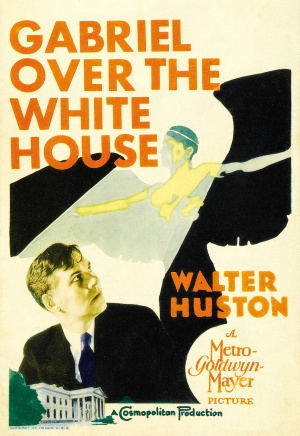
Gabriel Over the White House (1933)

I Love Democracy…

***This Review Contains Spoilers***

I do love the efficiency and streamlined nature of pre-code films. Within two minutes, the opening credits roll, followed by a montage of stock footage, and the story of Gabriel Over The White House is underway (unlike films today with a parade of 10 studio logos and a title screen that doesn’t appear until 40 minutes in).
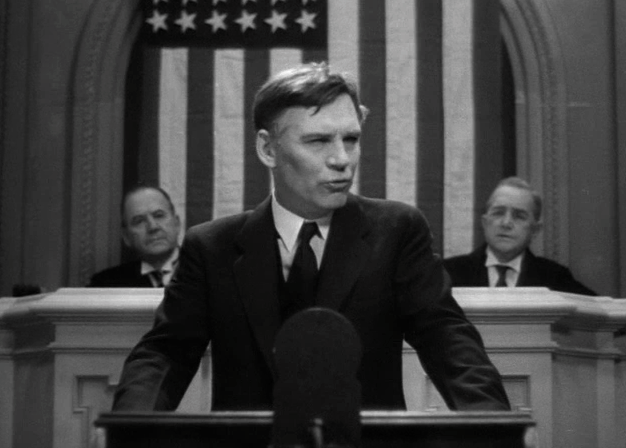
The newly elected President of the United States, Judson Hammond (Walter Huston), is sworn into office, yet behind closed doors, he and his inner circle treat the presidency as a joke. They engage in smarmy chatter and look down upon the populace (“When I think of all the promises I made to the people to get elected…by the time they realise you’re not going to keep them, your term will be over”). Hammond even takes the pen that Lincoln freed the slaves with and remarks, “Well, here it goes for Puerto Rican garbage”. To play up this disregard to an even greater degree, in a very unusual scene featuring a rare use of overlapping dialogue, the President and his nephew play a treasure hunt game in the Oval Office while the radio plays an activist speech. The audio from the dialogue between the President and his nephew becomes drawn out by that of the radio, as Hammond does not have a care in the world for what’s happening in the country. The only loyalty displayed by Hammond is towards what is simply referred to as “The Party” (“The party has a plan, I am just a member of the party”). Walter Huston has the look you would expect from a president from the early 20th century (not too dissimilar looking to Warren G. Harding or a clean-shaven William Howard Taft), while his sheer gravitas not only makes the hairs on your skin stand up, but he also prevents Hammond from coming off as just a caricature. Interestingly, however, he is a President without a First Lady, which would make him and James Buchanan the only unmarried presidents. 

Following a racing accident, Hammond goes into a coma. However, upon his reawakening, Hammond is no longer the man he once was; rather, a populist figure is born. “God might have sent the angel Gabriel to do for Jud Hammond what he did for Daniel”, states the President’s secretary, Pendie Molloy (Karen Morley), as the film makes no secret of indicating that Hammond will be enacting the will of God himself. Many scenes from this point onwards have a softer, more dreamlike look, with a higher contrast between black and white. In one moment shortly after Hudson’s awakening, he stares up in awe at a bright heavenly light shining upon his face, or as Pendie describes it, “the presence of a third being in the room”. Many a beautiful shot populates the film, from the dramatic zoom shot on Hammond (even if it does go in and out of focus) to some stunning set design with the art deco set of the film’s court martial scene.

The new Judson Hammond wastes no time getting things done with his newfound heavenly, populist political will. Right off the bat, he stops calling his staff nicknames and stands up to the members of his own party.

“Now, be careful. I might resign on you.”

“Your resignation is accepted.”

“Oh, well now, wait a minute, Jud, I was only suggesting…”

Hammond asks Congress to declare a state of national emergency to adjourn itself until normal conditions are restored, and during this period, he will assume full responsibility for the government. With the country under martial law, Hammond proceeds to tackle the issues of unemployment, mob rule, forcing over nations to pay their debts the US and by the film’s climax, literally enshrining world peace into a document signed by most nations in the world. Upon lending his own signature to the document, Hammond himself collapses and quickly passes away, lending further credence that he is enacting the will of God.
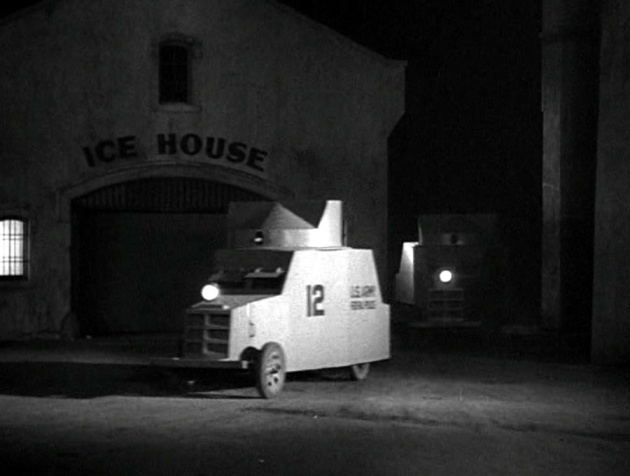
The subplot of Hammond’s efforts to eliminate the mob is particularly interesting. He praises gangster Nick Diamond (of course, he has a scar on his face) directly for “getting rid of most of his own kind”, relating to the theory in criminology that allowing one single crime syndicate to operate results in an overall reduction of crime. Hammond proceeds to create a federal police force to eliminate the mob, leading to two of the oddest scenes in the film, the first in which the mob attempts to assassinate Hammond on the grounds of The White House itself (was this more plausible in 1933?). The latter is a sequence which I can best describe as resembling the climax of every episode of Takeshi’s Castle. Following the arrest of Nick Diamond and his men, they are executed by way of an old school firing shot with the Statue of Liberty in the background (I’ll let you decide what is the intended symbolism, if any, of such a shot).

Is there a name for this kind of populist wish-fulfilment picture? The film which has the most striking similarities to Gabriel Over The White House is Ivan Reitman’s Dave (1993), in which an ineffective, uncaring president is replaced by a populist doppelganger who gets things done. Likewise, multiple sources online speak of an alternative European cut with 17 extra minutes, although such a cut has never been released on home video. Much is made of the fact that film was financed by media conglomerate William Randolph Hearst, although regardless of the agenda those behind the production may or may not have had (although it is worth noting that director Gregory LaCava would go on to direct the anti-New Deal May Man Godfrey in 1936), Gabriel Over The White House, whether by design or not, presents one central dilemma; should a nation be led by one all-powerful leader who can get things done, or have a system of checks and balances, which may be slow and inefficient? When watching Gabriel Over The White House, it’s easy to feel seduced by the temptation of having an all-powerful leader, a benevolent dictator, a king. Or once a crisis has abated, can we ever trust that a leader will lay down the powers given to him? History would say no, but Gabriel Over The White House allows the viewer to indulge in such a fantasy.

The Son-Daughter (1932)

Naaah Nah Nah Nah Naaah Naaah Nah Nah Naaah

***This Review Contains Spoilers***

1911, The Xinhai Revolution, “China under the Manchu Emperors…three centuries of unspeakable oppression…then…rebellion of wretched, starving millions”. The Son-Daughter was released in 1932, in which the supporters of the Chinese nationalists are, by and large, the good guys while the defeated royalists of China’s last emperor are ruthless hatchet men who subject their enemies to neck-straining torture devices. The head of royalists is portrayed by a moustache-twirling Warner Oland, of whom his death through strangulation with his own traditional Chinese queue (pig tail), surely signifies the death of the old. You don’t want to upset the winning side and the current government of one of the world’s largest powers, I guess.

The Son-Daughter follows an underground group of Chinese nationalists in San Francisco’s Chinatown running contraband to the Middle Kingdom, whom must raise $100,000 to release their latest ammunition ship from the wharf. The set and costume design are one of the picture’s biggest strengths, with exotic, smoke-filled rooms, noir-ish lighting and striking attention to detail. The meeting liar, seen 5 minutes into the picture, showcases a large number of extras and some stunning deep-focus cinematography; it’s a world that feels lived in and not an obvious Hollywood backlot. There’s just something fascinating about the world of a Chinatown with all its narrow corners and maze-like structure.

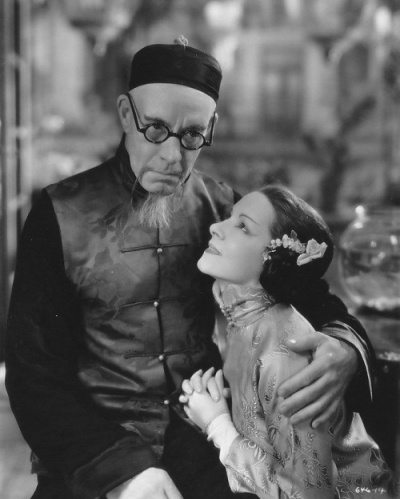
Based on a play, a large amount of The Son-Daughter takes place inside the apartment of Dr Tong Wong (Lewis Stone). Wong is faced with the challenge of raising the money to release the ammunition boat from the wharf. Although only third billed in the cast, Lewis Stone is the picture’s most prominent star and delivers the film’s most standout performance, as the ageing patriarch who is navigating between tradition and modernity; the values of the old world vs the new world (“Your daughter was born in America, where a girl is left free to meet her own heart”). His daughter Lien (Helen Hayes) feels guilty for being born a lady, as she can’t help her people in the way a man could. She does propose to her father that “I could do what no son could do”, to which her father promptly scolds her. Yet it is this very thing which he is forced to do to raise the required funds for the ammunition ship. The auction scene in which Lien is being bid for a man’s hand in marriage is the most fascinating scene in the film. Fascinating on the one hand to watch a woman being treated like a commodity by older, unpleasant men, but she herself is fully invested in this auction, and she works to increase the men’s offers (“Am I not all Confucius demands in a wife?”); making such a sacrifice to something which you feel is greater than yourself.

The Son-Daughter is a film in which its cast billing doesn’t accurately reflect the screen time of its stars. Second billed after Hayes is Ramon Novarro, who is actually absent for lengthy stretches of the film, but disappointingly, this is actually for the best. Novarro is the weakest aspect of the film, a great lover alongside the likes of Rudolph Valentino (thus his casting makes sense), but he is the weakest aspect of the film. He gives a very cheesy performance, but more importantly, he lacks any chemistry with Hayes. I can’t buy why she is head over heels in love with this man, and as a result, his scenes do cause the film to drag. The Son-Daughter is left as a flawed but intriguing gem in the treasure trove that is pre-code cinema. 

Hell’s Highway (1932)

Takin’ It Off Here Boss

***This Review Contains Spoilers***

Hell’s Highway is the lesser-known chain gang picture from 1932, overshadowed by its more famous counterpart, Warner Bros. I Am A Fugitive From A Chain Gang, however, according to sources, this RKO production was released two months prior to the Warner Bros. picture. There are some notable differences between the two socially-conscience, pre-code films. Unlike I Am A Fugitive…, the majority of Hell’s Highway takes place within the chain gang itself rather than the events leading to the protagonist being imprisoned. Richard Dix stars as Frank ‘Duke’ Ellis, whom unlike Paul Muni’s character in IAAFFAGC, is not an innocent man who has been falsely imprisoned, therefore as a viewer, one’s sympathies lie differently with him. The film cleverly creates sympathy for the character in two ways. Firstly it is established he has been locked up for the crime of bank robbery, which means he isn’t as morally reprehensible as say a murderer. Secondly, he forgoes an escape opportunity when he learns his idolizing younger brother Johnny (Tom Brown) has also been sentenced to the chain gang, thus Duke remains put in order to protect him. Duke is also a World War I veteran; however, the manner in which this is revealed is a brilliant piece of visual storytelling. In a scene in which Duke has been tied up to receive a whipping on the back, the guard is apprehensive about doing so. The camera then pans to Duke’s shirtless back to reveal a giant Tattoo of the American flag accompanied by the text “42nd Machine Gun Co, 167th INF.”, as the screen then fades to black – powerful stuff. Dix himself is a silent-era holdover and like his contemporary’s such as Richard Barthelmess, he has an intense presence and a face which is able to convey so much.

While Duke Ellis is a man who has been rightfully locked up, Hell’s Highway does raise the question of when does the punishment outdo the crime? When does punishment become even too hardcore for the likes of Dirty Harry – a system which has prisoners are in bondage the majority of the day, even as they sleep and eat in the mess hall. One of the most distinguishing images in Hell’s Highway is the prison uniforms which have a target on the back of them, a target for prison guards or bounty hunters to aim at as seen later in the film (however, I can’t find any real-life example of these uniforms actually existing). Likewise, the trousers worn by the prisoners have flaps on their rear ends, looking like an exposed diaper and another way (whether intentional or not) of removing dignity from these men. However, it’s the sweat box which is the most inhumane piece of torture present in the film. Alec Guinness might have survived one on the River Kwai but here it is a death sentence, as occurs early in the picture as indicated by the haunting sound of a crying dog (although one minor criticism I would deliver is from this moment having its impact weakened as a character immediately explains the dog’s crying means someone has died rather than just allowing the moment speak for itself).

Hell’s Highway opens with a prologue stating “Dedicated to an early end of the conditions portrayed herein – which though a throwback to the Middle Ages, actually exists today”, followed by a montage of newspaper headlines covering abuses taking place in chain gangs across the states. I am unable to find any evidence these headlines are real. For example, one of them reads “Prison Guards Accused Of Murder As Tortured Youth Dies Chained In Sweat Box” from the Seattle Post, a publication of which I can’t find any evidence of actually existing. Regardless, this along with the haunting acapella of chain gang singers over the opening credits sets the tone for the film. These chain gang chants serve as the film’s diegetic soundtrack (with prolific composer Max Steiner acting as the picture’s music director), which is put to its most effective use during a memorable montage which is accompanied by sketches made by prisoners depicting previous events in the film.

Hell’s Highway is one dirty, sweaty film full of fascinating, rugged faces which say a thousand words. Firstly I have to ask is the character of Maxie (Sandy Roth) supposed to look like the film’s producer David O. Selznick? Furthermore, it wouldn’t be a pre-code film without an overtly homosexual man thrown in; a prisoner who does what else, cooks the food and does the laundry.  Moreover, the head guard of the chain gang, Mr. Skinner (C. Henry Gordan) has a moustache primed for twirling. However, throughout the course of the film, he is seen trying to learn the violin in his downtime – a corny but effective way to make him more human and show he has a soft side. However, if the film has one show stealer it has to be religious/spiritual prisoner Mathew, a man who claims to be Christian despite having three wives at once and an expansive knowledge of astrology (of which he highfalutin, astrological predictions do come true throughout the film). When I first watched Hell’s Highway I had to know who this actor was a dead ringer for Harry Dean Stanton (or certainty in this picture at least). It turns out the actor is known as Charles Middleton, whose biggest claim to fame was playing Ming With Merciless in three Flash Gordon serials made between 1936-1940.

Hell’s Highway concludes with justice actually being served by the film’s end in which the Of Michigan State Governor arrives at the chain gang prison to issue injunctions against the corrupt prison officials for their violation of state law (although it is not stated where the film is actually set until ¾ into the picture). The Governor himself is presented in one of the most comically, stereotypical images of an American authority figure (usually a southerner but not always the case as seen here) wearing the Col. Sanders white suit, hat, shoes and the black bow tie. The ending is another major deviation from I Am A Fugitive…, which does not conclude in such a manner with everything being neatly tied up. It’s not a bad ending by any means, but I do feel the film’s impact could have been stronger with justice not remaining delivered at the end. Regardless, perspective viewers can find this pre-code gem on the Warner Archive Forbidden Hollywood Collection: Volume 9.

Tarzan And His Mate (1934)

Hot Jungle Sex

***This Review Contains Spoilers***

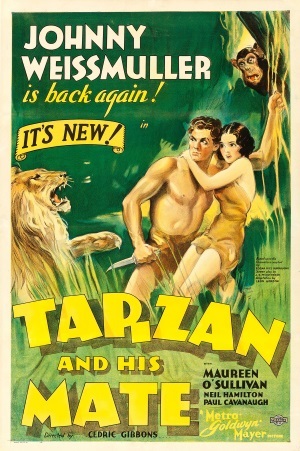
Tarzan and His Mate more than compensates for the shortcomings of the first Johnny Weissmuller Tarzan film of which the production values where a mixed bag. Tarzan and His Mate has less reliance on stock footage and rear projection with its use of matte paintings and a large amount of animals on set to recreate deepest darkest Africa in the only film directed by Cedric Gibbons, otherwise famous as an art designer for MGM. I just wish we could do without the men in not so convincing gorilla outfits, especially since the cast appears on screen with real apes (Planet Of The Apes was still 34 years off).

Pre-code cinema doesn’t get any sexier or revealing than Tarzan and His Mate, notably with its use of full-frontal nudity despite having a modern-day PG rating in the UK. During the early portion of the film, topless African natives can be seen in the background but in one of the film’s most memorable scenes, Tarzan and Jane going for a swim in which Jane goes full commando. The underwater scene was filmed in three different versions to comply with the individual censorship laws of different US states. Maureen O’Sullivan does not appear as Jane during the swimming sequence, rather she is doubled by Josephine McKim, a member of the 1928 and 1932 U.S. Women’s Olympic Swim Teams. O’Sullivan does nonetheless wear one of the screen’s most revealing costumes of the time, a halter-top and a loincloth that left her thighs and hips exposed. Needless to say, this two-piece costume did not make its way to the post-code Tarzan films. Jane sleeps in the nude and is constantly touched by Tarzan, even just watching the two of them interact while alone, there is such sexual tension portrayed on screen (we are even treated to the Austin Powers style silhouette in the tent of a woman getting undressed).

Tarzan and Jane do refer to themselves as a married couple in Tarzan and His Mate (“Never forget, I love you.” “Love who?” Jane prompts…”Love my wife”), however at this point in their relationship it is unlikely Jane and Tarzan are technically married in the eyes of the law since a justice of the peace isn’t likely to be found in the jungle. Rather you could say Jane considers Tarzan her husband because they have lived together and slept together for a long time by now, married virtually, synonymously and spiritually – a true marriage in the law of love and the jungle. Likewise, the scene at Jane’s father’s burial site, Jane takes the chain of his timepiece and puts it around Tarzan’s wrist and says “always” in which Tarzan repeats “always”. The morning after they repeat this vow, which one could interpret as a short and sweet jungle wedding – therefore monocles can remain firmly in place over the prospect of an unmarried couple living and sleeping together.

The mighty figure of a man that is Johnny Weissmuller – he is Tarzan! His short lines of limited, broken English are highly quotable (“Martin My Friend”), while he also provides moments of humour as the feral man reacts with bemusement at the ways of the civilized world such as curiously inspecting a record player like a cat, as well as inspecting Jane’s dress and stockings from Paris. It’s Jane who has to do the talking on behalf of the couple (and even performs the famous Tarzan yell herself). The pure romantic escapism of Tarzan And His Mate comes from watching these two being deeply in love and having the time of their lives in the wilderness of the jungle. The character of Jane is brilliantly summarized in a single line – “A woman who’s learned the abandon of a savage, yet she’d be at home in Mayfair”.

 It’s easy to feel sympathy for Jane’s old friend (and not so secret lover) Harry (Neil Hamilton) over his love for Jane as he nostalgically reminisces with her about old times back in England (“Those June nights in England, Murray’s Club in Maidenhead, moonlight on the Thames”). Alternatively, Paul Cavanagh as the villainous, womanising Martin Arlington has a touch of Basil Rathbone to him (expecting him at any point to literally twirl his moustache) while Nathan Curry is a striking screen presence as Saidi, the only native whose life is not expendable and even gets to go out in a moment of heroism. That can’t be said for the rest of the safari runners including one who is shot for his cowardice. Yet, its attacks from uncivilized tribes which prove to be their biggest threat, making Tarzan And His Mate one of the more graphic films of the pre-code era (including one particularly gruesome shot of a man having been impaled in the forehead).

Ouch!

I find it difficult to determine if Tarzan And His Mate is an early example of a film with an environmental/conservationist message? The film shows Tarzan has an almost supernatural connection to the non-predatory/ non-carnivorous animals of the jungle, whereas he fights predators such as lions and crocodiles throughout the picture. In particular, Tarzan has the ability to rally up herds of elephants in order to prevent the safari hunters from removing ivory from an elephant graveyard (there is no such thing as an elephant graveyard but the appearance of one in the film with its litany of skeletons is no less eerie). Is the film trying to promote a message or is it just a reflection of Tarzan’s personal feelings over the elephant graveyard being a sacred ground for the creatures and not to be disturbed or violated? Likewise, Tarzan and His Mate was reportedly banned in Germany by the National Socialist Party on the grounds that it showed a nordic man in primitive surroundings, which I do find odd since I could imagine them using Tarzan as a promotion of Aryan supremacy. Then again perhaps part of their motivation to ban the movie was based on the fact that Tarzan is played by a man whose surname is Weissmuller.

Love Me Tonight (1932)

Tailor Made Man

Love Me Tonight was produced and directed by the forgotten movie magic maestro Rouben Mamoulian, a name who doesn’t make the history books compared to the likes of Orson Welles but who’s work during the pre-code era deserve that cliché expression, “ahead of its time” – films which had extensive visual freedom more technical wizardry than you can shake a stick at. No more so than in the musical, comedy Love Me Tonight, the first film in history to use a zoom lens as it does several times throughout the movie (yet it would be decades until this technique would catch on). Not to mention the film’s early use of slow-motion during a very dreamlike deer hunt sequence – quite unlike anything else you’ll see in a film from the time.

Sharp Dressed Man

Love Me Tonight opens with the city of Paris coming to life in a visual manner reminiscent of the silent documentary film Berlin: Symphony of a Great City; however this is accompanied by a symphony created by everyday sounds from a construction worker hitting the ground with a pike axe to a woman sweeping a pathway. Likewise, the Paris street sets look authentic (with shots reminiscent of Gene Kelly’s apartment and neighbourhood from An American In Paris), I would believe it was real-world location but it was a set in the Paramount back lot, which is equalled by the opulence and detail of the chateau seen later on in the film.

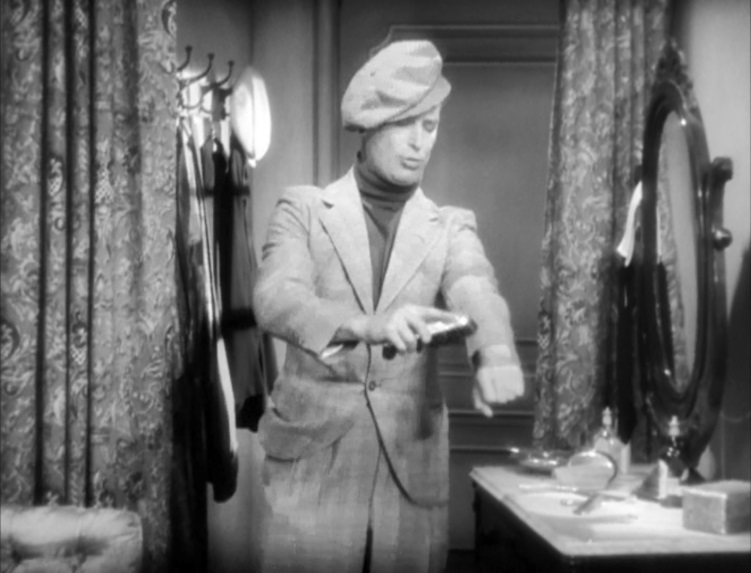
Love Me Tonight is an Ernst Lubitsch style romantic comedy focusing on European aristocracy. Our protagonist and his Supreme Frenchness is Maurice Chevalier in the role of well…Maurice – the stereotypical Frenchman who’s life revolves around the concept of romance (is there any truth to Hollywood’s fantasy of France and Paris in particular?). He is one fine dressed man in his dashing turtle neck and a distinct walk (he is a tailor after all) along with a shade of Groucho Marx aspect to his personality with his witty comebacks to all the bourgeois snobs he encounters. 

It was a novelty in 1932 for musical numbers to be so interwoven into the text and pushing the plot along, in particular, the Isn’t It Romantic number which cleverly connects future lovers by song as Maurice begins singing it in his Paris tailor shop and it ends up being carried out of the city and across the countryside to a chateau in which Jeanette MacDonald (who feels like she was tailor-made to play nobility) and her magnificent pair of pipes finish it off. Love Me Tonight has no shortage of character actors galore such as the inclusion of the three spinster sisters (a more benevolent version of the three witched from Macbeth) being a very humorous touch, especially when they sound like chickens as they frantically pace. Also take note of MacDonald’s reaction to Charles Butterworth falling off ladder and landing on his flute – priceless. 

The other great addition to Love Me Tonight is an always show-stealing Myrna Loy in a part which helped turn her career around from being typecast as the exotic temptress to performing high comedy as the sex-hungry Countess Valentine. The bored sex fiend spends her time around the chateau sleeping on chairs and furniture, becoming excited when the prospect of a male encounter arises. She gets many of the film’s best and not to subtle innuendo-laden lines and even sings for the only time in her career during her few lines in The Son Of A Gun Is Nothing But A Tailor. Currently, the only version of Love Me Tonight known to exist is the censored 1949 re-issue which includes among other potentially suggestive cuts, an omission of Myrna Loy’s reprise of “Mimi” due to her wearing of a suggestive nightgown. Why yes I’m outraged that a piece of film history has been erased and in no way does being deprived of seeing a scantily clad Myrna Loy factor into it. 

Regardless of what we are left with, it surprises me the Love Me Tonight would even receive a post-code rerelease with every other line of dialogue being a sexual innuendo (not to mention one particularly luring pan of MacDonald in lingerie as the Doctor inspects her). We can always hope one day an uncensored print we surface.

The Hatchet Man (1932)

The Chinese: A Great Bunch Of Lads

In the beginning of The Hatchet Man, the Chinese community (“Yellow residents” as the opening crawl refers to them as) in San Francisco circa 1918 are a parallel society to the rest of America. However, fast forward to 1932 and the community has moved beyond the Tong wars of the past to a more Americanized and western way of life in which many of the old ways are dismissed such as foot binding and women having less freedom. – Meanwhile, elders in the community hold onto their more old fashioned ways. Instead, we see a community which is becoming integrated into wider society and there are even signs of interracial relationships with mixed couples seen in the dance hall sequence in one of the more insightful films about the oriental to come from this era.

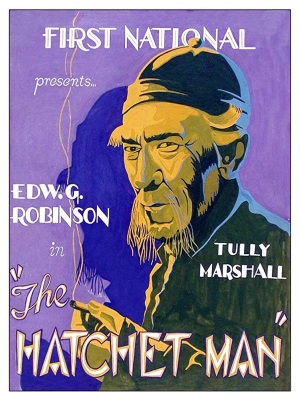
The Hatchet Man is another pre-code William Wellman gem in which the production values, extensive camerawork, and detail in the sets are second to none. The graphic ending is one of the best in pre-code cinema but the scene which I feel best shows of the craftsmanship present in The Hatchet Man is that early in the film in which Wong (Edward G. Robinson) has to kill his best friend and blood brother Sun Yat Ming (J Carroll Nash). At the beginning of this lengthy and slow-paced scene, Sun is finishing writing a will to Wong under the fear that he will be killed by a Tong (“The one I am expecting comes through doors without knocking”). Sun is leaving Wong all his worldly goods and his daughter to become his wife when she is of legal age. Soon Wong arrives and after many gaps in the slowly delivered dialogue with calming Chinese music in the background, the camera does an epic zoom on Robinson as he delivers the fatal line “I am the hatchet man of the Lem-Sing Tong”.

The one drawback of The Hatchet Man is the casting of Edward G Robinson; he isn’t fully convincing in the role of Wong Low Get. Sometimes he looks Asian which his epicanthic fold but not always, not to mention he doesn’t sound particularly Asian which his Eastern European accent. That said if you can suspend your disbelief at Robinson playing an oriental, you’re still left with a performance with the intensity you would expect from Robinson. Otherwise, it’s hard to tell in the cast who is Asian and who is a white actor in makeup. Loretta Young is far more convincing in her role as Wong’s adopted daughter Sun Toya San. Wong’s romantic relationship with his adopted daughter raises many eyebrows from today’s standards not is it ever made clear if she knows this is the man who killed her own father, but this just makes the odd relationship all the more fascinating. Leslie Fenton, on the other hand, is the film’s big scene-stealer as the slim ball villain Harry while Toshia Mori (who was originally to play Loretta Young’s role) as Wong’s secretary is a very striking screen presence.

There is much less focus in Hollywood cinema of Chinese-American gangsters as opposed to Italian-American gangsters; a shame since it’s a fascinating underworld with it prevalent theme of honor.

Heroes For Sale (1933)

ww1-banner-1

We Didn’t Start the Fire

***This Review Contains Spoilers***

The amount of subject matter and themes present in Heroes For Sale could create a verse in We Didn’t Start the Fire; morphine addiction, the great depression, unemployment, disgruntled vets, capitalism, communism, police brutality, automation, mob mentality, false imprisonment, stolen valour, rock n’ roll and cola wars, I can’t take it anymore! All packed within 71 minutes (well minus those last two I just mentioned). I find the sheer volume of topics the movie covers to be its weakness, many of the issues are only covered on a base level and doesn’t massively go into depth with them rather than focusing on a single topic. – Think of the movie as “Issues Facing American Society During the Great Depression 101”.

Heroes For Sale is an emotionally engaging film regardless of its constant shift in theme. Richard Barthelmess seems to have been made for heavy hitting dramas with that face and voice of his. In the role of Thomas Holmes he plays a character whom gets screwed over again and again; not being rewarded or ultimately losing his rewards either by bad luck or at the hands of a broken system. According to the details of a state narcotic farm card, Holmes is 25 in 1921 of which Barthelmess is defiantly not (yet despite being clearly too old for the role the ageing makeup in use is very effective).

At the beginning of the film, Holmes captures a German soldier in battle only to be shot and be captured by the German’s while his cowardly friend is mistakenly glorified and given a Medal of Honour for Thomas’ brave deed. Only a few minutes Heroes For Sale is comprised of a WWI battle, but any self-respecting war movie would jealous to have a sequence looking this good and real showcase of William Wellman’s skills as a director.

The film’s comic relief comes in the form of Max Brinker (Robert Barrat), a crazy caricature of a communist. They say communism fails to breed innovation due to the lack of an incentive yet Max is an inventor always hammering away in his room. Once he invents a machine which makes washing and drying clothes easier he happily becomes rich of it; reaping the rewards of your own invention rather than the state owning it. After this he dresses and acts like what would be a caricature of a capitalist seen in Communist propaganda, wearing a tux and top hat while despising the poor (*clicking tongues).

The fear of automation is present during the later portion of Heroes for Sale, the one aspect of the film which hits right at home as I write this review in 2018 in which major companies are automating their services. At the same time, however, does the fact that Heroes for Sale shows this fear existed in the 1930’s not prove that it is an unfounded one, that the market will adapt and life will go on? Holmes pitches the automated washing device invented by his friend Max to the head of a cleaning company under the pretence that it must not be used to throw anyone out of work or cut salaries but rather to increase production, makes jobs easier and make employees working hours shorter. Of course, the evil businessmen go back on their word and automate the entire process and throwing their employees out of work in which the newly found Luddites start rioting in the street. Tom himself is even taken over by guilt over the invention he promoted which resulted in job losses and uses his royalties to help the poor. Well not until he’s run out of town under accusations of being a communist (guy can’t catch a break).

It’s hard to really determine a political message emitting from Heroes for Sale that lands on either side of the political spectrum, even if it does conclude on an optimistic note with a final speech from Holmes about America and FDR’s inaugural address (whether the New Deal was counterproductive or not but that a whole other can of worms). It provides an interesting contrast to the more ominous final words given by Tom Joad in The Grapes of Wrath. Both films end with a titular Tom vanishing into the dark of night promising to do good in some form or another.

“It may be the end of us, but it’s not the end of America.”

Moby Dick (1930)

picmonkey_image-31

Here’s To You Ahab!

I have never read the novel Moby Dick although I am informed this adaptation has very little to do with its source material. The film does open with a shot of the novel itself, however, the screen dissolves into the first paragraph of a Chapter 1 which does not exist in the book nor contains the famous line, “Call me Ishmael” (a character who also does not appear in this adaptation). Yet even to judge Moby Dick from 1930 on its own merits this is a flawed film but has enough good in it to make it enjoyable; although it is a shame as all the ingredients are there for the making of a classic. Oh whale, what can you do?

John Barrymore’s performance is unlike my perception of Captain Ahab and also differs from Gregory Peck’s Lincolnesque performance from 1956. This Ahab during the first half of the film is a womanizing, carefree rapscallion who even exudes sexuality at times. What’s striking about Ahab’s introduction are his acrobatics atop of a ship’s mast. While some shots are clearly performed by a stunt actor, those involving Barrymore really gave me the Gene Kelly vibes, specifically of his performance in The Pirate (1948). Even his voice is reminiscent of Kelly when he shouts “Look out below!”. In the latter half of the film, we see the Ahab more identified in pop culture as a bitter, vengeful man once Moby Dick robs him of a leg. Nothing beats Barrymore hamming things up and in one scene we even see him wearing a cape and strutting like he did in Dr. Jekyll and Mr. Hyde.

Ahab’s relationship with his brother’s finance Faith (Joan Bennett) is an endearing bit of adultery as established in a cutesy scene taking place in a church in which they bond thanks a trusty Saint Bernard. The other real striking presence in the film is Noble Johnson as Queequeg, of whom Ahab humorously refers to as a heathen throughout the film.

The structure and pacing of Moby Dick is rather flimsy. The landlocked portions of the film, for example, leave me wanting to get some sea action. Likewise, the sequence of Ahab’s ship navigating through a storm is visually impressive but didn’t have to be as long as it did, plus it’s hard to make out much of the dialogue amongst the sound of the storm.

One of the film’s big positive’s are the production values from the rich details of the port, the seedy taverns and even full-scale ship recreations – all contributing to the film’s downtrodden atmosphere ( we are even given a sequence amongst an exotic Asian port in Singapore). The special effects, on the other hand, are mostly good for the time, all except for one extremely poor close up of Moby Dick during the first encounter in which the little mouth of the beast is seen moving. It only appears on screen for a mere second but looks poor enough that it sticks in your mind. Historical adventure pictures were not common during the pre-code era. After being abundant during the silent era they wouldn’t make a comeback in Hollywood until the mid 30’s so it is interesting to see a picture of this nature made in 1930.

Details on this film’s background are not abundant. It wouldn’t surprise me if Michael Curtiz directed any scenes (he did direct the lost, German language version) due to two scenes featuring the unmistakable use of Curtizian shadows. – But for now, I can only speculate. This brings me to my next point; the changes in image quality in the Warner Archive print of the film. Much of the clarity of the image quality is above what you would expect for a film from 1930, yet other scenes are of a much-degraded nature. Even more bizarrely in some scenes, the brightness levels between shots are very inconsistent. Is this the fault of the filmmakers, the print or where portions of this film lost at one point? Whale we ever know?

Night Flight (1933)

picmonkey_image-31

Par Avion

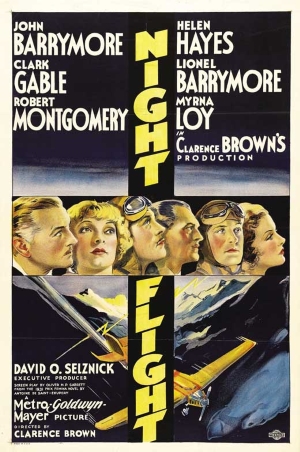
Night Flight is possibly the most forgotten all-star ensemble film ever made, thanks in no small part to the movie being withdrawn from public circulation for 69 years due to a copyright dispute. Although an all-star picture, Night Flight belongs to John Barrymore. The sight of him strutting and giving monologues in front of a giant map of South America is a magnificent sight to behold. He has the Warren William type role as a flight director for a Trans-Andean European airmail company in which he goes to extreme lengths to get the job complete while trying not to let empathy get mixed in. As a viewer I’m left to question are his actions justified or is he taking things too far? Considering the perils of early aviation should he even be sending men out at night and in such terrible conditions to deliver mail? However, he claims if they don’t send planes out to fly at night then the train service will overtake them and make the outfit an unviable business. He will even go to unethical measures such as lying to a pilot that there was nothing wrong with his engine after he reported otherwise to remove any fear he had. As seen in the film Command Decision starring Clark Gable, running an outfit like this you will have to make decisions which will make you unpopular. – “Ask the impossible, demand it!”

Viewers may be disappointed to find out Clark Gable has a mere four lines of dialogue in the entire film. Although this makes sense as the role doesn’t lend itself to many speaking opportunities as he is confined to the cockpit of a two-person plane in which communication is best carried out by passing written notes to each other – As a result, Gable’s scenes play out like a silent film. That said it wouldn’t be fair to say Gable is put to waste as the movie does a good job at increasing the tension of these scenes throughout the course of the film as the plane runs out of gasoline and encounters terrible weather conditions.

Robert Montgomery has the film’s most interesting character arc. It’s clearly evident that the guy is into prostitutes and during a particularly impressive sequence in which he comes close to death flying through a canyon in the Andes, he has to come to terms with this experience after landing. Thus he ends up favouring a friendly night with a very itchy Lionel Barrymore over booze and hookers. After he refuses to be called for duty on another flight his character disappears and we never find out what happens to him. Night Flight would also be one of Myrna Loy’s earliest ventures into the role of the perfect wife, going from the exotic to another form of typecasting, but there is no denying nobody could do it better than her.

Night Flight is full of picturesque luminosity in this rare non-Cedric Gibbons design at MGM. The film also stands out for its prevalent use of Star Wars style transitions and even one particular sequence which looks very much like the intro to the TV soap Dallas in this favourable and idealised representation of a much westernised South America in which there is little showcase of poverty.

The structure in Night Flight is held together by a subplot in which a serum package that has to be delivered across the continent in order to save a child’s life (the movie pulls no punches in the opening by showing a child’s funeral). No one involved in the flying, however, is aware of this package yet it turns out this was by accident rather than design as the inclusion of the serum package subplot was an afterthought. Producer David O’Selznick thought the film didn’t have enough tension and had these additional scenes inserted after the film was shot. However, I found this does succeed in holding the film together more. Likewise original cut of Night Flight ran at over two hours with the release version being 85 minutes – who knows what was left out?

Possessed (1931)

gable_gwtw-french-banner1

Living In Sin

***This Review Contains Spoilers***

The poor, poverty-stricken girl goes to the city to meet a rich man. Once you’ve seen enough 1930’s films which follow this formula you get sick of it but Possessed is one of the better films of this kind, partially from a degree of its self awareness, such as when businessman Wally Stuart (Richard “Skeets Gallagher”) reacts to Marian Martin (Joan Crawford) showing up at his New York apartment (“Poor but beautiful factory maiden leaves squallier of small town for glitter of big city”). At the beginning of Possessed Marian works in the most comically mundane place imaginable, a box factory (thank you Principal Skinner). Marian holds the fear of getting older and passing her sell-by date; use your looks now while you still got them. When Marian goes to the city she must navigate her way through a man’s world full of greed, ambition, politics, and sex. It’s there that she meets a certain Mark Whitney (Clark Gable).

Crawford and Gable – the heat, the passion, the electricity. Could you ask for a stunning and sensational on-screen couple? Crawford has talked openly about her feelings for Gable and watching them on screen you can tell the two of them are really in love with each other. Possessed shows a couple living together (and presumably having sex) out of wedlock; means nothing today but was scandalous for the time. Mark refuses to marry Marian out of pain from his previous marriage (“Losing a sweetheart is a private misfortune, losing a wife is a public scandal”) and we see the effect this has on their relationship. In one pivotal scene during a party at Mark’s apartment, an accomplice of his brings a floozy to the party and justifies this over the presence of Marian. Not married and living with a man? Then others will see you no better than some tramp off the street.

Later in the film, Mark makes the decision to run for governor and decides to marry Marian as she would otherwise be a liability to his campaign. The scene in which Marian can overhear Mark talking about his intention to marry her as heard from Marian’s point of view is one of the many deeply emotional and naturalistic scenes with Possessed. Also at exactly 7 minutes and 7 seconds into Possessed, there is an edit which does not match at all when Crawford opens a kitchen door and enters the room; I found myself watching it several times just to make sure I wasn’t seeing things.

Mark Whitney is a man of moral character compared to other Gable characters. This isn’t the brutish Gable who throws women around. Just like the film itself, there is a great sense of tenderness, warmth, and maturity to his performance. When the two do break up we finally hear the brutish Gable and it’s heartbreaking. The greatest emotional high, however, is saved for the film’s climax as we are treated to Mark giving a campaign speech to a huge crowd in an auditorium; expertly shot and very rousing stuff (he gets my vote!) Likewise that Whitney for Governor poster is an obscure film prop that I want.