Whisper Of The Heart [耳をすませば/Mimi o Sumaseba] (1995)

I Don’t Think There’s Any Artist Of Any Value Who Doesn’t Doubt What They Are Doing

***This Review Contains Spoilers***

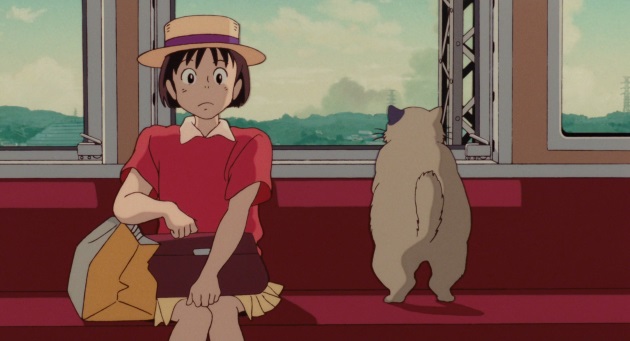
Whisper Of The Heart is Studio Ghibli’s love letter to creatives and a picture which contains great insight into the uncertainty derived from growing up and the role of education in this nostalgic coming-of-age tale. Fourteen-year-old Shizuku Tsukishima is the cheerful and infectiously optimistic protagonist of the story. She manages to find the joy in the mundanity of everyday life from something as simple as the sun coming out to seeing a positive message on the side of a blimp. Just observe the pure joy she gets from finding a quirky antiques store in a suburb (perhaps a bit too much as she nearly gets hit by a car while running across the road and never realizes it). The eccentricity of Japan is even on subtle display from the fact that a pork pie hat can be worn in common parlance and a girl can pursue a chonky cat for quite some distance just for the fun of it. It’s this aspect of Whisper Of The Heart which really makes you want to cherish life’s little moments.

Whisper Of The Heart is set over the course of 1994 (as indicated by Shizuku’s calendar), with a number of subtle indications for the passing of time throughout the film. The most noticeable of these being the seasonal variation of Shizuku’s school uniform with a white top for spring/summer and a navy-blue alternative for fall/winter. The initial catalyst of the story is set into motion when Shizuku’s father informs her that the local library is going through a transition from the old-fashioned book card system to a barcode system, much to her disappointment (I can recall my local library still using book cards in the early 2010’s). Goddammit modernity, sometimes the old ways are just better! It’s this tradition which ignites the film’s romance as Shizuku notices someone by the name of Seiji Amasawa has been taking out all the same books as her in this variation on The Shop Around The Corner formula re-imagined for the 1990’s. Shizuku and Seiji themselves aren’t too dissimilar to Jimmy Stewart and Margaret Sullavan in Ernst Lubitsch’s 1940 romantic comedy with Seiji’s initially jerky behaviour and Shizuku’s bookworm personality (unfortunately, when I was off this age any expression of a desire to read was social suicide – sad but true). 

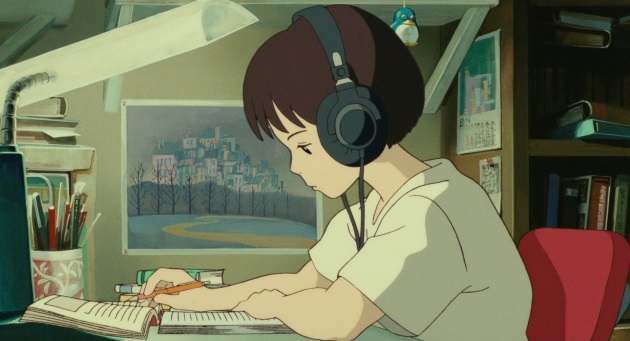
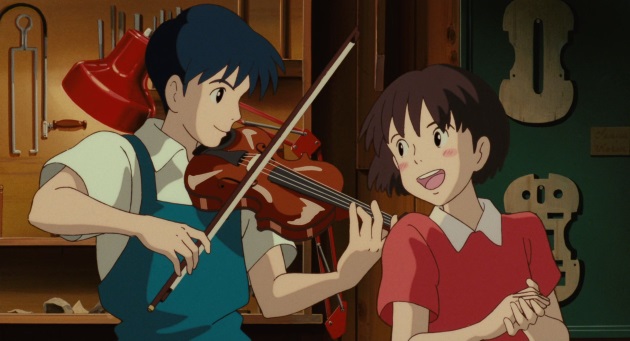
As is a common recurrence in Studio Ghibli’s films, Whisper Of The Heart is the story of a young, teenage girl forced into a position of maturity (it does make sense that the female sex tends to be the focus of these stories as research has shown that girls on average mature faster than boys). One major interlocked aspect of Whisper Of The Heart is the classic conflict of education vs. hands-on/real-world experience. Shizuku is attending middle school (aka junior high school) and is studying for her high-school entrance exams. Her love interest Seiji on-the-other-hand opts to attend a trade school in Cremona, Italy to further learn the craft of making violins rather than attend high school, much against his parent’s wishes (high school is not compulsory in Japan). This disapproval highlights the lack of respect one can entail for a practical hands-on profession over a more middle-class, so-called “real job”. Part of Shizuku’s impetus to embark on her writing of a novel comes from the insecurity that Seiji is far more developed in his own art form. Her focus on writing begins to affect her school grades, feeling that her need to write a first draft of her novel within two months before Seiji returns from Italy is more important than her school grades. Unlike Seiji, Shizuku doesn’t know what she wants to do with her future. She asks her older sister Shiho when she decided on her future, to which she responds with the dubious answer, “I’m at university finding that out”. This quote is particularly prevalent from a UK-centric point-of-view, when official figures state in the year 2017/18, 50.2 per cent of English 17-30-year-olds had participated in higher education, 20 years after the New Labour government set the target of having 50% of young people attend university (with these degrees often being of a useless nature and provide no stepping stone to a future career). From a personal point of view, I didn’t know what I wanted to do with the rest of my life when I was 14 and it’s self-evident very few people of that age either have any idea. Seiji’s oddball choice of profession as a violin maker is an appropriate one at the end of the day as his character is an outlier of a person in their teens who has a definitive idea of what they want to do with their life. The film doesn’t take a position on the question on the role of higher education but does raise many a thought-provoking point as to its effectiveness. Come the film’s end, Shizuku returns to studying for her entrance exams. I can however relate to Shizuku’s unwillingness and nervous disposition to tell the rest of her family about her writing project even though they are aware something is occupying her time, to which her understanding parents sympathize and don’t question her on it any further.

Seiji’s grandfather and owner of the antiques store Shiro explains how artists or writers develop and grow in their talents with a simple metaphor – “The rough stone is inside you. You have to find it and then polish it”. Shizuku holds intense self-doubt about her work, disagreeing with anyone when they praise her work. This intensely self-critical manner and strive for perfection overtakes her and leads to overpowering anxiety when she shows Shiro the first draft of her novel. To quote filmmaker Francis Ford Coppola, “I don’t think there’s any artist of any value who doesn’t doubt what they are doing.” – It’s this which really drives at the heart of Whisper Of The Heart. The picture showcases the highs and the lows that can be endured by creatives and parallels between the feeling of falling in love and the thrill that comes with creative pursuits. That scene in which a band has an impromptu performance of Country Roads as Shizuku sings her little heart out and gradually falls for Seiji (still unaware he is the boy on her book cards) combines these elements in a wonderfully corny scene. Whisper Of The Heart does hold parallels to fellow Ghibli film Kiki’s Delivery Service with protagonists succumbing to stress, burnout and depression (also is Shizuku’s older sister a recycled character model of Ursula?). Whisper Of The Heart is after all set in a country in which death by overwork is so tragically common that it even has a name – Karoshi (“You doctor yet? No Dad I’m 12. Talk to me when you doctor!”). The ultimate irony of this is that the Whisper Of The Heart’s director Yoshifumi Kondo would pass away 3 years following the film’s release from an aneurysm brought on by overwork. Whisper Of The Heart would be his only directorial feature, with Kondo joining the likes of Charles Laughton or Walter Murch as directors who have helmed only a single film, but what a film it would be.

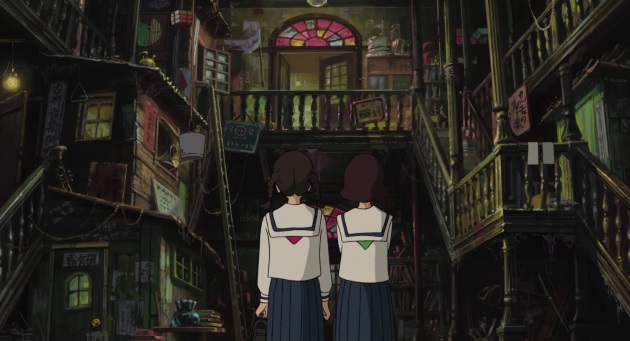
My first viewing of Whisper Of The Heart was somewhat marred by the film’s misleading (albeit still beautiful) poster, giving me the false assumption that Whisper Of The Heart was going to be a fantasy film in the vein of a picture like Labyrinth. This lead me to wonder when this non-existent fantasy element was going to kick in during the film’s first third, only to then realize it wasn’t that kind of film. The fantasy sequence inside Shizuku’s head which inspired the poster in which Shizuku and an anthropomorphic cat known as The Baron fly Superman ’78 style is a beautiful combination of fantasy and reality as those giant pillars (which do remind me of the backgrounds in Super Mario World) raise high into the sky above the suburbs of Shizuku’s world of West Tokyo. It’s easy to sound like a broken record when talking about the aesthetics of Studio Ghibli’s films, but god, this film is just so beautiful to look at it puts a smile on my face from the eye-popping colour of suburban Tokyo to those urban night-time landscapes. Even the film’s more mundane subjects such as the apartment block in which the Tsukishima family resides would be ugly in real life but has a certain beauty to it in the animated form. Correspondingly, the music score by Yuji Nomi is one of great variety from the whimsical nature of A Hilly Town to the Aussie outback vibe from The Cat Chases and even medieval-themed compositions with the track Engelszimmer. These pieces of orchestrated beauty make for a welcome contrast with the film’s urban setting however the film does also provide some more in-tune accompaniments to the Tokyo landscape with its use of electronic sounds and synthesizers as heard in Taking The Train and Starry Night Sky. Furthermore, I can’t help but notice similarities between the track A Hilly Town and the piece In The Evening Midst from the oddball, Japanese horror movie House, while these two aforementioned pieces of music surely must have influenced Michael Giacchino’s piece Married Life from Pixar’s Up (is it just me or do these three pieces of music work extremely well when listened to in tandem?). Whisper Of The Heart is also a rare instance of Ghibli film to feature licensed music with its recurring use of variations with John Denver’s Country Roads, including a real humdinger of a cover during the film’s end credits in which it is given the city-pop treatment. Correspondingly, like many a Japanese film, the always reliable sound of cicadas increases the atmosphere of anything tenfold.

Whisper Of The Heart concludes with a very sudden marriage proposal from Seiji to Shizuku. In the original manga from which the film is adapted, Seiji only says “I love you” but the film’s screenwriter Hayao Miyazaki changed the line to “I can’t say how soon it’ll be, but would you marry me?“. To quote the big man himself in defending this position – “I wanted to make a conclusion, a definite sense of ending. Too many young people now are afraid of commitment, and stay on moratorium forever. I wanted these two to just commit to something, not just ‘well, we’ll see what will happen”. Putting aside the oddity of receiving and accepting a marriage proposal when neither are of legal marrying age, I do agree this sense of commitment coming from these characters gives the film’s conclusion greater emotional weight (although I will say the film ends very abruptly and could have done with a few seconds to let the viewer take it all in). The Japanese and English dubs have different lines of dialogue in this final scene. In the Japanese version, Seiji makes the aforementioned proposal to which Shizuku nods and Seiji asks if she’s sure to which she replies “That’s exactly what I wanted.” However, in the English dub, their discussion of marriage is more tenuous. Seiji asks, “Could you see us getting married someday?” to which Shizuku nods and they agree that his question was corny. It feels like those responsible for the picture’s English dub had a lack of faith in the source material and outright disrespected it with said changes. Regardless, I am a sucker for a good story of hopeless romantics and this impulsive love present in the original Japanese version of Whisper Of The Heart defiantly delivers on the desired level of swooning.

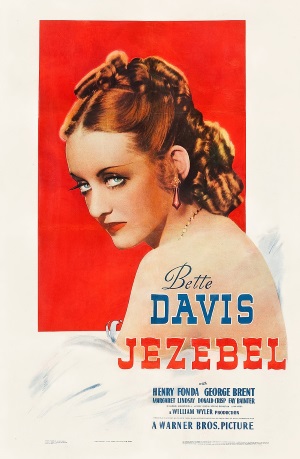
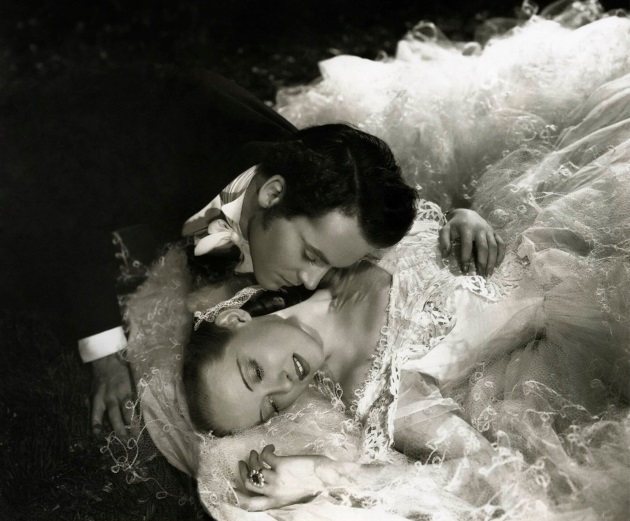
Jezebel (1938)

I Do Believe I’ll Give Room Service A Jangle And Have Them Send Up Some Étouffée

***This Review Contains Spoilers***

The antebellum south of the United States often makes the perfect setting for stories of decadence and doom as history has shown it wasn’t going to last. The Spanish moss hanging in the moonlight, the sounds of mockingbirds in the magnolia to the grand sweeping plantations and even the occasional utterance of Cajun French conjures a world which one can become lost in, but one of which it’s iconic architecture would later become associated with the dark genre of southern gothic in its future state of disrepair. This is the world present within the costume drama Jezebel, of which there are plenty of costumes and plenty of drama.

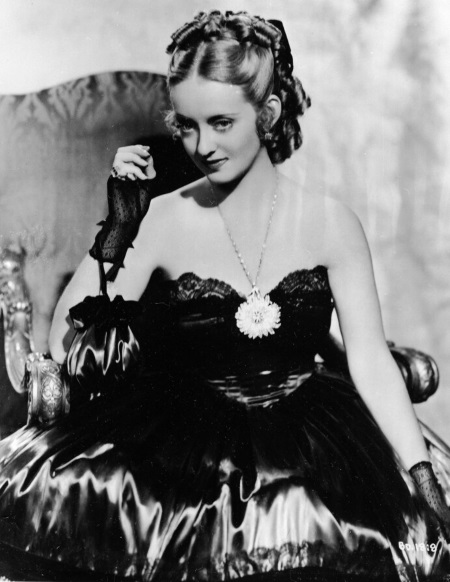
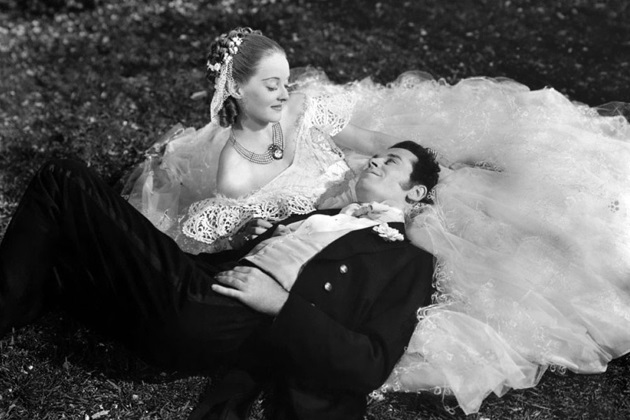
Bette Davis stars as the headstrong and manipulative southern belle Miss Julie Marsden. Contrary to the film’s title, the character is not actually called Jezebel. Rather this is the name given to her by her Aunt Massey (Fay Bainter) following Miss Julie’s less-than-stellar behaviour. The name is derived from the biblical figure present in Kings I and II, in which Jezebel is portrayed as an evil queen who engages in idolatry and leads men astray. In modern vernacular, a Jezebel is a woman who is regarded as sexually immoral or manipulative. Miss Julie Marsden resides within the upper class of New Orleans circa 1852, a world in which etiquette, dignity, good manners and dress codes are absolutely paramount and taken extremely seriously (“Punctuality is the politeness of kings”). Take the latter dinner scene at the Halcyon plantation (sounds like a ship from a science-fiction movie), tension is gradually created from the gentlemen’s political disagreements as the mood becomes increasingly passive-aggressive yet never is a voice raised. Miss Julie on-the-other-hand is a woman who likes to do as she pleases and gets a kick out of shocking people. From her character’s introduction, Miss Julie chooses to break the rules of the game by arriving at her own party late and wearing inappropriate clothes while shortly afterwards, the symbolism employed by her walking through the city bank to get her fiancé Preston Dillard (Henry Fonda) is on stark display.

The main driver of conflict in the first act of Jezebel is over an infamous red dress which Miss Julie chooses to wear to the Olympus Ball. The expectation of southern society being that only unmarried girls wear white but Miss Julie rebuffs this with her current year argument, “This is 1852, dumpling. 1852, not the dark ages”. No one in the film outright says it, but this is a whore’s dress, one which women wear in the gambling halls, steeped in the colour of both sexual sin and menstrual blood, not appropriate for a young, virginal woman of the upper class. Jezebel was made under the Production Code and the closest anyone gets to making the aforementioned connection is Julie’s rebuttal to Preston’s horrified reaction to the dress, “Are you afraid somebody will take me for one of those girls from Gallatin Street?”. I do find some unintentional humour is derived from the fact that so much hubbub is made from this dress being red, yet the movie is black & white (reminds me of that colourblind gag in Tim Burton’s Ed Wood), however in reality the dress in question was actually bronze. Miss Julie comes to regret her decision to wear the red dress to the ball, but Preston makes her go through with it, forcing her to live out the nightmare she has created. Speaking off moments which straddle the line of the production code, when Preston takes the cane up to Julie’s room to supposedly thrash her, the scene appears to linger on that thought. As Julie tries to play mind games with Preston she glances at the cane four times (with the camera even lingering on it for a mid-shot) as though she’s half expecting him to use the phallic device. As a result, the scene has an almost erotic vibe to it. 

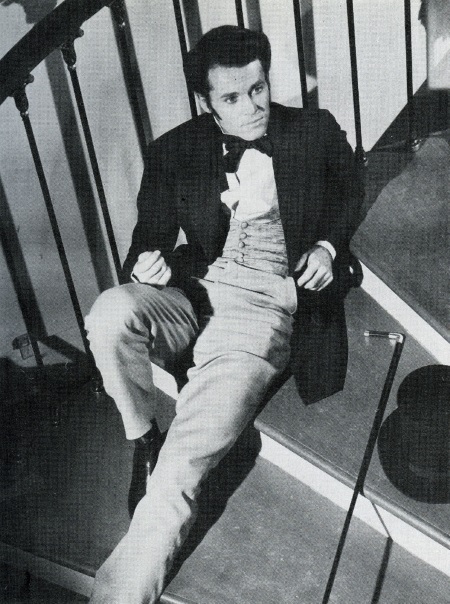
The young and dashing Henry Fonda stars as Preston ‘Pres’ Dillard. As common with many of Fonda’s roles, Pres is a man of great dignity and integrity without ever coming off as being obnoxiously righteous (“I think it was Voltaire who said I disagree with everything you say, and I will defend to the death your right to say it”). A southern-born man with a great love of his homeland, Pres Dillard has adopted the attitude of the northern states and is not content with the quo of the south, desiring civic improvements with railroads and sanitation and although he never outright says it, likely to curry public favour, it’s clear he is an abolitionist. In one key scene, he asks the slave Uncle Cato (Lew Payton) to share a drink with him, to which Cato obliges but only if he takes the drink to another room. Pres even later comes to marry a northern woman in the form of Amy (Margaret Lindsay), a woman who doesn’t have the domineering and rambunctious personality of Miss Julie. As a result of these transgressions, Pres is come to be seen as a traitor and the Uncle Tom by his fellow southern men, in particular Buck Cantrell (George Brent). 

Buck Cantrell is very much the opposite of Pres. The film’s metaphor for southern interests, the man’s foolish gallantry ends up costing him his life in a duel over a petty disagreement. I hadn’t previously thought much of Brent as an actor but his Clark Gable-like swagger in Jezebel makes him a real show stealer while his interplay with Davis really helps bring out the best in him (the virgin Buck Cantrell vs. the chad Preston Dillard, only joking, both are chads in their own way). The north vs. south dynamic as portrayed through the characters of Pres and Buck (9 years prior to the American Civil War) excludes Jezebel as being part of the Lost Cause narrative even if the film does portray slaves as being content with the status quo. The film does offer one of its funniest comedic moments to one of the black actors with his repeated utterance of “yessum” at Mrs. Kendrick’s (Spring Byington) orders upon their arrival at a party. 

Following the film’s first act, Jezebel portrays an America going through a pandemic of yellow fever (or yellow jack as it’s often referred to) as well as being split along ideological and political lines, now doesn’t that sound familiar? In a powerful scene, Pres faints from yellow jack in a bar and all the other men back away from him as fast as they can and cover their mouths, except for Dr. Livingstone (Donald Crisp) who goes over to Pres and asks for one of the men to help him, none of whom are brave enough to go anywhere near the fallen Pres (Livingstone is no social distancing soy boy). Likewise, Livingstone reports Pres as a fever patient to the authorities, resulting in him being taken away to a colony for the unlucky infected known as Lazarette Island, justifying his actions by stating “Have you any idea what would happen to New Orleans now if folks got to thinking there was one law for the rich and another for the poor”. Crucially, in an earlier scene during a blink-and-you-miss-it moment, Pres slaps a mosquito in his hand accompanied by a spike in the music just as this occurs. Is this how Pres caught yellow jack? I’ll let you decide.

Jezebel is often compared to fellow antebellum tale Gone With The Wind and parallels between the two are evident, albeit superficial:

– Julie Marsden /Scarlett O’Hara fall for Preston Dillard/Ashley Wilkes, neither of whom can deal with her behaviour.
– Preston/Ashley decides to marry Amy/Melanie, whom is less hassle.
– Julie/Scarlett corners Preston/Ashley in the garden/smoking room and tries to
convince him of her love.
– Julie/Scarlett lives with her disapproving Aunt Belle/Pitty Pat.
– Julie/Scarlett uses Buck Cantrell/Charles Hamilton to try and make Preston/Ashley jealous.
– Julie/Scarlett wears a red dress to a ball/party and scandalizes herself.
– Julie/Scarlett realizes too late that she is responsible for her own lot (Preston dying/Rhett Butler leaving).
– Julie/Scarlett is determined to make good (escorting Preston/getting Rhett back).

It is worth noting that Jezebel as a property actually predates Gone With The Wind, with Jezebel first debuting on stage in 1933 while Gone With The Wind was first published as a novel in 1936. Could the stage version of Jezebel bared any influence from Gone With The Wind and could the film version of Jezebel have taken any influence from the novel of Gone With The Wind?

Director William Wyler holds one of the most impressive resumes in Hollywood history and Jezebel is another showcase of his craftsmanship, in particular, the extravagance on display in the Olympus Ballroom scene. The magnificent set is shown in 360 degrees from multiple camera angles and it’s clear that big bucks have been spent on this production. Reportedly Wyler would do upwards of 40 takes on individual scenes in Jezebel and when you get results such as the manner in which Davis effortlessly lifts up the end of her dress with a riding crop, it appears the agony was worth it. It is also worth noting as a humorous error in geography emanating from the film’s set design; notice how the bar seen throughout the film has stairs going downwards from its street-level entrance. This is not advisable in New Orleans with the city being below sea level.

Bette Davis is an actress I could never bring myself to consider a personal favourite of mine but her ranking as the American Film Institute’s 2nd greatest American female star of all time is hard to argue against. I do prefer her in other films such as Kid Galahad or comedies including Its Love I’m After or The Bride Came C.O.D. in which she presents a more endearing side to her persona. Whereas in films such as Jezebel she is much more cold-hearted and presents the dark side of the feminine form, but there’s no doubt she played these roles to the utmost degree of acting prowess. Miss Julie Marsden was a spoiled brat who had no sense of when and when not to pick her battles, and ultimately got what she deserved. Jezebel concludes with Miss Julie convincing Amy not to go to Lazarette Island with Pres, but rather allowing herself to go instead. The film bills this as the redemption of Miss Julie by displaying a sense of grandeur along with Max Steiner’s sweeping music (which in itself is quite moving), but just how selfless is this act? Is Miss Julie truly trying to repent for her actions by making such a sacrifice and risk catching the disease or is she just trying to make a bold, last-ditch effort to win back Pres in the off chance of his survival? It is up to you my friend, the viewer to decide. Now time to bring this review to a conclusion as this flower is wilting!

Ocean Waves [I Can Hear The Sea/海がきこえる/Umi ga Kikoeru] (1993)

Youth Is Wasted On The Young

***This Review Contains Spoilers***

Ocean Waves is a real unsung gem of the Studio Ghibli library, with this made-for-TV film running at a very digestible and economical length of 72 minutes. Ocean Waves tells the story of Taku Morisaki (Nobuo Tobita), a high school student in a provincial town in the Kochi prefecture whose world is turned upside by a transfer student from Tokyo named Rikako Muto (Yōko Sakamoto). I’ve read many comments and reviews that express a strong dislike for this character usually reserved for the likes of Scarlet O’Hara and it’s not hard to see why – she is spoiled, manipulative, selfish and rude. The city girl thinks herself superior to the provincial folk in the town she has been incarcerated in and even says at one point she hates the area and guys who speak with a Kochi dialect. Rikako gives no acknowledgement for all the trouble she puts Taku through from lending her money, finding himself escorting her to Tokyo at the last minute and being forced to sleep in a hotel bathtub (some men will have the patience of a saint when it comes to a pretty girl). The will they/won’t they story becomes increasingly unlikely as the relationship between the two deteriorates so bad that they end up slapping each other in public, while in another incident soon afterwards Rikako gives Taku another powerful slap for no good reason in an excellent piece of animation as the beautiful young woman suddenly appears so unattractive. Yet as a viewer I can feel sorry for her as her parents are divorced and she has been forced to move with her mother (of whom she resents) to another town against her will (and being on her period as she declares doesn’t help matters). Although I can understand for other viewers she remains unredeemable.

Ocean Waves is also a love triangle story with Taku’s best friend Matsuno Yutaka (Toshihiko Seki) also being in the pursuit of Rikako. The film hints there may be a homosexual attraction between Taku and Matsuno. In the scene in which the two meet for the first time, Taku narrates “Since then, in my mind, Matsuno was different from the others” – a possible dog whistle that the two are friends of Dorothy not to mention the scene is very romantic in nature but it’s ultimately left ambiguous. Regardless their bromance serves as another great relationship dynamic. This slice of life anime is full of those relatable high-school moments which make you go “oh yeah, I remember going through a moment like that”.

The animation present in Ocean Waves is not to the quality of Ghibli’s theatrical films, but for a TV production, it still looks great despite a few technical issues. Several background characters appear as mannequins with no face but more significantly, the film does have some framing issues. I am unable to discover if Ocean Waves was created in the 4:3 or 16:9 aspect ratio. Being a made-for-TV production from the early 90’s I would imagine it was created in the former but I can only find copies presenting it in 16:9 of which the vast majority of the film looks perfectly fine however a number of shots do appear as if a 4:3 product has been zoomed in to fill a 16:9 screen with character’s heads being unnaturally cut off. Likewise, the film does contain some dodgy edits and several scenes have white borders running around the screen of which I fail to see their purpose. That said, such technical quirks are made up for the fact that Ocean Waves is a visually beautiful piece of work featuring many a lovely Ozu style pillow shot. Animation of real-life (for lack of a better term) is something rarely seen in the west (King Of The Hill being the most well-known example and yes, my favourite anime), a shame as it provides an opportunity to create a beautiful Technicolor-like look. Concurrently, the music score by Shigeru Nagata is an underrated work of melancholic wonder. With a main theme that is somewhat reminiscent of Dave Grusin’s score for On Golden Pond, the serene, nostalgic score is the kind that makes you want to reminiscence on days gone by (where music is absent the ever atmospheric sound of cicadas fills in).

At its heart, Ocean Waves is about the complexity of human relationships and the growing pains they endure. During their high school tenure, Taku and Matsuno violently fall out over Rikako but reunite post-graduation, showing how grievance during one’s school years becomes irrelevant later in life. During the reunion party, the characters speak of how everything seemed like a big deal in high school, but post-graduation they have come to realise they were getting upset over matters which were ultimately insignificant in the years to come.  They even speak of affection for Rikako who didn’t attend the reunion, despite how snobbish and stuck up she was. Taku even looks up at a castle in the night and remembers all the times Rikako complained and ranted to him with a smile on his face accompanied by the film’s beautiful score. Ocean Waves concludes with one of Cinema’s most enduring love story tropes, as the unlikely couple find themselves reunited by chance at a train station – an ending that encapsulates pure cathartic, romantic joy.

The Flavor Of Green Tea Over Rice [お茶漬の味/Ochazuke no aji] (1952)

He Supports You, He Provides For You And Darling You Can’t Support Yourself

***This Review Contains Spoilers***

The practice of arranged marriage was bizarre to the west come the 20th century however according to the website FactsAndDetails.com; “[Japan] In the 1950s, about 70 percent of all marriages were arranged. In 1973, the figure was only 37 percent. Today only around 10 percent are”. The Flavour Of Green Tea Over Rice (or “Flavor” as you yanks spell it) is one of several domestic sagas by director Yasujirō Ozu which focuses on arranged marriages, and it’s fascinating to see how such an arcane practice was still commonplace in a world which is otherwise very westernised. However, like Late Spring and Early Summer, the focus on arranged marriage doesn’t detract from the universality of these films nor do I get any impression Ozu is attacking the practice in any of his pictures. In The Flavour Of Green Tea Over Rice, the young girl Setsuko (Keiko Tsushima) outright refuses to partake in an arranged marriage however come the film’s conclusion, the story’s main couple Taeko & Mokichi Satake (Michiyo Kogure and Shin Saburi) do find happiness within their arranged marriage. The Flavour Of Green Tea Over Rice holds similar plot threads to Ozu’s earlier comedy What Did The Lady Forget? – both of which feature a childless, married couple and a rebellious niece named Setsuko.

Taeko Satake very much fits the mould of a wine aunt – a woman of privilege who is unemployed, childless and is able to live a rather luxurious life (symbolized from her preferred attire of kimono) from living off her husband as well as receiving money from her upper-middle-class parents. The film doesn’t indicate if the relationship between Taeko and her husband Mokichi was ever strong. She is only seen acting like a loving wife in the lead up to lying to her husband in order to go to the hot springs with her friends for the night, nor does he make any effort to confront these obvious lies. Upon first watching the film I wasn’t quite sure if Mokichi just accepted these lies and did nothing about it or was just thick. Taeko even calls her husband Mr. Bonehead when he’s not around and compares him to a big, sluggish carp on one occasion. Likewise, there is the hypocrisy of her refusing to speak to her husband for days on end after he lied to her even though she has previously lied to him on many occasions – ah women, amirite? I know I’m going quite hard on this character, but I by no means dislike her. Prior to the film’s conclusion, her character does receive some redemption in being a doting and caring aunt to Setsuko (of whom it’s somewhat odd that the young girl spends the entire movie hanging out with older women), plus I couldn’t bring myself to dislike the ever-gorgeous Michiyo Kogure. Despite collaborating with many actors on multiple occasions, The Falvour Of Green Tea Over Rice would be Michiyo Kogure’s only film with Ozu.

The other point of contention amidst Mr. & Mrs. Satake is the class difference between the two, with Mokchi coming from a more working-class background. This conflict becomes most pronounced when Taeko chastises her husband over his primitive manner of eating, “wolfing his food down like a dog” as she describes it. This class difference ties into the meaning behind the film’s title. Mokchi is a man who derives simple pleasures from life much to his wife’s displeasure. In a monologue, he speaks of how he likes things “cosy and down-to-earth” and “without ceremony or affectation” (which in itself is a perfect description of Ozu as a filmmaker). The pharse “flavour of green tea over rice” is a capitulation to the simple life with green tea over rice itself being a simple delicacy. What would be the western equivalent – the flavour of bread over butter? The other husband featured in The Flavour Of Green Tea Over Rice is that of Toichiro (Hisao Toake), the husband of Aya (Chikage Awashima). The awkward and cucked little man is spotted having an affair with another woman at a baseball game (despite the claim that he doesn’t like baseball very much) and even comes to his wife’s place of work in order to ask her for money (it’s not indicated if he actually works himself). Aya herself has a job of some prestige, appearing to be a clothes designer and it’s clear who wears the pants in this couple. Men, be more like Mokichi and don’t in any way emulate the pathetic Toichiro. Mokchi may not be the most exciting man in the world but he is a reliable husband ala green tea over rice. As Taeko states at the film’s conclusion – “What’s most important is whether he’s reliable or not”.

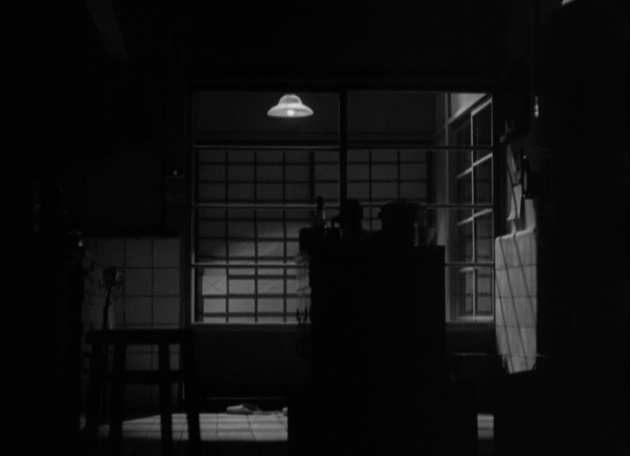
Taeko and Mokichi’s marriage is ultimately saved by what else, the making a late-night snack. After Taeko had to leave the country for Uruguay and was unable to say goodbye to his wife as she had unexpectedly left for a few days, the two then find themselves reunited at home when Taeko’s plane has to return due to mechanical troubles. In one of the most beautiful scenes in an Ozu film, the pair must find their way around the kitchen as their servant Fumi (Yôko Kosono) has gone to bed and they have never prepared food for themselves. The couple display a look of pure joy on their faces while they prepare a snack of (you guessed it) green tea over rice as the two fall-in-love with each other and Mokichi’s comes to understand Taeko’s philosophy of “cosy and down-to-earth”. The scene is not in any way unbelievable or contrived and demonstrates there still lies hope for damaged marriages and relationships. Their kitchen itself is pure interior decorating goals with its slight Bauhaus vibe and one which is illuminated with a beautiful, dark and hazy light. The final shot of the kitchen lingers as the couple leaves the room and turns off the lights, letting the viewer absorb the pure cinematic magic which just unfolded. Previously, I would have ranked the best ever scene in a movie centered around a kitchen to have been the comical climax in Woman Of The Year (1942), which can now hold the number 2 position of such an honour. 

Another interesting point of note is Aya’s question to Setsuko as to whether she prefers the upper or lower part of actor Jean Marais’ face after Setsuko speaks of going to see one of his pictures. The same reference was made in Late Spring to a Japanese man having the same facial features as Gary Cooper on the lower part of his face, with the significance being the upper part of the face being what most significantly distinguishes asians from caucasians. Conversely, in a slightly odd change of pace for an Ozu film, the camera moves with a total of 7 pans throughout the film – rare for Ozu considering his aversion to camera movement. This however does not include camera shots stationed on moving vehicles unless that in itself can be classified as a moving shot? Correspondingly, like other Ozu films, the film provides some documentary-like moments of post-war Japan such as shots of a baseball game as-well-as a cycling race in a purpose-built stadium. Also featured is a pachinko parlour, a coin-operated game and a predecessor to the modern-day coin-operated arcade game. The owner of the parlour known as the Bittersweet School Of Life, Sadao Hirayama (Chishū Ryū) thinks the addictive game is a bad trend that will die out, only history would go on to prove him very wrong. – Ah the nostalgia one can experience for a world never lived in.

Tarzan And His Mate (1934)

Hot Jungle Sex

***This Review Contains Spoilers***

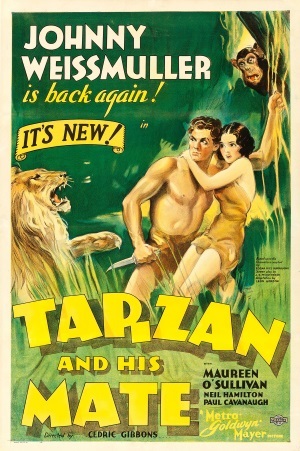
Tarzan and His Mate more than compensates for the shortcomings of the first Johnny Weissmuller Tarzan film of which the production values where a mixed bag. Tarzan and His Mate has less reliance on stock footage and rear projection with its use of matte paintings and a large amount of animals on set to recreate deepest darkest Africa in the only film directed by Cedric Gibbons, otherwise famous as an art designer for MGM. I just wish we could do without the men in not so convincing gorilla outfits, especially since the cast appears on screen with real apes (Planet Of The Apes was still 34 years off).

Pre-code cinema doesn’t get any sexier or revealing than Tarzan and His Mate, notably with its use of full-frontal nudity despite having a modern-day PG rating in the UK. During the early portion of the film, topless African natives can be seen in the background but in one of the film’s most memorable scenes, Tarzan and Jane going for a swim in which Jane goes full commando. The underwater scene was filmed in three different versions to comply with the individual censorship laws of different US states. Maureen O’Sullivan does not appear as Jane during the swimming sequence, rather she is doubled by Josephine McKim, a member of the 1928 and 1932 U.S. Women’s Olympic Swim Teams. O’Sullivan does nonetheless wear one of the screen’s most revealing costumes of the time, a halter-top and a loincloth that left her thighs and hips exposed. Needless to say, this two-piece costume did not make its way to the post-code Tarzan films. Jane sleeps in the nude and is constantly touched by Tarzan, even just watching the two of them interact while alone, there is such sexual tension portrayed on screen (we are even treated to the Austin Powers style silhouette in the tent of a woman getting undressed).

Tarzan and Jane do refer to themselves as a married couple in Tarzan and His Mate (“Never forget, I love you.” “Love who?” Jane prompts…”Love my wife”), however at this point in their relationship it is unlikely Jane and Tarzan are technically married in the eyes of the law since a justice of the peace isn’t likely to be found in the jungle. Rather you could say Jane considers Tarzan her husband because they have lived together and slept together for a long time by now, married virtually, synonymously and spiritually – a true marriage in the law of love and the jungle. Likewise, the scene at Jane’s father’s burial site, Jane takes the chain of his timepiece and puts it around Tarzan’s wrist and says “always” in which Tarzan repeats “always”. The morning after they repeat this vow, which one could interpret as a short and sweet jungle wedding – therefore monocles can remain firmly in place over the prospect of an unmarried couple living and sleeping together.

The mighty figure of a man that is Johnny Weissmuller – he is Tarzan! His short lines of limited, broken English are highly quotable (“Martin My Friend”), while he also provides moments of humour as the feral man reacts with bemusement at the ways of the civilized world such as curiously inspecting a record player like a cat, as well as inspecting Jane’s dress and stockings from Paris. It’s Jane who has to do the talking on behalf of the couple (and even performs the famous Tarzan yell herself). The pure romantic escapism of Tarzan And His Mate comes from watching these two being deeply in love and having the time of their lives in the wilderness of the jungle. The character of Jane is brilliantly summarized in a single line – “A woman who’s learned the abandon of a savage, yet she’d be at home in Mayfair”.

 It’s easy to feel sympathy for Jane’s old friend (and not so secret lover) Harry (Neil Hamilton) over his love for Jane as he nostalgically reminisces with her about old times back in England (“Those June nights in England, Murray’s Club in Maidenhead, moonlight on the Thames”). Alternatively, Paul Cavanagh as the villainous, womanising Martin Arlington has a touch of Basil Rathbone to him (expecting him at any point to literally twirl his moustache) while Nathan Curry is a striking screen presence as Saidi, the only native whose life is not expendable and even gets to go out in a moment of heroism. That can’t be said for the rest of the safari runners including one who is shot for his cowardice. Yet, its attacks from uncivilized tribes which prove to be their biggest threat, making Tarzan And His Mate one of the more graphic films of the pre-code era (including one particularly gruesome shot of a man having been impaled in the forehead).

Ouch!

I find it difficult to determine if Tarzan And His Mate is an early example of a film with an environmental/conservationist message? The film shows Tarzan has an almost supernatural connection to the non-predatory/ non-carnivorous animals of the jungle, whereas he fights predators such as lions and crocodiles throughout the picture. In particular, Tarzan has the ability to rally up herds of elephants in order to prevent the safari hunters from removing ivory from an elephant graveyard (there is no such thing as an elephant graveyard but the appearance of one in the film with its litany of skeletons is no less eerie). Is the film trying to promote a message or is it just a reflection of Tarzan’s personal feelings over the elephant graveyard being a sacred ground for the creatures and not to be disturbed or violated? Likewise, Tarzan and His Mate was reportedly banned in Germany by the National Socialist Party on the grounds that it showed a nordic man in primitive surroundings, which I do find odd since I could imagine them using Tarzan as a promotion of Aryan supremacy. Then again perhaps part of their motivation to ban the movie was based on the fact that Tarzan is played by a man whose surname is Weissmuller.

Witness (1985)

Don’t Give This One Amish

Any public fascination with the Amish and their stark contrast with the modern, civilized world sadly translates more than often to the group being the butt of jokes in movies, sitcoms and oddly enough, many TV commercials (look it up). Regardless of how accurately Witness represents the Amish, it’s as serious and as comprehensibly researched as Hollywood has ever taken the subject matter (customs, language, dialect and all) – a human portrayal without any condescension. Witness is the story of an Amish community being forced to cooperate with the outside world after a young Amish boy is a material witness to a homicide. The expertly paced story neatly falls into the classic heroes’ journey, as police detective John Book (Harrison Ford) has to leave the world he knows to take refuge in the unfamiliar but eventually has to set things right in his world.

Witness was Harrison Ford’s opportunity to showcase his acting chops playing a contemporary, real-world character as John Book, the upstanding figure of morality in a world of police corruption. Ford projects much warmth with his interactions with the little Amish child Daniel (Lukas Haas), posing as a Freudian father figure, while Ford’s trademark dry wit never fails to amuse (“learning a lot about manure, very interesting”). Early in the film there is a scene in which Daniel mistakes a Rabbi for an Amish man, this is the reverse of a gag from another Harrison Ford movie, The Frisco Kid, in which Gene Wilder plays a Rabbi who mistakes an Amish man as being a fellow Rabbi. Kelly McGillis on other hand has that country girl look and conveys a sense of purity to the character of Rachael. The forbidden love she shares with Book builds up the sexual tension between the two, most memorably during the sequence as the pair dance by Book’s car to the song Wonderful World by Greg Chapman (I’ve never seen anyone drink lemonade more manly than Harrison Ford) – This repressed longing is far sexier than any sex scene could ever be.

Jew Ain’t Amish

The mid-1980’s was a period when real-world dramas featured futuristic, synth music scores. Maurice Jarre’s score for Witness wouldn’t feel out of place in Blade Runner but the odd combo of futuristic-sounding music over the rural landscapes of Pennsylvania is effective (likewise, that barn construction sequence may lack the dancing from Seven Brides For Seven Brothers but is no less splendid). It’s just ironic that this music is juxtaposed to a world in which modern technology is shunned.

One of the most interesting scenes in Witness is that in which an Amish elder speaks to Samuel about Book’s gun, tying in with the film’s broader theme of pacifism vs. conflict. In what could be seen as an anti-gun argument from the Amish perspective, the elder states “this gun of the hand is for the taking of human life” and that it is only for God to take life. Samuel however, who has witnessed a man being murdered, refutes this and states “I would only kill a bad man”. The film presents two sides of an issue without taking a side or being propagandistic, letting the viewer draw their own conclusion.

Contraband [Blackout] (1940)

Hello Darkness My Old Friend

***This Review Contains Spoilers***

Contraband holds a number of similarities to All Through The Night (released by Warner Bros the following year). Both films are Hitchcockian thrillers and (as the title of the latter suggests) take place all through a single night in which a romantic hero inadvertently infiltrates a Nazi spy ring (even though the word “Nazi” is never used in ether film). On top of that, Conrad Veidt appears in both films, although he is cast as a villain in All Through The Night. I love films that effectively play out within a condensed time frame and Contraband is simply enormous fun to watch – one of those films which I felt like I had to tell someone about it afterwards I was left that thrilled. Contraband would be renamed Blackout for the US release, but I think Contraband is the cooler title.

Contraband would offer Conrad Veidt the rare role of a hero as Danish seaman, Captain Anderson. Veidt doesn’t have the looks matinee idol but he is very suave and pulls of the romantic hero with ease (sadly this great actor would pass away only three years following the release of Contraband from a heart attack aged 50). The bane to Captain Anderson, Mrs Sorensen (Valerie Hobson) is introduced defying the captain’s orders and not wearing a life jacket despite what the chattering gossips around her say. This defiance and Hepburn-esque, free-spirit attitude establishes Mrs Sorensen as a real badass.

The chemistry between Veidt and Hobson has shades of William Powell & Myrna Loy, with the two sharing moments reminiscent of screwball comedies. For example, the scene in which Sorensen calls for a taxi in a feminine voice after multiple taxis ignore Anderson is similar to the hitchhiking scene from It Happened One NightContraband makes reference to bondage on a number of occasions from Anderson’s early foreshadowing asking Sorensen “Have you ever been put in irons?” to the rather erotic, James Bond-style scene in which they attempt to break free after being tied up by their Nazi captors. All this sexual tension culminates by the film’s final scene in which Anderson directs Sorensen to drop her life jacket as it hits the floor and they go into a clinch, followed by phallic symbolism of a dripping wet anchor in the final shot – as steamy as a film from the 1940s can get.

Contraband is set in November 1939, the phoney stage of World War II. Like Powell & Pressburger would do in their subsequent film 49th Parallel, Contraband is clearly a rally call to other nations against neutrality in the war. Although a British film, Contrband is one which should ignite the patriotism in any Dane as Captain Anderson and his fellow Danish patriots from the Three Vikings restaurant in London work together to infiltrate the London based Nazis. Contraband offers an insight into life in London during the blackout as people try to go about their lives as normal, using torches to navigate their way in the street (they must be pointed down or else the blackout warden will call you out) and closing their eyes for ten seconds before going back outside. In one scene two wardens approach a man lighting up a cigarette in the street to which the man angrily responds “Why don’t you do something to earn your 3 quid a week and leave taxpayers alone”. With this portrayal of the restriction of liberties as well as the aforementioned refusal of Mrs Sorensen to be compelled to wear a life jacket, I can’t help for Contraband to directly remind me of recent world events as of writing this review. Due to the blackout setting, much of Contraband is visually dark and makes great use of chiaroscuro lighting and expressionist visuals – appropriate considering that the film stars the most notable cast member from the granddaddy of German Expressionist films, The Cabinet Of Dr Caligari. Unfortunately Contraband has yet to receive the special edition, 4K re-master treatment, with the film only being available in a scratchy print on an old Region 1, Kino DVD.

I do have to question if escapade off Captain Anderson’s ship and into London by Mrs Sorensen and her accomplice Mr Pidgeon (Esmond Knight) was part of a mission or a spur of the moment decision since we are lead to believe the British interception of the ship was unplanned.  It’s never made clear who or what Sorensen or Pidgeon are working for however it is reveled their aim is to find out under what neutral names, German vessels sail across the Atlantic, so in all likelihood, they’re probably British spies. Thus I do theorise that Sorensen and Pidgeon had a part to play on the British authorities stopping the ship and forcing it to dock overnight. This theory is backed up by the film’s ending in which one of the British authorities gives Anderson what he is told is a box containing painkillers to help him with his illness. Afterwards Mrs Sorensen tells him to look in the box only to find it contains the pocket watch which he lost in London, proving more or less she is working for the British authorities.

Adjoining the Nazi’s London layer is a warehouse full of busts of then British Prime Minister Neville Chamberlain by a company known as “Patriotic Plaster Products”. Why does a Nazi spy ring have a warehouse full of busts of Neville Chamberlain? Likewise, I can’t tell whether or not the film is trying to denigrate Chamberlain. After Anderson knocks out one of the Nazi ring leaders using one of the busts which simultaneously smashes it to pieces, Anderson responds “They always said he was tough”. Chamberlain left office on May 10th, 1940 and Winston Churchill became Prime Minister –Contraband was released in UK theatres the following day.

Sabrina (1954 + 1995)

Will They?/Won’t They?

***This Review Contains Spoilers***

Never again will the screen see such grace as Audrey Hepburn. Marilyn is hot, but Audrey is beautiful. However its Audrey being the goddess that she is which brings about the major flaw in Sabrina – you cannot make Audrey Hepburn look like a scrawny chauffeurs’ daughter. It doesn’t matter what she wears, Audrey can make any piece of dowdy clothing look glamorous (later in the film she even makes a lumberjack shirt look feminine). After all, in the original stage play, Sabrina Fairchild was played by the down to Earth Margaret Sullivan. Despite this, the sheer enchanting screen presence of Audrey Hepburn, as well as her childlike innocence does help to some degree, overcome this suspension of disbelief. The opening of Sabrina couldn’t be more impossibly romantic – a clear sky with a full moon, Isn’t It Romantic playing the background and a forbidden love imposed by class differences. Well that is until things take a dark U-turn and Sabrina attempts to commit suicide by locking herself in a garage with multiple car exhaust pipes emitting carbon monoxide. Even in a moment as disturbing as this, a joke is still thrown in with that one popping exhaust pipe (likewise did Sabrina’s father ever discovering that suicide note?).

Humphrey Bogart in the role of business mogul Linus Larrabee gets an opportunity to show his flair for light comedy. Bogart is such a pleasure to watch in the many witty lines he delivers, in particular the inter-office memo he sends to his brother David via a car phone. Linus Larrabee is a benevolent capitalist and not the stereotypical archetype of the evil business owner, as he brilliantly sums up in an exchange he shares with David:

“A new product has been found, something of use to the world. A new industry moves into an undeveloped area. Factories go up, machines are brought in, a harbour is dug up and you’re in business. It’s purely coincidental of course that people who’ve never seen a dime before suddenly have a dollar and barefooted kids wear shoes and have their teeth fixed and their faces washed.”

Linus evens has connections to a military general who can get him a bazooka to test against his revolutionary plastic, showing he has some Elon Musk in him. Likewise unlike as seen in many screwball comedies of the 1930’s, the servants of the Fairchild family have a perfectly amicable and respectable relationship with their masters.

David Larabee (William Holden) is the polar opposite of his brother – a 1950’s Billy Madison who lives for hedonism. Holden looks rather ghastly with his bleached hair and the ugly dressing gowns which he wears throughout the film. Sabrina has been head over heels for David since childhood but her love of the man was always forbidden due to class, well until her transformation after spending two years in Paris. David does not appear to be much longer than Linus, which is odd as it’s mentioned at one point in the film that David had kissed Sabrina when she was nine during a time they were roller skating. I never quite get what Sabrina sees in the immature David – this goes for both the original and the remake (more on that later).

At its heart, Sabrina is a story about true love vs. romantic love. Sabrina may be romantically infatuated with David, but ultimately it’s Linus of whom she is destined to be with. The age difference between Audrey and her leading men in multiple films is often a topic of conversation with the casting of a 54-year-old Bogart as a romantic love interest to a 25-year-old Hepburn not being the most obvious choice. Changing social norms since the 1950s and the feminist movement have made it anathema for a woman to rely on a man for money or status, making older man/younger woman relationships age gaps more taboo in modern times. Personally, I’ve seen enough old films with relationship age gaps that I’m more used to it plus the argument can be made that many women simply prefer an older man. At the very least the movie does acknowledge this age difference (“Here I am going off on a sailboat to make an ass out of myself with a girl of 22”). Age aside, with Bogart’s arrogance and overly masculine voice, Audrey isn’t the most obvious choice to play off him – she’s not like Lauren Bacall or Katharine Hepburn. The argument can be made that the original casting choice of Cary Grant would have been more suitable for the part. Regardless these performers are two of my favourite movie stars of all time and they are a joy to watch together so I personally can’t complain at the end of the day.

That Billy Wilder wit is as strong as ever in Sabrina (“That good, that’s bad” – I can see where a certain Simpsons joke came from), with the film also including one of the most clever and witty methods in which a film got around the censorship of the day (“What rhymes with glass?”). On a technical level, it’s also notable that Sabrina was filmed in the 4:3 aspect ratio, despite being released in late 1954, making it one of the last Hollywood productions to do so as almost all movies at this point where being shot in various widescreen formats. Coming off the heels from Sunset Boulevard, Ace In The Hole and Stalag 17, I get the impression Billy Wilder wanted to do something more pleasant and straightforward with Sabrina. I don’t consider Sabrina to be one of Wilder’s best films but I do enjoy it despite its flaws and the relationship dynamics requiring much suspension of disbelief. When a rom-com sparks an interesting debate on whom the female lead should have ended up with, to an extent it has done its job. However, unpopular opinion time, I will argue that the 1995 remake of Sabrina directed by Sydney Pollack is a superior film. 

The remake of Sabrina carries the same themes and follows the same basic plot of the original but with some notable adjustments, the most prescient of these being Sabrina’s (Julia Ormond) transformation in Paris being far more significant. At the film’s beginning, Sabrina really is a scrawny, nerdy girl with a dreadful fashion sense and very long, unkempt hair. Her time in Paris takes up a significant portion of the film (this time working as a photographer for Vogue rather than going to a cooking school) in which she gets mentored by others and comes out of her shell. Symbolically her hair gradually gets shorter over the two year period and returns to the US unrecognizable (I’m just slightly disappointed the remake doesn’t include the attempted suicide scene). Unlike the original, the Paris scenes are filmed on location and are the most distinctly 90’s portion of the film with the fashions and music (nice cover of Love’s In Need Of Love Today). So who is the better Sabrina? I know its sacrilege to outrank Audrey Hepburn, but going from the standpoint on both superior writing and more appropriate casting, Ormond’s rendition of Sabrina does have greater depth, is more believable and is portrayed with a greater sense of vulnerability.

Who was the better Linus? You’re asking me to pit two of my favourite actors of all time against each other. Harrison Ford plays the part beautifully with his trademark comic grumpiness and a real sense of loneliness, and even with the 90’s setting, Ford’s Linus remains a conservatively dressed man with his glasses, dotted bowtie and Homburg hat. The remake also features a much more resentful relationship between David and Linus. In the original, Linus is not impressed with David but doesn’t harbour much resentment, whereas in the remake the relationship is far more antagonistic (“My life makes your life possible – I resent that – So do I!”). I do wish however they could have retained the benevolent capitalist aspect of his character as Bogart portrayed. I feel like going for a tie but I know that’s a cop-out so ultimately I will have to choose Ford once again due to the superior writing and more appropriate casting – Ormond and Ford are simply a more believable romantic pair.

Lastly who was the better David? Greg Kinnear does a good job at portraying the hedonistic sleaze of David, while his turnaround towards actually doing work at the end is a very nice comic touch. Yet even the additional aspect of the antagonistic relationship, I would choose Holden on the account of simply being a more charismatic and likeable screen presence. Likewise, I do particularly enjoy John Wood as Sabrina’s father, a real charmer of an English gentleman, while Paul Giamatti gets one of his earliest screen roles but it’s just a shame he’s given nothing to do. I’d even go as far as saying that Sabrina ’95 provides a greater feast for the senses. The location filming of the North-Eastern United States (notably including Martha’s Vineyard) with the gorgeous architecture alongside the breezy John Williams score, makes the film a very relaxing watch (I also have to ask, was the film’s poster inspired by that of Billy Wilder’s Fedora?). While I hate having to outrank these classic Hollywood legends, Sabrina ‘95 is a rare remake which remains a classy affair and outperforms the original.

Love Me Tonight (1932)

Tailor Made Man

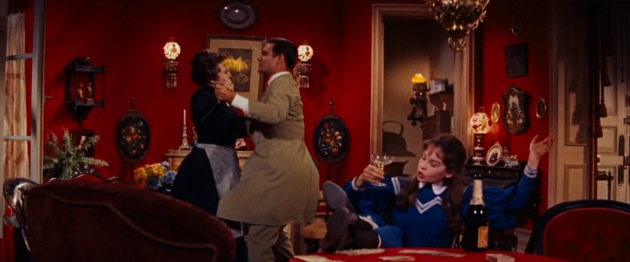
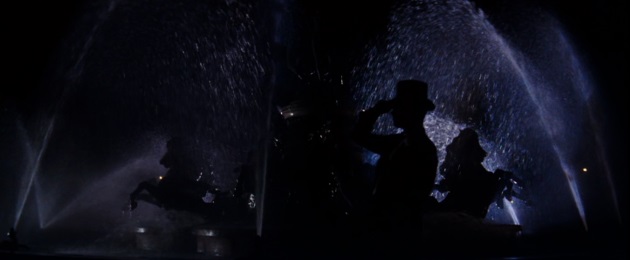
Love Me Tonight was produced and directed by the forgotten movie magic maestro Rouben Mamoulian, a name who doesn’t make the history books compared to the likes of Orson Welles but who’s work during the pre-code era deserve that cliché expression, “ahead of its time” – films which had extensive visual freedom more technical wizardry than you can shake a stick at. No more so than in the musical, comedy Love Me Tonight, the first film in history to use a zoom lens as it does several times throughout the movie (yet it would be decades until this technique would catch on). Not to mention the film’s early use of slow-motion during a very dreamlike deer hunt sequence – quite unlike anything else you’ll see in a film from the time.

Sharp Dressed Man

Love Me Tonight opens with the city of Paris coming to life in a visual manner reminiscent of the silent documentary film Berlin: Symphony of a Great City; however this is accompanied by a symphony created by everyday sounds from a construction worker hitting the ground with a pike axe to a woman sweeping a pathway. Likewise, the Paris street sets look authentic (with shots reminiscent of Gene Kelly’s apartment and neighbourhood from An American In Paris), I would believe it was real-world location but it was a set in the Paramount back lot, which is equalled by the opulence and detail of the chateau seen later on in the film.

Love Me Tonight is an Ernst Lubitsch style romantic comedy focusing on European aristocracy. Our protagonist and his Supreme Frenchness is Maurice Chevalier in the role of well…Maurice – the stereotypical Frenchman who’s life revolves around the concept of romance (is there any truth to Hollywood’s fantasy of France and Paris in particular?). He is one fine dressed man in his dashing turtle neck and a distinct walk (he is a tailor after all) along with a shade of Groucho Marx aspect to his personality with his witty comebacks to all the bourgeois snobs he encounters. 

It was a novelty in 1932 for musical numbers to be so interwoven into the text and pushing the plot along, in particular, the Isn’t It Romantic number which cleverly connects future lovers by song as Maurice begins singing it in his Paris tailor shop and it ends up being carried out of the city and across the countryside to a chateau in which Jeanette MacDonald (who feels like she was tailor-made to play nobility) and her magnificent pair of pipes finish it off. Love Me Tonight has no shortage of character actors galore such as the inclusion of the three spinster sisters (a more benevolent version of the three witched from Macbeth) being a very humorous touch, especially when they sound like chickens as they frantically pace. Also take note of MacDonald’s reaction to Charles Butterworth falling off ladder and landing on his flute – priceless. 

The other great addition to Love Me Tonight is an always show-stealing Myrna Loy in a part which helped turn her career around from being typecast as the exotic temptress to performing high comedy as the sex-hungry Countess Valentine. The bored sex fiend spends her time around the chateau sleeping on chairs and furniture, becoming excited when the prospect of a male encounter arises. She gets many of the film’s best and not to subtle innuendo-laden lines and even sings for the only time in her career during her few lines in The Son Of A Gun Is Nothing But A Tailor. Currently, the only version of Love Me Tonight known to exist is the censored 1949 re-issue which includes among other potentially suggestive cuts, an omission of Myrna Loy’s reprise of “Mimi” due to her wearing of a suggestive nightgown. Why yes I’m outraged that a piece of film history has been erased and in no way does being deprived of seeing a scantily clad Myrna Loy factor into it. 

Regardless of what we are left with, it surprises me the Love Me Tonight would even receive a post-code rerelease with every other line of dialogue being a sexual innuendo (not to mention one particularly luring pan of MacDonald in lingerie as the Doctor inspects her). We can always hope one day an uncensored print we surface.

The Mad Miss Manton (1938)

Manhattan Murder Mystery

Melsa Manton (Barbara Stanwyck) and her ilk of rich, bored socialites use Manhattan as their playground similarly to the wealthy socialites in My Man Godfrey, using the city for bizarre escapades such as sleuthing in the middle of the night and all while still dressing to impress at the same time in The Mad Miss Manton. Stanwyck’s enthusiasm alone is infectious and the quick-fire interactions of the girls are one of the film’s highlights (“I was never much of an individualist, if the upstairs has to be searched we search it together – why that’s communism!”). They even partake in a number of Scooby-Doo like moments, in particular actions reminiscent of the character Shaggy, i.e. making a sandwich in the kitchen when sleuthing in a trespassed apartment. The other memorable addition to the cast is the sarcastic, wisecracking Hattie McDaniel who takes no nonsense from anyone and has a comeback to everything despite her socio-economic status (“Comes a revolution and we’ll start being exploited by our help”).

Francis Mercer is real dead ringer for Gail Patrick

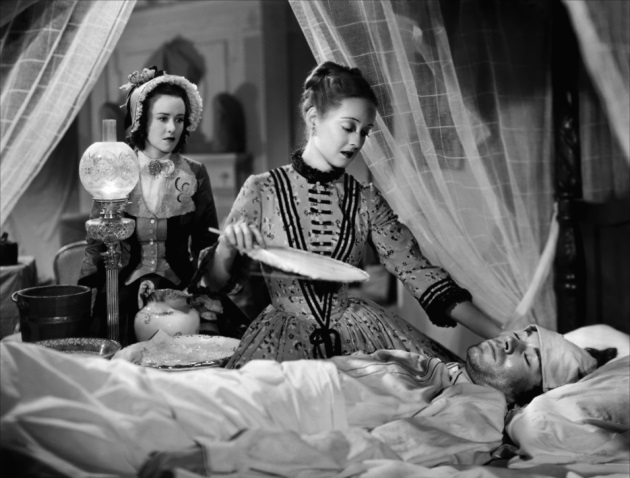
Barbara Stanwyck and Henry Fonda – one true pair if there ever was one. Their chemistry makes it more believable that Peter Ames (Fonda) with his dorky bow tie would fall head over heels for this spoiled Park Avenue princess who is trying to sue him for a million dollars over an editorial. He is even driven to the point in which he casually imposes marriage on her. Henry Fonda isn’t given enough credit for his comic abilities, in particular, the scene in which he fakes his own deathbed in order to extract information from Miss Manton. In one scene Fonda is even seen holding a knife, in the same manner he would years later in 12 Angry Men.

The Mad Miss Manton was one of many films throughout the 1930’s which attempted to get a piece of that Thin Man pie. The formula of the 1934 comedy-mystery romp was an effective one and could easily be recreated with low budgets. It doesn’t matter that the mystery in The Mad Miss Manton is incomprehensible. The comedy and the atmosphere are what makes the movie, of which the picture succeeds in creating with the high contrast, film noir-like lighting during the sleuthing sequences (especially with the sequence in the subway) even though the film is visibly a low budget production.